Home Blog Page 178

U.S. Supreme Court hears arguments in Permian Basin nuclear waste case

0

Adrian Hedden
Carlsbad Current-Argus
achedden@currentargus.com

Stalled plans to store spent nuclear fuel in the Permian Basin could get new life depending on how the U.S. Supreme Court rules in a case seeking to restore vacated licenses for two such facilities.

The court heard oral arguments in the case March 5 and filed it for a later decision

At issue are two projects to temporarily store spent nuclear fuel rods – one proposed by Holtec International near the Eddy-Lea county line in southeast New Mexico and another proposed by Interim Storage Partners in Andrews, Texas, about an hour’s drive east.

Holtec’s plan calls for a newly constructed facility to hold up to 100,000 metric tons of the rods. The Texas project would augment the existing Waste Control Specialists facility in Andrews to store about 40,000 metric tons of the materials.

The Nuclear Regulatory Commission granted the Texas site a license in 2021 and approved a license for Holtec’s project in 2023, but the licenses were vacated in separate 2023 decisions by the U.S. Fifth Circuit Court of Appeals. The court said the licenses were invalid under a provision of the federal Atomic Energy Act that specifies spent nuclear fuel can only be moved to a permanent, deep geological repository.

Those rulings were appealed last year to the Supreme Court in separate fillings by the Nuclear Regulatory Commission and the companies. The appeals were consolidated, meaning any ruling on the Texas case will also apply to the New Mexico proposal.

Attorneys from Interim Storage Partners and the Nuclear Regulatory Commission argued to the Supreme Court that the facilities were legally licensed by the federal agency and would provide a solution to the nation’s problem of what to do with its nuclear waste.

The state of Texas and oil and gas company Fasken Oil and Ranch both appealed the NRC’s original approval of the license for Interim Storage Partners and now want the Supreme Court to affirm the circuit court’s revocation of the license, arguing that the projects in the Permian Basin pose too big a risk for the local area.

What is temporary?

Associate Justice Neil Gorsuch voiced some of the same concerns, asking how the facility could be considered “temporary” when the license was for 40 years of operations.

He pointed to canceled plans for a permanent repository at Yucca Mountain, Nevada, which was defunded by the administration of President Barack Obama after officials from that state opposed the project.

Gorsuch also voiced concerns about impacts the site could have on the oil and gas industry that is booming in the region where the facilities would be built.

“Yucca Mountain was supposed to be the solution. We spent $15 billion. It’s a hole in the ground. How is this interim storage that the government is authorizing here, especially when ISP is getting a 40-year license. That doesn’t sound interim to me,” Gorsuch said. “On a concrete platform in the Permian Basin where we get our oil and gas? Hopefully, we don’t get irradiated oil and gas.”

Associate Justice Sonia Sotomayor said that by not moving the spent fuel, which in many cases sits at the site of decommissioned nuclear reactors, the federal government continues to put local communities at risk.

“If it takes 40 or 80 years to have a solution, it is still temporary,” Sotomayor said. “The risks to communities continue to rise If we keep permitting storage in facilities that have had to be shut down.”

David Frederick, an attorney for Fasken, argued the material was safer where it was, stored in cooling pools that gradually lower the heat and danger posed by the fuel rods than it would be while being moved by rail to rural New Mexico.

“That material is so hot, it takes years to cool,” he said. “It can only be done safely onsite by removing the reactor core and moving it into water.”

Malcom Stewart, a Justice Department lawyer representing the Nuclear Regulatory Commission, said many of the former power plants now only functioned to store the waste left after decommissioning.

He said moving the rods to one location – in the desert of the Permian Basin – would allow the former plant locations to be repurposed and restored to their native state.

“The petitioners and ISP have argued that you have a bunch of places around the country that now serve no other purpose than to store spent nuclear fuel, and it would be better to centralize the waste so that the other facilities can be returned to what is called green space,” Stewart said.

Justice Ketanji Brown Jackson said the federal government already decided that Interim Storage Partners could move and store the rods safely, contending that future advancement in technology could make it even safer.

“We have (Interim Storage Partners) here saying that they can receive this material. I’m not fully understanding why it matters that the material is so hot in a situation where the commission has licensed this transfer,” Jackson said. “Someone thinks it can be done.”

But attorney Aaron Lloyd Nielson of the Texas Office of the Attorney General argued that regardless of how it is moved and stored, and the level of safety, the facility would pose decades of risk and potentially be a target for foreign adversaries.

“If anyone thinks this is temporary, I have a bridge to sell you. There is no way we can move all the spent fuel in 60 years,” he said. “What the commission has done is put an enormous terrorist bullseye on the Permian Basin.”


For the Artesia Bulldogs boys’ basketball team, it comes down to two dogs and one bone

0

By J.T. Keith

El Rito Media Sports Editor

jtkeith@elritomedia.com

Artesia boys’ basketball coach Michael Mondragon is about as relaxed as a souped-up race car idling before the start of a race. Even when trying to relax, he is a bundle of nerves and energy.

The No.2-seeded Bulldogs took their cue from Mondragon and with energy to spare dismantled third-seeded Espanola Valley 72-51 in Thursday’s semifinals of the 4A state tournament at The Pit in Albuquerque.

Artesia (20-9) will face the No.8 seed Highland Hornets (18-14) in the state championship game at 4 p.m. Saturday, which happens to be the 28th anniversary of the Bulldogs’ second of two state championships. They won both titles, in 1995 and 1997, under former coach Bubba Jennings.

The game will mark the second time Mondragon’s team will play for the championship in his 11-year coaching career at Artesia. The Bulldogs also reached the title game during the 2020-21 season amid the COVID-19 pandemic.

The matchup with Highland will be a who-wants-it-more game, strictly a battle of wills. It will be two dogs chasing one bone — and who will fight harder for the prize?

Here are Artesia’s three keys to New Mexico 4A supremacy.

Kincaid must play big in the middle

Maybe for the first time this season, Artesia’s 6-foot-8 junior center Clay Kincaid will face another talented 6-foot-8 big man in Highland’s Jerry Moody. Moody, a sophomore, scored 14 points in the Hornets’ 66-37 semifinal victory over Albuquerque Academy. Kincaid must stay out of foul trouble in this game.

He picked up three fouls and had to sit against Espanola Valley. Kincaid’s value beyond scoring is his ability to block shots inside and limit opponents to one shot. He blocked four shots against the Sundevils and altered several others, setting the game’s tone.

Artesia will have to match the athleticism of Highland

Look no further than Jesus Licon, who is a force on offense. He can beat teams off the dribble and pull up from 3-point land. In the Hornets’ quarterfinal game against St. Pius X, Licon scored 35 points. Albuquerque Academy double-teamed him in the semifinal game and held him to eight points.

The Hornets also have guard Owen Cheng, who can score from anywhere on the court. Look for Juan Limas to get it going from the 3-point line.

Artesia will need the length and athleticism of Charlie Campbell, Braylon Vega, Trent Egeland, Jack Byers and Corbyn Dominguez to shut down the Highland players.

Artesia mirrors Highland’s intensity

It sounds simple, but this game comes down to basics. If Artesia can rebound, play defense, and take care of the basketball, then all the Bulldogs have to do is want to win more than Highland does.

J.T. Keith can be reached at jtkeith@elritomedia.com.

Bulldogs tame Sundevils

0

Mike Smith

Artesia Daily Press

Charlie Campbell scored 21 points as the Artesia Bulldogs defeated the No. 3 seed Espanola Valley Sun Devils Thursday night in the 4A semifinals at The Pit in Albuquerque 72-51.

The Bulldogs are the No. 2 seed and face No. 8 Albuquerque Highland at 4 p.m. Saturday in the championship game.

Braylon Vega, Trent Egeland and Clay Kincaid also scored in double figures for Artesia who outscored the Sundevils 23-14 in the final quarter coasting to the victory.

“Super proud of our boys, but we know we aren’t done,” said Artesia head coach Michael Mondragon during a postgame press conference.

The Bulldogs shot 68% from the floor, 60% from downtown and 68% from the foul line in the victory.

Artesia advances to finals

0

Charlie Campbell scored 21 points as the Bulldogs defeated Espanola Valley 72-51 to advance to the 4A state basketball championship in Albuquerque at 4 p.m. Saturday at The Pit. Braylon Vega scored 13 for Artesia.

Mike Smith Artesia Daily Press

Artesia’s Charlie Campbell (right) and Cael Houghtaling chase a loose ball against Espanola in the semifinals of the 4A state tournament Thursday in Albuquerque.

Mike Smith Artesia Daily Press

Braylon Vega attempts a long shot against Espanola Valley.

Mike Smith Artesia Daily Press

Artesia’s Trent Egeland (right) attempts to pass to Charile Campbell during the 4A semifinals in Albuquerque.

Importance of Jurisdiction

0

By: Harry Bailey
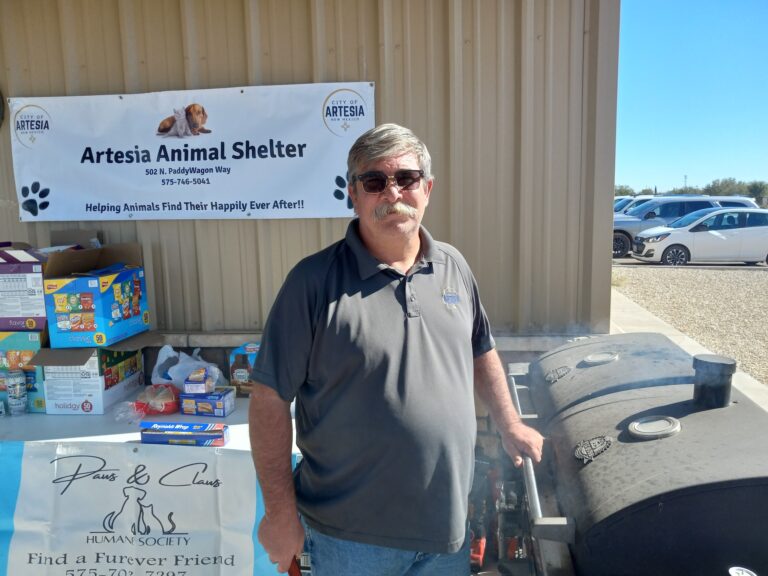
Supervisor, Artesia Animal Shelter

Transporting animals to shelters outside their local jurisdiction can present several challenges, including potential health risks, logistical complications, and legal concerns. Local shelters are better equipped to handle animals from their immediate area, ensuring they receive appropriate care and increasing the likelihood of successful adoption.

Health and Safety Concerns

When animals are transported across jurisdictions, they may be exposed to unfamiliar pathogens, increasing the risk of disease transmission. According to the American Veterinary Medical Association, effective relocation programs carefully screen animals for infectious diseases and aggressive behavior before transport, providing necessary vaccinations and treatments to ensure the health of both the animals and the receiving community.


Logistical Challenges

Transporting animals over long distances requires significant resources, including transportation, veterinary care, and temporary housing. This can strain the receiving shelter’s capacity and divert attention from local animals in need. Additionally, the ASPCA notes that laws vary between cities, counties and states, and transporting animals without proper health certificates and vaccinations can lead to legal issues.

Harry Bailey is the Supervisor for the Artesia Animal Shelter. He can be reached at: 575-746-5043 or at hbailey@atesianm.gov

Legal and Regulatory Issues

Different jurisdictions have varying regulations regarding animal intake, health standards, and quarantine requirements. Transporting animals without adhering to these regulations can result in legal penalties and may compromise the welfare of the animals involved.

Benefits of Utilizing Local Shelters

Local shelters are familiar with the specific needs of animals in their community and are better positioned to provide appropriate care. They can also facilitate the reunification of lost pets with their owners, as local residents are more likely to visit these shelters in search of missing animals. The Richmond SPCA emphasizes that directing found animals to the appropriate local animal control facility increases the chances of reuniting them with their families.

In summary, while transporting animals to shelters outside their jurisdiction may seem like a viable option, it often introduces health, logistical, and legal challenges. Utilizing local shelters ensures that animals receive the care they need and increases the likelihood of successful outcomes for both the animals and the community. If you are missing an animal please check in with your local animal shelter and remember adopt not shop.

Artesia-Valley in pictures

0

Photos by Mike Smith Artesia Daily Press

Clay Kincaid had 13 points as the No. 2 seeded Artesia Bulldogs held off the pesky No. 7 Valley Vikings 41-37 in the 4A quarterfinals at the state basketball tournament in Albuquerque Wednesday. The Bulldogs play Espanola Thursday at 6:30 p.m. More details coming in the March 2o edition of the Artesia Daily Press.

Ski New Mexico keeps up with high tech

0

Mike Smith
El Rito Media
msmith@currentargus.com

A chance to win $1,000 in new ski or snowboarding equipment through social media and a new website are two ways Ski New Mexico is using modern technology to promote the sport in the state, according to Executive Director Christy Germscheid.

Ski New Mexico is asking skiers and riders to use the hashtag #skiandrideNM and tag the skiing group on Instagram or Facebook to enter the ski gear contest, which started Dec. 14 and ends March 23. Skiers can also enter the contest by subscribing to Ski New Mexico’s newsletter on the skinewmexico.com website.

“It’s a really fun opportunity to get a new (snow) setup and increase visual assets with Ski New Mexico,” Germscheid said.

Germscheid said the winner has a choice of taking home either a new ski kit that includes skis, poles and bindings or a snowboard kit that includes the board and bindings.

“(Next) fall is when you get the new gear,” she said.

Website modernized

Germscheid said Ski New Mexico’s new website was launched in November of last year after not being updated for 15 years.

“It was antiquated with today’s visuals” and the relaunch was conducted “from the ground up,” she said.

Germscheid said the website offers the latest snow reports from New Mexico’s ski resorts along with views from web cameras placed at strategic locations on ski trails.

She said the website features local information for the state’s ski communities.

“There’s a general information area as well. There are blogs that are put out during the winter under the news section,” Germscheid said.

The site also offers a new online store where skiers can purchase clothing items with the Ski New Mexico logo, she said.

Conditions improving

Germscheid said a winter storm that hit northern New Mexico last weekend provided a boost for ski areas as some received anywhere from 4 to 17 inches of new snow.

Additional snow was forecast for northern New Mexico this weekend, opensnow.com forecaster Julien Ross reported on Tuesday, March 11.

“Friday will have blizzard conditions in the northern high country, and we will see ongoing snow showers through Saturday,” he noted.

Germscheid said the additional snow could prolong skiing in some areas. She said Taos Ski Valley was set to close April 7 and Sipapu had 17 inches from last Saturday’s storm.

“They could stay open late. Sipapu has a little more flexibility,” she said.

Here are reported New Mexico skiing conditions as of March 11.
(Information provided by Ski New Mexico)

Angel Fire had a base depth of 25 inches with 47 of 86 trails open and 7 of 7 lifts open.

Pajarito Mountain had a base depth of 10 inches with 25 of 53 trails open and 3 of 6 lifts open.

Red River had a base depth of 24 inches with 46 of 64 trails open and 7 of 7 lifts open.

Sipapu had a base depth of 20 inches with 21 of 44 trails open and 4 of 6 lifts open.

Ski Apache had a base depth of 10 inches with 1 of 55 trails open and 2 of 8 lifts open.

Ski Santa Fe had a base depth of 38 inches with 80 of 90 trails open and 6 of 7 lifts open.

Note: Snow conditions can change after this report is compiled.

Mike Smith can be reached at 575-308-8734 or email at msmith@currentargus.com.

Sharing the Gospel Clearly

0

By: Pastor Rick Smith

Are you witnessing for Jesus? You know not everyone can be a pastor, or an evangelist, or a teacher, but every Christian is a witness. We are all commissioned to “Go into all the world and preach (proclaim) the gospel to every creature.” (Mark 16:15NKJV). Some say, “I witness by my life.” But we are told to tell, to speak with our lips, the gospel of Jesus Christ. I know that one of the problems that I have is making the message of the gospel clear. Paul seems to have had this same problem. This is what he said when requesting prayer: “May I reveal it as clearly as I should!” (Colossians 4:4 ISV). That should also be our heart’s desire. Sometimes the gospel message is hidden from those that need to hear it most. In fact, Satan has made it his business to confuse, refute, and pervert the gospel from being understood by both those that need to hear and those that a proclaiming the gospel. So I want to share a few thoughts about this from Colossians 4:2-6)

First we need to live a life of prayer. Listen to Paul’s prayer request. “Continue in prayer, and watch in the same with thanksgiving; Withal praying also for us, that God would open unto us a door of utterance, to speak the mystery of Christ, for which I am also in bonds: That I may make it manifest, as I ought to speak.” (Colossians 4:2-4). Prior to this Paul instructed them on living the Christian life, but it is impossible to live the Christian life without prayer. Prayer and thanksgiving should be our constant activity. Jesus taught us the pattern of prayer in Matthew 6:9-15 in the Lord’s Prayer. Our witness, and the witness of even “professional” preachers and evangelists, is futile without prayer. Look at what Paul requested: an open door (opportunity) to speak the mystery of Christ (the gospel – Jesus is the good news), to make the message clear, as he ought to speak. We need the same kind of prayer for ourselves. We are helpless unless God moves. The Father draws souls to Christ and teaches them (John 6:44-45). God has to open their eyes, ears, and hearts to the gospel. It is God that converts and heals from sin (Matthew 13:15). They cannot be born-again by human means; that is something only God can do (John 1:11-13). So we have to live a life of prayer – praying before we witness, while we witness, and after we witness. And we need the prayer support of others and we need to pray for others that they may share Jesus clearly.

Secondly, we need wisdom. Where does wisdom come? It comes from God by His word and through prayer. “Walk in wisdom toward them that are without, redeeming the time.” (Colossians 4:5). This is not talking about being careful, except to have wisdom to make the message clear. We are dealing with hell bound and dying people. Each breath they take brings them closer to hell. They need to be rescued. We must be wise in what we say (and don’t say) and urgent in the call for them to repent. Keep it simple saints, knowing that we have such a short time to reach them. Make the most of our opportunities while we can.

Also, we must have gracious speech. “Let your speech be alway with grace…” (Colossians 4:6a). A drowning man doesn’t need a lecture, he needs to be rescued. We are to rescue the perishing, not condemn them for they are already condemned (John 3:17-20). We are to offer them grace. If we speak of hell it should be as a warning and we should do it with tears in our voice. We are ambassadors for Christ. Our appeal should be that they should make peace with Jesus.

What we say should be appealing. “…seasoned with salt, that ye may know how ye ought to answer every man.” (Colossians 4:6b). We don’t change the message. The message of Christ should always we clear. But our attitude expressed toward the lost is one of compassion, grace, and love. Read Acts and look at the messages particularly of Peter and Paul. They told the truth and sometimes it hurt, but it was always appealing. When Paul preached to Agrippa, remember how Agrippa responded? “Almost you persuade me to be a Christian.” (Acts 26:28). Paul was not cruel or crude. Learn from the Bible how appeal to the heart of the lost by giving them the gospel clearly.

If you have any questions, we invite you to visit with us this Sunday. Worship at 10:50 A.M. We are located at 711 West Washington Ave. Check our sermon videos on Youtube @ricksmith2541. Send comments and prayer requests to prayerlinecmbc@gmail.com.

Rick Smith is the Pastor at Calvary Missionary Baptist Church in Artesia

Eddy County Fairgrounds readies for new construction

0

Mike Smith
El Rito Media
msmith@currentargus.com.

Payton Putman has a unique perspective on the forthcoming changes at the Eddy County Fairgrounds in Artesia.

Putman, a sophomore at Loving High School, has been involved with the school’s FFA (Future Farmers of America) chapter since eighth grade and started participating in 4-H as a fourth grader.

And there’s more. Her father, Jon Putman, is a member of the Eddy County Fair Board so she had an insider’s view as plans unfolded to transform the aging fairgrounds into a 21st century showcase.

Father and daughter were on hand Wednesday, March 5, to help celebrate the groundbreaking for the fairgrounds’ new $25 million livestock and community building. Also participating in the ceremony were a number of FFA members from Loving, Carlsbad and Artesia, along with representatives of the fair board, the Artesia Chamber of Commerce, and the area’s agricultural community.

Payton said the new building will be a welcome improvement for those who show animals at the annual Eddy County Fair.

“It’s the whole community coming together and building something new and to help and grow the Eddy County Fairgrounds,” she said. “It means so much having a brand-new facility … and we’ll all be in one barn.”

Currently, exhibitors and their animals deal with heat and humidity in outdoor barns during the fair, which is held in late July. The new building is expected to be completed by January 2027.

The fair is a Putman family tradition, Payton said.

“My sister graduated last year, so she showed at these fairgrounds growing up and so did my mother,” she said. “It’s really interesting, this whole new facility and this whole new building for a brand-new generation to experience.”

The fair board is in the process of developing a long-range master plan that could bring even more improvements, officials say.

Jon Putman said improvements to the fairgrounds have been in the making for 20 years.

“For it to finally come to fruition is big for the fair board,” he said. “They have been passionate about it. These guys (fair board members) donate a lot of their time and a lot of their personal money to keep these organizations going and these fairgrounds kept up.”

He said the fair has shown consistent growth with increased numbers of FFA and 4-H participants showing livestock.

“This is a major improvement and overhaul of the Eddy County Fairgrounds,” said Eddy County 4-H agent Wayne Shockey. “It’s going to be a tremendous asset to our 4-H and FFA youth.”

Shockey has been the leader for 4-H programs for eight years and said the number of youths participating in 4-H and FFA programs has grown during his time in Eddy County.

“We continually see large numbers of exhibits and fair projects that are brought into the fair every year,” he said. “We hope to continue that growth, and this is going to help … draw kids into our programs.”

Mike Smith can be reached at 575-308-8734 or email at msmith@currentargus.com.

Oil and gas fee hike takes another step to become law

0

Adrian Hedden
Carlsbad Current-Argus
achedden@currentargus.com

Democrat lawmakers in Santa Fe have less than two weeks left to pass a bill that would hike fees paid to the state by oil and gas companies to drill on state-managed public land.

Senate Bill 23, which would raise the cap on royalty rates for oil and gas leases on State Trust land from 20% to 25%, passed the House Energy, Environment and Natural Resources Committee on a 5-4 vote March 4 and was sent to the House Finance Committee for further consideration.

Royalty rates are charged by the State Land Office to energy companies as a percentage of the revenue derived from oil and gas production on land leased from the state.

The bill already passed two Senate committee, in the chamber where it originated, and survived a vote on the Senate floor in February.

If granted a “do pass” recommendation by the finance committee in the House, SB 23 would then go to a vote of the full chamber. It could be amended on the floor and would then need approval by the Senate before going to the desk of Gov. Michelle Lujan Grisham to be signed into law.

The final approvals will need to occur in less than two weeks if the bill sponsored by Sen. George Munoz (D-4) is to become law, as the legislative session ends March 22. The bill was not scheduled for its next hearing as of press time.

“Raising the state’s top oil and gas royalty rate puts millions more into the state’s savings for some of our most important institutions every year to ensure we continue funding them well into the future,” Munoz said.

The State Land Office leases State Trust land to the industry through monthly auctions, which recently focused on the southeast corner of the state in the booming Permian Basin.

The 25% rate would only be charged for the most valuable tracts of land, as appraised by the Land Office, in the Delaware sub-basin – an area of the Permian encompassing Eddy and Lea counties and believed to be the most productive in New Mexico.

Land Commissioner Stephanie Garcia Richard, who leads the office and has long supported the higher royalty rate, said following the bill’s most recent passage by the House Energy Committee the measure would allow New Mexicans to get a fair share of fossil fuel revenue produced in the state. New Mexico is ranked second in the U.S. in oil production.

The nation’s top oil-producing state is Texas, which shares the Permian Basin with New Mexico.

Financial benefit or anti-business?

Revenue gained by the Land Office supports its statutory beneficiaries such as public schools, universities and hospitals. Garica Richard argued such support saves taxpayers in the state thousands of dollars each year.

“We should always get top returns for our best public resources, especially because this money funds some of our most important institutions and saves taxpayers about $3,000 per year,” Garcia Richard said. “We need to capitalize on this opportunity to get the most value we can for New Mexicans.”

An analysis by the Legislative Finance Committee said the bill would raise up to $75 million a year for the Land Grant Permanent Fund, which the Land Office uses to distribute money to its beneficiaries.

Despite the purported financial benefits to the land office, Republicans and oil and gas industry groups oppose the higher rate because, they say, it would further burden oil companies – especially smaller producers – and could cause oil and gas operations to be moved over the border to Texas.

Paul Gessing with the nonprofit Rio Grande Foundation, a conservative business advocacy group, said the bill was the latest attempt by Democrats in control of the Legislature to attack the oil and gas industry.

Such an agenda, Gessing added, would come at the expense of New Mexico’s fiscal prosperity as the state already heavily regulates and taxes the industry.

“New Mexico is actually taking more than any other state from the oil and gas industry in terms of revenue,” Gessing said during the House Energy committee’s March 4 hearing. “If you want this money, I encourage you to share the wealth with New Mexicans, not just hoard it in government.”

Larry Sonntag with the New Mexico Business Coalition said fees and other expenses imposed by the state, other than the land office’s royalty rate, already made it more expensive to drill for oil and gas in New Mexico

“This would have a detrimental effect to our oil and gas industry,” Sonntag said of the bill. “They already provide a significant benefit to the state, and we don’t want to do anything to disincentivize that.”

Renewable energy, pollution control bills pass house

Lawmakers in the House voted March 6 to pass House Bill 289. The bill, approved by a vote of 35-23, would expand grant eligibility up to $250,000 for geothermal energy projects.

Geothermal energy, considered a renewable form of energy, creates electricity using underground heat. Projects usually draw heated water and steam to the surface from deep underground, using the heat’s energy to produce power.

The House also voted to pass House Bill 140, which would update the state’s Hazardous Waste Act to allow New Mexico officials to sue entities such as the Department of Defense for causing water contamination from per- and polyfluoroalkyl substances, or PFAS. PFAS are industrial byproducts often labeled “forever chemicals” because they do not break down in the environment.

PFAS contamination in local groundwater was linked to the use of firefighting foam at several Air Force bases in New Mexico.