Home Blog Page 188

Cadillac CT5-V Blackwing sedan is a blast

0

By Len Ingrassia
Automotive columnist

There was a time when the Cadillac emblem out front was viewed as a land barge with a soft ride. No more.

Enter the CT5-V Blackwing to dispel any semblance to that era. For starters, its 6.2-liter V8 supercharged engine is hand built by a single technician at a Kentucky GM plant alongside Corvettes.

The result is a sport sedan with awesome power – a track car that uses its 668 horsepower and 559 lb.ft of torque to seriously challenge European stalwarts’ BMW M5 and Mercedes AMG 63 for a lot less c¬oin.

It comes with a standard six-speed manual transmission that catapults it to 60 miles-per-hour from a dead stop in 3.4 seconds with a top speed of 200 mph. An optional 10-speed automatic reaches the mark in 3.2 seconds.

The Blackwing shows up in several limited production Cadillac sedans including the CT4-V, CT5-V and CT6 V all of which were sold out quickly. All are track ready and are shoed with Michelin Pilot Sport 4S 19-inch paws for extra grip on and off track.

Base price is $99,090 and can be optioned to around $120,000 – a bargain price compared with European rivals.

New this year is a track focused Precision Package that greatly enhances chassis behavior in road and track conditions in straightaway and cornering maneuvers. It includes a carbon ceramic brake package, revised suspension bushings, MagneRide dampers and electronic limited slip differential.

The new Blackwing has a wider grille and front fascia with aero ground effects, side fender vents and quad-tip performance exhaust. Approaching the Caddy, the keyed driver is greeted with an animated front LED light show that will bring a smile.

If you want to awaken your neighbors, the Blackwing’s exhaust rumble will let them know you have started your day’s journey. A slight tap on the pedal brings this highly tuned engine to life.

We found it best to stay at idle till reaching a nearby divided highway.

Last year’s 10-inch touchscreen is replaced with an enormous 33-inch curved display that integrates instrument gauges and Google-based infotainment interface. While impressive to look at, we found the new display contains a lot of drill down features which can be distractive while driving this beast.

Audiophiles will marvel at the 16-speaker AKG sound system made specifically for the Blackwing while delivering studio-quality sound throughout the cabin.

Power shifting the Blackwing requires superior seating comfort and Cadillac delivers with an 18-way power adjustable driver and passenger seat with separate massage settings. Suede microfiber seatbacks add to its futuristic look.

Regrettably, we stayed away from the track but found the Blackwing to be ferocious on backroads where it howled along straightaways and hugged corners with ease. Cadillac’s supercar is everything you want on four wheels – luxurious cabin seating four adults comfortably with more power than you will need but nice to have.

The thirsty Blackwing takes premium fuel for best results. Typical range with its 17-gallon tank in 225 miles. Combined mileage during our 250-mile test run was 15 mpg.

(Contact independent automotive columnist Len Ingrassia at editor@ptd.net)

What was reviewed:

2025 Cadillac CT5 V Blackwing RWD

Engine: 6.2-liter supercharged V8. 668 horsepower, 554 lb.ft torque

MSRP/ as tested: $99.090 / $120,000 est.

EPA mileage: 13 city, 20 highway, 15 combined

Assembled: The CT5 V Blackwing is assembled at General Motors Lansing Grand River Assembly in Michigan. Parts content for the Blackwing is global.

Crash test ratings: Neither the National Highway Traffic Safety Administration (NHTSA) nor the Insurance Institute for Highway Safety (IIHS) had evaluated the CT5-V Blackwing as of this writing.

Warranty: 4-year/50,000-mile bumper to bumper; 6-year/70,000-mile powertrain; first maintenance visit.

Southeast New Mexico on alert after measles reported in West Texas

0

Adrian Hedden
El Rito Media
achedden@currentargus.

Two cases of measles were reported Feb. 3 in Gaines County, Texas, along the border with southeast New Mexico, leading state health officials to warn the region of possible exposure to those traveling across the state line.

Gaines County borders Lea County in New Mexico to the east in New Mexico’s southeast corner, which also includes Eddy and Chaves counties.

The New Mexico Department of Health said Texas health officials were investigating to determine if the two reported cases among residents of Gaines County could have led to exposure to New Mexicans.

The identities of the infected individuals and the severity of their illness were not released, nor was it clear if they had recently traveled to New Mexico.

While the cases were being investigated, New Mexico health officials encouraged residents statewide to check their immunization records to make sure they were current on vaccinations for diseases such as measles.

“Measles spreads easily and can linger in the air for hours after a person infected has left a room,” said Dr. Miranda Durham, chief medical officer with the New Mexico Department of Health. “The Texas cases highlight the importance of making sure you and your children are up to date on the measles-mumps-rubella vaccine.”

Symptoms of measles

Measles infections can cause a fever, runny nose or red eyes and a red-spotted rash starting on the head and face, spreading across the body. Symptoms usually last from seven to 21 days, and potential complications include diarrhea, ear infections and pneumonia.

Why to get a vaccination

The vaccination for measles-mumps-rubella can prevent infections and serious symptoms, health officials say, and high-risk adults including college students, health-care professionals and international travelers need two doses of the measles-mumps-rubella (MMR) vaccine. Children receive two doses: one at four years old and one at age 12.

Most adults vaccinated as children have enough immunity to last a lifetime and people born before 1957 are mostly considered immune as they likely had the disease as a child before vaccines were available, according to the Department of Health.

How to get vaccinated in New Mexico

Adults can receive the MMR vaccine from their health care provider, pharmacy or public health office. Vaccines are free for children in New Mexico.

State vaccination records can be checked at https://vaxview.doh.nm.gov/.

Suspected cases should be reported to the Department of Health at 1-833-SWNURSE

Local Honor Rolls announced

0

From staff reports

CENTRAL ELEMENTARY SCHOOL

Second-Grade Highest Honors

Alexandra DeLeon, Isaiah Fuentes, Easton Livesay, Ezra Sanchez

Second-Grade Honor Roll

Emerson LaPointe, Fatima Pacheco

Third-Grade Highest Honors

Emilin Abernathy, Elijah Burns, Troy Cedillo, Amias Chavez, Chloe Elliot, LeeAnne Fischer, Kenedi Jorgensen, Indie Kimmons, Jatziri Ruiz, Layla Ryan, Felicity Vazquez

Third-Grade Honor Roll

Isabella Box, Ariana Carrera, Izaak Coronado, Ka’rissa Fernandez, Aimee Grandales, Jackson Leyva, Nevaeh Lopez, Krislynn Mondragon, Julie Moss, Damian Perez, Alison Saenz, Avyana Smith

Fourth-Grade Highest Honors

Eizet Alvarado, Ava Carrera, Ella Crockett, Raynin Davis, Jacob Fabela, Marisela Granados, Addison Ramirez, Alan Rodriguez, Eduardo Ruiz, Elijah Sanchez, Dawson Simons

Fourth-Grade Honor Roll

Addilyn Smith-Bugh, Zaria Smith-Bugh, Delicia Catano, Kyler Davis, Kynleigh Davis, Emily Drake, Ayla Jimenez, Joe Orona, Luis Segura, Anthony Zamarron

Fifth-Grade Highest Honors

Xavier Barbosa, Nadia Brown, Nyzhony Bustamante, Alicia Carrera, Zayden Coronado, Caden Hack, Damon Macias, Zaedyn Mondragon, Kole Newton, Jesse Ramirez, Caraline Roach, Jaylee Rodriguez, Valentino Saiz

Fifth-Grade Honor Roll

Wyatt Abernathy, Hunter Aton, Brisa Campos, Sebastian Cazares, Alajni Medrano, Alyssa Payan, Alexander Saenz, Amiah Smith

HERMOSA ELEMENTARY SCHOOL

Second-Grade Highest Honors

Kasen Alaniz, Lexi Bickel, Phoebe Edwards, Trace Hughes, Ashlynn Klontz, Bennett Lucero, Evelyn Luna, Aria Osburn, Noah Sanchez, Heavenly Sarabia, Lawson Starnes, Abriana Velasquez

Second-Grade Honor Roll

Ronin Daub, Adrian Gonzales, Amelia Hall, Emma Hill, Ariella Leon, Jolene Martinez, Mateo Neito, Kayden Ponce, Damian Ramirez, Mitzi Rogers, Bryson Saiz, Nate Sena, Jace Smith, Rustin Smith, Kaidy Vaughn

Third-Grade Highest Honors

Susan Alvarez-Villegas, Ashley Ashdown, Drew Cox, Abigail Garcia, Emarie George, Beckham Liles, Brekyn Parker, Tanzi Rogers, Parker Rosson, Kenleigh Sell, Roman Witt

Third-Grade Honor Roll

Mac Armstrong, Amanda Ashdown, Ellie Bejarano, Hannah Chase, Armando Chavez, Carter Crawford, Holdyn Ezell, Jordan Granado, Charlee Kosta, Victoria Lewis, Aiden Nguyen, Izael Pinon, Mateo Romero-Borunda, Sophia Soto, Adrian Villalba, Leah Williams, Vada Wisen

Fourth-Grade Highest Honors

Taylee Cass, Jaxon Davis, Chloe Gazdik, Daegan Kuykendall, Madilynn Martinez, Amiyah Muniz, Bentley Polito, Colton Schafer

Fourth-Grade Honor Roll

Juan Aguilar, Jasiah Balencia, Luke Burton, Laeylah Hinojos, Torrance Hughes, Aniyah Muniz, Gene Peterson, A’liyana Saiz-Acosta, Paisley Sallee, Brayden Southerland, Titus Williams

Fifth-Grade Highest Honors

Ainslee Addington, Tracelynn Alcorn, Yule Aranda, Weldon Bearowitz, Madalee Becker, Melany Borunda-Mendoza, Ximena Cardosa, Samuel Clemmons, Von Harper, Aydenn Perales, Gemma Trevino, Myles Turner, Zetty Ybarra

Fifth-Grade Honor Roll

Ximena Chavez, Mari Baeza, Grayson Esquibel, Joleigh Guy, Hunter Landreth, Ricardo Lazarin, RJ Martinez, Maya Montoya, A. Sophia Ramirez, Thalia Ramirez, Iris Reyes-Villa, Ridgelea Tinker, Reid Townsend, Miley Vaughn

ROSELAWN ELEMENTARY SCHOOL

Second-Grade Highest Honors

Paul Chavez, Milani Iglesias, Kylah Lopez, Isaac Luna, Miarose Rojas, Adrian Rubio

Second-Grade Honor Roll

Jesus Avina, Kianna Bolanos, Mya Brizeno, Meena Campbell, Aiden Campos, RosaliAnn Garcia, Kyson Keene, Ernesto Lopez, Luis Lopez, Christopher Lugo, Renata Miranda, Sofia Rosas-Mondragon, McKenna Munoz, Demi Perez, Dylan Perez, Ler’Riah Rodriguez, Raelynn Trujillo

Third-Grade Highest Honors

Lupita Barrera, Kayla Chaparro, Paul Flores, Nayloni Garcia, Damian Gutierrez, Hector Hernandez, Michael Hirst, Xavier Luna, Julius Soto, Isabelle Urban

Third-Grade Honor Roll

Karlee Barnhill, Mavis Franco, Ayled Nayares

Fourth-Grade Highest Honors

Alexa Barrera, Lindsay Freeman, Julien Grado, Benjamin Hernandez

Fourth-Grade Honor Roll

Jazmyn Archuleta, Aaliyah Gonzalez, Javon Gonzalez, Jathen Lugo, Ruben Miranda, Adrian Ortega

Fifth-Grade Highest Honors

Alyssa Hernandez, Leilani Juarez, Mi’Reyah Ochoa

Fifth-Grade Honor Roll

Gabriel Alvarado, Julio Fraire, Camila Gutierrez, AubryAnna Soto

YESO ELEMENTARY SCHOOL

Second-Grade Highest Honors

Kaleb Alcocer, Julianne Baca, Grant Baldwin, Agnes Barrera, Jax Bilberry, Locke Braswell, Maddox Cabezuela, Adelyn Castleberry, Jameson DeLaRosa, RE Elkins, Sophia Fernandez, Cyrene Galassi, Daniella Garcia, Gavyn Gilchrest, Grayson Herring, Elliot James, Jr. Jimenez, Sutton Joy, Darian Lukacinsky, Daniel Melendrez, Joey Melendrez, Gionni Molina, Kion Montoya, Sawyer Montoya, Olivia Morgan, Owen Morris, Ashlyn Nunley, Tyler Parks, Emrie Rand, Carson Rodriguez, Hailey Samora, Gunner Sanchez, Naieli Vega, Kinsley Williams

Second-Grade Honor Roll

Tell Ledbetter, Ari Melendrez, Kane Ortega, Kynlee Peck, Logan Walton, Ryker Wilkerson, Leah Witt, Lucy Woolsey

Third-Grade Highest Honors

Camden Austin, Giovanni Bahena, Alana Barquero, Kaydence Bazyk, Bristol Bean, Zach Beardsley, Olivia Bellinger, Gage Bilberry, Addilyn Borges, Emma Bravo, Triston Caffall, Juan Calderon-Dala, Oliver Carmichael, Autumn Chavarria, Samuel Colon, Charles Decker, Naomi Delgado, Alana Escamilla, Emily Gay, Kaydee Goff, Jaylene Gutierrez, Gianna Hernandez, Blaiden Howard, Annabelle Joy, Jeslyn Joy, Zaxton Koone, Selena Kumar, Marcus Logsdon, Isabella Longoria, Nolan Lopez, Finley Maupin, Vaden Mendoza, Jayden Miller-Castillo, Amiliana Molina, Asilem Perez, Tennessee Poe, Roman Sanchez, Kinley Scroggin, Kadence Sexton, Ever Tarango, Payden Tolley, Mia Tovar, Brianna Tran, Colton Weiler, Jensen Young, Gabriel Zuniga

Third-Grade Honor Roll

Isabelle Chadwick, Sadie Daley, Xochil Elliot, Giovanni Gaziano, Laityn Grantham, Arianna Jimenez, Piper Johnson, Calina Olivas, Diego Orquiz, Ivy Perez, Nolan Pinson, Matteo Rey, Renaldo Reyes, Baylee Salcido, Leiah Segura, Olivia Smithwick, Julienne Tovar, Keaton Wallace-Bailey

Fourth-Grade Highest Honors

Greyson Acosta, Aerian Aguilar, Presley Aguilar, Emelyn Arellano, Jett Baca, Kai Banda, Jed Bilberry, Christian Bowen, Lucas Brito, Charli Collins, Vivan Foy, Easton Frederick, Carter Gamboa, Elijah Garcia, Elliana Jones, Briella Juarez, Jeremiah Juarez, Corinne Kelly, Amari King, Krosslyn Kirkpatrick, Kailee Klontz, Scarlett Knowlton, Matt Larsen, Jordan Martinez, Major Mendoza, Aria Molina, Claire Morgan, Kira Morgan, Cash Moziejko, Violet Newton, Natalie Norsworthy, Amaia Olivas, Azalea Perez, LeAnna Rodriguez, Olivia Rodriguez, Natalie Valverde, Kariem Velo, Aubree Ward, Paisley Williams

Fourth-Grade Honor Roll

Ariana Austin, Ximena Avila, Sawyer Davis, Mila DeHoyos, Isabelle Hernandez, Josiah Juarez, Jamie Larsen, Irvn Martin, Antonella Martinez, Joey Mayo, Mia Padilla, Delainey Parra, Jay Rubio, Casen Scarborough, Zoey Tesillo

Fifth-Grade Highest Honors

Arah Atencio, Gavin Baldwin, Adrianne Bautista, Jayden Been, Jase Bilberry, Braelyn Blanton, Adam Carnero, Madison Dean, Vada Dupont, Ariana Garza, Mckinley Goff, Niko Gomez, Xandyn Granger, Makayla Kenyon, Kalli Kirkpatrick, Major Kitchen, Macee Lujan, Hanna Marbach, Zendaya Martin, Ellyiana Mills, Ady Peck, Alexa Pinson, Jevin Quinones, Avery Reichenbach, Itzel Rey, Nicholas Reyna, Johnathan Roybal, Grayson Safar, Madilynn Samora, Christian Sanchez, Frankie Sanchez, Adeline Shipman, Kairi Spencer, Jayelle Tolley, Hailey Walton, Wilson Williams, Sofia Ybarra, Talon Young

Fifth-Grade Honor Roll

Tristan Anabia, Zayden Archunde, Mateo Baeza, Katie Beardsley, Emersyn Bellinger, Joshua Blackburn, Tatiana Calderon, Caleb Clemmons, Mia De Haro, Clyde Delgado, Annabella Escamilla, Adan Fierro, Chloe Garcia, Nataly Gilchrest, Christopher Keller, Arianna Leon, Mckinley Mcsherry, David Nunley, Jackson Pennington, Ella Rand, Serenity Richmond, Kate Ruiz, Aubrey Russell, Colbie Scroggin, Damian Tena, Andrew Torres, Dulce Zapien, Lucas Zuniga

YUCCA ELEMENTARY SCHOOL

Second-Grade Highest Honors

Arabella Adams, KinLea Archuleta, Jonalynn Bannister, AJ Borunda-Salsberry, Kayli-Beth Boyles, Natalia Carbajal, Bentley Elwell, Caleb Fox, Mason Harcrow, Gwynn Hatfield, Baylee Marquez, Josiah Martinez, Kase McClane, Jean Paul Morales-Navarro, Siera Munoz, Jacob Rackley, Witten Rodriguez, Brooklyn Runnels, Mason Whitt

Second-Grade Honor Roll

Steve Berdoza Jr., Colsen Callaway, Zedric Morales, Kashley Ramirez, Christian Runnels, Gisselle Salazar, Parker Smith

Third-Grade Highest Honors

James Baxter, Natalie Bilberry, Hannah Castandeda, Kamryn Conklin, Jaxson Corbell, Pedro Cristan Jr., Hagen Crosier, Carsyn Fisher, Abigail Granados, Isaiah Gonzales Jr., Ryleigh Goodloe, Danitza Guerrero, Liam Ivy, Maci Kennedy, Ellen Lester, Alex Lozano-Carrera, Erik Magallanes-Lopez, Katie Marquez, Nehemiah Marquez, Caleb Nez, Braelynn Ortega, Mia Ortiz, Paisley Polito, Bexli Pollard, Brylie Pytel, Judah Sanchez, Zander Sellers, Jaxon Sifuentes, Tyler Simpson, Lane Tulk

Third-Grade Honor Roll

Zakstyn Archuleta, Avianna Cano, Avianna Carbajal, Korbin Fletcher, Brooklynn Levario, Austin Leyva, Ximena Lopez, Jabin McCain, Irina Morales-Martinez, Matthew Olivas-Montes, Bentley Orquiz, Emilio Ortiz, Sophia Reza, Amelie Ruvalcaba, Yaritza Sotelo, Jaixdyx Towler, Rylee Waters, Anaveah Ybarra

Fourth-Grade Highest Honors

Amiyah Catano, Eli Chavez, Cassidy Combs, Alexis Diaz, Sophia Estrada, Isabel Gastelum, Aniello Granados, Landin Letcher, Penny Lopez, Daila Morales-Martinez, Daelyn Neel, Ryder Purcell, Logan Rodriguez, Mac Satepauhoodle-Mikkanen, TK Satepauhoodle-Mikkanen, Taylan Torrez, Alivia Velasquez, Lariah Trujillo, Xykaya Villegas

Fourth-Grade Honor Roll

Uriel Cazares, Yuliana Chavez, Gus Conklin, Meliana DeLaRosa, Dakota Fletcher, Kayson Gomez, Alessandra Jaquez, Daniel Lieb, Abriena Morgan, Analysia Muniz, Allison Reyes, Amayrani Rodriguez, Trevor Roxas, Conrad Walters, Elisabeth Williams, Jax Ybarra

Fifth-Grade Highest Honors

Aaron Adams, Zayden Berdoza, Bristol Denison, Rylee England, Damian Felix, Klancee Folmar, Matthew Fox, Presley Gaines, Jocelyn Gutierrez, Hannah Harcrow, Hollis Harrison-Madrid, Kenzi Horner, Chase Palmer, Jameson Panzer, Abri Polito, Yareli Varelas, Reece Waters

Fifth-Grade Honor Roll

Jacob Berry, Amira Ceniceros, Jonathan Crosier II, Natalia Gonzalez, Jaxon Levario, Andres Lopez, Sya Moreno, Emmerie Moser, Jaelynn Padilla, Bentley Pitts, Martin Quiroz II, Josy Rivera, Devyn Thurman, Lucas Tulk, Skylar Wilde

PENASCO SCHOOL

Second-Grade Honor Roll

Tressie Metcalf, Tristie Metcalf

Third-Grade Honor Roll

Jessie McClain

Fourth-Grade Highest Honors

Ace Elkins

Fourth-Grade Honor Roll

Hallie Metcalf

Fifth-Grade Highest Honors

Koy Burnett

Sixth-Grade Honor Roll

Lillian Fout

Seventh-Grade Highest Honors

Kendi Burnett

Seventh-Grade Honor Roll

John McClain

Eighth-Grade Highest Honors

Allie Elkins, Kailey Fout, Hartley Gutierrez

Artesia bowling takes runner up at state finals

0

Mike Smith
Artesia Daily Press
msmith@currentrargus.com

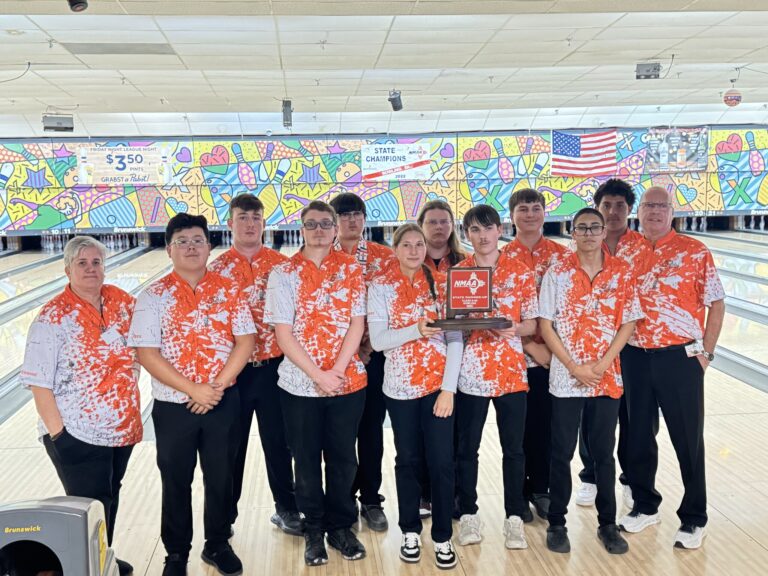
Artesia High School’s Bulldogs couldn’t overcome eight consecutive strikes by Albuquerque Valley High School and had to settle for second place in the state bowling championships Feb. 1 in Albuquerque.

The Bulldogs just missed in their quest for a 10th state title, rolling all the way to the final round before falling to Valley.

Artesia defeated Albuquerque East Mountain and Albuquerque Del Norte in the early stages of the tournament, and even outbowled Valley, sending the Vikings to the tournament’s consolation bracket.

“They went down and beat Espanola Valley to get back to us,” head coach Ken Clayton said.

The tournament came down to a final shootout with either Valley or Artesia needing to win two games to take home the championship trophy.

“(In the) finals Valley defeated us with eight strikes in a row to win 385 to 358 and force the final championship where they prevailed 365-342,” Clayton said.

The coach said he was proud of his team for battling to the end.

“I told the kids I’m never going to apologize for finishing in second place in a state championship,” he said. “The kids did a great job and sometimes you just get beat. … They’re still amazing bowlers and great kids. Really proud of the kids and their effort.”

Bowlers earn statewide honors

Although the Bulldogs finished second in the team standings, Clayton said Artesia bowler Brenden Depew was No. 1 in New Mexico with the state’s highest season average at 205. Teammate Ayden Gomez was second with a 203 average for the season.

Bulldogs Hagen Murph and Kambry Collins also excelled, earning spots on the All-State bowling team.

Murph, Collins and Mason Jeter are set to graduate in May, Clayton said, but seven Bulldogs will return for the 2026 bowling season.

Mike Smith can be reached at 575-308-8734 or email at msmith@currentargus.com.

The Unintended Consequences of Over-Zealous Regulations

0

By Grant Swartzwelder

Let’s face it, there aren’t many jobs in Cut Bank, Montana. And of those that do exist, the top-paying ones are in the energy industry, like oil and gas operators and energy service companies. Some of those oilfield jobs involve companies such as Montalban Oil & Gas Company (MOGO) owned by Patrick Montalban. A company focused on marginal wells—those producing less than 15 barrels per day, or only a few cubic feet of gas per day.

While the energy industry drives MOGO and many similar companies, the direct and indirect impact of the energy industry supports so many more. Laborers, small business owners, restaurant workers – all are beneficiaries of the energy industry. But if increasingly onerous and costly government regulations make the marginal wells – the foundation of so many communities’ economy – uneconomic, the financial ruin will not be limited to operators alone. Without the root economic driver there is no need for the supporting companies and the people they employ.

Montalban not only owns MOGO Inc., operating over 500 oil and gas wells with 21 employees, he’s president of the National Stripper Well Association (NSWA). Like many oil patch independents, he sees the community benefit of his industry, along with the pain inflicted on them by unreasonable regulations.

“We really fill a niche, not only with jobs in the oil and gas industry, but for these rural communities and how important it is to rural America and Main Street, the hospitals, the schools. People just don’t think about it, but it’s so important,” he said.

Why are Montalban and others worried?

It’s because new regulations and EPA actions most dramatically affect small and mid-sized producers and will likely make their marginal wells uneconomical to operate. The result? Wells being shut-in, companies filing bankruptcy. But the pain doesn’t stop there as support companies will be hit and communities will generate less tax revenue. It is not just operating companies that will be hurt, it will be the entire eco-system surrounding these companies and the companies they support.

Possibly the most dangerous of the new Environmental Protection Agency (EPA) rules taking effect in 2025 is the Waste Emission Charge (WEC). Utilizing arbitrary calculation methods, operators could pay “taxes” starting at $900 per ton, then $1,200 per ton and, by 2026, $1,500 per ton.

One might ask, “So what? Just don’t generate excessive emissions.”

It’s not that simple. Avoiding WEC taxes (i.e. fees) incurs a significant cost for equipping a site to detect and capture methane. And it will be a disproportionate burden to small operators with marginal wells, believes Gani Sagingaliyev, co-founder of ESG Dynamics.

“According to our estimates, the average operator subject to the WEC in Reporting Year 2024 will face liabilities ranging from $1.5 million to $2 million,” and it’s going to get worse in 2025, he said. Increasingly stringent emissions thresholds and additional categories will take effect then, forcing small operators “to allocate additional resources” toward compliance.

Sagingaliyev asked, “Can these smaller operators afford full compliance with the new regulations or pay WEC fees?”

Additions to Quad O further regulates venting and flaring, requiring frequent site inspections. “The associated capital expenditures and operational costs could render production uneconomical for many operators,” he said. “For marginal producers, inspection costs alone could add up to $10 per barrel of oil equivalent, (BOE), a steep expense for wells with thin profit margins.”

While marginal wells account for less than five percent of U. S. production, they loom large in rural America where they are the community’s lifeblood.

What happens to these newly uneconomical wells?

Abandoning an uneconomical well costs money. For example, in 2022, the Texas Railroad Commission spent ~$30 million to plug 1,068 wells, just over $28,000 each. A small independent producer lacks that budget, especially across their dozens of wells.

With the EPA estimating there are over 3 million abandoned oil and gas wells that need plugging, advocates of sweeping regulations targeting the elimination of marginal wells should realize their regulations will generate abandoned wells needing to be plugged. However, as a consequence of poor energy policy, the cost will be borne by the government and the taxpayers as the operators will be long insolvent.

Non-Attainment Spreads the Economic Devastation Even Further

Texas Congressman August Pfluger, whose district includes the Permian Basin, fears a non-attainment designation of the Permian being decided by individuals with minimal data and minimal energy experience. This is significant because, while the Texas side of the Permian is being targeted for non-attainment designation, the monitoring data on which that was based is only on the New Mexico side. This is the same data that EPA used for El Paso’s designation. It is difficult to understand how the wind can blow in both directions.

Such a designation can devastate an economy, Pfluger states. In 2017 the Texas Commission on Environmental Quality (TCEQ) assembled some figures when San Antonio had been cited as non-compliant on ground-level ozone in 2015. Pfluger said, “The report roughly projected that the cost across the San Antonio metropolitan area would be between $3 billion (low estimate) and $36 billion (high estimate). These costs were largely incurred due to the inability of manufacturing to expand or relocate to the region. Additional costs included employment and income loss, permitting costs, project delays, and reductions in Gross Regional Product (GRP) due to inspection fees, road construction delays, and more (emphasis added).” Again, over-reaching regulation will be destructive to community growth and expansion.

The Big Picture

As much as we love cities like Cut Bank, Midland, and the many rural oil towns in America, the real issue is much bigger.

In their “2024 State of Energy Report”, the Texas Independent Producers and Royalty Owners Association (TIPRO) says that, across the U. S., more than two million people work in the oil and gas industry, with the total payroll reaching $162 billion annually. About 23% of those jobs are in Texas, but the rest are scattered across a surprising number of states including Michigan, Ohio, and even Florida.

The threat to those jobs and economies is huge, according to an NSWA paper. Job losses from these regulations could reach 84,000 per year, state revenues could drop by $200 million per year, payments to royalty owners could decrease by $640 million per year, and the industry’s contribution to the U. S.’s gross domestic product (GDP) would shrink by $8.7 billion per year.

Oil and gas income is plowed back into the economies of towns, counties, states, and the nation in purchases/sales tax, income tax, gasoline tax, and other spending that supports thousands of small communities directly and indirectly dependent on the energy industry.

The effects are potentially devastating. We’ve seen this before.

In the oil bust of 1984-on, communities suffered in the Permian Basin. Suddenly unprofitable, producers and service companies laid off thousands, filed bankruptcy, or both. Desperate workers waited in lengthening unemployment lines. First National Bank failed, the FDIC called loans causing another wave of bankruptcies and layoffs. Office buildings stood empty.

Home equity evaporated, foreclosures abounded, and vehicles were repossessed. Schools and hospitals emptied

Everyone wants a clean environment, including the oil and gas industry. But regulation must be balanced by the consequences of these regulations. Our industry continues to make significant strides in terms of its environmental performance, while it provides the economic foundation for thousands of communities and life-sustaining energy for comfort, technology, transportation, education and most of the conveniences and necessities of today’s life.

Unwieldy regulatory burdens do no favors to either the people or the environment. They simply cause unnecessary pain to the nation as a whole, in lost jobs, higher energy costs and, therefore, rising inflation. Let’s encourage the government to understand the unintended consequences of their actions BEFORE enacting regulations.

Grant Swartzwelder is the Founder of OTA Environmental Solutions, a full-service environmental firm providing equipment, field services and emissions consulting. Additionally, he is Co-Founder of ESG Dynamics which provides environmental data analytics for the oil industry which assists in A&D, Waster Emissions Charge reduction and Health Checks.

Meals with Wheels

0

By Wheeler Cowperthwaite

A perfect dish for a fancy Lent dinner, these mussels are boiled in white wine and served with white wine and bread.

There are several French recipes that are great for impressing your guests, spouse or parents.

There’s coq au vin, chicken braised with wine; beef bourguignon, a beef stew named for the wine used to make it, (dry pinot noir if it’s not from Burgundy, France); and Rôti de porc, roasted pork (marinated for days in wine or vermouth).

The theme with these French dishes from Julia Child, besides wine, is time. They all take a lot of time and effort.

Not all fancy French wine-based dishes take so long, though. As we approach Lent, I’m making moules marinière, literally “sailor mussels,” a simple, quick and delicious dish that won’t take the entire day to make.

The method is incredibly simple: the mussels are steamed in a big, open pot with wine and some herbs and spices meant to flavor them. Once the mussels have steamed open ¬¬— about five minutes ¬¬— they are decanted onto deep plates and a quick stock of wine and their cooked juices is poured over them.

Mussels are oftentimes the most affordable shellfish and this is an easy, jazzy, flavorful way to cook them, and to add a new recipe to your Lent meal planning.

The sauce made for this dish is worth sipping (or soaking up with bread) after the mussels have been consumed.

In her seminal book “Mastering the Art of French Cooking,” Child advises that the mussels should be served with French bread, butter and a cold, dry white wine, like Muscadet (made with Melon de Bourgogne grapes) or Pouilly (made with Chardonnay grapes, but from the Mâconnais region of France).

Mussels require some preparation that make this recipe a little more labor-intensive than I may have initially let on.

Before throwing them in the boiling vat of wine, you should discard any mussels that aren’t closed, or alternately, tap them on the counter. If they don’t close, discard them. Mussels are alive when you buy them.

Scrub each mussel with a rough brush under running water and then scrape off the hair or beard with a knife. An alternative method is to hold the mussel in one hand using a dry towel, and then pull the beard out with your other hand.

Child suggests putting the mussels in a pot of water for an hour or two before cooking to “disgorge their sand,” although other cookbook authors do not suggest the same. If you soak, put them in a colander and rinse in cold water.

Child also advises a host should provide an extra dish for the discarded shells as well as a finger bowl, which is literally a bowl of water for people to clean their fingers mid-meal.

Sailor mussels

Ingredients

2 cups dry white wine or 1 cup dry white vermouth

8-10 quart pot with cover

½ cup minced shallots or green onions

½ bay leaf

¼ teaspoon thyme

1 dash of pepper

6 tablespoons butter (3/4 stick)

6 quarts of scrubbed and soaked mussels

Directions

Bring the wine or vermouth to a boil in a pot with the shallots, bay leaf, thyme, pepper and butter. Let boil for 2-3 minutes.

Add the mussels to the kettle, cover and continue to boil over high heat. Keeping the lid on, toss the mussels in the kettle with an up-and-down, jerky motion. Boil for about 5 minutes. The mussels should pop open when done.

Discard any mussels that did not open.

Decant the mussels to soup plates. Ladle the cooking liquid over the mussels and serve.

Wheeler Cowperthwaite is a former cops/courts reporter for the Rio Grande SUN.

Dems snub medical malpractice reform

0

By Sherry Robinson
All She Wrote

Long before the legislative session started, a full-page ad accosted readers with this headline: “Medical corporations & insurance companies blame patients harmed by medical malpractice for the healthcare crisis so they can distract us from the billions of dollars in profit that go to their out-of-state corporate headquarters.”

Whoa! Nobody is blaming patients who are victims of medical malpractice. And, looking at New Mexico’s ragged hospital network, there’s more red ink than black ink.

The New Mexico Medical Society has been clear that spiraling malpractice premiums are an obstacle to physician recruiting, but some Democrats still don’t see the urgency, and it’s hurting all of us.

In October Think New Mexico, a nonpartisan think tank, rolled out a plan to solve New Mexico’s healthcare worker shortage. One element involves reforming the state’s medical malpractice act. New Mexico ranks second highest in the nation for medical malpractice lawsuits per capita. The number is more than twice the national average. New Mexico’s medical malpractice insurance premiums are nearly twice those of Arizona, Colorado and Texas and still rising. And yet, many malpractice insurance companies lose money.

“The high cost of malpractice insurance, and the high likelihood of being sued discourage doctors and other health care workers from practicing in New Mexico,” the report concluded.

Right after Think New Mexico announced its plan, the above advertisement appeared, claiming “real solutions to the healthcare crisis.” It was paid for by New Mexico Safety Over Profit (NMSOP), a new group. Its website lists a spokeswoman but not officers, board members or funding sources. It appears to be closely aligned with the New Mexico Trial Lawyers Association.

NMSOP’s big concerns are “corporate greed” and “holding corporations responsible for harm.” The group wants you to believe our ills are the result of “medical corporations and insurance companies (that) prioritize profit to take back to their out of state headquarters and shareholders.”

To be fair, ownership by private equity firms and corporate giants is a huge issue, but that’s nationally and not so much here.

With this backdrop, Sen. Martin Hickey, D-Albuquerque and the Legislature’s only doctor, and Sen. Pat Woods, R-Broadview, introduced Senate Bill 176 to reform New Mexico’s medical malpractice system. The bill would cap attorney fees in medical malpractice lawsuits, end lump-sum payouts, and send 75% of punitive damages to a new public fund designed to improve patient safety.

SB 176 would cap fees at 25% of the money awarded if a case is settled or 33% if a case goes to trial. Currently, New Mexico has no limit on attorney fees. It would return to a pay-as-you-go system for the expenses of treatment instead of the lump-sum payouts delivered by Democrats and the trial lawyers in a dubious “reform” bill in 2021. The payout is based on an estimate. What if the estimate is wrong?

And SB 176 would also use punitive damage verdicts to improve patient safety and reduce future malpractice. Currently, New Mexico allows unlimited punitive damages, which Think New Mexico considers “a windfall for the attorneys bringing the cases.”

This should not be a partisan issue. But a day after Republicans named malpractice insurance reform as a priority, three Albuquerque-area Democrats repeated NMSOP talking points, blaming “corporate greed” for healthcare issues.

Senate Majority Leader Timothy Wirth, D-Santa Fe, defended the “compromises” in 2021 and 2023 that led us to this sorry state. He told the Albuquerque Journal that “all parties were on board and the measures passed with bipartisan support.” In fact, the so-called support by less enthusiastic lawmakers was only because they feared something worse.

“Undoing these important changes to the law now will only harm patients and allow insurance companies to evade responsibility for compensating hurting families,” said Wirth, a lawyer. NMSOP couldn’t have said it better.

The governor recognizes the problem: “Insurance rates for doctors and healthcare providers shouldn’t be any higher in New Mexico than in neighboring states, and they most certainly shouldn’t be twice the national average.”

Her solution is state-sponsored medical malpractice insurance, but she hasn’t offered details.

Contrary to what you might hear, reformers do want to protect injured patients, but they would ratchet down attorney payouts from stratospheric to earthly.

Sherry Robinson is a longtime New Mexico reporter and editor. She has worked in Grants, Gallup, the Albuquerque Journal, New Mexico Business Weekly and Albuquerque Tribune. She is the author of four books. Her columns won first place in 2024 from New Mexico Press Women.

Springlike weather shuts down ice fishing

0

Information provided by the New Mexico Department of Game and Fish

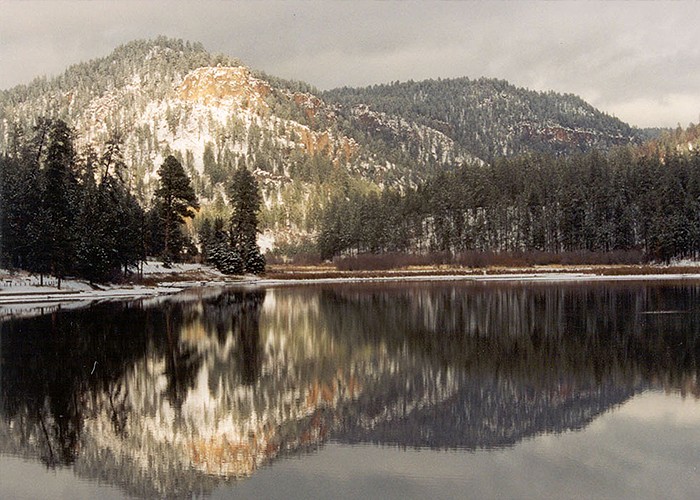
Warm weather in New Mexico melted hopes for a fast start to the ice fishing season as thinning ice forced the State Parks Division to shut down all ice activity at Eagle Nest and Fenton Lake State Parks.

The “first ice” of the season represents some of the most dangerous conditions for anglers, experts say, because the early ice can be very thin and inconsistent.

Would-be ice fishers are asked to check with local authorities along with New Mexico State Parks, the U.S. Army Corps of Engineers and the U.S. Forest Service before heading out to sink their lines in frozen water.

Even where fishing spots are open, officials say, it’s important to be cautious about stepping onto the ice: If it is clear, the ice needs to be at least four inches thick to be safe for walking.

Away from the ice, fishing for catfish was reported slow using worms along the Rio Grande below Elephant Butte and Caballo Lake in Sierra County. The Department of Game and Fish had no other reports from popular locations in southwestern, southeastern and eastern New Mexico.

Game and Fish said the department makes every effort to provide as much information as possible during the winter months but said there would be fewer reports available as fishing slows during the cooler season.

The fishing report, provided by the Department of Game and Fish, is generated from the best information available from area officers and anglers. Conditions encountered after the report is compiled may differ, as stream, lake and weather conditions alter fishing activities.

Outdoor Adventures Show opens Feb. 14

The Game and Fish Department’s New Mexico Outdoor Adventures Show will be held Feb. 14-16 at Expo New Mexico in Albuquerque. Admission is $5 for adults and free to youths 17 and younger as well as anyone who holds a valid New Mexico hunting and fishing license.

The show will be in the Expo’s Manuel Lujan Jr. Exhibit Complex, running from noon until 6 p.m. Feb. 14; from 9 a.m. to 6 p.m. Feb. 15; and from 10 a.m. to 5 p.m. Feb. 16.

Vendors will have products for outdoor enthusiasts along with interactive activities for all ages.

Kids can take part in the Wildlife Crime Scene Investigation, which tests skills trying to track a game poacher on the loose.

New to the show this year is a “seed ball” activity that will teach youngsters techniques to attract pollinators to their backyard. Also on tap: lessons on aquatic insects and knot-tying.

Energizing our shared prosperity

0

By: Mayor Sam Cobb

As the mayor of Hobbs, I see firsthand the benefits the oil and gas industry contributes to Lea County and the entire state. In Lea County, the industry provides careers, support and volunteers for local nonprofits, creates a thriving economy and helps to create communities where people want to live and raise their families. In 2024, the industry’s record production contributed over $13 billion in local and state revenues that will make a tangible difference in the lives of all New Mexicans.

As a mayor and a businessman, return on investment is a key determinant of success. In Hobbs, when we work with oil and gas companies, we expect them to be good stewards of the environment and economic drivers. From the FY 2024 total, $7.4 billion flowed directly into the state’s General Fund, nearly half of the budget that fuels critical state programs. The numbers for Fiscal Year 2024 speak volumes about the vital role the industry plays in driving our economy, funding essential services, and securing a bright, healthy future for generations to come.

The Governor promotes support for young New Mexicans from cradle to career, and the oil and gas industry is making that a reality. Its fiscal contributions are allowing legislators to invest directly in our schools today and create long-term funds, like the Early Childhood Trust Fund and the Opportunity Scholarship that provides 100% free tuition for qualified New Mexicans. Public education alone received $2.3 billion in recurring appropriations funded by oil and gas, supporting 386 schools statewide, over 130,000 students, and more than 9,500 teachers. An additional $500 million went to higher education, ensuring that our state’s universities and colleges remain strong hubs of learning, research and opportunity.

In Hobbs, the New Mexico Junior College, Career Technical Education Center, and Hobbs High School are preparing students for careers in energy, education, healthcare, hospitality, manufacturing, and more. The educational pathways reflect the workforce needs of southeastern New Mexico now and into the future. The industry’s dollars allow every publicly funded school statewide to determine the pathways that complement their region to strengthen today’s workforce and future economic diversification opportunities and workforce needs.

Lea County is proud to have quality healthcare facilities in Hobbs, Lovington, Eunice, and Jal. Public-private partnerships have allowed world-class doctors to serve residents throughout Southeast New Mexico and visitors from West Texas. Ease of access is crucial for quality healthcare. Statewide, the oil and gas industry provides over $1.2 billion for matching federal Medicaid funds.

The oil and gas industry strengthens Hobbs and Lea County by providing career opportunities that fuel upward mobility and generational change. Statewide, the numbers tell a compelling story: the oil and gas industry is not only a cornerstone of New Mexico’s economy. It is energizing our shared prosperity no matter where you live in our great state.

Education Reforms still needed!

0


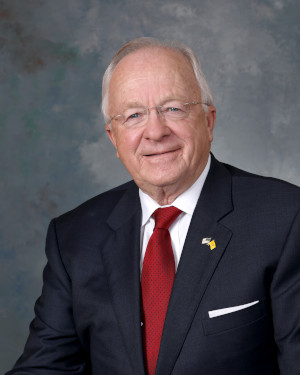
By: Senator Jim Townsend

This week New Mexico once again was recognized as a poor performing State with regard to Education.  In fact, New Mexico once again, was the worst of the worst with regard to education.  We have to change and this has to be addressed. We must find the solution. Either we don’t know how to educate as a State or we don’t know how to test or we have given up on the process that we use in our schools.  I’m tired of this record, our children’s deserve better and it has gone on too long. Let’s try something new. Just being privileged to live in a town where the education system works does not solve the issue as a State.  Our job is to make the State system better and we are working to do that.  If you live in District 34, we are lucky, our schools work.  We can improve and we should and we should not be afraid of a private school idea. They perform well too.

This is why I support private schools. Private schools have been long regarded as a vital component of the education system.  Private schools can offer state-of -the-art technology,  smaller class sizes are often more often available in private schools and often teachers seem to gravitate toward a more controlled orderly classroom that many private schools offer. Parental involvement is reportedly often more vigorous in these private schools.  Having vibrant private schools relieves the population burden of public schools allowing them the benefit of smaller classrooms.

 So I support parental choice and I also believe that the taxes we pay toward educating our children should follow the child. No child should be trapped in a failing education system and no parent should feel the burden of having to send their child to a school that they do no meet the needs of the child.

There is problem brewing within the environmental world that I believe you should know about.  Recently a midstream operator, purchased assets of another company and discovered an environmental issue.  After self reporting, and spending over $100M fixing the issue, the State Environmental Department levied a fine of approximately $45M dollars.  That’s wrong, and should be stopped.  If you self report and the State fines you, why self report. Shouldn’t the State promote compliance and self reporting. I think so.

I have caused some to reach out over my  SB 185.  It is a Bill that penalizes the illegal diversion of water.  I plan to make a couple of amendments to this Bill but I am intent on stopping the illegal diversion of water for profit. Stealing water is a crime I want it stopped.  Water is pretty precious in New Mexico and I don’t believe the State Engineer has done enough to protect our water.

We had 4-H kids in the Chambers today.  It is always a delight to sponsor 4-H kids to the Legislature.  Senator Ezzell and I sponsored those in the Senate today and we were happy to have them. We were both 4-H kids and are strong supporters of the program.

Jim Townsend is a New Mexico State Senator from Artesia. He represents District 34.