Home Blog Page 52

Cannon sets air show for June 6

0

El Rito Media News Services

CLOVIS — Cannon Air Force Base has scheduled a commemorative air show — “Normandy to Now” — for June 6.

According to a Cannon news release:

“This event honors the legacy of the D-Day landings while showcasing the evolution of America’s unconventional airpower from WWII to today.”

Admission will be free, but tickets will be required, the release states.

As part of the air show, the base plans to host a fly-in and car show.

“Attendees will experience a full lineup of aerial demonstrations, including performances by modern Department of War aircraft, WWII-era warbirds, and aerial performances from civilian pilots as well as Cannon’s own Air Commandos,” the release states.

“Historic displays, hands-on activities, and science, technology, engineering and mathematics exhibits will also be included in the day’s events.”

Information on tickets and how to register for the fly-in and the car show will be coming soon, the release states.

For more information visit www.cannon.af.mil/

Jones heads Hall of Fame class

0

JT Keith
Artesia Daily Press
jtkeith@elritomedia.com

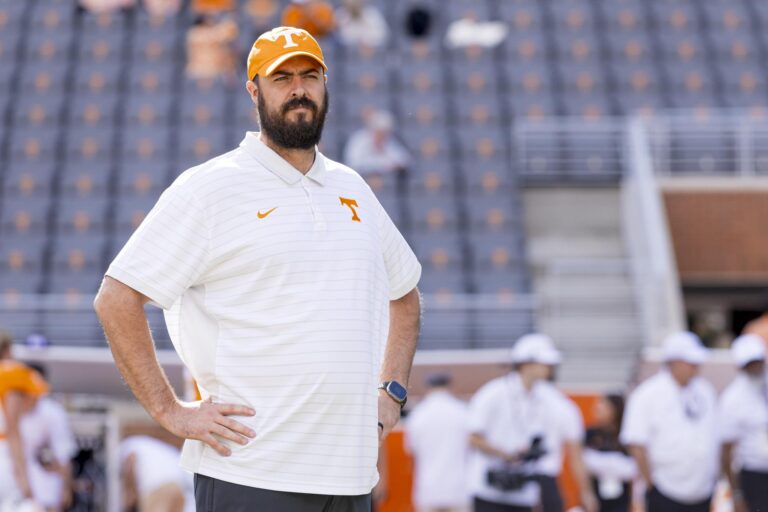
The New Mexico Sports Hall of Fame will welcome five new members to its ranks on June 29, with Artesia’s Landry Jones highlighting the list.

The class includes Miles Watters, who has won more than a dozen state titles as a basketball and track-and-field coach at Clovis and former University of New Mexico Lobo Courtney Frerichs, who competed in the 3,000-meter steeplechase and won the NCAA title in 2015 and a silver medal at the Tokyo Olympics in 2021. Also included are Anita Maxwell, New Mexico State basketball’s all-time scoring leader, and John Fields, a Las Cruces native and UNM All-American golfer, who has been a three-time national Coach of the Year at Texas.

Jones, who is an offensive analyst for the University of Tennessee, is helping the Volunteers prepare to face Illinois at 3:30 p.m. Dec. 30 in the Liberty Mutual Music City Bowl.

Jones led the Bulldogs to two straight Class 4A state championships and finished with 7,013 passing yards and 89 touchdowns. His senior season produced 3,433 yards and 45 touchdowns, without an interception. In the 2007 state title game against Goddard, Jones threw for 325 yards and seven touchdowns, a school record. 247Sports.com ranked him as a five-star recruit; Rivals.com and Scout.com each ranked him as a four-star recruit. Those recruiting services rated him as the highest-ranked prospect ever from the state, and Jones won the New Mexico Class 4A Player of the Year.

Jones signed with the University of Oklahoma and took over for Sam Bradford in 2009. He led the Sooners to a 31-27 Sun Bowl victory over Stanford as a freshman and later guided Oklahoma to a 48-20 Fiesta Bowl win over Connecticut in January 2011.

Jones held Oklahoma’s records for passing yards (16,646), touchdown passes (123), completions (1,388), attempts (2,184) and 300-yard games (27). He also earned Second Team All-Big 12 honors twice and delivered 12 career 400-yard passing performances.

The Pittsburgh Steelers selected Jones in the fourth round with the 115th pick of the 2013 NFL Draft and he spent multiple seasons as a backup quarterback, appearing in games from 2015 to 2017. His NFL career included stints with the Steelers, Jaguars and Raiders before he joined the Dallas Renegades of the XFL in 2020. Across his NFL appearances, he threw for 1,310 yards with eight touchdowns and seven interceptions while completing nearly 64% of his passes.

JT Keith can be reached at 575-420-0061, or on X @JTKEITH1.

Opinion: Slouching toward open season on Jews

0

Victor Davis Hanson

Jews celebrating Hanukkah were just slaughtered by Muslim gunmen on an Australian beach, in an imitation of the October 7 massacres.

An inert Europe is canceling Christmas celebrations out of fear of threats of violence from Muslim minorities. In the West, when an Islamist shoots a Jew, politicians often offer two bizarre remedies: gun control or a task force to tackle Islamophobia.

Yet, our political class rarely offers data on the overwhelming preponderance of targeting Jews rather than Muslims, much less the vast disparity in Jewish-on-Muslim versus Muslim-on-Jewish violence.

To catalog all the recent violence against Jews in the Western world would fill a book.

We know the causes. Anemic Western leaders — politicians, college presidents, media grandees, and celebrities — fear Muslim terrorism, growing Muslim voters, and their own growing antisemitic campus constituencies.

So, they never call out antisemitic violence other than with nauseating nothings like, “Such violence has no place here.” Or “We condemn such violence in the utmost terms.” Or “This is not who we are.”

The prime minister of Australia — a country that produced some of the most heroic soldiers of World War I and II and still is a bulwark of the West in the Pacific — goes through a series of linguistic contortions daily to avoid identifying the threat to Jews and how to stop it. He talks as if guns were animate and murdered Jews without the aid of radical Islamic killers.

So nothing much follows in the West, and Jews are becoming the hunted. The attacks will increase because there is no foreseeable force to combat them.

Just a few years ago, it used to be that antisemitism was mostly on the left and repugnantly identifiable and condemnable by most.

In 2009, the Rev. Jeremiah Wright grew angry against his former favorite parishioner, then newly elected President Barack Obama, and scoffed in anger, “Them Jews ain’t going to let him talk to me.”

Many leftist icons used to voice blatant antisemitism, such as Jesse Jackson (“Hymietown”), Al Sharpton (“If the Jews want to get it on, tell them to pin their yarmulkes back and come over to my house”), or Louis Farrakhan (“your gutter religion”).

Do we remember the utterances of once White House press corps liberal icon Helen Thomas (“Jews should get the hell out of Palestine. They should go home to Poland, Germany, America, and everywhere else.”)?

Their left-wing legacy is now amplified by Rep. Ilhan Omar (“It’s all about the Benjamins, baby”). The so-called Squad, New York Mayor-elect Zoran Mamdani, the “The Democratic Socialists of America,” and the legions of campus protestors never disown the slogan, “Palestine will be free from the river to the sea” — a call to destroy the current state of Israel and everyone in it — because they either all believe in it or assume their clueless followers have no idea what it means.

Again, when the elite say, “River to the sea,” does that mean they will erase all the Jews in Israel but spare its two-million-Arab citizenry, about the only Arabs in the entire Middle East who vote in free and fair elections and enjoy constitutional rights?

Of course, no left-wing Westerner visiting the Middle East would wish to publicly express his free speech, atheism, or pro-gay/trans support either in the West Bank or in Gaza.

The combination of providing DEI exemptions to biased minority activists, the anti-Israel and antisemitic indoctrination in universities, and no-borders immigration has turned the Democratic Party into the natural home of those who dislike Israel in particular and feel free to demonize Jews in general.

Indeed, most polls show that 60 percent of Democrats favor the Palestinians over the Israelis. Translated, that means they prefer a terrorist autocracy over a Western liberal constitutional government.

The right used to be a unified corrective to left-wing antisemitism. It still polls nearly 70% in favor of Israel. For a while longer, it is far more likely to condemn antisemitic violence than the left.

But recently, its own base, in varying degrees, has come full circle and joined the left in its distaste for Israel and Jews in general.

The new anti-Israel right despises Israel and the U.S. support of it, either in terms that are commercial (there are more Arabs, with more money and oil), cowardly (trashing Jews does not earn terrorist reprisals; rebuking Muslims can), political (Jews more often vote Democratic), or simply antisemitic (cabals of Jews control Wall Street, Hollywood, the media, etc.).

Once-fringe antisemites like Nick Fuentes are now welcomed to air their views openly, but mostly the conspiracy venom is of the more insidious sort, like “I’m just throwing this out there…” or “Here is something to consider…”

In the last few weeks, we have been told — without any evidence — by right-wing influencers that the Jews may well have had a hand in killing Charlie Kirk, in bombing an Iranian nuclear facility, in pressuring the Maduro kleptocracy, and in the 9/11 slaughter.

One hallmark of the new right-wing furor against Jews and Israel is the strange symbiosis they employ. Formerly edgy podcasters become vicarious hosts of virulent antisemites. The partnerships are a way of not directly owning up to their toxicity but just “putting it out there.”

Candace Owens initially championed Kanye West (“I’m a bit sleepy tonight but when I wake up, I’m going death con 3 On JEWISH PEOPLE.”).

Then she graduated to expressing her own old antisemitic tropes: “There is just a very small ring of specific people who are using the fact that they are Jewish to shield themselves from any criticism. … All Americans should want answers because this appears to be something that is quite sinister.”

Tucker Carlson hosted critics of the U.S. effort against Hitler in World War II and Israel-behind-it conspiracists before escalating to inviting Nick Fuentes on in a mostly friendly manner — which might be attributed to his interview format, except he has attacked fellow conservatives far more than has odious Fuentes.

But now Carlson himself too throws out story-line hints about just maybe Jews’ involvement in Charlie Kirk’s death, or a sort of/kind of Jewish effort behind 9/11, or perhaps it was those Jews eating humus, not the Roman prefect of Judea who ordered Jesus killed for supposed sedition — a common fate of any provincial residents who even appeared to defy the absolute authority of the Roman imperial state.

Carlson strangely categorized Israel as an “insignificant” country. But is not Israel a democratic Western outpost in a sea of Middle East autocracy, the most technically advanced and scientifically sophisticated nation for its size in the world, and the ancient home of the Judeo-Christian tradition?

Somehow, many on the right forgot who funds the virulently anti-American mouthpiece Al-Jazeera, or where the 9/11 murderers came from, or who has killed Americans in Syria, Lebanon, and on the Red Sea, and or whom the Muslim Brotherhood, ISIS, and theocratic Iran have vowed to destroy.

And as for October 7 and what followed, Israel waited in vain for nearly three weeks for Hamas to give up the 3,000 terrorists who murdered 1,219 Jews, wounded 3,400, and took 254 hostages before mounting a full invasion of Gaza.

Where does it all end?

Either there will be an 11th-hour Western intolerance of antisemitism, a limit of student visas and immigration from the illiberal nations of the Middle East, a return to melting pot assimilation, an end to DEI tribalism, and a reform of the weaponized university curricula, or we will see more images of gunmen shooting Jews as if they were mere animals.

Victor Davis Hanson is a distinguished fellow of the Center for American Greatness. He is a classicist and historian at the Hoover Institution, Stanford University, and the author of “The Second World Wars: How the First Global Conflict Was Fought and Won,” from Basic Books.


4-H reaching out to urban members

0

NMSU News Center

Since joining 4-H in 2015, Savannah Tuss has tried her hand at many different activities, including photography, baking, raising animals and competing in shooting sports, all with much success.

4-H has also helped the Albuquerque teen become more comfortable at public speaking and taking on leadership roles. “It’s just become part of who I am,” said Tuss, now a New Mexico State University Global Campus student. “4-H introduced me to new people and new things that I never would have come across if I hadn’t joined.”

As the largest youth development organization in America, 4-H empowers nearly six-million kids and teens through hands-on projects that teach life skills. In New Mexico, more than 40,000 youth from all 33 counties engage in 4-H activities offered through NMSU’s Cooperative Extension Service.

Tuss began her 4-H journey at age 8. She grew up in a military family in Albuquerque and joined the program at her grandmother’s urging. Tuss said she initially had reservations but quickly warmed up to the camaraderie of her club. It didn’t take long for Tuss to find a place among her peers and climb up the county ranks.

“It’s my favorite thing ever,” she said.

Now in her last year in county 4-H, Tuss is working to make it easier for youth in military families to participate in the program on their own terms. This effort is part of her role as the state 4-H military ambassador, an elected position she holds through the end of the 2025-2026 academic year.

Her message to young people in urban areas is simple: “You are one of us, even if you’re not from a traditional 4-H background.”

Jaime Castillo hopes to take a similar message across New Mexico as he works to reach more youth as the new department head for 4-H Youth Development at NMSU.

“I want to help the 4-H program serve all youth communities in New Mexico,” Castillo said. “I am committed to our traditional programs and want to expand our network so that we can offer more programs to more youth from corner to corner throughout New Mexico.”

Castillo points to the success of the 4-H Fridays program as an innovative way of engaging youth. The program brings 4-H into classrooms at an Albuquerque elementary school.

In 2016, Stephani Treadwell, the principal of Collet Park Elementary School, sought new ways to help students succeed. For help, she turned to Brittany Sonntag, the 4-H agent at the Bernalillo County Extension Office, who transformed the traditional 4-H curriculum to fit within the school day. The school now provides 4-H activities to its students.

As a result, student attendance, behaviors and academic performance have improved across the board.

“The 4-H Fridays program shows that when we meet youth in their classrooms, we remove barriers to participation and open the door for every student to belong,” Sonntag said.

RaeAnna Gallegos had similar success starting an after-school 4-H club at her old middle school in Albuquerque’s South Valley. Gallegos is possibly the first — and perhaps the only — 4-H member in Bernalillo County to help launch such a program.

The idea came to Gallegos as a sixth grader at Ernie Pyle Middle School.

“I had already seen how 4-H builds leadership, sparks community service and grows confidence,” she said. “I knew my friends deserved those same opportunities.”

The program became a reality by the time Gallegos entered eighth grade. It makes 4-H activities and projects available to students after the school day. Gallegos said students learn many skills that “help them learn how to thrive in their daily lives.”

Now in high school, Gallegos views the program as proof that 4-H has a place within cities.

“I raise my animals right here in Albuquerque, and that’s exactly what makes Bernalillo County 4-H unique,” she said. “In an urban setting, we make it happen — and we do it together.”

The top 10 Artesia sports moments of the Year

0

JT Keith
Artesia Daily Press
jtkeith@elritomedia.com

Before the year concludes, the Daily Press is looking back at the 10 best Artesia sports moments of 2025.

10. The Artesia girls softball team makes it to the semifinals at the state playoffs, losing against Lovington.

9. The Artesia volleyball team loses in the state semifinals to St. Pius X.

8. The Artesia boys soccer team goes on a 13-game winning streak and finishes with an 18-4 record and is undefeated in district play. The team defeated Los Alamos in the quarterfinals, advancing to its first semifinal game against St. Pius X.

7. The Artesia girls soccer team goes 18-4 and undefeated in district, advancing to the quarterfinals on an Aubrie Edwards save as a goalie. Edwards then made the game-winning penalty kick to give the Lady ’Dogs a 2-1 win over Goddard at Robert Chase Field.

6. The Artesia Bulldog golf team becomes the runner-up behind state champions Albuquerque Academy. Freshman Beau Byers earned the individual third-place medal at the Class 4A State Golf Tournament at Pinon Hills in Farmington.

5. The Bulldogs boys track team finishes as the runner-up to Albuquerque Academy, 74.5-71, at the state meet.

4. The Bulldogs bowling team finishes as runner-up in the state tournament.

3. The Bulldogs football team wins its 33rd state championship with a 25-24 victory against Roswell with 24 seconds left to play in the game.

2. The boys baseball team wins its first championship since 2000.

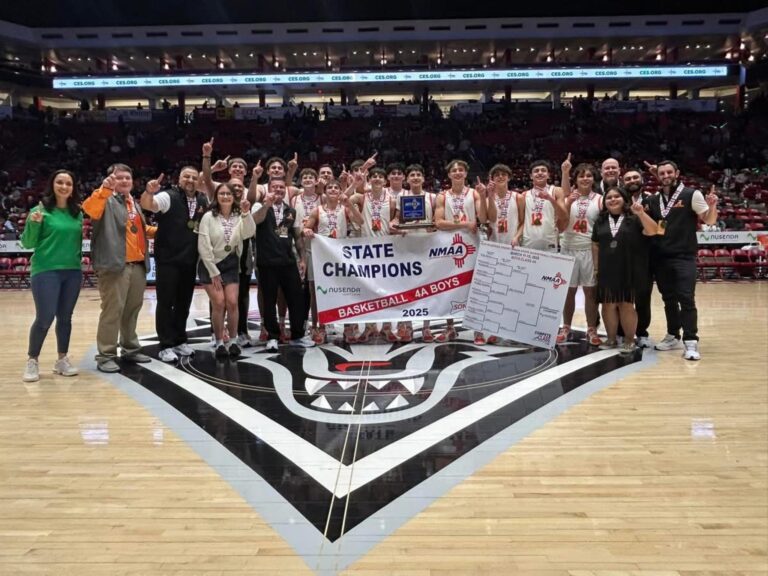
1. The boys basketball team wins its third title and first since 1997.

JT Keith can be reach at 575-420-0061, or on X @JTKEITH1.

Yvette Herrell tapped by Trump for post at USDA

0

Staff Reports

Former U.S. Rep. Yvette Herrell was confirmed last week by Congress to a leadership role in the U.S. Department of Agriculture.

A Republican, Herrell will serve as assistant secretary of agriculture for congressional affairs, following a 53-43 confirmation vote by the U.S. Senate.

The single vote was used to clear Herrell and about 100 other appointees by President Donald Trump for various roles in the federal administration.

In her new role, Herrell will manage congressional relations for the U.S. Department of Agriculture, serving as a key liaison between USDA leadership and Congress on legislation, budgets and policy priorities.

U.S. Sens. Ben Ray Luján and Martin Heinrich — New Mexico’s two Democrat senators —  joined Senate Democrats in voting against the nomination package.

Herrell told the Piñon Post it was an honor to be confirmed by the Senate.

“I am grateful for the trust placed in me by President Trump and (U.S. Agriculture) Secretary (Brooke) Rollins,” Herrell said. “I look forward to hitting the ground running in this position as we work to deliver on President Trump’s priorities for American agriculture.”

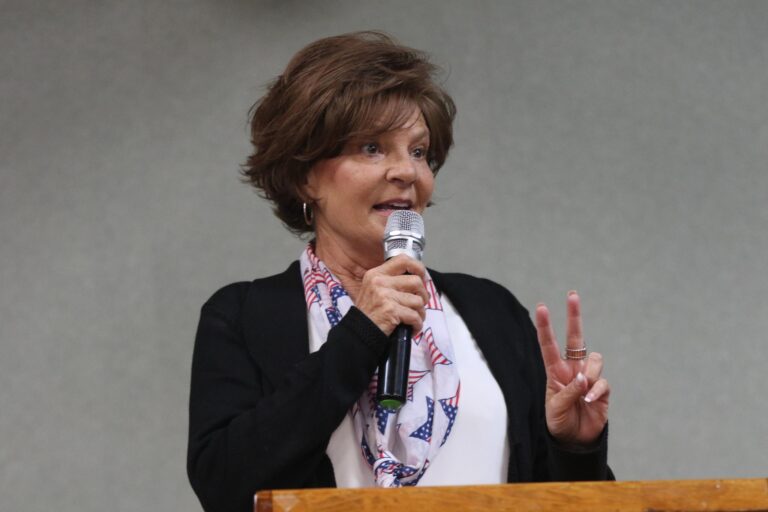
New Mexico Republican Party Chairwoman Amy Barela said Herrell would continue to represent New Mexicans at the federal level “just as she has done in the past.”

“Her deep roots in Southern New Mexico give her a firsthand understanding of the agricultural, rural, and economic issues facing our state, making her exceptionally well suited to serve in this role,” said Barela.

Herrell, who represented New Mexico’s Second Congressional District from 2021 to 2023, advanced to the confirmation hearing after months of review.

She is not the only New Mexican appointed to a post in the Trump Administration. Former U.S. Rep. Steve Pearce, who also represented the state’s Second District was appointed by the President earlier this year to head the Bureau of Land Management. Pearce’s confirmation vote was not yet scheduled.

A native of Ruidoso, Herrell was first elected to the New Mexico House of Representatives in 2011. She represented District 51, which covers Otero County and is currently represented by Republican Rep. John Block, until 2019.

She lost a narrow election against former congresswoman Xochitl Torres Small in 2018 to replace Pearce as he ran for governor, then defeated Torres Small in 2020.

Herrell lost her 2022 reelection bid against current U.S. Rep. Gave Vasquez (D-NM) and was defeated again by Vasquez in 2024.

While in Congress, Herrell served on the Committees on Natural Resources and Oversight Reform, and was a frequent supporter of oil and gas and agriculture industries.

Red River Ski and Summer Area offers discounts for college students

0

Mike Smith
Carlsbad Current-Argus
msmith@currentargus.com

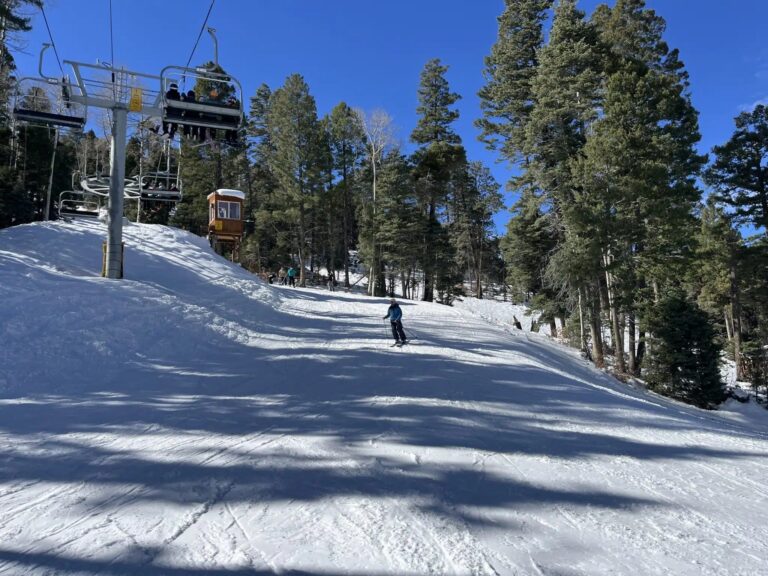
College students seeking adventure and fun before returning to classes in January might want to take advantage of discounts at the Red River ski resort in northern New Mexico as College Days return Jan. 3.

The first College Days of the 2025-26 ski season wrapped up Tuesday, said Christy Germscheid, executive director of Ski New Mexico.

The second round ends Jan. 18 and the third round is set for March 19-22.

“College Days are always a fun celebration. There are deals to be had,” Germscheid said.

Eligible college students can purchase lift tickets, equipment rentals and lessons for a discount, according to the Red River Ski and Summer Area website.

Germscheid said in-person and online purchases require a student identification card or proof of current enrollment.

“Lift tickets and rentals are date specific, and you must select the date or dates when purchasing lift tickets,”  she said. “Lift tickets and rentals can be purchased as multi-day lift tickets and rentals but must be used consecutively beginning on the first date selected at the time of purchase.”

More information is available at https://www.redriverskiarea.com/winter/deals/college-days/.

Here are reported New Mexico skiing conditions as of Monday, Dec. 22 (Information provided by Ski New Mexico).

Angel Fire Resort has a base depth of 6 inches with 5 of 95 trails open.

Red River Ski and Summer Area has a 20-inch base with 14 of 64 trails open.

Sipapu Ski and Summer Area has a 12-inch base with 7 of 44 trails open.

Ski Apache has a 4-inch base with 2 of 55 trails open.

Ski Santa Fe has an 18-inch base with 32 of 90 trails open.

Taos Ski Valley has a 16-inch base with 18 of 120 trails open.

Note: Snow conditions can change after this report is compiled.

Mike Smith can be reached at 575-628-5546 extension-2361.

WIPP taking more waste from Washington

0

Adrian Hedden
Artesia Daily Press
achedden@currentargus.com

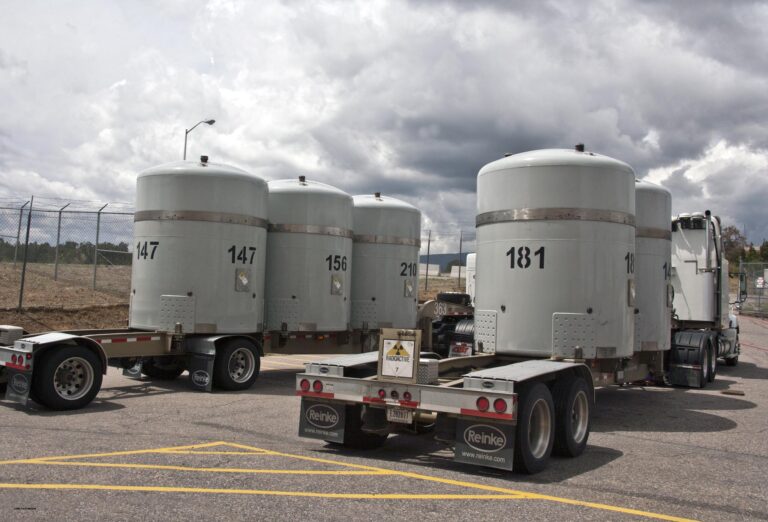
More nuclear waste is being sent from a federal national lab in the state of Washington to the underground repository near Carlsbad.

The U.S. Department of Energy said 130 large waste containers were recently exhumed from two underground storage sites at the federal Hanford Site in the southern region of Washington.

The containers, containing transuranic (TRU) nuclear waste, stand about 19 feet tall and weigh about 50 tons, according to a report from the energy department’s Office of Environmental Management.

They were sent to an offsite location, read the report, to be repackaged into smaller containers and shipped to southeast New Mexico for burial at WIPP.

At WIPP, the energy department disposes of the TRU waste, which is clothing materials, equipment and other debris irradiated during nuclear activities.

The waste is buried at WIPP in a salt deposit about 2,000 feet underground. The salt gradually collapses on the waste, burying the refuse and blocking radiation from escaping.

Scott Green, manager of the department’s Hanford Field Office, said the removal and packaging of the waste was completed “with no incidents.”

“This project not only reduces risk but meets a significant regulatory milestone,” Green said.

The tank removal was required by the U.S. Environmental Protection Agency and the state of Washington’s Department of Ecology through a 2018 agreement with the Department of Energy.

Known as the “Tri-Party Agreement” the deal required removal of all containers from outside storage areas at Hanford by Sept. 30, 2026.

The Tri-Party Agreement, officially called the Hanford Federal Facility Agreement and Consent Order, was signed by the three entities in 1989. It required all tank waste at Hanford be disposed of within 40 years – 2029.

“These milestones represent the actions necessary to ensure acceptable progress toward Hanford Site compliance,” read the agreement. “The goal of these milestones is to achieve timely and appropriate cleanup of the Hanford Site.”

Most of the exhumed containers include material such as metal, glass, and fiberglass-reinforced plywood irradiated during Hanford’s nuclear weapons production activities, read the report.

Removing the 130 containers and preparing them for disposal took about six years, according to Andy Drom, project director at Central Plateau Cleanup Company, the contractor hired by the federal government to oversee the Hanford Site.

“The success of this work is testimony to what can be achieved by working together to meet the challenges of our critical cleanup mission head-on,” Drom said.

Idaho also has waste removal agreement

WIPP took in about 572 shipments from Hanford since the repository opened in 1999, representing about 4% of the 14,687 shipments the facility has received as of Dec. 13, according to Department of Energy records.

The majority of WIPP’s waste – 7,767 shipments or 53% of the total – was sent from Idaho National Laboratory.

That facility was prioritized for WIPP under a 1995 settlement agreement between the federal government and the state of Idaho.

The agreement allowed the federal government to store some spent nuclear fuel in Idaho, and in exchange “expedite the treatment and permanent removal of waste” from the state.

All TRU waste was required to be removed by 2018, a deadline not met due to a three-year (2014-2017) shutdown of WIPP’s primary operations after a disposal drum ruptured and contaminated parts of the underground, according to a 2019 report from the Leadership in Nuclear Energy Commission.

Both agreements were criticized by New Mexico Environment Department Cabinet Secretary James Kenney, who said the deals were signed without input from WIPP’s host state.

He said this had the effect of “deprioritizing” New Mexico for nuclear waste cleanup, despite its acceptance of the risk associated with such work.

In 2023, the energy department signed a 10-year renewal of its operating permit with the state of New Mexico. The permit, overseen by Kenney’s environment department, included a clause requiring waste from Los Alamos National Laboratory to be prioritized.

Managing Editor Adrian Hedden can be reached at 575-628-5516, or @AdrianHedden on the social media platform X.

Opinion: Addictions undercut everything that makes America great

0

Mary Sanchez

Nothing President Donald Trump is pushing in his war on drugs would have saved Rob Reiner and his wife Michele Singer Reiner.

The murdered cinema couple’s loving efforts to help their son overcome addiction wouldn’t have benefited from any of Trump’s most ballyhooed efforts.

The president wants another failed war on drugs. Treatment for addiction, accessible mental health therapies, and funding for research aren’t top on the Trump agenda – they might barely make that agenda at all.

Instead, the White House is deploying shock and awe tactics, most of it self-serving to the He-Man persona the president craves.

Trump fancies himself a ruthless and all-powerful commander of the high seas, blowing up drug-ferrying boats, killing all aboard and even circling back to annihilate survivors. He is justifying these immoral acts by branding drug pushers “foreign terrorists.”

Trump’s latest salvo twists international law to label fentanyl as a weapon of mass destruction.

Recall that WMDs didn’t exist in Saddam Hussein’s Iraq. And WMDs are not what is driving addiction rates in America.

Trump speaks as if Americans are being tied down and forced to shoot up heroin, snort and cook cocaine into crack, and consume opioids at the hands of nefarious foreign terrorists.

The truth is much more basic.

The monsters are within – literally, within the U.S. population.

Overdoses are down from years past, but still an estimated 81,700 Americans died in 2024, a decrease from more than 108,600 in the previous year. (Trump consistently overstates those deaths, inaccurately doubling and tripling the numbers.)

The illicit U.S. drug market has long been stable and incredibly profitable. The draw for the drug pushers and international cartels will remain until there is less U.S. demand – it’s as simple as that.

At his core, Trump understands this. He’s a businessman. He knows market forces are involved in transactions, even illicit ones, and therefore need to be part of the solution. He also has personal insight to tap.

A much younger Trump learned about addiction early with the painful loss of his brother Fred Trump Jr. to a life stewed in alcoholism.

He watched his once vibrant, handsome older brother transform into a shell, dying at 43.

Apparently, that familial pain is too deeply burrowed into Trump’s consciousness to influence policy, or decorum now.

Trump unloaded yet another inappropriate social media tirade after the Reiners were brutally murdered, allegedly by their son Nick Reiner.

The president blamed the victims. He was offended by Rob Reiner’s political activism, much of it against the policies, tone, and approach of the Trump administration.

First-degree murder charges have been filed against Reiner’s son and he deserves a fair defense and complete psychiatric evaluation. But so far the evidence is compelling that he slayed his parents in a rage.

The 32-year-old’s stints in rehab, homelessness, as well as periods of sobriety are heavily documented, captured even in a movie he helped to write and produce with his father in 2015, Being Charlie.

Strip the Reiners of their Brentwood address. Set aside the vault of cinematic classics they produced, and the gruesome brutality of how they died. What remains is very familiar to Americans, including Trump.

This is a family struggling to help one member, who, at times, resisted or simply couldn’t get sober. Their wealth, unlimited access to treatment, and years of loving attention couldn’t bring their son to sustained sobriety and stability.

Trump’s brother died in a different era, when we understood addiction and recovery far less, including the links to mental health disorders and self-medicating cycles of usage. At that time, we also didn’t understand much about how the support of others who’ve also managed to regain their sobriety can be best utilized.

Untwisting where addiction begins and a mental health disorder exists is work for psychiatric experts, scientists studying the receptors of the brain, chemical imbalances, and a swirl of genetics, environment, and individual factors.

Attention to the international drug trade and routes is warranted, along with continued oversight of opioid manufacturers, some of which have exacerbated dependency to chase profits.

The administration doesn’t tend to underscore the meetings, but there are on-going diplomatic conversations to bilaterally curb the illegal drug trade, especially fentanyl. Mexico is a great example of such collaboration.

Instead, the American public is fed heavy doses of bravado, the methods of bluster and attack that Trump has mastered. Meanwhile, families, some famous, most not, continue to be ripped apart by addiction.

Readers can reach Mary Sanchez at msanchezcolumn@gmail.com and follow her on Twitter @msanchezcolumn.

Opinion: Can the Dark Ages return?

0

Victor Davis Hanson

Western civilization arose in the 8th century B.C. Greece. Some 1,500 city-states emerged from a murky, illiterate 400-year-old Dark Age. That chaos followed the utter collapse of the palatial culture of Mycenaean Greece.

But what reemerged were constitutional government, rationalism, liberty, freedom of expression, self-critique, and free markets — what we know now as the foundation of a unique Western civilization.

The Roman Republic inherited and enhanced the Greek model.

For a millennium, the Republic and subsequent Empire spread Western culture, eventually to be inseparable from Christianity.

From the Atlantic to the Persian Gulf and from the Rhine and Danube to the Sahara, there were a million square miles of safety, prosperity, progress, and science — until the collapse of the Western Roman Empire in the 5th century AD.

What followed was a second European Dark Age, roughly from 500 to 1000 AD.

Populations declined. Cities eroded. Roman roads, aqueducts, and laws crumbled.

In place of the old Roman provinces arose tribal chieftains and fiefdoms.

Whereas once Roman law had protected even rural people in remote areas, during the Dark Ages, walls and stone were the only means of keeping safe.

Finally, at the end of the 11th century, the old values and know-how of the complex world of Graeco-Roman civilization gradually reemerged.

The slow rebirth was later energized by the humanists and scientists of the Renaissance, Reformation, and eventually the 200-year European Enlightenment of the 17th and 18th centuries.

Contemporary Americans do not believe that our current civilization could self-destruct a third time in the West, followed by an impoverished and brutal Dark Age.

But what caused these prior returns to tribalism and loss of science, technology, and the rule of law?

Historians cite several causes of societal collapse — and today they are hauntingly familiar.

Like people, societies age. Complacency sets in.

The hard work and sacrifice that built the West also creates wealth and leisure. Such affluence is taken for granted by later generations. What created success is eventually ignored — or even mocked.

Expenditures and consumption outpace income, production, and investment.

Child-rearing, traditional values, strong defense, love of country, religiosity, meritocracy, and empirical education fade away.

The middle class of autonomous citizens disappear. Society bifurcates between a few lords and many peasants.

Tribalism — the pre-civilizational bonds based on race, religion, or shared appearance — re-emerge.

National government fragments into regional and ethnic enclaves.

Borders disappear. Mass migrations are unchecked. The age-old bane of antisemitism reappears.

The currency inflates, losing its value and confidence. General crassness in behavior, speech, dress, and ethics replaces prior norms.

Transportation, communications, and infrastructure all decline.

The end is near when the necessary medicine is seen as worse than the disease.

Such was life around 450 AD in Western Europe.

The contemporary West might raise similar red flags.

Fertility has dived well below 2.0 in almost every Western country.

Public debt is nearing unsustainable levels. The dollar and euro have lost much of their purchasing power.

It is more common in universities to damn than honor the gifts of the Western intellectual past.

Yet, the reading and analytical skills of average Westerners, and Americans in particular, steadily decline.

Can the general population even operate or comprehend the ever-more sophisticated machines and infrastructure that an elite group of engineers and scientists create?

The citizen loses confidence in an often corrupt elite, who neither will protect their nations’ borders nor spend sufficient money on collective defense.

The cures are scorned.

Do we dare address spiraling deficits, unsustainable debt, and corrupt bureaucracies and entitlements?

Even mention of reform is smeared as “greedy,” “racist,” “cruel,” or even “fascist” and “Nazi.”

In our times, relativism replaces absolute values in the eerie replay of the latter Roman Empire.

Critical legal theory claims crimes are not really crimes.

Critical race theory postulates that all of society is guilty of insidious bias, demanding reparations in cash and preferences in admission and hiring.

Salad-bowl tribalism replaces assimilation, acculturation, and integration of the old melting pot.

Despite a far wealthier, far more leisured, and far more scientific contemporary America, was it safer to walk in New York or take the subway in 1960 than now?

Are high school students better at math now or 70 years ago?

Are movies and television more entertaining and ennobling in 1940 or now?

Are nuclear, two-parent families the norm currently or in 1955?

We are blessed to live longer and healthier lives than ever — even as the larger society around us seems to teeter.

Yet, the West historically is uniquely self-introspective and self-critical.

Reform and Renaissance historically are more common than descents back into the Dark Ages.

But the medicine for decline requires unity, honesty, courage, and action — virtues now in short supply on social media, amid popular culture, and among the political class.

Victor Davis Hanson is a distinguished fellow of the Center for American Greatness. He is a classicist and historian at the Hoover Institution, Stanford University, and the author of “The Second World Wars: How the First Global Conflict Was Fought and Won,” from Basic Books.