Home Blog Page 55

Jury rules ‘self-defense’ in murder acquittal

0

Adrian Hedden
Carlsbad Current-Argus
achedden@currentargus.com

A smile cracked the stoic expression Damien Vasquez held throughout his murder trial as the jury read its verdict finding him not guilty.

Vasquez, 38, was charged with second-degree murder in the September 2024 stabbing death of 24-year-old Dalton Putman and would have faced 18 years in prison if convicted.

He was acquitted of the single charge Wednesday, Dec. 17, after a three-day trial before a jury and District Judge AnneMarie Lewis.

The jury deliberated for about an hour at the Eddy County Courthouse before handing down its unanimous decision.

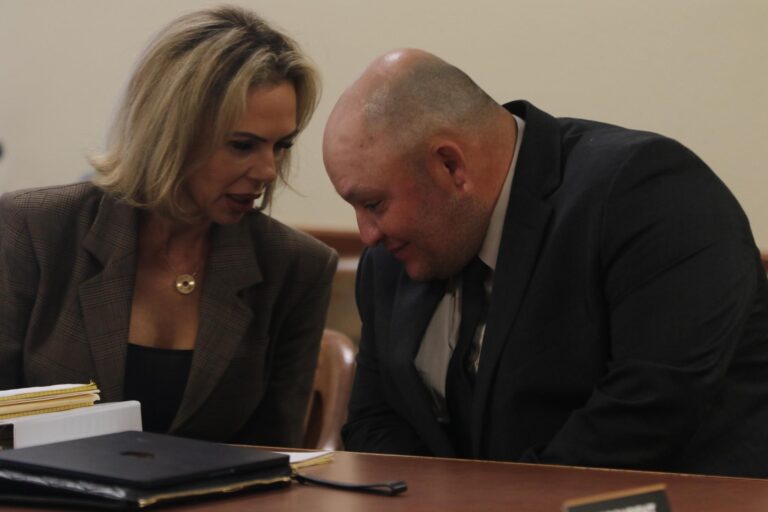
Following the verdict, defense attorney Boglarka Foghi said Vasquez used a knife to defend himself from Putman who she said was beating her client throughout the night in Vasquez’s home on Honolulu Street.

“My client did what any reasonable person would do,” she said. “The law does not require a homeowner to retreat. Unfortunately, the young man lost his life. It was terrible for everybody involved.”

Prosecutor Daniel Sewell said the case against Vasquez hinged on whether lethal force was warranted. He argued Vasquez was not justified in “bringing a knife to a fistfight.”

“I’m very disappointed,” Sewell said of the verdict. “The victim’s family lost their loved one, but I do respect the decision of the jury. We thought it was an illegal use of self-defense. The jury thought it was acceptable.”

‘Did he deserve to die?’

During his closing arguments on the third day of the trial, Sewell said the evidence showed Vasquez unjustifiably escalated the ongoing fight when he stabbed Putman.

He said a conflict arose between the two men after they became intoxicated. Vasquez was losing the brawl when he decided to use a knife, stabbing the victim in the heart, Sewell said.

“You can’t bring a knife to a fistfight, and that’s what he did,” Sewell said of Vasquez. “They both drank a lot of beer that night. Obviously, it was affecting their judgment.”

Sewell admitted Putman threw the first punch, but contended Vasquez bullied Putman for quitting his job at Buffalo Wild Wings earlier in the night when staff denied him a seat at the restaurant’s bar.

“Did he (Putman) deserve to die for that?” Sewell asked the jury. “He certainly did not. The defendant chose to fight back. He could have left the room, he could have called police, but he chose to fight back.”

Fighting back was not illegal or morally wrong, Sewell said, but introducing the knife was. He pointed to Vasquez’s admission on the stand during the trial that he stabbed Putman, claiming self-defense.

“Mr. Putman was unarmed,” Sewell said. “He had no weapon, only his fists.”

‘He got aggressive.’

Foghi, during her closing arguments before the jury, contended the stabbing was justifiable, following “dozens” of demands by Vasquez that Putman leave the home during the struggle.

She said her client had a right to defend himself and his home when he used lethal force against Putman who allegedly punched Vasquez first and several times after.

Foghi said the beating her client sustained caused him to fear for his life.

“He became an intruder, he became a trespasser, he became an unwanted guest,” she said of Putman. “Damien wasn’t the aggressor. Dalton was the aggressor.”

Foghi walked the jury through the night of Putman’s death from Vasquez’s perspective. She said Vasquez was eating dinner at Chili’s when he saw a Facebook post from a friend, Trey Munoz, 24.

Munoz testified that he made the post because he was depressed, and Foghi said Vasquez went to pick up Munoz to hang out because Vasquez is “a nice guy.”

The two men picked up Putman at Munoz’s request, Foghi said. Munoz testified he knew Putman for many years and that Putman was “like a brother.”

The three men went to Buffalo Wild Wings to drink more, Foghi said, then to Vasquez’s house where, the defense attorney admitted, her client teased Putman, causing him to become enraged.

Foghi also pointed to a text message from Putman to Munoz she said indicated the victim planned to steal Vasquez’s guns out of his garage. She said Putman was also told several times not to go in the garage and was ultimately asked to leave the home.

“Dalton could have left the home the very first time my client asked him to leave his house. He would be here today if he had left the home,” Foghi said. “Instead, he decided to get aggressive.”

Managing Editor Adrian Hedden can be reached at 575-628-5516, or @AdrianHedden on the social media platform X.
Artesia approved for county housing funds

0

Adrian Hedden
Artesia Daily Press

Artesia officials will use about $6.5 million from Eddy County to stimulate the city’s housing market.

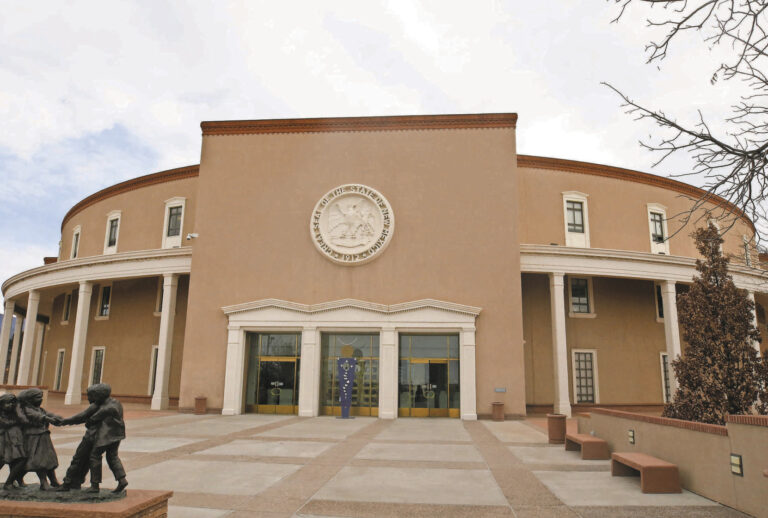
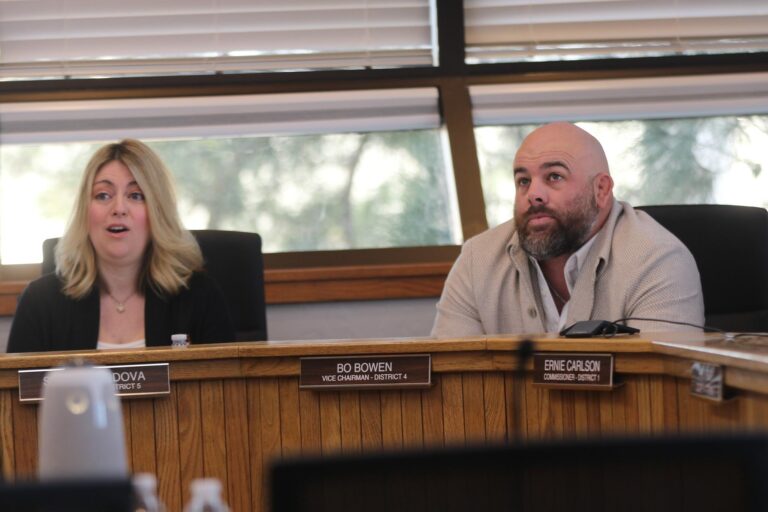
Funding for two Artesia housing developments and an incentive program for homebuilders was approved by county commissioners during their Tuesday, Dec. 16, meeting in Carlsbad.

The money was provided under a county initiative enacted at the commission’s Nov. 18 meeting setting aside $15.6 million in county money for the county’s four municipalities: Carlsbad, Artesia, Loving and Hope.

Artesia’s first project would include a total of 240 lots for homes in a development known as the Park Place Subdivision when fully built out on Hermosa Street, near Jaycee Park. The city of Artesia requested $4 million in county money to purchase the land, which would see the first 72 lots developed.

Construction was expected to start in mid-March 2026.

The second project, known as the EOG Development, would include 340 lots with the county providing about $2 million for the city to purchase the land and begin developing the property next to the Federal Law Enforcement Training Center.

That property is currently owned by oil company EOG, and the money is to be used to purchase the land and complete an engineering study.

Artesia also requested $500,000 to match city funding for a housing incentive program, which the Artesia City Council already approved via vote earlier this year.

Under that program the city of Artesia will provide a $10,000 reimbursement to homebuilders for each home built in the city, with the county funds used to help extend the program to more builders.

“The commission wanted to pursue those projects with municipalities that are shovel ready or as close to ready as possible, said County Manager Mike Gallagher. “One of the components we heard from the commission was not to dillydally or take too much time.”

County Attorney Cas Tabor, who also serves as Artesia’s city attorney, said the contracts for the land and any projects in the program must be in place within 60 days of approval, per the language of the county ordinance authorizing the payments.

Commissioners agreed to extend the deadline to 90 days for Park Place and 120 days for the EOG property due to the holiday season.

“The funds will be paid when there is a contract for the purchase of the property,” Tabor said. “The county wanted those projects ready to go, and that’s what they are.”

Byron Landfair, infrastructure and development director for the city of Artesia, said all three projects will allow Artesia to address a housing shortage he said was being experienced in communities throughout southeast New Mexico.

“I think all cities and communities up and down this area are all facing the same problems, and looking into how to solve it,” he said.

District 5 Commissioner Sarah Cordova said creating more housing was a priority of Eddy County, amid a population influx credited to the region’s booming oil and gas industry.

“I know we’re all very impressed by these projects,” Cordova said. “We feel that it’s going to really generate some opportunities for families. We have to open up houses for families to move into those houses.”

Other business

Commissioners voted to approve the creation of the Eddy County Highway Safety Team within Eddy County Fire & Rescue, using funds provided by the Permian Safety Partnership – a collective of oil and gas companies and other entities raising money for safety programs throughout the Permian Basin in southeast New Mexico and West Texas.

The program will entail six new positions costing a total of about $3.5 million over the next four years, with the partnership providing $2 million.

Finance Director Roberta Gonzalez reported the county received about $6.4 million in gross receipts tax in revenue to its General Fund in October, and $8.2 million in oil and gas taxes. Gonzalez said all the gross receipts tax revenue comes from industries and activities, such as pipeline construction, that support oil and gas operations.

She also said about 30.8 million barrels were produced in October in Eddy County at an average cost of $63 a barrel.

The county accepted a $500,000 grant from the New Mexico Department of Homeland Security for the purchase of a “burn building” used for firefighter training exercises.

Managing Editor Adrian Hedden can be reached at 575-628-5516, or @AdrianHedden on the social media platform X.

WIPP contractor staying on 3 more years

0

Adrian Hedden
Artesia Daily Press
achedden@currentargus.com

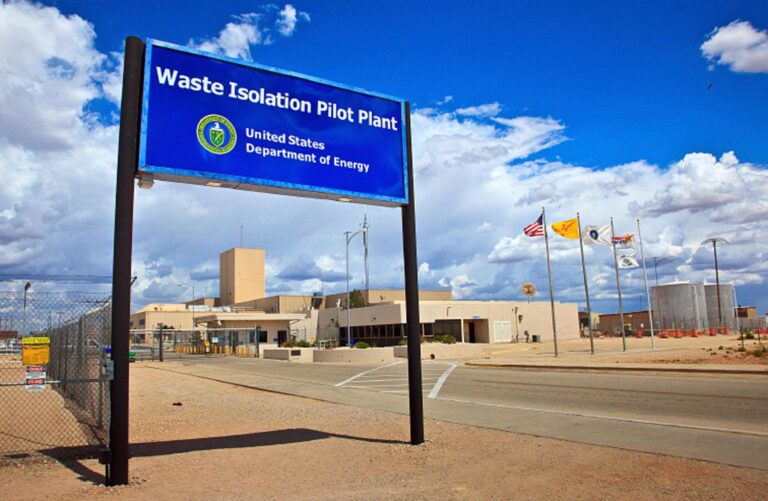
A contractor hired to oversee nuclear waste disposal near Carlsbad will continue running the facility for the next three years.

The U.S. Department of Energy announced Wednesday, Dec. 10, it extended its contract with Salado Isolation Mining Contractors, also known as SIMCO, which was hired in November 2022 as the primary operations contractor at the Waste Isolation Pilot Plant.

The initial contract was for four years and included six one-year extensions. Last week’s announcement used three of those potential extensions from, Oct. 1, 2026 to Sept. 30, 2029.

The other three extensions were still available.

With all six extensions enacted, the contract was valued at about $3 billion.

At WIPP, the Energy Department disposes of transuranic nuclear waste (TRU), which is clothing materials, equipment and other debris irradiated during nuclear activities.

The waste is buried at WIPP in a salt deposit about 2,000 feet underground. The salt gradually collapses on the waste, burying the refuse and blocking radiation from escaping.

The Energy Department said Salado has completed several infrastructure improvements since taking over operation of the facility.

“SIMCO has been an exceptional partner, safely emplacing waste from across the nation while completing critical infrastructure projects ahead of schedule and under budget, all without disrupting WIPP’s mission or compromising safety,” said Mark Bollinger, manager of the Energy Department’s Carlsbad Field Office.

WIPP facilities need repair

WIPP completed a $480 million underground ventilation system earlier this year, along with an associated $100 million air intake shaft on the west end of the facility.

That’s where Salado is currently mining out more space for waste, under an agreement with the state of New Mexico for two additional disposal panels.

Panels are mined out areas in the WIPP underground where drums of waste are placed for disposal. WIPP’s current state permit, signed in 2023, gives approval to mine out the site’s 11th and 12th panels; the previous permit approved only eight.

Don Hancock, director of the Nuclear Waste Program at Albuquerque-based Southwest Research and Information Center, a government watchdog nonprofit and frequent WIPP critic, said the ventilation project could not be counted as a success.

Hancock said WIPP under Salado’s leadership saw the ventilation project completed several years behind schedule and over budget by hundreds of millions of dollars.

When the project started in 2018, it was intended to be built for $135 million and to be completed by 2021.

Although Salado wasn’t involved in the project for its first five years, Hancock questioned if it could be counted as a success by the contractor or the federal government.

Much of the delay resulted from previous contractor Nuclear Waste Partnership’s decision to fire its construction subcontractor, Carlsbad-based Critical Applications, in 2020.

“It could be counted as a success in doing better than the previous incompetent contractor, but that’s a really low bar,” Hancock said. “That shouldn’t be the goal.”

More broadly, Hancock argued, WIPP infrastructure – namely the hoists that bring waste underground and the site’s fire suppression system – were in disrepair and raised alarms recently among state and federal officials.

Hancock pointed to the most recent monthly report by a federal watchdog agency, the Defense Nuclear Facilities Safety Board, which reported Dec. 5 that WIPP’s waste hoist was shut down from Nov. 17 to Nov. 29.

The board’s report said the closure was due to a malfunction in the hoist’s chairing system, the part of the lift that holds drums of waste being brought below the surface for disposal, meaning that no waste could be disposed of during that 12-day period.

The report also showed that Salado was planning to suspend shipments of waste for more than three months, from mid-December to March 2026, while officials address problems with the waste hoists and others that carry salt to the surface and move workers in and out of the underground.

“You can’t say everything is fine where there’s an incident that stops normal operations from happening,” he said. “It’s hard to argue everything is going fine when you’re planning to shut down the facility for three months.”

Concerns raised for New Mexico waste

As for the shipments WIPP did receive in the last three years, the Energy Department said Salado “exceeded” set goals in 2023, 2024 and 2025. The safety board’s report noted that 432 shipments were processed, compared with the goal of 425.

Salado President Ken Harrawood said WIPP’s mission of cleaning up nuclear waste at government sites was proving successful, as the facility ramps up to a goal of 17 shipments per week.

“We appreciate DOE’s continued confidence in our team and the work we deliver,” he said. “Our partnership with the Carlsbad Field Office is exceptional, and we look forward to advancing this work to continue WIPP’s important environmental cleanup mission.”

He also said WIPP continued to prioritize waste from outside New Mexico with Salado at the helm. Records show about 290, or 67% of the waste disposed of at WIPP came from Idaho National Laboratory.

This contradicted the original intention of WIPP, Hancock said, arguing the site should focus on waste from Los Alamos National Laboratory to give New Mexico the most benefit for hosting the repository.

He pointed to a clause in the renewed permit that required WIPP to prioritize waste from within New Mexico.

Hancock said the agency and its contractor were falling short of this requirement, along with others to properly define and plan for so-called “legacy waste” leftover at federal sites from the Cold War and another clause that requires the Department of Energy to find a location for a new repository outside New Mexico to replace WIPP in the future.

“When you agree to having provisions in a permit, you’re agreeing to comply with them,” Hancock said. “They agreed to provisions and now they are not complying with them.”

Managing Editor Adrian Hedden can be reached at 575-628-5516, or @AdrianHedden on the social media platform X.

Artesia basketball splits with Carlsbad

0

Friday night at The Cave at Carlsbad High School, the Artesia Bulldogs and Lady Bulldogs faced a partisan crowd.

The Lady Bulldogs won the opening game 45-35. The Bulldogs and Cavemen had a hard-fought contest in the second game, with Carlsbad winning 60-54.

Christmas shoppers get last minute gifts at Oil Patch Market finale

0

Mike Smith
Artesia Daily Press
msmith@currentargus.com

The last Artesia Oil Patch Market of 2025 wrapped up Saturday as vendors offered homemade items shoppers might not find at brick-and-mortar stores in the closing days of the Christmas shopping season.

The series of nine market events at the Derrick Floor in downtown Artesia began in April, showcasing vendors from the local area and across southeast New Mexico selling a variety of wares including arts and crafts, jewelry, baked deserts, and fresh fruits and vegetables grown in season.

Kristen Jones, a Texas native who recently moved to Artesia, set up shop as a first-time Oil Patch Market vendor with an impressive array of flavored marshmallows.

Among the flavors: watermelon, vanilla, butterscotch, butter rum, strawberries and cream, peaches and cream, cotton candy, bubblegum, peppermint, and maple with candied bacon. Jones said any of the flavors would make a tasty winter treat accompanied by hot chocolate or coffee.

“They’ve been surprised,” Jones said of shoppers’ reaction when they stopped by her booth. Her offerings are “different from your store-bought marshmallows,” she said. “The flavors have been a different surprise and they’ve loved it.”

Jones said mixing the marshmallows with the various flavors takes about 30 minutes then she waits two hours before cutting the final product and placing the marshmallows in sandwich bags for sale.

Homemade jerky and smoked pistachios

Milo Silva, a Roswell resident, was set up not from Jones, selling spicy and non-spicy beef jerky and smoked pistachio nuts from his Smoked Out Beef Jerky table.

Silva said he’s been cranking out homemade jerky and pistachios since 2018. It started as a hobby, he said, but over the past year and a half he’s been touring farmers markets and festivals during the spring, summer and fall months.

“I really loved it,” he said.

Making the jerky starts with 150 pounds of meat that is only seasoned and smoked, Silva said, never marinated or dehydrated. He said pistachios go through a smoking process similar to the beef jerky.

“We coat them in olive oil and smoke them for an hour to two hours,” he said.

After the farmers market circuit shuts down for the winter, Silva said, he travels across New Mexico selling 20 different jerky flavors and 11 pistachio flavors to various businesses.

“I travel everywhere, and we do good,” he said.

Silva also sells his jerky on the Smoked Out Beef Jerky website: smokedoutbeefjerky.com

Recapping 2025 Oil Patch Markets

Artesia MainStreet event coordinator Meghan Martinez said the nine markets held in 2025 featuring crafters, bakers and growers were “a wonderful monthly addition to Artesia.”

She said the markets have received support from the community and involvement has grown since the events began in 2023.

Martinez said each of this year’s markets included 20 to 30 exhibitors.

Martinez said the Oil Patch Market series will resume in April and run through December with the markets scheduled for the second Saturday of each month.

“Times can vary due to weather and sunset,” she said.

 Mike Smith can be reached at 575-628-5546 extension-2361.v

Opinion: Apathy won the runoff in Albuquerque

0

Jodi Hendricks

Tim Keller has won another term as mayor of Albuquerque, the first to be elected to a third term in our city’s history. Congratulations, Albuquerque. We will continue to experience unprecedented rates of homelessness, crime, and chaos.

But before anyone rushes to either celebrate or despair, we need to confront a harder truth. This election was not decided by a groundswell of confidence in the direction of our city. It was decided by apathy.

Only about 35 percent of eligible voters bothered to show up in this runoff election. In a city struggling with public safety, open drug use, failing infrastructure, and a visible humanitarian crisis on our streets, nearly two thirds of voters stayed home. That is not a mandate for Keller, it is indifference.

The biggest victims of the state of our city will not be those who live in gated communities or insulated neighborhoods. It will be the small business owners trying to survive downtown while theft, vandalism, and foot traffic decline. It will be the families raising children in neighborhoods overrun with drug addiction and encampments, where walking to a park no longer feels safe. And it will be the city as a whole, as businesses choose not to expand here or leave altogether, taking good paying jobs with them because no one wants to invest in a place where disorder feels permanent.

This outcome happened because too many people decided that voting was pointless, or that national political grudges mattered more than local leadership. For many, the calculation was simply: “Never vote Republican.” For others, it was about sending a message to Donald Trump, even though he was not on the ballot and has nothing to do with the day to day governance of our city.

Local elections are not symbolic protests, they are decisions with real life consequences. When voters sit out they should also sit out from complaining or criticizing the state of the city. After all, they did nothing when they had a chance to make a difference.

Apathy always favors the status quo. It favors incumbents. It favors systems already in place, even when those systems are failing. And it sends a clear message to city leadership that there is little political cost to continued dysfunction.

If Albuquerque is going to change, it will not come from slogans or social media outrage. It will come when voters decide that their city is worth showing up for. It will come when we demand accountability, not perfection, and are willing to vote for a different direction even when it feels uncomfortable or unpopular.

How much worse does it have to get before the voters of Albuquerque decide they want a change? I’m not sure we want to find out.

What we do know is this: a city cannot be rescued by the 35 percent. Until more of us are willing to engage, to vote, and to take responsibility for the future of our community, we will keep getting exactly what we are willing to tolerate.

Jodi Hendricks is executive director of the New Mexico Family Action Movment.

Trout biting in NM waters just in time for Christmas

0

Information and photos provided by New Mexico Department of Game and Fish

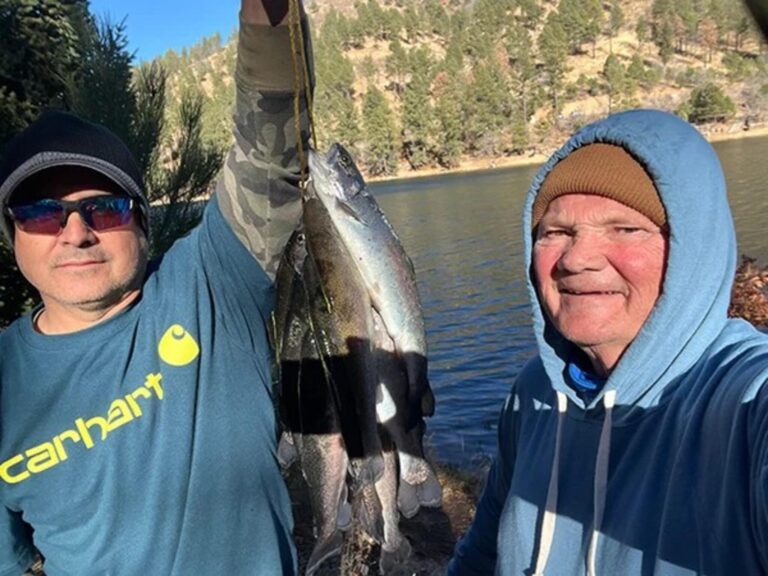
Holiday-weary New Mexicans looking for a break from shopping and other festivities might want to consider a Land of Enchantment fishing trip as trout-catching conditions are good at most lakes and rivers.

In northern New Mexico at Eagle Nest Lake, trout were biting on jigs and PowerBait.

Ice-fishing for trout was exceptionally good using Swedish pimples and tungsten jigs tipped with wax worms.

Along the San Juan River, the streamflow near Archuleta was 280 cubic feet per second (cfs). Fishing for brown trout was incredibly good using red annelids in the quality waters.

In southern New Mexico, trout fishing was good using PowerBait at Glenwood Pond.

In Lincoln County at Bonito Lake, trout fishing was slow to fair when using Garlic Cheese PowerBait and nightcrawlers.

Other species of fishing were also biting in New Mexico waters.

At Ute Lake, fishing for walleye, crappie, catfish and white bass was fair to good when using 3- and 4-inch Gulp minnows and jigs with green blades.

Around the Albuquerque Area Drains, fishing for carp was good when using worms.

Near Truth or Consequences at Elephant Butte Lake, catfish were biting on chicken.

This fishing report, provided by the New Mexico Department of Game and Fish, has been generated from the best information available from area officers and anglers. Conditions encountered after the report is compiled may differ, as stream, lake and weather conditions alter fish and angler activities.

The final week of Advent

0

Ty Houghtaling

The final week of our 7-week Advent will be known as the “Forefeast”. It is a time of intense spiritual focus. If you have ever prepared for a long trip, you know how it feels to get everything you need packed; your bank account/credit cards/travel documents ready, and your phone services updated. There is this “hurry up and wait” anxiety often during the few days leading up to your journey. For us this Advent season, let these last 7 days or so be a time of excitement, joy, and preparation. Maybe we could plan to attend the special services in our community, most churches will at the very least have a Christmas Eve service of some sort. Maybe we could plan a time each day and intentionally talk with family or friends recounting the events leading up to the birth of Christ, including the genealogies and the journey to Bethlehem. In some traditions the Church teaches that this is a time for final purification and renewal, culminating in the celebration of the Nativity. Let this week lead to an increase in personal and communal prayer, along with the reading of scriptures, especially the first chapters of each of the Gospels.

In addition, during the seven days leading up to Christmas maybe you should consider a “Nativity Fast”. The Nativity Fast in some religious circles is sometimes referred to as “Philip’s Fast” because it begins after the feast of St. Philip the Apostle, and it is a time set aside for spiritual cleansing and anticipation of Christ’s birth. The Eastern Orthodox Church, in their tradition, teaches that the purpose of this fast is not merely abstention from certain foods, but rather a holistic preparation involving the body, mind, and soul for the coming of the Messiah. For our purposes we will challenge ourselves to fast for seven days (December 18-24) leading up to Christmas Day. Maybe you might consider fasting from social media in the evening hours so that you might focus on your family or on scripture reading. Maybe you might choose to fast certain foods such as sweet treats or salty snacks during this week. You could always fast from food during the daylight hours or take on the bread and water only fast for the entire 7 days. I bet your Christmas Day or Christmas Eve meals will be even more delicious after such a fast. During this fast we will discover time and opportunities to focus on prayer, meeting the physical needs of the less advantaged, and repentance.

The Savior has come, and that’s why we celebrate Christmas. Don’t let the hustle and bustle of the holiday cause you to miss Him; and remember the other aspect of Advent is on our preparation for the Messiahs second coming. He is coming back; some predict very soon. Are you prepared?

Opinion: Legislature should health care worker compacts in 2026

0

Kristina Fisher

The most immediate way that New Mexico lawmakers can expand access to health care is by joining all the interstate compacts for health care workers, which would make it easier for health care professionals who are licensed in other states to care for patients here in New Mexico, including via telehealth.

States that join the doctor compact experience an increase of 10-15% in the number of doctors licensed every year.

This probably explains why states keep joining compacts and no state that has joined a compact has ever left. Forty-two states now participate in the doctor compact, 41 in the psychology compact, and 39 in the physical therapist compact. Meanwhile, New Mexico is one of only four states that participates in just one or no health care worker compacts. (We are a member of the nursing compact.)

During the 2025 legislative session, the House unanimously passed seven compacts, and Governor Lujan Grisham expressed her support. The only opposition came from a handful of powerful senators on the Senate Judiciary Committee, who blocked the compacts last session.

The good news is that, in response to increasing public pressure, the Senate Majority Leader pledged to consider the compacts for doctors and social workers during the upcoming 2026 session.

The bad news is that this leaves out the other eight compacts, even though New Mexico has shortages across all those health professions.

For example, in order to meet national benchmarks, New Mexico needs 2,510 more EMTs, 526 more physical therapists, 281 more physician assistants, and 114 more occupational therapists, among other professions. The state’s behavioral health care system has been in crisis for over a decade, with severe shortages of psychologists and counselors.

So what are the arguments against the compacts? We have heard three.

First, the senators who oppose the compacts object to several specific provisions, particularly the provision that prevents lawyers from suing the interstate compact commissions for their official acts. These commissions are made up of members of the medical boards of each of the participating states, and New Mexico’s medical board already has identical protection from lawsuits under our existing state law.

Notably, all of the provisions that senators object to in the compacts are included in the nursing compact, which New Mexico has participated in since 2003. The opponents of the compacts have not been able to identify any problems that have resulted from New Mexico’s participation in that compact over the past two decades.

Second, the opposing senators have inaccurately asserted that joining the compacts could jeopardize New Mexico’s protections for health care providers who provide reproductive and gender-affirming care.

In reality, the compacts clearly state that they do not alter any state’s authority to regulate the practice of medicine within its boundaries. The compacts also include strict limitations on information sharing between states. States like Colorado and Illinois, which have strong protections for reproductive and gender-affirming care similar to the laws in New Mexico, participate in multiple health care worker compacts without any issues.

Finally, these senators have said that there isn’t enough time to get the compacts ready for the 2026 session. However, because compacts are agreements between states, each state must agree to the same terms in order to participate. This means that if New Mexico passes a compact bill that materially changes the terms of the compact, it will not be allowed to participate.

The only changes that states can make are minor, technical tweaks to the compact wording that do not change any of the substantive terms. Legislators have had years to work with compact commission staff on crafting any wording changes they desire. The EMT compact was first introduced in 2017, and the doctor compact has been introduced repeatedly since 2019. Other compacts have also been introduced multiple times over the past five years.

It is time for legislators to stop playing political games with New Mexicans’ access to health care and pass all 10 health care worker compacts without further delay.

Kristina Fisher is associate director of Think New Mexico.

Debate rages on oilfield wastewater

0

Adrian Hedden
Artesia Daily Press
achedden@currentargus.com

Wastewater from oil and gas drilling could be reused by other industries next year, if a state body acts despite criticism from environmental groups.

The state of New Mexico’s Water Quality Control Commission, which is considering regulations to permit some discharge of oilfield wastewater – known as “produced water” by the industry – heard public comments on the proposal during the commission’s Dec. 9 meeting.

Commission members voted in April to allow permits for produced water to be discharged in conjunction with pilot projects studying its potential for reuse. The commission reversed that decision in May and also opted to require permits even for pilot projects that do not discharge the fluid.

The commission has yet to vote on the specific language of the rule, which could be approved by the commission at its next meeting on Jan.13, 2026.

Among those commenting on the proposal during the Dec. 9 meeting was Christian Isely, a state government affairs representative for Chevron who said water extracted at mineral mines in northern New Mexico was already being reused. He said similar treatment could be applied to fluid produced by the oil and gas industry.

“The science is absolutely clear,” Isely said. “This water is safe after it is treated. Water treatment technology is evolving very quickly. Other states are moving ahead. If we use reclaimed mine water, why can’t we use produced water?”

The debate centered on the Permian Basin, where environmental group WildEarth Guardians contended that efforts to treat and reuse oilfield waste was resulting in more spills.

Meanwhile, oil and gas industry leaders in the state countered that energy companies were redoubling their investments in technologies intended to curb contamination while addressing water scarcity through reuse of wastewater.

State regulations were needed to ensure responsible reuse across the industry, said Missi Currier, president of the New Mexico Oil and Gas Association.

Spills are up, group contends

In the Permian, about four barrels of produced water are generated for every barrel of oil pumped during the drilling process.

The liquid is a combination of drilling fluids flowing back to the surface and formation water brought to the surface during the extraction of oil and gas from shale deposits.

The water is often high in brine and other chemicals and unsafe for human consumption.

In the third quarter of 2025 – July to September –produced waste spills increased by 244% in New Mexico when compared with the second quarter, according to a Nov. 11 report by Santa Fe-based WildEarth Guardians.

That amounted to about 2.9 million gallons of produced water spilled in about 350 spills of mostly produced water, the report read. The spills also included other substances such as crude oil and natural gas condensate, according to the study.

Of those, 165 spills were in Eddy County and 147 were in Lea County – the two counties that make up New Mexico’s portion of the Permian Basin.

Currier said spills necessitated the infrastructure to treat and recycle wastewater she said the industry was “heavily investing in,” such as better leak detection and automatic shutoffs.

“Spilled water is never treated – it must be contained and remediated immediately to meet or exceed regulatory requirements. That’s why prevention is critical,” Currier said. “These measures, combined with best practices and strict compliance, reflect our commitment to safe water management and environmental stewardship.”

WildEarth Guardians argued the problem was the result of increased drilling, higher volumes of water, and the industry’s struggles to handle its own growth.

The biggest spills were reported at recycling facilities the group contended were subject to frequent “equipment failures,” read the report.

“These ‘recycling’ facilities are ground zero for contamination,” said Melissa Troutman with WildEarth Guardians.

A ‘critical priority’

Despite such concerns, Currier maintained the facilities were crucial to addressing the environmental impacts of oil and gas production.

She called on the state of New Mexico to enact regulations allowing the use of produced water outside the oil and gas industry.

“Reuse is a critical priority for New Mexico because it addresses two pressing challenges: water scarcity and responsible resource management,” Currier said.

New Mexico’s regulations currently do not allow produced water to be used for any means other than drilling.

The “Produced Water Act,” passed in 2019, called on state agencies to adopt regulations to potentially expand reuse and the state created its Produced Water Research Consortium between its environment department and New Mexico State University.

The rulemaking remained ongoing six years later amid stern opposition from environmental groups who believe the fluid can never be made safe for reuse.

Currier said such rules were crucial to creating a level playing field for the industry, adding a layer of enforcement that would ensure companies of all sizes manage produced water correctly.

“We expect the Commission to act swiftly and decisively, because these rules are critical for responsible water management and for providing the regulatory certainty that industry and communities need,” she said.

Rebecca Sobel with WildEarth Guardians maintained that the reports of produced water spills proved the problem would only be worsened by state sanctioned discharges.

“If companies can’t safely contain produced water at their own recycling facilities inside the oilfield, there’s no justification for allowing them to transport this waste offsite to dump into rivers or spread onto fields,” she said.

Managing Editor Adrian Hedden can be reached at 575-628-5516, or @AdrianHedden on the social media platform X.