Adrian Hedden
Artesia Daily Press
ahedden@elritomedia.com
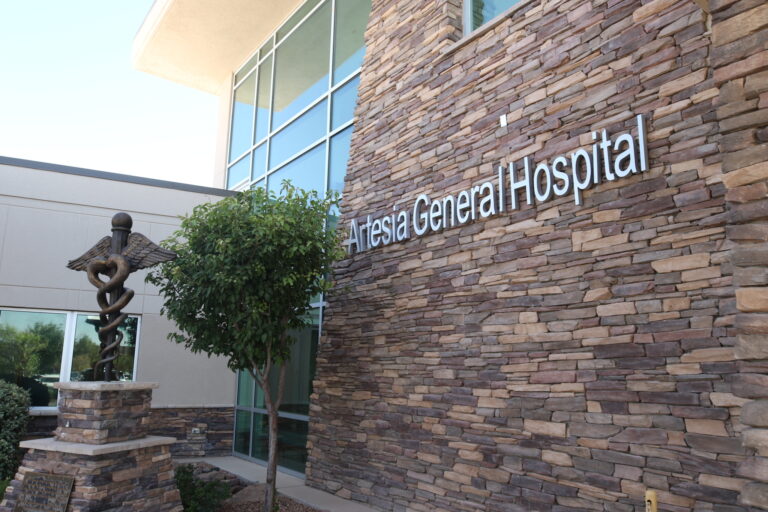
A tax levy that produced about $7 million in revenue for Artesia General Hospital last year was rejected by voters in a June 3 mail-in election as hospital leaders sought a four-year renewal.
Officials with the Artesia Special Hospital District blamed the levy’s defeat on low voter turnout in the special election and hoped to see the levy reinstated via in-person ballots in November’s regular election. The levy was established when the hospital district was created in 1979 and had been renewed by voters every four years until this month’s rejection.
The levy is collected by the hospital district, which functions as a government agency, similar to a school district, and as such is allowed to place the levy on the ballot for voters. The funds are used to support operational costs at the hospital, which serves patients throughout Eddy County and in Chaves County.
The hospital district will need approval from Eddy County to put the matter before voters a second time this year.
The levy charges 2.70 per every $1,000 of a property owner’s net taxable property value for those within the district – defined in state statute as “the Artesia public,” which is most land within the city of Artesia.
Voters rejected the levy despite a heavy public relations campaign conducted in the city in the weeks leading up to the election. Eddy County Commissioners voted June 10 to canvass the results: 638 against and 605 for the levy’s renewal.
That meant only 1,243 Artesia voters returned their ballots to the Eddy County Clerk’s Office during the May 6 to June 3 voting period. That’s out of about 10,000 ballots that were sent out, said Jarrod Moreau, chair of the Artesia Special Hospital District.
He said the results were disappointing but explained that the mill levy does not expire until the end of the year, and an affirmative vote in November could revive it in time for funding in 2026.
He said the levy provided between $4 million and $7 million annually to the district over the past four to eight years.
“We were all disappointed. It was advised that we do a mail-in because we all thought it was a home-run thing, and we thought we could save some taxpayer money,” Moreau said. “The next thing to do is run it again in the regular election.”
The last time the levy was up for renewal, in 2021, Moreau said it passed by 400 votes which he said was the approximate difference in turnout between that in-person election and this year’s mail-in ballot.
He also said there may have been some misperception that supporting the mill levy meant raising taxes. Moreau countered that it would keep a tax in place, one he said is mostly – about 80% to 90% – paid by larger corporations such as oil and gas companies, rather than the local residents voting in the election.
Moreau also said the mill levy was not intended to fund a proposed project by the Special Hospital District to build a new hospital campus on the north side of town, replacing its existing main facility with a “state-of-the-art” health facility and potentially adjacent land for affordable housing.
“People ask if this is for that. This (the levy) is status quo for what we’ve been doing for the past 40-plus years,” Moreau said.
Hospital Chief Financial Officer Cory Yates said the turnout was “abysmal” and should the levy be defeated a second time in November the hospital planned to continue driving its revenue by expanding its options and health care offerings throughout southeast New Mexico.
That includes adding providers and specialists for general surgery, urology and family practice, she said.
The mill levy funds operational costs, including salaries for medical personnel and recruiting of specialists. Having those expenses largely covered by the mill levy, Yates said, allows the hospital to focus more of its revenue on infrastructure and capital investments.
Yates said the hospital is “always looking” for new lines of service and ways to bring new providers to the community. “Our intent is to increase access, so we can increase revenue to replace some of the mill levy money.”
Director of Public Relations Khushroo Ghadiali said supporting the levy, and the hospital’s overall operations, means improving rural health care in southern New Mexico and preventing patients from having to travel long distances.
“It’s an investment for Artesia’s local health care. It keeps medical services local, so they don’t have to travel out of town,” he said. “It helps the hospital perform.”
Managing Editor Adrian Hedden can be reached at 575-628-5516, or @AdrianHedden on the social media platform X.