
An Artesia player helps with the camp on Thursday.

















Artesia Mayor Jeffrey Youtsey officially proclaimed July 2, 2026, as Tennis Appreciation Day, celebrating the sport’s growing footprint in the community. The proclamation ceremony took place on July 1 at the Jaycee Park tennis courts.
The initiative gained momentum through the efforts of Tim Palmer, a local instructor who provides tennis lessons to both youth and adults in Artesia. During the ceremony, Youtsey emphasized that Palmer’s persistence was the driving force behind the city’s official recognition.
“I give Mr. Palmer a lot of credit,” Youtsey said. “He came to several city council meetings and got the support of the council, and that’s why we made this official.”
For the mayor, the proclamation is about more than just the sport—it is about the community impact.
“You can tell they’re really enjoying it,” Youtsey said. “Moms are out here, and you can tell they’re happy to see their kids involved in the sport. It’s just a great thing. It’s a sport that most people can participate in.”
Following the proclamation, Palmer hosted a grand reopening of the Jaycee Park tennis courts on July 2. The event provided an opportunity for residents of all ages to practice their skills and featured an exhibition match with members of the Artesia High School tennis teams.
In the featured exhibition, the duo of Cutter Summers and Abigail Jowers faced off against Jackson Hollinger and Adrienne Harvey.
Beyond the matches, the day served to highlight significant infrastructure upgrades at the facility. Palmer noted that the event was a fitting way to mark the completion of the renovation project.
“It just seemed appropriate to have a celebration of all the improvements that have been made to our courts,” Palmer said. “Getting all four courts resurfaced, getting all new nets and then getting the new backboard made it seem like a good thing to do.”
Marshall Mecham covers sports for the Artesia Daily Press. He can be reached at 915-232-1793 or on X at @mecham_marshall. Mecham serves with the New Mexico Local News Fellowship Program, which places emerging journalists in newsrooms across the state. Learn more at New Mexico Local News Fellowships.
Seven years, two months and 25 days.
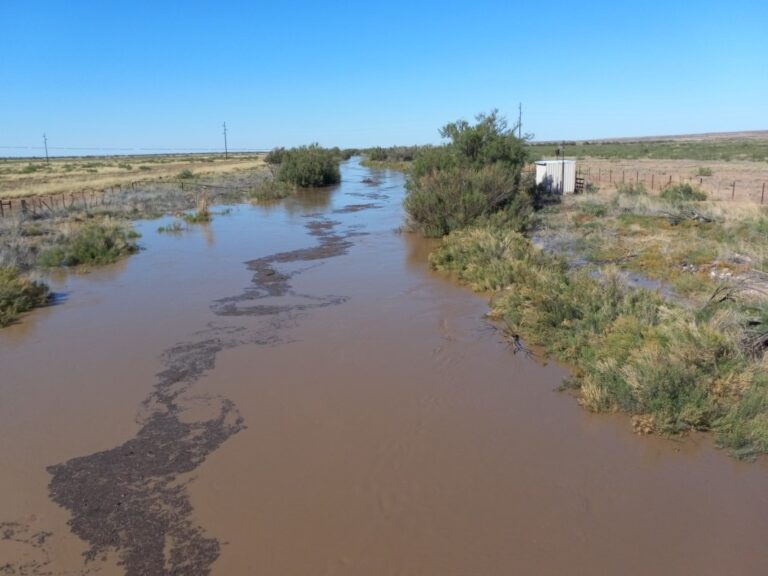
That is how long it has been since Gov. Michelle Lujan Grisham signed bipartisan legislation directing the Water Quality Control Commission to promulgate rules governing the beneficial use of treated produced water.
Six years, one month and 11 days.
That is how long it took for the commission to adopt its first rule — a rule that, in my view, failed to create the workable framework the Legislature intended.
Thirty-seven days.
That is how long it took for a new petition to be filed asking the commission to revisit the issue.
Four months and 24 days.
That is how long that petition remained alive before the commission reversed course and tossed out its prior decision amid allegations of political interference.
Three months and 18 days.
That is how long petitioners spent before returning with a new, narrower proposal.
They did not simply refile the same petition. They narrowed it. They focused it on defined, non-potable uses. They worked to address concerns and create a path for a real, science-based hearing — not a statewide mandate, not a blank check, but a public process where evidence could finally be heard.
Forty-two days.
That is how long the new petition waited before the commission first considered whether it should move forward.
Even then, after hours of testimony and procedural arguments, the commission still did not vote.
Twenty-eight more days.
That is how long it took before the commission finally acted.
On May 12, the Water Quality Control Commission voted 7-4 to move the petition to a formal rulemaking hearing.
That should have ended the procedural delay. It did not.
Forty-seven days and counting.
That is how long it has now been since the commission voted to hold a hearing.
There is still no hearing date.
No schedule.
No explanation.
That timeline tells the story better than any speech ever could. At every step, New Mexicans have been told to wait. Wait for rules. Wait for another petition. Wait through procedural fights. Wait through another meeting. Wait for another vote.
Now, after the commission finally voted to move forward, we are waiting again.
A hearing is not approval. It is not endorsement. It does not decide the outcome.
A hearing is where science is tested. It is where experts testify. It is where public concerns are raised and answered on the record.
No one should fear that process.
Chairman Brancard is entitled to his opinion. He is entitled to oppose the petition. He is entitled to vote against any final rule after hearing the evidence.
What he should not do is delay the hearing itself after the commission has already voted to proceed.
New Mexico’s water challenges are not waiting. Drought is not waiting. Communities looking for long-term solutions are not waiting. Every additional day of inaction makes clear that delay itself has become the decision.
If Chairman Brancard intends to lead this rulemaking, he should schedule the hearing immediately.
If he has no intention of doing so before his term expires, then he should step aside and allow someone else to lead.
The Legislature acted.
The commission voted.
Now the chairman needs to do his job.
Jim Townsend is a state senator representing New Mexico’s 34th Senate District, which includes portions of Eddy, Otero counties.

Marshall Mecham
The 81st annual Eddy County Fair is set for July 21-25, and Bailey Trujillo has spent the year preparing her livestock for the show ring.
Trujillo, 17, will compete in the yearling, market sheep, and market goat shows.
She said the yearling she is showing belongs to her friend Samuel Fodge, who is training the horse for the fair.
Preparing for the fair
Trujillo said her parents, Tabatha and Jesus, have helped her get the animals ready for the fair, including caring daily for the sheep and goat.
“We feed them in the mornings and then I come back in the afternoons to feed them lunch,” Trujillo said. “Around 6 p.m., we wake them up and walk them for about 10 minutes. I also give them fresh water to drink in the morning and at night. Afterward, we feed them dinner.”
Trujillo also schedules spa days for the sheep and goats.
“We wash the sheep’s legs with shampoo and conditioner because a big part of showing market sheep is the way they look,” Trujillo said. “You want them to have nice leg hair because it makes them look more presentable. We do the same thing with the goats.”
Trujillo said she likes to go into her animals’ pens to play with them because one of the keys to showing livestock is making sure the animals are comfortable around people. She also likes to spend one-on-one time with each animal to get the best practice possible.
Trujillo participated in the New Mexico Bred Lamb Association jackpot show in Roswell from June 26-27, where she placed fourth overall out of 120 competitors. She said the show helped her prepare even more for the Eddy County Fair.
Trujillo said she loves what she does, but the work can be stressful. Still, she said she can push through it.
“One of my favorite mottos comes from the FFA Creed, which was written by Erwin Milton Tiffany,” Trujillo said. “It talks about the joys and discomforts of agricultural life, and it’s something I’ve carried with me throughout my whole experience.”
Trujillo also said she gets nervous about big events like the fair because she has high expectations, but she copes with the pressure by remembering how hard she has worked.
Appreciating her parents
Trujillo said she is busy with several other activities in addition to caring for livestock, and she credited her parents for being there for her.
“I would not be able to do what I do without my parents,” Trujillo said. “Since I’m busy with competitive dancing, National Honor Society, being the president of Artesia FFA, and preparing for college, I’m super grateful my parents are there to make sure my animals are staying in line.”
Marshall Mecham covers sports for the Artesia Daily Press. He can be reached at (915) 232-1793 or on X @mecham_marshall. Mecham is serving with the New Mexico Local News Fellowship Program, which places emerging journalists in newsrooms across New Mexico. Learn more at www.newmexicolocalnewsfellowships.org.

About 1,000 abandoned oil and gas wells were plugged at the expense of New Mexico taxpayers in the last 20 years.
That’s according to a June 2025 report by the state’s Legislative Finance Committee, which also reported that if the state’s 60,000 currently active wells were also abandoned, the state could be on the hook for up to $1.6 billion.
Just over a year later, on Wednesday, July 1, New Mexico’s Oil Conservation Commission voted to approve new bonding requirements intended to put more of the financial assurance burden on oil companies.
The commission functions as the governing body of the Oil Conservation Division, the state’s main oil and gas compliance arm within the Energy, Minerals and Natural Resources Department.
So-called “marginal wells,” which produce 1,000 barrels of oil or less per year, were required to post a bond of $150,000 per well.
The new rules also specify that operators in New Mexico must provide a $250,000 “blanket bond” for all their wells in the state to cover cleanup costs should the well become inactive and abandoned.
Oil Conservation Division Chair Albert Change explained that the single-well bonds pay for plugging expenses “down hole” within the well, while the blanket bond is often used to fund remediation of the land at the surface.
That $150,000 per-well rate will also be required of wells owned by operators whose portfolio includes 20% of wells approved as inactive by the state.
Non-producing wells may be approved by the state to sit idle after an operator applies to the Oil Conservation Division. Owners of such wells were also required to provide reports to the state on progress toward again becoming productive.
The bonding requirements must be met before drilling a well can commence, according to the revision. Before the state can approve a well transfer – the process of selling wells between owners – the new owner must satisfy the bonding requirements under the revised rules.
The new regulations were first proposed by the Western Environmental Law Center in April 2025 and were approved July 1 on a unanimous vote by the three-person commission.
The change drew criticism from the oil and gas industry as another step by the state administration that will restrict energy development and diminish its contribution to the state’s economy.
Missi Currier, president of trade group the New Mexico Oil and Gas Association, said higher bonding rates were unnecessary as oil companies already contribute a portion of their proceeds to the Oil Reclamation Fund to pay for well cleanup.
Lawmakers passed House Bill 80, which was signed into law by Gov. Michelle Lujan Grisham on March 9, to increase the amount going into the fund and restrict it from other uses.
HB 80 increases the amount of the oil conservation tax going to the reclamation fund to 50% in 2027, then to 75% in 2028 and to 100% by 2029 until 2037 when the portion reverts to 50% permanently.
Based on projections of state oil prices included in a Legislative Finance Committee analysis published Feb. 5, the bill will generate annual revenue of $46.5 million for the reclamation fund by Fiscal Year 2028, increasing to $76.5 million by FY 2029 and to $108.7 million by FY 2030.
“The dollars in the Fund are generated exclusively by the oil and gas industry,” read a statement issued by the Oil and Gas Association. “These funds are dedicated to surveying abandoned well sites, plugging orphaned wells, and restoring and remediating associated production facilities – work that is essential to protecting New Mexico’s land, water, and communities.”
But environmental groups said the industry should pay more for cleanup, not rely on state tax revenue.
Hayley Jones of Carlsbad-based Citizens Caring for the Future, said the state’s new bonding rules will protect frontline communities such as hers that dwell alongside heavy oil and gas operations.
“In Carlsbad, we’ve seen firsthand what happens when corporations don’t have the financial backing in place to fix problems they create,” Jones said. “These rules are a practical step to make sure corporations clean up their wells so communities like ours aren’t left with the costs or the uncertainty.”
The Oil Conservation Commission’s rules come as the New Mexico State Land Office was underway with its own rulemaking to require higher bonding specifically on State Trust land, which the office leases to companies for oil and gas production.
On Oct. 23, 2025, the Land Office announced a proposal to increase bonding requirements from $10,000 to $150,000 for oil and gas operations on state land. A final decision on that rule was pending.
Meanwhile, at the federal level, the U.S. Department of the Interior said it planned to cut bonding requirements for operators on federal public land managed by the Bureau of Land Management.
In one of two rule changes announced June 22, the Interior Department reduced from $500,000 to $25,000 the minimum bond oil companies must post to pay for cleaning up all abandoned wells per state. The agency said it would reduce per well bonds from $150,000 to $10,000.
The department also said it planned to amend its Waste Prevention Rule by rescinding a requirement that operators provide plans to eliminate pollution when applying to the Bureau of Land Management for permission to drill.
The Interior Department estimated the change would save the industry $17 million a year in compliance costs.
“Energy dominance requires regulatory clarity,” said Interior Secretary Doug Burgum.
We have all seen signs that say, “Jesus is the answer.” That sounds good, but it is overly simplistic.
Let’s suppose someone is seeking the solution to three plus three. The answer here is not Jesus, it is six. We need to sow the Word of God in a responsible, mature manner. We must not be immature or silly as we do so.
Rev. Earl Davis was doing a Children’s sermon one Sunday, and he asked the children, “What is brown, furry, lives in a tree and eats nuts?” Dead silence from the children.
Finally, one 6-year-old boy in the back row spoke up and said, “Well, you know preacher, that sounds an awful lot like a squirrel, but I’ve been around here long enough to know that the right answer is always ‘Jesus’.”
The Kingdom of God was the main emphasis of Jesus’ ministry, and this is accepted by most. But defining precisely what the Kingdom was is a bit more difficult. Indeed, even Jesus himself was often illusive about it. He did not speak in absolutes; rather, he spoke in parables.
In Matthew 13:1-9 & 18-23, Jesus compared the Kingdom to a Sower going out and spreading seed. Some of it falls upon hard ground and is unable to take root. Some of it falls on shallow ground, and although it initially sprouts it later withers away. But some seeds falls upon good earth and come to fruition and produces a harvest.
We are to understand, of course, that the Sower is God, the seed is the Kingdom, and the various types of soil represent us – you and me. On the surface of it, of course, it doesn’t sound as though God is a very frugal farmer. After all, most of the seeds that are scattered never take root.
But this is not really a story about the Sower or the seeds. It is a story about different types of soil, or to put it another way, the responses of different types of people to the Kingdom.
The question is really, what is the state of our hearts when the seeds are sown with us?
For a moment, let’s put this story to one side and hear another story. It concerns a young anthropologist named Connie who works among aboriginal people in Australia. The community where she lives has a rich tradition of storytelling. Everyone gathers at night, a story is told, and then another, and another. Connie feels extraordinarily privileged when she is asked to join in this activity.
The first story told that evening is about the animal ancestor of this community and its adventures at the beginning of time. The story overflows with detail, action, imagery.
At the end of the story, Connie is delighted. “May I ask a question?” she says. “What does it mean?”
All eyes are upon her. The elder looks at her gravely and says, “That is the one question you cannot ask.” A long time passes before she is invited again. She has asked the wrong question.
“What does it mean?” was the wrong question for Connie to ask about the aboriginal myth. It may also be the wrong question for us to ask about the story of the Sower, or any of the stories told by Jesus.
“What does it mean?” is the wrong question if we think that by having an answer, we can somehow get a handle on this story, domesticate it, make it safe. The stories Jesus tells are not subject to our control. He tells these stories so that we can be transformed. He tells these stories, not so that we can ask questions about them, but so that the stories can ask questions of us.
What are you being asked?

Dean Fowler lost his house to the South Fork and Salt Fires of 2024.
He said his home in the Eagle Creek area of Ruidoso burned down and was a “total loss” amid the 20,000 acres torched by the two fires in April of that year.
A year later, Fowler said, his customer base at The Ranchers steakhouse, which he’s owned for 39 years, began to dry up after a catastrophic flood poured into the town along the fires’ burn scars, disrupting the tourism that underpins Ruidoso’s economy.
The Rio Ruidoso overflowed its banks July 8, 2025, producing a deluge that surged down Mecham Drive and resulted in three deaths while leaving destruction in its wake for homeowners and local businesses.
Flash flooding often follows large wildfires, as the flames torch vegetation that would normally hold back falling rainwater. Meanwhile, the heat from the inferno can cause soil to fuse and lose its absorbency, rendering it “as water-repellant as pavement” when burned, according to the National Weather Service.
“The fires and floods affected the economy immensely,” Fowler said in a July 1 interview with the Ruidoso News, one week before the first anniversary of the flood. “Those are our peak seasons. People were scared to come here. It was a horrific situation.”
Further weakening visitation, the iconic Ruidoso Downs Race Track was shuttered indefinitely due to flood damage, bringing a host of economic concerns to the region and especially to businesses that have traditionally relied on the annual influx of tourists drawn by the racing season.
About a year later, hundreds of millions of dollars were sent from state and federal coffers to the rural mountain town, aiming to help the desperate community of about 8,000 recuperate from the tragedy.
And more aid could be on the way as the state of New Mexico is faced with a constant barrage of similar disasters in Ruidoso and across the state. State officials said an annual fund could be created to pay for relief throughout New Mexico communities, to the tune of $30 million a year.
Fowler, 61, said he believes the town is recovering. He said he was able to recoup most of the cost of his own home through insurance and did not need to rely on state aid. His restaurant has a “strong local clientele,” Fowler said, and he is optimistic the business will survive.
But Ruidoso needs repairs for infrastructure such as roads and bridges, Fowler believes, along with relief for residents and business owners looking to “start over” as he was in 2024.
“I think we can always use more,” he said. “I know the village is waiting for money. They need to get the money out to us so we can get these projects going. The flood was catastrophic, but it is very important people know we’re open for business. Come to Ruidoso. Don’t be scared.”
Jean Swopes, supervisor at the Ruidoso Trading Post, said many businesses are hoping alternative tourist attractions such as live concerts and new sporting events will help fill the void created by the loss of Ruidoso Downs.
She said the trading post, known for its authentic New Mexican jewelry, was still trying to restore its inventory after thousands of pieces were lost in the flood. And Swopes also needs new customers to replace those who came to Ruidoso for horse racing.
“For a lot of customers at the racetrack this was their style, this was their place and they’re not here anymore,” Swopes said. “We need more tourism to the village since the racetrack closed. That has affected all business.”
The year before the 2025 flood, an initial wave of relief was sent by the state via a special legislative session called in July 2024 by New Mexico Gov. Michelle Lujan Grisham. The only bill passed during the one-day session was a $100 million relief package for Ruidoso.
The first $25 million was set aside for initial spending on repairs and rescue efforts in the immediate aftermath of the 2024 fire and a perilous-but-not-fatal flood that followed that summer.
The rest of the money was made available to local governments such as the village of Ruidoso and Lincoln County with the provision that the state would be reimbursed when federal disaster dollars kicked in through the Federal Emergency Management Agency (FEMA).
Then in July 2025, Lujan Grisham signed a disaster declaration for Ruidoso in response to the floods that summer, calling in more support from FEMA to repair homes, provide emergency supplies and restore infrastructure.
Lujan Grisham said in a statement issued Wednesday, July 1, that the state’s efforts were gradually working, albeit slowly, as New Mexico lawmakers mulled legislative proposals and a lack of federal support put pressure on the state.
Michael Coleman, spokesman for the governor, pointed to her visit to Ruidoso the day after the 2025 flood, followed in the succeeding months by weekly meetings with local officials. He also said the governor’s declarations unlocked up to $500 million in FEMA funds for fire and flood disaster recovery in Ruidoso. But Coleman called on lawmakers to support legislation that could extend more zero-interest loans to those affected by future disasters, to be reimbursed when federal money is available.
“Without these changes, New Mexico is being asked to absorb greater disaster responsibilities without proportional federal funding, and the state should not be forced to carry prolonged cash-flow burdens while key requests remain pending,” he said.
Coleman said New Mexico’s response to the disasters was swift, and that the state is working on long-term solutions.
He said federal and state relief money was being used for 220 ongoing projects in Ruidoso in response to the fire and 100 projects related to the floods – work such as debris removal, restoring utilities and repairing roads and bridges.
“New Mexico is continually threatened by the ongoing disaster challenge caused by wildfires,” Coleman said. “In combination with the annual monsoon season, we know that these disasters are not a single point-in-time event and communities can experience burn scar flooding that requires watershed restoration and continuous response capabilities.”
In March, the U.S. Department of Agriculture announced it would provide $235 million through its Watershed Protection Plan to buy at-risk properties at market rates prevailing before the damage in 2024.
Federal funding will provide 75% of the cost of restoring a property, with the state of New Mexico paying the remaining 25% through a matching agreement.
Target areas include portions of the Rio Ruidoso corridor and other locations heavily damaged by flooding, including areas near Upper Canyon, the Rio Ruidoso creek system and Spaghetti Flats.
Blighted structures will be demolished, and lands would be remediated to their natural state, turned into “green spaces” that can be used for recreation, parks and other public purposes.
But the road to recovery continued as summer monsoon clouds frequently cast a menacing shadow upon the ponderosa pines and blue spruce trees that define Ruidoso’s iconic vistas, the sky threatening to douse the village in tragedy once again.
“We’ve heard there are still a handful of years left where we might have some flooding,” said Swopes. “Last year’s flood, nobody expected it to get that bad. We’re hoping that was the worst of it but who’s to know?”
State Rep. Harlen Vincent (R-36) said flood relief offers a chance for bipartisanship between local leaders in this rural area of conservative southern New Mexico and the Democratic state administration in Santa Fe.
Vincent’s district represents portions of Lincoln and Otero counties, and he’s been a constant figure in the political arena focusing on flood relief for Ruidoso.
Vincent also sits on the interim Legislative Finance Committee, which met in Ruidoso June 16-18.
During the meeting at the Ruidoso Convention Center, Vincent said more relief might be needed for long-term solutions in his community. That help could come in the form of “disaster reserve,” a funding device discussed by lawmakers at the meeting.
Such a fund would require legislative action authorizing the deposit of state money that could be used without an administrative declaration or subsequent legislation. The fund would be reimbursed when federal dollars become available.
A presentation was made to lawmakers on the first day of the meeting by the Pew Charitable Trust, which was contracted by the committee to study the proposal.
Pew suggested the reserve fund could total about $30 million a year, based on the average of New Mexico’s disaster spending in the last decade up until 2025.
Unspent funds could then be repurposed, read the presentation, to mitigate future risks.
Vincent was optimistic that with such programs and the unwavering efforts of locals to rebuild their own community, Ruidoso could rise again among the peaks of the surrounding Sacramento Mountains.
“Ruidoso and Lincoln County, we’re healing day by day,” Vincent said. “I’m hoping that it keeps healing and we’re able to do some good work and be back at it.”
But it will be a tall order, said Ruidoso Mayor Lynn Crawford who estimated that without the racetrack and amid potential future flood risks, Ruidoso could face a drop-off of up to 40% in retail business.
The mayor told lawmakers that village officials hoped to overcome the losses through new showcase events such as the Xterra World Championship triathlon planned for Oct. 8 to 11 at Ruidoso’s Grindstone Lake.
“We’re bringing in other attractions,” Crawford said, noting the village had no plan to bring back the racetrack. “There’s a lot of things we’re doing around it. We are looking at every option.”
Managing Editor Adrian Hedden can be reached at 575-628-5516, or @AdrianHedden on the social media platform X.

An Artesia man pleaded guilty in federal court to kidnapping and killing a woman in 2021 at a local motel.
Jerrold Albert Chavarria, 37, pleaded guilty via a plea agreement to conspiracy to kidnap and faces a sentence of up to life in prison, according to a June 30 news release from the U.S. Attorney’s Office for the District of New Mexico.
Police said Chavarria and 47-year-old Jerry Romero were captured on video taken from the Budget Inn motel at 922 South 1st St. taking a sobbing woman from the motel and into the back seat of a Red SUV.
Romero was seen forcing the woman into the vehicle, while Chavarria was driving, the release read.
Federal authorities did not identify the woman the men were accused of kidnapping and killing.
She was found dead at about 10:21 a.m. the same day in a remote location on and oilfield property about 11 miles from the motel. The woman was shot 21 times, police said, at close range with at least two different guns.
Romero remained in custody and was awaiting a trial on a federal charge of kidnapping resulting in death.
The Federal Bureau of Investigation’s Roswell Resident Agency was assisted by the Eddy County Sheriff’s Office in investigating the case.

JT Keith
The numbers kept climbing as the doors opened. Artesia’s annual volleyball camp drew a record 143 participants from July 1–3, nearly doubling the turnout from each of the previous two years.
Assistant coach Mandi Lewallen admitted the staff had initial reservations about scheduling the event so close to the Fourth of July holiday, a time when many local families typically head out of town. Those concerns, however, were quickly dispelled by the overwhelming response.
Record turnout
The camp, now in its 14th year, saw participation jump significantly from the 85 campers who attended in each of the past two years.
“We got to work on a lot of skills,” Lewallen said. “We focused on the basics in the morning, like passing and serving. We played on three different courts, which gave the kids a chance to get a lot more touches.”
The camp was divided into two sessions: 9 a.m. to noon for seventh and eighth graders, and 1 to 3 p.m. for third through sixth graders.
Campers rotated through fundamental stations before pairing with high school players for scrimmages at the end of each session. The curriculum was tailored to skill level; younger campers practiced footwork through catch-and-toss drills, while fifth- and sixth-graders progressed to passing and serving techniques.
Camp adds new features
Organizers also introduced a concession stand this year, providing a 10-minute break for refreshments, including water, sports drinks and snacks.
Additionally, coaches brought back a popular tournament format featuring eight teams of six players. The teams selected their rosters Wednesday, practiced throughout the week, and concluded with a double-elimination tournament on Friday. Games were capped at 12 minutes, with the final match extending to 18 minutes or until a team reached 25 points.
While the winners received medals, Lewallen emphasized that the primary goal was fostering teamwork and sportsmanship.
“I love this camp,” Lewallen said. “This is one of my favorite times with the kids. They are so young, they love the game, and they are so energetic. We appreciate all the parents who brought their kids to our program. I am super excited.”
Practice begins
The Artesia High School team officially opened practice on July 1. Following a home tournament on Monday, the squad will travel to Abilene Christian for a camp July 16–17, followed by stops in Portales and Western Colorado on July 23.
What comes next
Despite graduating nine seniors from a team that finished 21-7 and reached the state semifinals, the outlook remains positive.
“We had 38 girls in the gym,” Lewallen said. “We had 18 to 20 freshmen on the court today. It is going to be exciting. We have full teams and many girls in the gym, ready to play. They are ready to start playing on Monday.”

Ruidoso Mayor Lynn Crawford intends to be remembered for leading the village’s resilience in the face of adversity.
One year after the disastrous flood on July 8, 2025, that claimed the lives of two children and one adult, local government is focused on rebuilding with renewed safety measures and projects geared toward improving the community.
“The legacy is one of resilience, not giving up, fortitude, rugged individualism, the ability for you to be all you can be and not give up and to teach people that just because you get knocked down, you can get back up,” Mayor Crawford said.
Rain began to fall while Crawford and other village council members were in a regularly scheduled village council meeting.
Village officials forecast that rain was imminent, but reality turned out to be far more aggressive than imagined.
Notifications from Emergency Manager Eric Queller pulled the fire and police chiefs and their subordinates away from the meeting and to the Emergency Operations Center.
Ten minutes later, “all the world broke loose,” the mayor recalled.
The sound of rain made it difficult to hear others in the council chambers.
The mounting intensity caught village officials off guard as issued flood watches quickly moved into warnings from the Emergency Operations center.
The staff had already been monitoring the rain, and they started working checkpoints in low-lying areas for swift water rescues during the flood.
Next on the priority list: immediate road clean-up after the flooding subsides.
This preemptive preparation was something learned from previous floods.
This time, though, flood waters failed to recede as quickly as expected, and rain intensified over the South Fork burn scar.
Crawford began to realize this would be a more severe flood than initially anticipated.
According to Mayor Crawford and Emergency Manager Queller, informing the public about possible imminent flooding risks in the most accurate manner possible has been a vital challenge of flood recovery and future preparedness efforts.
The village’s siren alert system has completed an upgrade following the flood, an improvement that officials hoped would be completed before the summer of 2025 according to Crawford.
The system now has nine additional sirens to indicate a wide variety of disasters instead of only utilizing them for fire evacuation.
Sirens located at White Mountain Elementary, Wingfield Park and the Eagle Creek Sports Complex feature a public announcement system which will alert residents of the specific threat.
“We sit in a bowl, so we only have about a 15-minute lead time for public flood detection before we start seeing impacts,” Queller said.
Along with the new sirens, the village has been providing more avenues for emergency information. In the event of a flood or other disaster, residents can expect alerts from the “Call Me Ruidoso” emergency phone system if they are signed up through the Village’s website.
Residents can also receive alerts through the integrated public alert system which is used for Amber Alerts and the emergency alert system on the radio and television.
Queller also highlighted the Ruidoso “All Hazards” Information Network Map through the Discover Ruidoso app as a good method to stay up to date on where a disaster is impacting the community.
“Don’t think that it’s (the flooding) over, because it’s definitely not,” Queller said. “We want to make sure that folks continuously pay attention to those alerts, make sure they pay attention to their surroundings and to make sure they’re prepared.”
Mayor Crawford, Deputy Manager Heath Dobrovolny and Emergency Manager Queller all shared a desire for the community to stay resilient and move forward together while looking to the future.
The village’s “Clean and Lien” program — along with the Lincoln County “Buy-Out” program — is one way Deputy Manager Dobrovolny highlighted for the community to move forward.
The “Clean and Lien” program is available for property owners with destroyed or damaged residences in the flood plain.
Property owners can choose to have the village demolish and clear their property with the cost becoming a lien on the property that must eventually be paid back to the village. Owners may also declare an intention to rebuild if the property meets specific guidelines.
More than 350 property owners living in flood-prone areas have applied for the county’s “buy-out” program. Owners with damaged or destroyed property can apply to have their property purchased by the county at pre-flood values.
For those applying, the “clean and lien” process immediately stops until a property owner decides to accept or reject the county’s purchase offer. To date, the county has not purchased any properties as part of the “buy-back” program.
“We want to see this community recover,” Dobrovolny said. “No one is trying to make life impossible or unbearable or hold somebody back from their recovery. Everybody is moving in the same direction because we all have the same goal of seeing this community recover.”

Copyright © 2026 El Rito Media, LLC. All rights reserved.