Home Blog Page 191

Measles Prevention Tips

0

Courtesy of Artesia General Hospital

As measles cases rise in our area, it’s more important than ever to arm ourselves with the right information and practical tips to safeguard our families. In this post, we explore effective preventive measures—from vaccination to everyday hygiene practices—that can help reduce your risk of contracting and spreading measles.

Understand the Risks

Measles is a highly contagious viral illness spread through respiratory droplets when an infected person coughs or sneezes. Even a brief exposure in a crowded place can lead to transmission, which is why understanding the risks is the first step toward protection. Being aware of the symptoms—such as high fever, cough, runny nose, and a characteristic rash—can also help you identify potential cases early on.

Vaccination: Your First Line of Defense

The most effective way to prevent measles is through vaccination. The Measles, Mumps, and Rubella (MMR) vaccine is proven to be safe and highly effective. Health authorities, including the Centers for Disease Control and Prevention (CDC), recommend that all eligible individuals receive the vaccine. For children, the first dose is typically administered around 12-15 months of age, with a booster given between 4-6 years. Adults who have not been vaccinated or are unsure of their immunization status should consult with their healthcare provider about getting the MMR vaccine.

Practice Good Hygiene

While vaccination is crucial, practicing good hygiene can further reduce your risk of infection:

• Frequent Handwashing: Wash your hands thoroughly with soap and water for at least 20 seconds, especially after being in public places or coming into contact with someone who is sick.

• Use Hand Sanitizer: When soap and water aren’t available, use an alcohol-based hand sanitizer containing at least 60% alcohol.

• Cover Coughs and Sneezes: Always cover your mouth and nose with a tissue or the inside of your elbow when coughing or sneezing to prevent the spread of respiratory droplets.

• Avoid Close Contact: During an outbreak, try to avoid crowded places or maintain a safe distance from individuals showing symptoms of illness.

Stay Informed with Trusted Sources

Reliable information is key during an outbreak. Regularly check updates from trusted sources like your local health department and the CDC. The CDC provides detailed guidelines on measles prevention, vaccination schedules, and what to do if you suspect exposure. Staying informed ensures you’re aware of any changes in recommendations and can act promptly if necessary.

Protecting Vulnerable Family Members

Some individuals, such as infants, pregnant women, and those with compromised immune systems, are at a higher risk for severe complications from measles. Here are some steps to protect these vulnerable members:

• Consult Healthcare Providers: If you have a family member who is at high risk, speak with a healthcare provider to understand specific precautions.

• Ensure Up-to-Date Vaccinations: Double-check that all family members, especially those in close contact with high-risk individuals, are up to date on their vaccinations.

• Limit Exposure: Consider reducing outings or visits to crowded public places during an active outbreak.

What to Do If You Suspect Exposure

If you believe you or a family member has been exposed to measles, it’s important to act quickly:

• Monitor for Symptoms: Watch for early signs of measles such as fever, cough, or rash.

• Seek Medical Advice: Contact your healthcare provider immediately if symptoms appear. Early intervention can be crucial, especially for those at higher risk.

• Isolate if Necessary: Follow the advice of your local health authorities regarding isolation to prevent further spread.

Conclusion

Preventing the spread of measles is a community effort. By ensuring that you and your family are vaccinated, practicing rigorous hygiene, and staying informed through trusted sources like the CDC, you can significantly reduce the risk of infection during an outbreak. Remember, your proactive steps not only protect your loved ones but also contribute to the broader community’s health. Stay safe and stay informed!

Debunking Measles Myths: Facts vs. Misinformation

During an outbreak, accurate information is critical. However, misinformation about measles can spread quickly, leading to unnecessary fear and risky behaviors.

Common Measles Myths

Myth 1: Measles Is Just a Mild Childhood Illness

Some believe that measles is a benign part of growing up. However, measles can lead to severe complications including pneumonia, encephalitis, and even death—especially in infants and immunocompromised individuals. The CDC stresses that measles is a serious disease that should not be taken lightly.

Myth 2: Vaccines Are Dangerous and Cause More Harm Than Good

Misinformation often claims that the measles vaccine is unsafe or linked to conditions like autism. Extensive research has consistently shown that the Measles, Mumps, and Rubella (MMR) vaccine is both safe and effective. According to the CDC, the vaccine’s benefits far outweigh any minimal risks associated with it.

Myth 3: Natural Immunity Is Better Than Vaccine-Induced Immunity

Some argue that contracting measles naturally offers stronger immunity than vaccination. While natural infection can provide immunity, the risks of complications far exceed the benefits. Vaccination provides a safe way to build immunity without the dangers of the actual disease, a point well-documented by the CDC.

The Facts Behind Measles

Understanding the Disease

Measles is caused by a virus that spreads through respiratory droplets. It is highly contagious, and even a short exposure in a public place can result in transmission. Early symptoms include high fever, cough, runny nose, and a distinctive rash. The severity of measles, especially among vulnerable populations, reinforces the need for accurate information and proper prevention methods.

The Proven Efficacy of Vaccination

The MMR vaccine has been a cornerstone of measles prevention for decades. Vaccination not only protects individuals but also contributes to community-wide herd immunity. The CDC recommends that all eligible individuals receive the vaccine as a safe, effective means of preventing outbreaks.

Combating Misinformation

The Role of Reliable Sources

In today’s digital age, misinformation can travel fast. It is crucial to rely on authoritative sources when researching health topics. Trusted organizations like the CDC offer evidence-based guidelines and data that help clarify the real risks and benefits associated with measles and its prevention.

How to Identify Misinformation

• Check the Source: Is the information coming from a reputable public health organization or a well-known medical institution?

• Look for Scientific Evidence: Trusted information is usually backed by research and verified studies.

• Stay Updated: Health guidelines can change. Regularly check trusted websites for the latest information.

Conclusion

Debunking myths and relying on verified facts is essential during a measles outbreak. By understanding the real risks of measles, the proven safety of vaccines, and the importance of credible information, we can better protect ourselves and our communities. For more detailed guidance on measles prevention and the latest updates, visit the CDC’s measles page.

Staying informed with accurate, research-backed data is the best defense against misinformation—ensuring that our decisions are driven by facts, not myths.


BPA in Santa Fe

0

Artesia High School’s chapter of the Business Professionals of America met with lawmakers in Santa Fe at the start of the 2025 Legislative Session.

The session opened Jan. 21, and runs until March 22. During the 60-day session, lawmakers will propose and debate hundreds of bills to reform New Mexico State law.

Bills must be approved by both the House and Senate, and signed into law by Gov. Michelle Lujan Grisham by April 11.

The man who loved gold

0

By: Pastor David Grousnick

There was a man who loved gold. Then he inherited a fortune. With joy he redecorated his bedroom. He put gold parchment wallpaper up, hung yellow curtains, had a golden colored rug and a yellow bedspread. He even bought some yellow pajamas.

But then he got sick and came down with, of all things, yellow jaundice.

His wife called the doctor who made a house call and went up to that bedroom for an examination. The doctor stayed up there a long while. When he came down, the wife asked, “How is he?”

“Don’t know,” said the doctor. “I couldn’t find him.”

I heard about an expert in diamonds who happened to be seated on an airplane beside a woman with a huge diamond on her finger. Finally, the man introduced himself and said, “I couldn’t help but notice your beautiful diamond. I am an expert in precious stones. Please tell me about that stone.”

She replied, “That is the famous Klopman diamond, one of the largest in the world. But there is a strange curse that comes with it.”

Now the man was really interested. He asked “What is the curse?”

Lowering her voice, she replied, “The curse is Mr. Klopman.”

The curse of any kind of valuable possession is its capacity to steal our hearts and souls and somewhere in the process, we can easily get lost.

A seminary professor named Stanley Hauerwas had a novel idea about how churches should receive new members. A teacher of Christian ethics at Duke University,he was considered by many to be one of the world’s most influential living theologians.

He once wrote about the church’s need for honesty and he called for us to tell the truth as a “community of character.”

To this end, he had a modest proposal. Whenever people joined the church, Hauerwas thought they should stand and answer four questions:

Who is your Lord and Savior? The response: “Jesus Christ.”

Do you trust in him and seek to be his disciple? “I do.”

Will you be a faithful member of this congregation? The answer: “I will.” Finally, one last question: What is your annual income?

You heard me correctly. When people joined the church, Dr. Hauerwas thought they ought to name their Lord and Savior and tell their fellow church members how much money they made!

According to William Cater, obviously Hauerwas did not serve as a pastor of a congregation. His idea just wouldn’t work, especially in the American church.

Most church members believe salary figures are more sacred than prayer, and would quickly tell an inquisitive minister to snoop around somewhere else.

What’s more, parish experience tempers the questions a minister might ask of church members. Most pastors learn early on how to dance around the issue of money without ever naming it.

Nevertheless, the perception of our financial worth and our feelings about being successful often get so wadded up together it’s hard to keep your eye on the true prize.

More than forty years ago, John Killinger heard a man describe two paintings he said he had at his home.

One was of the figure in Jesus’ story of the rich man whose crops produced so abundantly that he decided to pull down his barns and build bigger ones, and he said to his soul, “Soul, eat, drink, and have a great time, for tomorrow you die.” The caption under this painting said: “The Failure that Looked Like Success.”

The other painting, the companion painting, was of Jesus dying on the cross, the crown of thorns on his head, his chin drooping against his chest, the crude nails in his hands, and all his friends off somewhere in hiding. The caption under this picture said: “The Success that Looked Like Failure.”

We would all like to be successful and fulfilled as persons. It is one of the dreams with which our culture surrounds us.

But when we listen to Jesus, we realize that success and fulfillment don’t really come the way we often expect them to. They aren’t the direct result of anything we can do to attain them.

Instead, they’re a gift from God and they simply happen when we are doing the right things with our lives. In God’s eyes it is a whole lot better to be a success that looks like failure than a failure that looks like success.

And, if you have bought any lottery tickets, good luck! And if you win, don’t forget your local charities!! And if you win big, don’t forget First Christian Church.

That’s OK to say, isn’t it?

David Grousnick, is the Pastor at the First Christian Church in Artesia.

Outrageous Barbecued Nachos

0

Let these nachos be the hit at any gathering

Chips and dip always work when entertaining, and the potential flavor combinations of this classic party offering are endless. When it comes to nachos, the dip and the chip are melded into a single dish for a convenient and tasty offering that works as a snack, appetizer or even a main course. Of course, nachos also are a go-to dish while watching the big game with friends.

Nacho flavors run the gamut from Latin-inspired to chili-covered to everything in between. These Outrageous Barbecued Nachos courtesy of Virgil’s Barbecue Road Trip Cookbook (St. Martino’s Press) by Neal Corman, pair the smoky flavor of slow-cooked barbecue with the zip of some nacho standards like jalapeno peppers and cheese.

Outrageous Barbecued Nachos

Serves 4-6

3 ounces (about 1 cup) pulled pork

3 ounces (about 1 cup) pulled chicken

3 ounces (about 3 slices) sliced and chopped barbecued brisket

1 1/2 cups favorite mild barbecue sauce

3/4 (10-ounce) bag tortilla chips

1 cup shredded Monterey Jack cheese

1 cup shredded mild cheddar cheese

15 pickled jalapeno slices

1. Preheat the oven to 400 F.

2. Combine the meats and barbecue sauce in a small saucepan over medium heat.

3. Spread half of the tortilla chips on a small cookie sheet. Cover the chips with half of the meat and sauce. Top with half of each cheese.

4. Repeat the process on top of this layer, using the other half of the ingredients.

5. Bake until the cheese is completely melted, about 10 minutes. Remove and top with the jalapenos.

Ice fishing season opens in northern New Mexico

0

Information provided by New Mexico State Parks Department

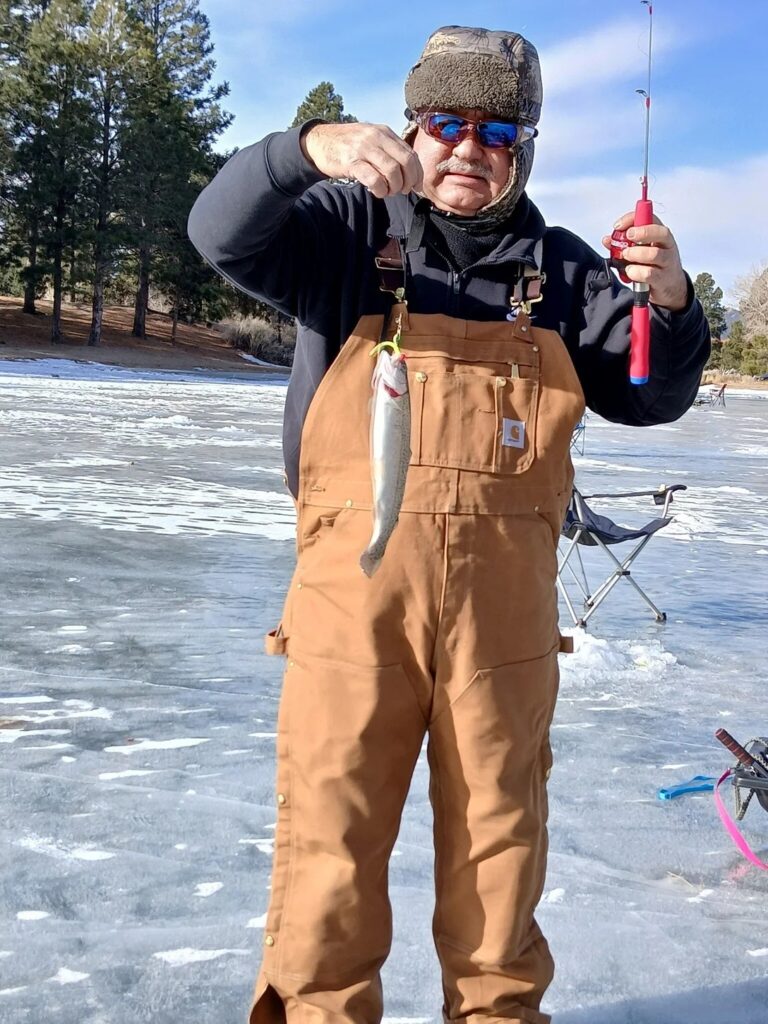
New Mexico anglers wanting a change of pace can dig out their ice-fishing gear and drop their lines at any of three northern state parks: Eagle Nest Lake, Fenton Lake and Sugarite Canyon.

“We welcome ice-fishing enthusiasts to enjoy this winter fishing season,” New Mexico State Parks Director Toby Velasquez said in a news release. “However, we ask that they take precautions to ensure that their outings are safe and enjoyable.”

The parks department offered some vital tips for staying safe while ice-fishing:

• Motorized vehicles are not allowed on the ice. Fishing is only permitted on foot.

• Check for the latest ice conditions before setting out to fish.

• Show caution and avoid marked hazards along pressure ridges. Ice fishers are asked to stay at least 50 feet away from cones or barrels marking danger zones.

• Don’t fish alone and inform someone of both your intended fishing destination and your expected return time.

• Report any hazards to park staff so additional warnings can be issued if needed.

• Dress in layers, including thermal underwear, fleece or wool wear and windproof, waterproof outerwear, especially for feet, hands and head.

• Keep fishing holes smaller than eight inches in diameter to reduce safety hazards for others.

• Stay cautious around weak ice areas such as feeder streams, springs, or cracks. Ice spikes are recommended for self-rescue.

• Distribute weight and fishing poles to avoid overcrowding in one area.

Trout fishing remains good at other lakes

In southern New Mexico, trout were biting on PowerBait at Trees Lake near Deming.

At Young Park Pond in Las Cruces, trout were being caught with PowerBait Salmon Eggs, according to the New Mexico Department of Game and Fish.

In Lincoln County, trout were biting at Bonito Lake on flies, lures, and worms.

At Corona Pond, trout fishing was good using earthworms. At Grindstone Lake, fly fishing for trout was slow to fair.

At Oasis State Park near Portales, fishing for trout was very good using PowerBait and Pistol Pete red worm flies. Bass fishing was slow.

There will be fewer reports available during the cooler seasons when fishing slows. The Department will make every effort to provide as much information as possible during the winter months.

This fishing report, provided by the Department of Game and Fish, has been generated from the best information available from area officers and anglers. Conditions encountered after the report is compiled may differ, as stream, lake and weather conditions alter fish and angler activities.

Anglers in New Mexico could face higher fees for fishing licenses if legislation calling for major changes at the Department of Game and Fish becomes law. The story in on A3.

Ski resorts hope for help from Mother Nature

0

Mike Smith

El Rito Media

msmith@currentargus.com

Frigid temperatures across parts of New Mexico last week have ski resorts remaining hopeful for more natural snow, according to the executive director of Ski New Mexico.

Christy Germscheid lives in Angel Fire, home to one of New Mexico’s popular ski resorts.

She said temperatures last week in some places in northern New Mexico were below zero in the morning and warmed into the teens during the afternoon.

Germscheid said manmade snow helps when nature does not come through.

“(Colder temperatures) are excellent for snowmaking as it funnels into most ski areas during the day,” she said.

Germscheid was hopeful a winter storm expected to drop 10 inches of snow into the northern mountains above 8,000 feet and up to a foot along some of the higher peaks from Tuesday into Thursday would provide fresh natural snow.

She said New Mexico ski resorts were holding up well with manufactured snow augmenting nature.

Michael Hawkins, marketing director at Angel Fire, said underground wells, a pond and a stock tank help the snowmaking process.

“Our snowmakers work overnight, and they want temperatures to be about 25 degrees or lower to get the best snow quality and then the machines use a mixture of compressed air to blow the water out and that turns into nice snow,” he said.

“Our guys are constantly monitoring the air-to-water ratio while we blow snow to make sure we get the best quality product that we can.”

Germscheid said synthetic snow is good in a pinch but natural snow could allow other ski resorts to open at full capacity instead of partial capacity as some have been doing.

“As we move into winter we could use some more natural snow as a marketing tool,” she said.

Germscheid said ski season in New Mexico traditionally ends in March.

Depending on snow depth, she said, some stay open into April.

Latest skiing conditions as of Monday, Jan. 27

(Information provided by Ski New Mexico)

Angel Fire had a base depth of 21 inches with 57 of 86 trails open and 7 of 7 lifts open.

Pajarito Mountain had a base of 14 inches with 40 of 53 trails open.

Red River Ski Area had a base depth of 24 inches with 40 of 64 trails open and 7 of 7 lifts open.

Sandia Peak Ski Area had a base depth of 6 inches with 1 trail open.

Sipapu Ski Area had a base depth of 16 inches with 13 of 44 trails open.

Ski Apache had a base depth of 3 inches with 9 of 55 trails open.

Ski Santa Fe had a base depth of 32 inches with 80 of 90 trails open.

Taos Ski Valley had a base depth of 24 inches with 57 of 120 trails open.

Ski Cloudcroft had a base depth of 12 inches with the Bunny Slope and Tubing Hill both open.

Note: Snow conditions can change after this report is compiled.

Mike Smith can be reached at 575-308-8734 or email at msmith@currentargus.com.

Fundraising drive for AHS graduate killed by drunk driver

0


From Staff Reports:

Hermosa Elementary will be conducting a community service project called Cpl. D. Robert-Martin Harvey “Thirst” Responders Drive. This drive will be starting on

Starting Feb. 5, and ending on Feb. 13, they are asking their students to bring cases of water and Powerade/Gatorade to their school during this drive. The top 3 classrooms that bring the most cases of water and Powerade/Gatorade will receive a Pizza Party courtesy of Brenden and Heather Harvey. Last year they brought in 800 cases of water/Gatorade/Powerade, in which some of this was sent to Ruidoso to serve their first responders and the residents during the time when the fires were ravishing their community.

Each case of water/Powerade will go to support our Artesia Police, Eddy County Sheriff’s Office, Eddy County Fire and Rescue and the Artesia Fire Department. Our law enforcement departments have DWI saturation points and other long and tiring events that water and Powerade would be greatly appreciated. Our fire departments need water and Powerade to help the firemen stay hydrated during fires. They decided to take up this cause and help out our local First Responders.

On Feb. 13 at 1:30 p.m.  they will be presenting our local Police Officers and Firefighters with all the water and Powerade. During this assembly the three classes who brought the most cases of water/Powerade will be recognized and presented with the previously mentioned Pizza Party. All of the Hermosa Superkids will be able to get an ice cream sandwich courtesy of Brenden and Heather Harvey. They will also be thanking our First Responders with a High Five Tunnel that day with all the staff and students making a tunnel while the first responders walk through to be thanked for their service.

They have titled the drive the Cpl. D. Robert Harvey “Thirst” Responders Drive in memory of their first-grade teacher’s son. Cpl. Harvey was killed by a drunk driver while on duty as a night commander for the Lubbock County Sheriff’s Department, and since we are honoring and loving our first responders, we thought it would be appropriate to honor his memory and the brotherhood of Police and Fire by naming this drive after him. Cpl. Harvey graduated with the AHS class of 1998.

Mayor to be absent for 60 days

0

By Rebecca Hauschild

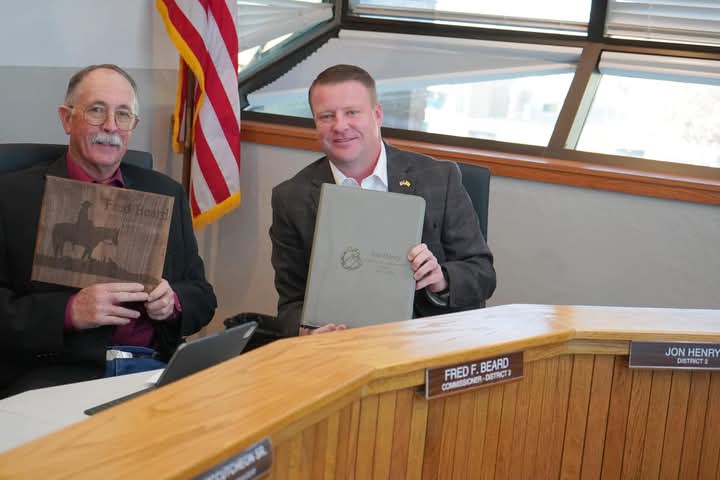
Artesia residents looking for Mayor Jon Henry over the next couple of months won’t find him at City Hall. He’ll be in Santa Fe working in his other elected position – state representative for District 54.

Henry reported during the city council’s Jan. 14 meeting that he would be absent for 60 days during the 2025 New Mexico Legislative Session, which began Tuesday, Jan. 21, and continues until March 22.

Henry was elected to the Legislature in the November 2024 election. He had been serving as an Eddy County commissioner but could not seek re-election due to term limits.

He will not be paid as a state lawmaker. Legislators receive a daily stipend to cover their expenses during the session, based on the distance they must travel to the Capitol.

“We’ve put a pretty good plan in place so I can stay connected and understand how things are going,” Henry said during the council meeting. “We have some really great things happening in this city. Let’s focus on the positive and please continue to help us be great.”

In other business:

• The city’s police and fire departments reported fewer staff vacancies. The police department needs to fill only two positions, and the fire department needs to fill five. The fire department currently has four candidates in training. At one point, the department was down 11 employees, according to Fire Chief Kevin Hope.

• City officials said they will be proceeding with plans to build an outdoor pickleball court. The court will be financed by a $650,000 grant and a loan of approximately $68,000 from the New Mexico Department of Finance.

• The council approved a public celebration permit for the Dueling Pianos event to be held Jan. 30 at the Ocotillo Theater in Artesia.

• Mayor pro tem Jeff Youtsey reported that bids are out for new hangar and taxiway work at Artesia Municipal Airport.

• Artesia Police Commander Pete Quinones reported the department would conduct three-weeks of “saturation patrol” seeking DUI violations.

• The council approved the donation of 11 old radios to be split between the House Volunteer Fire Department in House, New Mexico, and the Quay County Fire Marshal in Tucumcari.

• The council approved the Annual Records Certificate of Destruction List and adjustments to the 2024-2025 Budget including finalized numbers for a water trust board grant/loan and $150,000 for a solid waste trailer to move waste daily from Artesia to Sandpoint Landfill in Carlsbad.

• The council scheduled a public hearing Feb. 25 on three applications for liquor licenses: New Mexico Company Operations LLC, doing business as: Hermosa Shell, 1304 S. 1st St.; New Mexico Company Operations LLC, doing business as: Western Way Shell, 101 N. 1st St.; New Mexico Company Operations LLC, doing business as: West Main Shell, 2601 W. Main St.

Tense Changes

0

 By: Jim Townsend
State Senator District 34


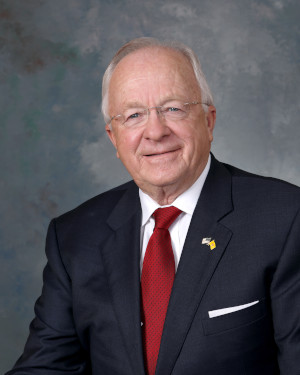
The first week of the Legislature is complete and the work of Committees looks to be set.  Let me give you a hint of the tenor of this year’s Legislative Majority.


House Health passed HB 11 Paid Family Leave. A new tax on workers and businesses all Democrats supported, and all Republicans opposed. This Bill has a cost of $370M annually and required 200 new employees to administer.


Senate Rules Committee passed Senate Bill 5, creating Game Commission reforms with a expanded mission.

All Democrats supported with one Republican supporting and the balance of Republicans opposed. I opposed the Bill because expanding New Mexico Government almost always works against the working people.  I believe this will occur here as well if it passes through.


Tuesday was a busy day; SB4 The Clean Horizon Bill aka tracking Green House Gas Emissions passed Senate Conservation. It is a tough Bill on business including Ranching and Oil and Gas.  This Bill is referred to as “Net Zero” Bill which purports to reduce New Mexico green house gas Emissions 100% by 2050. This is an anti-oil and gas bill carried by Sen Mimi Stewart. The effect of this Bill is staggering. I guess some just can’t stand prosperity, knowing full well that history shows where energy is cheap and abundant, the people thrive.


It is interesting that this week our New Mexico Environmental Department Announced that they were going to delay new Air Permits because their department was underfunded all while backing increases in Air Permit Fees by 500%. Only in the City Different is this possible. Representative Bill Gray used to say Santa Fe was 40 square miles surrounded by reality, and he was right on this too.


Democrat Representative Sarianna is touting a Set Back Bill. The effects of this bill would greatly harm many mineral interests owners who may own Mineral Interests in this set back area.  This Bill would impact all of the industry by changing the mission of the Oil Conservation Commission and even they believe it is duplicative and inefficient and will lead to over regulation. Imagine the OCD saying that.


There are other industry harming Bill’s coming, HB33 Representative Sarianna prohibiting new emissions, SB23 Oil and Gas Royalty Increases carried by Democrat Senator George Munoz, SB9 Increasing Civil Penalties by Democrat Senator Soules. The list goes on and on.  We are still waiting for anti-crime bills to come forward with the veracity of campaign slogans, I won’t hold my breath.


The majority has stated they want all of their important bills on the governor’s desk 30 days into the session, so that tells the story. We can now determine what is most important to them and I will wait for their promised bills that increase public safety, create jobs and opportunity and try to enhance our failing education system.

Early childhood workers shore up support for pay raises, career ladder

0

El Rito Media News Services 

Lori Panteah loved being an early childhood teacher at an Albuquerque day care.

She did the job for over 13 years, she said. But the mother of two could not support her family on her wage of $13.50 per hour and was forced to leave the profession.

“I really loved working with the kids, but it wasn’t good enough,” Panteah said.

She has hope for a comeback, however, under a proposal backed by the governor and the New Mexico Early Childhood Education and Care Department to raise the wage floor for early childhood workers from $15 per hour to $18.

During a Monday news conference at the state Capitol, early childhood advocates and officials worked to shore up support for two proposals tied to early child workers’ pay — one to raise their base pay and another to set up a wage and career ladder to make work in early childhood care and education a viable career path.

The proposals face a battle in the Roundhouse. While the executive branch has embraced them, both were left out of the budget recommendation by the powerful Legislative Finance Committee, released earlier this month.

“For far too long, our early childhood workforce have been underpaid and underrecognized,” Early Childhood Education and Care Cabinet Secretary Elizabeth Groginsky said at the news conference.

Under the governor’s budget recommendations, upping the wage floor for early childhood workers would be a part of a larger, $104.6 million pilot program aimed at broadly improving child care throughout the state. The wage and career ladder comes with an expected price tag of $10 million.

It’s not clear why the Legislative Finance Committee did not include the proposals in its spending plan — efforts to reach leaders of that committee were unsuccessful Monday.

Early childhood advocates were optimistic they could work it out during the session.

“I think there’s a lot of room for negotiation,” said Leila Salim, a spokesperson for OLÉ New Mexico, a nonprofit family advocacy organization. “I think the LFC is usually very conservative in their recommendations, and then throughout the course of the session, there is time to negotiate.”

In a joint written statement, House Appropriations and Finance Committee Chair Nathan Small, D-Las Cruces, and Vice Chair Meredith Dixon, D-Albuquerque, said they would closely review the requested $104.6 million for the pilot program.

“Our focus on HAFC is on making sure that our substantial investments in early childhood education are sustainable and directly serve the kids, families, and providers who care for them across our state,” they wrote.

The wage and career ladder is still being developed, the early childhood department said Monday.

But Valeria Holloway, owner of Las Cruces-based day care Best of the Southwest, said it would broadly help early childhood workers remain in classrooms.

“It is a tool that [recognizes] the skill, dedication and expertise required to nurture the young members of our society,” she said. “It creates opportunities for educators to grow in their careers without being forced to leave the classrooms, where they are needed the most.”

To fund the proposals, Groginsky said the Legislature must also pass House Bill 71, which would double the annual distribution from New Mexico’s Early Childhood Education and Care Fund from $250 million to $500 million.

That bill comes after a measure was passed last year expanding the distribution from about $150 million. On Monday, HB 71 was in the House Education Committee, but had not yet been scheduled for a hearing.

Esteban Candelaria is a corps member with Report for America, a national service program that places journalists into local newsrooms. He covers child welfare and the state Children, Youth and Families Department. Learn more about Report for America at reportforamerica.org.