Home Blog Page 21

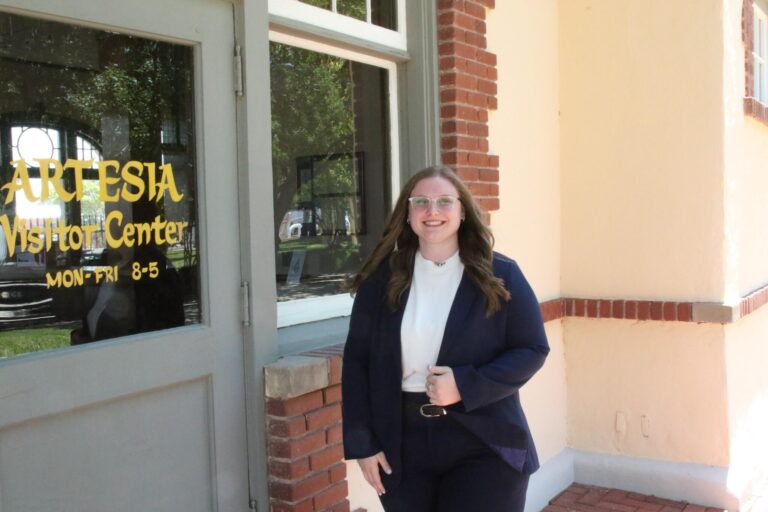
From visitor to neighbor: A look at Hannah Wilcocks making Artesia home after taking job with Artesia’s Chamber of Commerce

0

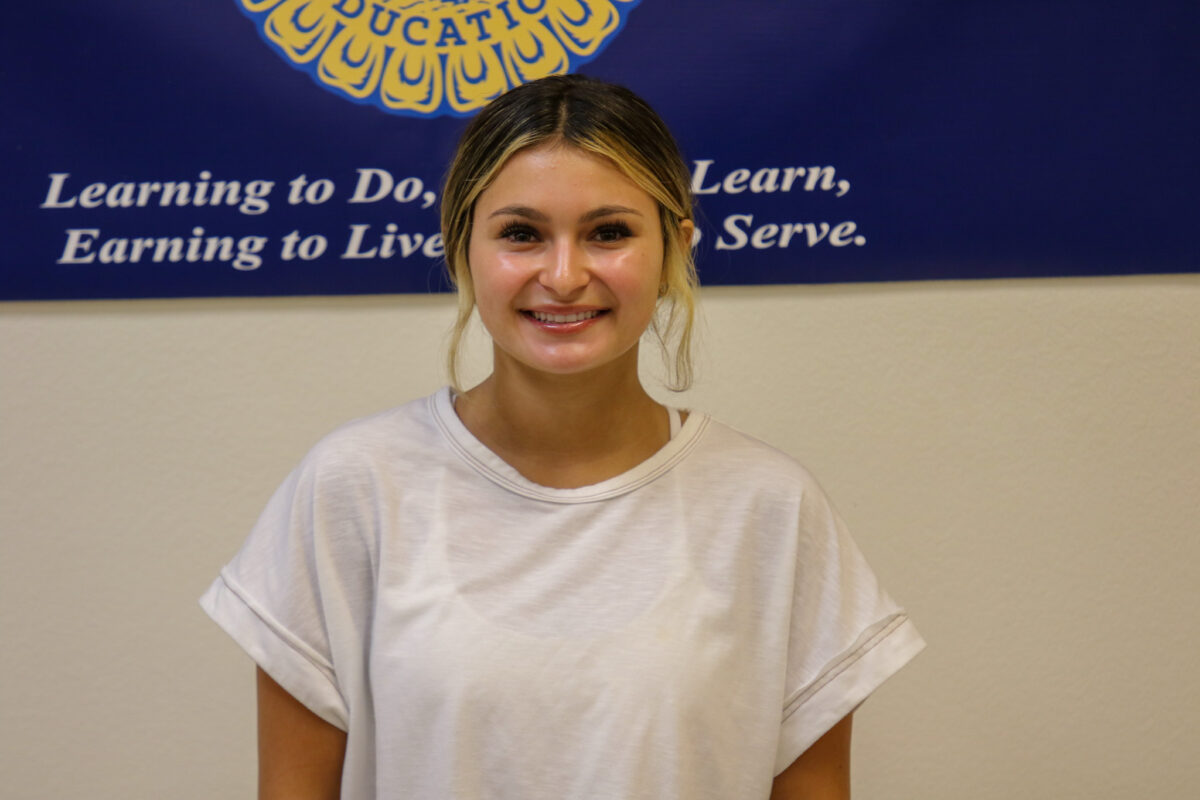
Before accepting a full-time job with the Artesia Chamber of Commerce, Hannah Wilcocks visited the community while attending classes at Oklahoma State University, doing research on the place that has turned into home base for her and boyfriend.

“It’s full circle in a way,” she said during a June 17 interview midway through her third week as the chamber’s membership and communications coordinator.

In the summer of 2025, Wilcocks was in the midst of completing classes for a master’s degree in agricultural communication from Stillwater-based Oklahoma State University.

“I came out here when he (her boyfriend, Tate Robertson) came out here to work at First American Bank. I was working in my master’s program. It was a welcoming and cute little town,” she said of Artesia.

Wilcocks was on summer break when she, Robertson and his brother Cole moved to Artesia from Oklahoma on Memorial Day weekend in 2025.

Tate had taken a job as a commercial lender, his brother was a summer intern, and the three established a small support system in their new community.

“I did leave briefly for an OSU study-abroad program in New Zealand and Australia from June 8 through July 1. When I returned, I spent the remainder of July in Artesia,” she said.

Wilcocks takes in new community

“I started following (social media) community pages over that summer and helped with the (Eddy County) Fair as a volunteer,” she said.

Wilcocks and the Robertson brothers were offered an opportunity to get to know people when First American Bank served free popcorn during the annual fair that takes place in July at the Eddy County Fairgrounds in Artesia.

“It gave me the chance to meet people, learn more about the community, and experience the friendliness and hospitality that make Artesia special,” Wilcocks said.

Wilcocks, 24, grew up in Bakersfield, California, where oil and gas and agriculture are the main economic drivers.

She said her father worked in the oil fields of the southern California city and in 2014 she got involved with the Golden State’s agriculture industry.

“I began showing livestock for the 4-H program and soon was introduced to the Future Farmers of America (FFA) program at my high school,” she said. “Prior to showing and starting to learn about the industry, I was unaware of what the FFA did and what it entailed.”

Once the Eddy County Fair ended, Wilcox went back to Stillwater in the fall of 2025 needing two semesters to complete her master’s program.

Wilcocks lines up chamber job during final semester

At the conclusion of the fall semester on Dec. 10, 2025, she came back to Artesia for Christmas break and enjoyed some time off before returning to Oklahoma on Jan. 10 for the start of her final five months in college.

While in Artesia for the holiday period, Wilcocks was focused on finishing her degree and not seeking full-time employment. But she noticed while viewing an online video that the chamber was seeking a membership and communications coordinator.

“I honestly got excited because it seemed like such a great opportunity and fit with my background in communications, design and storytelling,” she said.

Wilcocks applied for the job on Dec. 22, 2025, and had an interview the next day with Jessica Bollema, the chamber’s new director, and Kamili Burnett, the marketing and events coordinator.

Bollema became director on Dec. 8 after Hayley Klein left to take a job with the city of Artesia.

“We wanted someone who was young and well qualified for this position,” Burnett said.

During her job interview, Wilcocks said, she was upfront with both Bollema and Burnett that she could not take the job until she graduated.

“Throughout the holidays, I couldn’t stop thinking about the opportunity, but I continued to trust that if it was meant to be, it would work out,” she said.

On Jan. 6, Bollema called Wilcocks and offered her the job.

Wilcocks becomes a full-time Artesian

Wilcocks earned her master’s on May 8 and stayed in Stillwater until May 23 when she packed her belongings and made the nine-hour trip to Artesia.

“I spent the final week of May getting settled and preparing for the new chapter. I officially started with the Artesia Chamber of Commerce on June 1,” Wilcocks said.

As she has settles into her new career, Wilcocks is working on plans to meet with all chamber members while also recruiting new members.

“She’s done a good job of actively pursuing members,” Burnett said.

Follow reporter Mike Smith on Instagram @mikesmithartesianm
David Grousnick: The outcome of discipleship

0

Now I would like to stop the world for just one minute and ask you to think back. Think back with me to the first century. Think about those 50 years after Jesus’ death and what it must been like for Jesus’ disciples.

Before the last one died their efforts had brought 500,000 men, women, and children into the ranks of the church. But what they had to suffer in order to accomplish this task is seldom discussed.

We like the outcome of their discipleship but we don’t want to hear the cost of discipleship. So, for the record here is the cost: History tells us…

1. John died of extreme old age exiled to the island of Patmos.

2. Judas Iscariot, after betraying his Lord, hanged himself.

3. Peter was crucified; head downward, during the persecution of Nero.

4. Andrew died on a cross at Patrae, a Grecian Colony.

5. James, the younger, son of Alphaeus, was thrown from a pinnacle of the Temple, and then beaten to death with a club.

6. Bartholomew was flayed alive in Albanapolis, Armenia.

7. James, the elder son of Zebedee, was beheaded at Jerusalem.

8. Thomas, the doubter, was run through the body with a lance at Coromandel, in the East Indies.

9. Philip was hanged against a pillar at Heropolis.

10. Thaddeus was shot to death with arrows.

11. Simon died on a cross in Persia (what we now call Iran.)

12. Matthew was first stoned and then beheaded.

What sacrifices! And I ask you why? Why did they choose to die this way? Why desert your father and mother, your wife and child, and your home? Why put up with the constant humiliation, and hunger, and persecution, and defeat town after town after town?

I’ll tell you why, because, in the words of Apostle Paul, they were held captive by the words and teachings of Jesus Christ. It is Paul’s way of saying they were slaves to Christ!

One unsung hero of the Bible is Onesiphorus. He is forever known as a minister to the minister, the one who kept the Apostle Paul on his feet.

In 2 Timothy 1:15-18, Paul confided, “You are aware that all who are in Asia turned away from me, among whom are Phygelus and Hermogenes. May the Lord grant mercy to the household of Onesiphorus, for he often refreshed me and was not ashamed of my chains, but when he arrived in Rome, he searched for me earnestly and found me – may the Lord grant him to find mercy from the Lord on that day – and you well know all the service he rendered at Ephesus.”

Just listen to the action verbs:

He often refreshed me. He was not ashamed. He searched for me. He found me. He rendered service.

May we be that sort of person to one another, and especially to our prophets!

Artesia Public Library Summer Reading Program winds down

0

Photos by Mike Smith, Artesia Daily Press

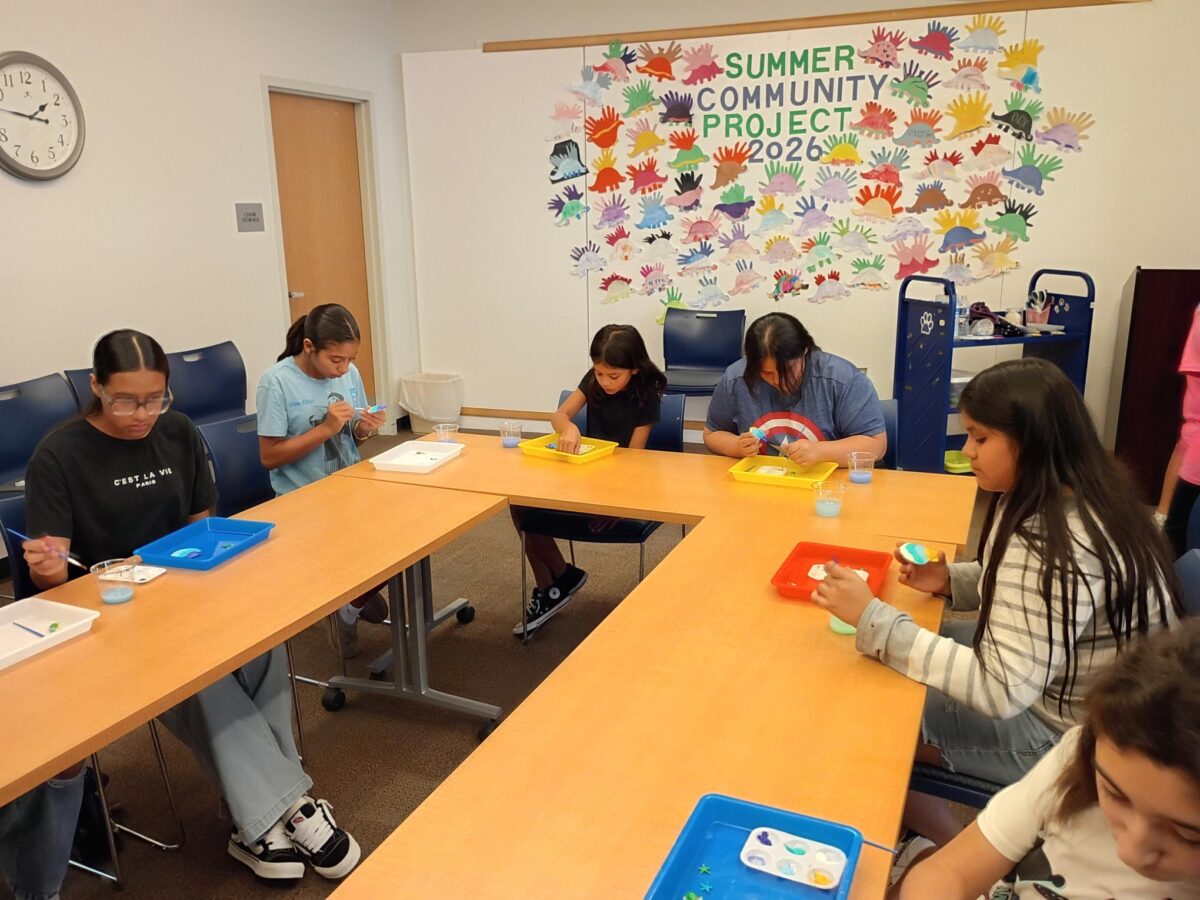
Wednesday afternoon, teenagers from Artesia gathered for a canvas painting session at the Artesia Public Library.

The title of this year’s summer program is “Unearth a Story.”

Dinosaurs are the theme this year.

The program ends July 10 with a movie party.

More information may be obtained by calling the library at 575-746-4252.

Artesia children paint seashells on Wednesday at the Artesia Public Library.

Officials look to stop screwworm spread that was discovered in Lea County earlier this month

0

A parasite that can prove lethal to cattle was found June 7 in southeastern New Mexico, officials said.

Detection of the New World screwworm in a dog near the Lea County town of Eunice prompted the New Mexico Department of Agriculture to establish a 15-mile “infested zone” around Eunice where increased monitoring and testing was required for any cattle moving through the area.

The parasite was found after the dog’s owner had taken it to veterinarian in Andrews, Texas, near the New Mexico border. The Eunice case was the first report of the screwworm’s presence in New Mexico and remained the state’s only case as of Friday, June 19.

The New World screwworm is a fly that lands on cattle and burrows into their flesh, laying eggs that hatch into larvae and feed on the animal, according to the U.S. Department of Agriculture. If infected cattle are not treated quickly, the parasite can prove deadly.

U.S. Rep. Gabe Vasquez (D-NM), whose 2nd Congressional District includes Eunice, reacted to the parasite’s discovery by introducing the Protecting America’s Herds Act on Thursday, June 18. The bill would provide funds to local specialists and agricultural agencies to train inspectors and educate producers about signs of infection by the screwworm.

No action has been taken on the legislation.

The New World screwworm is believed to have spread from South America and Mexico before entering Texas and being discovered in two cattle in Zavala County on June 3, the state agriculture department reported.

The agency set up a webpage https://screwwormnm.org/ where additional infections could be reported and to provide information on symptoms.

Meanwhile, Vasquez said, New Mexico’s ranchers must be better educated about the screwworm as it is new to the state. He’s up for reelection Nov. 3 against Republican nominee Gregory Cunningham.

The Protecting America’s Herds Act would call on the U.S. Department of Agriculture to create a federal program to award competitive grants to agricultural extension services throughout the U.S. to combat screwworm infestation.

The bill did not detail how much funding would be appropriated to “prepare and respond,” as the bill put it, but specified that applications could be awarded to train personnel on screwworm response, pay for livestock inspections and educate ranchers on prevention and treatment.

Vasquez said New Mexico’s ranching industry was already struggling under widespread drought and rising costs of production. About 98% of New Mexico was experiencing some drought conditions, according to the U.S. Drought Monitor, a national database operated by the University of Nebraska-Lincoln.

“The last thing we need is a flesh-eating parasite threatening their herds and driving up beef prices for American families,” Vasquez said. “It’s a national threat to our food supply, our ranchers, and American families – and we need to respond now.”

U.S. Rep. Teresa Leger Fernandez (D-NM) signed on as a cosponsor of the Vasquez bill and blamed a lack of federal action by the U.S. Department of Agriculture for allowing the screwworm to spread into New Mexico.

Other cosponsors included U.S. Rep. Melanie Stansbury (D-NM) and a bipartisan group of 11 representatives from Texas, California, Kansas, Oregon, Alabama and Mississippi.

Leger Fernandez is running for reelection against Republican State Rep. Martin Zamora, and Stansbury is running in the Nov. 3 general election against Rio Rancho pharmacist Ndidiamaka “Didi” Okpareke.

“Unfortunately, the federal response did not match the urgency of the moment,” Leger Fernandez said. “Now that the screwworm has arrived, we have a responsibility to step up and give our producers the tools they need to protect their herds.”

The bill is the third anti-screwworm measure filed in Congress over the past 13 months.

On June 6, 2025, Republican Rep. Monica De La Cruz of Texas introduced the New World Screwworm Preparedness Act. The bill would direct the USDA to study the effects of the parasite and develop strategies to stop its spread while reporting progress annually to Congress.

Rep. Tony Gonzales, also a Republican from Texas, introduced the STOP Screwworms Act on May 14, 2025, with 51 cosponsors. That bill would call on the agriculture department to build at least one screwworm “fly rearing facility” where sterile screwworms would be bred and released to suppress wild populations.

The De La Cruz and Gonzales bills have yet to advance beyond their initial assignment to the House Agriculture Committee.

Sterile fly production facilities are in operation in Tuxtla and Tampico, Mexico. Construction on another at Moore Air Base in Texas was completed this spring and is expected to go into operation next year.

Agriculture Secretary Brooke Rollins said in January a total of $100 million in federal money was available for subsequent projects, although no additional facilities were being built.

“We know we have tried-and-true tools and methods to defeat this pest, but we must constantly look for new and better methods and innovate our way to success,” Rollins said in a statement.

Tom Paterson, president of the New Mexico Cattle Grower’s Association said Vasquez’s approach would place responsibility with local livestock producers, who Paterson said best know the conditions on the ground and how to respond to threats such as the screwworm.

“Extension agents and their staff are among the most trusted agricultural professionals in many communities,” Paterson said. “They know our producers, understand local conditions, and can play a critical role in educating the public and helping detect New World screwworm in our livestock.”

Artesia football player Kyle Bean finds purpose through FFA

0

JT Keith

Kyle Bean did not know that quitting band would change his life.

The Artesia football player found his place in agriculture through 4-H and later FFA, where showing dairy heifers became more than an activity. It became part of who he is.

A creed to live by

“I believe in the future of agriculture, with a faith born not of words but of deeds,” E.M. Tiffany wrote in the FFA Creed. “Achievements won by the present and past generations of agriculturists; in the promise of better days through better ways, even as the better things we now enjoy have come to us from the struggles of former years.”

The FFA Creed, written by Tiffany in 1928, is a five-paragraph statement that has helped guide generations of FFA members. Bean said it also shapes the way he tries to live. He does not call himself a farmer. He calls himself an agriculturist.

Bean said farming and agriculture are connected but not the same. A farmer plows land, grows crops, harvests them and sells what is produced.

Agriculture, he said, is broader. It includes animals, farming, teaching, and the work that connects them.

The switch that stuck

Bean, 18, has shown dairy heifers since he was 9. Before that, he was in band. He quickly learned it was not for him, but 4-H was.

“I went into PowerSchool and changed from band to agriculture for the next year,” Bean said. “That was the best decision I ever made.”

When he joined FFA, Bean said, he learned far more than he expected.

Football and fair season

Bean is a member of Artesia’s 2025 Class 4A state championship football team. He said head coach Jeremy Maupin has worked with his schedule when livestock shows conflict with practice, including a show in Roswell. Bean said he may have to miss practice twice this year if he goes to the state fair.

“He is very understanding of what I do,” Bean said. “He understands that this is a big part of my life as a football player, and he is willing to work with me.”

The Artesia football team heads back onto the field after halftime during a game against Lovington.

Building trust in the barn

Bean is preparing for the Eddy County Fair. He started the year by traveling with his father to Minnesota to pick up six dairy heifers. He also has two older heifers from last year.

For Bean, success starts with trust. He works to build confidence with each animal from the start, and he wants them to trust him in return.

“It starts the day they get out of the trailer,” Bean said. “We are hand-walking them. We are getting them halter-broke to lead them around and walk them.” Bean compares the halter to putting a leash on a dog. The goal is to make sure the heifers are not easily spooked on show day.

Controlling what he can

Bean said dairy heifers will become milk cows one day, but a cow must have a calf before producing milk. He said it usually takes about two years for a heifer to conceive.

“There is a lot of competition in the dairy heifer,” Bean said. “There are a lot of families in Eddy County that bring very good, high-quality animals. I try not to worry about what other people are doing, because at the end of the day, it is one judge’s opinion on one given day. I can only control what I can control, and that is getting my animals to look the best they can that day.”

Editor’s note: This story is scheduled to publish online Thursday and in print Wednesday. Artesia Daily Press reporter JT Keith will follow Swayzee Folmar and Kyle Bean each week through the Eddy County Fair, giving readers a behind-the-scenes look at FFA and the competition leading up to the fair.

Victor Davis Hanson: Is California reaching critical mass?

0

By any measure, California is a failed state–and a national embarrassment.

Taxes? It has the highest income and gas taxes in the nation.

Roads? A Reason Foundation survey ranks it 49th among the states.

Mass flight? Between 250,000 and 350,000 more Californians leave the state than move in each year. Housing, gas, insurance, and electricity prices? The highest in the continental U.S.

Illegal aliens, the poor, the homeless, the foreign-born, and welfare recipients? The largest numbers in the U.S.

Public K-12 schools? Test scores in the bottom quartile.

Poverty? Twenty percent live below the poverty line.

So, what happened to the nation’s most richly naturally endowed–and once best governed–state?

The Left took total control–after millions of the embattled middle class fled. Millions more impoverished immigrants, legal and illegal, took their place. Left-wing Silicon Valley spawned some of the wealthiest elite liberal enclaves in the world.

The result was a neo-feudal society that was hardly democratic.

Millions of subsidized poor compose the bottom. A beleaguered middle continues to shrink. An ultra-rich apparat of left-wing coastal professionals and investors rules from the top.

As upper-bracket taxpayers fled, taxes rose on those who remained to fund expanding entitlements for newly arrived poor would-be residents. In turn, even more of the middle class left.

In 2014, Californians voted for Proposition 1, a $7.5 billion water bond designed to solve the state’s chronic water storage deficit.

Included was $2.7 billion specifically designated for new reservoirs, as the last major reservoir had been built in 1980, when California had roughly half its current population.

Despite the people’s vote, bureaucracies, elected officials, and green activists blocked all new reservoir construction.

Adding insult to injury, Governor Gavin Newsom instead used $250 million from the Proposition 1 fund to blow up four dams on the Klamath River. They had once provided storage, electrical generation, recreation, and flood control.

Californians have twice voted in referenda (for Proposition 209 and against Proposition 16) to bar the use of racial preferences for contracting, admissions, and promotion in public institutions.

Most public universities simply ignored the law. They continued their “diversity” quotas under new names, relying on left-wing elected officials and judges to ignore again the will of the people.

Preferential admissions, along with racially segregated dorms and graduation ceremonies, continued under euphemisms and denials. “Theme” houses, “affinity” graduations, and “safe spaces” practice “affirmative” discrimination.

California voters in 2008 passed Proposition 11 to stop political gerrymandering by creating a supposedly nonpartisan state redistricting commission of five Democrats, five Republicans, and four Independents. Two years later, the commission took over redrawing congressional districts as well.

But Democratic lobbyists and lawyers sabotaged the goal of disinterested redistricting according to population and geography. Instead, racial preferences and the interests of the Democratic majority of incumbents prevailed to warp the intent of the voters.

Although Republicans usually achieved nearly 40% of the California vote in national elections, two decades later there were only seven Republicans in the 52-person congressional delegation, or a mere 13% of the state’s representatives.

But even that tiny contingent was considered too generous by the Left. Thus, in 2026, it will likely be further redistricted down to four or five seats.

The balloting mess in the recent Los Angeles mayoral race further reminds the nation and the world just how dysfunctional and anti-democratic California has become.

Democrats warp elections without the need for the old Chicago way of outright ballot theft or destruction. Instead, they do so in a “legal” manner by passing insane laws that ensure fraud and Democratic victories.

The winners in the strange jungle primaries–usually both Democrats–were not announced until a week after the polls closed. One of the eventual winners in the mayoral race, the socialist Nithya Raman, had already given her teary concession speech after coming in well back at third on election night.

The Republican Spencer Pratt was comfortably ahead of her in second place on Election Day–only to lose, as expected, when large numbers of late ballots that broke roughly 90% Democratic were counted.

Remember, every registered voter is sent a mail-in ballot. If it is postmarked on election day, it can arrive at vote centers up to seven days after the election.

No one really knows whether the ballots are mailed to the dead, to former or nonexistent addresses, or to legally eligible voters–by design. In 2024, when losing presidential candidate Kamala Harris won the state by 20 points, only 0.09% of all ballots cast were rejected.

Anyone can register and receive a provisional ballot on the same day.

Ballot harvesting and ballot curing are legal.

Campaign operatives can round up voters, gather their ballots, and deliver them en masse to a voting center.

They can register anyone to vote, provide a ballot, and then deposit it immediately afterwards.

There is no requirement to provide proof of U.S. citizenship to get a driver’s license. Yet a license is not even needed to register. Any credit card without a picture suffices.

And it gets worse still.

If the potential voter has no license, no Social Security number, no proof of U.S. citizenship, and no credit cards, he still will be registered–once harvesters provide him with a “unique identifier” number.

He can then vote that very day without any ID at all.

Victor Davis Hanson is a distinguished fellow of the Center for American Greatness. He is a classicist and historian at the Hoover Institution, Stanford University, and the author of “The Second World Wars: How the First Global Conflict Was Fought and Won,” from Basic Books. You can reach him by e-mailing authorvdh@gmail.com.

‘Roadless rule’ could affect Lincoln National Forest as Sen. Heinrich calls it a “Trojan Horse”

0

The Trump administration and Republicans in Congress are working to abolish a federal regulation that restricts road construction and logging on public land in New Mexico.

The so-called “Roadless Rule,” adopted in 2001 by the U.S. Department of Agriculture, affects about 45 million acres of federal public land in the U.S., including 1.6 million acres in New Mexico national forests. Part of the acreage lies within Lincoln National Forest, which spans from the Ruidoso area in south-central New Mexico to the southeast just outside Carlsbad.

The rule, officially titled the Roadless Area Conservation Rule, is under siege on two fronts: a legally mandated administrative process initiated in June 2025 by Agriculture Secretary Brooke Rollins and in Congress through legislation proposed by U.S. Sen. Mike Lee (R-Utah).

Lee’s effort to rescind the rule via an amendment to a bill aimed at preventing wildfires drew the ire of U.S. Sen. Martin Heinrich (D-NM), who called the provision a “Trojan horse” intended to bypass the administrative process and codify the rule’s repeal into federal law so it could not be revived without action by Congress.

The Roadless Rule allows for bans on logging and construction of roads on designated “inventoried roadless areas,” also known as IRAs. The U.S. Forest Service, a subagency within the Department of Agriculture, can adjust the prohibitions as needed, meaning some IRAs allow road construction but not logging and vice-versa.

Heinrich said the rule allows federal land management policy to be quickly adapted for the designated areas. He said Lee’s amendment to the Wildfire Prevention Act – a bipartisan funding bill to address wildfires and forest management across the U.S. – was “deeply concerning.”

“This is probably the most flexible conservation tool that we have,” said the former Albuquerque city councilor. “The most responsive to being able to do vegetative and wildfire management. The most responsive in terms of protecting habitat. And yet we see this desire to just turn over our public lands to industry.”

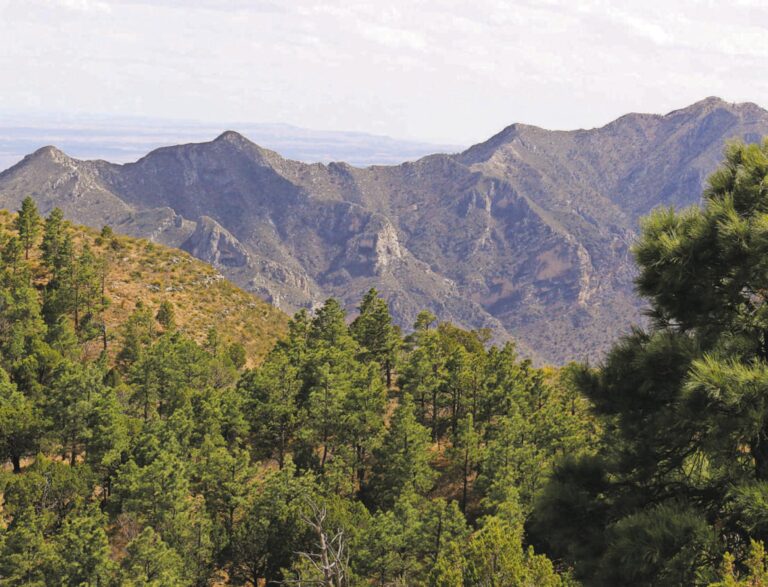
In Lincoln National Forest, about 158,000 acres are covered by the rule, spread throughout the Capitan Mountains Wilderness on the northern edge of the forest, along its western edge near Alamogordo and on the southern tip of Lincoln National Forest near Carlsbad Caverns National Park.

All of Lincoln’s IRAs are currently exempted from the ban on road construction, leaving a prohibition on logging in those areas unless later amended.

In total, New Mexico holds about 1.6 million acres designated under the rule, out of about 9.3 million U.S. Forest Service lands throughout the state.

The roadless areas are divided among six units managed by the Forest Service: Lincoln, Carson, Cibola, Coronado, Gila and Santa Fe national forests.

Road construction is banned on about 1.1 million acres of these lands while allowed on about 430,000 acres monitored under the rule.

When Rollins announced on June 23, 2025, she was initiating procedures to rescind the rule, she argued the move would cut regulations she said were getting in the way of private forest management and industrial development on federal land.

Rollins said eliminating the rule would open “a new era of consistency and sustainability for our nation’s forests. It is abundantly clear that properly managing our forests preserves them from devastating fires and allows future generations of Americans to enjoy and reap the benefits of this great land.”

Before rescinding the rule, the Agriculture Department must issue an environmental impact statement and solicit comments from the public. No date is set for final action but the process is expected to completed later this year.

Lee, who serves as chairman of the Senate’s Energy and Natural Resources Committee – Heinrich is the committee’s ranking Democrat – said the restrictions imposed by the rule could lead national forests to become overgrown, increasing fuel for wildfires and worsening dangers to public health.

“The roadless rule was a bad idea in 2001 and it remains a bad idea today, a quarter of a century later,” Lee said when he introduced the amendment during a June 10 committee meeting. “The rule has wreaked havoc on many western communities.”

Joining Heinrich in support of keeping the rule in place were conservation and sporting organizations, which argued the Roadless Rule was critical to preserving public land for recreational purposes.

Chris Wood, president of Trout Unlimited, said lands protected by the rule accounted for “2% of the American landscape,” and 25% of habitat for endangered species.

Trout Unlimited is a national nonprofit that advocates for conservation of fisheries and related watersheds throughout the U.S.

Wood argued 80% of wildfires are started by people, and 80% of all fires are sparked within half a mile of a road.

“Lack of roads in inventoried roadless areas has neither prevented fuel treatment nor led to substantially more fire,” Wood said. “The idea that we would overturn the roadless rule …. defies economic, ecological and common sense.”

Leia Barnett, New Mexico conservation lead with Santa Fe-based environmental group WildEarth Guardians said southeast New Mexico, specifically the Carlsbad area and Lincoln National Forest benefitted from roadless areas.

Barnett argued that removing the roadless designations could impact freshwater sources such as the Capitan Aquifer, which supplies 98% of Carlsbad ‘s drinking water from beneath the surface of Lincoln National Forest and the Guadalupe Mountains.

She also pointed to roadless areas in the forest’s Sacramento Ranger District near Alamogordo that were home to species of mule deer, golden eagles, trout and bears, which could be at risk if the rule was rescinded.

“If you hike, camp, fish, hunt, or drink water, Roadless Areas are some of the most valuable places we have in New Mexico,” Barnett said. “It’s very clear what the American people want. Politicians are going to learn the hard way if they ignore New Mexico’s voice to keep Roadless Areas protected.”

The Wildfire Prevention Act, with Lee’s amendment added, was approved June 10 by the 20-member Energy and Natural Resources Committee with all 11 Republican members voting in favor and the committee’s nine Democrats voting no. The bill now awaits action by the full Senate.

Managing Editor Adrian Hedden can be reached at 575-628-5516, or @AdrianHedden on the social media platform X.

Trujillo readies livestock for Eddy County Fair

0

Marshall Mecham

Bailey Trujillo has worked all year to get her livestock ready for the 2026 Eddy County Fair, set for July 21-25.

Back in the ring

Trujillo, 17, an incoming high school senior, will compete in yearling, market sheep, and market goat shows.

It will be her ninth year at the fair. She said she plans to return next summer for one final year.

She has seven sheep, five goats, and one yearling. Her sheep are Koala, Louie, Honey, Wendy, Duffy, Eskimo and Rebel. Her goats are Millie, Molly, Goliath, Bean and Big Time. Her yearling is Stewy.

Marshall Mecham | Artesia Daily Press

Artesia student Bailey Trujillo is seen getting ready for the Eddy County Fair in June.

Shows before fair week

Trujillo has competed in events to get ready for the fair, including a jackpot show on June 13 in Capitan, where she showed sheep and goats. Jackpot shows give youth exhibitors a chance to show their animals for cash prizes and awards.

Trujillo said she did well, though she still has work ahead.

“I did pretty well, as I had a few second- and third-place finishes in some classes,” Trujillo said. “I could’ve done better, but my goats and sheep aren’t ready because they’re still preparing for the fair.”

Trujillo will be in Roswell for the New Mexico Bred Show on Friday, June 26, and the Market Show on Saturday, June 27. She will bring only her sheep to those shows. She also plans to take her sheep and goats to the Fourth of July Show in Portales.

Evening work

Trujillo said she works with her animals in the evening, when she is in the right mindset and the animals have more energy.

Trujillo is a competitive dancer, and making livestock work is time-consuming. She said she is thankful that her parents, Tabatha and Jesus, help care for the animals when she is busy.

Marshall Mecham can be reached at (915) 232-1793 or on X @mecham_marshall.

Mecham is serving with the New Mexico Local News Fellowship Program, which places emerging journalists in newsrooms across New Mexico. Learn more at www.newmexicolocalnewsfellowships.org

Tom Wright: The conflict that built a nation

0

Editor’s note: This is the second of a three-part column series by Tom Wright, a regular contributor to El Rito Media, commemorating the nation’s 250th anniversary.

“Our lives, our fortunes and our sacred honor.”

Such are the last words and pledge of the signers of the Declaration of Independence. They knew the ruthlessness of the British King George and his officers. Losing the Revolution meant losing all, yet their desire for a free confederacy of colonies, which would become the United States of America, was worth the risk and what would become an eight-year struggle for victory. Not all colonists agreed. There were differences from the beginning. A war of independence would be risky and costly and some colonists preferred remaining under British authority. For the fifty-six men who signed, their future would be sealed. George Washington was not a signer. He was in the field raising the Continental Army.

The separatist movement was taking shape in 1765. The debate over independence continued eleven years until the Declaration of Independence was adopted on July 4, 1776. Combat had begun on April 19, 1775, and would continue until September 3, 1783.

This country has experienced much in the 250 years of its existence. From colonial times to present day, there have been true statesmen, scoundrels and scandals. Men have risen and faltered, but our way of government has survived. Any resemblance between current times and the activities described here is intended. Human nature has not changed. Our shared American history recounts our nation’s origins and ascent along with our human frailties.

In 1755 or 1757 – history isn’t sure – an illegitimate son was born in the West Indies, the product of an extramarital affair between Scottish trader James Hamilton and Rachel Faucette Lavien. When Alexander Hamilton was born his mother had left her husband, who had her jailed for adultery. Nine years later, Alexander’s father deserted the family; his mother died when he was eleven. Given a job at a trading company, young Alexander Hamilton impressed the adults who helped raise him and they raised money to send him to New York to attend King’s College. While there, he wrote papers favoring the revolutionary cause. In 1775, Hamilton became a commissioned officer in the Continental Army and fought at Princeton and Trenton. In 1777, Hamilton became General Washington’s aide-de-camp, serving until he and the general had a falling-out. Hamilton took a leave of absence from military service to marry Elizabeth Schuyler, the daughter of a wealthy New York family. He had risen from poverty to influential social status.

In 1781, with supplies short, over 5000 colonial soldiers had died and 15,000 captured. One of Washington’s senior officers, Benedict Arnold, had betrayed him and there was a mutiny by soldiers who had not been paid.

Tempers were short. Several months after his falling-out with Washington, Hamilton was assigned to a field command, fighting alongside French troops commanded by Marquis de Lafayette. Moving from the Hudson Valley to Yorktown, Virginia, they engaged forces commanded by British General Charles Cornwallis, forcing him to surrender on October 19. This became the last major land battle of the revolution, elevating Lafayette and the 25-year-old Hamilton to hero status.

After the war, Hamilton passed the New York bar and began a private law practice in New York City. In 1787, he was appointed a delegate to the Constitutional Convention in Philadelphia. The Articles of Confederation were to be amended and a constitution drafted. Hamilton was a Federalist, believing in strong central control over states’ rights and earned criticism from delegates who feared creating a monarchy. Hamilton saw the need for a constitution which would give a congress the power to tax, raise an army, form a federal judiciary, control interstate commerce, establish a national bank and a national currency. This put him at odds with Thomas Jefferson and the anti-Federalists. James Madison wanted a Bill of Rights to a constitution. Hamilton felt one unnecessary.

Between 1787 and 1788, Hamilton, Madison and John Jay published 85 essays, known as the Federalist Papers, describing their ideas for a constitution. When the Constitution was finally ratified, Washington would become president, Hamilton Secretary of the Treasury and Jay would become the first Chief Justice. Madison was credited as the father of the Constitution and would become our fourth president.

As Treasury Secretary, Hamilton established a national mint which produced gold and silver coinage, recognized and began repaying the war debt through tariffs on imports and a whiskey tax, established the foundation for a national economy, including public credit authorized by Congress. Import tariffs were to protect American manufacturers, which raised prices for consumers and a whiskey rebellion ensued. Hamilton’s ideas were not always well received, by the public and other Founding Fathers. Although Jefferson, Washington and other states’ rights devotees had their differences with Hamilton, all considered him virtuously devoted to America.

In 1791, the incumbent Federalist senator from New York was Phillip Schuyler, Hamilton’s father-in-law. Aaron Burr, a Democratic-Republican candidate, won the election. Hamilton had publicly opposed Burr and there began bad blood between them. Hamilton would resign from public office in December, 1794, but his public life was not over.

In the election of 1796, Vice President John Adams was running for president, but Hamilton thought him to be too unstable for the office. Hamilton tried unsuccessfully to sway Federalists into voting for Thomas Pinckney, but it didn’t work and Adams became President and Jefferson, Vice President. More partisan bad blood resulted.

In 1797, journalist James Callender produced a recap of the 1796 election, which included revelation of an extramarital affair that began in 1791 between Hamilton and a 23-year-old Maria Reynolds. What began as Reynold’s story of spousal abuse and a need for $30 to find safe harbor, ended in a $1,300 blackmail scheme orchestrated by Reynolds and her husband. In an effort to clear his name, Hamilton published an account of the affair, claiming his integrity had remained constant while he was in office. To support his claim, he requested James Monroe to issue a public statement. Monroe refused. Tempers flared and Hamilton and Monroe reached the point of a duel before Aaron Burr intervened to arrange a settlement.

From July 18, 1798, to June 15, 1800, Hamilton served as Inspector General of the Army. Washington encouraged President Adams to promote Hamilton to the rank of Major General, which made him second in command of the Army. In 1793, the Congress had suspended repayment of the war debt owed to France and the First French Republic under Napoleon Bonaparte. That led to French privateers attacking and confiscating England-bound U.S. ships and their goods. An undeclared war began. Hamilton pressed Congress to raise a tax to fund rebuilding an army and navy. President Adams preferred negotiations over all-out war, but found opposition within his Cabinet. Secretary of State Timothy Pickering and Secretary of War James McHenry sided with Hamilton and were fired by Adams to avert a war.

In the election of 1800, Hamilton worked to defeat both Thomas Jefferson, the Democratic-Republican candidate, as well as his own party’s President Adams. After all of Hamilton’s political manipulations, Jefferson and Aaron Burr were tied, both with 73 electoral votes, throwing the decision to a vote in the House of Representatives. After 35 tie votes, Hamilton, still a power in the Federalist Party, endorsed Jefferson as being “the lesser of two evils.” Jefferson became president and Burr vice president.

As a result of Hamilton’s vicious campaigning against Burr, ill feelings festered. Jefferson saw Burr as an opportunist and began receiving reports of Burr forming a conspiracy to establish a Spanish colony in the newly acquired Louisiana Purchase of 1803. Jefferson indicated Burr would not be his choice for vice president in the 1804 election. Burr decided to run for governor of New York against the Jeffersonian-Republican candidate and appealed to the Federalist party for support. Hamilton again rose in opposition and Burr was defeated. After the election, letters Hamilton wrote in opposition to political leaders were published. Burr felt his honor had been challenged and in that day, a visit to the field of honor was the settlement method of gentlemen. On July 11, 1804, Vice President Aaron Burr and Alexander Hamilton met on the field of honor in Weehawken, New Jersey. In that duel, 49-year-old Hamilton was mortally wounded and died the following day. He told the attending Rev. John Mason, “I am a sinner. I look to His mercy.” In 1801, Hamilton’s oldest son had also died in a duel, defending his father against Burr supporters. Historians speculate that Hamilton refused to aim his shot at Burr. Such an act was known among duelers as a delope, a gesture intended to end the duel. It is said Hamilton had counseled his son to do the same.

As a footnote: After Vice President Burr served his one term he was suspected by some of scheming to establish a Spanish territory within the 1803 Louisiana Purchase. Jefferson won a second term and had Burr arrested for treason in 1807. Burr was acquitted.

Tom Wright is a Santa Fe columnist and El Rito Media investor.

Sherry Robinson: New Mexico: ‘A brilliant destiny awaits her’

0

As we observe the nation’s 250th anniversary, historians focus on the East Coast, but New Mexico has proud moments too. Return with me to 1851, when New Mexico became a territory of the United States.

Five years after the United States claimed New Mexico as a prize of the Mexican-American War, Congress declared New Mexico a territory and President Millard Fillmore appointed James Silas Calhoun as governor.Calhoun was a cut above the usual federal appointee; a former judge, legislator, merchant and banker from Georgia, he was highly ethical and conscientious. (I wrote his biography in 2021.) He was already serving as New Mexico’s first Indian agent. And he spoke Spanish.

New Mexicans had no experience with democracy. They had been under the thumb of Spain and Mexico for more than two centuries and in 1846 became wards of a corrupt U.S. military occupation.

Political debates were hotly divided. One faction demanded that Americans run everything, even though they represented a sliver of the population. And to avoid taxes they wanted to keep New Mexico dependent on the federal government. Calhoun’s faction argued for statehood and had the support of New Mexicans.

In his inaugural speech on March 3, 1851, he said: “An era in the history of New Mexico commences this day… The fate of New Mexico, under Providence, is in the hands of her own sons, and if wise and patriotic counsels prevail, a brilliant destiny awaits her.”

With Calhoun’s inauguration, New Mexicans became citizens – with rights – of a United States Territory. He understood that he must guide the creation of a just and stable government in this remote outpost and see that New Mexicans were closely involved in the process. His experience as a judge and legislator prepared him well for the job.

New Mexicans weren’t entirely unprepared. Prominent families had long sent their sons to the States to be educated, and among the American newcomers were a handful of lawyers.

On May 19 New Mexicans elected their legislators. The men chosen could be considered the fathers of New Mexico Territory, and most of them were Hispanic.

This high level of political participation was unusual for a conquered people, according to historian Phillip Gonzáles. The American political process gave New Mexicans a seat at the table and rewarded them as they submitted to the power of the United States.

Now, imagine 39 legislators settling into small chambers in the ancient, dilapidated Palace of the Governors on the Santa Fe Plaza. Their job was to create a government from scratch.

New Mexico then had about 57,000 people, not counting tribes, and seven in eight were illiterate. Only churches provided any education. Indian hostilities were rampant. And official Washington barely knew the territory existed.

Addressing lawmakers, Calhoun covered issues that are surprisingly contemporary, beginning with elections. He asked them to define the qualifications for voting and holding office so that “strangers temporarily residing in your midst” couldn’t interfere in elections and suggested requiring voters to register before elections to prevent fraud. Regarding taxation, it “should be borne alike, having a just regard to the means of each individual… Not one cent beyond the just wants of the government should be collected, and the most rigid economy should be practiced.”

On education, this father of two daughters said it was important to educate New Mexico’s girls as well as her boys. Agricultural laws should govern irrigation, sale of animals, and marks and brands. Improper use of weights and measures should be penalized. As for the poor, he said, “Let us, at the very commencement of our career in self-government, take special care of the weak and the innocent, and secure to them the means of an honest and virtuous independence…”

Issues of their day included defining relations between masters and peons, demanding that the military restore church property it had seized, exploring the territory, and persuading people to give up their Mexican citizenship and join the “political community of New Mexico.”

For 40 days the first territorial legislature tackled Calhoun’s priorities and their own. By adjournment new legislators had accomplished a great deal. They declared and established the people’s rights, decided who could vote, provided for punishment of crimes, regulated trade and interaction with the tribes, attempted to levy taxes, established the territorial treasury, standardized master-servant contracts, and regulated water and acequias. They passed mining and agricultural laws, and created judicial districts.

In just three months, Calhoun and the Legislature made a remarkable start on creating a territorial government that brought order and predictability. They reassured skeptical New Mexicans and welcomed their participation in the American democratic process.

Sherry Robinson is a longtime New Mexico reporter and editor. She has worked in Grants, Gallup, the Albuquerque Journal, New Mexico Business Weekly and Albuquerque Tribune. She is the author of four books. Her columns won first place in 2024 from New Mexico Press Women.