Home Blog Page 22

Sherry Robinson: New Mexico: ‘A brilliant destiny awaits her’

0

As we observe the nation’s 250th anniversary, historians focus on the East Coast, but New Mexico has proud moments too. Return with me to 1851, when New Mexico became a territory of the United States.

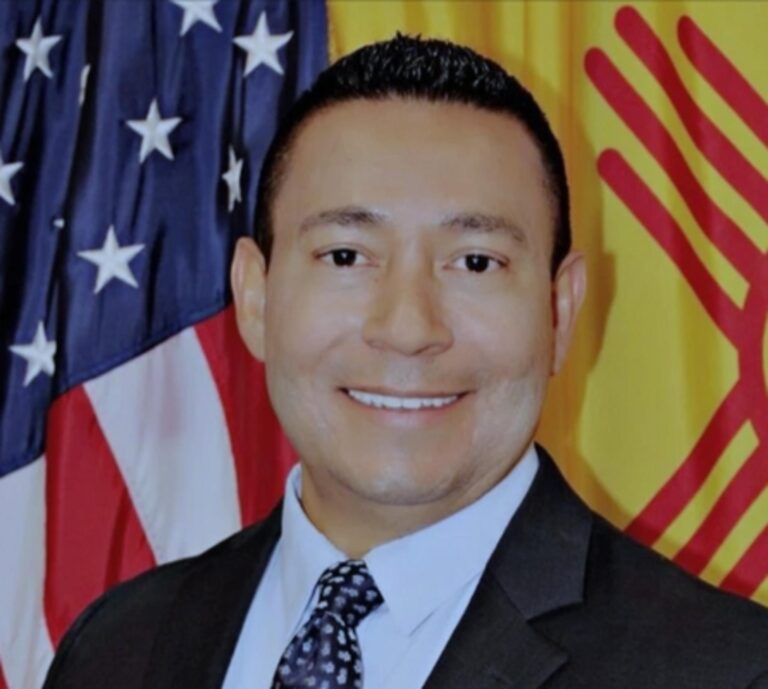
Five years after the United States claimed New Mexico as a prize of the Mexican-American War, Congress declared New Mexico a territory and President Millard Fillmore appointed James Silas Calhoun as governor.Calhoun was a cut above the usual federal appointee; a former judge, legislator, merchant and banker from Georgia, he was highly ethical and conscientious. (I wrote his biography in 2021.) He was already serving as New Mexico’s first Indian agent. And he spoke Spanish.

New Mexicans had no experience with democracy. They had been under the thumb of Spain and Mexico for more than two centuries and in 1846 became wards of a corrupt U.S. military occupation.

Political debates were hotly divided. One faction demanded that Americans run everything, even though they represented a sliver of the population. And to avoid taxes they wanted to keep New Mexico dependent on the federal government. Calhoun’s faction argued for statehood and had the support of New Mexicans.

In his inaugural speech on March 3, 1851, he said: “An era in the history of New Mexico commences this day… The fate of New Mexico, under Providence, is in the hands of her own sons, and if wise and patriotic counsels prevail, a brilliant destiny awaits her.”

With Calhoun’s inauguration, New Mexicans became citizens – with rights – of a United States Territory. He understood that he must guide the creation of a just and stable government in this remote outpost and see that New Mexicans were closely involved in the process. His experience as a judge and legislator prepared him well for the job.

New Mexicans weren’t entirely unprepared. Prominent families had long sent their sons to the States to be educated, and among the American newcomers were a handful of lawyers.

On May 19 New Mexicans elected their legislators. The men chosen could be considered the fathers of New Mexico Territory, and most of them were Hispanic.

This high level of political participation was unusual for a conquered people, according to historian Phillip Gonzáles. The American political process gave New Mexicans a seat at the table and rewarded them as they submitted to the power of the United States.

Now, imagine 39 legislators settling into small chambers in the ancient, dilapidated Palace of the Governors on the Santa Fe Plaza. Their job was to create a government from scratch.

New Mexico then had about 57,000 people, not counting tribes, and seven in eight were illiterate. Only churches provided any education. Indian hostilities were rampant. And official Washington barely knew the territory existed.

Addressing lawmakers, Calhoun covered issues that are surprisingly contemporary, beginning with elections. He asked them to define the qualifications for voting and holding office so that “strangers temporarily residing in your midst” couldn’t interfere in elections and suggested requiring voters to register before elections to prevent fraud. Regarding taxation, it “should be borne alike, having a just regard to the means of each individual… Not one cent beyond the just wants of the government should be collected, and the most rigid economy should be practiced.”

On education, this father of two daughters said it was important to educate New Mexico’s girls as well as her boys. Agricultural laws should govern irrigation, sale of animals, and marks and brands. Improper use of weights and measures should be penalized. As for the poor, he said, “Let us, at the very commencement of our career in self-government, take special care of the weak and the innocent, and secure to them the means of an honest and virtuous independence…”

Issues of their day included defining relations between masters and peons, demanding that the military restore church property it had seized, exploring the territory, and persuading people to give up their Mexican citizenship and join the “political community of New Mexico.”

For 40 days the first territorial legislature tackled Calhoun’s priorities and their own. By adjournment new legislators had accomplished a great deal. They declared and established the people’s rights, decided who could vote, provided for punishment of crimes, regulated trade and interaction with the tribes, attempted to levy taxes, established the territorial treasury, standardized master-servant contracts, and regulated water and acequias. They passed mining and agricultural laws, and created judicial districts.

In just three months, Calhoun and the Legislature made a remarkable start on creating a territorial government that brought order and predictability. They reassured skeptical New Mexicans and welcomed their participation in the American democratic process.

Sherry Robinson is a longtime New Mexico reporter and editor. She has worked in Grants, Gallup, the Albuquerque Journal, New Mexico Business Weekly and Albuquerque Tribune. She is the author of four books. Her columns won first place in 2024 from New Mexico Press Women.

El Rito Media welcomes Trina Thomas as advertising sales executive

0

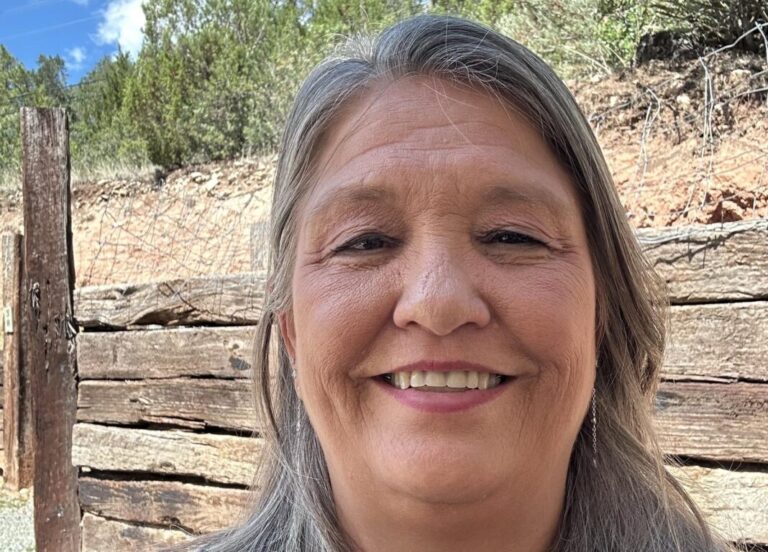
Trina Thomas has joined El Rito Media as an account executive leading advertising sales at the company’s five New Mexico newspapers.

Thomas started June 15.

The opportunity to help meet the need for community news is what Thomas said she values most as she begins her job overseeing advertising for the Ruidoso News, Alamogordo News, Artesia Daily Press, Carlsbad Current-Argus and the Rio Grande Sun in Española.

El Rito Media was founded with the purchase of the Rio Grande Sun in 2022, acquired the Artesia paper in 2023 and expanded further in June 2024 by purchasing the other three properties from Gannett, all with the mission of focusing on community-driven journalism.

“You have to become a part of the community. That’s what it’s all about,” Thomas said. “If you don’t have a newspaper that gets involved with your sports, and your politics and government, nobody cares.”

Her new job marks a return to Ruidoso for Thomas, 57, who grew up in Electra, Texas, and first worked in the restaurant industry before switching to newspaper sales at age 40.

That transition led to a job at the Ruidoso News as a salesperson in 2009 after she moved here with her husband Sid Thomas. Thomas kept that job for a decade, but her tenure ended when former owner Gannett laid her off. She was rehired for a position in Montana in 2019 but before starting that job, Thomas said, she got a call from the Santa Fe New Mexican offering her a position selling advertising that she would hold for the past seven years.

Thomas said she learned a lot serving clients in one of New Mexico’s biggest cities and at one of its largest newspapers but she was glad to return to Ruidoso.

“You have to prove it. You have to walk it, if you want to go get their support,” she said of her customers. “People want to read the paper and want to know what’s going on.”

She said she especially appreciated how the community came together after the Little Bear Fire, which burned about 44,000 acres in June 2012.

“Everybody pulls together,” she said. “They’ve been forced to. People stay here because people fight hard, they play hard, and they love hard.”

Transfer rule passes with mixed reaction from local football coaches

0

JT Keith

Rule approved 67–60; takes effect in 2026–27

New Mexico high schools have spoken. On Monday, June 22, member schools voted 67–60 to approve a major change to the state’s transfer rule.

Beginning with the 2026–27 school year, students will be allowed one free transfer to another school and will be immediately eligible for athletics at their new school. Homeschool and charter-school statutes still apply, as do recruitment and undue influence rules.

The measure is part of a broader set of revisions to Section 6 of the NMAA Handbook.

NMAA: Flexibility for families, safeguards remain

Member schools finalized the change through a referendum vote following earlier approval by both the NMAA Commission and Board of Directors.

“This change reflects the membership’s desire to provide students and families with greater flexibility while maintaining the safeguards that protect the integrity of interscholastic activities,” NMAA Executive Director Dusty Young said. “The transfer process has been one of the most discussed topics among our schools in recent years, and this adjustment creates a pathway for students making their first transfer. At the same time, our recruitment, undue influence, and home‑school and charter‑school regulations remain firmly in place to ensure a fair and equitable competitive environment for all member schools.”

Local coaches split on the impact

Artesia: ‘Unfortunate’ change

Artesia football coach Jeremy Maupin said he believes the rule could have negative consequences.

“Unfortunate, but we will look into our policies and see how we should approach it,” Maupin said. “I hope I am wrong on the negative impact it possesses.”

Carlsbad: Helps big cities, not small towns

Carlsbad coach Cale Sanders said the rule favors larger metro areas.

“I don’t like it,” Sanders said. “It only helps multi‑school towns. Nobody is transferring to Carlsbad. It helps Albuquerque and Las Cruces make more All‑Star teams than they already do.”

Roswell: Academic concerns and legal pressure

Roswell coach Jeff Lynn said he understands why the NMAA made the change, but remains firmly opposed.

“I am obviously against it,” Lynn said. “I understand the reasoning why the NMAA put that rule in. At some point, you just can’t pay all the legal fees associated with every time a parent gets upset. You will go bankrupt trying to defend that rule.”

“In a state where we are last in education, I don’t think we should be doing anything to hurt our kids academically,” he said. “I believe this rule does that.”

Lynn pointed to research showing that each transfer decreases a student’s chance of graduating by 12 percent.

Roswell students already choose their preferred school first, Lynn said, and can transfer back if it doesn’t work out.

“Does it end with one transfer?” he said. “I think someone is going to challenge the one‑transfer rule, and they are probably going to win. We’re going down a slope where a kid can transfer anytime he or she wants, similar to what is going on in the NCAA.”

Goddard: ‘It’s going to get messy’

Goddard coach Art Bolanos said he sees positives but expects growing pains.

“This is going to force coaches to have good relationships with kids,” Bolanos said. “Not that anyone has bad ones, but I think—it’s a double-edged sword. It’s going to get sloppy, and it’s going to get messy. It will be a couple of years before things get figured out.”

New Mexico officials look to stop screwworm spread as Lea County case deemed ‘inactive’

0

A parasite that can prove lethal to cattle was found June 7 in southeastern New Mexico, officials said.

Detection of the New World screwworm in a dog near the Lea County town of Eunice prompted the New Mexico Department of Agriculture to establish a 12-mile “infested zone” around Eunice where increased monitoring and testing was required for any cattle moving through the area.

The parasite was found after the dog’s owner had taken it to veterinarian in Andrews, Texas, near the New Mexico border. The Eunice case was the first report of the screwworm’s presence in New Mexico.

The case was downgraded to “inactive” on Friday, June 19 as the dog recovered from its infection, according to the New Mexico Department of Agriculture.

The New World screwworm is a fly that lands on cattle and burrows into their flesh, laying eggs that hatch into larvae and feed on the animal, according to the U.S. Department of Agriculture. If infected cattle are not treated quickly, the parasite can prove deadly.

A slide of a fly laying eggs in an animal wound.

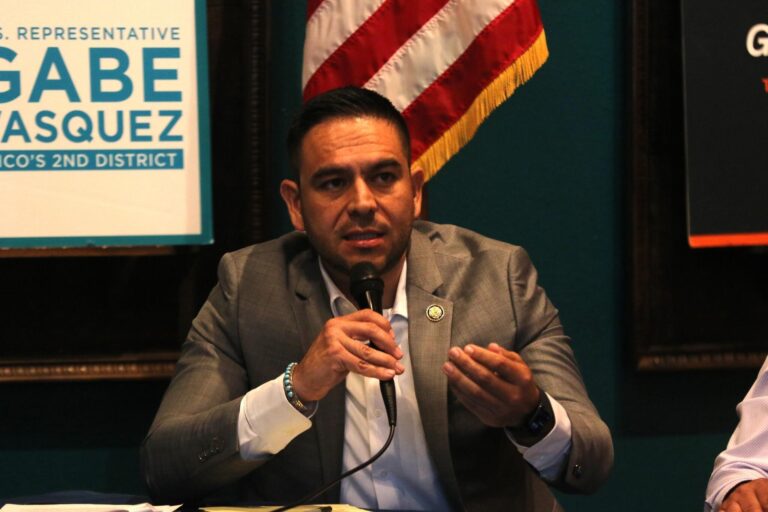
U.S. Rep. Gabe Vasquez (D-NM), whose 2nd Congressional District includes Eunice, reacted to the parasite’s discovery by introducing the Protecting America’s Herds Act on Thursday, June 18. The bill would provide funds to local specialists and agricultural agencies to train inspectors and educate producers about signs of infection by the screwworm.

No action has been taken on the legislation.

The New World screwworm is believed to have spread from South America and Mexico before entering Texas and being discovered in two cattle in Zavala County on June 3, the state agriculture department reported.

The agency set up a webpage https://screwwormnm.org/ where additional infections could be reported and to provide information on symptoms.

Meanwhile, Vasquez said, New Mexico’s ranchers must be better educated about the screwworm as it is new to the state. He’s up for reelection Nov. 3 against Republican nominee Gregory Cunningham.

The Protecting America’s Herds Act would call on the U.S. Department of Agriculture to create a federal program to award competitive grants to agricultural extension services throughout the U.S. to combat screwworm infestation.

The bill did not detail how much funding would be appropriated to “prepare and respond,” as the bill put it, but specified that applications could be awarded to train personnel on screwworm response, pay for livestock inspections and educate ranchers on prevention and treatment.

Vasquez said New Mexico’s ranching industry was already struggling under widespread drought and rising costs of production. About 98% of New Mexico was experiencing some drought conditions, according to the U.S. Drought Monitor, a national database operated by the University of Nebraska-Lincoln.

“The last thing we need is a flesh-eating parasite threatening their herds and driving up beef prices for American families,” Vasquez said. “It’s a national threat to our food supply, our ranchers, and American families – and we need to respond now.”

U.S. Rep. Teresa Leger Fernandez (D-NM) signed on as a cosponsor of the Vasquez bill and blamed a lack of federal action by the U.S. Department of Agriculture for allowing the screwworm to spread into New Mexico.

Other cosponsors included U.S. Rep. Melanie Stansbury (D-NM) and a bipartisan group of 11 representatives from Texas, California, Kansas, Oregon, Alabama and Mississippi.

Leger Fernandez is running for reelection against Republican State Rep. Martin Zamora, and Stansbury is running in the Nov. 3 general election against Rio Rancho pharmacist Ndidiamaka “Didi” Okpareke.

“Unfortunately, the federal response did not match the urgency of the moment,” Leger Fernandez said. “Now that the screwworm has arrived, we have a responsibility to step up and give our producers the tools they need to protect their herds.”

The bill is the third anti-screwworm measure filed in Congress over the past 13 months.

On June 6, 2025, Republican Rep. Monica De La Cruz of Texas introduced the New World Screwworm Preparedness Act. The bill would direct the USDA to study the effects of the parasite and develop strategies to stop its spread while reporting progress annually to Congress.

Rep. Tony Gonzales, also a Republican from Texas, introduced the STOP Screwworms Act on May 14, 2025, with 51 cosponsors. That bill would call on the agriculture department to build at least one screwworm “fly rearing facility” where sterile screwworms would be bred and released to suppress wild populations.

The De La Cruz and Gonzales bills have yet to advance beyond their initial assignment to the House Agriculture Committee.

Sterile fly production facilities are in operation in Tuxtla and Tampico, Mexico. Construction on another at Moore Air Base in Texas was completed this spring and is expected to go into operation next year.

Agriculture Secretary Brooke Rollins said in January a total of $100 million in federal money was available for subsequent projects, although no additional facilities were being built.

“We know we have tried-and-true tools and methods to defeat this pest, but we must constantly look for new and better methods and innovate our way to success,” Rollins said in a statement.

Tom Paterson, president of the New Mexico Cattle Grower’s Association said Vasquez’s approach would place responsibility with local livestock producers, who Paterson said best know the conditions on the ground and how to respond to threats such as the screwworm.

“Extension agents and their staff are among the most trusted agricultural professionals in many communities,” Paterson said. “They know our producers, understand local conditions, and can play a critical role in educating the public and helping detect New World screwworm in our livestock.”

WIPP halts waste disposal and might be on hold until August, per officials

0

Nuclear waste disposal was halted more than a month ago at the Waste Isolation Pilot Plant amid problems with its elevator system.

Federal records show no waste shipments have been emplaced at the repository near Carlsbad since May 7, and federal officials said they didn’t plan to resume disposal until the end of August.

At WIPP, the Energy Department disposes of transuranic nuclear waste (TRU), which is clothing materials, equipment and other debris irradiated during nuclear activities.

The waste is buried at WIPP in a salt deposit about 2,000 feet underground. The salt gradually collapses on the waste, burying the refuse and blocking radiation from escaping.

To do that, WIPP operates a series of three hoists, or “shafts,” which function as elevators carrying waste underground, mined salt to the surface and people in and out of the repository.

The waste and salt hoists double as lifts for workers, as does the air intake shaft. The waste hoist is the primary lift for people, but the other two can be used for emergency egress as required by state regulations.

Another shaft that exhausts air does not have hoisting capabilities. Nor does a fifth shaft recently built on west end of the mine.

The salt and air intake shafts were taken out of service for maintenance April 15 and April 28, respectively, according to a May 14 report from the Defense Nuclear Facilities Safety, an independent federal watchdog agency.

That meant all underground work was halted as there is no alternative path out of the mine should the waste hoist also go down.

This will be the case until Aug. 27 at the earliest, according to a June 16 request by the energy department to store 357 containers of waste at the surface of the site without disposing of them underground within the 60-day limit defined in the department’s state operations permit for WIPP.

The containers represent a total of 25 shipments from Idaho and Los Alamos national laboratories and the Savannah River Site in South Carolina.

The New Mexico Environment Department approved the energy department’s request June 17, granting WIPP an extra 60 days to store the drums at the surface of the site, in the parking lot and in the waste handling building, where containers are typically prepared for disposal.

“The waste containers currently stored in the (waste handling building) and (parking lot) pose no additional hazards to human health or the environment,” read the federal government’s request.

To justify these assertions, the energy department contended the drums are currently in a safe position “in accordance with WIPP standard operating procedures,” and that they will be inspected weekly.

“The waste containers are closed and are not stored in a manner that may rupture the containers or cause them to leak. No evidence of open containers or improper storage has been observed,” the request read.

In the New Mexico Environment Department’s approval of the extension, the state agency agreed that the conditions warranted the extension, and the energy department was to hold the waste where it is without disposal from June 28 to Aug. 27.

“The Request lists reasons the extended storage time poses no additional hazards to human health and the environment,” read the approval notice. “NMED herby grants the request for an extension of time.”

Don Hancock, nuclear waste program director at Albuquerque-based nonprofit and government watchdog the Southwest Research and Information Center, said the need to hold the waste above ground was a symptom of a broader problem at WIPP.

He said the facility was aging beyond its originally intended lifetime of 25 years – 1999 to 2024, according to WIPP’s initial 10-year permit with the state of New Mexico.

The permit was last renewed in 2023, and the 2024 end date was removed. Federal officials now say WIPP will remain open until about 2080 as it pursues its legal capacity of 6.2 million cubic feet of waste. Officials recently estimated the site was at about 40% of that capacity.

“WIPP is old and obsolete. DOE doesn’t want to admit it,” Hancock said. “They can’t stay open that long. It’s ludicrous.”

Hancock said the longer lifetime, which he also criticized as going beyond what New Mexicans agreed to in the first place, was leading to crumbling infrastructure being used beyond its intended duration.

He also pointed to a “maintenance outage” the Department of Energy announced at WIPP between Jan. 5 and March 13, when WIPP’s primary operations were halted to allow for about 140 maintenance projects throughout the site.

Hancock questioned the success of the outage given that disposal operations had to be suspended about two months later.

“WIPP is going to be shut down for more than six months. If you’re only operating half the time, most businesses would say that’s not adequate,” Hancock said. “There are serious problems that need to be addressed.”

One of those, Hancock argued, is the need for a new repository outside New Mexico. In the 2023 permit renewal, a clause was added stipulating that the federal government must report to the state annually on its progress in finding such a location.

Meanwhile, the Environment Department recently proposed a modification to the permit that would require half of WIPP’s disposal capacity be reserved for Los Alamos – the only generator site within New Mexico – by 2027 and 80% by 2031.

Hancock said the proposal was made to ensure WIPP benefits New Mexico in the last years of its operation. The proposed change was recently opposed by federal officials who requested a public hearing to contest the amendment. The hearing has yet to be scheduled.

“The state needs to take targeted action to see if they’re meeting real milestones and getting the waste out of Los Alamos, which to New Mexico is the highest priority,” he said. “The citizens of New Mexico are tired of waiting for action to happen.”

Managing Editor Adrian Hedden can be reached at 575-628-5516, or @AdrianHedden on the social media platform X.

Meals with Wheels: Oreo Fudge, Your New Guilty Pleasure

0

Wheeler Cowperthwaite

We all have that one friend. You know the one. They make one thing that you absolutely love and maybe it’s not good for you, but every time they come over, they bring it. You’ll always eat it, even if you shouldn’t.

That thing I absolutely love is white Oreo fudge.

It’s more substantive and crunchy than just making something with white chocolate and the cookies give it that extra flavor profile.

I love white chocolate (a sin, I know) and Oreo fudge puts all that goodness into one neat package: the sweetened condensed milk (hello Thai iced coffee!), butter, white chocolate chips, vanilla and Oreos, or their generic equivalent.

But that’s it, just six ingredients, even if they are in excess.

This is a recipe I almost never make because I like the fudge too much and they’re too easy. If I start making them, I’ll make them all the time, and I can’t have a white chocolate fudge Oreo concoction everyday, so I just wait until that one friend has a party, or comes over, with the fudge in tow.

Maybe your reaction will be different than mine, but I find these are incredibly hard to keep around for long.

The recipe involves crushing most (20) of the cookies, melting the chocolate and butter, mixing it all with the sweetened condensed milk and salt, stirring in those Oreos and vanilla extract and letting it all cool in a pan.

White Chocolate Oreo Fudge

Ingredients

24 Oreo cookies or their generic equivalents

3 cups white chocolate chips (18 ounces/510 grams)

14 oz. sweetened condensed milk

3 tablespoons unsalted butter

1/8 teaspoon salt

1 ½ teaspoons vanilla extract

Directions

Line a, 8”-square pan with parchment or wax paper. Set aside. (Overhang will allow the whole thing to be lifted out once it’s set for easier cutting outside of the pan).

Crush the cookies in a bag or cut up into small pieces. There should be some largish pieces.

In a medium saucepan over medium-low heat, mix the white chocolate chips, butter, sweetened condensed milk and salt. Stir until the chips and butter melt and everything is smooth.

Reduce the heat to low and stir in the vanilla extract and cookies.

Once mixed, pour the mixture into the parchment paper-lined pan and smooth the top. You can take four cookies’ worth of crumble and spread on the top id desired.

Refrigerate for at least 1 hour.

Remove the fudge from the pan, lifting it out by the paper and cut into servings and serve.

Recipe from Boston Girl Bakes

Jackson Bickel’s time as Artesia baseball head coach has ended 

0

Marshall Mecham 

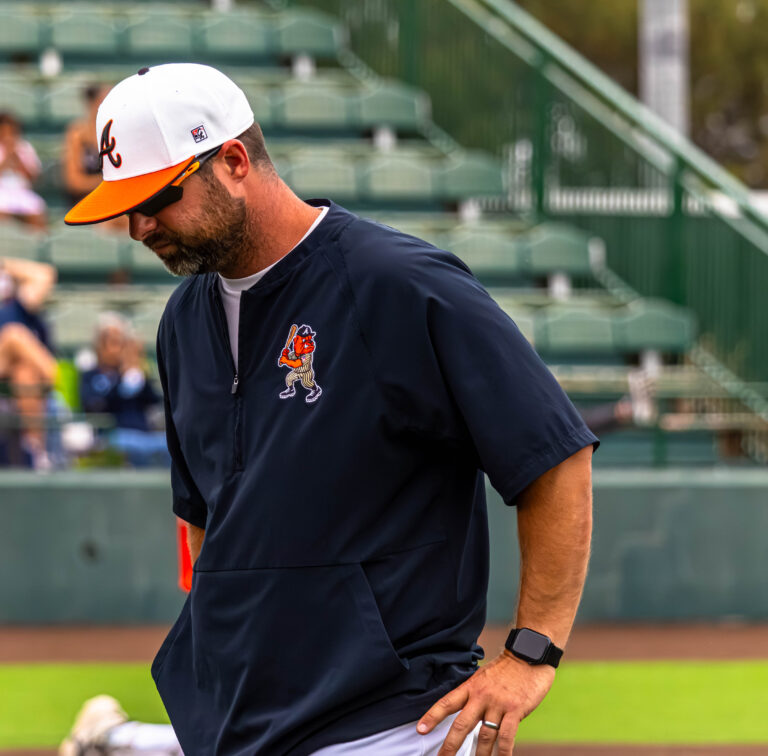
Jackson Bickel’s time as Artesia baseball head coach has ended after two seasons, as he is now the assistant principal at Artesia High School. 

Bulldogs’ success 

He led the Bulldogs to a 47-15 record in his time as head coach. This included a 6-3 4A State Championship win over Bloomfield in 2025 to secure the program’s seventh state title and first since 2000. Bickel led the Bulldogs back to the state championship game in 2026, but they lost 11-6 to Goddard.  

Bickel said he would love to have the Goddard game back, but the 2025 state championship banner hanging on the back of the press box is something the players earned and will carry with them for the rest of their lives. 

He also said he has a lot of love for all the players he coached for the last two years because they were all unique. 

Supporting staff 

Bickel said the program’s success over the last two seasons would not have been possible without the assistant coaches. 

“I think this is one of the strongest baseball staffs that we’ve had in a very long time,” Bickel said. “These assistant coaches are your warriors in all this, so it’s amazing to have a staff like that.” 

A new era for the Bulldogs 

Artesia athletic director Jeremy Maupin hired Gentry Doolittle as the new head coach. He served as an assistant coach for the last two years.  

Bickel said he thinks the program is in great hands with Doolittle because he is a great coach and knows what he is doing. Bickel also said he thinks the baseball team has a bright future. 

“These players coming in are young, hard workers, talented, and have a blueprint that was laid out for them by the seniors this past season,” Bickel said. 

Marshall Mecham can be reached at (915) 232‑1793 or on X @mecham_marshall. 

Mecham is serving with the New Mexico Local News Fellowship Program, which places emerging journalists in newsrooms across the state. Learn more at www.newmexicolocalnewsfellowships.org

Javier Sanchez: A frightening reality

0

The problem with revolutionaries is that they’re revolutionary. They are misunderstood, misfits in their own right and time. Revolutionaries are doubted – told they will never make it and told to slow down and wait for society to catch up. It took Christopher Columbus seven years and rejections from the kings of Spain, Portugal and England before he secured funding for his triumphant voyage. Society vilifies revolutionaries because the ordinary man can’t tolerate his own ordinariness. It is far easier to bring someone down so as not to feel bad about one’s own mediocrity than it is to level up. The ordinary man is trained to think that revolutionaries are the root of all evil – and oftentimes refuses to utilize the genius of their ideas and inventions. We’d rather cut off our nose to spite our face.

Last week, Elon Musk became the planet’s first trillionaire with the IPO of SpaceX. He has brought tremendous ingenuity, wealth, inspiration and leadership to literally billions of people on this planet. His influence is undeniable. Yet his haters took to the pulpit immediately to denounce his “absurd” wealth. In a Washington Post article, Sen. Elizabeth Warren wasted no time bashing Musk for his success. “I want to be clear: This is not just some fluke. It is a figure of a rigged economy. Today’s marker should be a wake-up call … Time to make a change.” I’m sure she didn’t say that when electric cars revolutionized by Tesla took to the streets. Or when reusable rockets landed perfectly on their launch pads. Or when Starlink provided millions of people with high-speed internet. Warren wasn’t the only one, however. Other naysaying pooh-poohers included Bernie Sanders, Rep. Ro Khanna and Rep. Alexandria Ocasio-Cortez who said this wealth accumulation marks a “new pinnacle of oligarchy.”

The frightening reality is that those elected officials who fight for democracy are the same ones who fight to limit personal freedom and self-determination. On the one hand they want you to believe that individual rights are important. But they just don’t want anyone to break the mold too much. Don’t make us uncomfortable with your success because it stings. The desire to bring someone down breeds a culture of dependence and blame. It’s never our fault. Our current situation, for better or worse, must be the fault of billionaires! The system is rigged! It’s intergenerational and historical trauma that keeps me back. If it’s not one crutch it’s another.

Cayetana Alvarez de Toledo, the Spanish historian, journalist and politician, understands this sentiment clearly and makes the argument that Mexican sovereignty is under threat. Not from abroad, but from within Mexico itself. In a speech delivered at the Universidad de la Libertad in Mexico a couple of weeks ago, Cayetana responded to Mexican President Claudia Sheinbaum’s defense of national sovereignty. Cayetana said the threats against Mexican sovereignty do not come from the United States or any outside forces. They come from three sources. First, organized crime fulfilled through narco-terrorism. Second, from authoritarian populism that often works in conjunction with terrorism. And third is the mindset and culture of dependence. When a society becomes complacent with the idea that it must accept what is given, it continues to ask for what must be given. Combined, these internal forces weaken national sovereignty and personal and national independence.

Haters have existed since the beginning of time. It’s not their jealousy of others that stings most; it’s the recognition that they’re mediocre.

Which brings us back to earth. When even iconic greats such as Christopher Columbus and Elon Musk can’t escape the orbit of vituperative jealousy, what chance does the common person staging his own revolution have? The guy trying to change the world or the girl who says enough is enough – even if it is in their backyard or a small town such as Española or Chama. Or even El Duende. With so much disdain for success, societies risk losing their vigor for change, adaptation and even survival as they quash the next great revolutionary. Don’t let the fear of the common man stop you from starting your own revolution. Even if it’s a small step toward independence, make that change. Life has become so boring from the collective monotony of people afraid to dress differently, speak differently or, God forbid, think differently. We stick to our usual catch phrases such as “They don’t get us because they’re not from here.” Or my personal favorite: “It’s always been done that way.”

At the bottom of La Rambla, the street that takes you from the city center to the harbor in Barcelona, Spain, you see an enormous statue of Christopher Columbus. It is awe-inspiring. He is pointing west. To the new world. He is pointing to us. To the next revolutionary. Don’t shy away from your calling. Let the haters hate.

Javier Sanchez is the former Mayor of Espanola, an independent businessman, and El Rito Media investor and columnist.

Fuentes takes baseball dream to NMMI

0

Brook Stockberger
For the Daily Press
LAS CRUCES — Jett Fuentes is surrounded by family in Artesia, and the soon-to-be New Mexico Military Institute student has his eye on a New Mexico career.

“I think I’d be a good engineer, a petroleum engineer,” Fuentes said.

Staying in the Land of Enchantment, near his family, matters to him.

“My support here is definitely a blessing,” he said.

But, oh, when he dreams …

Eyes on baseball

Fuentes can envision traveling the country.

“I want to be a Major League Baseball player,” he said.

The former Artesia High Bulldog knows he has a steep hill to climb. A 5-foot-8, 160-pound shortstop, he is preparing this summer to play junior college baseball for the NMMI Broncos.

“I’m definitely doing a lot of working out for JUCO baseball,” he said.

Fuentes said NMMI reached out to him earlier this year.

“I talked to them a little bit and the coach showed interest,” he said. “I liked them.”

Jackson Bickel, who coached Fuentes at Artesia High, said he was glad to see Fuentes get a chance at the next level.

“We hoped to see him get a few more offers,” Bickel said, “but he’ll do real well.”

Provided | Brook Stockberger

Artesia Jett Fuentes played in the Bob Ogas All-Star Baseball Classic.


All-star moment

Along with his defense, Fuentes has shown speed on the bases.

At the 49th Bob Ogas Annual All-Star Baseball Classic in Las Cruces, Fuentes hit the first single of the three-game event, advanced on a walk and scored the weekend’s first run on a throwing error.

He also entered games as a pinch-runner multiple times.

In all, 44 players from 28 schools participated in the Classic. Fuentes helped the Red Team win all three games.

“It was a different experience for sure,” Fuentes said. “It was pretty much a bunch of other guys we knew from travel ball. We were enjoying it.”

Summer work

Now the former Bulldog said he is working this summer to improve his batting strength.

Still, he said, the transition to being just a baseball player feels odd. In the past, summer was reserved for Artesia High football preparations.

“It’s definitely weird not having football camps,” he said.

As for his pro baseball dreams, Fuentes said he is going to work hard and “wherever it leads me, we’ll see what comes.”

Trout fishing in Lincoln County offers relief from Artesia June heat

0

Triple-digit temperatures across the state have not had any effect on fishing in the Ruidoso area as cooler conditions and plenty of trout are calling anglers to the mountains.

Trout conditions at Alto Lake were particularly good using Kastmasters and worms.

Trout fishing at Bonito Lake was exceptionally good using worms along with Orange and Pink Glitter PowerBait and gold Kastmasters.

In eastern New Mexico at Sumner Lake, fishing for catfish was slow using shrimp.

In northern New Mexico at Abiquiu Lake, walleye fishing was good using white grub jigs.

Fishing for trout and tiger muskie was fair to good when using PowerBait.

Fishing for white bass was slow to fair using white slab spoons at Cochiti Lake. Northern pike fishing was fair to good using white slab spoons and five-inch green pumpkin shad. Fishing for crappie was good using Rapala crankbaits and fair using white slab spoons.

At Navajo Lake, fishing for smallmouth bass was fair to good using Ned rigs, crankbaits, and spinnerbaits. Fishing for northern pike was slow using deep-diving crankbaits.

Along the San Juan River, fishing for rainbow trout was incredibly good using size-22 princess nymphs in the quality waters.

At Fawn Lakes, fishing for trout was fair to good using worms.

Fishing for trout was very good at Hopewell Lake using small leeches, blue-winged olive flies, elk-hair caddis flies, stimulators and zebra midges.

This fishing report has been generated from the best information available at the time of publication.