Home Blog Page 212

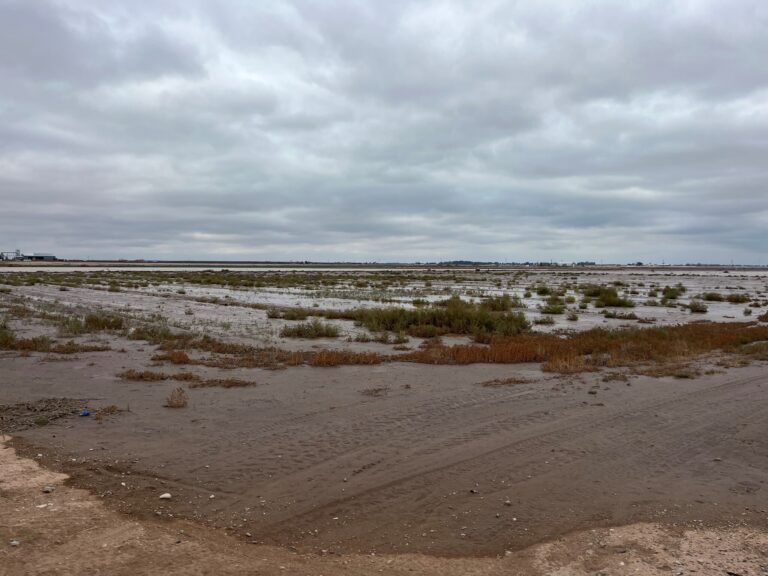
Chaves County floods impact farmland and closes schools

0

By Mike Smith
El Rito Media
msmith@currentargus.com

Elisa Begueria woke up Sunday (Oct. 20) morning to flooding in her neighborhood and concerns for Roswell and Lake Arthur.

“The amount of water was just spectacular,” she said. “I have never seen anything like that in my life.”

Begueria is a Roswell resident and superintendent of Lake Arthur Municipal Schools (LAMS), a small rural district in far southern Chaves County.

A torrential downpour on Saturday (Oct. 19) had dumped nearly 6 inches of rain on Roswell, breaking a record set in 1901, and Begueria said the water in her north Roswell neighborhood seemed like a river. The flooding caused multiple road closures and left people stranded on Sunday.

Begueria said her house was not damaged by the flooding, but she was worried about her fellow residents and LAMS employees and started checking on their safety and welfare.

“We have teachers in Roswell, Dexter, Hagerman and Artesia and some of our staff work and live in Lake Arthur,” she said. “My whole job Sunday morning was to call those in need.”

She said LAMS personnel residing in Dexter suffered the most damage from the floods. The school district canceled classes on Monday.

In a Facebook post, Dexter Volunteer Fire Department and Rescue Chief Justin Powell said flood waters hit the west side of town and flowed east of the railroad tracks into the heart of the community.

He said houses were full of water, cars were swept away and water was nearly 5 feet deep on some streets.

While Lake Arthur did not see immediate impact from the flooding, Begueria said she was concerned about rising waters in the Pecos River.

A U.S. Geological Survey monitoring location cited river water at 20 feet Sunday night. Water started receding Monday morning.

Bill Pollard, a farmer in Lake Arthur, drove six miles Monday morning for breakfast at Toby’s Place in Hagerman. He has lived around Lake Arthur for 70 years and had never seen flood waters reach such high levels.

“It backed out of the river (and flooded) all over the farm,” he said.

Pollard farms 150 acres northeast of Lake Arthur.

Water flow from the Pecos River originates in northern New Mexico and flows through southeast New Mexico into Texas.

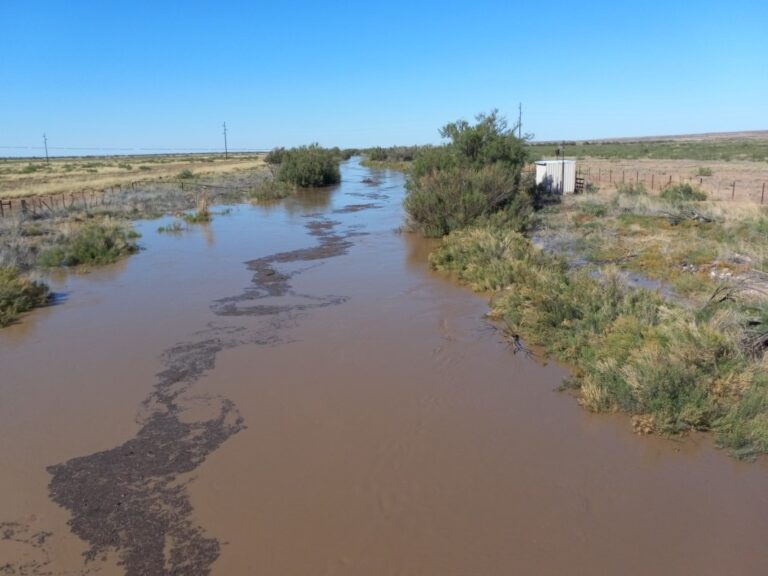
Flood waters wiped out the Rio Feliz Bridge along U.S. Highway 285 between Artesia and Roswell and filled the normally dry Felix River north of Hagerman, flooding nearby farmland.

The town of Hagerman did not suffer flood damage, said Fire Chief Chad Hamill.

Hagerman resident Benny Griffin has lived in the community since 1989 and said he did not venture anywhere on Sunday.

“I couldn’t get anywhere,” he said. “I live east of the river. If had to go anywhere I would have to go east and go around to Loco Hills, Maljamar or Tatum.”

Mike Smith can be reached by phone at 575-308-8734 or email at msmith@currentargus.com.

Catfish and bass are biting at New Mexico lakes and streams

0

Mike Smith
El Rito Media
msmith@currentargus.com

Southern and southeast New Mexico anglers looking for a weekend trip will find good conditions, according to the New Mexico Department of Game and Fish.

Around Carlsbad at Bataan Lake, fishing for catfish was fair to good using cut bait and worms.

At Brantley Lake, 19 miles north of Carlsbad, fishing for bass was fair using plastic worms.

In Lincoln County, fishing for trout was fair to good at Bonito Lake using Panther Martin spinners.

At Grindstone Lake, fishing for trout was good using Pautzke Balls O’ Fire and mini marshmallows.

Around Truth or Consequences, fishing for walleye was slow to fair using small jigs. Fishing for crappie was good using small jigs and grubs.

Fishing for white bass was good using white jigs and chrome Kastmaster lures. Fishing for walleye was good using white crankbaits jigs tipped with worms.

Fishing for largemouth bass was fair to good using topwater lures. Fishing for crappie was fair using live minnows near the Dam Site Marina. Fishing for catfish was good using white jigs and cut bait.

This fishing report, provided by the Department of Game and Fish in cooperation with Dustin Berg of www.gounlimited.org,has been generated from the best information available from area officers and anglers. Conditions encountered after the report is compiled may differ, as stream, lake and weather conditions alter fish and angler activities.

Mike Smith can be reached at 575-308-8734 or email at msmith@currentargus.com.
Brace Yourself, Change is Coming

0

By: Dr. Jose Garcia

Polls show Harris and Trump tied with two weeks to go.  Anything is possible, including familiar mischief—disinformation, voter suppression, interruption of official vote counting, and possibly a more organized version of events that led to January 6.  With media bombarding us with breathless trivia, perhaps we should pause for a moment of reflection and assess the stakes to our well-being as a nation and state.

The architecture of global power is on the verge of collapse, the result of America squandering its overwhelming lead with bipartisan wars that inflated our hubris and sense of entitlement but accomplished little.  Unlike the Soviet Union in 1945, China after the Cold War did not arm itself to the teeth, gobbling up the little fish nearby.  It prospered instead.  US-financed, state-controlled capitalism has worked spectacularly, and China’s GDP is catching up to the US.  Because of the huge Chinese market and cheap labor, US corporate wealth has prospered greatly in the exchange, but at the cost of giving vital technology to a potential enemy.  As Chinese power was growing, Chinese leaders were carefully observing the often-nasty games major powers play.  China is now exercising military muscle in the Taiwan Straits and shows a knack for statecraft.  But this should be no surprise.  Two thousand years ago, during the Han and Tang Dynasties, China rivaled the Roman Empire in size and power-over-others.  It is now rivaling ours, everywhere in the world.

Eager to benefit from America’s internal weakness, Putin hopes to restore Russian power in Eastern Europe through oil revenues, alliances, and, likely, military conquest. Nuclear weapons can bolster Russian interests elsewhere.  His ambitions probably depend on a Trump victory.  Europe and Japan show signs of alarm at growing US disfunction.  And the smaller powers in Africa and Latin America–aghast at the abandonment of what once looked, at NAFTA time in 1994, like a stable set of rules within which they could play a subordinate but dignified role—grow restless and hedge bets.

NATO, the backbone of US power until Corporate America took over much of this role, has been revived by Biden and Zelensky.  It will likely dissolve should Trump become President, as a new structure of power, full of surprises, emerges.  How Trump’s administration would exercise US power is a mystery. Members of the elite media, intimidated, have not risked asking this impertinent question, so we have no idea.  The record of his first administration is one of appalling servility to Putin and gross ignorance of the non-business world.  But this could change, right?

Harris has shown no more understanding of global affairs than Trump, so it is possible national elites and the billionaire class have decided—with a Congress unable to find its butt with either hand—to leave foreign affairs in the less-transparent but stable hands of corporate and finance America.  A Harris administration is likely to repeat the familiar and comforting rhetoric of Biden—bolster NATO, counter Russia, dance nervously with China, two-state solution, Iran is an outlaw state, etc.  But so far there seems to be no zeal for new direction in the face of mounting challenges.  Both camps just say, “trust us.”  Yeah, right.

At the national level, voters seem caught between the evisceration of the formal vestiges of democracy, promised by Project 2025, and the weakness of the Democratic Party’s response to global and national calamities.  What might be the domestic policy goals after implementation of Project 2025?  We don’t know. What do Democrats offer?  More of the same.  The public senses need for change but Harris has not convinced anyone she has an imagination for change.  Whether or not a few thousand voters in swing states are willing to accept this passive, I-am-not-Trump appeal while offering stale ideas—is going to determine the outcome of the election, a sad commentary on the current state of American democracy. Whatever happens, democratic norms are likely to continue to dissolve, and corporate-finance America is likely to be in charge.  Sorry, Bernie.

Here in New Mexico, elites enjoy a comfortable status quo.  The feds continue to shovel easy money into the economy; the oil patch, for the moment, is filling the legislature’s Christmas stockings with billions of new dollars—enough to keep lobbyists and public institutions happy.  Progressives tinker to improve the status of transgender and gay people, while doing nothing but shrug at the state’s decline in education, health care, affordable housing, or the decline of livability in Albuquerque.  The elections will not change this, not immediately.

But pay attention.  The global architecture of power is changing, as it is domestically.  We are not immune.  Change is coming and it won’t be as easy as before.  Don your helmet, gloves, and motorcycle jacket.  Brace yourself as you start your Harley.  We are in for a bumpy ride on the road ahead.

Monty Python Might be on to Something

0

By: Pastor David Grousnick

Thousands of years ago a young Chinese emperor called upon his family’s most trusted advisor. “Oh, learned counselor,” said the emperor, “you have advised my father and grandfather. What is the single most important advice you can give me to rule my country?”

And Confucius replied, “The first thing you must do is to define the problem.”

Many unhappy people cannot put their finger on what is really causing their distress. Many unfulfilled people cannot even tell you what it would take to satisfy them. Many of us have no clear idea or conception what our real needs, our real desires, and our real priorities are.

And because we have never defined the problem or clarified our goals, we spend a lifetime anxiously wandering with very little to show for the pilgrimage.

It is like the beggar in the movie “Monty Python’s Life of Brian.” Brian and his mother are walking through town and get hit up by a beggar. “Alms for an ex-leper. Alms for an ex-leper, please.” And Brian says: “What do you mean an ex-leper?”

And the leper says: “Well I was cured”

“Who cured you?” Brian says.

And the leper says: “That Jesus fellow.” He says: “Now I have a hard time making a living, all I’ve ever known how to do is beg.” And Brian says: “Well why don’t you go back and ask him to make you a leper again?”

And the leper says: “Well, I might not like that. Maybe he could just make me a leper during working hours or something.”

So, Brian just sighs, drops a coin into his cup and walks away. The ex-leper looks in the cup and says: “A half a dinari! Look at this – he only gives me a half a dinari!” And Brian says: “Some people are never satisfied.”

To which the leper replies: “That’s just what Jesus said!”

Now Monty Python might be on to something. Jesus may not have said exactly these words, but he certainly ran into people who were unappreciative. Blind Bartimaeus was not one of them. Upon receiving his sight, he immediately began to follow.

Sometimes in life, you have to define the problem and then decide if you are going to ask for help.

Doctor Fred Collier, a retired physician tells this story about his youth.

He was a medical student in the Army Specialized Training Corps in 1945 when World War II ended. He was from a Kansas family that didn’t have the kind of money he needed to complete medical school on his own. And so, when he mustered out of the army, he had no idea how he’d ever finish school, if indeed he’d ever finish it all.

One day he happened to pick up a copy of a magazine in a barber shop. One of the articles talked about the kindness and compassion of Eleanor Roosevelt, whose husband, President Franklin Roosevelt had died just a few months before.

That article planted a seed in Fred’s mind. He went to the local library and with the help of the librarian found Mrs. Roosevelt’s home address. Then he sat down and composed a letter telling her about his problem. He wrote it and rewrote until he had it exactly the way he wanted it.

When he put the letter in an envelope and dropped it in the mailbox, even his young wife wondered if it was worth the time and the postage he’d spent on it.

To Fred’s amazement, Mrs. Roosevelt agreed to meet him. When the meeting ended, she promised to help him. In the months and years ahead, Fred got checks through Mrs. Roosevelt from a variety of sources, including her own personal checks. Fred, in turn, kept her informed of his progress and sent her copies of all his term papers. Her secretary said later that she always read them with great interest.

Later Mrs. Roosevelt visited the couple in their sparsely furnished apartment. The owner of the apartment nearly collapsed when he recognized the famous visitor.

When Fred finally finished Medical School, he told Mrs. Roosevelt that he didn’t know how he would ever be able to repay her. She said that repayment wasn’t necessary nor desirable. Then she added “I will be adequately repaid if, when you are financially secure someday, you help out someone else who is truly deserving, as you were.”

Doctor Fred Collier defined his problem, reached out for help and he received it. As did blind Bartimaeus (Mark 10:46-52). It is a hard thing to do, this asking, a difficult thing, a humbling thing, but there are times when we all need help, times when we must turn to our parents once again for help, or to our children.

Sometimes it is to the church. Sometimes to God.

Have a great weekend!

Running at large: Who let the dogs out?

0

By: Harry Bailey, Supervisor
Artesia Animal Shelter

An animal running at large can become a tricky situation. There are several reasons why animals run around on the streets and most people want to help, but sometimes they put themselves or the animal in harm’s way even though they mean well.

Before we talk about what to do if you see an animal running the streets, let’s talk about a few reasons why they are running the streets. The most common would be because they are not sterilized. When an animal becomes sexually mature around 6 months old, their drive becomes very prevalent, and they go looking for a female or the female admits a scent to attract males. Another reason may be separation anxiety. This occurs when there is a change in your schedule, or you may be very close with your animal, and they want more of your time. Another cause maybe they are not being properly restrained on the property due to fencing and other factors.

After identifying a few of these issues, we should talk about what to do when you see an animal running the streets. If you find an animal running loose, the best thing to do is take a photo of the animal and call an Animal Services Officer to describe the animal (size, color, fur length) and which direction it was heading, also noting if there was a collar or leash attached. This should be done before sharing on social media. Social media is a great tool however, letting an Animal Service Officer know first allows us to respond in a better time frame.

We do not recommend residents chase after or try to capture an animal. Animal Service Officers are trained for this, and we don’t want to see anyone get bit. You can get assistance by calling our dispatch center at 575-616-7155 and if you are missing your animal or looking to adopt, please come down to the Artesia Animal Shelter located at 502 N. Paddywagon Way, here in Artesia to look for your pet.

Bipartisan Index shows which members of Congress work across the aisle 

0

By Sherry Robinson
All She Wrote
 

Entertainer-turned-politician Kinky Friedman was asked in 2006 about getting the Democrats and Republicans to work together. He responded, “I’m running for governor, not God.”

            After months of political advertising that’s more punishing than enlightening, the likelihood of anybody working together to get something done seems remote, despite all their fine language about “reaching across the aisle.”

            And yet, sometimes they do. There’s even a measure of how often this happens in Congress.

In 2015 two organizations created the Bipartisan Index to rank how often members of Congress work across party lines. The Lugar Center and Georgetown University’s McCourt School of Public Policy said at the time that “hyper-partisanship has frequently paralyzed congressional decision-making and led both Republicans and Democrats to fail the most basic tests of governance.”

The Bipartisan Index looks at how often a member co-sponsors a bill that was introduced by the other party and how often a member introduces a bill that attracts co-sponsors from the other party.

“The aim of the Index is to highlight members’ willingness to get results, regardless of party,” wrote the two founders, former Sen. Richard Lugar, R-Indiana, and Edward Montgomery, dean of the McCourt School.

New Mexico’s congressional delegations since 2015 have been mostly in the middle, but former Reps. Yvette Herrell, Republican, and Michelle Lujan Grisham, Democrat, notched the two worst rankings.

In the most recent index (118th Congress, first session, in 2023), Rep. Gabe Vasquez, a Democrat, ranked 117th of 436 representatives. Fellow Dems Rep. Teresa Leger Fernandez and Rep. Melanie Stansbury were 315th and 373rd. First on the national list that period was Rep. Brian Fitzpatrick, R-PA; at the bottom was Rep. Jim Jordan, R-OH. Next to last was Rep. Alexandria Ocasio-Cortez, D-NY.

(Some lawmakers are not ranked because they’ve served briefly. Majority and minority leaders are also excluded.)

In the 117th Congress (2021-2022), Rep. Yvette Herrell ranked 425th of 441. Leger Fernandez and Stansbury were 223rd and 226th.  Herrell was not far from Rep. Lauren Boebert, R-CO, who was last, and Marjorie Taylor Greene, R-GA, who was next to last.

The Senate is a different story, with the state’s two senators maintaining respectable rankings. In the most recent index Sen. Ben Ray Lujan was 36th of 98 senators ranked, and Sen. Martin Heinrich was 56th. In first place was Sen. Susan Collins, R-ME; in last place was Sen. Katie Britt, R-AL.

What can we learn here?

Gabe Vasquez scored his 117th place after redistricting transformed the shape of CD2, leaving it competitive with a slight tilt toward Democrats. Still, Vasquez’s score indicates he wasn’t taking political survival for granted and was out to show he could work with both sides. The lowest ranking for a New Mexican from 2021 to 2023 belongs to Herrell, who served her term before redistricting, when CD2 was more Republican. She and other occupants of the list’s lower reaches apparently didn’t feel a need to cross the aisle.

Ben Ray Lujan, in the House and the Senate, has steadily improved his rank, meaning that he has found more opportunities to work with Republicans. Lujan has regularly scored above Heinrich, and Heinrich’s rankings have been in the middle.

Fun facts: In the 115th Congress, Rep. Steve Pearce, who today is Republican Party chairman, ranked 265th, and Lujan Grisham, now governor, ranked 357th. In the 114th Congress, Pearce ranked 289th, and Lujan Grisham ranked 300th. In the 113th Congress, Lujan Grisham ranked 284th, and Pearce ranked 351st.

The Bipartisan Index is one more bite of information in a smorgasbord of analysis. But if you’re tired of congressional gridlock and want to know who will reach out to the other party, the index can help.  

Sherry Robinson is a longtime New Mexico reporter and editor. She has worked in Grants, Gallup, the Albuquerque Journal, New Mexico Business Weekly and Albuquerque Tribune. She is the author of four books. Her columns won first place in 2024 from New Mexico Press Women.

Decision 2024

0

Third Congressional District race

Name: Teresa Leger Fernandez

Party affiliation: Democrat

Office sought: U.S. Congress, New Mexico’s Third District

Current occupation: Congresswoman, New Mexico’s Third District

City of residence: Santa Fe

Age: 65

IMMIGRATION

1. What, specifically, would you encourage the House to do about the following immigration issues:

a. The process by which immigrants may seek asylum in the U.S.

b. The backlog of millions of people waiting for their cases to be heard in federal immigration courts.

c. Length of stay for documented noncitizens currently in the U.S. legally.

d. Deportation of undocumented noncitizens in the U.S. illegally. e. Prevention of illegal crossings into the U.S.

We must fix our broken immigration system. I support a balanced approach that will make our country safer, reduce the immigration court backlog, make our border more orderly and secure, and keep families together. We must create a pathway to citizenship for those who have been here a long time, work hard, and play by the rules – including our Dreamers who came to this country as children. In speaking to agricultural and construction industries, we know we must also pass the bipartisan Farmworker Modernization Act and ensure that we have legal pathways for other needed workers. We must send more resources to the border, especially investments in technology and staff to make sure that drugs and criminals do not come into the U.S. I will continue to work on a bipartisan basis to find common sense solutions that fix our system and uphold our nation’s values.

EDUCATION

2. With New Mexico ranking so consistently at the bottom of all national rankings regarding K-12 education, what would you encourage the House do to address the issue in some way?

We invest in what we believe in, and I believe in our students and their future. My parents were educators and I saw firsthand how good education and caring teachers can change the lives of students. I started my academic career at the local Head Start and fell in love with learning. The American Rescue Plan invested $112 billion in our nation’s grade schools. As a member of the House Education Committee, I’ve worked to expand apprenticeships and vocational school opportunities for New Mexicans wanting to go right into the workforce. I have advocated to preserve and expand funding in our schools that serve lower income students, known as Title, I schools. In New Mexico, 86% of New Mexico schools are eligible for Title 1 funding. Republicans have proposed to cut or eliminate Title 1 funding and Head Start which would devastate New Mexico’s education system. Lastly, I supported Constitutional Amendment I to provide access to early childhood education for all New Mexico’s children.

INNOVATION

3. New Mexico has a history of being part of historic innovation in many fields, including science, military, and the arts. What would you encourage the House to do in helping our state build on and expand innovation in multiple areas?

We must continue to leverage federal investments, federal programs, and federal institutions to spur private innovation and investment that will grow our economy and create good-paying jobs. I led efforts to promote technology transfer from our national labs to spin off groundbreaking technologies and grow private business. I introduced legislation to protect our arts economy during the pandemic. I’m hoping my Creative Economy Investment Act will generate additional funds for New Mexico’s creative arts and apprenticeships. The CHIPS and Science Act helped spur Intel to invest $3.5 billion into its facilities in New Mexico. This is only part of the approximate $8.3 billion in private investment in manufacturing and other industries flowing from bills I helped pass my first session in Congress. I’ve pushed back against Republican efforts to undo that legislation this session because I know New Mexico must create an Enchanted Innovation Economy. To build any economy, you also need basic infrastructure so that our businesses have water and roads and internet. Together, the bills I helped pass like the Inflation Reduction Act, the Bipartisan Infrastructure Law, and the CHIPS and Science Act have invested billions of dollars into New Mexico roads, transit systems, manufacturing, renewable energy, clean water systems, health care, and so much more. I will continue to secure investments that grow our economy, diversify our tax base, and put hard-working New Mexicans to work in good jobs.

PARTY LINES

4. Name an issue where you have – or would consider doing so – voted against the majority of your party because it was the better decision for the people in your district.

The needs of our New Mexico communities always come first in D.C. and in New Mexico. I represent the second-largest rural Democratic district in the country and our rural communities share many similarities with Republican districts. After talking with farmers and ranchers, I partnered with a Republican colleague to introduce the Support the West Act to make sure USDA conservation programs work for the arid west. I’m a co-sponsor of another Republican colleague’s bill which would cut red tape for local slaughterhouses and allow small ranchers to sell their meats at farmers’ markets and to local hotels, restaurants, and grocery stores. I constantly educate my colleagues on both sides of the aisle about the unique issues and challenges in our rural communities. I’ve led legislation that increases communication between the federal government and land grants, which are so unique to New Mexico. I have held the federal government accountable for PFAS contamination in New Mexico working with dairy farmers and pushed the Hermit’s Peak Office to compensate survivors more quickly. I continue to work on a bipartisan basis on an array of issues and will never hesitate to advocate for our beloved communities, regardless of party politics.

ENERGY ISSUES

5. Knowing New Mexico as a state receives as much as 50 percent of its budget from revenues from oil and gas exploration, what would you encourage your colleagues in the House to do to protect the industry in the state?

a. What would you do to make the industry safer?

New Mexico is blessed with an abundance of natural resources that include oil and gas that help fund our schools but also wind and solar that can help power our state. I know many hardworking New Mexicans work in the oil and gas industry and am committed to not only supporting the workers in these communities but also growing and diversifying their economies to avoid the boom-and-bust cycle we have seen in the past.

b.What would you do to simultaneously encourage other energy industries?

For example, I secured $4.7 billion dollars to clean up abandoned oil and gas wells – which will prevent methane from seeping into the atmosphere and create good jobs in oil and gas communities. We also have to invest in the federal agencies that regulate and oversee worker safety in the energy industry. These investments will create good paying jobs for skilled New Mexican workers, grow our economy, and make sure that the New Mexico energy industry is keeping workers safe.

Decision 2024

0

Third Congressional District race

Name: Sharon Clahchischilliage

Office sought: U.S. Congress, New Mexico’s Third District

Current occupation: New Mexico Public Education Commissioner

Party: Republican

Age: 75

City of residence: Gadiiahi

IMMIGRATION

1. What, specifically, would you encourage the House to do about the following immigration issues:

a. The process by which immigrants may seek asylum in the U.S.

The current laws need to be enforced.

b. The backlog of millions of people waiting for their cases to be heard in federal immigration courts.

This is a judicial issue which can be fixed with legislation or an executive order.

c. Length of stay for documented noncitizens currently in the U.S. legally.

Enforce the current laws.

d. Deportation of undocumented noncitizens in the U.S. illegally.

The US reserves the right to deport illegal immigrants.

e. Prevention of illegal crossings into the U.S.

Enforcing the laws will deter illegal immigrants from crossing the border.

EDUCATION

2. With New Mexico ranking so consistently at the bottom of all national rankings regarding K-12 education, what would you encourage the House do to address the issue?

A “one size fits all” does not work. There are schools within NM which have success rates which could be used as a model for other schools. As a Public Education Commissioner I have witnessed the success rates of Charter Schools whose teaching methods have addressed the educational inadequacies. The education systems need to change with the times to meet the needs of the student.

INNOVATION

3. New Mexico has a history of being part of historic innovation in many fields, including science, military and the arts. What would you encourage the House to do to help our state build on and expand innovation in multiple areas?

The state needs to improve its rankings in crime and education in order to draw tech companies and their families. New Mexico has lost bids as with Space Force due to the factors of low rankings. New Mexico cannot build effectively if its rankings aren’t addressed.

PARTY LINES

4. Name an issue where you have, or would consider doing so, voted against the majority of your party because it was the better decision for the people in your district.

As a Congressional Rep I would place a priority on the needs of my constituents before the position of my party.

ENERGY ISSUES

5. Knowing New Mexico as a state receives as much as 50 percent of its budget from revenues from oil and gas exploration, what would you encourage your colleagues in the House to do to protect the industry in the state?

a. What would you do to make the industry safer?

I believe the industry is very safe and other states should emulate New Mexico. New Mexico has the cleanest air in the U.S.

b. What would you do to simultaneously encourage other energy industries?

I would encourage competition and innovation. My main concern is to keep down utility bills and not pass down the cost to taxpayers.

Recovery efforts continue in Roswell after floods

0

Adrian Hedden
Carlsbad Current-Argus
achedden@currentargus.com

City of Roswell spokesman Todd Wildermuth said officials were working to clean up debris and assessing damage to city buildings in the wake of a massive flood that turned fatal after record-breaking rainfall drenched the city over the weekend.

The storm dropped about six inches of rain on Roswell within hours on Saturday, leading to destructive flooding Sunday, while city officials and others worked to clean up debris and assess the damages.

Two people were reported dead within the city and Chaves County, Roswell police confirmed Tuesday. Officials did not give any details to identify the deceased or the circumstances of their deaths.

“There’s a lot of clean up we’re doing. There’s so much debris on the thoroughfare,” Wildermuth said. “We’re telling people to try and stay off the streets while we make them safe again.”

Wildermuth said the event qualified as a “500-year flood,” meaning a flood of such magnitude would only occur once every 500 years.

“This event certainly was rare, and something we don’t want to go through again,” he said.

Wildermuth said the work in the wake of the flood consisted largely of removing debris from roadways and inspecting damage to city buildings. The Roswell Independent School District canceled classes for Wednesday, and several other facilities remained closed through the week.

Several impacted city facilities remained closed until further notice including the Recreation and Aquatic Center, Adult Center, Spring River Zoo, Roswell Public Library and Museum, the Convention Center and the Nancy Lopez Golf Course, according to a Facebook post from the City of Roswell.

The Cemetery and Municipal Court reopened on Wednesday.

The New Mexico National Guard said it conducted 125 welfare checks at local homes, taking 38 people to local hospitals for various treatments. The Guard said it rescued more than 300 people trapped by the floodwaters.

On Tuesday the Guard reported 75 guardsmen were on the ground in Roswell.

The Guard used 24 tactical vehicles capable of driving in four feet of water to evacuate people who were trapped by the flood, read a news release. The displaced were sent to a shelter set up by the Red Cross at the Eastern New Mexico University Fairgrounds at 2500 SE Main Street in Roswell and were allowed to bring livestock if properly contained.

The Roswell International Air Center was temporarily closed, with flights canceled Sunday into Monday morning. The airport reopened Monday afternoon and flights resumed. Roads in and out of Roswell were closed Sunday night but reopened the next day with north and southbound traffic advised to seek alternative routes.

Traffic heading north from Artesia to Roswell was diverted to State Road 2, turning west on Ojibwa and north on U.S. Highway 285, according to a Facebook post by the Chaves County Sheriff’s Office.

Anyone heading south from the city was directed to travel south from Roswell to Artesia, to turn east on Okjibwa, then south on State Road 2.

Gov. Michelle Lujan Grisham issued two state executive orders Monday declaring a disaster and appropriating $1 million in state funds to help with flood recovery.

Lujan Grisham’s first order sent $750,000 to the Department of Homeland Security and Emergency Management, while the second provided $250,000 to the New Mexico National Guard.

The Chaves County Commission declared a local state of emergency, indicating local resources were “insufficient to address the emergency,” the governor’s executive order stated.

The governor met with the Federal Emergency Management Administration (FEMA), which had yet to issue its own declaration. A federal declaration could bring more relief funding to the area but it was unclear when such a declaration would be issued. FEMA staff were reportedly in Roswell evaluating the damages.

Lujan Grisham and state officials visited the city this week to survey the damage and meet with local leaders to coordinate the recovery.

“My declaration of a state of emergency for Chaves County will help support local recovery efforts in the aftermath of historic and severe flooding in and around Roswell,” Lujan Grisham said in a statement. “I’m grateful for the swift actions taken by local authorities and our state departments to help communities in need.”

Adrian Hedden can be reached at 734-972-6855, achedden@currentargus.com or @AdrianHedden on the social media platform X.

Democracy is Worth Saving

0

By: Javier Sanchez


Our democracy is at risk they tell us.  We hear it over and over again.  Whether you’re on the left, the right or just in the middle, everything you hear on social and mainstream media talks about our threats to democracy.  News anchors say he’s fascist.  No!  She’s fascist.  These are strong words coming from people who should be more even tempered.  To stop the spread of so-called misinformation, people race to spread even more misinformation.  Even though Reagan said that freedom is never more than one generation away, I believe strengthening our democracy through constant practice of speaking freely makes it more resilient.    


Who are you voting for president?  Which candidate promotes democracy and which will destroy it? 


Take a deep breath and take a step back.  These words trigger our already high states of anxiety.  Let’s take a look at a few reasons you can take heart and realize things may be better than you think. 


First let’s take look at why democracy is worth saving.  Thanks to democracy and its sister capitalism, the United States has brought more people out of hunger, darkness and poverty than any other nation at any other time in the history of the world.  Even though politicians try and make you believe that disparities between poor and rich are “greater now than ever” don’t fall for it.  We are the richest, most democratic, free and open society that has ever existed.  Fighting for equal outcomes shouldn’t be our goal because meritocracy believes that even given the same starting point, we each hold individual strengths, weaknesses, capabilities and work ethic that naturally produce different outcomes.  And we should be ok with that because democracy isn’t about making everyone the same, it’s about freedom.  Freedom to optimize our own good and the good of our families as we see fit.  But not everyone understands this.


In a recent interview, the former US Secretary of State under President George W. Bush, Condoleezza Rice showed just how difficult conveying the meaning of democracy to others truly is.  She recounted the first time former President Bush met with former Soviet Union leader Mikhail Gorbachev.  She remembers sitting at the President’s side as he tried to explain democracy and capitalism to the head of the communist party.  Ms. Rice could see it was going nowhere.  She said Gorbachev’s eyes glossed over and Bush had lost him.  The concept was too foreign.  Gorbachev turned to Bush and said, look.  In the Soviet Union we have this fable.  There is a farmer who finds a magic lamp.  Out pops a genie to grant him a wish and the farmer immediately begins to tell the genie his troubles.  The farmer tells him his life is a failure.  His life is miserable, his wife has left him, and his fields are barren.  Yet he tells him that his neighbor has plentiful crops and two successful boys and a dutiful wife.  So the genie says I suppose your wish is to make your life rich and successful just like your neighbor’s.  To which the farmer responds, “No!  I want you to make his life miserable like mine.”  That is the jealousy of the Russian peasant, said Gorbachev.  Communism isn’t the tool that creates value and raises wages, communism is the political system that makes people poorer because jealousy promotes the crab mentality by dragging down others.


But does a that make democracy necessarily better?  According to this year’s Nobel Prize winners in Economics and a recent press release from MIT where two of the noble laureates teach and the third joint recipient from the University of Chicago, “inclusive governments”, namely democracies, experience the greatest growth in the long run.  In their book “Why Nations Fail” the economists argue that “because economic growth depends heavily on widespread technological innovation, such advances are only sustained when and where countries promote an array of individual rights, including property rights, giving more people the incentive to invent things.  Elites may resist innovation, change, and growth to hold on to power, but without the rule of law and a stable set of rights, innovation and growth stall.”  Both in the political and the economic realm, holding on to old schools of thought and patron systems remain detrimental to the advancement, growth and sustainability of optimized systems.  (Think long and hard about what I’m saying fellow Rio Arribans).  We cannot afford to wreck our democracy for the sake of maintaining the “system” that stomps out free thought, dissension and innovation.


Which brings us to the reason I think things are better than they seem.  Many people bemoan the fact that we exist in a two-party state.  You hear the incessant cries from news anchors that our country is just too evenly split and divisive.  The presidential race is neck and neck!  No matter how much you hate the other side, nothing exemplifies greater democratic strength than strenuous debate and rigorous scrutiny.  We cannot afford to let others make decisions for us.  Now is the time to make your voice heard and vote.  Otherwise, you give up your rights to the autocrats and the big machine.  When we lose our plurality, we lose our democracy.  When we lose our freedom of speech, we lose our democracy.  Get it back.  Say something. 


Javier Sanchez is the former Mayor of Espanola, an independent businessman, and El Rito Media investor and columnist