Adrian Hedden
Artesia Daily Press
achedden@currentargus.com
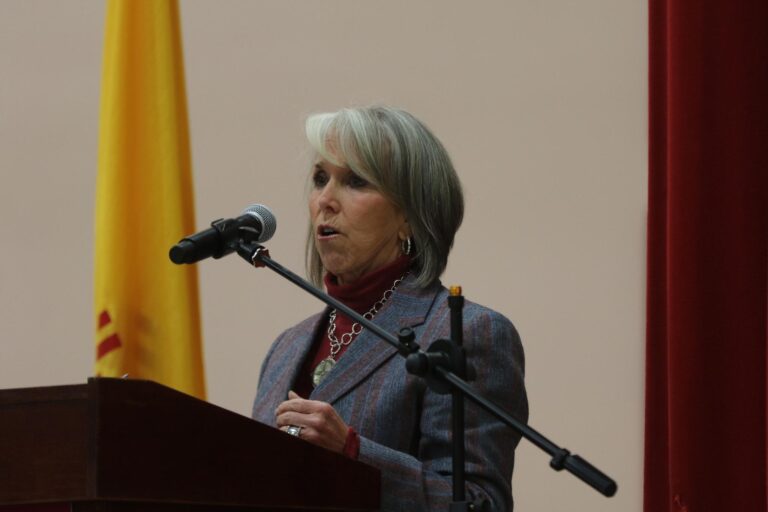
More state funds will go toward cleaning up abandoned oil wells after a bill was signed into law by Gov. Michelle Lujan Grisham.
House Bill 80 increased the portion of New Mexico’s oil and gas conservation tax that goes to the state’s Oil and Gas Reclamation Fund. The tax is paid by fossil fuel operators as a percentage of their proceeds.
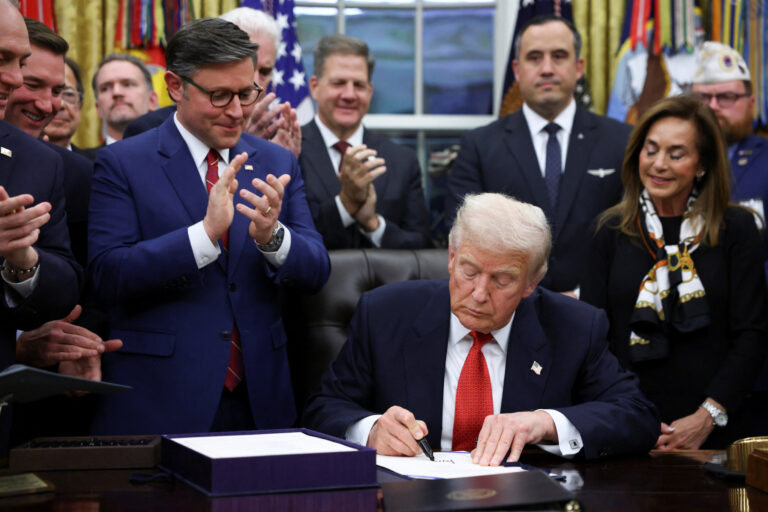
HB 80 was signed into law by Lujan Grisham on March 9 after passing the New Mexico House and Senate unanimously during the 2026 legislative session, which ended Feb. 19.
The Oil and Gas Reclamation Fund is used to pay for cleanup of inactive oil and gas wells, which are often abandoned by operators when they become financially nonviable, or the owners go bankrupt.
New Mexico was estimated to have about 1,700 such wells throughout both of the state’s oil and gas regions, the southeast Permian Basin oilfields and the northwest San Juan Basin, according to a June 2025 report by the Legislative Finance Committee.
When state regulators identify an inactive well and no owner is liable or able to be contacted the well is deemed “orphaned” by New Mexico’s Oil Conservation Division, meaning the state must pay to plug the well.
To plug all the wells deemed “orphaned” in New Mexico would cost about $208 million, read the finance committee report, and another $468 million for the 1,400 inactive wells not yet deemed orphaned.
When also considering all low-producing wells likely to become abandoned soon, the reported estimated New Mexico’s total well-plugging liability at $700 million to $1.6 billion.
HB 80 increases the amount of the oil conservation tax going to the reclamation fund to 50% in 2027, then to 75% in 2028 and to 100% by 2029 until 2037 when the portion reverts to 50% permanently.
Currently, when oil and gas prices dip below $70 per barrel of oil equivalent, the tax is 0.19% per barrel, with 10.5% going to the reclamation fund and the rest to the state’s general fund.
At more than $70 a barrel, the tax climbs to 0.24% a barrel with 19.7% going to the fund. HB 80 would not alter the tax rate, only the percentage of the revenue sent to the reclamation fund.
Based on projections of state oil prices included in a Legislative Finance Committee analysis published Feb. 5, the bill will generate annual revenue of $46.5 million for the reclamation fund by Fiscal Year 2028, increasing to $76.5 million by FY 2029 and to $108.7 million by FY 2030.
The bill was sponsored by a bipartisan group of New Mexico representatives including Rep. Mark Murphy (R-59) of Roswell and Rep. Debra Sarinana (D-21) of Albuquerque.
New Mexico’s oil and gas industry leaders applauded HB 80 as a solution to the state’s struggles to clean up the wells.
Missi Currier, president of trade organization the New Mexico Oil and Gas Association, said the bill balanced economic and environmental needs of the state for an industry she noted provides about 40% of the state’s revenue.
“At a time when the world is reminded just how fragile and volatile global energy supply can be, New Mexico’s producers offer something rare: steady, responsible, homegrown energy that funds our schools, our transportation systems, our health care, and our communities,” Currier said in a statement.
“Gov. Lujan Grisham’s signing of HB 80 is an investment in that stability – and in every New Mexican who benefits from it.”
New Mexico Rep. Cathrynn Brown (R-55) of Carlsbad said she supported the bill because it requires that state money intended for plugging abandoned oil wells be used to do so.
She said the reclamation fund was originally created to pay for the work, but in recent years money in the fund was diverted for a variety of other spending initiatives largely led by Democrats in the Legislature.
With the funding restored, Brown said, the New Mexico Oil Conservation Division should next create an inventory of all abandoned wells in the state and begin plugging them as money comes into the reclamation fund.
“That never should have happened,” Brown said. “This is what the money was intended for. This gives the Oil Conservation Division more to work with.”
And as oil and gas production grows, Brown said, the problem of abandoned wells would likely be mitigated by increased regulations and tougher requirements to drill for oil and gas in New Mexico.
“I think it’s a vestige mostly of the past,” she said. “Regulations have become more stringent. Oil and gas companies are, on the whole, being more responsible.”
Managing Editor Adrian Hedden can be reached at 575-628-5516, or @AdrianHedden on the social media platform X.