President George W. Bush
For a Leader, Humility Is the Ultimate Strength
As America begins to celebrate our 250th anniversary, I’m pleased to have been asked to write about George Washington’s leadership. As president, I found great comfort and inspiration in reading about my predecessors and the qualities they embodied. Abraham Lincoln’s resolve, Harry Truman’s decisiveness, Ronald Reagan’s optimism, and others reminded me of the challenges America has faced – and of the values that have helped us overcome them.
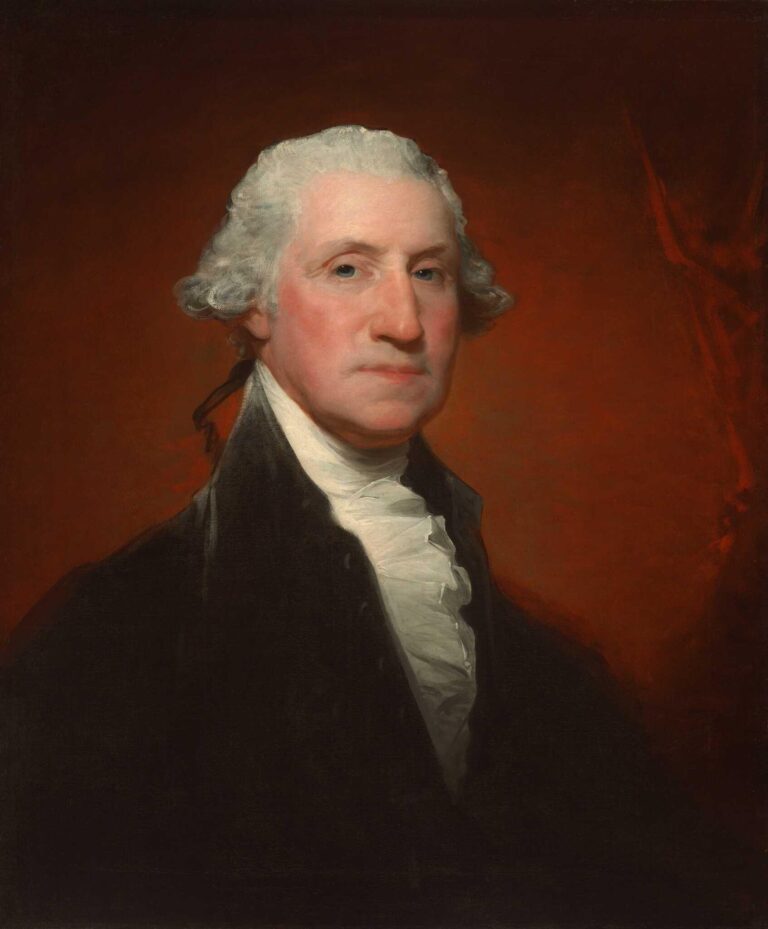
Few qualities have inspired me more than Washington’s humility. I have studied the corrupting nature of power, and how retaining power for power’s sake has infected politics for generations. Our first president could have remained all-powerful, but twice he chose not to. In so doing, he set a standard for all presidents to live up to. His life, with all its flaws and achievements, should be studied by all who aspire to leadership. George Washington’s humility in giving up power willingly remains among the most consequential decisions and important examples in American politics.
After leading the United States to victory over Great Britain in the Revolutionary War, George Washington was at the height of his power. Some suggested that he should become king. Instead, General Washington resigned his military commission in 1783. When King George III of Great Britain learned of his vanquisher’s intentions, he reportedly said, “If He did, He will be the greatest man in the world.” What Washington did on that cold December afternoon in Annapolis shaped the foundation and future of American democracy. And he was just getting started.
Washington’s path to greatness wasn’t always easy. His father died when he was 11. Rather than receiving a classical education in London like his older half-brothers, young George had to help his mother on Ferry Farm, where he learned the value of hard work. His father’s death and his own lack of education bred an insecurity. That insecurity, in turn, led to an insatiable hunger for knowledge. Largely self-taught, he became a voracious reader.
As a boy, he schooled himself in the “gentlemanly arts” by copying the 110 maxims from Rules of Civility and Decent Behavior in Company and Conversation, which shaped his character for the rest of his life. Many of the qualities that came to be associated with Washington’s leadership, from self-control and courteousness to modesty and diplomacy, can be traced to that short book on manners.
When he was 20, Washington’s interests shifted from the field of surveying to the field of battle. He started his military career as a young officer in the Virginia militia. During a single battle in the French and Indian War, four musket balls ripped through his coat, and his horse was shot out from under him. He never received a commission in the British army.
As the American commander of the Continental Army for more than eight years, Washington’s humility led him to listen, a very different style from British leadership. As Washington wrote to Major General Stirling, “a people unused to restraint must be led, they will not be drove.” Washington listened and learned not just from top military brass but from his soldiers down the ranks, in one case asking their advice on where to advance next after crossing the Delaware River and taking Trenton, New Jersey.
Subsequent leaders learned from that lesson, including Abraham Lincoln, who made sure to listen to privates as much as generals. Despite commanding badly outmanned soldiers and losing more battles than he won, America under Washington’s leadership emerged victorious in a war that changed the trajectory of world history. With Washington, character was key – in this case his humility, perseverance despite difficult odds, indomitable will, and the loyalty he inspired in others.
In early 1783, that loyalty would be tested. His men were tired, homesick, and angry about unpaid wages. Their frustration with the Continental Congress was boiling over, and there was talk of mutiny among the officers. On March 15, in a speech to the troops, Washington spoke about their common cause, their duty to each other, and the righteousness of their mission. He also stressed his personal bond with them, refusing to elevate himself above his men.
Before he made history, Washington had studied it. He was especially drawn to Roman leaders and generals wary of power. So like Lucius Quinctius Cincinnatus, who retired to his farm after saving Rome in battle, Washington returned to Mount Vernon after winning the war. It was the place that centered him, provided him with happiness, and enabled him to spend time with his beloved wife, Martha. But before long, duty once again summoned him.
The young republic was in crisis. The Articles of Confederation were failing, with the federal government virtually powerless. In 1787 Washington was called back to public life, where he presided over the Constitutional Convention in Philadelphia. He was asked to serve because he was a national hero and a unifying figure, trusted by all, and unmatched in his ability to forge consensus. He could be given power because of his character; because everyone knew he would not abuse power.
Out of the Convention emerged a new Constitution and a new office, the presidency. Washington was the obvious choice and twice was unanimously elected – the only president so elected in American history. He accepted the presidency because the office needed him, not because he needed the office.
Our first president stabilized the economy and the nation’s finances, asserted the authority of the federal government, and secured passage of the Bill of Rights. He kept America out of the French Revolutionary wars, successfully put down an insurrection in western Pennsylvania, and assembled and skillfully managed a cabinet of brilliant but contentious individuals. He delivered a foundational message on religious tolerance to the Touro Synagogue in Rhode Island. He signed legislation to create the nation’s court system and first executive departments.
The question we must all ask is, how did he accomplish these things? By most historian accounts, one of the reasons Washington achieved all of this was by admitting he might not be up to the task. He summoned experts and let debates play out in front of him. For me, that lesson meant recognizing what I didn’t know as President, surrounding myself with advisors who did know what I didn’t know, and listening to them.
Like all presidents, Washington had his faults. He made tactical errors, especially early in his military career. He could be prickly and “naturally irritable,” in the words of Thomas Jefferson. But worst of all, he was – as were so many of his generation – a lifelong slave owner who never publicly condemned the institution. His views evolved over time, expressing private misgivings about slavery later in his life. It’s been said he “made his most public antislavery statement after his death” by freeing the slaves he owned in his will, which is more than most people of his generation did. Still, slavery is a stain on an otherwise sterling private and public life.
But Washington, like all of us, should be taken in the totality of his acts and of his life in his times. By that standard, his life was exceptional. The founding generation considered Washington to be the “indispensable” man. Without him, there would be no America; and without America, the world would be a very different and much darker place.
As Doug Bradburn, President and CEO of George Washington’s Mount Vernon, put it, “His perseverance, steadfast optimism, and ultimately his wisdom drew upon a deep integrity and humility, which over many trials created in him the character of the greatest political leader of the revolutionary age.”
As America’s first president, Washington knew “the first of everything in our situation will serve to establish a precedent.” So after two terms in office, with a distrust of long-seated rulers still fresh on America’s soul, Washington chose not to run again for president. And by once again relinquishing power rather than holding on to it, he ensured America wouldn’t become a monarchy, or worse.
Our first leader helped define not only the character of the presidency but the character of the country. Washington modeled what it means to put the good of the nation over self-interest and selfish ambition. He embodied integrity and modeled why it’s worth aspiring to. And he carried himself with dignity and self-restraint, honoring the office without allowing it to become invested with near-mythical powers.
I often say that the office of the president is more important than the occupant; that the institution of the presidency gives ballast to our ship of state. For that stability we are indebted to the wisdom of our founding fathers’ governing charter and the humility of our nation’s first president. It has guided us for 250 years, and it will strengthen us for our next 250 years.
George W. Bush founded the George W. Bush Presidential Center and served as the 43rd President of the United States.