Home Blog Page 53

Opinion: The (non-Christmas) lists

0

Cal Thomas

‘Tis the season. No, not that season. It’s the season for end-of-year lists.

Time magazine, which, like so much in print journalism has suffered from a loss of readers, has published its annual list called the “most influential people of 2025.” The list includes “Artists, Innovators, Titans, Icons, Leaders, and Pioneers.” Time’s “Person of the Year” is Artificial Intelligence. That might also apply to Congress.

Most of the people Time considers influential I have never heard of, so they haven’t influenced me. Maybe it’s a generational thing.

You may be wondering (I was) how Time defines “influential”? Here it is: “The word influence is derived from an ancient astrological term describing the power of the stars to affect the destiny of human beings. The definition has changed a bit over the centuries, but influence remains a mysterious force and a difficult one to measure.” All together now as we sing “The Age of Aquarius.” May the Force be with you.

Time’s definition of influence begs the question: if the meaning keeps changing and is difficult to measure, what’s the point of publishing the list?

I put together my own (partial) list of people who have influenced me. Readers can likely identify and may have additions of their own.

A teacher whose knowledge and enthusiasm for a subject creates that desire for knowledge in a student (my American University history professor, Bill Cromwell, and books by David McCullough and Stephen Ambrose, among others)

An artist who creates and shares beauty (Julie Andrews). You can still find our interview on YouTube.

A writer who, by the power of his or her argument, sometimes causes me to think differently or understand their reasoning (Frank Rich when he was an opinion columnist with the New York Times and Maureen Dowd who still is. Also, Henry Louis Gates Jr. and his profound PBS series on race and Reconstruction).

An orator (where have you gone?) who can speak without notes, but with deep convictions that causes even people who might disagree with his/her positions to respect them and the way they communicate (the late Paul Harvey, Rush Limbaugh and Margaret Thatcher).

A mother who chooses to stay home with her children while they are young rather than putting them in daycare (mine).

A husband who is faithful to his wife and puts her needs before his own, thus getting what he couldn’t get by putting himself first.

The unsung, including the volunteer, who goes into prisons and builds relationships with inmates to help them lead a better life when they are released.

The pregnancy help centers that tell women who have unplanned pregnancies the truth about their unborn children and persuade them to parent or place them in adoptive homes.

The organizations that offer scholarships for children in failing public schools to attend private schools where they will receive a real education (The Children’s Scholarship Fund).

The pastor who is not associated with a mega church but works tirelessly to lead his congregation with financial and moral integrity (whom the media ignore as they focus only on those few who commit sexual or monetary sins).

For the person who has “everything” and you don’t know what to give them: If any on my list fit any on your list, give them a present this Christmas season that will never lose its value. Tell them how much they have meant to you and how they have positively influenced your life.

Readers may email Cal Thomas at tcaeditors@tribpub.com. Look for Cal Thomas’ latest book “A Watchman in the Night: What I’ve Seen Over 50 Years Reporting on America” (HumanixBooks).

Health care worker compacts gain bipartisan support

0

Think New Mexico

A growing coalition of organizations from across the political spectrum supports New Mexico joining the interstate compacts for health care workers.

Joining these interstate compacts was one of the top reforms recommended by the nonpartisan think tank Think New Mexico in its 2024 report, How to Solve New Mexico’s Health Care Worker Shortage.

Interstate health care worker compacts are agreements among states to recognize and accept professional licenses issued by the other states participating in the compact.

Similar to the way that a person can hold a driver’s license from one state and legally drive in another, states that participate in an interstate compacts agree to recognize licenses issued to health care professionals by other states. Without these agreements, doctors and other health care workers licensed in other states cannot legally provide services in New Mexico – even via telehealth – unless they go through New Mexico’s lengthy licensing process.

States that join the doctor compact experience an increase of 10-15% in the number of doctors licensed every year, according to the New Mexico Medical Board. Forty-three states and D.C. participate in the interstate compact for physicians, including all five states that border New Mexico.

A growing majority of states also participate in compacts for psychologists, counselors, physical therapists, audiologists and speech therapists, physician assistants, dentists, and emergency medical personnel – all fields where New Mexico has shortages.

New Mexico is one of just four states that participates in one or no compacts. Meanwhile Colorado has joined all ten compacts; Utah is in nine; Oklahoma is in eight; Arizona is in seven; and even Texas is in five. During the 2025 regular legislative session, the House unanimously passed seven health care worker compacts, and Governor Lujan Grisham expressed her support for them.

Senate Republicans also endorsed joining the compacts. However, during the 2025 session the Senate Judiciary Committee killed six of the seven compact bills without a hearing, and killed the doctor compact by making 32 amendments. (Because compacts are agreements among states, all states must agree to the same terms in order to join the compact.)

Senate Majority Leader Peter Wirth pledged to consider the compacts for doctors and social workers during the 2026 session. However, there was no commitment to pass the other eight compacts, even though New Mexico has shortages across all those health professions.

For example, in order to meet national benchmarks, New Mexico needs 2,510 more EMTs, 526 more physical therapists, 281 more physician assistants, and 114 more occupational therapists, among other professions.

The state’s behavioral health care system has been in crisis for over a decade, with severe shortages of psychologists and counselors. The coalition of groups supporting the interstate health care worker compacts spans the political spectrum, including representatives of business, like the NM Chamber of Commerce, the Greater Albuquerque Chamber of Commerce and the Albuquerque Hispano Chamber of Commerce, as well as labor unions AFSCME and the AFT. It ranges from progressive.

Indivisible chapters to the Coalition of Conservatives in Action. The doctor compact is supported by both the New Mexico Conference of Catholic Bishops and Planned Parenthood of the Rocky Mountains.

“Joining the interstate health care worker compacts unites New Mexicans all across the political spectrum,” said Fred Nathan, Jr., Executive Director of Think New Mexico. For more information, visit Think New Mexico’s website at: www.thinknewmexico.org.

Commentary:Ah, the ‘70s – good vibes, fab food, nice prices

0

Richard Connor

My man, my man, takin’ you outta sight with a tale that’s radical.

The lady I dig is stellar and slammin’ and you know I treat her right, not just last night but every night. Last night, though, was the bomb.

Sure, I dropped about $30 for two at the Inn of the Mountain Gods on steak, veal, crab legs and off-the-hook shrimp cocktail, adding a couple of Pepsis. There were some good vibes, and it was just fab. And sure, I knocked the tip to 15% and gave the waitress five cool ones.

We tripped over to see the movie “One Flew Over the Cuckoo’s Nest” and then went back to my crib to listen to some Captain & Tennille. The lady agrees “love will keep us together.” We spun some Freddy Fender to give a country groove.

All dolled up. Left the leisure suit in the closet. Me in my new bell bottoms and her in that maxi dress and high heels. We were sharp. New F-150 Ford was the right chariot.

And you know we like President Gerald Ford. Good riddance to Tricky Dick Nixon.

Okay, okay. That was 1975 and that was then but actually it is now – 2025 – and we’re basking in 50 years of nostalgia at the Inn of the Mountain Gods. On Tuesday night, Dec. 9, the Inn ended its yearlong celebration of a half century in business with a final round of Wendell’s restaurant dinner servings at 1975 prices: shrimp cocktail $3.75, prime rib $9.50 (full bone cut $11.50).

After the first one last January, each dinner has been sold out. Tuesday’s final round of servings drew more than 400 diners.

“This whole year what we’ve done on the second Tuesday of every month, we serve the original 1975 menu at the 1975 prices as an appreciation to our guests for coming 50 years and supporting Inn of the Mountain Gods,” said Chief Operating Officer Frizzell J. Frizzell Jr. “So, people are literally getting $400 meals for $75.”

Nostalgia never tasted so, well, so far out. Affordable, too.

If you need a refresher – or introductory – course on 1975, let’s start with the Billboard Magazine music charts. Captain & Tennille had the number one song with “Love Will Keep Us Together,” followed by Glen Campbell with “Rhinestone Cowboy.” Other ‘70s hitmakers in the top 10 were Elton John; Grand Funk Railroad; Earth, Wind & Fire; and the Eagles.

Jack Nicholson was wowing audiences in the movie “One Flew Over the Cuckoo’s Nest” and the shark shocker “Jaws” was a Hollywood hit. Art Carney earned the Academy Award for Best Actor in “Harry and Tonto,” and Ellen Burstyn was named Best Actress for “Alice Doesn’t Live Here Anymore.”

On the political scene, the nation was still recovering from the Watergate scandal with President Gerald Ford working to restore order following the previous year’s resignation of Richard Nixon.

In 1975’s economic climate, automobiles sold for $4,200 to $4,900. The Ford F-Series pickup truck topped the vehicle charts with 366,000 sold.

Buying a home cost on average $39,300. Today, the price is $522,200. The average household income was $113,900; today’s estimates range from $59,456 to $63,214.

Let’s fill up that Ford F-150.

In 1975, the price for a gallon of gasoline was 37 cents. A gallon of gas today costs $2.98 on average. Adjusted for inflation, the 1975 price per gallon would be $3.24 – yes, believe it or not, the price for a gallon of fuel is less expensive now than it was 50 years ago.

A barrel of crude oil was $13.95 back then and today it fluctuates between $58.44 and $62.32. Adjusted for inflation, the 1975 price would be $54.61.

Two reporters and an editor who worked on our news story about the Inn of the Mountain Gods’ 50-year anniversary had not been born in 1975, nor had most members of the waitstaff at the Inn. There are folks in upper management at the restaurant who worked at the hotel in 1975. Bingo was a popular gambling pastime.

Trying to use something called ChatGPT in 1975 would have landed you in the cuckoo’s nest. Today, it’s the source for much of this information about 1975.

So, as we ponder the looks, sounds and costs of the year the Inn of the Mountain Gods first smiled on Ruidoso, the question presents itself: Would anyone want to go back to 1975?

Richard L. Connor is corporate editor and publisher of all five El Rito Media newspapers. He lives in Ruidoso.

Roads that move nuclear waste could get a $20M boost

0

Adrian Hedden
Artesia Daily Press

Roads used to transport nuclear waste throughout New Mexico could be maintained using $20 million in federal funds.

The appropriation was included in the Senate Appropriations Committee version of the Energy and Water Development Act of 2026, published Nov. 25 by the committee. The bill funds water and energy projects at several federal agencies for fiscal year 2026, which runs from Oct. 1, 2025 to Sept. 30, 2026.

The U.S. House of Representatives passed its version, without the New Mexico road money, on Sept. 4 on a 214-213 vote. The Senate has yet to vote on its own rewrite.

The funds, if ultimately approved, would provide $20 million a year to maintain highways in New Mexico used to transport nuclear waste to the Waste Isolation Pilot Plant from federal facilities around the country.

The federally approved routes are also used to send empty trucks from the WIPP site, about 30 miles east of Carlsbad, to its generator sites where the waste is packaged and loaded for transport to the disposal site.

At WIPP, the Energy Department disposes of transuranic nuclear waste (TRU), which is clothing materials, equipment and other debris irradiated during nuclear activities.

The waste is buried at WIPP in a salt deposit about 2,000 feet underground. The salt gradually collapses on the waste, burying the refuse and blocking radiation from escaping.

But to get the waste to the WIPP site, the department sends trucks along its approved routes into New Mexico on east-west Interstate 40 and north-south Interstate 25.

U.S. Highway 285 connects to the interstates at a junction near Los Alamos National Laboratory in northern New Mexico, heading southeast toward Carlsbad. Another, shorter section of U.S. Highway 128 can carry waste to the WIPP site west from New Mexico’s southeast border with Texas.

Under the Senate version of the appropriations bill, those four roads could be maintained using the funds via projects agreed to by the state of New Mexico and Department of Energy.

A report filed by the Senate Appropriations committee with its version of the bill explained the federal government provided the money for the roads to New Mexico for fiscal years 1999 to 2012 under the WIPP Land Withdrawal Act.

The funds were cut off at the end of the 14-year period and were not extended, read the report.

Meanwhile, the committee noted, 59% of WIPP roads were rated in “fair” or lower condition by the Department of Energy in a 2023 report, with 21% of the roads receiving a “poor” grade

“The Committee continues to recognize the importance of well-maintained roadways throughout approved transportation routes for promoting public safety and safe transportation of transuranic waste to the WIPP,” the report read. “The deteriorated roadway conditions near WIPP pose a safety risk to both WIPP staff and transuranic [TRU] shipments.”

Carlsbad Mayor Pro Tem JJ Chavez said local leaders lobbied Congress “for years” to resume the road funding. He said that in the past the funds were appropriated annually and that he hopes the 2026 appropriation will be similarly extended.

“The shipments still pass through those roads, and we still need the money,” Chavez said. “This makes the roads safer not only for WIPP, but for the entire state of New Mexico. Everybody benefits from this.”

Chavez also works as a Mine Safety Health Administration compliance manager at WIPP, and serves as vice chair of the Energy Communities Alliance, a national group of local officials from communities that host Department of Energy projects such as national laboratories and other facilities.

Chavez said supporting WIPP’s roads was crucial to maintaining safe disposal of nuclear waste, to the benefit of all federal nuclear facilities in the U.S., namely Los Alamos National Laboratory.

New Mexico officials recently pressured the federal government to clean up nuclear waste at Los Alamos left over from the Cold War, adding a clause to WIPP’s 10-year state operations permit renewed in 2023 to prioritize such waste. This came as the lab was being prepared to increase the production of plutonium pits – triggers of atomic warheads – in a national effort to modernize the nation’s nuclear stockpile.

“It helps us get the waste off Los Alamos,” Chavez said. “As soon as they (Los Alamos) call with waste ready, we respond. This ensures that those roads are safe.”

Jack Volpato, who chairs the Carlsbad Mayor’s Nuclear Task Force and has for several years lobbied for the needs of WIPP in state and federal government, said a crucial part of the funding language prohibits state officials from sweeping the money for other needs.

He estimated it costs about $1 million a mile to repave the roads, meaning more will be needed than the single appropriation for FY 2026.

“It’s a caveat that the state of New Mexico can’t move it anywhere else,” Volpato said of the funding. “I’m hoping we can get a recurring authorization. It will help us make sure the roads are safe and properly maintained.”

Volpato further argued the funding would serve a dual purpose in New Mexico’s southeast corner, where highways are heavily trafficked by the booming oil and gas industry.

“It’s good for the local community, good for the state of New Mexico and good for the WIPP site,” Volpato said. “Those roads really get a pounding.”

Managing Editor Adrian Hedden can be reached at 575-628-5516, or @AdrianHedden on the social media platform X.

50 years

0

Sarah Rubinstein
Artesia Daily Press

Step back in time with inn’s 1975 menu

Mark Chino has fond memories of a steak dinner at The Inn of the Mountain Gods in 1975. He did it again Tuesday night – another New York Strip sirloin steak at Wendell’s restaurant, another $9.75 tab.

Chino, 71, was one of 400 diners who helped the Inn of the Mountain Gods Resort and Casino close out a yearlong celebration of its 50th year in business with a 1975-priced meal.

He has a special connection to Wendell’s Steak & Seafood, originally known as Dan Li Kå Dining Room but renamed 20 years ago in honor of Chino’s father Wendell Chino.

Wendell Chino was a longtime leader of the Mescalaro nation, and led development of the eesort and casino, which is owned and operated by the Mescalero Apache Tribe.

The Resort and Casino’s chief operating officer, 43-year-old Frizzell J. Frizzell Jr., said he conceived the 1975 retrospective as an ideal way to commemorate the resort’s half century of success.

To get the idea off the ground, he tracked down the long-abandoned 1975 Wendell’s Steak and Seafood menu on eBay – and shelled out $80 to buy it.

“This whole year what we’ve done on the second Tuesday of every month, we serve the original 1975 menu at the 1975 prices as an appreciation to our guests for coming 50 years and supporting Inn of the Mountain Gods,” he said. “So, people are literally getting $400 meals for $75.”

The steak that cost $9.75 in 1975 is called a New York Striploin on Wendell’s current menu and sells for $65. A side of broccoli cost $1.25 in 1975 and now goes for $12. An appetizer of a dozen oysters was priced at $6 in 1975. Today’s price: $78.

When Executive Chef Brendan Gochenour heard Frizzell’s idea for a 50-year menu price rollback, he said he considered it his duty “as steward of this place” to challenge the plan.

Frizzell’s response, according to Gochenour: “I want to give back to the community for supporting us these past 50 years. It’s a way to honor our heritage and the start of all of this.”

Gochenour watched as the unique celebration sparked a buzz throughout the community. When the specially priced servings were launched last January, reservations started pouring in and were completely booked until October. On Dec. 9, the final night of the promotion, Wendell’s had 402 reservations.

Ruidoso native Gochenour, 56, calls the original menu “a culinary time capsule” that brought back classic French “comfort food,” dishes he was trained on in the 1980s.

The biggest challenge he faced, Gochenour said, was working with older recipes. One offering, pickled herring, was impossible to find, so he decided to create it in-house. His favorite dish to cook, he said, was the Sweet and Sour Shrimp Oriental Style.

Angel Saiza, who worked as a dinner cook at Wendell’s from 1975 to 1978, remembers cooking this exact menu. Saiza learned the trade under John Fyre, who was executive chef at the time.

“He taught us all of the names of food that we never experienced before,” he said.

Former tribe president Gabe Aguilar, 49, who has enjoyed the 1975 dinner special three or four times this year, said he and his family have many special memories related to Wendell’s restaurant.

“When we were kids, we were waiters. All the kids we grew up with were serving, bussing in there,” he said.

More than just a good deal for guests, the unique menu offering allowed the Apache tribe to celebrate how far the resort has come. The resort originally had 134 rooms and now accommodates around 273 guests.

“Where in the United States or in the world are you going to get a pound of king crab legs for $11.50 right now?” asked Alan Kirgan, the resort’s food and beverage director for the past 16 years.

Kirgan, 56, said he’s proud of bringing the Apache culture to everything at the resort, including the serving of Native American beef.

“We try to represent Mescalero in quite a few of our dishes,” Kirgan said. “We try to bring that rustic and homey feeling.”

The resort employs about 70% of the tribe, Kirgan said. It is the second largest employer in Otero County, following Holloman Air Force Base. He said the anniversary signals 50 successful years of strengthening the tribe’s economy while preserving its cultural heritage.

“It’s a symbol of pride for our Mescalero people, our tribal members, because it was really the first major economic project that the tribe undertook in the tribe’s history and it started many people on their way to financial independence,” Chino said.

Around Town

0

President Trump’s Prayer Initiative:

President Trump has asked that the American People come together and pray for our Nation weekly until July 4th, 2026.

Artesia will be holding its prayer gathering every Thursday at Lucky Duck Restaurant, 2209 W. Main St, Artesia NM at 10-11am.

Come and go during the hour. Everyone is welcome Come join and pray for our Nation.

—————–

GUIDED MEDITATIONS

Are held during the summer at First Christian Church at 11th and Bullock on Tuesdays at 11:30 a.m. and 12:10 p.m. It is free and all are welcome.

—————–

PHLEBOTOMIST PROGRAM

Applications are now open for Artesia General Hospital’s certified phlebotomist program. To learn how to apply and for more information on this career opportunity, call 575-736-8178 or email foundation@artesiageneral.com.

—————–

GRIEF SUPPORT

A Grief Group meets at 1:30 p.m. each Tuesday in the Saint Damien Center at Our Lady of Grace Catholic Church, 1111 N. Roselawn Ave. Free support is offered in both English and Spanish. For more information, contact Nora at 575-308-3248.

—————–

P.A.L.S.

People about losing safely meets at 9 a.m. Wednesdays at the Senior Center. For more information, call the Center at 575-746-4113.

—————–

ALZHEIMER’S/DEMENTIA SUPPORT GROUP

Every other Tuesday  from 6:30pm-7:30pm at Artesia Healthcare and Rehabilitation Center -1402 Gilchrist Ave. RSVP to Helen at 575-746-6006.

Ice hasn’t stopped trout in northern New Mexico

0

Information and photos provided by the New Mexico Department of Game and Fish

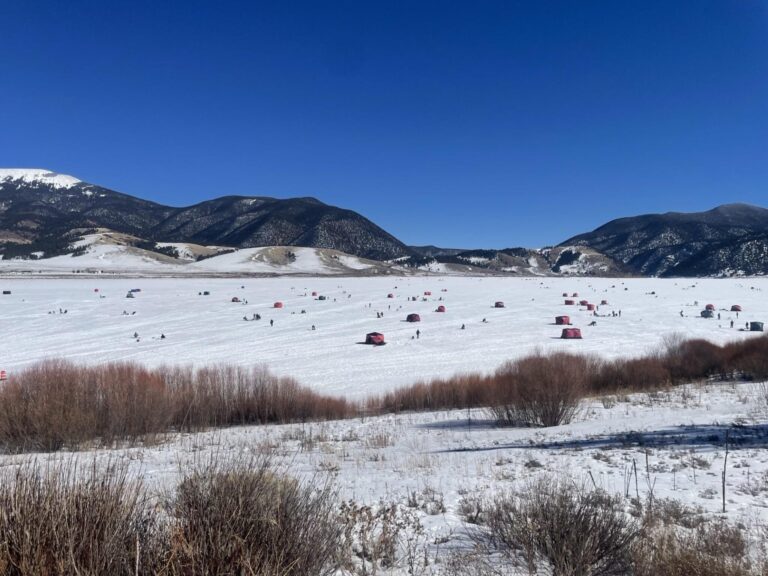
Despite frozen waters, anglers have reported good fishing conditions at Seven Springs Kids’ Pond, nestled in the Jemez Mountains of northern New Mexico.

The pond is reported half frozen due to recent snowfall in the northern part of the state but fishing for trout is very good using worms.

Near Seven Springs at Fenton Lake, trout fishing was fair to good using Garlic PowerBait.

Along the San Juan River in northwestern New Mexico, streamflow near Archuleta was 284 cubic feet per second (cfs) on Wednesday. Fishing for rainbow trout was fair to good using worms in the bait section.

In southern New Mexico, at Elephant Butte near Truth or Consequences, fishing for white bass was slow to fair using shad-colored crankbaits. Fishing for striped bass was slow to fair using jerkbaits.

In Lincoln County at Bonito Lake, fishing for trout was slow to fair suing Garlic Cheese PowerBait and nightcrawlers.

This fishing report, provided by the New Mexico Department of Game and Fish, has been generated from the best information available from area officers and anglers. Conditions encountered after the report is compiled may differ, as stream, lake and weather conditions alter fish and angler activities.

SENMC, NM Tech sign transfer agreement

0

Staff reports

Southeast New Mexico College and the New Mexico Institute of Mining and Technology signed an articulation agreement that expands academic opportunities for students across New Mexico.

The partnership creates a transfer pathway for SENMC graduates to continue their education toward four-year bachelor’s degrees at New Mexico Tech in Socorro.

Located in Socorro and founded in 1889, New Mexico Tech specializes in coursework and degree programs focused on science, technology, engineering and math (STEM) disciplines, offering bachelor’s degrees along with masters and doctoral programs.

At the signing ceremony Wednesday, Oct. 8 held at the SENMC campus, Title III Transfer Pathway & Outreach Coordinator Saul Navarrete and STEM Program Manager Erick Dominguez welcomed New Mexico Tech representatives, faculty and community members, calling the moment “a celebration of partnership, progress, and pride for our great state of New Mexico.”

“Today, we’re not just signing an agreement; we’re signing a promise,” Navarrete said. “A promise that students from Carlsbad and beyond will have new doors opened to them, new pathways to innovation, and new opportunities to dream big. When New Mexico works together, amazing things happen.”

New Mexico Tech Interim President Dr. Michael Jackson said the agreement meant students from Southeast New Mexico College would be better prepared for coursework at New Mexico Tech, and be able to transfer credits toward their degrees.

“We are excited to collaborate with SENMC to assist with preparing individuals for the STEM workforce by providing defined pathways to both undergraduate and graduate degree programs,” he said.

The agreement ensures that qualified SENMC graduates who have earned applicable associate degrees can transfer their credits directly into New Mexico Tech undergraduate programs, minimizing duplication of coursework.

Students transferring under this agreement will receive full credit for courses completed with a grade of C- or higher, provided they align with New Mexico Tech’s degree requirements.

The partnership also allows for reverse transfer; meaning SENMC students who transfer to New Mexico Tech before completing their associate degree can apply their credits back to SENMC to earn their associate credential.

New Mexico Tech will also offer enrollment counseling, academic advising and opportunities for SENMC transfer students to engage in internships, research and work-study programs.

“This partnership with New Mexico Tech provides a pathway for our students to attend a top-ranked STEM university. I believe our students will feel right at home there and find a world of opportunity,” said Dr. Kevin Beardmore, president at SENMC.

He said the partnership represents a shared vision to strengthen the state’s educational ecosystem.

Jackso said New Mexico Tech’s programs could be useful to students seeking jobs in the Carlsbad area, in fields such as oil and gas and mining.

“Along with some of our well-known degrees such as biology, chemistry, and electrical engineering, students have the opportunity to pursue materials engineering, petroleum engineering, and mineral engineering – all critical areas to advancing New Mexico’s energy portfolio and our state’s demand for a talented and qualified STEM workforce, Jackson said.

Opinion: Is AI a good investment or just the next financial bubble about to pop?

0

Trip Jennings

At the outset I want to say I’ve spent most of my life celebrating the new-fangled and innovative against the custodians of tradition who poked fun at anything resembling change.

For example, 18 years ago, I quit newspapers to help found New Mexico’s first online newspaper, the New Mexico Independent. A few years after that, I co-founded the state’s first digital nonprofit media outlet, New Mexico In Depth, in the aftermath of the 2008 economic collapse.

I like new things.

So, at the risk of acting like what my children think people my age act like — I am old enough to remember calling people on rotary phones and watching original episodes of The Mod Squad and Room 222 — I am not sold that AI is the next big thing. Sure, it can help with mundane everyday tasks. But I’m not sure it’s a civilizational-defining technology, as many of its boosters repeatedly promise us.

That thought permeated my Monday morning routine as I read a New York Times story on the September vote by the Doňa Ana County Commission to grant a massive tax break to developers of Project Jupiter, a collection of data centers that would cost $165 billion in Doña Ana County. (I have kept up with local reporting on the project, but when one of the globe’s largest media players publishes a story, it is noteworthy.)

I am not a technophobe. And I am certainly not a tech genius. But what I am is a journalist who has lived through a particular set of reportorial experiences that have left an impression on me.

Over the space of a few years in the 2000s, I reported on the economic carnage Enron’s bankruptcy wrought on Connecticut municipal budgets and the economic carnage to New Mexico’s investment portfolio by the near collapse of Wall Street in 2008, fueled by the systematic fraudulent valuation of toxic tranches of mortgage bonds.

Speculative booms powered by promises of a generational opportunity to invest in the future aren’t so terrible when they do what their boosters say they will: benefit the public at large. But when speculative booms go wrong, they can rain down devastation and catastrophe on tens of millions of unsuspecting Americans in the form of lost jobs, decimated retirement accounts and destroyed lives.

In the case of Enron, once the nation’s seventh-largest company and highly valued by Wall Street analysts, fraud ultimately undid the company. Enron’s senior officers copped to or were convicted of federal crimes related to conspiring “in wide-ranging schemes to fraudulently manipulate Enron’s publicly reported financial results,” all in service of keeping the company’s troubled finances a secret. One of the victims of the fraud beyond the tens of thousands of Enron employees who lost their jobs was a quasi-public trash authority in Connecticut. It had invested more than $200 million in state taxpayers’ money in Enron. Post collapse, Connecticut communities were left to figure out how to pay for the increased cost of hauling trash the authority imposed to make up for the loss of the $200 million. I lived and breathed that story for more than a year.

A few years later, I moved across the country to New Mexico to report on Gov. Bill Richardson and the Legislature just in time for the economic collapse of 2008. During the lead up to the economic collapse, the occasional Cassandra predicting catastrophe was drowned out by a chorus of optimists who said the housing bubble driving the American economy wouldn’t burst because, well, it just wouldn’t.

After the housing bubble burst and almost took down the global economy with it, I spent many hours digging into court documents alleging pay-to-play allegations against officials in the Richardson administration. They had invested in opaque financial vehicles that lost much, if not all, of their value with Wall Street’s collapse, costing New Mexico taxpayers. I lived and breathed that story for much of 2009 into 2010.

Reporting on those stories has made me a skeptic whenever I hear someone declare an investment is a generational opportunity. That’s how the developers of Project Jupiter marketed the project to Doña Ana County officials.

I am not accusing anyone of fraud, or bad-faith dealing. I just know how bad things can go when they go sideways.

There are people much more tech savvy than I who see the possibility of AI becoming the next too-big-to-fail industry as AI weaves itself into Americans’ lives. If the AI bubble bursts, there is a chance that U.S. taxpayers might be asked to bail out the industry because it will become so important to 21st century life that a decision will be made that we cannot live without it.

Maybe it won’t turn out that way. Let’s hope.

In other words, I’m not a full-blown AI doomsday-er. But I am a skeptic.

I hope my skepticism is misplaced.

Since 2005, Trip has covered politics and state government for the Albuquerque Journal, The New Mexico Independent and the Santa Fe New Mexican. In 2012, he co-founded New Mexico In Depth, a nonpartisan, nonprofit media outlet that produces investigative, data-rich stories with an eye on solutions that can be a catalyst for change.

Know the rules of the slopes before hitting the snow

0

Mike Smith

Artesia Daily Press

msmith@currentargus.com

Before you drive on New Mexico’s streets and highways, you need to learn the rules of the road. And before you start zooming down hills at the state’s ski resorts, you need to know the rules for staying safe on the slopes.

With winter about to settle in and interest in skiing and snowboarding heating up, it’s time for a safety check, said Christy Germscheid, executive director of Ski New Mexico, a trade organization dedicated to promoting winter sports.

“Many people don’t realize there is a responsibility, like driving a vehicle,” she said. “People need to be able to stop. People going downhill have the right of way. You have to be able to stop.”

Other keys to safety, Germscheid said, include making sure you’re visible to others, steering clear of fellow skiers and snowboarders, and taking precautions to prevent skiing and snowboarding equipment from racing out of control.

Staying in control is the No. 1 factor in avoiding collisions and staying safe on the slopes, according to the National Ski Areas Safety Association. The association’s 10-point Responsibility Code is posted on the Ski New Mexico website.

Beyond urging visitors to adhere to the basic rules of safe skiing, resorts have taken measures to promote safety, Germscheid said, including new signage this year warning skiers to stay away from objects with safety pads.

“It is not a safety device. It is a device to warn you,” she said of the padding. “There’s limited protection. It won’t protect you from serious injury.”

Germscheid said staying away from closed trails is another safety precaution. Also important: safe loading and unloading at ski lifts.

“Lift operators provide assistance and make sure you’re in those seats. Be prepared and sit back in the seat,” she said.

Maps and mountain signs are posted to help skiers find trails and lifts and know where trails merge or terrain is closed, Germscheid said.

If a collision or accident does occur, she said, those involved should exchange information and contact a resort employee.

Stating what should be obvious, Germscheid noted that skiers and snowboarders should stay off the slopes if impaired by drugs or alcohol.

And she offered some advice, especially for those who are new to the sport.

“Taking a ski lesson will go a long way toward helping with all of these things,” she said.

 Here are reported New Mexico skiing conditions as of Tuesday, Dec. 9

(Information provided by Ski New Mexico)

Sipapu Ski and Summer Area has a base depth of 14 inches with 4 of 44 trails open.

Ski Apache has a base depth of 4 inches with 1 of 55 trails open.

Ski Santa Fe has a base depth of 18 inches with 26 of 90 trails open.

Taos Ski Valley has a base depth of 18 inches with 13 of 120 trails open.

Note: Snow conditions can change after this report is compiled.

Mike Smith can be reached at 575-628-5546 extension-2361.

2962 ch, 505 words, Infinity in