
Artesia senior Adrienne Harvey served against Carlsbad on Tuesday night, August 26.



Staff reports
It was just by a nose, but KJ Born to Be Wild and jockey Noe Garcia got the best of FDD Dreams and rider Luis Martinez in the All American Derby trials Aug. 6 at Downs of Albuquerque. The two will meet again in the All American Derby final on Sept. 1 to run for their share of the $1 million purse.
Javier Rodriguez, who owned the eventual loser of that photo finish, went over to KJ’s owner John Lee and offered a friendly handshake and a hearty congratulations.
“I told Javier that I wasn’t supposed to outrun him,” Lee laughed, recalling the moment in the winner circle following the trial race. My horse got loose on the outside that day and caught Dreams just at the wire. That’s horse racing.”
Rodriguez agrees with his friend Lee that anything can happen in a horse race, but when the two meet again on Labor Day, the stakes will be much higher. This will be the fourth meeting on the racetrack between the two horses and right now it’s 2-1 Dreams.
“Dreams is doing fantastic,” Rodriguez said this week as his horse went to the track on Tuesday for a breeze. “It was just one of the things to get caught at the wire. We hope it doesn’t happen again, but if it does there’s no one I’d rather lose to than John.”
Following a third-place finish in the All American Futurity last Labor Day, plus a win in the Texas Classic Futurity at Lone Star Park and a victory in the Ruidoso Derby, FDD Dreams currently has earnings of $1.3 million. FDD Dreams is listed at 6-1 on the morning line and KJ Born to Be Wild is 4-1.
Neither are favored to win the final. The favorite is House of Lords and jockey Francisco Calderon at 5/2 which has won four straight races including the Heritage Place Derby at Remington Park in the spring. House of Lords ran the fastest qualifying time for all quarter horses that competed in the All American trial races of 20.789 seconds for 440-yards.
“That’s an extremely tough Derby,” Calderon said. “We might be favored but FDD Dreams is the horse to beat. I feel like my horse is capable along with a number of horses in the field. I would say this year’s Derby has quality through-and-through.”
The Derby is ninth on the 11-race card on Labor Day, scheduled for 5:45 p.m.

Adrian Hedden
Carlsbad Current-Argus
achedden@currentargus.com
A federal court ruling could mean the end of federal protections for a struggling grouse species in southeast New Mexico, the conservation of which created years of debate on land use and impacts to local industry.
The lesser prairie chicken was listed as endangered in November 2022 in its southern distinct population segment (DPS), which the U.S. Fish and Wildlife Service used to describe the bird’s southern range in southeast New Mexico and West Texas.
Its northern segment, covering portions of Colorado, Kansas, Oklahoma and the northern Texas Panhandle, was listed as threatened.
Endangered status means the agency believes a species’ extinction is imminent. The listing requires a federal recovery plan be put in place while often setting aside lands for habitat critical to recovery.
Threatened status indicates an endangered listing may soon be warranted.
After backlash from the oil and gas and agriculture industries, and allegations the listing and recovery efforts could negatively impact local economies and the industries that drive them, a judge for the U.S. District Court for the Western District of Texas issued a ruling to vacate the lesser prairie chicken’s endangered listing.
The ruling was signed by U.S. District Judge David Counts, in a March 2023 lawsuit filed by the Permian Basin Petroleum Association against the U.S. Department of the Interior – the parent agency of the U.S. Fish and Wildlife Service, which enacted the initial listing.
Counts’ verdict, which also denied motions by environmental groups to legally intervene in the matter, followed an Interior Department motion in May contending the endangered status was not warranted for the lesser prairie chicken and asking the court to vacate the listing.
This was after the federal administration changed hands from Democratic President Joe Bident to Republican President Donald Trump, who issued an executive order in January calling for federal agencies to reduce oil and gas regulations or those that could restrict fossil fuel production.
The agency argued, and was supported by Counts, that it previously erred when separating the species into the north and south population segments, meaning the listing was invalid.
“The Service concedes that it improperly applied its DPS Policy in a manner that tainted the substance of the final listing rule,” read the motion. “Given the seriousness of the error identified, the Service will be unable to correct the rule’s defects on remand short of engaging in an entirely new analysis.”
The move had industry groups claiming victory in a debate dating back to the first time the bird was listed as threatened in 2014, a listing that was opposed on similar grounds and later overturned.
Bronson Corn, president of the New Mexico Cattlegrowers Association, said that if the most recent listing was allowed to stand, it could devastate agriculture and energy development in New Mexico.
“This outcome represents a significant victory for both the oil and gas and livestock industries in New Mexico, and we are proud to have played a role in defending these vital sectors,” Corn said.
Wayne Walker, chief executive officer of Common Ground Capital, a conservation banking company involved in protecting the species, said delisting the prairie chicken would cause “more uncertainty for everyone.”
Conservation banking functions by selling “credits” to land users such as utility or oil and gas companies, offsetting their impacts to the species, then using the proceeds to pay other landowners to set up contiguous areas for the species to recover, which Walker referred to as “strongholds.”
It’s a business model that relies on the urgency afforded by the listing, he said, and one that could prove a success where Walker said government-sponsored programs “failed.”
To demonstrate this failure, Walker pointed to continued declines in lesser prairie chicken populations throughout the native range, down 90% today from the bird’s historical population, according to the American Bird Conservancy.
“You’ve got big infrastructure going, big transmission lines, wind and solar. All that stuff’s going to be coming,” Walker said. “Without that listing, you’re not going to have effective offsets.”
In opposing the listing and federal action to restore the species, critics pointed to voluntary conservation programs known as “candidate conservation agreements with assurances.” These contracts entail landowners taking on certain practices to conserve a species, making them immune to additional restrictions when a listing takes place.
But with the listing being vacated, Walker said there will be little incentive for landowners to enter those, or any, programs to restore the species.
“You will have people participate in our programs, but it will be a much smaller percentage than would have if we had the species listed,” Walker said. “We expect participation in our program to go down significantly. We do think there will be some good corporate actors.”
Managing Editor Adrian Hedden can be reached at 575-628-5516, or @AdrianHedden on the social media platform X.
Adrian Hedden
Carlsbad Current-Argus
achedden@currentargus.com
Grave concerns for the viability of a project to store nuclear fuel at a site near Carlsbad were shared by the company proposing to do so in a letter to local officials in southeast New Mexico.
Company officials wrote in the letter that the project “was impossible” amid strong opposition from state lawmakers and current agreements in place with local leaders, though suggesting later that such issues could be renegotiated to move the facility forward.
Holtec International appeared ready to build the facility which would hold up to 100,000 metric tons of the refuse after a June U.S. Supreme Court verdict reinstated a federal license to build and operate the site.
But in a July 28 letter to the Eddy-Lea Energy Alliance, which was presented to the group at its Aug. 11 meeting, the company said the project was blocked by New Mexico state law.
That’s because of Senate Bill 53, passed by state lawmakers in 2023 to bar any state agency from issuing permits Holtec would need to operate the site, and the overall “political climate” in New Mexico, read the letter.
Holtec was issued a federal license to build and operate the site known as a Consolidated Interim Storage Facility (CISF) by the Nuclear Regulatory Commission (NRC) in May 2023, an approval that was vacated by the Fifth Circuit Court of Appeals last year.
The matter, along with a similar license and ruling to vacate the license for a site to store the fuel in Andrews, Texas, by Interim Storage Partners, went before the U.S. Supreme Court this year with justices ruling those opposed and who initially appealed the license to the site had no legal standing to enter the licensing process in the first place.
That left Holtec and its supporters claiming victory and expecting the project to move forward, after more than a decade of negotiations between the company and Alliance, public hearings and debate.
But the progress could be stalled, as Holtec’s recent letter to the Alliance sought to terminate its revenue sharing agreement with the consortium. The agreement would give ELEA a third of the project’s revenue once the facility was operational in exchange for use of the land needed.
“Unfortunately, the passage of state legislation that effectively prohibits the construction of the CISF, combined with the continued public opposition expressed by New Mexico’s current administration, has made the project impossible in the near future,” read the letter signed by William F. Gill, Holtec vice president and senior counsel.
Gill went on to explain that the project’s success hinged on support expressed by former Gov. Susanna Martinez, a Republican – support that was reversed by Martinez’ successor and current Gov. Michelle Lujan Grisham.
Lujan Grisham, her Cabinet, lawmakers and New Mexico’s entire five-person congressional delegation – all Democrats – remained opposed to the proposal and the project in Texas throughout the licensing process due to risks they purported it could pose to the oil and gas and agriculture industries in rural southeast New Mexico.
“Faced with the obdurate opposition of the state government to establishing the consolidated interim storage facility in the state, we find ourselves with no alternative but to respectfully terminate the revenue sharing agreement effective immediately,” the letter read.
Waste project still viable?
Despite those words, Holtec spokesman Patrick O’Brien said in a statement the company still believed the project was doable, pending further negotiations with the Alliance to potentially alter the agreements and allay concerns expressed in the letter.
“With the NRC license in place, our HI-STORE consolidated storage project in New Mexico, partnered with Eddy-Lea Energy Alliance, remains a viable part of that solution,” read the statement emailed to the Current-Argus on Aug. 14. “The two parties, with a nearly decade long relationship, have discussed options available moving forward on both the revenue sharing and land purchase aspects under the current agreement, and will continue to do so.”
Alliance Chair John Heaton agreed it’s not over.
He said the Alliance and Holtec continued to negotiate how to get around the state legislation effectively blocking the project, and that Holtec cannot “unilaterally” terminate the agreement.
“The letter they sent us has no basis in fact as far as what they (Holtec) plan to do,” Heaton said. “This says they want to withdraw from the agreement, and there is no provision in that agreement that they can do that unilaterally.”
Aside from those plans, and concerns over opposition in New Mexico, Holtec also explained in the letter that it planned to take part in the U.S. Department of Energy’s “expressions of interest” program which would see the company going out to other communities to find support for other federal waste storage facilities.
Holtec’s agreement with the Alliance, Heaton said, is “essentially a non-compete” agreement, meaning the company is not allowed to promote or take part in competitive projects in conjoining states.
Heaton said that means Holtec cannot pursue projects in Colorado or Texas, places the federal government, he said, was targeting for such facilities. The company and local leaders remained in discussion on how to address these contractual concerns, Heaton said.
“I think we can get to some agreement,” he said.
Critic says project doesn’t ‘make any sense’
However, Don Hancock with the Southwest Research and Information Center in Albuquerque, a frequent critic of nuclear development in New Mexico, said Holtec’s letter was “unsurprising” as he said the project was doomed from the start.
He also said it is not economically sound as he argued Holtec does not have any customers – utility companies in possession of the spent fuel that are currently storing it onsite at the reactors.
About “90%” of spent nuclear fuel is already stored in the eastern half of the U.S., Hancock argued, and efforts to move it out west were “bad and nonviable.”
“It is confirming what has been suspected for a while,” Hancock said. “NRC licensing is necessary, but not sufficient. They have no customers. Who’s going to be pay for the transportation?”
As for the Supreme Court ruling that supported Holtec and the Texas facility, Hancock said the idea that it made the projects inevitable was “not realistic.”
He questioned if leaders in Carlsbad and the surrounding communities would ever receive a return on their investment in the project, which entailed granting Holtec access to the 1,000 acres of land for the site, along with promoting and supporting the project over the years.
“You can’t do it in New Mexico,” he said. “The thing I hope the local people in Carlsbad would say is that they invested the money to buy this site. What are local people actually getting out of it? That’s too bad that they pursued projects that don’t make any sense.”
Managing Editor Adrian Hedden can be reached at 575-628-5516, or @AdrianHedden on the social media platform X.
The Artesia Lady ‘Dogs went on the road with returning nine seniors, and started slow, losing the first game against a ready Carlsbad Cavegirls’ team. Artesia bounced back from a first game 25-22 loss, and won in four sets on Tuesday at Carlsbad Gymnasium.
The Lady ‘Dogs have nine seniors returning from a team that played for the state championship in 2024. During the opening set, Artesia called two timeouts in the first set to gather themselves. In the second set, Artesia came back from a 25-24 deficit and won the second set 28-26. The Lady ‘Dogs would take control after breaking through Carlsbad’s serve in the second set when the game was tied 24-24.
Artesia would come back to win the game and match 25-22, 28-26, 25-6 and 25-16.

Artesia’s Avery Frederick blocks a shot at the net by Carlsbad’s Jazmariyah Sandoval as Artesia opened its season with a 25-22, 26-28, 25-6 and 25-16 in four sets Tuesday at Carlsbad Gym.
“I will say that Carlsbad has had two games under their belt,” assistant Lady ‘Dogs coach Mandi Lewallen said after the team’s victory. “In our first game of the season, you can tell that we were timid about some touches on the ball.”
Lewallen said that once the team settled in the Lady ‘Dogs were able to do what the coaches thought they could. She said that after coming off the championship game in 2024, there were a lot of expectations. This season the team’s approach is to take each game one game at a time.
“We need to make less errors,” Lewallen said. “We need to take it one game at a time, and to make sure we are doing the little things right.”
Lewallen said Thursday’s 6 p.m. game at The Bulldog Pit against Alamogordo will be the seniors last, first home game of the season.
Adrian Hedden
Carlsbad Current-Argus
achedden@currentargus.com
A state regulation adopted earlier this year required oil and gas operators report to local government agencies all fluids used in drilling for fossil fuels – and if they contain a suite of substances known as “forever chemicals.”
But Eddy County Commissioners, during their Tuesday, Aug. 19, meeting, opted to not require operators to file these reports with the county, contending companies are already required to disclose most of the ingredients in liquids for hydraulic fracturing or “fracking.”
The rule, along with a ban on per- and polyfluoroalkyl substances, or PFAS, in oil and gas drilling called for operators to report to the state of New Mexico and local jurisdictions the ingredients of the liquids for every drilling facility in the state.
The acronym PFAS (perfluoroalkyl and polyfluoroalkyl substances) is an umbrella term for thousands of man-made industrial chemicals first used in 1949 for Teflon in nonstick pans. Labeled “forever chemicals” by scientists and environmental activists, PFAS were found in groundwater around the country and in New Mexico near Air Force bases where they were used in a firefighting foam.
PFAS are believed to cause various cancers through long-term exposure or consumption, along with several other impacts to the human body including high cholesterol and low birth weight.
Industry leaders denied the substances were present in drilling, but after a series of public hearings in November 2024, the Oil Conservation Commission approved the rule in March while allowing local jurisdictions to opt out of the reports, which would come via certified mail from all oil and gas drilling facilities in the county.
In approving the resolution to opt out, Eddy County leaders argued it would be a burden for the county to catalogue the reports as they are received. The chemicals would still be reported to the state, per the rule, but not to Eddy County or any other local jurisdiction that opts out.
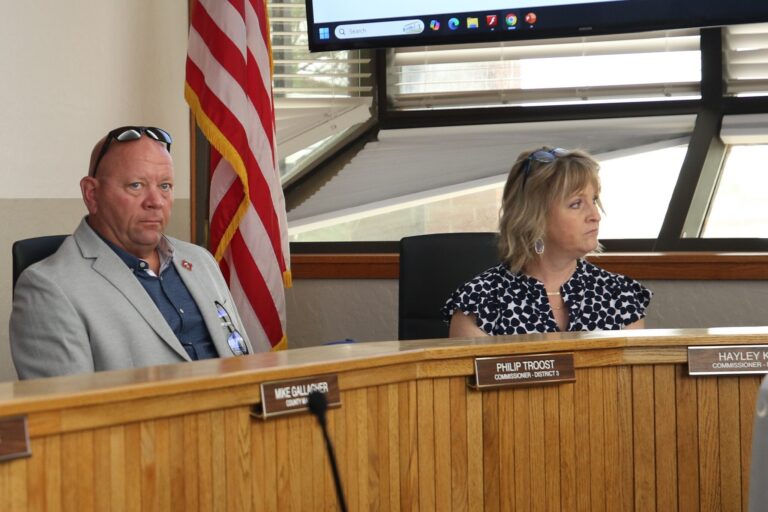
“Eddy County is not a regulatory agency when it comes to oil and gas extraction. That responsibility falls with the state,” said Eddy County Manager Mike Gallagher. “This does not mean that companies are not going to continue to disclose that.”
District 1 Commissioner Ernie Carlson said there was no provision in the rule allowing the county to respond, protest or take any action in response to the reports.
“Getting that certified letter is really a waste of our time because there’s nothing we can do about it,” he said. “It’s just going to be another stack of certified mail.”
District 4 Commissioner Bo Bowen said the amount of additional mail the county would receive was impractical, and that he hoped if enough local entities chose not to receive the reports, lawmakers would block them altogether in the next legislative session.
“If you think about every operator that’s in Eddy County, every well or drilling rig you see, the hopes is with enough people passing resolutions not to receive this junk mail, it will get wiped out in the next session,” Bowen said.
Other business
A $1.5 million project to expand the county’s Law Enforcement Training Center was approved by commissioners. The work will entail a new fitness center and locker rooms, a new breakroom and a passage to connect the new areas to the rest of the facility.
The Eddy County Sheriff’s Office was approved to hire two recruits through the “over-hire” process, which allows the entity to hire new staff before vacancies occur. In total, the two positions will cost about $234,000 for the year’s remaining 22 pay periods.
Eddy County Sheriff Matt Hutchinson was also approved to provide retention bonuses to his office’s employees for various terms of service ranging from five to 10 or more years on staff. In total, the retention program will cost the county $300,000 a year.
Commissioners also received an update from the Permian Strategic Partnership, a nonprofit group made up of oil and gas companies throughout southeast New Mexico and West Texas. The partnership reported it invested a total of $200 million in projects throughout the region in the six years of its existence.
Managing Editor Adrian Hedden can be reached at 575-628-5516, or @AdrianHedden on the social media platform X.
Adrian Hedden
Carlsbad Current-Argus
achedden@currentargus.com
A nuclear waste repository near Carlsbad was approved by the federal government to mine out more space for waste disposal, in line with the state of New Mexico’s 10-year operations permit issued in 2023.
The New Mexico Environment Department included in its hazardous waste permit issued to the U.S. Department of Energy in November 2023 language for two new panels where waste will be emplaced, allowing the Waste Isolation Pilot Plant to operate for 10 more years.
Those panels were given final approval July 31 by the U.S. Environmental Protection Agency via a letter transmitted to Mark Bollinger, manager of the energy department’s Carlsbad Field Office.
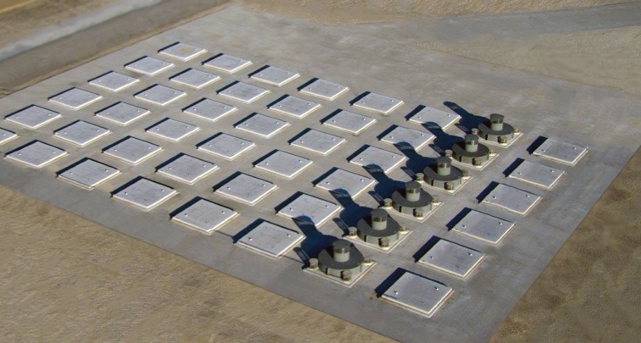
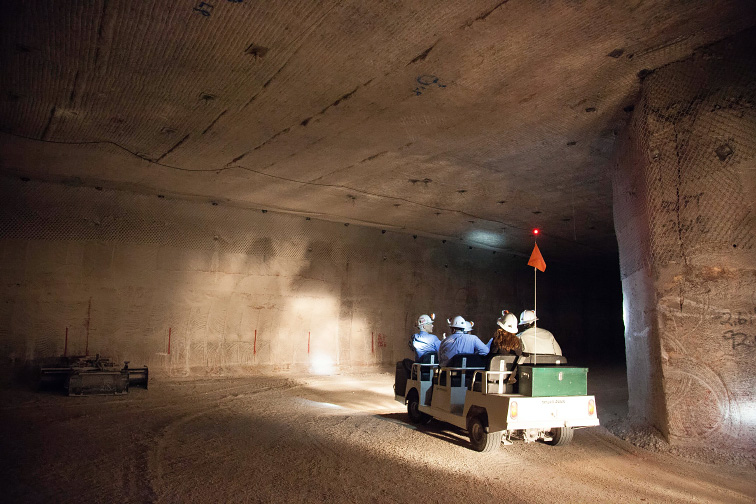
At WIPP, the Energy Department disposes of transuranic nuclear waste (TRU), which is clothing materials, equipment and other debris irradiated during nuclear activities. The waste is buried at WIPP in a salt deposit about 2,000 feet underground. The salt gradually collapses on the waste, burying the refuse and blocking radiation from escaping.
Panels are mined out areas in the WIPP underground where drums of waste are placed for disposal. The permit gives approval to mine out the site’s 11th and 12th panels; the previous permit approved only eight.
Panels 11 and 12 were intended as “replacement panels” for space lost to contamination after an accidental radiological release in 2014, caused by a ruptured drum of TRU waste already emplaced in the underground, Bollinger said during a July 30 public forum.
Bollinger said the new panels would not increase WIPP’s waste capacity while adding to its physical footprint, and that the facility continued to operate under the same 6.2 million-cubic-foot capacity outlined in the Land Withdrawal Act.
As of the July 30 meeting, Bollinger said WIPP was at about 2.8 million cubic feet of waste buried, about 45% of the limit.
The new panels would be mined on the west side of the WIPP underground, where workers were already mining an access drift to connect the new area with the rest of the facility. That work was nearing completion, Bollinger said.
“The Land Withdrawal Act created WIPP, and is our guidance to how we’re doing,” he said. “All waste that comes to us must be defense TRU waste and it must meet the full waste acceptance criteria.”
Bollinger said waste was currently being emplaced in Panel 8 – the final panel under the previous permit – but it was unclear when it would be full and WIPP would begin using Panel 11.
He said federal officials expect to have disposed of 424 shipments of waste in Panel 8 by the end of the federal fiscal year, which concludes Sept. 30.
“We’re making good progress there, and we are expecting to transition to a new panel very soon,” he said. “But it will take some time to fill up Panel 8, and with permission from all of our regulators, begin emplacing in Panel 11.
WIPP to expand beyond new panels
In the EPA letter signed by Principal Deputy Assistant Administrator Abigale Tardif, the agency explained that the Department of Energy also included an analysis of a 19-panel facility, adding seven panels on top of those approved by the agency.
Subsequent panels beyond the 11th and 12th would require a new permit with the state of New Mexico, per the language in the newest permit that allowed for the two new panels.
“These panels (11 and 12) are intended to restore lost waste disposal capacity, primarily due to the 2014 radiological incident and other operational issues,” read the EPA letter. “Initially, the DOE submitted an analysis for a 19-panel repository, reflecting expectations for seven future waste panels beyond the two for which approval was requested.”
The EPA said it “generally agreed” with the Department of Energy’s performance analysis of the 19-panel layout.
But Don Hancock with the Southwest Research and Information Center, an Albuquerque-based government watchdog group and WIPP critic, said the approval raised several other questions tied to WIPP’s expansion and compliance with the state permit.
Southwest Research was included in negotiations for the 2023 permit, which included several clauses the Department of Energy agreed to in exchange for the new panels, Hancock said.
Among those were requirements to prioritize Cold War “legacy” nuclear waste in Panel 12, which Hancock said was WIPP’s original intended purpose, along with providing annual reports on the federal government’s process in finding a new repository outside of New Mexico and a provision that allows the New Mexico Environment Department to close WIPP should any section of the permit be violated.
The Environment Department recently opposed a federally created definition of “legacy waste” as required by the new permit, arguing it was too broad and requiring the energy department to file a revision by November.
“The letter doesn’t impose any conditions,” Hancock said of the EPA approval. “The EPA should support DOE complying with the other conditions in the permit they negotiated.
As for adding panels 13 through 19 in the future, Hancock said they would require an entirely new permit renewal, even if the energy department applies for approval before the 10-year term of its current permit.
“We have been and will continue to oppose expanding WIPP in the way the DOE has proposed to,” Hancock said. “That is allowing them to put waste at WIPP that it was not designed for.”
Future waste streams he said would be beyond the scope of WIPP included surplus plutonium, which the department of energy said it could dilute to meet WIPP’s acceptance criteria, and TRU waste created in the production of plutonium pits – triggers for nuclear warheads.
The federal government said it plans to produce 80 pits a year by 2030 to “modernize” its atomic arsenal.
Even so, adding seven more panels would put WIPP dangerously close to “busting” EPA standards for radiation emissions from the site, Hancock said.
“WIPP is supposed to be for Cold War legacy waste. The expansion is because DOE wants to use WIPP for waste that is not Cold War legacy waste. We are opposed to that,” he said.
And looking ahead, Hancock said a repository outside of New Mexico was crucial to allow the federal government to dispose of nuclear waste for decades in the future while lifting the burden from New Mexico.
“Another repository outside of New Mexico is a linchpin to the whole expansion question,” Hancock said. “They are in the position to say not all of the waste has to go into WIPP and that they are serious about finding another repository.”
Managing Editor Adrian Hedden can be reached at 575-628-5516, or @AdrianHedden on the social media platform X.

By Tim Keithley
There’s something about the southwest that lingers deep in Jamie O’Neal’s heart.
“It seems like there’s a connection,” Jamie said during our radio interview this week. “It’s just something about the southwest that makes me feel at home despite living around Nashville.”
Cue the record: “There is no Arizona.” It’s Jamie’s signature No.-one hit from 2001 about promises made and not kept. Her new album is called “Sometimes” with the cover photo-shoot made at White Sands National Monument outside Alamogordo.
“We’re doing a 25-year anniversary remake of that song on my new album,” Jamie said. “It’s hard to believe that it’s been that long. That song has the southwestern vibe that I love so very much.”
Like most everyone that paid attention to news accounts about the recent flooding events that occurred here and spread across the country, Jamie said she learned about the destruction and her heart went out to those impacted. She last played at the Spencer Theater just one year ago, in July 2024.
“When I heard about it I called Charles (Centilli) and told him that I wanted to do something to help the flood victims,” she said. “I told him to put together a fundraising concert and I would come and bring other artists.” Charles is the theater’s longtime director.
The brief phone call developed into Thursday’s night’s special benefit concert featuring Jamie, country star Ty Herndon, and Ruidoso’s Tawnya Reynolds who grew-up here before moving to Nashville.
The show begins at 7 p.m. with tickets at $55. All proceeds from the benefit concert will go directly to the Community Foundation of Lincoln County which in turn will support local flood victims. Tickets can be purchased at the door or online at www.spencertheater.com.

JT Keith
Artesia Daily Press
Friday Night Lights will look a lot different for two of the state’s powerhouses football teams on Friday. The Hobbs Eagles (1-0) will come into the Bulldog Bowl for a 7 p.m. kickoff. Look for a lot of high scoring and hard-hitting action, as Artesia lost last year’s matchup 44-40. The contest had video game-like numbers as the Bulldogs ran 72 total plays and had 474 yards of total offense, while the Eagles ran 76 plays and had 473 yards of total offense according to Max Preps.
Last year’s game came down to the last possession, with the Bulldogs having a chance to win, according to Bulldogs coach Jeremy Maupin.
Here are the things the Bulldog must do to secure a victory.
Stop Hobbs’ running game
The ‘Dogs (1-0) must slow down Hobbs’ running back Shamus Wright. According to the Hobbs News-Sun, the junior running back ran for 235 yards on 13 carries in the season-opening 41-13 victory over Lovington on Friday night. Artesia’s defensive line must confuse the big offensive line of Oliver Hernandez, Isaiah Morales, Ricardo Alvarez, and Max Garcia. Hobbs rushed for 381 yards on the ground against Lovington.
In last year’s game, Artesia gave up 265 yards rushing, with Wright gaining 117 yards on six carries. He broke free for a 66-yard run but did not score.
Make Hobbs’ quarterback throw the ball
The ‘Dogs must make Hobbs’ quarterback Junior Medrano throw the ball. He is a first-time starter, and this will be his second game seeing action under the bright lights of the Bulldog Bowl on Friday. Against Lovington, Medrano had more yards rushing the ball, 87, than passing the ball, going 8 of 16 for 71 yards, according to the Hobbs News- Sun.
Artesia running back Bryce Parra breaks loose on a 75-yard touchdown run against Carlsbad Friday night.
Tire Hobbs’ defensive line out
It is still August, so it will be hot, humid, and muggy at the start of the game, with fans packed in the stands on both sides. Artesia needs to be unrelenting and go after Hobbs’ defensive line. Artesia must tire out Hobbs’ two best defensive linemen, Jeremiah Mackey, who finished the Lovington game with two-and-a-half sacks and ended the Wildcats drives according to the Hobbs News -Sun. Also, Michael Meridyth, the Bulldogs must get them running side -to-side and make neutralize their pass rush.
“I think Mackey is really good,” Maupin said.
With the Bulldogs’ screen game and its ability to run the draw and throw the ball to its receivers on the line, allowing them to create in space, by the fourth quarter, the linemen should be tired.
“We have to have some sustained drives and get after these guys,” Maupin saidl
Artesia coach Jeremy Maupin is not afraid to go for it on fourth down; he went for it both times and called passing plays, which resulted in a first down conversion.
Down and distance mean nothing to Maupin. In last year’s game, the ’Dogs were in a third-and-25 at their own 25-yard line, and Maupin called a draw play to tailback Bryce Parra, who picked up the first.
If last year’s game is any indication of the winner, whoever has the ball last could win the game.
jtkeith can be reached at 575-420-0061, or onX@JTKEITH1.

Staff reports
New Mexico students can win a backpack filled with electronics, school supplies and other prizes via the New Mexico Oil and Gas Association (NMOGA)’s annual Ultimate Backpack Giveaway contest.
Entries in this year’s contest are accepted at https://www.nmoga.org/backpack2025 until Sept. 19.
This year, five winners will receive a backpack with an iPad, a keyboard, school supplies and free pizza party, read a NMOGA news release.
“NMOGA has long been a proponent of supporting and strengthening the New Mexico school system, and we’re proud of the industry’s impact on New Mexico students,” read the release.
NMOGA pointed out all the products included in the backpacks were made using petroleum products generated via oil and gas production in New Mexico, read the news release.
The release also pointed $2.3 billion in tax revenue, the Association said was provided to New Mexico in 2024, supporting public services such as education.
“The technology and school supplies provided in our backpacks have a unique connection to the oil and gas industry,” the release read. “Products like iPads, AirPods, and even the backpacks themselves are made possible thanks to petroleum byproducts. These byproducts are essential in creating the plastics and materials used in a wide range of modern technology and everyday items.”
To enter, students can go to NMOGA.org and fill out the registration form. Winners are chosen randomly.
“We’re honored to support New Mexico’s future energy leaders by supporting a strong educational foundation. From all of us at NMOGA, we wish you a great year of discovery, learning, and growth,” the release read.

Copyright © 2026 El Rito Media, LLC. All rights reserved.