

Defeat in June blamed on mail-in ballot woes, misinformation
Adrian Hedden
Artesia Daily Press
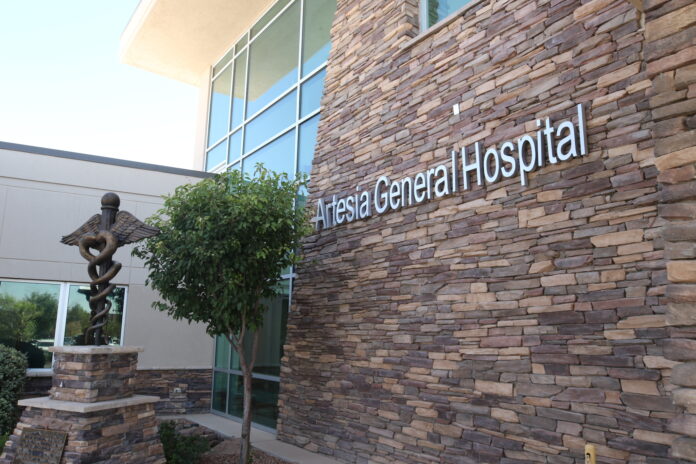
A tax levy that was defeated in a special election in June – a setback that could cost Artesia General Hospital between $4 million and $7 million a year – is going before the voters again in this year’s general election on Nov 4.
Hospital officials said they were hopeful that problems with the mail-only format of the June election will be alleviated in the second round of voting, along with misconceptions throughout the community as to what the levy revenue would pay for.
The levy, paid on property taxes for homeowners and businesses within the Artesia Special Hospital District which encompasses most of the city limits and about 10,000 voters, is used to supplement the hospital’s operating costs.
The district, which owns the land the hospital sits on, acts as a landlord while collecting the levy from taxpayers and providing the funds to the hospital at its board’s discretion and based on requests from hospital officials.
The levy was first implemented in 1979, when the district was established mainly to spend the funds. It had been renewed every four years since.
That changed on June 3, when a special mail-in election resulted in 638 votes against renewal and 608 in favor.
Approval of the mill levy in next month’s election would not raise taxes but would maintain the current levy of $2.70 per every $1,000 of a property owners’ net taxable property value within the district. It was last renewed in 2021 and doesn’t expire until Dec. 31 of this year so passage in November would keep the levy in effect without interruption.
Hospital officials maintain that about 80% to 90% of the levy is paid by commercial entities, mostly large oil and gas companies, and that it funds between 5% and 10% of the hospital’s operating budget.
Hospital could cut services
District board member Karen Waldrip said hospital leaders are devising a plan to “cut lines of service,” should the levy be defeated again.
She declined to comment on which specific services could be defunded, but said “lines of service” include specialties such as cardiology and advanced surgery.
“The hospital has already made plans since it was defeated in June,” said Waldrip, who is also running in the Nov. 4 election for a second four-year term against David Romine and Harry Williams. “Our money from the mill levy goes to improvements and maintaining hospital services.”
During a small gathering of residents and hospital staff Tuesday, Oct. 7, at Kith and Kin in downtown Artesia the hospital’s chief executive officer, Dr. Joe Salgado, said the funds would support ongoing operations at the hospital, which serves patients throughout Eddy County – both at the main location and at a facility in Carlsbad.
“One of the things to recognize and spread is that support of the hospital is essential,” Salgado said. “It’s for our operating expenses, but it also gives validity to the district in its managerial role.”
Salgado said the funds allow Artesia General to maintain specialized treatment and prevent patients from having to travel to larger cities such as Lubbock or El Paso, often across state lines and several hours away.
“Because we’re small, we’re rural, we’re going to try to get about 85% to 90% of what people need,” Salgado said. “The rest we will facilitate.”

Without the levy funds, the hospital could also be strained by more patients coming to Artesia, according to Director of Radiology Roy Thomas.
He pointed to federal cuts to Medicare, Medicaid and SNAP, or the Supplemental Nutrition Assistance Program, formerly known as food stamps, impacting rural hospitals throughout New Mexico, and potentially sending their clients to Artesia.
The cuts, which were estimated to remove 90,000 New Mexicans from federally supplemented health care, were enacted July 4 when President Donald Trump signed a spending bill known by supporters as the “One Big Beautiful Bill.” Conflict over the cuts was the key factor in the ongoing government shutdown that began Oct. 1 when Republicans and Democrats in Congress failed to agree on a plan to keep the government up and running.
New Mexico Health Secretary Kari Armijo earlier this year testified before a legislative panel that six to eight rural hospitals, not including Artesia General, could be in danger of closing, according to a July 2 article in the Albuquerque Journal. The reported list included facilities in Taos, Grants, Clayton and Gallup in northern New Mexico.
Thomas said such closures could send more patients south to hospitals like Artesia’s, making the mill levy more important in efforts to serve a potentially broadening client base.
“That’s something for not only local Artesians to keep in mind, but the whole region,” he said.
Why was the hospital mill levy voted down?
Morgan Fox, who serves as spokesperson for both Artesia Mayor/State Rep. Jon Henry (R-54) and New Mexico Sen. Jim Townsend (R-34), said many of the no votes in June were likely the result of misconceptions about what the levy pays for and how the money is distributed.
The mill levy is specifically for continued operations at the hospital, Salgado said, not for future capital projects such as plans for the hospital district to build multiple new medical facilities throughout Eddy County.
“I think the public just doesn’t understand all the components of the hospital and the district,” Fox said. “I think education is important.”

Joseph Shiel, an 85-year-old retired teacher and oilfield worker, said many voters did not comprehend what the June ballot was for or why they received it in the mail, and as a result failed to fill it out and submit it.
The ensuing low turnout could be to blame for the levy’s defeat, he said, as only 1,246 of about 10,000 ballots mailed to voters were returned to Eddy County. That means the turnout was about 12% for the special election, compared with about 68% countywide during the 2024 general election when voters chose President Donald Trump over Democratic Party nominee Kamala Harris, according to data from the New Mexico Secretary of State.
Shiel said he believed the levy would have more success when it’s up for approval in the Nov. 4 election along with candidates for school board and the Artesia Special Hospital District Board of Directors.
“Nobody understood the ballot,” Shiel said. “It was just the whole mail-in thing. I knew a lot of people who thought it was junk mail; they just threw it in the trash.”
Danny Parker, who serves on the Special Hospital District Board and as assistant superintendent of secondary education at Artesia Public Schools, agreed that mail-in ballots were to blame.
He said concerns were raised to him that the ballots required personal information such as the last four digits of a voter’s social security number, details many potential voters were leery of providing through the mail.
“Mail ballots are confusing. People don’t fill them out,” Parker said.
He also said voters were dissatisfied with the time it took the hospital to begin devising a “baby box” – a secure location where unwanted infants can be left at the facility.
Artesia General signed an agreement in August with Indiana-based Safe Haven Baby Boxes to design and install a baby box at the facility, two years after New Mexico’s first such box was installed in Alamogordo and another was made available in Carlsbad.
Another sticking point for voters, Parker suggested, was the perception that the mill levy would pay for a new hospital, after plans were announced in August 2024 for a “health care village” that would include a housing subdivision to be established around a new medical facility on the north side of town, replacing Artesia General’s current main campus.
But that project was in the early design phases, said hospital spokesman Khushroo Ghadiali, and may not come to fruition for at least another five years. Funding for such a proposal, Parker said, would likely go before voters in the form of a general obligation bond separate from the mill levy.
“There’s a lot of talk about the levy and the new hospital, and people put them together,” Parker said. “It’s a whole different ball of wax. The public will have their say on the new hospital, which will take a lot more than a mill levy vote will provide.”
In a broader sense, owner of Permian Construction Scott Taylor, who has led multiple construction projects at the hospital, said votes against the levy in the mail election were used by many to vent their overall frustrations with health care in the U.S.
He said rising health care costs and insurance premiums led to widespread dissatisfaction with the health care industry, criticisms Taylor said were misdirected toward Artesia General Hospital.
“People are frustrated with their health care and their insurance. It’s an emotional thing,” Taylor said. “It’s a nationwide problem that affects the mill levy.”
Managing Editor Adrian Hedden can be reached at 575-628-5516, or @AdrianHedden on the social media platform X.