Home Blog Page 11

David Grousnick: Christ’s kingdom calls for sacrifice

0

We human beings have a perception problem. We often think we have the proper perspective on an issue when in fact we are way off.

There’s a charming story that Thomas Wheeler, CEO of the Massachusetts Mutual Life Insurance Company, told on himself: He and his wife were driving along an interstate highway when he noticed that their car was low on gas. Wheeler got off the highway at the next exit and soon found a rundown gas station with just one gas pump. He asked the lone attendant to fill the tank and check the oil; then went for a little walk around the station to stretch his legs.

As he was returning to the car, he noticed that the attendant and his wife were engaged in an animated conversation. The conversation stopped as he paid the attendant. But as he was getting back into the car, he saw the attendant wave and heard him say, “It was great talking to you.”

As they drove out of the station, Wheeler asked his wife if she knew the man. She readily admitted she did. They had gone to high school together and had dated steadily for about a year.

“Boy, were you lucky that I came along,” bragged Wheeler.

“If you had married him, you’d be the wife of a gas station attendant instead of the wife of a chief executive officer.”

“My dear,” replied his wife, “if I had married him, he’d be the chief executive officer and you’d be the gas station attendant.”

Christ’s kingdom always calls for the note of sacrifice, taking a chance, living on the edge.

There was a man down in Florida who used to wrestle alligators for tourists. One time after one of his performances a lady noticed he wore a string of alligator teeth around his neck. She said, “Oh, that is sort of like wearing a string of pearls.”

He replied, “Not quite. Anyone can open an oyster.”

It’s all a matter of perspective!

Yes, we often think we have the proper perspective on an issue when in fact we are way off. Jesus understood this propensity for us humans to get it wrong. Especially when it comes to spiritual things. So, he told a few parables, recorded for us in Matthew 13:31-33 and 44-52, teaching that the kingdom of heaven is like a small seed, a hidden treasure or a pearl of great price.

Nancy Cornice remembers as a child hearing the tip-tap of a cane on the sidewalk. It was an old man “bent from the years” his rough, knotted hand purposefully clutching a cane.” But this old man had a peculiar custom as he roamed the streets of this small town. When this gentleman saw a child he would stop, reach into his pocket and give the child a picture of Christ.

“He would thrust it into the child’s hand and continue on his way, never speaking a word.”

What this gentleman did certainly doesn’t seem like a big deal. However, this small act of kindness made a world of difference to Nancy. Over 40 years later, she still had the picture he gave her. The picture is of Jesus surrounded by a flock of sheep, with a river running through the middle of the picture. On the back of the card in a shaky hand is written, “Psalm 23.”

It wasn’t until Nancy was an adult that she realized what this man was doing. In his own way he was planting tiny seeds of faith in the children on his street. It worked for Nancy. “His faithful commitment,” she says, “helped fashion a stone in the foundation of my own faith.”

Whoever would have thought that giving a child a picture of Jesus would eventually lead that child to faith? Whoever would have thought that a tiny, little seed would produce such a big shrub? For that matter who would have thought that the Messiah would come from such a small, unlikely town as Nazareth? It is often from small, seemingly inconsequential beginnings that great good emerges.

Douglas Hare says that while the allegorical details of 31-33 must be treated with caution, the main point is secure: God is at work, even though human eyes may fail to perceive what is happening.


Siah Correa Hemphill: Congress was never meant to be a lifetime job

0

The recent passing of Senator Lindsey Graham has once again raised an important question: How long is too long to serve in Congress?

Today, Iowa Senator Chuck Grassley is 92 years old and serves as President Pro Tempore of the Senate, fourth in the presidential line of succession. He has served in Congress for more than 50 years. Kentucky Senator Mitch McConnell, 84, has been absent from Senate duties for weeks amid questions about his health after first being elected in 1984. In the House of Representatives, more than half of the members age 80 and older are seeking another term.

This is not about any one politician or political party. It is about a system that has turned public service into a lifetime career.

Congress was never meant to be America’s assisted living facility.

Instead, it has become the nation’s most overpaid and underperforming institution. Members routinely spend decades in office, accumulating power while Washington becomes increasingly dysfunctional. The longer they stay, the more protecting the institution—and their own careers—takes priority over solving problems.

The Founders never envisioned a permanent political class. They expected citizens to serve for a time and then return home, allowing new voices and fresh ideas to emerge.

Experience certainly has value, but so do fresh perspectives. After 20, 30, or 40 years in Washington, too many lawmakers become products of the system instead of agents of change. Washington changes them far more often than they change Washington.

Meanwhile, the challenges facing America are evolving at lightning speed. Artificial intelligence is reshaping the economy. Cyber warfare threatens our national security. Blockchain technology is transforming finance. Global competition is more complex than ever.

Yet many of the people writing the laws governing these issues first took office before the internet existed.

Americans also deserve confidence that those making decisions about national security, the economy, and the nation’s future are fully capable of serving. Questions about age and cognitive ability should never be considered off limits simply because someone has held office for decades.

Fortunately, there is a solution that enjoys overwhelming bipartisan support.

Polls consistently show that nearly 87 percent of Americans—Republicans, Democrats, and independents alike—support congressional term limits. In today’s polarized political climate, almost nothing brings Americans together like this issue.

Term limits are also far from radical. The President is limited to two terms. Thirty-six governors serve under term limits, as do legislators in 16 states. Mayors in nine of America’s 10 largest cities are also subject to term limits.

So why should Congress be different?

What makes members of Congress so uniquely qualified that they should effectively be allowed to stay in office for life?

Nothing.

If term limits improve accountability everywhere else in government, they can improve accountability in Congress as well.

That is why New Mexico has an opportunity to lead.

Congress has repeatedly demonstrated that it has no interest in limiting itself. That leaves the states with a constitutional solution: an Article V Convention limited solely to proposing congressional term limits.

Several states have already acted, and New Mexico should join them.

By passing a resolution calling for an Article V Convention focused exclusively on congressional term limits, New Mexico can help build the momentum needed to finally force action on one of the most popular reforms in America. Limiting the convention to a single subject ensures that the focus remains exactly where Americans want it—ending career politicians in Congress.

This is not a partisan issue. Career politicians exist in both parties. Incumbency protects Republicans and Democrats alike. The longer members remain in office, the more disconnected they often become from the people they represent.

Regular turnover would bring new energy, fresh ideas, and leaders who understand the challenges facing today’s families and businesses. It would encourage elected officials to focus on making a difference instead of spending decades building political careers.

New Mexicans understand that no job should last forever simply because the person holding it wants to keep it. Every profession makes room for new leadership. Congress should be no exception.

The American people have spoken. They overwhelmingly support congressional term limits. Congress refuses to listen.

Now it is time for the states to act.

New Mexico should join the growing movement to restore citizen government and remind Washington that elected office was never intended to be a lifetime entitlement. It was meant to be temporary public service.

Congress was never designed to be a career.

It’s time to make sure it isn’t.

Siah Correa Hemphill is New Mexico State Chair, U.S. Term Limits.

State touts oil well cleanup as nearly 600 were abandoned

0

Oil wells can leak pollution into the land and air when abandoned, and state agencies often must pick up the bill for cleanup.

In New Mexico, the work is conducted by the Oil Conservation Division, an arm of the state’s Energy, Minerals and Natural Resources Department.

The division reported it plugged 114 abandoned wells in Fiscal Year 2026, running from July 1, 2025, to June 30 of this year, via a July 9 report published by the agency.

That leaves 586 wells on state and private lands identified as abandoned in a July 2025 report by New Mexico’s Legislative Finance Committee – wells the Oil Conservation Division has the authority to plug without consent from the operator.

The division could soon seek approval to plug 1,400 other inactive wells, according to the committee report, which also identified 3,000 wells producing “extremely small quantities of oil and gas” that could soon require plugging.

Operators in New Mexico can receive approval from the division to keep wells idle, meaning they are not producing during an agreed-upon time frame.

When a well’s owner fails to communicate with the state about such a status, the well can be deemed abandoned or “orphaned.” In state terms, that means no active owner is identified – often when an operator finds the well to be no longer financially viable.

Once a well is declared orphaned, the state can plug and clean up the facility, potentially remediating the land back to its normal state.

Plugging is the first step toward cleaning up an unused well, with concrete and other materials poured into the borehole to prevent remaining gas or liquids from leaking out.

The FY 2026 plugged-well total surpassed the division’s previous record of 104 plugged wells set in FY 2024. The wells were plugged at an average cost of about $236,000 per well.

That means the wells plugged in FY 2026 wells cost roughly $26.9 million, not accounting for the costs of remediating the land, which the state estimated can amount to millions of dollars depending on the state of the land and age of the well.

The committee estimated the state could face a liability up to $1.6 billion for plugging all 60,000 of New Mexico’s currently active wells when they are no longer in use.

But Erin Taylor, acting cabinet secretary of the natural resources department, was optimistic that the state’s work so far prevented pollution in New Mexico’s atmosphere and water supplies.

“This milestone reflects New Mexico’s ongoing commitment to protecting public health and safety by reducing greenhouse gas emissions and safeguarding groundwater,” Taylor said of the work done in FY 2026.

Since then, the state said, it plugged 429 wells, estimating the work cut methane emissions from the wells by 59,000 grams per hour since FY 2023, or 517,000 kilograms per year.

The work was funded using a combination of federal grants and tax funds provided by oil companies through the state’s Oil Reclamation Fund.

That included about $109 million from the U.S. Department of Interior through a provision in the Infrastructure Investment and Jobs Act.

The legislation was signed into law by former-President Joe Biden in November 2021, providing about $1.2 billion for well-plugging in 24 states, including New Mexico.

And New Mexico lawmakers passed House Bill 80, which was signed into law by Gov. Michelle Lujan Grisham on March 9, to increase the amount going into the fund and restrict it from other uses. The bill was estimated to bring up to $108.7 million to the fund by FY 2030.

Looking ahead, the Oil Conservation Division said it was still eligible for $57 million in federal funds to plug wells and remediate land. The agency reported it already had spent $14.7 million to reclaim 505,950 square feet of land at former well sites.

“Every well we plug is a direct investment in New Mexico’s future,” said Division Director Albert Chang in a statement. “This year’s results show what’s possible when we combine technical expertise, effective planning and a commitment to serving the people of our state.”

Missi Currier, president of trade group the New Mexico Oil and Gas Association, said operators were largely compliant in cleaning up inactive wells.

“Our members fully support operators meeting, and often exceeding, their obligations to responsibly plug and remediate wells,” she said. “We remain committed to working with regulators on policies that protect the environment while preserving New Mexico’s ability to attract investment and sustain the revenues that fund our schools, health care, and public services, making our state an energy mecca for generations to come.”

But Antoinette Reyes at the Rio Grande Chapter of the Sierra Club, a national environmental nonprofit, said public tax dollars should not be used to address the impacts of private industry.

“New Mexicans should not be left paying to clean up oil and gas pollution after companies move on,” Reyes said. “Oil and gas operators should be responsible for cleaning up their mess after they privately profit from extracting public resources.”

Managing Editor Adrian Hedden can be reached at 575-628-5516, or @AdrianHedden on the social media platform X.

Artesia’s Swayzee Folmar gives behind-the-scenes look at fair livestock prep

0

JT Keith

Countdown to the 81st Eddy County Fair

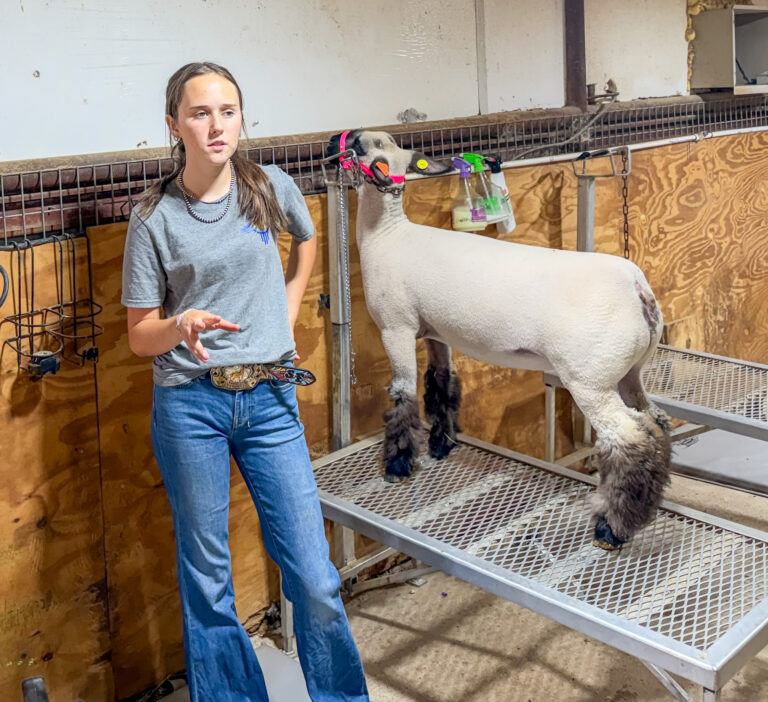
With the 81st Eddy County Fair approaching July 21–25, Artesia High School junior Swayzee Folmar is giving the Artesia Daily Press a behind-the-scenes look at what it takes to prepare pigs, goats, and sheep for show week. For her family, the fair isn’t just a summer tradition — it’s a daily commitment that begins long before the gates open.

Early Mornings and Daily Chores

Folmar’s day starts at 6 a.m. She heads outside to feed her sheep and pigs, walks all five pigs, and washes them before the heat settles in. The morning routine wraps up around 8, and she’s back out again at 4:30 p.m. to repeat the process.

With less than two weeks left, Folmar said she’s focused on getting every animal exactly where she wants them. Throughout the year, she works to keep them healthy, prevent injuries, and maintain a routine that keeps the animals manageable.

Preparing Sheep for the Show Ring

Sheep classes at the fair are divided by breed and weight, with a minimum show weight of 80 pounds. Folmar said she has brought some of her sheep down from 150 pounds to around 90 to fit the classes she wants. She keeps animals at different weights so she can enter multiple divisions.

This year, she will show four sheep and one pig. Before the fair, she will shear each sheep down to bare skin so judges can feel muscle definition rather than wool. She practices walking them daily, preparing for the moment she enters the ring and makes the first big circle with the sheep’s hind end facing the judge.

From there, everything depends on the judge. He may handle the sheep, send it out of the ring, or ask for another circle and a proper setup to see the side profile.

“Everything depends on the judge,” Folmar said.

The Work Most People Don’t See

Folmar said many people don’t realize how much work goes into preparing livestock for the fair.

“Many people do not realize the work that goes into the fair,” she said. “We wash the pigs every other day; we put in a lot of work.”

Last week, she hauled her pigs to Levelland to have their feet clipped. Sheep, she said, are far more high‑maintenance. She cleans their pens once or twice a day, and it takes about 30 minutes to wash and care for each one. Pigs are simpler — they get walked and bathed — but they gain two to three pounds a day, so she washes them three times a week and walks them 20–30 minutes daily.

Each day, Folmar bathes her sheep and massages their legs with a conditioner called Clean Sheen, then rubs and combs their wool. It’s part care, part training — a way to show the animals she’s in control and to prepare them for how they’ll be handled in the ring.

Goats, Pigs and a Packed Fair Schedule

Folmar will also take her goats, Ned and Ed, to the fair. The schedule is packed: the fair parade is Friday, followed by cleanup Saturday. On Sunday, she’ll get everything organized. Monday is bedding day, when she hauls in shavings and finds out where her animals will be penned for the week. Usually pigs get one pen each, but if space gets tight, two pigs may share a pen with a divider.

Tuesday night is the goat show and the official public opening of the fair. Wednesday features pigs, chickens, and rabbits. Thursday is steers and lambs. Friday brings the booster show for younger kids, and Saturday afternoon is the livestock auction. On Sunday, exhibitors clean out their pens and wrap up another fair week.

A Tradition Built on Hard Work

For Folmar, the long days, early mornings and constant work are part of the tradition — and part of what makes showing livestock at the Eddy County Fair special.

Auctions, bull riding, live music highlight the 2026 Eddy County Fair in Artesia. Here are the details

0

Here’s what to expect at the Eddy County Fair

Hundreds of local children will convene this week at the Eddy County Fairgrounds, hoping to take home prizes for their hardwork.

The 81st Eddy County Fair will run July 21 to 26, with students from across the county showing the livestock they’ve raised all year.

And it commences with the moment of truth: a livestock auction Saturday night where the winners the big payoff by selling their prized animals.

Here is a list of festivities, shows, and events that will take place at the fair this year:

Tuesday, July 21

8 a.m.- Official Opening and Rabbit Show at Livestock Barn Show Ring

10 a.m. to 9 p.m.- Exhibit Building and Eddy County Community Center open to the public

Noon- Cake Contest at Livestock Barn Show Ring

3 p.m.- Dairy Heifer Show at Livestock Barn Show Ring

5 p.m. to 12 a.m.- Carnival

6 p.m.- Breeding and Market Goat Show at Livestock Barn Show Ring (There will be a 15-minute break in between the Breeding and Market Show)

7 to 10 p.m.- Josh Abbott Band at Outdoor Arena

Wednesday, July 22

9 a.m.- Prospect Yearling Class at Covered Arena and Flower Show at Eddy County Community Center

10 a.m. to 9 p.m.- Exhibit Building and Eddy County Community Center open to the public

2 p.m.- 2-Year-Old Futurity at Covered Arena

5 p.m.- Swine Show at Livestock Barn Show Ring

5 p.m. to 12 a.m.- Carnival

8 p.m.- Faith and Family Night Concert

Thursday, July 23

8 a.m.- Broiler Show at Livestock Barn Show Ring (Breeding Poultry and Ducks will be judged in the poultry barn immediately following the Broiler Show)

9 a.m. to noon- Horticulture entries will be taken at Eddy County Community Center

9:30 a.m.- Breeding Heifer Show at Livestock Barn Show Ring

10 a.m.- Market Cattle Show at Livestock Barn Show Ring

10 a.m. to 9 p.m.- Exhibit Building and Eddy County Community Center open to the public

1 p.m.- Flower Show entries will be judged at Eddy County Community Center

3 p.m.- “James Hamilton” Breeding Sheep Show and Market Lamb Show at Livestock Barn Show Ring (There will be a 15-minute break in between the Breeding and Market Show)

4:30 to 10 p.m.- Eddy County Fair Goat Roping at Covered Arena

5 p.m. to 12 a.m.- Carnival

6 p.m.- La Original Banda El Limón Concert at Outdoor Arena

Friday, July 24

8 to 10 a.m.- All sale pulls and destinations must be finalized

10 a.m. to 10 p.m.- Exhibit Building and Eddy County Community Center open to the public

Noon to 1:30 p.m.- Entries for Pecan Contest will be accepted at Concession Building

2 p.m.- 4-H and FFA Awards Presentation at Livestock Barn Show Ring

4 p.m.-Wool Lead Show at Livestock Barn Show Ring

4 p.m. to 12 a.m.- Carnival

6 p.m.- Pecan Contest Auction at Livestock Barn Show Ring

7 p.m.- Bull riding at Horse Council Open Arena

9 to 11:30 p.m.- Walker Hayes Concert at Outdoor Arena

Saturday, July 25

8 a.m. to noon- Fire and Ice at Concession Stand

8 a.m.- Booster Shows for Swine, Lamb, Goat, Market Cattle, and Dairy Heifer at Show Arena

10 a.m. to 10 p.m.- Exhibit Building and Eddy County Community Center open to the public

10 a.m. to noon- Cornhole Tournament and “Jack Rauch” Anvil Toss at Covered Arena

10 a.m. to 12 a.m.- Carnival

Noon- Fire and Ice Competition Awards at Concession Stand

4 to 5:30 p.m.- Buyer’s Dinner at Covered Pavilion (Donated by PVT Networks)

5:30 p.m.- 4-H and FFA Junior Livestock Auction at Livestock Barn Show Ring

Sunday, July 26

9 a.m.- Release of Livestock

10 a.m.- Release of Adult/Open Class exhibits and Flower Show entries

10 a.m.- Release of 4-H Indoor exhibits except for 1st and 2nd places

Marshall Mecham can be reached at (915) 232-1793 or on X @mecham_marshall

Mecham is serving with the New Mexico Local News Fellowship Program, which places emerging journalists in newsrooms across New Mexico. Learn more at www.newmexicolocalnewsfellowships.org.

Blue skies, cool streams, big trout await anglers in northern New Mexico this week

0

New Mexico fishing enthusiasts angling for trout should head to the lakes and streams of northern New Mexico this week as the popular fish are biting on all kinds of baits and lures.

Along the Cimarron River, trout fishing was fair to good using PowerBait.

At Hopewell Lake, fishing for trout was particularly good while using PowerBait and worms on a bobber.

At Morphy Lake, fishing for trout was fair to good using worms, gold Thomas spoons and Pistol Pete flies.

Trout fishing was good along the banks of the Santa Cruz Reservoir using worms.

At Ute Lake, fishing for smallmouth bass and bluegill was fair to good using worms. Fishing for white bass was incredibly good using spinners.

At the Animas River, fishing for trout was slow to fair using Panther Martins, worms, and hot dogs. Fishing for catfish and bass was fair to good while using live worms and Panther Martins.

Along the San Juan River, fishing for brown trout in the bait section was fair to good when using worms. Fishing for rainbow trout in the quality waters was good when using size-22 red annelid flies, hand-tied flies, pinched crawlers, and worms.

In southern New Mexico at Young Park Pond in Las Cruces, fishing for catfish was good using hot dogs.

In Lincoln County at Bonito Lake, trout fishing was good using garlic and salmon peach PowerBait.

This fishing report has been generated from the best information available at the time of publication.

Summer Catfish Waters are the cat’s meow

By Melissa Garnett, New Mexico Department of Game and Fish

Despite its easy-going existence, the catfish is a powerful fighter on a hook, as experienced anglers will tell you.

New Mexico waters support three species of catfish: the channel, flathead and blue. Catfish are widely distributed in New Mexico because they have adapted well to life in reservoirs, though they are also found in rivers. Channel and flathead catfish each have eight black barbels (whiskers) near the mouth and thick, smooth, scaleless skin. Their fins are dark and soft, except for portions of the dorsal and pectoral fins, which are sharp and serrated and can be venomous.

Young channel catfish are silvery blue gray with black spots and a forked tail. Once they reach maturity, at about 12 inches, their coloration darkens markedly, and their spots diminish. Although channel cats prefer clear, slow-moving water, they’re highly tolerant of turbid water. They can grow to over 30 inches, though 12- to 16-inchers are more common catches in New Mexico waters.

In spring and early summer, when water temperatures are between 60- and 72-degrees Fahrenheit, catfish are easy to catch, so long as you remember to fish the bottom when the sun is off the water. The only thing that affects a catfish appetite is water temperature. Below 40-degrees Fahrenheit, it has no interest in feeding.

During daytime hours, murky backwaters of coves or slow water stretches of river are good places to fish from the bank or with waders (check out the bottom structure first). Use a float, small weight and chunks of bait or bait on a hook by itself.

Nighttime is when catfish come alive for most fishermen. They tend to feed by night, especially after summer rains when they search turbid waters with their barbels for food.

During the day, catfish seek out dark, deep pools with submerged logs, rocks, or other debris.

Special summer catfish waters

Many small lakes and ponds through New Mexico are stocked from April-September with 17-inch or longer channel catfish. These waters offer great opportunities throughout the summer to catch a gigantic fish.

“Special Summer Catfish Waters provide angling opportunities in urban areas where a reservoir may not be close by,” said Edward Enriquez, warmwater fisheries supervisor for the Department.

On stocking day, six hatchery trucks travel all over New Mexico to deliver an approximate total of 9,000 pounds of channel catfish to our fishing waters. The Department’s weekly stocking report details which waters have been recently stocked.

To make these unique angling opportunities possible, reduced bag limits (two per day) have been established on these waters. Trotlines may not be used in Special Summer Catfish Waters.

This special catfish limit applies to: Alto Lake, Bataan, Blue Hole Park Pond, Bosque Redondo, Carrizozo, Chaparral, Conoco Lake (Loco Lagoon), Corona Pond, Dennis Chavez Pond, Escondida, Estancia Park Lake, Eunice, Grants Riverwalk Pond, Greene Acres, Green Meadow, Harris Pond, Jal Lake, Lake Van, Liam Knight Pond, McGaffey Lake, Ned Houk, Oasis State Park, Pecos River within Villanueva State Park, Perch Lake, Rancho Grande Ponds, Timberon Ponds, Tingley Beach, Trees Lake and Young Pond.

Artesia boys’ soccer coach goes to the 2026 FIFA World Cup

0

A sudden departure — for the best reason

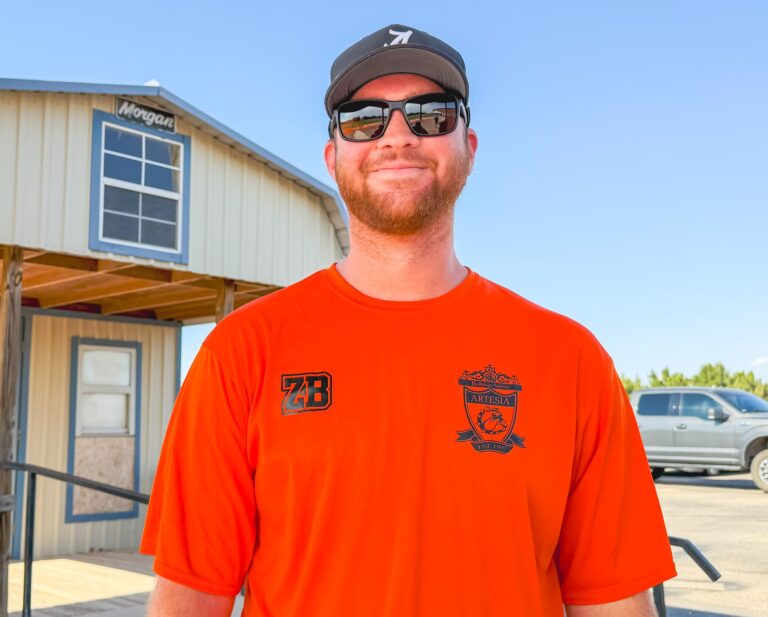
Artesia boys’ assistant soccer coach Zane Brooks had to cut his time short at last week’s Artesia boys’ soccer camp. And he had a good reason. Brooks, who has been an assistant coach in Artesia for four years, won the ticket lottery for the 2026 FIFA World Cup and had to leave for Dallas on Thursday to begin his trip.

Four months ago, Brooks and his friends entered FIFA’s ticket lottery. When his name was drawn, he purchased seats for the quarterfinals in Kansas City. On Saturday, July 11, he watched Argentina defeat Switzerland 3–1 at Kansas City Stadium in Kansas City, Missouri.

A chance to see Messi — maybe for the last time

Brooks said he picked Kansas City with one hope in mind: seeing Lionel Messi on the World Cup stage one more time.

“I was hoping Argentina would get to Kansas City,” Brooks said. “I love Messi. He is a humble guy; he is hard to get to, and he goes 100% all the time. This should be his last World Cup. It should be. This is historical that I get to see him play his last World Cup.”

Brooks didn’t hesitate when asked who he’d trust with the final kick of a match.

“If I had to choose between Cristiano Ronaldo and Messi taking the last kick to win the game, I would pick Messi,” Brooks said.

He added that Ronaldo has scored only one knockout‑stage goal in his entire World Cup career.

“To me,” Brooks said, “Messi is a much more clutch player.”

A coach shaped by the game

Brooks played college soccer as a center back at Southwestern College for three years. His junior season ended early when he tore his ACL, and he stepped away from playing to preserve his long‑term health.

Artesia boys’ soccer coach Phillip Jowers later contacted Brooks’ college coach to ask about seniors interested in high school coaching. That connection brought Brooks to Artesia, where he has become a fixture in the program.

Finding home in a small town

Now in his fourth year with the Bulldogs, Brooks said Artesia has become home.

“I love it here,” Brooks said. “I love the support from the community, and it is great living here.”

Brooks said Jowers has transformed the program’s culture and raised expectations across the board.

“Coach Jowers has changed the culture of the soccer program here,” Brooks said. “You do not see many high school soccer stadiums like this. This is second to none.”

Bureau of Land Management Director Steve Pearce ‘enjoying the work’ after confirmed by Congress

0

Tim Keithley
Ruidoso News

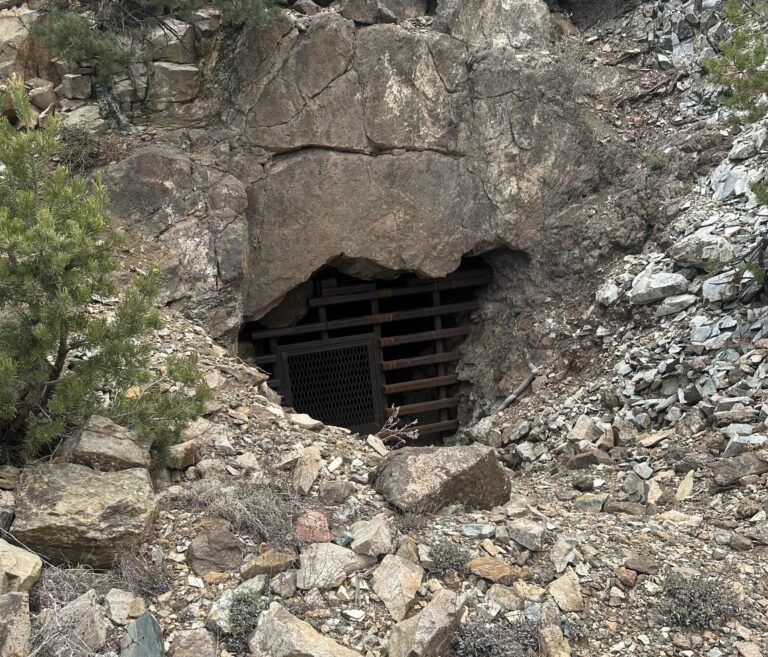
Plugging-up dangerous and abandoned oil wells and orphaned mineral mines in the western U.S. are two major projects that currently have the attention of new Bureau of Land Management Director Steve Pearce.

The longtime New Mexico congressman and former state Republican Party Chairman toured 11 orphaned mines in northern New Mexico last week. Pearce was back in his home state to speak at the Independent Petroleum Association of New Mexico’s annual convention in Albuquerque.

“The gas industry applauded our efforts to clean up those abandoned wells,” Pearce said on my Saturday morning radio show, “KWES Saturday Morning.” Pearce said there are thousands of abandoned oil wells and former mineral mines found on BLM land across the West.

“Our office has put together a working plan and we currently have the funds budgeted to cap the wells,” Pearce said. “We would like to have the majority of this work completed by the end of next year.”

Pearce said the job has been hectic since being sworn in as BLM director on May 19, but he enjoys the heavy workload. He described currently working 12-hour days in Washington D.C. that include regular meetings, while attempting to resolve any issues that can’t be addressed at one of the local field offices that manage 245 million acres and 700 million subsurface acres of public land.

“My 14 years in Congress, along with a previous career of working in the oil and gas business, has allowed me to get a grasp on the issues impacting the BLM,” Pearce said. “We are working with companies that have invested in the land and we’re balancing their concerns with preserving the land and environment.”

One of the issues that used to irritate Pearce while serving in Congress was government bureaucracy “red tape” inside the various agencies. As director of the BLM, Pearce said he is doing his best to streamline decisions without compromising environmental concerns.

“Mostly people just want answers,” Pearce said. “In one case that I’ve been involved with thus far, the company had been waiting for years for a decision to be made about a particular issue. We were able make a decision and move a project forward within days that previously had been held-up in paperwork for years.”

Pearce said one of the most important topics on his desk in his new position is water conservation in the West. An expert on oil and gas extraction, Pearce would like to see brackish water that comes out of wells as produced water become 100% reusable.

“This is one of the most important issues facing the western states,” Pearce said. “It is vital that oil and gas companies are doing everything possible to conserve as much water coming out of the ground as possible while producing product.”

Although Pearce has only two months on the job, he said that the BLM field offices have committed employees and staff that want to serve the public.

“Our 5,700 BLM employees are genuinely positive about our goals and projects,” Pearce said. “I’m enjoying the opportunity to serve every day.”

Ruidoso News columnist Tim Keithley writes about the people and events in the community. If you have a story idea, contact Tim at tkeithley@elritomedia.com.

Native Air upgrades to serve high-risk pregnancies in New Mexico air ambulance

0

Expectant mothers with high-risk pregnancies now have improved access to a higher level of care thanks to Native Air and LifeGuard.

The Roswell-based emergency air medical provider can now carry a TOCO monitor for continuous in-air fetal monitoring, and their sister bases in Artesia and Carlsbad are also trained to use the device on their helicopters and fixed-wing aircraft.

Native Air and LifeGuard join a handful of programs within Air Methods, the nation’s leading air medical service provider, to carry this device. Air Methods plans to expand the use of TOCO monitors to other community-based programs throughout the year.

A tocodynamometer, commonly known as a TOCO monitor, provides clinicians with valuable information about uterine activity, including the frequency, intensity, and length of contractions during labor. It is a non-invasive sensor placed on the abdomen to help clinicians gain insight into the well-being of both the mother and baby and respond with any critical care needed.

“The TOCO monitor allows us to monitor a baby’s heart rate and condition, as well as the frequency and length of the mother’s contractions, continuously throughout the transport,” said Air Methods Regional Clinical Director Ronnie Rivas-Savell. “This gives us the opportunity to see real time changes in both the baby and mother and treat them immediately, which is particularly important for women with high-risk pregnancies.” 

Due to limited OB resources in New Mexico, women with high-risk pregnancies, including those with twins, pre-eclampsia, premature membrane rupture, pregnancy-induced hypertension, or pregnant patients suffering trauma from car accident, falls, or other incidents are often flown to Albuquerque or to Lubbock, TX for specialized care.

With the addition of the TOCO monitor, more patients will be able to be transported by air in order to receive this medical attention as this device will be used on all pregnant patients transported after 20 weeks of gestation.

Native Air and LifeGuard have been serving the Energy Basin for over 20 years. Their helicopters and fixed-wing airplanes function as flying ICUs, carrying the equipment and medications needed to save lives in emergency situations.

Their industry-leading flight nurses and paramedics are trained to provide critical care to patients suffering from trauma due to accidents, cardiac and stroke events, high-risk obstetric emergencies, and more.  

“Air Methods is committed to providing air medical services to all members of the communities it serves and is in-network with most major health insurance providers across the country for emergency air medical services,” read a statement from Air Methods.

“Additionally, their patient advocates work with all patients, regardless of insurance, to ensure affordability while making pre-paid air medical membership unnecessary.”  

Prehistoric fun unearthed during Dino dig at Artesia Museum

0

For two hours on Friday, July 11, Artesia children of all ages had a chance to have some fun and channel their inner archaeologist.

The fun and the science were part of the summer reading program sponsored by the Artesia Public Library and the Artesia Museum and Historical Center, and Friday’s event encouraged kids to find buried plastic dinosaurs and other forms of treasure during a bone dig held outdoors in the museum’s garden area.

Hayley Maldonado was watching her 7-year-old twins Brynlee and Braelyn dig through one of three kid-sized swimming pools filled with dirt and hidden loot.

“They were wanting to do something this summer and wanted to have fun at the same time,” Maldonado said as her kids enjoyed some shade while sifting through the soil on a warm summer morning. “They are into dinosaurs.”

The bone dig was the latest chapter of the reading program that got underway June 1 with a wide range of activities for young children, teenagers and adults with the goal of helping students keep up with educational activities during the summer break.

Jessica Hope, museum director, said the library prepared the pools as dig sites with prizes were offered to those who unearthed dinosaurs and other underground gems.

This theme of this year’s program is “Unearth a Story” and Maldonado said the activities provided a summer outlet for her daughters, who attend Hermosa Elementary School and enjoy reading.

“It keeps kids on track,” she said.

Maldonado liked the arts and crafts projects, stories and guest speakers offered by the library and the museum.

Not far from the bone dig, another Artesia mother, Mikayla DeHoyos, was helping her son Matthias,4, prepare for a game of ladder ball.

Her two older children, 11-year-old Mila and 8-year-old Hezekiah, were participating in other activities.

“They love dinosaurs,” she said. “It’s a great thing for our kids to do. My kids have been looking forward to this all day long.”

DeHoyos said the summer activities keep the kids occupied while awaiting the Aug. 13 start of Artesia Public Schools’ 2026-2027 school year.

“I love seeing a lot of people at the museum,” said museum director Hope. “We’ve been really trying with our community outreach, and pairing up with the library has brought more people here than we normally see and people get to see the items that we have.”

She said the summer reading program has created increased awareness for the museum, which opened in 1970.

“We see an increase (in visitors) during the summer but nothing to this extent,” Hope said. I think we’ve had many people who either previously had no interest in the museum or didn’t know it existed come by and see that we have a lot of really cool stuff to see.”

Follow reporter Mike Smith on Instagram @mikesmithartesianm.