Home Blog Page 12

Trujillo ready for 81st Eddy County Fair

0

Marshall Mecham

The 81st annual Eddy County Fair is set for July 21-25, and 17-year-old Bailey Trujillo said she is ready.

Fair participation

Trujillo will participate in several events during the week, including livestock shows and singing performances.

Before the fair, Trujillo will ride on the Artesia FFA float in the Eddy County Fair Parade at 7 p.m. Friday, July 17. The parade begins at Bulldog Bowl and ends on Second Street.

After that, the events she is participating in will be held at the Eddy County Fairgrounds, beginning with livestock and prospect yearling check-in from 7-10 a.m. Monday, July 20. Later that night, she will sing “My Jesus” and “Goodness of God” during Cowboy Church at 7 p.m.

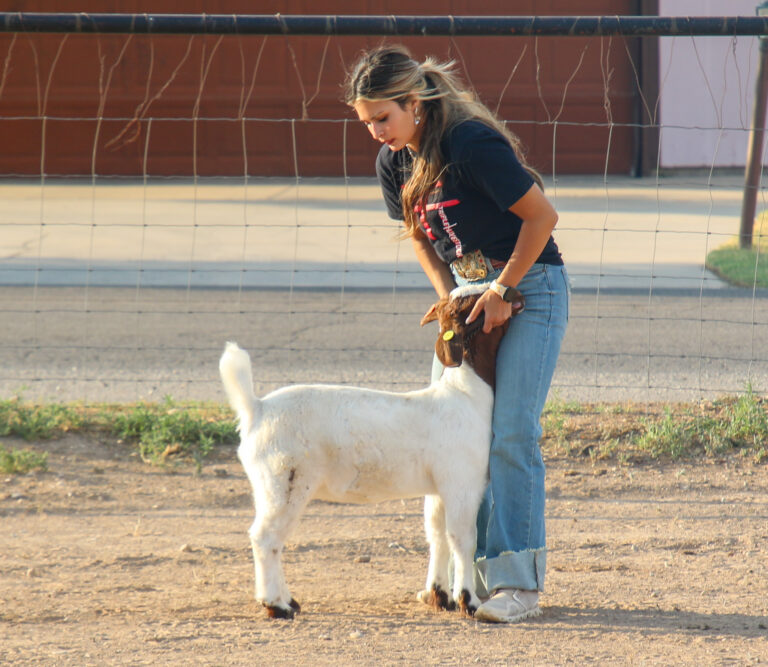
Trujillo will participate in the Market Goat Show at 6 p.m. Tuesday, July 21. She will then make a quick turnaround for the Prospect Yearling Class at 9 a.m. Wednesday, July 22. She also will participate in the Market Lamb Show on Thursday, July 23, 15 minutes after the James Hamilton Breeding Sheep Show, which begins at 3 p.m.

The 4-H and FFA Awards Presentation will be held at 2 p.m. Friday, July 24. The fair will end with the 4-H and FFA Junior Livestock Auction at 5:30 p.m. Saturday, July 25, when Trujillo will sing “The Star-Spangled Banner.”

Preparing for the fair

The sheep Trujillo will show are Honey, Louie, Duffy and Wendy. The goats she will show are Big Time, Bulldog, and Bean. The yearling she is showing, Stewy, belongs to her friend Samuel Fodge, who is training the horse for the fair.

Trujillo has been training her goats and sheep in the mornings and evenings. She said judges will consider several factors.

“Goats are judged on their masculinity, performance and how well they look,” Trujillo said. “We wash the goats’ legs on Monday and Friday. We wash the sheep’s legs on Sunday, Tuesday, Wednesday and Saturday. We break it up into multiple days because washing 12 animals for 30 to 45 minutes each can be a lot.”

Trujillo said preparing for the fair is a long process.

“It takes a lot of mental preparation because it’s a hot, long and stressful week,” Trujillo said. “I’ll be very busy because I’m singing, showing and in the parade. There’s also a check-in to make sure our animals are the weight we want them to be.”

Adversity

Trujillo also has lupus, a chronic autoimmune disease in which the immune system attacks healthy tissues and organs. She said the condition is a challenge, but she has pushed through it.

“I was diagnosed when I was 13,” Trujillo said. “It’s taken a big toll on my life, especially with all the work I do. However, I know there are people with worse conditions out there, so things could be way worse. God has truly blessed me with everything he has given me, so all I can do is be grateful at the end of the day.”

Marshall Mecham covers sports for the Artesia Daily Press. He can be reached at (915) 232-1793 or on X, @mecham_marshall. Mecham serves with the New Mexico Local News Fellowship, which places emerging journalists in newsrooms across the state. Learn more at www.newmexicolocalnewsfellowships.org.
Auctions, bull riding, and live music: Here’s what to expect at the Eddy County Fair

Hundreds of local children will convene this week at the Eddy County Fairgrounds, hoping to take home prizes for their hardwork.

The 81st Eddy County Fair will run July 21 to 26, with students from across the county showing the livestock they’ve raised all year.

And it commences with the moment of truth: a livestock auction Saturday night where the winners the big payoff by selling their prized animals.

Here is a list of festivities, shows, and events that will take place at the fair this year:

Tuesday, July 21

8 a.m.- Official Opening and Rabbit Show at Livestock Barn Show Ring

10 a.m. to 9 p.m.- Exhibit Building and Eddy County Community Center open to the public

Noon- Cake Contest at Livestock Barn Show Ring

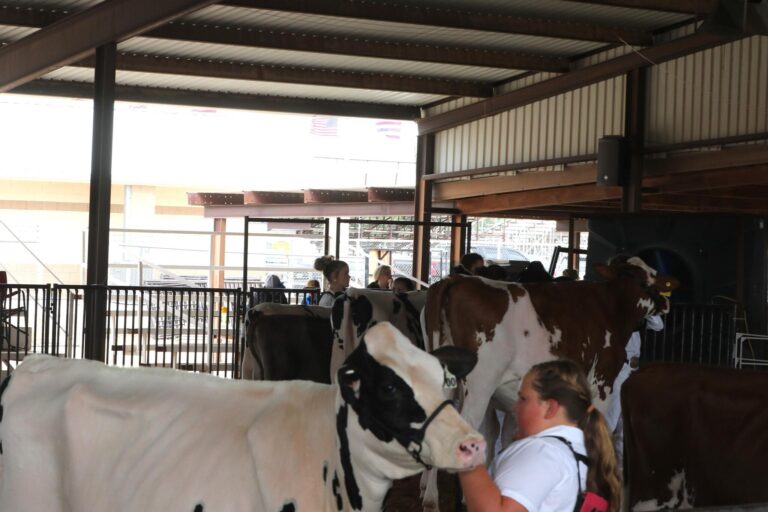
3 p.m.- Dairy Heifer Show at Livestock Barn Show Ring

5 p.m. to 12 a.m.- Carnival

6 p.m.- Breeding and Market Goat Show at Livestock Barn Show Ring (There will be a 15-minute break in between the Breeding and Market Show)

7 to 10 p.m.- Josh Abbott Band at Outdoor Arena

Wednesday, July 22

9 a.m.- Prospect Yearling Class at Covered Arena and Flower Show at Eddy County Community Center

10 a.m. to 9 p.m.- Exhibit Building and Eddy County Community Center open to the public

2 p.m.- 2-Year-Old Futurity at Covered Arena

5 p.m.- Swine Show at Livestock Barn Show Ring

5 p.m. to 12 a.m.- Carnival

8 p.m.- Faith and Family Night Concert

Thursday, July 23

8 a.m.- Broiler Show at Livestock Barn Show Ring (Breeding Poultry and Ducks will be judged in the poultry barn immediately following the Broiler Show)

9 a.m. to noon- Horticulture entries will be taken at Eddy County Community Center

9:30 a.m.- Breeding Heifer Show at Livestock Barn Show Ring

10 a.m.- Market Cattle Show at Livestock Barn Show Ring

10 a.m. to 9 p.m.- Exhibit Building and Eddy County Community Center open to the public

1 p.m.- Flower Show entries will be judged at Eddy County Community Center

3 p.m.- “James Hamilton” Breeding Sheep Show and Market Lamb Show at Livestock Barn Show Ring (There will be a 15-minute break in between the Breeding and Market Show)

4:30 to 10 p.m.- Eddy County Fair Goat Roping at Covered Arena

5 p.m. to 12 a.m.- Carnival

6 p.m.- La Original Banda El Limón Concert at Outdoor Arena

Friday, July 24

8 to 10 a.m.- All sale pulls and destinations must be finalized

10 a.m. to 10 p.m.- Exhibit Building and Eddy County Community Center open to the public

Noon to 1:30 p.m.- Entries for Pecan Contest will be accepted at Concession Building

2 p.m.- 4-H and FFA Awards Presentation at Livestock Barn Show Ring

4 p.m.-Wool Lead Show at Livestock Barn Show Ring

4 p.m. to 12 a.m.- Carnival

6 p.m.- Pecan Contest Auction at Livestock Barn Show Ring

7 p.m.- Bull riding at Horse Council Open Arena

9 to 11:30 p.m.- Walker Hayes Concert at Outdoor Arena

Saturday, July 25

8 a.m. to noon- Fire and Ice at Concession Stand

8 a.m.- Booster Shows for Swine, Lamb, Goat, Market Cattle, and Dairy Heifer at Show Arena

10 a.m. to 10 p.m.- Exhibit Building and Eddy County Community Center open to the public

10 a.m. to noon- Cornhole Tournament and “Jack Rauch” Anvil Toss at Covered Arena

10 a.m. to 12 a.m.- Carnival

Noon- Fire and Ice Competition Awards at Concession Stand

4 to 5:30 p.m.- Buyer’s Dinner at Covered Pavilion (Donated by PVT Networks)

5:30 p.m.- 4-H and FFA Junior Livestock Auction at Livestock Barn Show Ring

Sunday, July 26

9 a.m.- Release of Livestock

10 a.m.- Release of Adult/Open Class exhibits and Flower Show entries

10 a.m.- Release of 4-H Indoor exhibits except for 1st and 2nd places

Marshall Mecham can be reached at (915) 232-1793 or on X @mecham_marshall

Mecham is serving with the New Mexico Local News Fellowship Program, which places emerging journalists in newsrooms across New Mexico. Learn more at www.newmexicolocalnewsfellowships.org.
A ‘sportsman’s paradise.’ Here’s a look at Ruidoso businesses embrace the IRONMAN triathlon

0

Local businesses embrace change during IRONMAN in Ruidoso

Edward Tinsley’s customers came from all over the world on July 11.

It was the first day of the international IRONMAN triathlons in Ruidoso, each spanning a swim in Grindstone Lake, biking through scenic mountain trails and a run to the finish line at the White Mountain Recreation Complex.

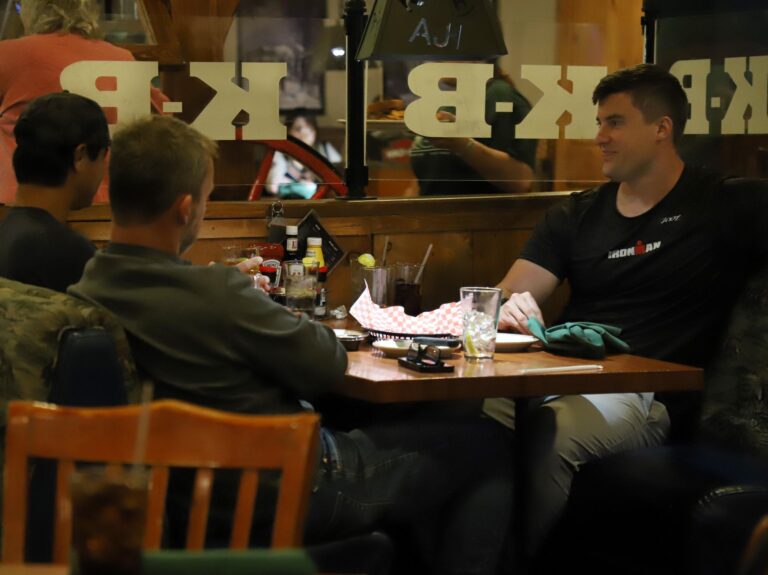
Competitors flocked to the mountain town’s local businesses between the races, including the popular K-Bob’s Steakhouse which Tinsley owns.

Tinsley, 45, recalled a Saturday customer donning a shirt from a previous IRONMAN competition in Kona, Hawaii, where it’s been held annually since 1981. That race is famous for holding its swim leg in the open waters of the Pacific Ocean.

Ruidoso’s elevation at more than 6,900 feet could be the town’s own unique selling point, Tinsley suggested.

“We can start a tradition like that here,” Tinsley said. “These kinds of events put us on the map globally.”

IRONMAN, an international triathlon organization holds competitions through the U.S. and across the globe. Officials in Ruidoso hoped their event, held July 11 and 12, could improve the visitation and tourism the village relies on for its economy, after the recent closure of the iconic Ruidoso Downs Race Track.

The track closed last summer in the wake of a severe flood in July 2025 caused when monsoon rains fell along the burn scare of the 2024 South Fork and Salt fires. At least three people died, and local businesses and homes were damaged in the flood.

‘Innovation and creativity’

Despite having a slower morning on Sunday due to road closures from the IRONMAN 70.3, Tinsley said he appreciated how such events promoted new forms of tourism beyond horse racing.

“Ruidoso can only benefit from diversifying the reasons to visit here,” he said. “There’s an important future with the racetrack, but we can build other spheres of reasons to come.”

Part of that future saw the first significant change in K-Bob’s menu since the regional chain first opened in 1966 in Clovis. IRONMAN organizers enlisted the steakhouse to create an athlete’s menu for the event weekend, featuring protein dishes, salad and mocktails.

“The restaurant business is all about innovation and creativity,” Tinsley said. “You have to be constantly developing new menus and new items. I’m happy to do it.”

Mayor Lynn Crawford said residents initially feared the event would draw tourists away from Midtown’s numerous businesses. But the races ended up successfully distributing tourists throughout Ruidoso, he said.

“There was a little bit of apprehension,” Crawford said. “We were going to take a lot of the folks out of the shopping area. Now, they’ve seen so many customers, so many tourists, that have come into town.”

‘Help athletes function better’

Fusion Medical Spa & Wellness owner Dr. Stephen Rath purchased an RV last year to support athletes onsite at races, after Ruidoso recruited the XTERRA triathlon last fall and IRONMAN this summer.

XTERRA’s second Ruidoso event is slated for Oct. 8.

Rath’s black-and-white RV sat in the Ironman Village where Saturday’s 70.3-mile race ended, and local booths, food trucks and other services began.

Rath, 53, said the RV contains an oxygen bar, compression and shockwave therapy, IVs and vitamin injections to “help athletes function better.” Thirteen people – mostly seeking compression therapy – visited the vehicle on Sunday after the 5150 and sprint races, said registered nurse Chevaun McKibbin-Pease.

“We were really excited,” Rath said of Ruidoso’s plan to host the IRONMAN. “We had already committed to promoting sports medicine in this community, and IRONMAN was in house.”

‘Nice for a change’

For Board House and Bike, the festivities brought excitement – and profits – to the business. Owner Shane Barnett, 53, said the store also sold IRONMAN-branded t-shirts, stickers and bottles.

About six athletes attended the shop to reassemble their bikes after breaking them down to store on their incoming flights, said employee Craig Stafford.

“It was nice for a change to work on some really nice $10,000 bikes,” the 64-year-old mechanic said. “They’re a specialized machine made just for triathlons. We don’t get a lot of them.”

He said Ruidoso should continue promoting athletics as the mountain town works to rebuild its appeal from the devastation of the fires and floods.

“We’ve lost a few things lately,” Stafford said. “There needs to be another draw for people to come here, and I think the outdoors has always been a part of it. I hope they continue making it more of a sportsman’s paradise.”

Managing Editor Adrian Hedden can be reached at 575-628-5516, or @AdrianHedden on the social media platform X.

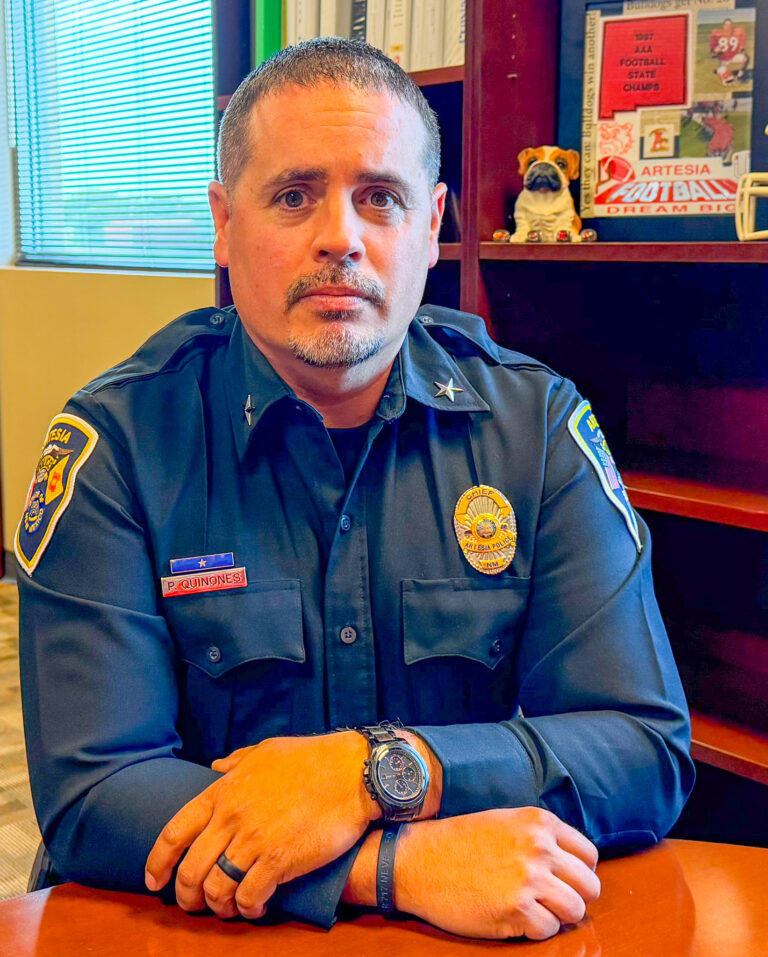
Artesia Interim Police Chief Pete Quinones Dreams Big and Bleeds Orange

0

 JT Keith

A New Chapter at APD

When Pete Quinones was sworn in as Artesia’s interim police chief on Wednesday, July 8, the city didn’t just get a new leader — it got the full‑throttle version of Quinones.

“I have to be sworn in to do the duties of the chief of police,” he said. “Even though it’s just for the interim role, I’m still trying to figure out if I want to do this permanently.”

Quinones steps in for longtime Chief Kirk Roberts, who retired on July 1. Mayor Jeff Youtsey appointed Quinones effective July 1, with the city council set to vote on the appointment July 17.

Quinones, 46, has been with the department since graduating from New Mexico State University in 2004. And from the moment he took the oath, he hit the ground running.

Built From the Ground Up

Quinones started as a patrol officer in 2005, worked his way up to corporal, then sergeant, and spent five years as a first-line supervisor. After that, he served five years as patrol commander.

“For the first 15 years,” he said, “I’ve been on patrol and on the streets and seen the heartbeat of Artesia.”

Even now, while learning the chief’s role, he still serves as administrative commander. The department is 94% staffed, employing 53-55 people.

His days start early — 3:30 a.m. — with workouts and quiet time scheduled at 6 a.m. on Tuesdays and Thursdays. It’s all part of giving Artesia everything he has.

Bleeding Orange Since Day One

Quinones learned the value of all-out effort long before he ever put on a badge. He learned it under the lights of Bulldog Bowl.

He played wide receiver for the Bulldogs and ran track. Artesia won the state football championship in 1996 and 1997, and the state track titles in 1997 and 1998. Those years shaped him.

One of his best memories came in the 1997 football championship at Bulldog Bowl. Artesia ranked No. 1, trailed No. 2 Silver City 17‑6 at halftime.

“That game was pretty similar to the one we just had against Roswell this past year,” Quinones said. “It was a tough game, and we came back and won it 34‑31.”

The Coach Who Changed His Life

Playing for legendary coach Cooper Henderson left a mark that never faded.

“He prepared boys to be men,” Quinones said. “He wanted us to have respect for the community. Coach Henderson had excellent integrity and wanted us to do everything respectfully everywhere we went.”

Players had to complete community service before earning their letterman jackets — a lesson in responsibility that Quinones still carries.

He admits he wasn’t always on the right path. “I was kind of going down the wrong path my sophomore year,” he said. “It took one coach to push me in the right direction. I wouldn’t be here if it were not for the coaches and the Quarterback Dads. You can guarantee it.”

A Quarterback Dad Paying It Forward

Six years ago, Quinones became a Quarterback Dad, a mentor for Artesia football players. He takes kids out to eat, checks grades, spends time with them on bye weeks, and gives advice when they need it.

“I love doing that,” he said. “I love watching them grow up. Now some of them are married and have kids.”

He learned the role from his own Quarterback Dad, Gary Sims, who never stopped checking on him — through college, through his early years as an officer, through life.

Sims’ guidance helped shape Quinones into the man he is today.

The Best Friend He Lost — and the Mission He Carries

In college, Quinones switched majors after his best friend, D. Robert‑Martin Harvey, encouraged him to try criminal justice. Harvey became his closest friend — and the reason Quinones chose law enforcement.

Harvey was killed in the line of duty on April 26, 2009, by a drunk driver.

“He is my hero,” Quinones said. “He was killed in a DWI crash. I’ve been a DWI enforcer, and it’s one of the things I hold dear to my heart. But I got into law enforcement because of him.”

Quinones keeps Harvey’s photo and medal in his office. He thinks about him every day.

Artesia’s First Responders Water Drive each February — providing cases of water to law enforcement for the year — is one of the ways Quinones honors that memory.

Family First, Always

For all the championships, all the badges, all the early mornings and long nights, Quinones says the real key to his life is simple: his family.

His wife of 13 years, Ashlie, and his children — Ethan, 20; Zailee Valverde, 17; and Jevin, 13 — are the center of everything.

“I would not be sitting here if it were not for a lot of my coaches setting me straight,” he said. “I wouldn’t be here without the coaches, the Quarterback Dads, and the people who guided me.”

Dreams do come true — and Quinones is living proof. From Bulldog Bowl to the chief’s office, from a kid who needed direction to a man leading a department, he’s still running full speed.

And he’s still bleeding orange.

Trip Jennings: Skepticism is the love language of journalism

0

“Great story, better if true.”

It’s a throwaway line journalists sometimes say to each other, a playful evocation of another era.

For those of us old enough to remember, editors would utter this adage, often with a hint of sarcasm, when a reporter pitched a story that sounded too good to be true.

After additional reporting, the reporter might learn that too good to be true meant the tip they received was false or, at the least, lacked important information that muddied a situation that appeared clear. Or the hunch they swore by was merely them interpreting events or information in a way that supported their own beliefs without being aware they were doing it.

We all have blind spots.

“Great story, better if true” was an effective tool in differentiating between knowing and believing and, sometimes, if you were lucky, revealing a blind spot you weren’t aware of.

The lesson journalistic elders bequeathed to generations of aspiring scribes was that believing that something is true is not the same as being able to document that it is true.

In journalism, if you are reporting a story, knowing something is true requires verification and documentation. Believing, on the other hand, is a matter of opinion unless it is backed up by facts.

This is not to say that belief and believing are lesser forms of human knowledge. They are not. (In fact, research shows that the line between objective knowledge and subjective feelings is a lot fuzzier than many of us would like to admit. Nobel laureate Daniel Kahneman’s book Thinking, Fast and Slow comes to mind as I write this.). Journalism’s best practices, particularly in investigative reporting, demand that a reporter document and verify, contrary to a person writing an opinion column.

Back in the “Great story, better if true” era, the world moved slower; public information spread at the speed of telephone calls, the printing of the next day’s newspaper and daily TV and radio broadcasts. You had time to sit and ponder what you heard on the TV news broadcast or read in the newspaper.

And in a newspaper newsroom, particularly the type of newsroom that was committed to the “craft” of journalism, rumors, gossip and half-baked ideas often died an excruciating death, done in by editors demanding that you support with facts what you purported to be true. I know. I was the recipient of many demands for supporting evidence over the years.

These days we live in a different world, a world where facts have merged with neighborhood gossip, rumors and half-baked ideas, all of which spreads at the speed of 24-hour up-to-the-second posts, videos, memes-by-algorithms — with much of it mistaken as “true” by many Americans.

These days everybody is a publisher. And many people have seized the opportunity to give the world their hot takes, sometimes on events or situations that are complex and require specialized knowledge accrued over years, sometimes decades.

Here’s my hot take: A lot of Americans could benefit from a gruff, profane editor standing over them and muttering in their ear “Great story, better if true.”

But as Americans fiercely guard their right to say anything they want, whether it’s true or not, I admit an army of curmudgeonly, short-tempered editors demanding proof is a pipe dream.

Honestly, I don’t know how to combat the information overload we’re currently living through. Today’s world is baffling; the amount of misinformation and disinformation that passes as legitimate information is overwhelming.

This troubles me as I think about the younger generation now entering journalism. I wish I had a magic wand to take all of us all back to that earlier era, when there was a scarcity of information, not an overabundance. Of course, that was an imperfect world, too. Not everyone was heard, or had access to tools that enabled them to get their stories out.

Like so much of human experience, there are downsides and upsides to what we’re living through.

So, there is no ageless wisdom I can impart to the younger generation of journalists beyond perhaps something said by Lou Reed, the street poet / co-founder of the influential rock band, the Velvet Underground.

And what was it the street poet said?

“Don’t believe the half of what you see and none of what you hear.”

Sounds strikingly similar to “Great story, better if true,” doesn’t it?

Sensible advice is sensible advice, whatever era you’re living through.

Since 2005, Trip has covered politics and state government for the Albuquerque Journal, The New Mexico Independent and the Santa Fe New Mexican. In 2012, he co-founded New Mexico In Depth, a nonpartisan, nonprofit media outlet that produces investigative, data-rich stories with an eye on solutions that can be a catalyst for change.

Artesia Clean and Beautiful announces Yard of the Week 

0

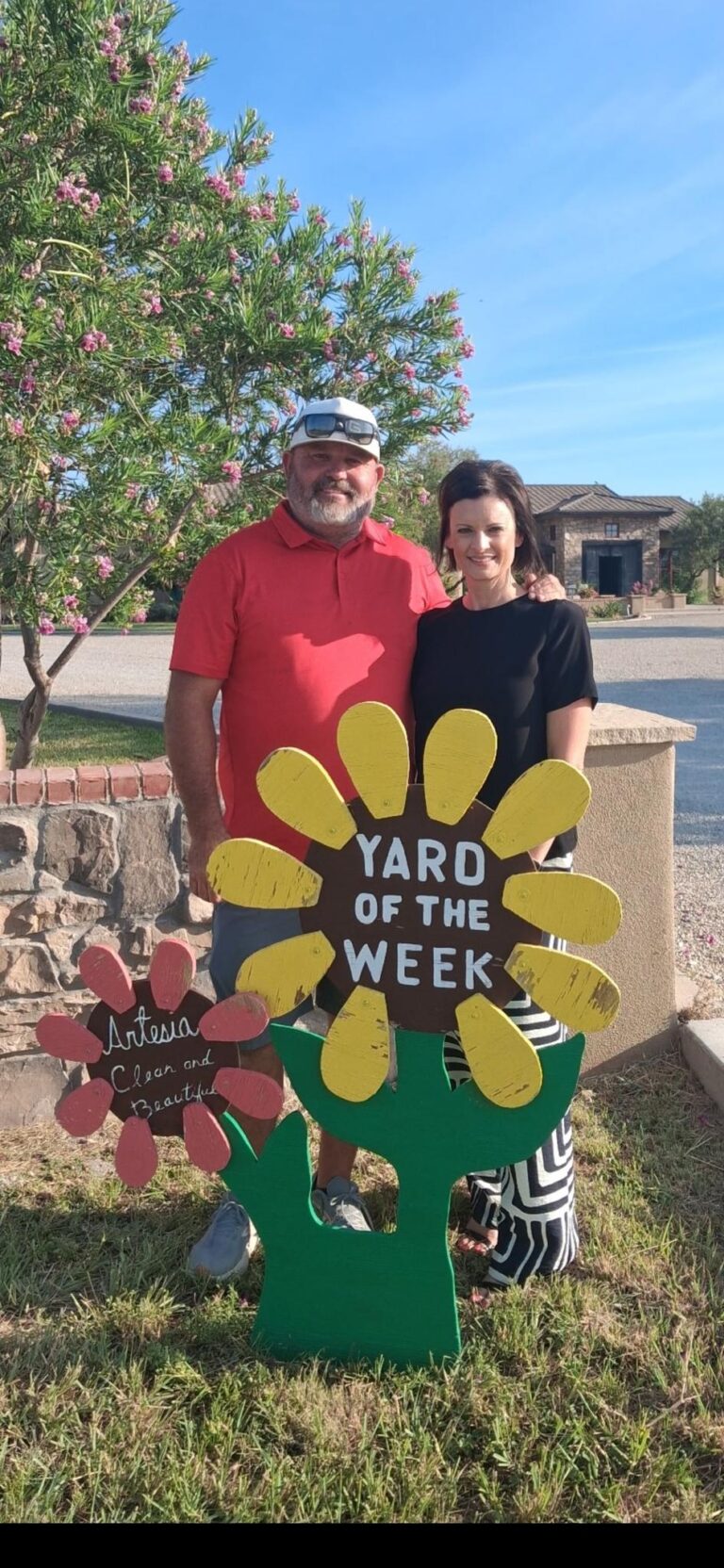
The desert oasis at 3311 W Richey has belonged to Zack and Jessica Simer for the last 14 years. The lush grounds are all their design from the circle drive to the front porch sitting area and back yard covered patios with a cabana and pool.  All of these features are enhanced with fescue, crepe myrtle, desert willow, sage bushes and potted plants for added features of color. Make your staycation right here as you would never want to leave.  Congratulations on all your hard work.

Safety training hosted by Permian Resources for toxic gas operations

0

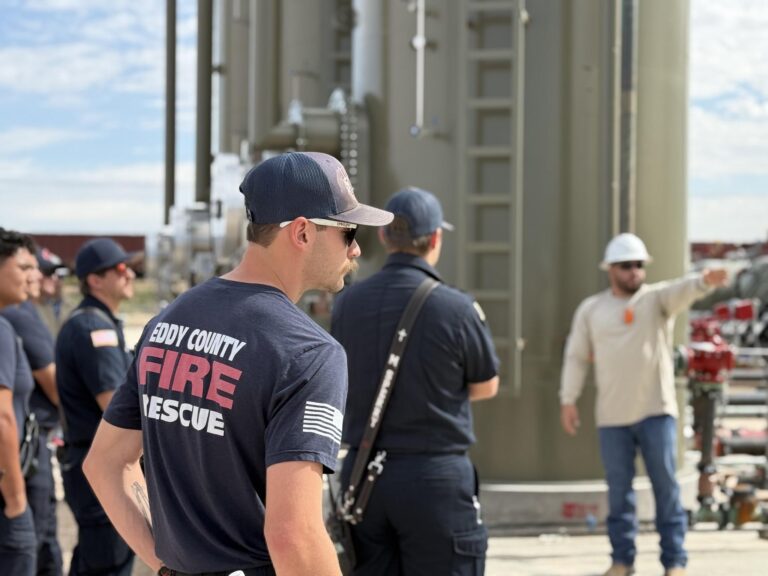
Permian Resources teamed up with Eddy County Fire and Rescue, the Eddy County Sheriff’s Office, and the Carlsbad Fire Department to host training to familiarize first responders with its production operations and provide an H2S safety overview.

Firefighters, EMS personnel, and the sheriff’s office were given in-depth tours of a Permian Resources production facility to provide insight into safety measures and help acquaint first responders with the components of the location.

“We are proud of the partnerships we have built with the first responders and law enforcement who serve the communities where we operate,” said Permian Resources Community Engagement Advisor Lyndsey White. “The goal of this training was to continue to strengthen those relationships and provide first-hand experience on location.”

In addition to the field tour, training on H2S safety was presented by American Safety Services, Inc. The groups were provided with information about components and characteristics of H2S, detection, and response.

While H2S releases in the area are exceedingly rare, Permian Resources’ facilities are equipped with continuous, advanced air monitoring technology. Offering this training to first responders reinforces the company’s continued focus on safety.

“In 2025, we hosted an H2S training for local first responders, and we are glad to have expanded the training to go beyond the classroom and into the field this year,” White said.

In 2026, Permian Resources has contributed over $200,000 to projects directly improving safety including partnering with six other oil and gas companies to upgrade the Carlsbad Fire Department’s existing gas monitoring system and providing funding for safety barricades to be used by the Carlsbad Police Department during community events.

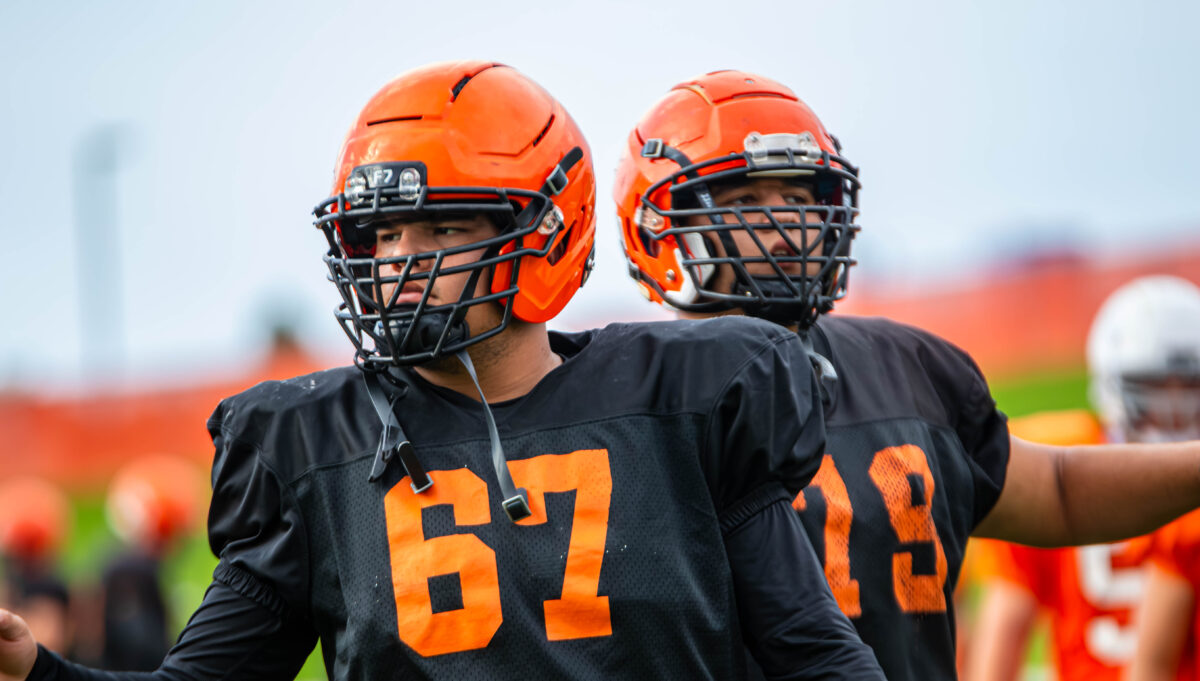
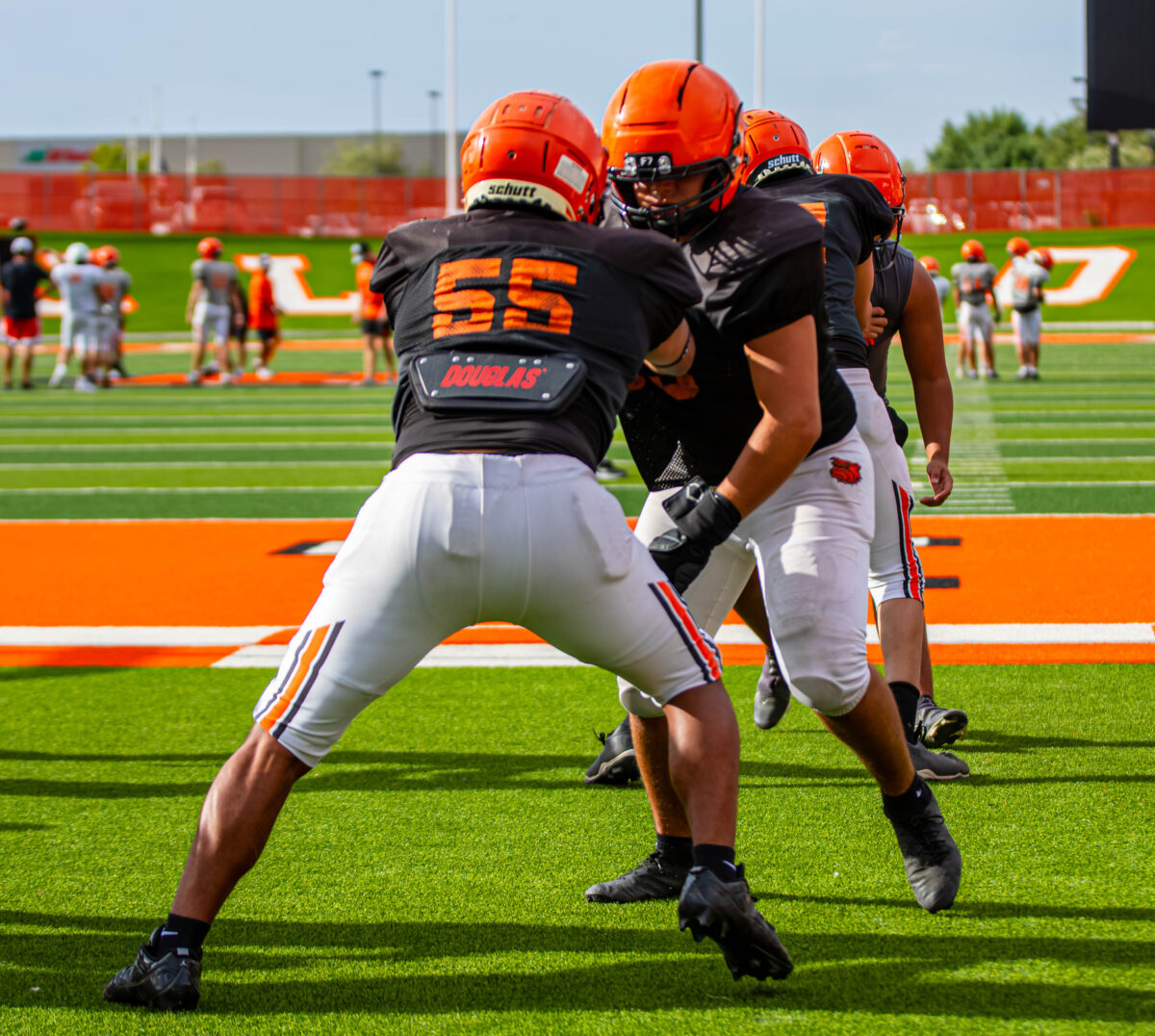
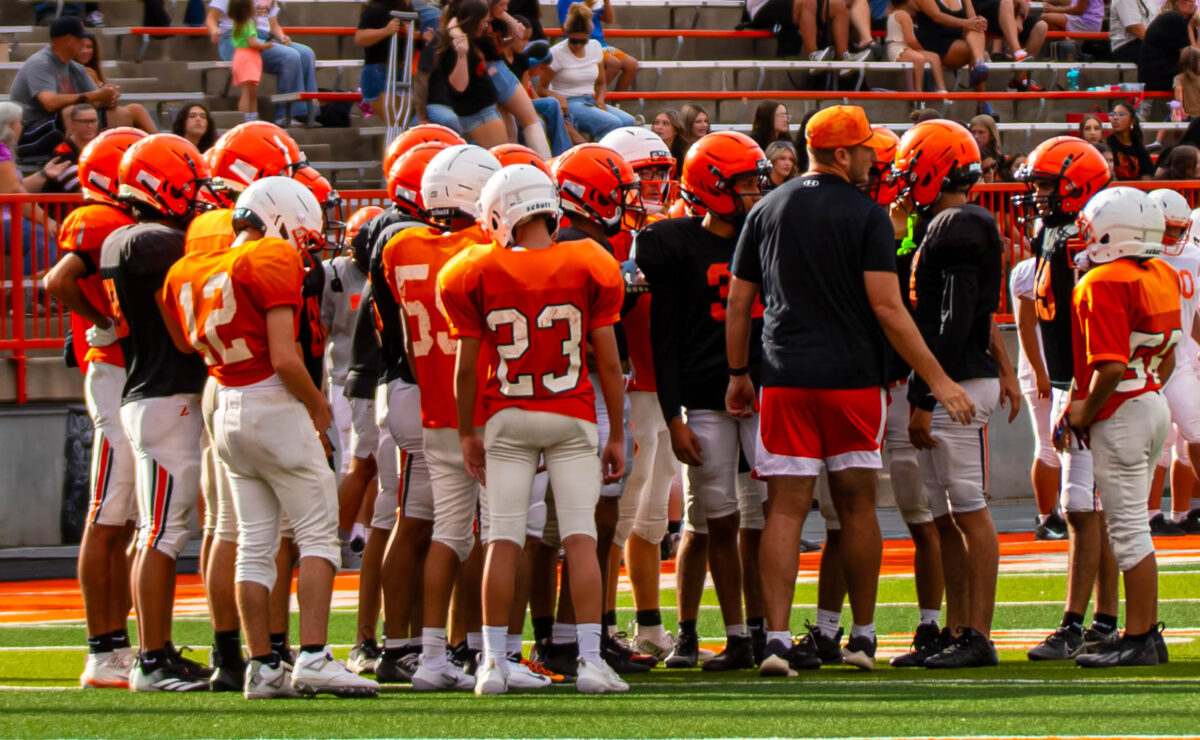
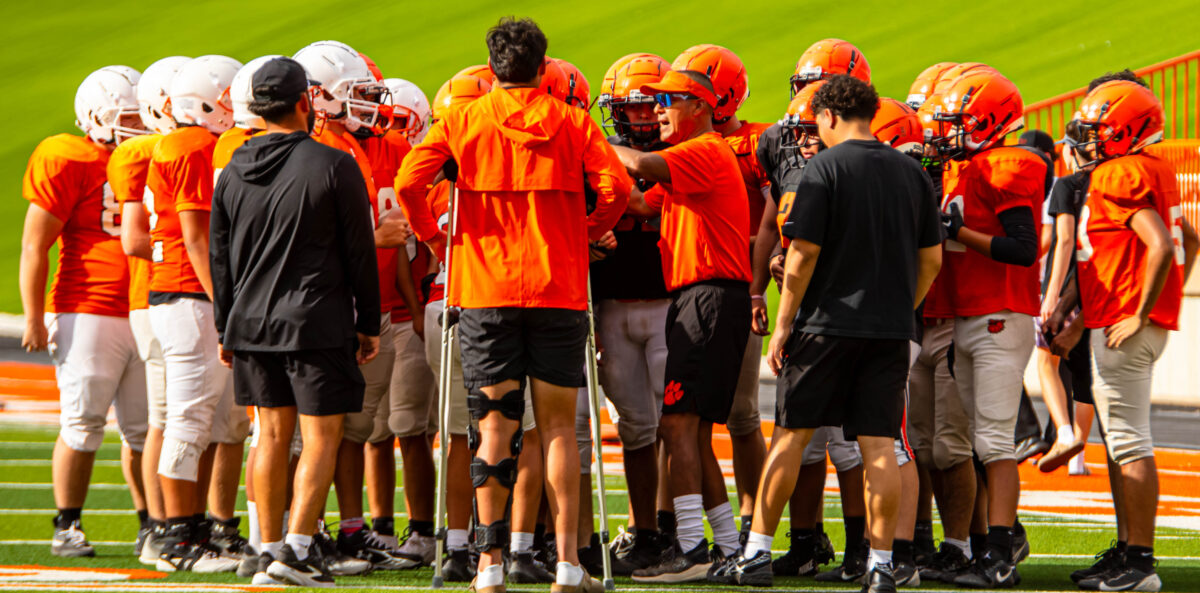
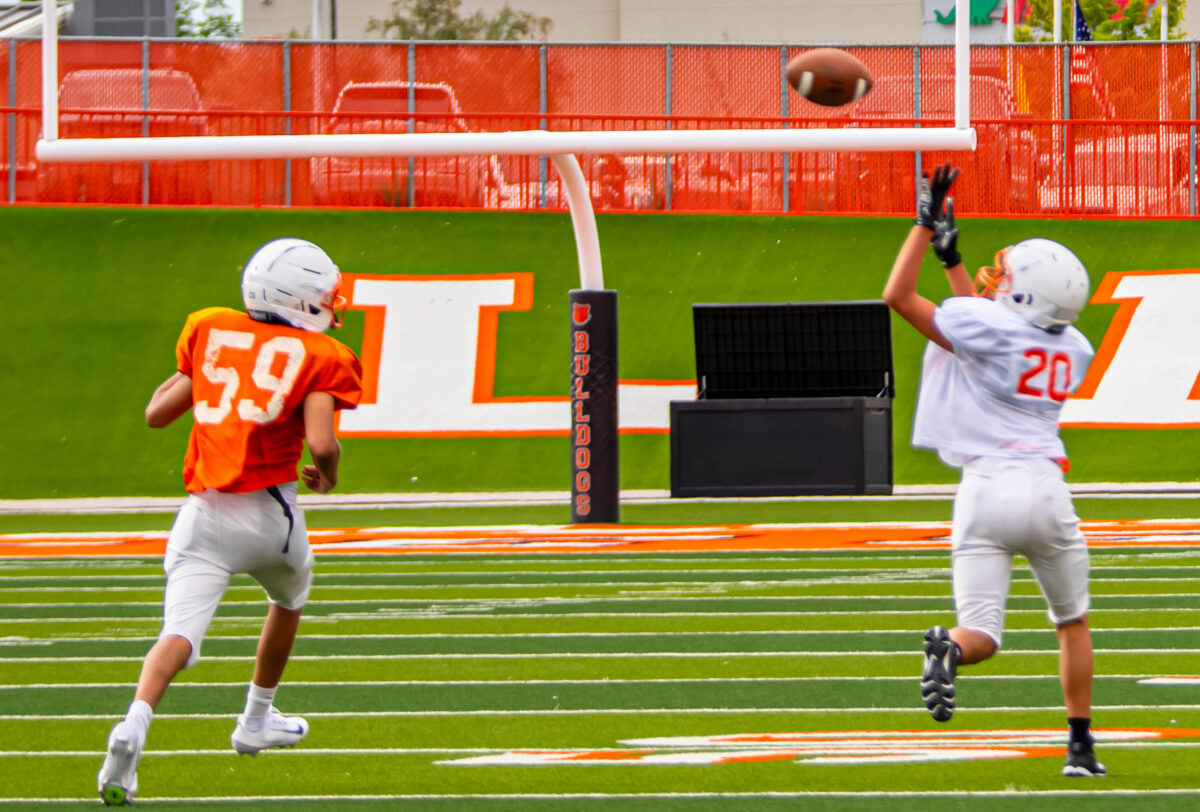
Scenes from the Artesia football intersquad scrimmage on Friday

0
JT Keith | Artesia Daily Press

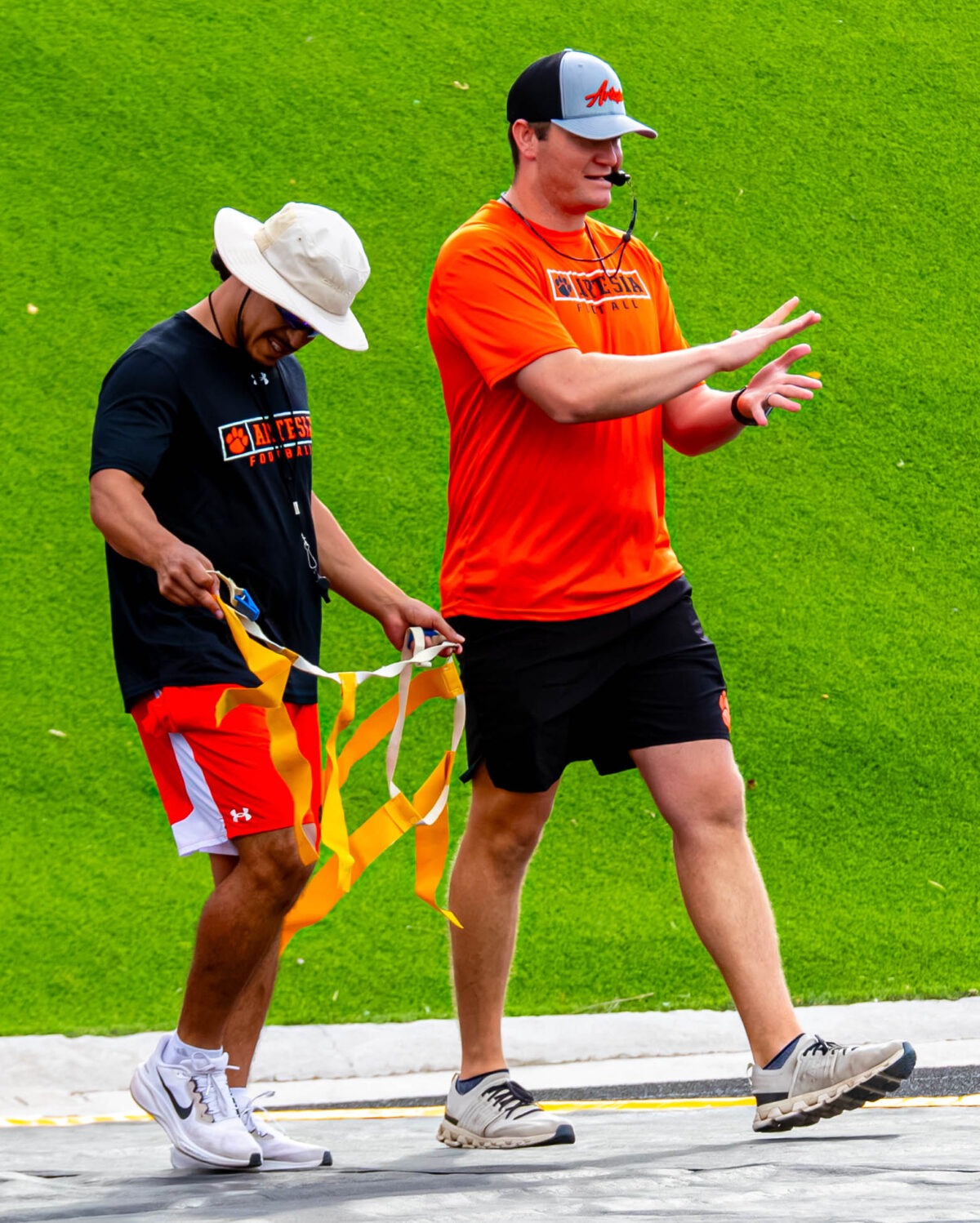
Coaches coming down the winners’ ramp prior to the start of the scrimmage on Friday at the Bulldog Bowl.

Team heading to the field.
The team is excited to take the field for its first intersquad scrimmage of the season.
Taking the field.
The team breaks up into their groups.
The team gets ready to huddle up before the scrimmage.
A player listens to his coach during warmups.
Warming up before scrimmaging.
Looking at a teammate during warm-ups.
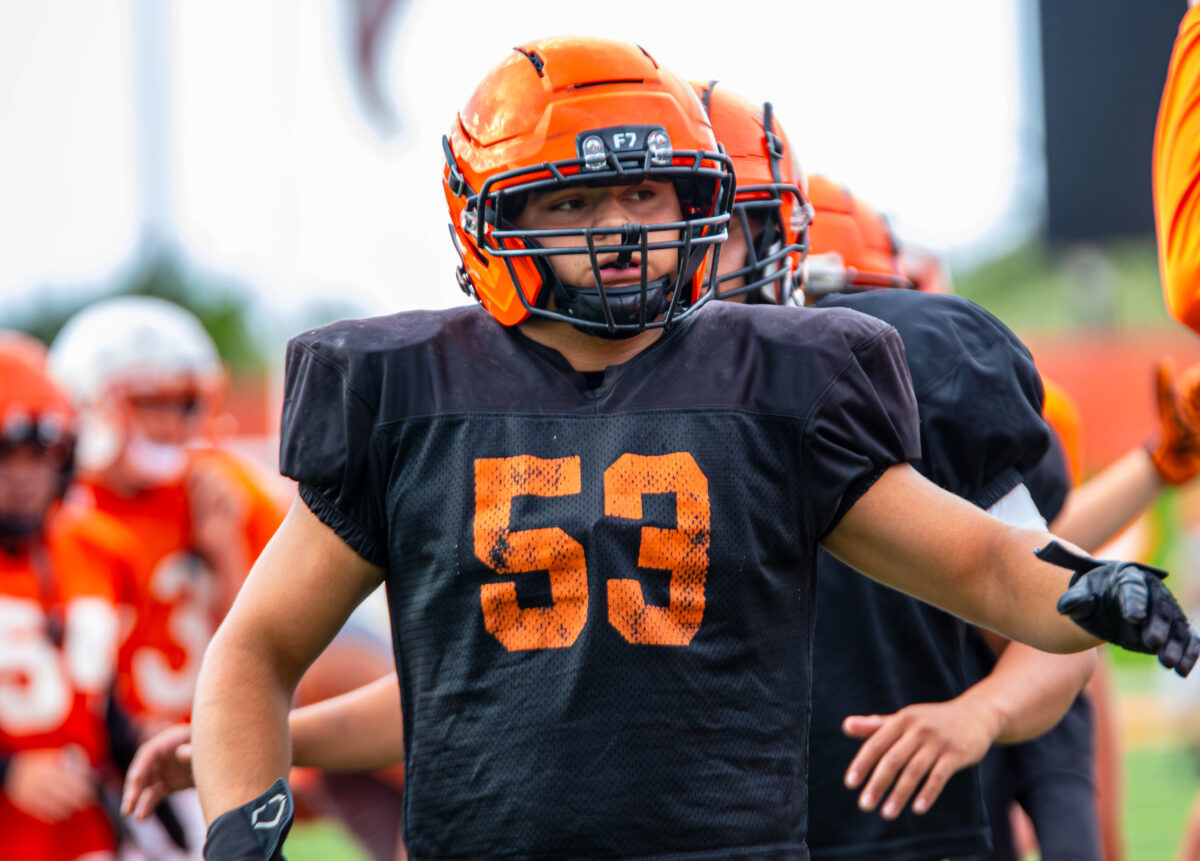
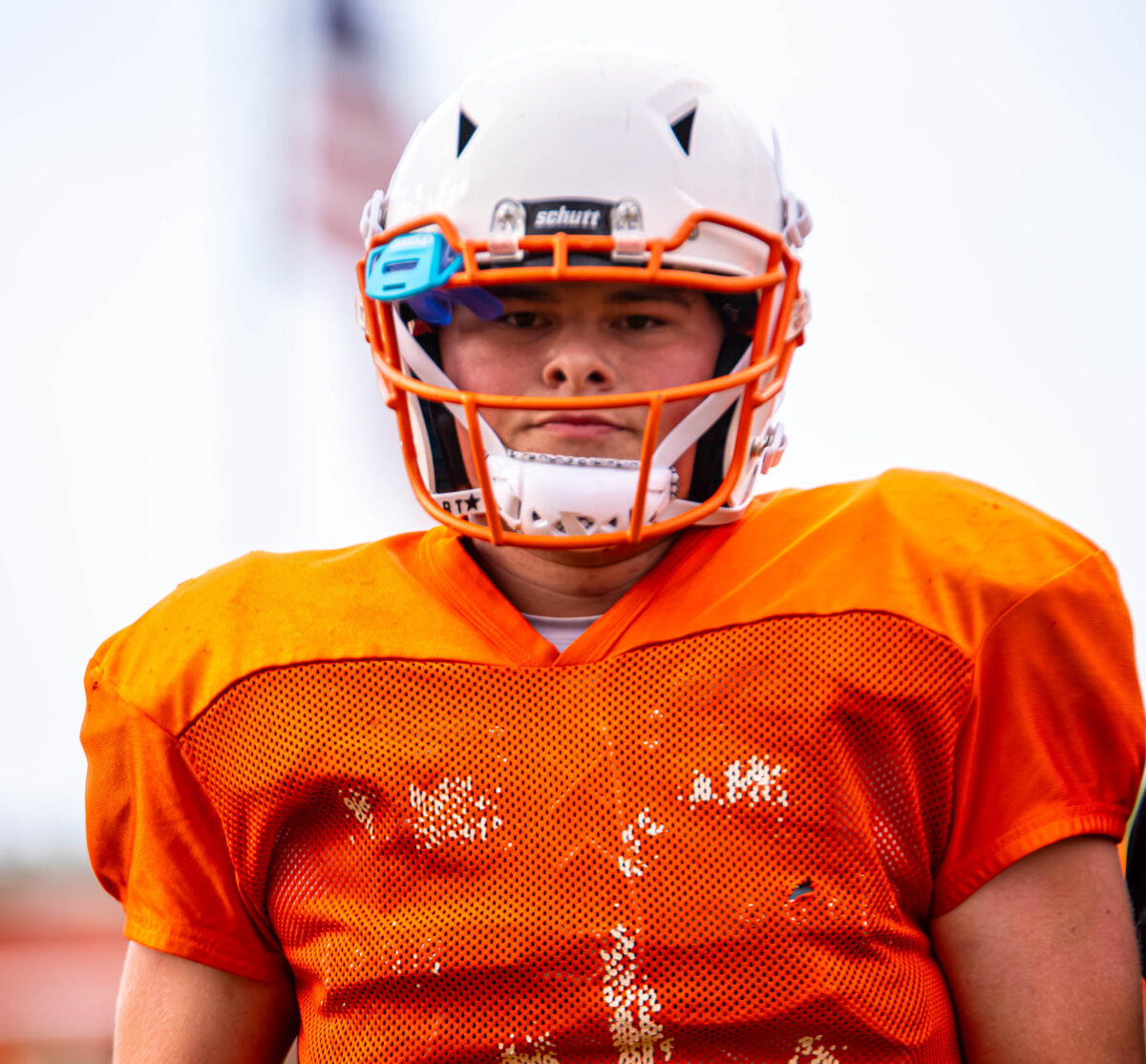
A player looking intense before action on Friday night at the Bulldog Bowl.
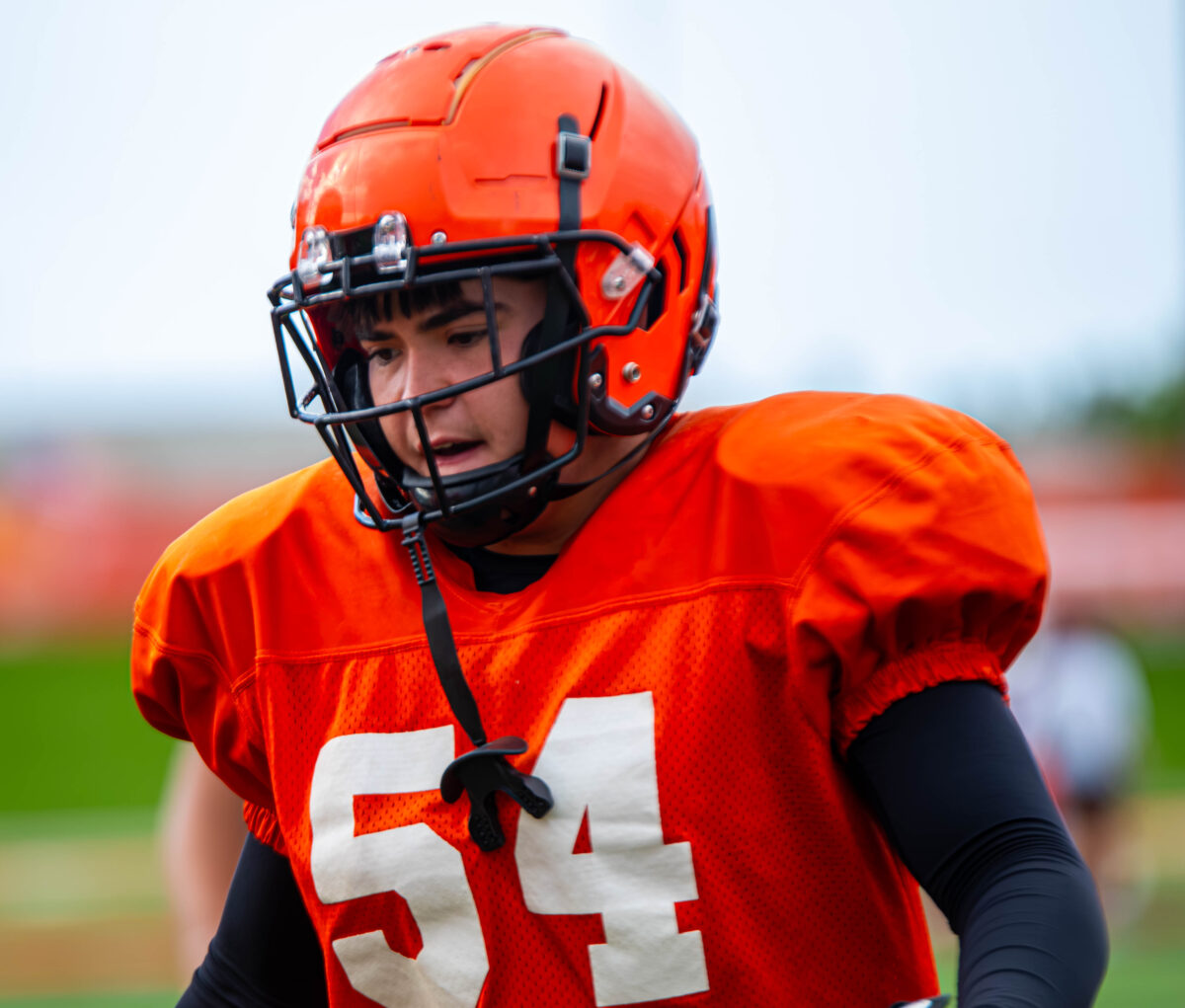
Getting ready for action.
Getting ready to get after it.
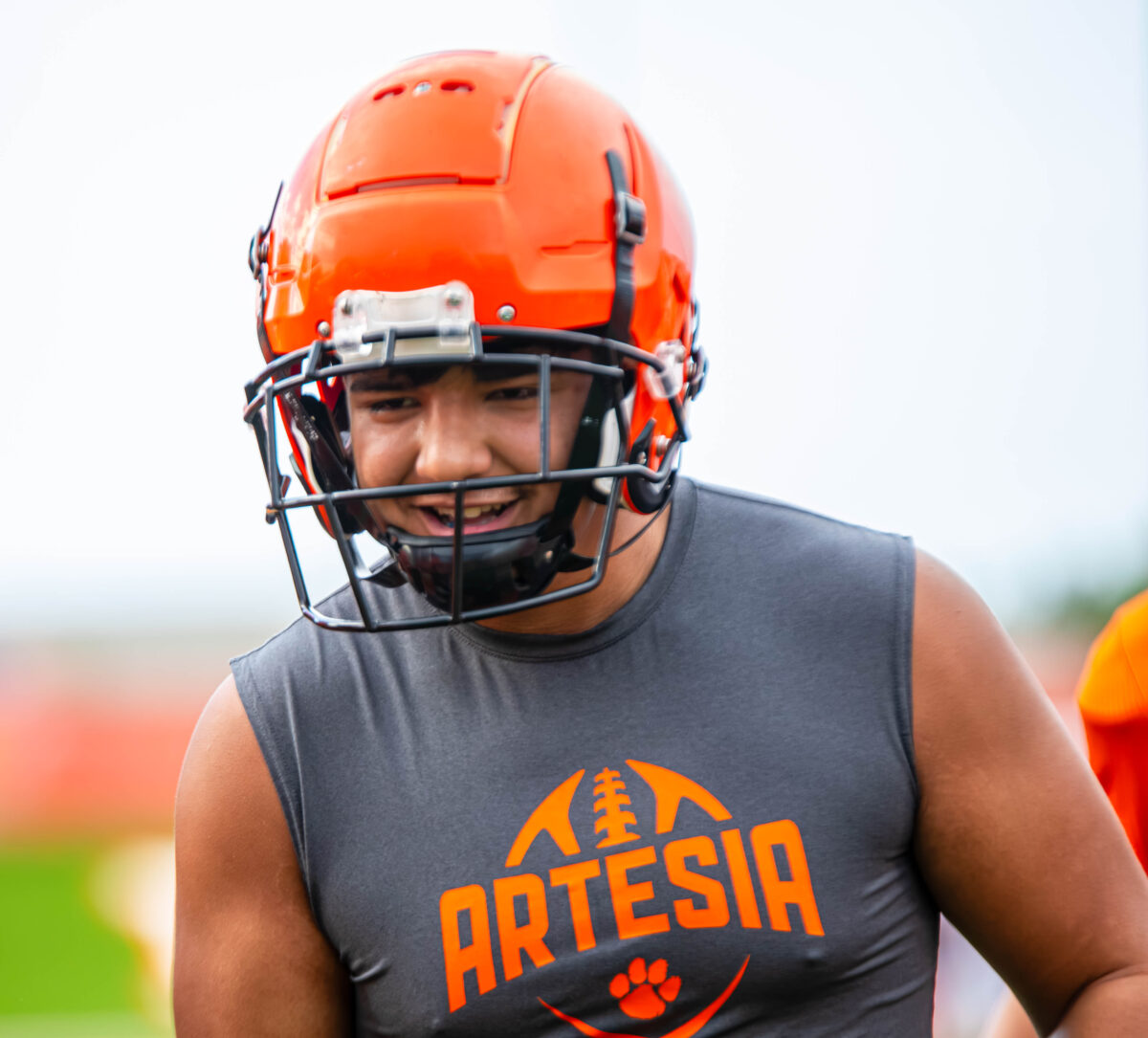
A player happy to be on the field.
A player stretching before scrimmaging.
Going through drills before scrimmaging.
Position players are going through their stances during warm-ups.
Players practice their technique during position drills.
The team huddles up before going on the field.
The defense huddles up before starting the scrimmage.
Both players are embracing for contact during an intersquad scrimmage at the Bulldog Bowl on Friday.
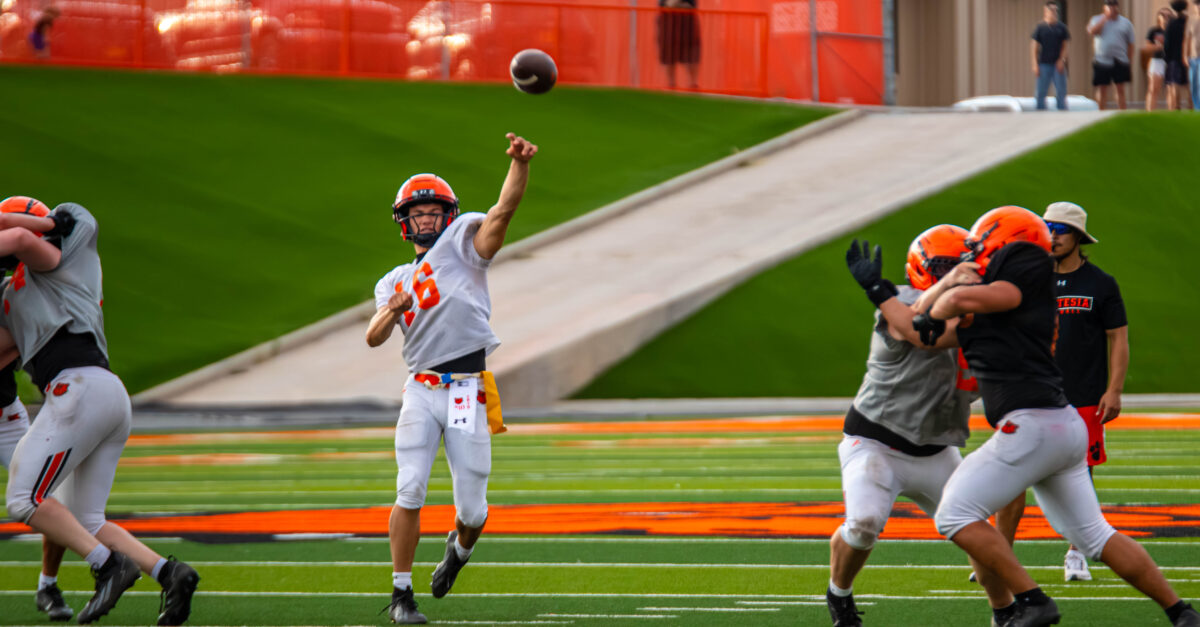
A quarterback gets ready to throw the ball deep during action on Friday.
A quarterback is following through on his release.
A receiver catches the ball from the quarterback and runs it to the 10-yard line.
Two players jog to take a water break after coming off the field.

A running back looks at a tackler during play on Friday night.
A receiver tries to outrun the defense on Friday night.
A running back runs through a hole during the scrimmage at the Bowl Bowl.
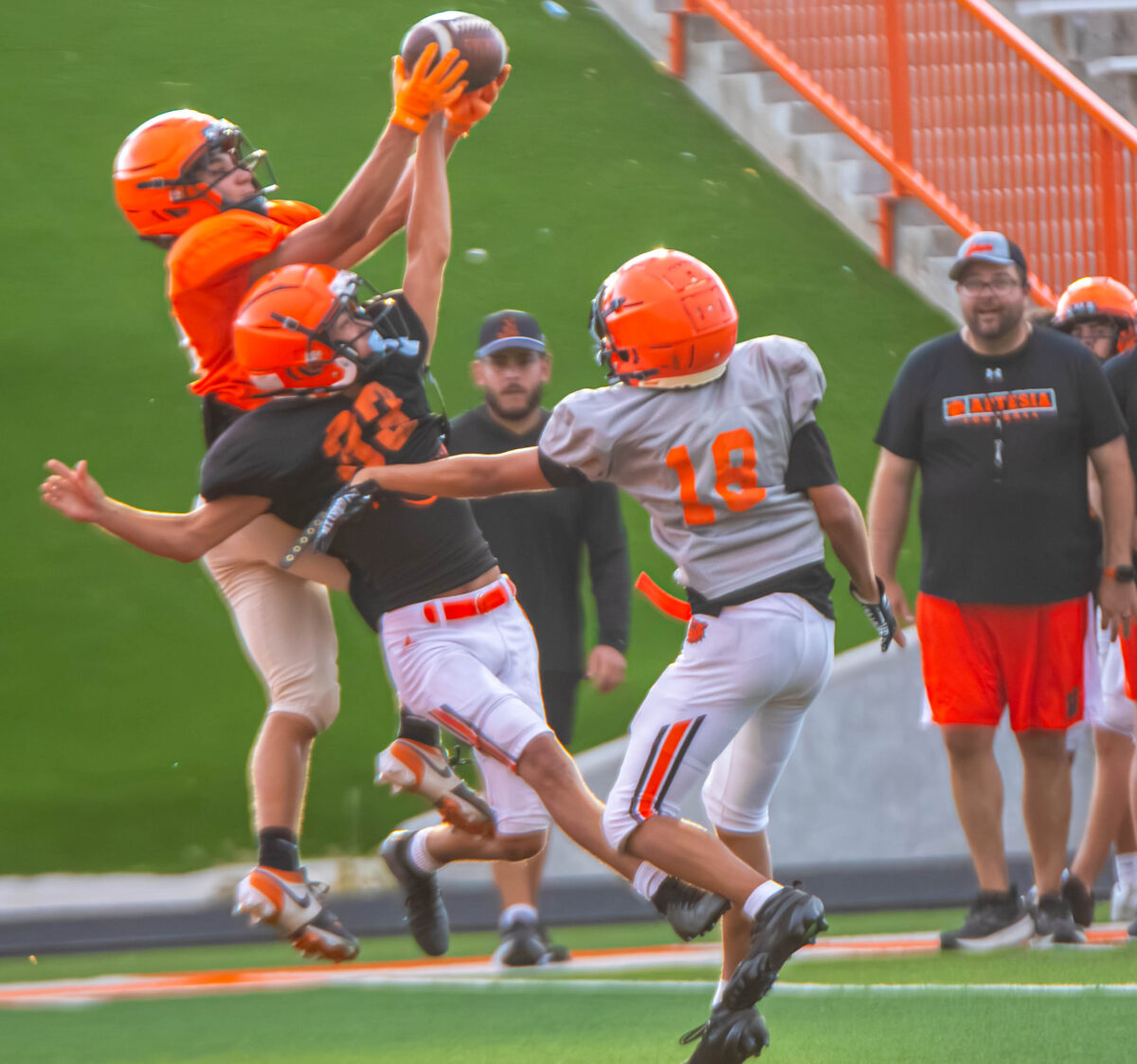
An Artesia receiver tries to make a catch that was knocked away by two Bulldog defenders on Friday night.
Artesia quarterback Chance Hocker throws the ball deep during Friday night’s scrimmage.
A receiver makes a catch during the intersquad scrimmage on Friday night at the Bulldog Bowl.

Ronald Johnston’s lesson after 35 years: Take care of people

0

JT Keith

Ronald Johnston learned the lesson that would define his career long before he ever sat behind a desk at Artesia Credit Union.

Take care of people.

That simple idea has carried Johnston through 35 years as president and chief executive officer of Artesia Credit Union, where he helped guide a hometown institution from its roots serving school employees into a community credit union serving members across Artesia.

“We have the best members in the country, here in town,” Johnston said.

Johnston, 71, took over the credit union in 1991 after managing The Main Place men’s clothing store for 17 years. Retail clothing stores were beginning to fade, he said, and Artesia Credit Union needed someone to lead the institution.

“I could see the handwriting on the wall,” Johnston said. “The clothing industry was changing.”

A credit union built by teachers

The story of Artesia Credit Union began in 1955, when teacher Leonard Witcher applied for a $300 bank loan and was turned down. In response, teachers formed the Artesia School Employees’ Credit Union to serve school employees who needed a place to borrow and save.

Johnston’s father, Warren Johnston, a teacher at Artesia High School, helped form and manage the credit union and served as its president until 1986. Elizabeth Bach managed it for five years before Ronald Johnston took over in 1991.

Opening the doors

One of the biggest decisions of Johnston’s career came in 1995, when the credit union expanded beyond school employees and opened membership to others in the community after approval from the bank examiners.

“We wanted to grow,” Johnston said. “We wanted to offer our services to the community. There was no credit union here in town where people could join.”

Johnston said the change made Artesia Credit Union the first credit union in Artesia open to community members.

Small-town service

 Johnston said small-town banking has always been personal. It means knowing members, understanding their families, and helping them reach their goals.

It also means giving people a local place to finance the things that shape their lives, including homes and vehicles.

“People are looking for somebody who will take care of them, take an interest in them and understand their families and their needs,” Johnston said.

The philosophy is simple; he said, “It is the golden rule: treat people the way you would want to be treated.”

Owned by members

Johnston said many people think a credit union and a bank are the same. The key difference, he said, is ownership. Artesia Credit Union is owned by its members and governed by a five-member board of directors.

“They (Board of Directors) have been very supportive all these years,” Johnston said. “Some of them have been on the board as long as I have been here. The board works for nothing; they don’t get paid a dime.”

The board sets policy, Johnston said. His role is to carry it out.

Growth and succession

When Johnston took over, the credit union had about $5 million in assets. Today, Johnston said, it has $172 million in assets, making it the largest credit union in southeastern New Mexico.

Johnston said the credit union has grown to 21 employees and continues to support the community, including local athletic teams.

Johnston said he expects to retire within the next five years. He said a succession plan is in place but did not name who would succeed him.

For young people interested in banking, Johnston said the path can begin as a teller.

“I would tell them to be honest,” Johnston said. “Do a good job and be committed to your institution. I think you can rise up from teller.”

His advice for young people managing their own finances is direct: Be careful with money, save when possible, borrow only when needed, and pay your bills on time.

Faith, family, and work

Johnston graduated from Artesia High School in 1972 and from Eastern New Mexico University in 1978 with a degree in social studies. From the age of 15, he began working and hasn’t taken a break since, he stated.

He attends Faith Baptist Church, where he plays the organ. Married for 49 years, he and his wife, Tammy Johnston, will celebrate their 50th anniversary in November.

The couple has three children: Leslie Johnston, 44; and twin sons Stuart Johnston, 39, an executive vice president at Artesia Credit Union, and Stephen Johnston, 39, head football coach at Los Lunas.

Johnston never played football at Artesia High School, but he was in the band and played the French horn. This year, he said, he has a special interest in the Bulldogs because his grandson, Lucas Atkins, a quarterback, is part of the football team.

Doing right by people

After more than three decades at Artesia Credit Union, Johnston said he hopes members remember him for more than loans, assets, or growth.

“I want people to feel like I was interested in their well-being,” Johnston said. “That I took good care of them.”

JT Keith can be reached at 575-420-0061 or on X at @JTKEITH1.