Home Blog Page 11

Congratulations, Class of 2026: This is what you take from Artesia

0

JT Keith

Graduation is more than a ceremony for the Class of 2026. It is a turning point. It marks the moment when years of early mornings, long practices, hard lessons, and steady growth give way to a new chapter. The tassel moves in a second, but what it represents took years to earn.

And if there is one message worth carrying into adulthood, it is this: Never forget what this town, this school, and these teams taught you. In Artesia, being from here means something. The standards are high because the people before you set them high, and now it is your turn to carry them forward.

Carry the standard

Life after high school will ask you to begin again. Just as you once moved from middle school to high school, you will start at the bottom in college, in the workforce, or in whatever path you choose. That is not a setback. That is how growth works. You earn trust. You earn responsibility. You earn your place.

Wherever you go, go with a servant’s heart. Be loyal. Be honest. Be hardworking. Show up early. Stay late. Do more than is required. Treat every opportunity as a gift and every person who opens a door for you with respect. Never be afraid to be yourself and who you are, even when others do not fully understand you. And always say thank you to your mentors, teachers, coaches, and parents. People notice that kind of character, and character still matters.

Sports already taught you what many people spend a lifetime trying to learn: Winning is not magic. It is discipline. It is sacrifice. It is doing the little things when no one is watching. If you live that way, you will become the kind of person others can trust. And when people can trust you, they will place more in your hands.

That is what it means to be from Artesia. You do not lower the standard to match the moment. You rise to meet it. You represent a place that expects toughness, humility and excellence. You represent people who believe the name on the front matters and that the generations who came before you left a responsibility, not just a reputation.

When adversity shows up

And life will test you. It will hand you setbacks, disappointment, and moments when the outcome looks decided. That is when your training must speak louder than your fear. Ask (Aubrie Edwards), the Artesia girls’ goalkeeper, who responded after a tough moment against Goddard in the playoffs and helped her team keep fighting. The lesson is bigger than one match: adversity does not get the final word unless you let it.

Football players already know this truth. In the 25-24 state championship comeback against Roswell, Artesia was still down 13 with under five minutes left, then scored twice in the final 3:08, including the tying touchdown with 24 seconds remaining before the go-ahead extra point. That kind of finish does not happen by accident. It happens because belief survives when the odds do not.

There will be moments in your own life when it feels as if people are leaving the stands, when support grows quiet and the clock seems to be working against you. Keep going anyway. Some of your most important victories will come after doubt, after fatigue and after other people decide the story is over.

Keep working when no one notices. Keep believing when the return is not immediate. One play can lead to another. One break can change momentum. One act of courage can change a life. The people who endure are usually the people who refuse to quit before the final whistle.

In hard moments, you do not rise to your wishes. You fall back on your training. That is true in sports and in life. So, train yourself to be steady, disciplined, and unselfish. Remember that the team matters more than the ego, and that real strength often lies in staying together when the pressure is highest.

Take Artesia with you

So, as you leave this season of life, carry Artesia with you. Carry the pride, the grit, the loyalty, the honesty, and the work ethic. Carry the belief that adversity can be overcome, and that quitting is never the answer. If you do that, you will not just remember where you came from. You will honor it. And maybe one day, parents and coaches will read this to another class and say, “This is what I have been trying to tell you. This is what it means to be from Artesia.”

Congratulations, Class of 2026.

jtkeith can be reached at 575-420-0061, or on X@JTKEITH1.
Patrick Brenner: New Mexico can’t afford permitting paralysis to restore housing market

0

President Donald Trump has made restoring affordability a national priority, and early signs show that approach is working. In the housing market, mortgage rates are easing, affordability is improving, and buyers are beginning to reenter the market after years of strain.

But in states like New Mexico, affordability gains will only last if we can build enough homes and the infrastructure that supports them.

Efforts to address local housing challenges can be alleviated or hindered by federal policies. Today, New Mexico is short more than 90,000 homes, and nearly half of renters struggle to afford their monthly payments, and homelessness is rising as prices continue to climb.

Local zoning rules, construction costs, and workforce shortages all contribute to this crisis, while lengthy federal permitting reviews and endless litigation delay the infrastructure and energy projects that housing depends on, such as water systems, transmission lines, and power generation. With cities like Los Lunas and Sunland Park growing rapidly, the infrastructure must keep pace.

Reforming outdated federal laws like the National Environmental Policy Act (NEPA) is not just about pipelines or power plants. It’s about giving states like New Mexico a fair shot at building the infrastructure our growing community and workforce needs.

Permitting laws like the National Environmental Policy Act were created with a clear purpose: to ensure that federal agencies understand environmental impacts before approving major projects. Environmental reviews now stretch for years, documents run hundreds of pages, and approvals are routinely tied up in court long after agencies have done their job. The result is a system that discourages investment and punishes communities that are trying to plan responsibly.

Impact statements average nearly 600 pages. Transmission and clean energy projects take an average of over 4 years to reach a decision. The system is no longer working.

America must build faster, invest more at home, and secure its energy future. Endless reviews and years-long delays run directly counter to those goals.

Just last year, President Trump encouraged federal agencies to make full use of modern technology to accelerate environmental reviews and permit evaluations. He has made clear that major investments in the United States should not be held up by slow bureaucratic processes.

Congress has started to follow that lead. Provisions included in the One Big Beautiful Bill reflect a growing recognition that time matters. Developers can now opt into firm deadlines for environmental reviews. Certain energy projects, including liquefied natural gas facilities and oil and gas development on federal lands, are eligible for expedited review. The direction is clear; Congress and the administration are working to modernize permitting. Federal agencies should follow suit.

The SunZia Wind and Transmission project, one of the largest renewable energy developments in the Western Hemisphere, is Exhibit A. Spanning multiple counties and paired with a major transmission line, the project will deliver power to countless homes, strengthen grid reliability, and support thousands of jobs.

There are currently 30 solar projects in development. Geothermal and wind projects are underway. And in September of last year, Pacific Fusion selected New Mexico as the site of its first research and manufacturing campus, a $1 billion investment aimed at advancing fusion energy. These decisions reflect a state wanting to welcome major projects, support innovation, and put real resources behind economic growth.

Federal permitting should spur that momentum. When states are prepared to move forward, attract investment, and deliver projects that benefit their communities, they look to federal agencies to provide clarity. Federal permitting should be aligned with that mission rather than holding it back.

Patrick Brenner is president of the Southwest Public Policy Institute.

Deb Haaland’s campaign for gov. raises more questions than answers

0

This story was originally published by New Mexico In Depth at nmindepth.com.

Here is a question worth asking: Is Deb Haaland actually running for governor of New Mexico?

The answer is certainly yes. She is campaigning, debating at community forums, running ads, giving interviews, and leading in the polls. But there’s a second question that is harder to dismiss: Is the governorship the destination for Haaland, or the launching pad?

This is New Mexico In Depth’s elections 2026 newsletter produced every week by Marjorie Childress. It goes beyond the horserace to the money, power, and issues that shape our elections. Have tips or insights? Be in touch: marjorie@nmindepth.com

The newest fundraising numbers reinforce that Haaland’s political footprint extends well beyond the boundaries of a state race.

And now, she’s written a memoir that will be available shortly after the primary election. Both of these factors suggest she is building something larger than what a governorship requires.

The Money Behind the Question

The second campaign finance reports were filed Monday, capturing candidate contributions from April 7 through May 4. Haaland reported raising $874,000 from roughly 19,000 contributions. Her opponent, Bernalillo County District Attorney Sam Bregman, raised $182,000 from 563 contributions in the same window.

The gap is large but unsurprising. In a previous newsletter, we showed how different fundraising approaches had created growing fundraising momentum for Haaland but a plateau, or even stall, for Bregman.

Haaland continues to outpace Bregman within New Mexico. She raised $409,000 from New Mexico donors in this window; he raised $121,000. There’s no question that she enjoys broad support from within the state.

But her campaign is still powered largely by recurring small-dollar donors outside New Mexico.

To put the magnitude of her fundraising outside the state in perspective, compare the fundraising to date of Haaland and Bregman to where current governor Michelle Lujan Grisham stood at this same point in her 2018 and 2022 campaigns.

While Haaland is out-raising Michelle Lujan Grisham’s first gubernatorial run in 2018 and Bregman’s campaign this year, the amounts raised from within New Mexico remain roughly comparable across the four election cycles.

Bregman is performing strikingly similar to Lujan Grisham in 2018. It’s Haaland’s national fundraising that sets her apart. She has already raised nearly as much money as Lujan Grisham did during the entire 2022 cycle.

The median tells us that half of Haaland’s 333,292 total contributions are $12.50 or below. Haaland’s average donation of $36.04 is low even with her big donors. That’s how many small donations she has, from all over the country.

Lujan Grisham and Bregman both had a median of $25. But Bregman’s average is sharply higher than for Haaland or Lujan Grisham in 2018 and 2022.

The table below shows why Bregman’s average donation looks so different. His campaign is dependent on a small number of large checks — nearly two-thirds of everything he has raised came from donations of $5,000 or more. Haaland’s campaign runs on the opposite model: 41 cents of every dollar she has raised came in donations under $50, from the kind of recurring small-dollar donors who power national progressive campaigns. She has raised more from tiny donations alone than Bregman has raised in total.

Memoir, or campaign book?

Into this context comes Haaland’s memoir, set for release in June — just after the primary. She is already lining up promotional appearances for the book, in Washington, D.C.

Publishing a book — whether a memoir, a political manifesto, or a collection of ideas — has become close to a standard move for ambitious American politicians looking to build a national profile. U.S. presidents are the best example, before running or reaching the White House: George H.W. Bush Looking Forward in 1987, George W. Bush A Charge to Keep in 1999, Barack Obama The Audacity of Hope in 2006, and Joe Biden Promises to Keep in 2007. Biden ran for president in 2008, but dropped out before the primary. Trump wrote as well. His famous Art of Deal in 1987, of course, but in 2000 he published The America We Deserve in the midst of his campaign to be the candidate of the Reform Party.

The tactic extends beyond those who actually won. Hillary Clinton published Hard Choices in 2014, a memoir of her tenure as Secretary of State, about a year before she declared she would pursue a 2016 presidential run. Kamala Harris published The Truths We Hold in January 2019, just days before announcing her own presidential campaign. Biden selected her as his 2020 running mate.

It’s an unusual move for a New Mexico gubernatorial candidate, unless they are positioning for a larger stage. But our state does have some experience here.

Former Gov. Bill Richardson published his book Between Worlds: The Making of an American Life, in 2005. He was reelected to his 2nd term in 2006, and then in early 2007 announced a run for president.

A book is how you tell voters who you are before others do. The most straightforward interpretation is that Haaland is using her memoir as a way to introduce herself to New Mexico voters who aren’t among the Democratic party faithful and who may know her primarily as a national figure.

That may well be true. But it is equally consistent with a candidate who is thinking beyond Santa Fe.

Political money rarely captures the whole story of a campaign. Am I asking the right questions here? If you have a perspective on Haaland’s ambitions — or what her donor profile means in New Mexico politics — I’d like to hear it. Reach me here:


marjorie@nmindepth.com

Artesia turns out in force to celebrate the Class of 2026

0

JT Keith

The city turned out Thursday night as families, friends, and residents packed the Bulldog Bowl to celebrate the 234 graduates of Artesia High School’s Class of 2026.

For a night, the Bulldog Bowl felt more like it does on a bitter rival football night with Roswell than a graduation, with cars lined up for blocks and a standing-room-only crowd filling the stadium.

On a clear spring evening, graduates entered the stadium in pairs, soaking in the cheers as they made their way to their seats on the field.

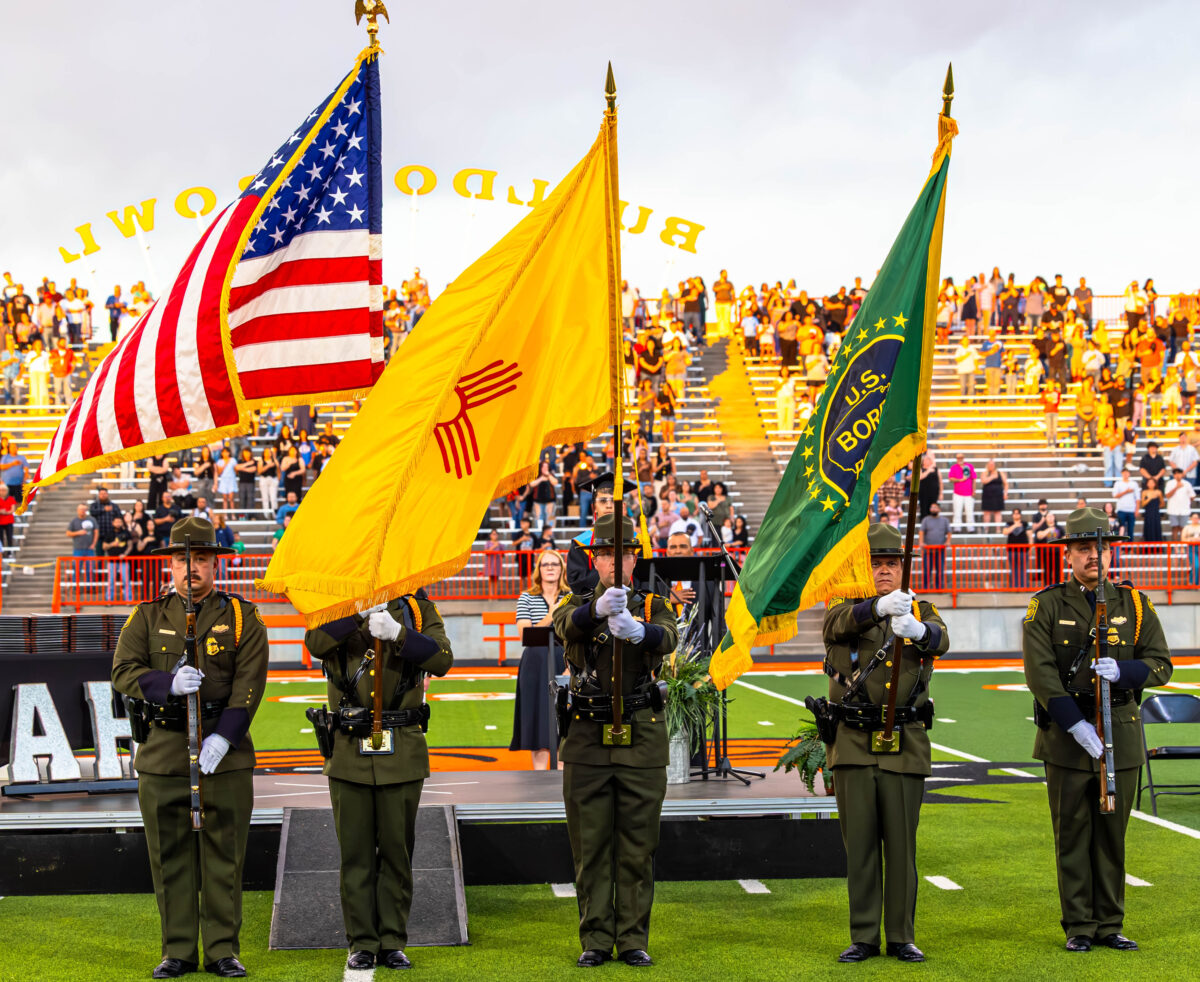
The ceremony opened with the presentation of the colors, the national anthem, and the Pledge of Allegiance, setting a formal tone for a night marked by pride and celebration.

Superintendent Darian Jaramillo welcomed families and graduates, and Artesia High School Principal Halee Goff addressed the class before introducing the student speakers.

The student speakers looked back on how far the class had come, touching on the uncertainty of earlier high school years and urging their classmates to walk into the future with confidence.

It was also a reminder of what makes Artesia, Artesia — the Dog Pile, the high expectations and the pride that comes with wearing orange and black.

But the applause was not reserved for athletics alone. Graduates were recognized for their work in FFA, choir, band, cheer, and other activities that shaped their high school years.

Members of the Class of 2026 will head to colleges and universities with a combined $2,976,846 in scholarships to support their education.

The evening also marked a milestone for Assistant Superintendent of Secondary Education Danny Parker, who is retiring after more than 34 years of service to Artesia Public Schools.

JT Keith | Artesia Daily Press

Family and friends pack the Bulldog Bowl for the 234 graduating seniors on Thursday night.

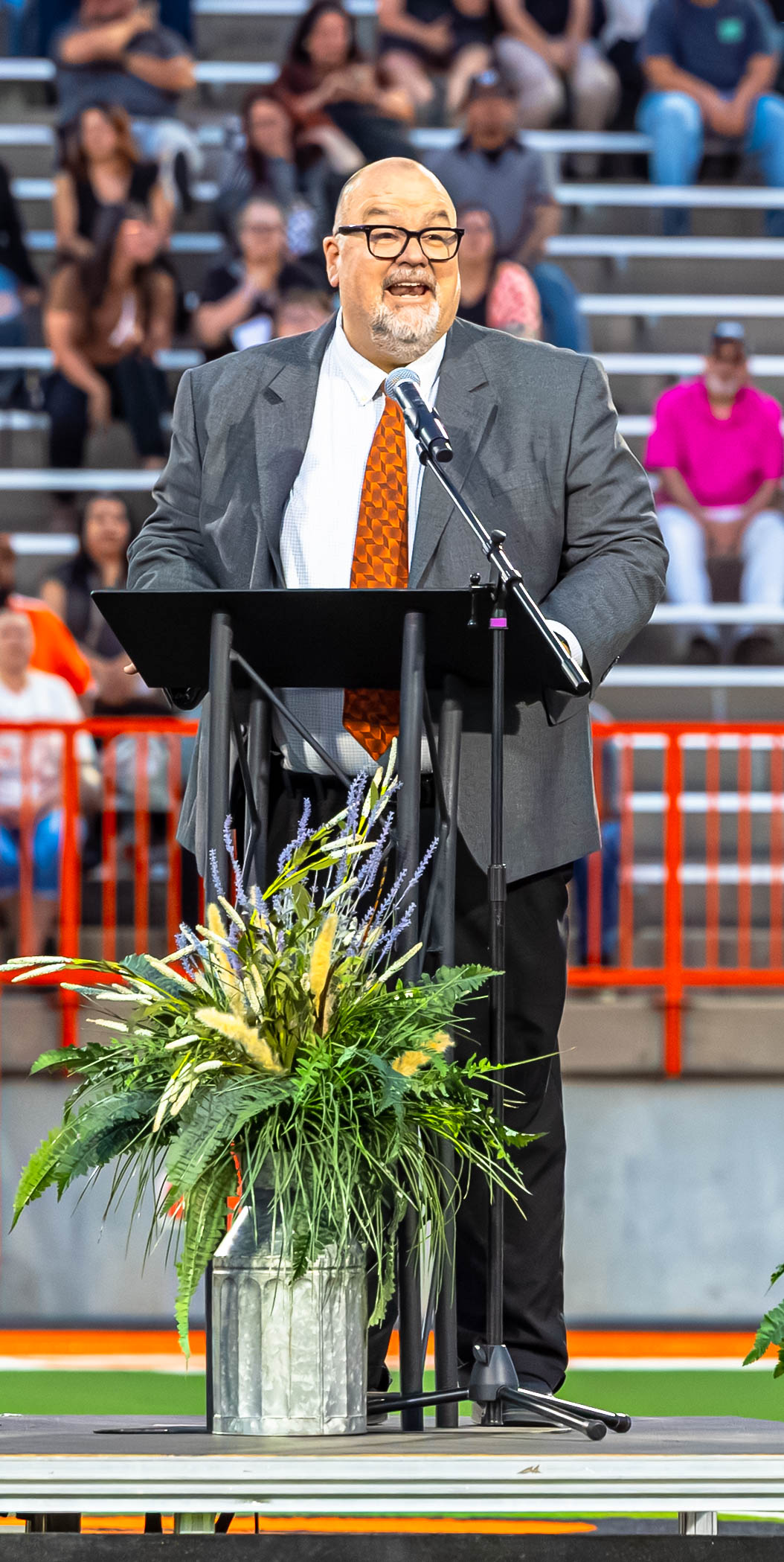
Master of ceremonies Tony Jaramillo kept the energy high, prompting cheers, car horns and air horns from families and supporters throughout the night.

By the time graduates were told to move their tassels, it was clear the night had become more than a commencement. It was Artesia celebrating 234 graduates ready to step into what comes next.

After the ceremony, graduates and their families streamed onto the field, sharing hugs, tears and photos as one chapter ended and another began under the lights at Bulldog Bowl.

jtkeith can be reached at 575-420-0061, or on X@JTKEITH1.

Scenes from Artesia High School Graduation Ceremony

0
JT Keith | Artesia Daily Press
Artesia graduates Brooklynne Ivans and a friend pose on the way to their seats after being introduced on Thursday at the Bulldog Bowl.
Jenna Whitmire stands back-to-back with another graduate as they are introduced at the Bulldog Bowl before graduating on Thursday night.
An Artesia graduate kisses the hand of a friend while walking to their seats for graduation on Thursday.
Kayden Apodaca makes a dance move before heading to her seat while walking into the Bulldog Bowl for graduation.
Graduates strike the Heisman pose while walking to their seats before graduation on Thursday at the Bulldog Bowl.
The Artesia graduates face the crowd before the ceremonies begin on Thursday night at the Bulldog Bowl.
The Bulldog Bowl was packed on Thursday as the class of 2026 prepares to graduate.
The crowd stands to honor the country before the start of the graduation ceremony at the Bulldog Bowl on Thursday.
The Artesia superintendent and school board were on the field, honoring the country with the National Anthem and the Pledge of Allegiance, on Thursday.
An Artesia student led the crowd in prayer and the Pledge of Allegiance before graduation.
Artesia principal Halee Goff opens the ceremonies on Thursday by addressing the crowd.
Artesia Superintendent Darian Jaramillo talks while her husband, Tony Jaramillo, Artesia High School principal Halee Goff, and Danny Parker listen as Jaramillo introduces Parker.
Danny Parker speaks to the crowd one last time before retiring this year.
Artesia school board Vice President Ben Harvey shakes hands with Eli DeHoyos on Thursday night at the Bulldog Bowl.
An Artesia graduate shows her glee after receiving her diploma and is helped offstage on Thursday night.
Family members light off fireworks during graduation ceremonies on Thursday night at the Bulldog Bowl.
Near the end of the ceremonies, two graduates celebrate and show their diplomas to family and friends.
Tony Jaramillo gets the crowd fired up before telling the graduates to turn their tassels to the other side.
One last time, the graduates arm-in -arm and rock back and forth before throwing their hats in the air.
The Artesia band sends the seniors off with music during graduation on Thursday night.

Los Alamos makes case for WIPP shipments indicates a large priority

0

Federal officials said they will work “substantially” over the next two years to remove nuclear waste held at Los Alamos National Laboratory.

The waste will then be disposed of at the Waste Isolation Pilot Plant near Carlsbad.

Newport News Nuclear BWXT-Los Alamos (N3B), the contractor hired by the U.S. Department of Energy to manage cleanup at the lab, reported in a May 12 news release that by the end of 2025 more than 12,000 cubic meters of irradiated soil and debris were sent to WIPP for disposal.

The contractor also said more than 15,000 cubic meters of waste were disposed of, including more than 900 cubic meters of legacy transuranic (TRU) waste left over from past nuclear operations during the Cold War and the Manhattan Project.

The refuse is being disposed of via burial at the Waste Isolation Pilot Plant where the Energy Department disposes of TRU waste, which is clothing materials, equipment and other debris irradiated during nuclear activities.

The waste is buried at WIPP in a salt deposit about 2,000 feet underground. The salt gradually collapses on the waste, burying the refuse and blocking radiation from escaping.

WIPP officials said during an April 28 town hall that WIPP was about 40% full toward its statutory capacity of 6.2 million cubic feet of waste.

N3B said in its news release that between 2026 and 2028 it will remove waste being stored at the surface at Los Alamos and conduct a safety analysis of the lab’s Area G, the on-site facility where TRU waste is prepared for shipment to WIPP.

Officials said the safety analysis will “further mitigate risks to workers and environment” and improve waste characterization operations – one of the final steps before waste is ready for WIPP.

“We have a lot of work ahead of us, but I know the N3B team will continue to demonstrate the dedication, the focus on safety and the commitment to operational excellence that has been at the core of our success to date,” said Brad Smith, N3B general manager.

Stanley Pyram, manager of the Department of Energy’s Los Alamos Field Office, said removing legacy waste from Los Alamos for disposal at WIPP remained a priority for the federal government.

“We look forward to our continued partnership with N3B on this next phase of the (Los Alamos) legacy cleanup mission and building on the progress achieved,” Pyram said.

Debate over WIPP’s priorities

The announcements came amid concerns expressed by the New Mexico Environment Department – which oversees the federal government’s state permit to operate WIPP – that not enough waste was coming to the repository from within New Mexico.

Those concerns prompted the Environment Department’s April 23 proposal to modify the WIPP permit with a requirement that 55% of shipments of waste to WIPP originate at Los Alamos by next year, and 75% by 2032.

Federal records show that Los Alamos sent 1,824 shipments of waste to WIPP since it opened in 1999, about 12.3% of the total 14,800 shipments received at the site as of May 9.

In addition to waste from the lab in northern New Mexico, WIPP has accepted shipments from 13 federal nuclear facilities around the country including the Idaho National Laboratory, the Savannah River Site in South Carolina and the Hanford Site in Washington.

A public comment period for the state’s proposal is ongoing until June 8, at which time the state and federal government could reach an agreement or hold additional public meetings.

As of Wednesday, May 13, the state had received 344 comments via its online portal, both for and against the proposed requirement.

That included a submission by Mayor Rick Lopez of a resolution passed by the Carlsbad City Council at its May 12 meeting opposing the rule.

Don Hancock, nuclear waste program manager at the Southwest Research and Information Center, a nonprofit government watchdog group in Albuquerque, said the proposed rule followed the original intention for WIPP to clean up New Mexico’s Cold War nuclear waste.

“NMED is proposing to put some more specificity into the permit, and some levers,” he said, noting another clause that allows the state to suspend all shipments if it finds the federal government in violation of the permit.

“The new thing is that the state is putting some additional requirements because DOE didn’t do what it agreed to,” Hancock said.

Managing Editor Adrian Hedden can be reached at 575-628-5516, or @AdrianHedden on the social media platform X.

Jose Garcia: The pudding of the governor’s race in New Mexico

0

In 2019 a story broke out that newly-elected Florida Governor Ron De Santis had eaten a cup of chocolate pudding with his fingers, provoking a national spate of stand-up jokes. In 2023, when DeSantis was running for reelection, Jake Tapper interviewed him, asking whether his recent campaign movement further to the right might alienate more moderate Republicans. He replied, “the proof is in the pudding.” In England, where American politics is followed closely, one wit, among thousands of other jokers, declared on social media, “the only thing in the pudding is his fingers,” which went viral. Another round of stand-up jokes ensued. De Santis, though, got the last laugh: he won the election.

In New Mexico the governor’s race tells us volumes about the sorry state of the pudding of state politics. Here is the scenario.

A new election law for the first time permits all voters to vote (once) in either primary election, not just in your own party’s. Sam Bregman’s bet from the start was that because of this change, he could thwart the current stranglehold progressive Democrats have in state politics. If enough “decline to state” (DTS) voters (totaling 25.3% of all registered citizens last December) decide to vote in the Democratic primary and vote for Bregman, a moderate, he could win against a progressive Democrat. Evidence shows most DTS voters are more moderate than what is now mainstream in each party. In addition, some Republican voters, knowing the strong odds against the GOP this fall, might cross over and vote for Bregman to help deny a progressive victory in the Democratic primary for governor. If all of the ifs come true, Bregman might squeak through the primary, and, because of what looks like overwhelming support for the Dems this year, win the general election.

If this sounds complicated, it is. Today’s national and statewide electoral systems act to weaken the moderate middle. Moderates form a majority of the overall electorate. They tend to want the trains to run on time; Congress to stick to business instead of theatrics; and for public policy to work—more than they want to enjoy the nasty kerfuffle arising from the angry, tribal politics that have ensnared the country for the past three decades. Keys to the recent success of non-moderate candidates are the dynamics of primary elections, which tend to turn out the more fanatical voters in each party: “woke” leftist Democrats and Trumper Republicans. This tendency weakens chances for the moderate majority to win. The result has been angry politics and poorly managed government.

At this late date in the primary season, the hand that progressive candidate Deb Haaland holds is strong. Polls indicate the change in voting laws has had less impact than Bregman will need to succeed.

Part of this is due to a surprisingly wooden campaign by Bregman. It ain’t just the cowboy hat that don’t fit. It is also his seeming inability to listen to voters; instead, cozying up to rich donors just at a moment when voters are wary of this. Instead of focusing on concrete steps to improve our standing in affordability, health care and education—policies moderates throughout the country are begging for—he sounds like Richardson a quarter century ago, asking for support before he has earned it by showing sensitivity to our views.

Haaland so far has received most of her financing from progressive sources out of state. But in spite of her lead in the polls, she loses ground daily with voters. “I am in the lead,” she seems to say. “I don’t need to ask voters what they want, nor do I need to prove I can handle Bregman in debate. The progressive label and the national money for my campaign are enough to put me in.”

Republican candidates in the governor’s primary seem to accept their ultimate loss as a given; they appear to be positioning for the future, not this year. Public rejection of Trump in most of New Mexico is unlikely to permit even the most outstanding Republican candidates (yes, the Rs have some) to win. The attraction of the GOP with voters, and the party’s ground game, are abysmal.

Such is the pudding of the gubernatorial primary. Our dysfunctional electoral system will get the last laugh: we will elect a governor not because s/he best reflected the electorate’s views, but because our election system allows a win with only a perfunctory gesture toward the public’s will.

Hope springs eternal. No one thought Harry T. the haberdasher from Kansas City was up to the job in 1945. But he ended up constructing a lasting, enormously successful global structure—a structure, incidentally, that Trump and a few billionaires are dismantling, piece by piece, exposing us to uncharted dangers that the King of England warned us about a few days ago.

Dr. Jose Z. Garcia is a former New Mexico Secretary of Higher Education, retired University PhD professor of political science, is active in state politics and a columnist for El Rito Media. He lives in Las Cruces and also frequently spends time in Santa Fe where he maintains a residence.

Dismissal sought of Carlsbad grandma’s child abuse appeal in fentanyl overdose

0

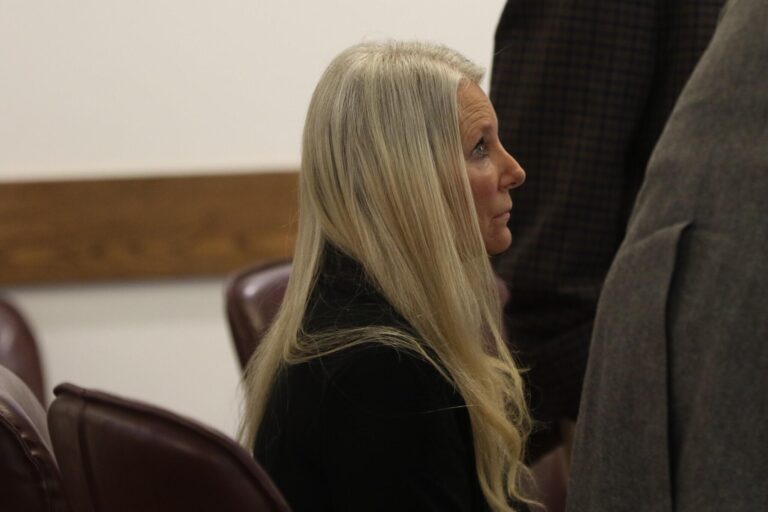
Prosecutors asked for dismissal of an appeal challenging a woman’s conviction of child abuse after her grandson fatally overdosed on fentanyl.

Kelli Smith, 60, last November appealed her 2024 conviction on a count each of child abuse resulting in death and child abuse not resulting in death.

She was found guilty of both charges after a four-day jury trial on Aug. 19, 2024, and sentenced to 15 years in prison by District Judge David Finger.

The charges originated from the overdose death of 12-year-old Brent Sullivan, Smith’s grandson, who police said smoked fentanyl at his grandmother’s house in the 2400 block of Western Way in Carlsbad.

Sullivan was found dead from an overdose of the drug on the morning of Sept. 28, 2021, in a shed on Smith’s property. Prosecutors argued that Kelli Smith and her daughter Alexis Smith, both admitted fentanyl users and traffickers, created an environment where Sullivan and his infant sister had access to the drug that killed him.

Alexis Smith was convicted of the same charges as her mother and sentenced to14 years in prison. Her appeal was denied recently by the New Mexico Court of Appeals.

A brief in chief detailing Kelli Smith’s reasons for appealing her conviction was filed Feb 21 with the Court of Appeals, followed by a response from the New Mexico Department of Justice on April 20 and a reply brief by Smith on May 11.

A trial or additional hearing was not yet set for the case.

Smith argued in her brief that Finger erred in allowing prosecutors to present evidence police obtained from Smith’s property without a warrant. This included burnt tin foil found in the shed where Sullivan was found dead, along with syringes and other drug paraphernalia found in a bedroom.

The brief also challenged testimony by Alexis Smith’s ex-husband Christopher Murray that she obtained fentanyl from her mother, Kelli Smith, and the inclusion of cellphone records the prosecution used to indicate Alexis and Kelli Smith exchanged quantities of fentanyl.

Smith further argued the prosecution failed to properly establish that she was solely responsible for the safety of the children in her home, and that her past addictions to fentanyl indicated she provided the drug to Sullivan.

Smith did not purposefully place the child in a situation that endangered his life, read the brief, arguing that when Sullivan ran away, out of the house and into the shed where he died, he was no longer in his grandmother’s care.

“He was not in her presence at the time he consumed methamphetamine or fentanyl, which resulted in his fatal overdose,” read the brief. “Instead, the state’s case depended upon the vilification of people who use, have used or allow those who use substances to be near children in order to create a belief in the jury that Ms. (Kelli) Smith was at fault for her grandchild using substances.”

In its answer brief, the Department of Justice argued that on the day Sullivan died Smith purposefully allowed children to be in her home where she knew drugs were kept.

Those facts were proven at trial, read the brief, and the jury was not left to speculate on whether Smith’s addiction led to Sullivan’s death.

The brief also argued that there was “overwhelming” evidence of drug use in the home, and that the court’s inclusion of evidence such as the foil obtained immediately after discovering Sullivan’s body but before a warrant was issued was “harmless” to the defense’s case.

The evidence was admissible, the brief stated, due to the “inevitable discovery” doctrine, which allows evidence to be gathered to aid law enforcement response in an emergency – in this case a child overdosing on drugs.

In urging the court to reject Smith’s appeal, the Justice Department argued that the evidence presented by prosecutors was “legally sufficient and proper evidence in support of the convictions. Because Defendant fails to demonstrate any error, this court should affirm her convictions and sentence.”

Managing Editor Adrian Hedden can be reached at 575-628-5516, or @AdrianHedden on the social media platform X.

Doug Turner makes case to be GOP nominee for gov. Here is a little more about him

0

Making New Mexico more “business friendly” was at the center for Doug Turner’s case for the state’s highest office.

Turner, 57, is one of three candidates vying for the Republican Party’s nomination for governor in the June 2 Primary Election.

A Taos resident, Turner owns Albuquerque-based public relations firm Agenda Global and sits on the Taos Ski Valley Village Council.

He’s never held a public office before after running unsuccessfully for the party’s nomination against former-Gov. Susana Martinez in 2010. He served as campaign manager for former-Gov. Gary Johnson.

El Rito Media sat down with Dough Turner to discuss his vision for New Mexico, should he be elected governor.

What are your plans for k-12 education?

“I think we have to really hold schools and teachers accountable for that metric that (students) be able to read at third grade. And quite frankly, if they need to be held back or need to be put in some remedial program at the same time, then we need to do that.”

“We really need to make sure that local school districts are at the table. And that there is connectivity between what (the Public Education Department) does and what the needs of districts are. But I think more importantly, from my perspective, we need more school choice. We need more competition across the public-school enterprise broadly, and that means more charter schools competing with traditional public schools.”

What are your spending priorities?

“I think we don’t fund our roads properly and our infrastructure properly. I’d like to set up a full sort of permanent highway infrastructure trust fund.

“I think we need to invest probably more money in our (Children, Youth and Families Department) infrastructure. We need to hire more people qualified social workers. We need to ensure that they’re paid properly because it’s hard work as we seek to fix that agency.

“And then I think we need to invest some money in how the state interacts with small businesses around New Mexico and how the state creates investment funds for small businesses around New Mexico. I mean, not even the funds that are managed by the State Investment Council are flowing to small businesses in New Mexico. Almost all that money is going elsewhere.”

What is your tax policy for individuals and companies?

“I don’t think it makes financial sense for municipalities to eliminate property taxes. I think it’s being disingenuous for anybody to say that they’re going to get rid of all these taxes on day one, because you would have massive financial shock to towns and counties around the state. What I do believe is that we need to reduce our personal income tax. So, at the very least, we’re competitive to our surrounding states.

“And I think that’s doable over a number of years. I think that’s money that can go back into businesses, investing in people, investing in companies. And then I do also believe that over a number of years, we can get rid of the gross receipts tax. You know, right now it’s on everything.”

How can you reduce poverty and drug abuse?

“It’s part crime, part drug abuse and addiction, part mental health. I think we definitely need to rebuild our mental health infrastructure in the state, because a lot of those people who are homeless have real mental illness and they need appropriate care.

“A big chunk of that is aggressively supporting federal law enforcement and interdiction, whether that be counter cartel activity at the border or other law enforcement to stop the inflow of a lot of these drugs, fentanyl being the primary drug.

“I think we have to have facilities that provide a full wraparound coverage. Meaning if they have addiction, that gets addressed. If they have mental health, that gets addressed. That’s a tough thing to do because we tend to just push these problems off to the municipality and appropriate money to let them figure it out. It doesn’t always work.”

What can New Mexico do to be more attractive to business?

“It’s all of the above. Companies and capital. Investments tend to go where they’re treated well. We need to improve how our economic development tools and outreach works for all size companies.

“We need to deal with crime. We have this revolving door, cashless bail, that puts criminals back out on the street long before they are adjudicated. They (companies) have to have schools that they can send their kids to and feel like they’re getting the education that their kids deserve. They want their kids to be able to go out and play and not get shot. I mean, this stuff happens all the time.”

What are your plans for rural health care?

“Rural health care is largely a function of the availability of providers. And being able to have providers within proximity of communities. If they’re not local and not wanting to return to their communities, we need another incentive. So, one of those might be offsetting medical expenses, medical bills or education.

“We have to deal with our tort laws. The medical malpractice bill that recently passed, I think is a good step, but I don’t think it’s enough. I think we need to have medical malpractice insurance costs be competitive with our surrounding states. And it’s definitely not, not even after this bill. Regarding Medicaid, I think we need to ensure that Medicaid goes to people who need it and support those programs.

How can environmental concerns be addressed?

“Every part of the state has a different issue, whether you’re in agriculture or oil and gas or mining. But I also think we have to have transparency, and we have to have regulatory certainty.

“We need to pay far more attention to our water resources. I’ve been having conversations with people about cloud seeding and we don’t do it. But Wyoming does it, Arizona does it, so why don’t we do it?

“We have to make sure that we balance development in the name of economic growth with the resources that we have and that we are not placing increased stresses on our environment or our resources. We are not ignoring existing needs of other industries and we’re not ignoring needs of municipalities.”

Rep. Rebecca Dow: New Mexico must protect freshwater as surface water is committed to irrigation season

0

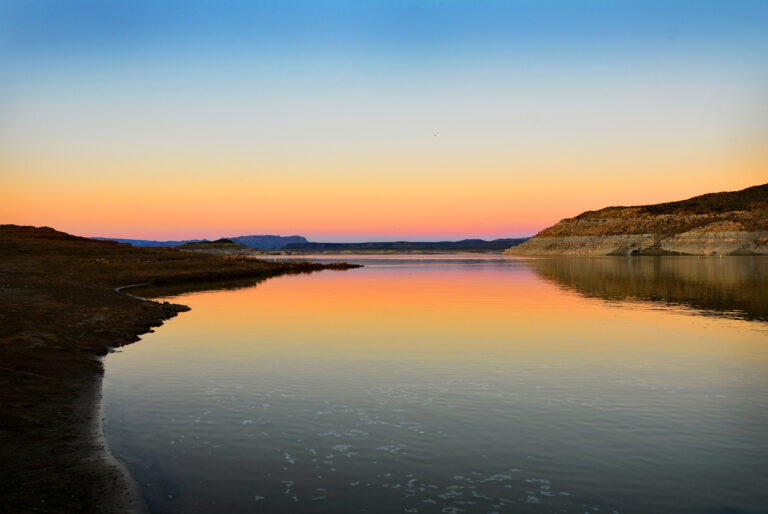
Across our state, from Elephant Butte to Caballo and the northern stretches of the Rio Grande, the reality is becoming impossible to ignore. After this irrigation season, our surface water system is effectively fully committed. Agricultural deliveries are shrinking, obligations downstream to El Paso and Mexico continue, and meaningful reserves are disappearing. The system is no longer operating with margin because it is now functioning at its limit.

This is the new water reality of the Southwest. We are not running out of water entirely, but we are running out of easy water.

For generations, freshwater sustained New Mexico’s communities, farms, and economy. Today, those traditional sources are fully allocated and increasingly unreliable, yet demand continues to grow. Data centers, advanced manufacturing, and energy development are expanding across the state. These industries bring opportunity and economic growth, but they cannot be allowed to compete directly with families, agriculture, and rural communities for the last remaining supplies of freshwater. New Mexico must establish that boundary now, before water scarcity forces far more painful decisions later.

Fortunately, we still have options if we act decisively. New Mexico sits atop significant reserves of brackish groundwater, water too salty for drinking but increasingly usable for industrial purposes with modern treatment technology. At the same time, millions of gallons of produced water from energy production are already being brought to the surface every day. For too long, this resource has been viewed only as waste. With proper treatment standards, monitoring, and containment, it can become a reliable industrial supply that reduces pressure on freshwater resources and helps sustain long term economic growth without sacrificing critical water supplies.

This should become the foundation of New Mexico’s industrial water strategy. Large industrial users should no longer rely on potable water as the default option. In a basin this constrained, the expectation should be simple: industries requiring massive amounts of water should rely on brackish or produced water whenever possible, while freshwater is prioritized for people, agriculture, and the long term survival of the Rio Grande system itself.

At the same time, New Mexico must invest heavily in watershed restoration, forest thinning, and soil health initiatives across the state. Healthy forests reduce catastrophic wildfire risk, while healthy soils absorb rainfall, rebuild groundwater supplies, and slowly release water back into streams and aquifers over time. These projects are not environmental luxuries. They are essential water infrastructure in an arid state where every drop matters and where the ability to capture and store rainfall will become increasingly important in the years ahead.

Public trust will also be critical as these strategies expand. Any increase in brackish or produced water use must come with strict safeguards, transparent treatment standards, continuous monitoring, and absolute protections for drinking water aquifers. New Mexicans deserve confidence that innovation and economic growth will not come at the expense of public health or environmental safety.

The truth is simple: New Mexico can no longer treat freshwater as an unlimited resource for unlimited growth because the math no longer works. If we fail to act, industrial growth will continue placing pressure on farms, acequias, and communities already facing water shortages. If we act now, we can protect freshwater for future generations while still supporting economic growth through smarter use of nontraditional water sources.

Brackish water development produced water treatment, watershed restoration, and soil regeneration are no longer side conversations. They are rapidly becoming the backbone of a survivable water future in the Southwest.

New Mexico Rep. Rebecca Dow represents District 38, including portions of Dona Ana, Sierra and Socorro counties.