Home Blog Page 10

Artesia police are looking for suspects in ‘violent home invasion.’ Here’s how to help

0

Three men were being sought after police said they violently robbed a home in the early morning of Tuesday, May 19.

Police were called at 3:30 a.m., to the 900 block of Bullock Court for a report of a home invasion, according to a May 20 news release by the Artesia Police Department.

Police said the homeowner “sustained significant injuries” and was taken to a local hospital for treatment.

Investigators said the three unidentified men donned ski masks and forced their way into the home using a pry tool.

They were all armed with handguns, with at least one using a green laser sight, the release read. The men allegedly demanded property under threat and fled the home on foot.

The suspects were described as younger, possibly juvenile, and Hispanic with light skin tones. Their heights ranged from 5 feet, 5 inches to 5 feet, 9 inches.

One of the men had a distinct “N” tattoo on his cheek, the release read.

Police did not immediately identify what was stolen from the home or the nature of the homeowner’s injuries.

Signs of a violent struggle in the home were noted by investigators, and multiple items were left behind for processing as forensic evidence.

“Investigators are still working to determine motive and identify all individuals involved,” read a statement from Artesia police.

Police asked anyone who saw suspicious activity near Bullock Court and Dallas Street between 2 and 3 a.m. on May 19 to report to the police department, along with anyone in the area with surveillance footage.

Residents with information related to the incident were asked to call the Artesia Police Department at 575-746-5000. Anonymous tips can be made to Eddy County Crime Stoppers at 844-786-7227 or eddycountycrimestoppers.com.

District 66 candidate Trinidad Malone exceeds anonymous donation limits, says he’ll amend disclosure report 

Azure Mitchell | New Mexico In Depth

This story first appeared in New Mexico In Depth at nmindepth.com.

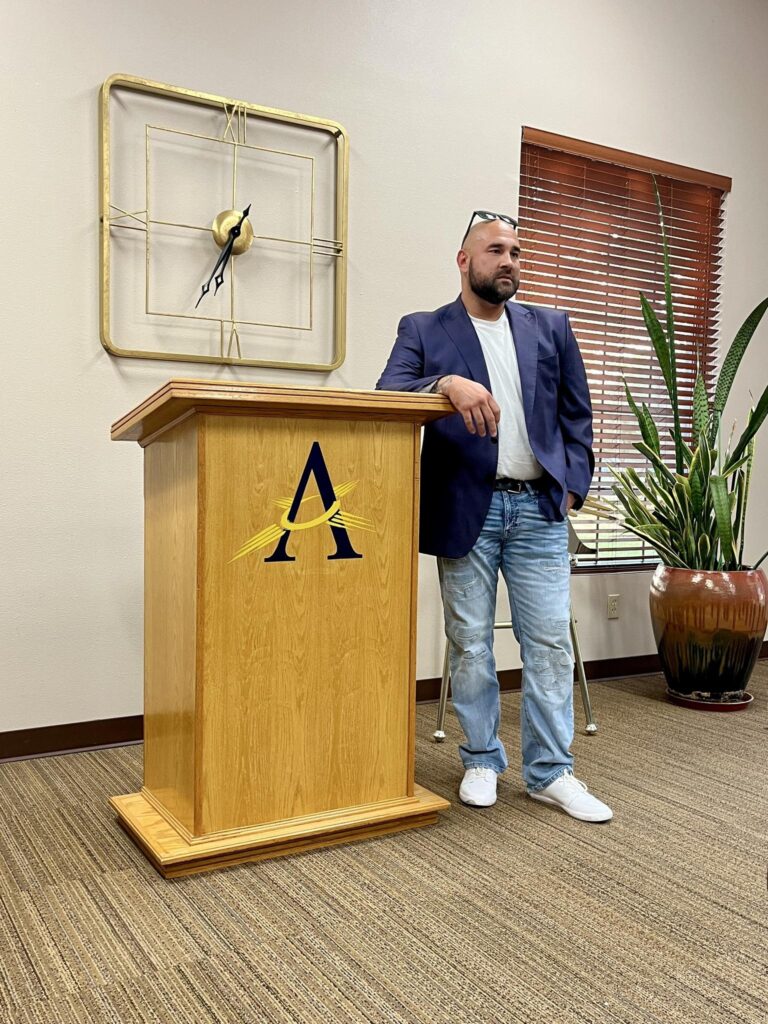
Trinidad Malone, a local Artesia businessman running to represent District 66 as state representative, exceeded the amount of money he can accept from anonymous donors to run his campaign. 

New Mexico’s Campaign Reporting Act allows anonymous donations if the candidate does not know who the donor is, but places limits on them. A non-statewide candidate, like Malone, may only accept up to $500 in total from anonymous donors and none of the contributions may exceed $100. It also does not allow contributions to be recorded as anonymous if the candidate knows who the contributor is. 

Malone’s second disclosure report, filed May 11, shows a total of $1,500 of the total $2,000 raised coming from seven anonymous donors. Five exceed $100. His report reflects just one named donor, Bowlin Travel Centers for $500. 

In an interview, Malone said friends, family, and local businesses contributed, in addition to Bowlin, but in the interest of time he filed them as anonymous because he lacked the information he needed before the reporting deadline. 

“We’ll go ahead and amend it once we get all their credentials,” he said of the report. 

Pearce sworn in to lead BLM amid $4B oil and gas lease sale in New Mexico

0

Steve Pearce came to Carlsbad May 20 and it was a productive visit.

The former Republican congressman from Hobbs took the oath of office as newly confirmed director of the federal Bureau of Land Management while he was in the Cavern City and celebrated the bureau’s record-breaking, $4 billion sale of oil leases on federal public land.

The sale included 74 parcels in southeast New Mexico and West Texas, centered in the Permian Basin oilfield.

Pearce’s nomination by President Donald Trump to lead the agency that oversees 247 million acres of federal land in 12 states, including New Mexico, was confirmed Monday, May 18, by the U.S. Senate.

After being sworn in as head of the Bureau of Land Management during a private ceremony, Pearce joined other federal officials and employees of the bureau’s Carlsbad Field Office to announce the lease sale.

Pearce said the sale would bring wealth to communities such as Carlsbad as the United States strives to become energy independent.

“We want jobs. We want wealth to come into our communities,” Pearce told the Current-Argus after the announcement event at the National Cave and Karst Research Institute in Carlsbad.

Leases to portions of federal public land managed by the Bureau of Land Management are sold via auction to oil and gas companies for 10 years or as long as oil or gas are produced. Operators must obtain approval from the agency for a separate permit to commence drilling.

Proceeds from the sales are split between the federal government and the host state, meaning New Mexico would receive a check for about $2 billion as a result of the second quarter lease sale announced Wednesday, said Kate MacGregor, deputy secretary of the U.S. Department of the Interior. The Bureau of Land Management is an agency within the Interior Department.

The sale included 35 parcels on 14,289 acres in Eddy County – about 42% of the total lands offered in the sale. Another 24 parcels were offered in Lea County on 16,015 acres, or 47% of the sale.

The sale also included three parcels on 360 acres in Quay County, and a single, 320-acre parcel in Roosevelt County, along New Mexico’s eastern border with Texas.

In the northwest corner of New Mexico, 11 parcels were offered on 2,168 acres spread among Sandoval, Rio Arriba and San Juan counties.

The lone Texas parcel was on 156 acres in McMullen County.

MacGregor said the previous record in Carlsbad was a $972 million lease sale held in 2018, and that the previous national record was $3.7 billion in leases sold by the bureau in 2008 on public land in the Gulf Coast.

She said large sales such as Wednesday’s were a testament to the strength of the U.S. oil and gas industry and highlighted the necessity of domestic drilling.

“We have restored the goal of American energy dominance as something we support at the Department of the Interior,” MacGregor said, invoking a January 2025 executive order by President Donald Trump titled “Unleashing American Energy.” The order called for more drilling throughout the U.S., especially on public land.

In addition to the $4 billion in proceeds from the sale, MacGregor said, the leases would generate another $7 billion in royalties over the next 10 years.

“If we keep those wells productive, we’re talking real money,” she said.

Royalty rates are paid by operators to the government as a percentage of the proceeds from wells on federal land. The current rate of 12.5% has prevailed for all but three years since it was adopted by the federal government in 1920. It was raised to 16.67% during the administration of former President Joe Biden but was cut back to 12.5% through legislation passed by Congress and signed by Trump last July.

Pearce said the large lease sale was a sign that southeast New Mexico is critical to the U.S. becoming independent of other countries for energy and unfettered by global conflicts such as Iran closing the Strait of Hormuz amid military attacks by the U.S. and Israel starting on Feb. 28.

The strait is an essential trade route moving oil and gas from the Middle East to Europe and other global markets.

“The whole world is hanging onto the Strait of Hormuz, and we’re supplying the oil to the world in the interim,” Pearce said. “We want to be energy independent. It’s good for the American people.”

Pearce also addressed concerns about the environmental effects of expanded drilling. Oil and gas companies, he said, have “bought into the idea” of producing energy while mitigating pollution.

“I’m reassured that we’re paying attention to everything we can to keep our environment clean,” Peirce said, noting his plans to address abandoned wells throughout bureau-managed lands and balance other uses such as outdoor recreation. “I’m willing to talk to industry about the problem. We’re going to take care of people who want to recreate on public lands. I want to protect that.”

Pearce offered similar assurances during his Senate confirmation hearing, but environmental groups remain skeptical.

Demis Foster with Santa Fe-based nonprofit Conservation Voters New Mexico said Pearce’s record while he served as U.S. representative for New Mexico’s 2nd Congressional District from 2003 to 2009 and again from 2011 to 2019 was marred by heavy support for the use of public land for industrial development.

“Pearce also has a long history of climate denial and putting polluter profits over the well-being of our people,” Foster said. “Here in New Mexico, our communities are suffering the consequences of the Trump administration’s disregard of climate science, with record heat, drought, and wildfire devastating our rural communities.”

Managing Editor Adrian Hedden can be reached at 575-628-5516, or @AdrianHedden on the social media platform X.

Missi Currier: Voting shapes New Mexico’s future as participation is “alarming”

0

Every election cycle brings debates about candidates, policies, and politics. But at its core, voting is about something much bigger: shaping the future of New Mexico and ensuring your voice is heard on the issues that matter most to you, your family, and your community.

Primary elections are now underway across New Mexico, and this year’s races will help determine decisions about our economy, education system, healthcare, infrastructure, public safety, energy policy, and job creation for years to come. Those choices impact every New Mexican, regardless of political party or where they live.

That’s why participation matters, and you still have time to make it happen.

Too often, people feel like their vote won’t make a difference or that politics has become too divisive to engage in. But when people stay home, others make decisions for them.

New Mexico’s civic participation is alarming. According to the New Mexico Secretary of State, the overall turnout rate of eligible voters in the 2022 primary was only 25.2. Only a quarter of the state’s population weighed in.

Primary elections are often decided by a relatively small number of votes, but we can change that and raise our collective voices. The leaders elected this year will make decisions that affect the cost of living, business growth, energy reliability and access, education and workforce development, and opportunities for future generations.

This election cycle is also historic because, for the first time, “decline to state” voters can participate in New Mexico’s primary elections by selecting either a Democrat or Republican ballot at check-in. That change gives more New Mexicans the opportunity to have a say in races that will shape the direction of our state.

You can still make a plan to vote and register to vote. Please visit www.nmforopportunity.org to learn more.

No matter what industry you work in or what issues matter most to you, voting is one of the most important ways to influence the future. For many New Mexicans, that means supporting policies that strengthen our economy and create opportunities for working families.

For those of us in the oil and gas industry, the stakes are especially high. Oil and natural gas support more than 100,000 jobs across New Mexico and generate billions of dollars each year that help fund public schools, healthcare, roads, and infrastructure. The industry plays a critical role in supporting all communities across the state and keeping New Mexico economically competitive.

Your voice deserves to be part of the future of our state. Voting is how we make priorities known, and we hold leaders accountable.

Early voting is already underway for the primary, and primary day is June 2. Make a plan to vote, check your registration status, and encourage your friends, family, and coworkers to take part, as well. Every voice matters, and every vote does, too. New Mexico’s future will be shaped by the people who show up.

Missi Currier is president of the New Mexico Oil and Gas Association.

Two Artesia High School students earnt United Way, ConocoPhillips awards Eddy County scholarships

0

Nine Eddy County residents will each receive $2,500 scholarships from the United Way of Eddy County, thanks to a partnership with ConocoPhillips and a very successful Cinco De Mayo Golf Tournament.

Thanks to the generosity of participants and sponsors in the May 2 “Cinco De Mayo Scramble,” $68,000 was raised for the local nonprofit. Funding from the tournament was then split between the scholarship effort and the organization’s general program fund.

The United Way has previously offered annual scholarships, but the total amount more than tripled this year. A selection committee reviewed the applications anonymously and ranked each submission. Recipients were selected from Artesia, Loving and Carlsbad. Three recipients are “nontraditional” applicants – individuals who applied for assistance after their high school senior year.

“We’re already excited about next year,” said Kyle Marksteiner, executive director of the United Way of Eddy County. “We want to continue to see this tournament grow and, with it, our scholarship effort. Thanks again to ConocoPhillips for being so dedicated to Eddy County and to workforce development.”

The following students were selected as this year’s scholarship recipients.

· Joslynn Abernathy, Texas Tech University

· Tobias Chacon, Loving High School

· Melissa Delgado, Loving High School

· Chloe Melvin, Carlsbad High School

· Sarah Prouty, Grand Canyon University

· Jimmy Quintela, New Mexico Highlands University

· Emily Soto, Artesia High School

· Sawyer Whitehead, Artesia High School

· Xuanlin Zhang, Carlsbad High School

Javier Sanchez: Thoughts on honor and sticking to your roots

0

Honor is doing the right thing under pressure. It’s not running from a challenge. And most importantly, honor is doing the right thing even when no one is watching. In life and politics, the concept of “honor” has transformed to fit a more modern aesthetic that prizes expediency over reality and prioritizes boastfulness over humility and truth. We find salient features of this subtle shift in the way politicians speak and act to appear more trustworthy or honorable.

Though technology has created what we may call our “modern age,” our reverence for things such as virtue, honor and truth ought to withstand the test of time. There has to remain a steady cadence of that which holds true throughout the ages. For some it is religion that keeps us constant in our faith and in our beliefs. In physics, it is the constant – that which holds true under all circumstances, like the speed of light. To transform the basic ideal of what makes us human just because evolution brings change would dissolve meaning into relativist chaos. We hold ourselves to standards because they have worked to keep our society in order. A society that accepts lying or cheating as normal or even encouraged would crumble.

What happens when we stop trusting in people? We may look to Princeton University to clue us in: In 1876, an editorial in the university’s daily newspaper argued against the use of proctors to monitor exams. According to an article in The Atlantic, the editor argued that proctoring was a means of bad moral education. Treat students as presumptively dishonest and some would become so; treat them as honorable and they will learn to behave honorably. Instead of proctors skulking about during exams, students were expected to do their own work. At the end of the exam, students would write that they have neither received nor given help. In other words they would swear on their honor that they neither cheated nor saw anyone else cheat.

The basic rules of societal engagement require that we act honestly and with honor. To break this rule leaves us lawless and devoid of meaning. It is with great sadness, therefore, that Princeton decided to reinstitute the proctoring of exams after 150 years. Due to the increased use of AI and technological advancements that make cheating and getting caught more and more difficult, faculty, staff and students have concluded that children must once again be monitored and coerced into doing the right thing. We have removed the human belief that man is naturally good, and assumed that man, left to his own devices, will cheat, lie and curse his way out of the cave.

The dean of Princeton argued that to maintain the high level of expectations by students, parents and the employers who hire graduates, the administration must ensure the highest level of integrity. In other words, because they now monitor their students during testing, they somehow become more trustworthy and the authenticity of their degree is solidified.

The policymakers at Princeton fail to recognize that the foundation of trust builds honor. And a culture of distrust breeds paranoia. The policy to proctor exams is not the cure. It is a Band-Aid to the bigger problem of selfishness, avarice and low self-esteem. Blaming technology or the “modern age” for the phenomenon of cheating overlooks the simple fact that our proclivity to do so has not changed our proclivity to cheat to get ahead. It’s as old as time.

Blaming technology or the “modern age” for our not-so-newfound proclivity to cheat ignores the reality that it has existed since dinosaurs roamed the earth. We let the genie out of the bottle and Pandora’s box was opened ages ago. It’s too late to put the cap back on.

This doesn’t mean we lose hope for society – quite the opposite. Stick to your roots and desire for a baseline. That which stays true through all time. Honor, truth and virtue produce the authenticity the universe craves.

Javier Sanchez is the former Mayor of Espanola, an independent businessman, and El Rito Media investor and columnist.

Charlie Campbell IV Is Heading to ENMU

0

JT Keith

Anyone who knows basketball in this state knows the roar of The Pit. It is that loud, sunken concrete bowl in Albuquerque where high school kids go to see if they can survive the pressure and become legends. It is a place where memories stay with you for the rest of your life.

For Artesia High School standout Charlie Campbell IV, those memoirs of The Pit are real. They are the backdrop to the sweat, the miles, and the absolute pinnacle of wearing the orange and black.

On Monday, Campbell took the next big step in his journey, announcing that he is signing to play college basketball for Eastern New Mexico University.

The Greyhounds are getting a winner. But to understand why he is a winner, you have to look at the story behind the story. You have to go back to the hardwood floor in Albuquerque, right when the clock was ticking down to the absolute end.

There were only five seconds left in the 2025 Class 4A state championship game. The noise in the arena was deafening. In that exact moment, teammate Corbyn Dominguez looked over at Campbell, locked eyes, and said the words every kid in Artesia dreams of hearing: “We are about to be state champions.”

Five seconds later, the buzzer went off. The Bulldogs had their third state title, and a group of local kids had their names etched into history. It happened because they simply refused to lose.

That championship ring wasn’t luck. It was earned by a willingness to go against the best of the best. Campbell’s high school career was defined by those heavyweight matchups. He wanted to go against top-tier players and elite defenders because he knew that was how you get better. He never backed down from a challenge.

A lot of that physical and mental toughness came from the football field. In Artesia football, the starters and the best players went against each other every single day in practice. The ones went against the other ones. It was iron sharpening iron.

“The only way to get better is to go against the best on your team,” Campbell said. “We were not afraid to work hard.”

Those collisions, that raw physicality, and the requirement to show up early and give everything you have transferred directly to the basketball court. It gives you an edge over teams that only know the clean, non-contact style of play. When the fourth quarter comes, and the pressure is cooking inside The Pit, that football-bred toughness takes over.

Now, Campbell takes that exact pedigree to Portales. He joins an ENMU program led by head coach Daven Võ, coming off a stellar 26-6 season that took the Greyhounds to the NCAA Division II tournament.

For Campbell, it came down to a place that felt like home.

JT Keith | Artesia Daily Press

Artesia guard Charlie Campbell IV shoots a free throw in the state tournament at the Pit in Albuquerque.

“I just felt like ENMU had the morals and beliefs that I was raised with in Artesia,” Campbell said. “I enjoyed being there, and the coaches and players are cool, and I just want to go and show them I can help.”

He leaves Artesia as a two-time all-state selection, the 2025 Class 4A Player of the Year, and a member of the 1,000-point club. But the stats aren’t the real story. The real story is the blueprint he leaves behind—built on facing the toughest competition, trusting his teammates, and letting the lessons of the field carry him to championships on the basketball court.

jtkeith can be reached at 575-420-0061, or on X@JTKEITH1.

Bass biting in Sierra County lakes region, trout fishing is good in northern New Mexico

0

New Mexico anglers seeking bass should drive to the Truth or Consequences area in south central New Mexico as conditions are right for trolling.

At Caballo Lake, 20 miles south of Truth or Consequences, fishing for white bass was fair using colorful lures.

Walleye conditions were slow at Caballo Lake.

At Elephant Butte Lake, seven miles northeast of Truth or Consequences, fishing for white bass was fair to very good using lures and white soft grubs.

Near Socorro at Escondida Lake, catfish conditions were very good using shrimp.

In northern New Mexico at Charette Lakes, fishing for trout was very good using white PowerBait.

Fishing for trout along the Cimarron River was very good using prince nymphs with active fishing along the river below Eagle Nest Lake.

Fishing for white bass was very good at Conchas Lake using green lures. Fishing for largemouth bass and smallmouth bass was good using brown crawfish plastic jigs.

Along the Pecos River, trout fishing was good using mixed, perdigon and rainbow warrior nymph flies and spinners.

Fishing for walleye, white bass, smallmouth bass, largemouth bass, and crappie at Ute Lake was good using 4-inch Gulp minnows and paddle-tail swimbaits on jig heads.

Fishing for walleye at Cochiti Lake was fair while targeting catfish with homemade bait.

Fishing was good for trout using garlic PowerBait at Seven Springs Kids Pond.

At Tingley Beach in Albuquerque, catfishing was slow to fair using corn.

This fishing report has been generated from the best information available at the time of publication.

Victor Davis Hanson: America: The real crouching tiger, hidden dragon

0

One American view of China–now increasingly popular on the Left and the Right alike, especially among the hate-Trump crowd–is that the communist colossus will be forever ascendant, with continued astonishing levels of food production, ship construction, and industrial output. In this pessimistic view, China will soon replace America as the world’s predominant power. We are, supposedly, like an exhausted British Empire circa 1945, and China is the new version of the postwar American powerhouse.

Yet even Beijing’s miraculous 30-year leap out of poverty into first-world affluence and Westernized power is hardly the same as parity with the US. In truth, Trump held almost all the cards at the current summit and will do so again when Xi Jinping visits the US this autumn. According to nearly every historical measure of power, the US leads China by sizable margins–in wealth, economic output, fuel, food, and military strength.

China has roughly four times the population of the US, but produces only about 60 percent of our total GDP. A crude way of looking at this asymmetry is that one US citizen accounts for 40 percent more goods and services than his four Chinese counterparts. Americans enjoy a per capita GDP (roughly $95,000) over six times higher than China’s (roughly $15,000).

We are the largest oil and gas producer and exporter in history; China must import 11 to 12 million barrels of oil every day. The US is also the greatest food exporter in history; China, for all its miraculous increases in agricultural productivity, still must import 30-40 percent of its food, a number that keeps rising as China becomes more affluent and more diverse in its food consumption.

The US still spends almost three times as much on defense. Its nuclear forces are roughly six times larger, and its 11 carrier strike groups are nearly four times more numerous than China’s three conventionally powered carriers. The US has more than 100 years of experience in carrier warfare; China has less than 15 years.

American universities’ science, technology, engineering, and mathematics departments dominate global rankings. In terms of market capitalization, eight US companies are in the world’s top ten. American companies, along with NASA, have regained prior American primacy in space exploration. In new frontiers such as robotics, drones, artificial intelligence, nuclear fusion, cryptocurrencies, and bioengineering, a once sluggish US has woken up, rebounded, and is reasserting its preeminence.

True, the US fertility rate is down to 1.7. But China’s is 1.0, and its population is rapidly shrinking and aging.

But most importantly, China is an autocracy. It is superficially efficient, but its technology is ultimately derived from the free and wide-open atmosphere of the West and of the US in particular. There are usually around 300,000 Chinese students here in the US–and they are not art history majors, but sent here to master and appropriate US scientific expertise and then return home to clone it.

China has spent over $4 trillion in the last decade on its Belt and Road, mercantile, and imperialist agendas and on its military-industrial complex. Yet recently, its effort to pull Latin America away from the US has been failing miserably. China lost its client, Nicolas Maduro, in Venezuela, and, with his arrest, Venezuela’s discounted oil imports. Its insidious effort to control the Panama Canal was aborted by Trump.

For now, China has also lost its discounted oil from Iran. If, in the months ahead, the Iranian theocracy falls, China will have no presence in the oil-rich Middle East, even as its appetite for oil grows exponentially. In terms of China’s stranglehold on rare-earth minerals, a once sleepy US is planning its own huge new mines in mad dash fashion everywhere from Greenland to California, Utah, and Wyoming.

The latest Chinese air defenses have failed miserably in Iran in 2025-26. But US naval and air power–both weapons and personnel–performed brilliantly against Iran.

Geostrategically, the US enjoys two vast oceans off its coast and, despite tensions, considers Canada and Mexico allies. Both are dependent on the US economy and ultimately the American military for their defense. And North America may be the most natural-resource-rich continent in the world. China, by contrast, shares a border with nuclear-armed arch-rival India and an always unpredictable nuclear Russia–not to mention volatile, nuclear North Korea. Besides these, China, which suppresses 12 million Uyghur Muslims, has five Muslim neighbors. The US and its European NATO partners often bicker, but again, China’s North Korean “ally” is a nuclear global pariah.

Critics claim the Iran war plays into China’s hands, but they rarely convincingly explain how or why Beijing is stronger than before the war started. Its trading partner and oil supplier, Iran, is in shambles and now fires on Chinese tankers seeking oil in the Gulf. Israel and the US allies in the Gulf are ascendant, and in the years to come, they will remember that China was an enabler of their shared archenemy Iran.

If there is peace soon in Ukraine, Russia will likely seek to triangulate with the US against China and vice versa, as in the old days of Henry Kissinger’s great-game balancing act (“China will be no friendlier to Russia than to the US, and Russia no friendlier to China than to the US”).

China is about as popular in the Pacific as was the hated Japanese Greater East Asia Co-Prosperity Sphere of World War II. It takes some effort to alienate formerly anti-American nations like Vietnam and the Philippines and drive them into the US sphere of influence. In truth, China has legitimate worries about its neighborhood, since it is surrounded by its own “ring of fire,” nations that are far more potent and dangerous than the motley crew of Hezbollah, Hamas, and the Houthis that Iran once used to encircle Israel. Australia, Japan, the Philippines, South Korea, Taiwan, and Vietnam are all rearming, seeking closer military relations with the US, and forming a loose alliance against what they see as their common existential enemy China.

As far as leverage goes, tomorrow the US could deny visas and green cards to hundreds of thousands of Chinese students and technicians, effectively aborting China’s fifty-year effort to absorb and replicate US technology.

Tomorrow, Trump could announce that he seeks “parity” and “equity” with China in a spirit of “friendship” as he announces that the number of Chinese nationals in the US from now on will match the number of their US counterparts residing in China. China can buy as much US farmland as Americans can buy Chinese farmland. Chinese can buy property as close to US bases as Americans can purchase land near Chinese bases.

Finally, the Ukraine and Iran wars have taught the world that cheap drones can sometimes nullify missile defenses and are nearly as effective as $100 million combat aircraft and $4 million missiles. The US is now rapidly incorporating the data from these two wars and will soon deploy a vast fleet of its own air, surface, and submarine drones.

The idea of a third of a million Chinese troops steaming across the 110-mile Taiwan Strait to land on the beaches of Taiwan, while fighting, in transit, and on arrival, thousands of drones, is not an appealing invasion scenario.

True, America can be sluggish, insular, complacent, and naive.

But historically, its innately resilient free people, singular constitutional government, robust federalism, and free-market economy eventually wake up to the next rising threat–if often just in the nick of time. In the 1930s, a disarmed America, mired in depression, was told that fascist Italy, Nazi Germany, and militarist Japan were the paradigms of the future, armed to the teeth, fielding millions of goose-stepping, scary soldiers, and engaging in massive rearmament.

When war broke out in 1939, the US Army ranked 19th in size worldwide. Was it hopeless? No. By war’s end in August 1945, Nazism, fascism, and Japanese militarism were in ruins, and the US fleet and economy were larger than those of all the war’s belligerents combined.

A communist Russia on the move, we were told, starting in the late 1940s, would destroy the US. And indeed, the Red Army loomed huge, and thousands of Russian nuclear missiles were eventually pointed at the US.

The Soviet Union, we were further warned, was taking over the globe, as an unstoppable communism seemed to spread unchecked through Latin America, Africa, and Asia to our doorstep in Cuba. But after the crackup of the Soviet Empire, Russia’s GDP today is pathetically one-thirteenth the size of the US economy, and it has become a shrinking, aging, and unhealthy society.

Next, Japan, Inc. was also supposed to bury us in the 1980s, as confident, rich Japanese investors bought up the iconic Pebble Beach Golf Course, Rockefeller Center, and Columbia Pictures. We were told Honda and Toyota were light-years ahead of the soon-to-go-bankrupt Ford and GM. Today, Japan remains mired in deflation, and US corporations dwarf their Japanese counterparts.

Then, at the beginning of the millennium, it was the European Union’s turn to be the next supposed wave of the future, with America once more relegated to the past. When the US in 2008 was mired in the Iraq War, short of oil, and faced with soaring gas prices, the dollar fell, and the euro rose to $1.60. Soon, President Barack Obama would lecture Americans that we were no more an exceptional nation than Greece or the United Kingdom. “Lead from behind” became his new declinist mantra, and “apology tours” the way of the future.

Yet now the energy-short Europeans import American natural gas, and in early 2025, the euro fell to about $1 before rising later in the year. Moreover, the Iran war revealed the European Union as militarily weak and energy-short, with vast numbers of unassimilated and often hostile illegal aliens, suicidal green policies, and a shrinking and aging population–and as reliant upon the US economy and military for its continued prosperity and security.

The latest supposed Chinese existential threat is not to be assessed by how fast and impressively the nation rose from its own prior weakness, poverty, and irrelevance. What matters instead is to what degree its innate system ensures that such ascendance will be permanently continued and whether its political system, food and fuel capacity, military, and scientific community are on par with those of America’s.

And so far, in these regards, China, like all the other rivals of the last hundred years, has not come close.

(Victor Davis Hanson is a distinguished fellow of the Center for American Greatness. He is a classicist and historian at the Hoover Institution, Stanford University, and the author of “The Second World Wars: How the First Global Conflict Was Fought and Won,” from Basic Books. You can reach him by e-mailing authorvdh@gmail.com.)


Eddy County allays property rights concerns in weeds rules for possible vote in June

0

Tougher rules on overgrown plants in Eddy County are being reviewed by county officials hoping to allay concerns about “government overreach.”

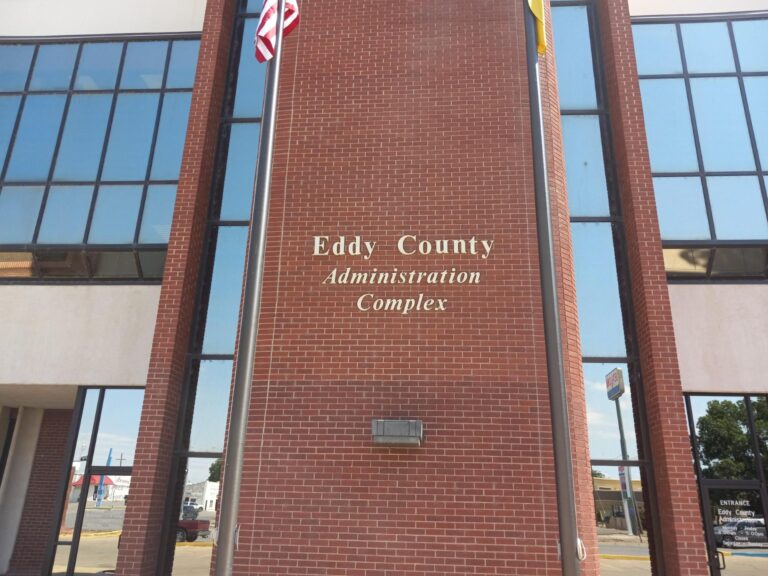
The Eddy County Commission discussed a proposed rewrite of its nuisance vegetation ordinance at its May 19 meeting in Carlsbad, opting to have the county’s legal team review the latest version and potentially take it up for a vote at a meeting next month.

The rewrite notably removed an exemption for properties 3 acres or larger but also included a defined process for county officials to work with landowners before taking action to clean up so-called “nuisance vegetation.”

Commissioners tabled a vote on an earlier version of the amendment at their April 21 meeting, citing concerns that the regulation could infringe on property rights.

At issue was the authority last month’s proposal would have granted the county to remove vegetation after 10 days of noncompliance, place a lien on the property to pay for cleanup and potentially charge the landowner criminally, which could lead to jail time.

Such wording was removed from the rewritten ordinance, while defined standards were added to initiate enforcement and establish a process for the removal of such vegetation.

Standards for removal included vegetation accumulating on fences and other infrastructure via wind, along with unmaintained agricultural crops and invasive species posing a risk of cross-contamination and overgrown native vegetation that could pose a fire hazard.

Agricultural or livestock properties were expressly exempted from the ordinance unless they are “maintained inconsistently with normal practices” and found to pose a threat to public safety.

A 10-foot “clear safety area” was also established to provide a buffer between vegetation and “combustible barriers” such as fences that could pose threats to neighboring properties.

If any of the enforcement standards are met, the county will first notify the landowner in writing. The property owner has 10 days to respond and submit a mitigation plan for approval by the county.

Physical mitigation must begin 30 days after the notice. Any failure to comply with the ordinance can result in a $300 fine per day of violation.

The Eddy County Board of Commissioners will approve all emergency and non-emergency actions to clean up a property after continued noncompliance and can place a lien on the property to pay for such activities.

In a non-emergency, such steps can only be taken after accumulation of fines totaling $9,000, an amount that equates to 30 days of noncompliance.

“They have 30 days to establish their mitigation plan,” said Eddy County Fire Chief Josh Mack. “I feel like we’ve been fully fair. We’re taking care of public safety and the community as a whole.”

Mack said the biggest change in the new ordinance was in its enforcement and language he said gave the county more discretion to work with owners to bring them into compliance before enforcement actions are taken.

“We’re giving the resident this much time to come in and say, ‘I need this much time and it’s going to cost me this much,’” Mack said. “Any issues that can lead the property owner not to get the work done, we want to be that community partner.”

County Attorney Cas Tabor said crafting a well-defined process for the county to decide whether to clean up a property was critical to ensuring property rights. He also said the county should provide for landowners to appeal or challenge a finding that their vegetation would cause a nuisance.

“I think we need to be a little more cautious in how we make a determination,” Tabor said. “There’s got to be some due process before we say we’re going to go in and clean someone’s property, and put a lien on their property. The landowner has to have some right to contest something, or appeal something.”

District 4 County Commissioner Bo Bowen said he supported allowing the county commission, rather than the county manager or staff, to determine when debris will be removed.

“If it’s going to the board, you have five people,” Bowen said. “I think you have a greater probability that there will be less idiots.”

Infrastructure plan approved

County Commissioners also approved the county’s Infrastructure Capital Improvement Plan, which will be submitted to the New Mexico Department of Finance and Administration for final approval.

The plan lists capital projects in order of importance to the county. The list contained 26 projects planned between 2027 and 2031, totaling about $482.3 million.

A $5 million project to renovate the Eddy County Courthouse and upgrade its HVAC system topped the list, followed by $1 million in medical equipment for the Eddy County Detention Center, and a $21 million project to build a consolidated emergency dispatch center in the county.

The county ranked building its own emergency medical facility for $57.5 million at No. 4 and $11 million in repairs to the McDonald Road Bridge at No. 5.

Managing Editor Adrian Hedden can be reached at 575-628-5516, or @AdrianHedden on the social media platform X.