Home Blog Page 164

Building a Lasting Legacy: Ensuring the Future of Early Childhood in New Mexico

0

By: Gabrielle Uballez and James Jimenez

Six years ago, Governor Lujan-Grisham and the New Mexico Legislature created the Early Childhood Education and Care Department (ECECD) to optimize the health, development, education, and well-being of young children across the state. By establishing a coordinated system of high-quality prenatal and early childhood services, the department can ensure every family in New Mexico has access to support during the most important years of a child’s development when 90% of the brain’s neurological foundation is built.

In 2022, New Mexico made their voices heard, voting overwhelmingly to guarantee the right to early childhood education. Since then, we’ve made a significant impact on the lives of families, from single parents to grandparents raising grandchildren to two-parent households, and our early childhood policies have garnered national recognition.

The most recent New Mexico Kids Count State Databook shows that 97% of New Mexico adults with children enrolled in childcare assistance are employed, and more than half of these families receiving childcare assistance have an income of less than $47,000 annually for a family of four.

New Mexico’s investment has also improved quality, with licensed childcare providers earning a 4- or 5-star rating, increasing from 40% in 2018 to 50% today.

We can be proud that New Mexico essentially provides universal free childcare. A family of four with two kids in full-time care can save over $23,000 annually, which, for the average family, could be half of their income. Now, parents can pursue new career opportunities or advance their education with the peace of mind that their children are safe and well cared for.

But we still have work to do!

Senate Joint Resolution 6 (SJR6), sponsored by Senator Padilla, is the next step to sustain these investments. The constitutional amendment would ensure the fund is used exclusively for prenatal and early childhood programs, providing a predictable yearly distribution of $500 million. However, funds would still be appropriated by the legislature, and in the case of catastrophic budget situations, it could be tapped into as a source of revenue.

Passing SJR6 this session will give voters another opportunity to express their belief in the importance of the early years in a child’s development. SJR6 will expand upon the progress we’ve made in building a strong prenatal-to-early-childhood system, ensuring that future generations continue to benefit from these investments.

We share lawmakers’ sense of urgency in making swift progress to improve childhood well-being. But, it’s important to recognize that we are building an early childhood system from the ground up, and only five other states have established early childhood agencies at the cabinet level. This makes our work both groundbreaking and complex.

To ensure equity in access, we must intentionally ensure implementation is data-informed, culturally responsive, and address the real needs of everyday New Mexicans. While we’ve made significant strides, our vision of a fully funded, comprehensive early childhood ecosystem is still a work in progress. Advocates, early childhood professionals, and our organizations are advocating for additional policies, including a wage and career ladder to provide fair compensation for the early childhood workforce, increased access to in-home visiting and maternal health programs, and expanded infrastructure for early education. These investments are essential to achieving lasting impact.

Supporting SJR6 will strengthen New Mexico’s commitment to early childhood education and care. Let’s continue leading the nation by ensuring our youngest children have the support they need to thrive. The future of New Mexico starts with our kids, who deserve every opportunity to succeed.

Gabrielle Uballez is the Executive Director for New Mexico Voices for Children.

James Jimenez is the Executive Director of the New Mexico Voices Action Fund.
Supporting Missionaries

0

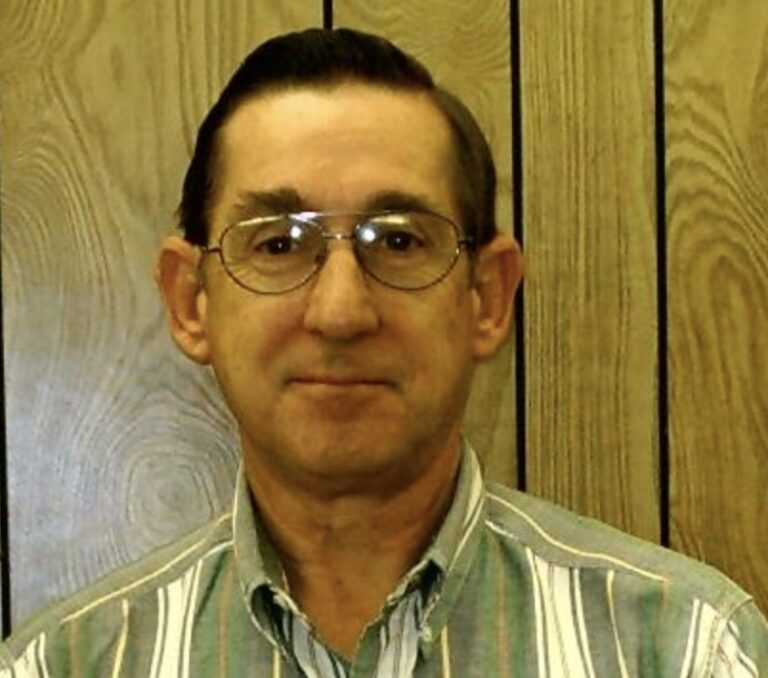
By: Pastor Rick Smith

William Carey is known as the founder of modern day missions, but before this he had a heart for missions. He was a cobbler and above his workbench he tacked a map of the world and used it to pray for the souls of people all over the world. Missionaries were rare in those days and when the missionary society in London asked who would go to the world, Carey responded, “I will go down into the well, if you will hold the rope”. In the little letter of 3 John we have the guidelines for being those that “hold the rope” — that provide the support of those that go “…into all the world, and preach the gospel to every creature.” (Mark 16:15).

First, we must stand for the gospel ourselves. “For I rejoiced greatly, when the brethren came and testified of the truth that is in thee, even as thou walkest in the truth. I have no greater joy than to hear that my children walk in truth.” (3 John 3-4). The same commission that our missionaries take applies to us. It is just like in the military you have the front line soldiers, but you also have the support personnel that are necessary for the success mission. We must maintain the faith and the truth where we are and practice living and proclaiming the gospel to those that are around us. We are co-laborers with the Lord and the missionaries He sends into the far reaches of the world.

If a missionary is home on furlough or we hear about a need that they have on he mission field, then we are obligated to help as much as we can. John said this to Gaius, “Beloved, thou doest faithfully whatsoever thou doest to the brethren, and to strangers; Which have borne witness of thy charity before the church: whom if thou bring forward on their journey after a godly sort, thou shalt do well…” (3 John 5-6). We often think that the only thing that missionaries need is money to fund their work. They do need this, but they need much more. Sometimes they need a place to stay when on furlough. Many times they need, whether at home or abroad, a friend to listen, to be as sounding board, and a prayer warrior to come along side of them to help. Pray for our missionaries, but also correspond with them and encourage them in the work. Years ago there was a young missionary family that I had visited with and suddenly they seemed to disappear. Perhaps I failed to be a friend as well as a supporter. Perhaps I failed to hold the rope for them at a critical time in their work. Sadly, I will never know what happened.

I think that we need to remind ourselves of the great responsibilities that have been placed on our missionaries. Again, John says, “Because that for his name’s sake they went forth, taking nothing of the Gentiles.” (3 John 7). First, they did not choose to be a missionary. They were called by Jesus and they go in His name. A soldier represents the country that commissioned him and our missionaries are not commission by the church or an organization, but they are singled out and called by Jesus Himself. Consider Paul and Barnabas in Acts 13:3, that says, “As they ministered to the Lord, and fasted, the Holy Ghost said, Separate me Barnabas and Saul for the work whereunto I have called them.” They were called by the Spirit of Jesus and sent out by the church in Antioch. Secondly, they are not to look to the world for their support. They are one with us and we with them. They deserve support from faithful followers of Jesus Christ Who sent them out. Will you support them Jesus sent out?

Lastly, when we support our missionaries we are joining in with them in the work. “Therefore we ought to support people like these, that we may be fellow workers for the truth.” (3 John 8 ESV). We ought, we are obligated, to support those that are called by Jesus into this work. We are not obligated to support, nor encourage those that are self-sent or who preach another Jesus and another gospel. “If there come any unto you, and bring not this doctrine, receive him not into your house, neither bid him God speed: For he that biddeth him God speed is partaker of his evil deeds.” (2 John 10-11). We should reprove such as these and call them to repentance and faith in Jesus Christ our Lord.

If you have any questions, we invite you to visit with us this Sunday. Worship at 10:50 A.M. We are located at 711 West Washington Ave. Check our sermon videos on Youtube @ricksmith2541. Send comments and prayer requests to prayerlinecmbc@gmail.com.

Rick Smith is the Pastor at Calvary Missionary Baptist Church in Artesia

Preparing for the worst, hoping for the best

0

By Trip Jennings

Gov. Michelle Lujan Grisham told business leaders last week state lawmakers will need to return to Santa Fe this fall for a special session to fill holes to New Mexico’s proposed $10.6 billion spending plan created by federal spending cuts.

There are too many unknowns to say with certainty how the state might fare with a cost-cutting Trump administration dreaming of a smaller federal workforce and pared-back programs for the needy and vulnerable.

It’s only been a week since the Republican-controlled U.S. House of Representatives passed a budget resolution that calls for $4.5 trillion in tax cuts and a $2 trillion reduction in federal spending over a decade. But with the federal share of New Mexico’s last 10 state budgets hovering around 40%, or 4 in every 10 dollars, the state is in the federal crosshairs.

One of the places the federal government likely will seek savings is Medicaid, the government’s health care insurance program for the low-income. Currently, the federal government pays roughly $3 for every $1 New Mexico spends to pay for its program. That’s because New Mexico is one of the poorest states in the nation, and receives a higher share in federal dollars than other wealthier states.

Gov. Michelle Lujan Grisham told CBS News last week that deep cuts to Medicaid would leave hundreds of thousands of New Mexicans either under- or uninsured.

To put that into context, a 12 percent to 13 percent cut in federal Medicaid dollars to New Mexico “would amount to more than $1.1 billion,” according to a presentation staff at the legislature’s budget arm, the Legislative Finance Committee, gave to lawmakers Monday in Santa Fe.

There are other programs New Mexicans rely on that could suffer cuts. Should Congress seek to save money in its free school lunch program, New Mexico might need to make up the difference because current New Mexico law requires “the state to provide funding for universal free meals.” Making up the difference could cost tens of millions of dollars, the LFC report said.

In addition to federal programs that could shrink in size, there is the Trump administration’s desire to reduce the federal workforce.

The LFC estimated New Mexico had around 29,500 direct federal government jobs in New Mexico in December 2024. Add in another 32,000 positions at the two national labs in Los Alamos and Albuquerque.

“New Mexico has the 6th highest concentration of federal employment in the country,” reads a slide in the LFC presentation. “Several NM counties have among the highest concentrations of federal employment nationally.”

New Mexico is also vulnerable to the financial consequences of tariffs the Trump administration wants to slap Mexican and Canadian imports.

“The state imported $2.5 billion from Mexico in 2023, alongside $3.61 billion of imports from China, Canada, and India,” the report reads.

Should those countries slap tariffs on American goods in response, New Mexico could feel economic pain, according to the LFC. “New Mexico exported $4.9 billion in goods globally in 2023, with $3.4 billion (70%) going to Mexico.”

Helen Gaussoin of the LFC on Monday stressed the report to state lawmakers was a “high-level broad look at possibilities” and it is too early to know what exactly will happen in the coming months.

Whatever happens, it is a safe bet New Mexico will feel economic pain in the coming months and years.

Trip Jennings started his career in Georgia at his hometown newspaper, The Augusta Chronicle, before working at newspapers in California, Florida and Connecticut where he reported on many stories, including the resignation and incarceration of Connecticut’s then-governor, John Rowland, and gang warfare in California. Since 2005, Trip has covered politics and state government for the Albuquerque Journal, The New Mexico Independent and the Santa Fe New Mexican. He holds a Master’s of Divinity from Columbia Theological Seminary in Decatur, Ga. In 2012, he co-founded New Mexico In Depth, a nonpartisan, nonprofit media outlet that produces investigative, data-rich stories with an eye on solutions that can be a catalyst for change.

Paid family and medical leave bill passes heads to Senate

0

El Rito Media News Services

A revamped but still highly controversial proposal to provide paid family and medical leave to New Mexicans is heading to the state Senate after winning approval from the state House of Representatives.

The passage of House Bill 11 marks a major win for supporters of the measure after a years-long effort to offer paid leave to working families in the state failed to pass the chamber by just two votes during last year’s 30-day session. That vote led to primary challenges against some of the more moderate Democrats who had sided with Republicans.

Friday, Feb. 28’s 38-31 vote was largely along party lines. Five Democrats — Wonda Johnson of Rehoboth, Patty Lundstrum of Gallup, Marian Matthews of Albuquerque, Joseph Sanchez of Alcalde and Martha Garcia of Pine Hill, who took the oath of office Thursday — joined their Republican colleagues in voting against the measure.

“It’s been a journey, for sure,” sponsor Rep. Christine Chandler, D-Los Alamos Democrat, said after the vote.

The journey has been hard-fought.

After Friday’s floor vote, Rep. Rebecca Dow, R-Truth or Consequences, who had offered a substitute bill she called a “reasonable compromise,” sat outside the House chamber in tears.

“We just created the largest exodus of small business in our state,” she said.

“I have been asked by [the media] why Republicans won’t compromise and why do we bring bill that are unreasonable,” she said, her voice cracking with emotion.

“This was a reasonable compromise … and it was disregarded.”

Dow’s substitute proposal called for six weeks of paid parental leave that would be funded by the state Early Childhood Education and Care Fund. Three weeks of supplemental paid leave would be available to employees who chose to contribute to a proposed supplemental fund. The chamber voted it down 40-29.

“They don’t care if the last restaurant open on Sunday in Socorro County is open,” Dow said. “I do.”

HB 11 is not a done deal.

With only three weeks left in the 60-day session, it now heads to the Senate amid stiff business opposition and a public relations campaign that has branded it the largest tax increase in New Mexico history, which proponents argue is patently false. Last year’s version passed the Senate before dying in the House.

Proponents contend they have a strong case.

They hailed the measure as one that would ensure a strong, healthy and vibrant workforce in the state.

“I’m very excited about this bill,” Chandler said at the start of the floor debate.

“We’ve worked very hard over the last year or so listening to many public comments, inputs from the business community, input from stakeholders, and we’ve come up with a proposal that I think is unique to New Mexico and is uniquely appropriate for New Mexico,” she said.

The bill, was called the Welcome Child and Family Wellness Leave Act and would create a family wellness leave fund and the welcome child fund, Chandler said.

The family wellness fund is essentially an insurance program.

Employers and employees would both contribute premiums to pay for family wellness leave, with workers chipping in the equivalent of two-tenths of 1% of their earnings while employers would add in .15% of each eligible workers’ wages — significantly lower than the premiums of one-half and four-tenths of 1% for workers and employers, respectively, in versions of the bill proposed previously. Employers with fewer than five employees would be exempt from having to pay into the fund.

Qualifying workers would be able to take up to six weeks of family wellness leave while receiving a portion of their pay equivalent to the state’s minimum wage, plus two-thirds of their remaining salary.

Chandler said family wellness leave would include medical leave for an applicant to care for themselves or a family member with a serious health condition, leave pertaining to a family member’s military service, so-called safe leave granted to an applicant who is experiencing domestic violence or sexual assault or abuse, bereavement leave for the death of a child younger than 18 and foster leave for a family who is welcoming a foster child into their home.

The welcome child component would apply to families after the birth or adoption of a child.

“Anytime a child is adopted or born in our state, one parent will receive a $3,000 rebate each month for the first three months of that child’s life,” said Rep. Linda Serrato, D-Santa Fe, who is also among the sponsors.

Both parents would have access to up to 12 weeks of welcome child leave with job protection. Though the original version of HB 11 proposed premiums on workers and employers to pay for parental leave, lawmakers now plan to pay for welcome child leave through the state Early Childhood Education and Care Department’s existing budget.

“This $3,000 rebate is really important in those first few months of life,” Serrato said. “As we all know, in that time, it’s incredibly difficult to find child care. … It gives them that financial stability that they need to bond with their child in these critical months.”

Sipapu celebrates winter with plenty of snow

0

Mike Smith
El Rito Media
msmith@currentargus.com

One northern New Mexico ski resort has dodged the lack of snowfall that has hurt other resorts in the state as above normal temperatures and sporadic precipitation disrupt the ski season.

“We are fortunate at Sipapu that we’re in this valley that the weather pattern changes once you hit that alpine valley,” said Christiana Hudson, marketing director for Sipapu Ski and Summer Resort.

As of Tuesday, March 4, the resort located 20 miles southeast of Taos had 79 inches of snow on the ground, according to the Ski New Mexico website.

The resort has a peak elevation of 9,255 feet and averages 185 inches of snowfall per year, read the Sipapu website.

Manufactured snow has been a helpful alternative for ski resorts in New Mexico, including Sipapu, Hudson said.

Sipapu and other ski areas in northern New Mexico could get a boost from Mother Nature this weekend with the National Weather Service in Albuquerque forecasting a mix of rain and snow.

A closer look at Sipapu

The Sipapu Ski and Summer Resort touts itself as being first in New Mexico in many respects.

According to the resort’s website, Sipapu opened in 1952 as the first lift-served ski area in New Mexico. It is the state’s longest running lift ski resort with the longest ski season, the website says.

“It is very diverse and it’s very alpine,” Hudson said. “One of the things that’s unique about Sipapu is all the runs empty into the same base area, so nobody ever gets lost.”

Hudson said the resort has onsite amenities that include a restaurant and bar, general store, slope-side cabins and a hotel.

“It really is more of a resort experience,” Hudson said.

Lots to do for the family

Like other ski resorts in New Mexico, Sipapu offers special events. Last month a snow castle was built and a scavenger hunt was held on the grounds, according to Hudson.

An event called the Cardboard Derby will be held March 22.

“It’s not really a race,” Hudson said. “The goal is to actually hit a target and you create a vessel made only of cardboard, duct tape, string or twine and paint. You go down a chute to try and hit a target and whoever is closest to the target wins big prizes.”

Hudson said there are categories for children, young adults and older adults.

“People build vessels that look like cats, school buses or pirate ships or rockets and it’s a super fun event for the whole family,” she said.

On March 29, Sipapu hosts the Pond Skim.

“The goal is for skiers and (snow) boarders to test their balance and their bravery and go across Lake Sipapu,” she said. The man-made lake is nearly 75 feet long, three feet deep and filled with river water ranging in temperature from 30 to 40 degrees, Hudson said.

The season wraps up April 5-6 with Corny Closing Days.

“We do that because the snow that time of year is called ‘corn snow,’” Hudson said. “It is … granular snow that is developed from the heating and cooling down in spring temperatures and actually it’s really great skiing. We celebrate it with all things corn. We have corn dogs, popcorn, and Helotes, the Mexican street corn. So many corny things happening on Corny Closing Days.”

Here are reported New Mexico skiing conditions as of Tuesday, March 4.
(Information provided Ski New Mexico)

Sipapu had a base depth of 14 inches with 13 of 44 trails open and 4 of 6 lifts open.

Angel Fire had a base depth of 20 inches with 32 of 86 trails open and 7 of 7 lifts open.

Pajarito Mountain had a base depth of 10 inches with 13 of 53 trails open and 3 of 6 lifts open.

Red River Ski Area had a base depth of 24 inches with 41 of 64 trails open and 7 of 7 lifts open.

Taos Ski Valley had a base depth of 38 inches with 68 of 120 trails open and 12 of 13 lifts open.

Ski Santa Fe had a base depth of 36 inches with 77 of 90 trails open and 5 of 7 lifts open.

Note: Snow conditions can change after this report is compiled.

Mike Smith can be reached at 575-308-8734 or email at msmith@elritomedia.com.

Lawmaker has been top advocate for advancing bilingual programs

0

El Rito Media News Services

State Rep. Yanira Gurrola found her calling in bilingual education.

“For two or three years in this country, I thought, ‘What am I doing here?’ “ Gurrola, D-Albuquerque, a trained engineer-turned-bilingual educator, said in a recent interview. “But then I really fell in love with everything. I saw what the program did to my students, and that’s when I became an advocate.”

Gurrola, 50, a former bilingual math teacher elected to her seat in 2022, has been a staunch advocate in the Legislature for bilingual and multicultural education measures, co-sponsoring almost every recent effort to bolster programs across the state.

Born in Chihuahua, Mexico, she first visited the U.S. as part of a church-led community service trip. She moved to Albuquerque in 2000.

She wanted to get more involved in community work than her background in electronic industrial engineering allowed, she said. So, in 2005 she earned a master’s degree in curriculum and instructional leadership from the College of Santa Fe.

Even then she was lost, she said, until a counselor at the college told her a female Mexican engineer might be a role model for other women.

“And in that moment, I knew what she meant,” Gurrola said. “So, I became a math teacher.”

She worked for over a decade as a math teacher in several schools but ultimately found her place at Washington Middle School in Albuquerque, where she worked from 2006 to 2019.

Six years ago, she left the classroom to work in professional development for Dual Language Education of New Mexico, a nonprofit that travels nationally and internationally to help schools and districts develop dual language instruction.

Dual language, one of the five program models recommended by state’s Bilingual Multicultural Education Advisory Council, calls for learning subject matter in a mix of two languages, either starting at a 50/50 split or starting with more use of the student’s home language before gradually reaching 50/50. For kids in lower grades, the goal is to reach 50/50 by the third grade.

“Every program, except the dual language program, is trying to fix the kid because they don’t speak English,” Gurrola said. “We don’t value what they bring to the classroom.”

In a dual language program, students behave differently, she said. “They became more involved in the school. They were happier. They behaved better — I mean, it was day and night. And year after year, I was trying to understand why.

“And then that’s when I realized — kids feel that they belong,” she said. “They are part of something here.”

The program is more than just a way to make kids more comfortable in school, Gurrola said. It harkens back to correcting legacies of cultural erasure.

“Talk to any Native New Mexican,” she said, “and they will tell you their parents were beat up for speaking their language.”

She sees bilingual and multicultural education as more than an academic approach — it’s cultural preservation.

“It’s not just Spanish,” she said, “Native languages were here before Spanish, before English. They’ve tried to eliminate them, but the culture and identify have survived.”

Spanish, too, has faced erasure, Gurrola said, something she saw firsthand in the school system.

“Many parents felt pressured to stop teaching their kids Spanish after being punished for speaking it,” she said. “Assimilation was the goal.”

Gurrola recalled one moment when a parent expressed relief after school staff made an effort to find a Spanish speaker.

“He was so embarrassed that he couldn’t communicate. And I said, ‘You are communicating in your second language with somebody who speaks only one — and you are the one who feels embarrassed?’ “ she said.

Gurrola noted that under the New Mexico Constitution, she must be proficient in English to serve as a state legislator.

“I’m speaking English with you because that’s the language of power,” Gurrola said from her office in the Capitol. “I could speak Spanish — and I’m tempted to, since I’m better in Spanish — but that’s the inner mentality.”

CUTLINES Michael G. Seamans/The New Mexican

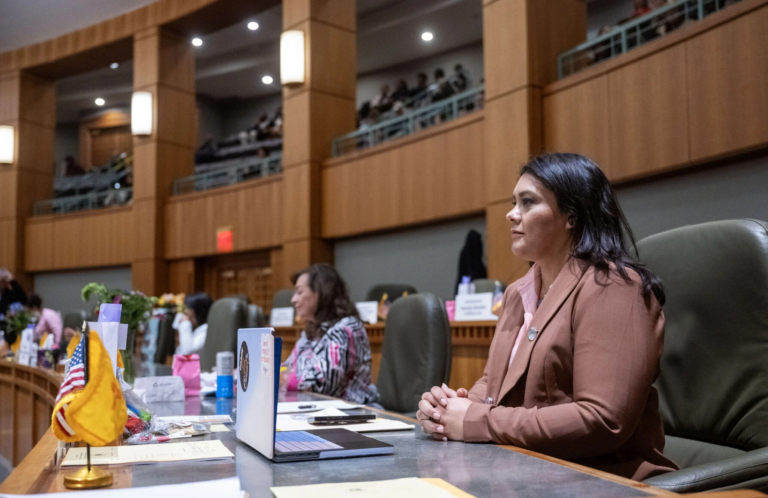
Pic 1: Rep. Yanira Gurrola, D-Albuquerque, listens as the session is called to order on the floor of the House of Representatives at the state Capitol in Santa Fe on Friday, Feb. 14, 2025. Gurrola, an engineer-turned-bilingual math educator, has been a top proponent of bilingual and multicultural education in the state.

Pic 2: Rep. Yanira Gurrola, D-Albuquerque, listens as the session is called to order on the floor of the House of Representatives at the state Capitol on Friday, Feb. 14, 2025.

Paid family leave backers ignore employers

0

By Sherry Robinson
All She Wrote

The family leave bill is another great idea New Mexico can’t afford.

Progressive Democrats passed House Bill 11 through two committees and the House, changing its name and its more onerous provisions while ignoring the state’s employers, who are saying loud and clear that they can’t afford it. For many, it would be disastrous.

The rebranded Welcome Child and Family Wellness Leave Act would allow workers to take up to six weeks of paid time off to care for a loved one, deal with serious health issues, welcome a foster child, grieve the loss of a child, or recover from domestic violence. New parents could take 12 weeks of leave, keep their jobs and receive $3,000 a month for the first three months.

Supporters would pay for this through a tax on employers (they call it a “contribution”) of 0.15% of their payroll, or $1.50 on every $1,000; employees would “contribute” 0.2% of their income, or $2 of every $1,000 they earn. Businesses with fewer than five employees would be exempt, but their employees would still be eligible for benefits.

Opponents like the New Mexico Chamber of Commerce say this would be the largest tax increase in state history. The new child benefit would come from the state Early Childhood Education and Care Department – still taxpayer money. New Mexico would be the poorest state to create a paid family leave program.

For the last House committee hearing, the room was packed, and 25 people stood in the hall hoping to testify. Lawmakers heard employers say the bill puts them in an impossible situation. They can try to find a temporary employee in a tight labor market and then train them only to dismiss them six weeks or three months later, when they’ll be on the hook for unemployment. Or they can stretch an already stretched staff and pay overtime to maintain the absent employee’s duties.

This is particularly acute for caregivers like Santa Maria El Mirador in Rio Arriba and Santa Fe counties, which serves people with intellectual disabilities. CEO Patricia Romero worries about staff burnout as well as quality of care for her clients.

Restaurant owners grapple with the same issues. “This will kill restaurants,” said one. “It will hurt the people it’s intended to help.”

Shaylynn Jim said she drives 300 miles a week from the Navajo Reservation to her job in Gallup. The employee contribution might not sound like a lot of money, she said, but “I need every penny I rightfully earn.”

Tom Patterson, of the New Mexico Cattle Growers Association, told the committee that bill sponsors don’t understand the demands of agriculture. “When work needs to be done, it needs to be done,” he said.

The paid family leave bill has been the source of much bad behavior in the Roundhouse.

Last year, after the bill failed by two votes in the House, its last stop before the governor’s desk, progressives cannibalized their own – targeting and punishing Democratic moderates who opposed the bill. They got rid of three by running candidates against them in primaries.

One of their victims was Rep. Harry Garcia, of Grants. After his fellow Grants legislator, Rep. Eliseo Alcon, resigned and then died, it appeared Garcia might return as Alcon’s replacement, but he didn’t live in Alcon’s district. The governor recently appointed Martha Garcia, of Pine Hill, and Garcia promptly voted against HB 11 in the House. She joined four moderates who voted no: Patty Lundstrom of Gallup, Wonda Johnson of Church Rock, Marian Matthews of Albuquerque, and Joseph Sanchez of Alcalde.

Progressives probably have the votes to shove HB 11 down everyone’s throats, and it will hurt the economy just as rash actions by Republicans in Washington D.C. are also hurting the economy. Each side assumes it will be in power forever. They ignore economic consequences at their peril.

Sherry Robinson is a longtime New Mexico reporter and editor. She has worked in Grants, Gallup, the Albuquerque Journal, New Mexico Business Weekly and Albuquerque Tribune. She is the author of four books. Her columns won first place in 2024 from New Mexico Press Women.

Missing woman found dead at apartment complex

0

Adrian Hedden
El Rito Media
achedden@currentargus.com

A Carlsbad woman was found dead Wednesday, Feb. 26, outside her apartment at the Village of Carlsbad Apartments in the 3800 block of National Parks Highway.

Jadyn Kennedy, 31, was reported missing on Monday, Feb. 24, and was last seen on surveillance footage at about 8:05 a.m. Feb. 20 leaving the Sleep Inn and Suites hotel at 3825 National Parks Highway on the south end of town.

Kennedy’s death was being investigated by the Carlsbad Police Department’s Criminal Investigation Division. Her remains were being investigated by the New Mexico Office of the Medical Investigator.

Carlsbad police Lt. Andrew Swanson said law enforcement will await autopsy results before proceeding with the case, and declined to say if police believed a crime had occurred.

Swanson also declined to say if Kennedy appeared to have suffered any injuries, if anyone was present at the scene where she was found or if any suspects or persons of interest were being sought. He did say family members were notified of Kennedy’s death and were in contact with police.

Kennedy was last in contact with her family who live outside of Carlsbad on Feb. 19, according to police, and family members reported her missing to Carlsbad police five days later.

Swanson said Kennedy recently moved to Carlsbad from Texas, but it was unclear exactly how long she’d been in town. He said police had been investigating the case since Kennedy was reported missing, and the inquiry led them to the apartment complex where she was found.

“A lot will be determined by the results of the autopsy,” he said.

Anyone with information on the case was asked to call the Carlsbad Police Department at 575-885-2111, extension 0, or Sgt. Jacob Castenda at extension 7134.

Tips can also be made anonymously through Eddy County Crimestoppers at 575-887-1888, at eddycountycrimestoppers.com or on the mobile app P3 Tips.

Dickie Reedy

Dickie Raymond Reedy died peacefully at home, on February 20, 2025 in Artesia, New Mexico after a prolonged illness.

Dickie was a storyteller, a Boy Scout Leader, a special education teacher, and a hard worker in the oilfield. He was known for his outgoing personality and friendliness. He strove to love his family, his friends, and his church well.

Dickie was a devoted family man, who loved his wife Ginger Reedy for 52 years. He was a devoted father to Richard Reedy and Robin King and beloved grandfather to Oliver Reedy and Elijah King. He was a cherished and loyal friend to many.

In his free time, Dickie Reedy enjoyed all things Texas, Dallas Cowboys, and socializing with everyone he came across. He never met a stranger. He was also involved in the Hermosa Church of Christ family actively supporting and contributing the church since he married Ginger there in 1972.

Dickie is survived by his beloved wife Ginger, his son Richard Reedy, his daughter Robin King, two grandsons, as well as numerous nieces, nephews, cousins, and friends.

Visitation will be at Terpening & Son Mortuary from 2:00 PM – 6:00 PM on Friday, February 28 and on Saturday at 9:00 AM at Hermosa Church of Christ. The funeral service will follow at Hermosa Church of Christ on March 1, 2025 at 10:00 AM, with interment to follow at Twin Oaks Cemetery. In lieu of flowers, donations can be made to Hermosa Church of Christ for the New Mexico Children’s Home, Manuelito Children’s Home, or Haitian Children’s Home.

Dickie Reedy will be dearly missed by all who knew him, but his legacy will live on through his friends and family.

Talon LPE Welcomes Sean Atkins as Chief Operations Officer

0

From staff reports:

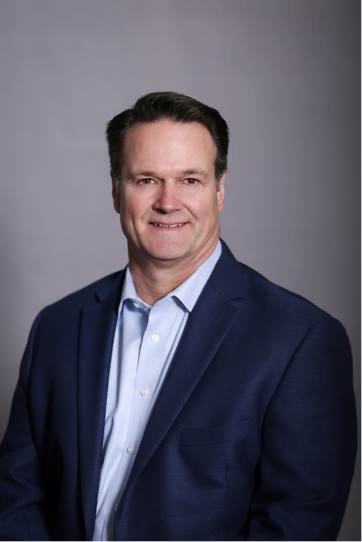
Talon LPE recently introduced Sean Atkins as their new Chief Operations Officer, a new role designed to enhance operational strategy, strengthen efficiency, and support long-term growth. Atkins brings more than 30 years of experience in technical compliance, risk management, and operational leadership. He will play a key role in building on Talon LPE’s strong foundation, refining processes, and driving continued success.

Atkins joins Talon LPE after a distinguished career leading health, safety, and environmental (HSE) teams, regulatory compliance initiatives, and operational strategy. Most recently, he served as Vice President of HSE & Sustainability at West Texas Gas (WTG), where he successfully guided complex compliance efforts and helped shape the company’s safety culture.

Before WTG, Atkins spent 15 years at EnLink Midstream, overseeing a team of 70+ subject matter experts in EHS, pipeline integrity, and regulatory affairs​. His career also includes leadership roles at Enterprise Products and Koch Industries, giving him a comprehensive understanding of operational efficiency and industry best practices​.

At Talon LPE, he will focus on streamlining operations, increasing efficiency, and reinforcing a culture of innovation and accountability. Over time, his role will expand to include financial strategy and internal operations, further strengthening Talon LPE’s ability to serve its clients​.

David Prescott, CEO of Talon LPE, highlighted what Sean brings to the company:

“Sean brings the expertise to build on Talon LPE’s strong foundation of reliability and operational excellence. His deep experience in technical compliance, risk management, and operations will help us refine processes, improve efficiency, and strengthen our ability to serve clients at the highest level. Having been on the client side, Sean understands what sets Talon LPE apart and how we can continue to improve and grow.”

Atkins officially joined Talon LPE on February 17, 2025. In his first 90 days, he will focus on understanding the team, fine-tuning operations, and aligning external goals. Prescott believes Atkins’ leadership will enhance Talon LPE’s strong reputation in environmental consulting, drilling, and engineering services.