Home Blog Page 167

Council throws a flag on youth football

0

Rebecca Hauschild
For the Artesia Daily Press

The city of Artesia’s recreation department will change its tackle football program for fifth and sixth graders to flag football following a vote by the City Council on Tuesday, April 8.

The council acted after receiving unanimous recommendations from the recreation advisory committee and the city event board.

“It was unanimous,” said District 1 council representative Raul Rodriguez, who is a member of the advisory committee. “We are looking out for the future of our kids.”

Jayde Burnell, the city’s recreation supervisor, surveyed several members of the community and researched the issue before recommending the change.

Burnell said some football coaches were not enthused about the change but “everyone else is excited about it being flag football because they (participants) are still learning the skills … I think it opens us up to be more versatile.”

Rodriguez said flag football is “a growing sport. I think we’re headed on the right track. One of our goals is to grow the programs.”

In other business:

• Byron Landfair, community development/infrastructure director reported that concrete work on retaining walls is starting on the 26th Street project and crews are laying water line on Grant Street while keeping the westbound lane open.

• District 3 council member Jeff Youtsey reported that a company called The Towers LLC wants to construct a telecommunications tower at the Senior Mill site property near the CVE property line. Youtsey said The Towers would contract with communication companies to use the facility, which would be similar in appearance to a tower at ABU shopping center that has panels to cover the electronics.

• Rodriguez expressed concern about speeding traffic at Jaycee Park, suggesting the city look for ways to slow traffic and reminding the public to slow down while driving in the park.

• City Clerk/Treasurer Summer Valverde reported on projects underway at the Artesia Airport in preparation for the Roswell Air Races in September. Valverde said a quote for roof repairs has been received and will be presented to the council in the near future and that work will start on interior remodeling after roof repairs are completed. In addition, Valverde said, crews have almost finished fixing the runway and the city is working with a contractor on a bid for a new hanger.

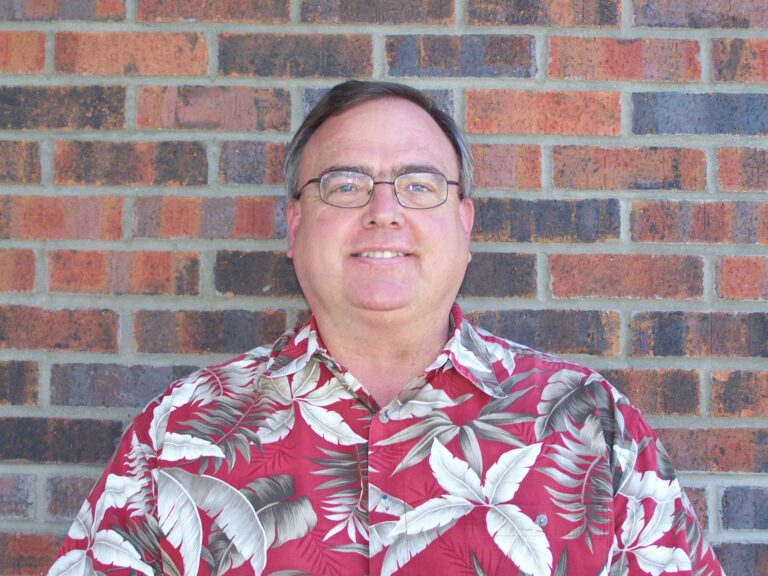
• During the public comment period, Pastor Scott Pettus of First Church Artesia proposed bringing a skydiving exhibition to Artesia during Roswell’s air races. “We think it will be a good draw for people in the air sports world,” said Pettus, a 25-year veteran of the U.S. Marine Corps who said he has been involved with skydiving exhibitions around the world. The exhibition would be provided by Skydive New Mexico, a 501C4 operation from Belen, Pettus said.

Jimenez acquitted in 2017 murder case

0

Adrian Hedden
El Rito Media
achedden@currentargus.com

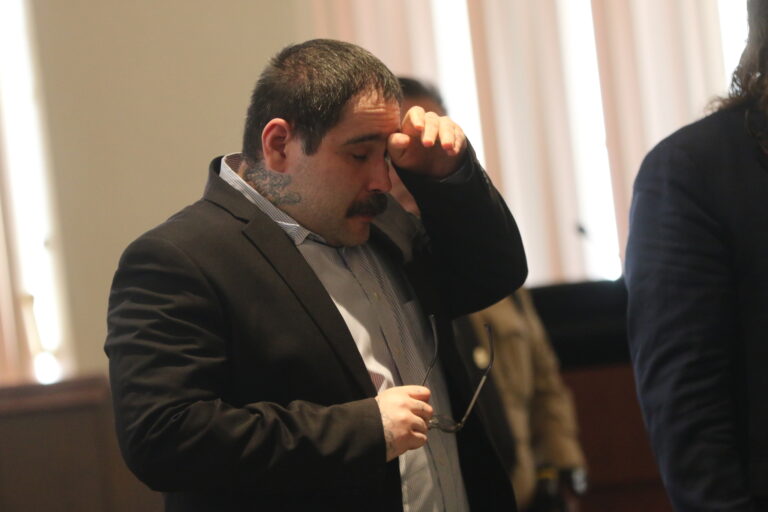
Michael Jimenez wiped tears from his eyes as a jury acquitted him of first-degree murder after a six-day trial ended Monday in Carlsbad.

The jury had the option of convicting Jimenez on a lesser charge of second-degree murder but voted 11-1 in favor of acquittal. Lacking a unanimous verdict, the judge declared a mistrial.

Jimenez could face a future trial for second-degree murder but was released from custody after being imprisoned for four years awaiting trial in Fifth Judicial District Court.

Jimenez, 33, of Artesia was first charged eight years ago with killing Danny Mendes, 49, in a remote area of Eddy County near Four Dinkus and Haystack roads. Mendes, of Roswell, was found beaten to death in the roadway in March 2017.

Ryan Morgan, 29, first accused Jimenez of beating Mendes to death during a fight near the scene of the murder, but Morgan later recanted and said he committed the homicide. A single count of first-degree murder against Jimenez was dropped about a month after the incident.

Jimenez was rearrested in May 2021 after a former girlfriend told police he confessed to her that Morgan struck Mendes first in the head with a hammer and Jimenez finished him off with the same weapon.

For his role in the death, Morgan was charged with first-degree murder but accepted a plea deal for second-degree murder and was sentenced to 16 years in prison.

At the conclusion of Jimenez’s trial, the 12-person jury unanimously found him not guilty of first-degree murder but was hung on a charge of second-degree murder. Instructions for both charges were provided to jurors, who voted 11-1 in favor of finding him not guilty of the lesser charge.

District Judge David Finger declared a mistrial, and prosecutor Ariane Gonzalez said the state would retry Jimenez for second-degree murder. A new trial date was not yet set.

Jimenez, who served four years in pretrial incarceration, was released from the Eddy County Detention Center while he awaits future proceedings.

Defense Attorney Todd Holmes said his strategy throughout the trial was based on raising doubt with jurors about Morgan’s version of events as he testified on the witness stand to Jimenez’s involvement in the murder.

“From day one, he (Morgan) was just trying to save his own criminal liability,” Holmes said. “The dude has no remorse. He was asked why (the murder) was weighing on his mind, and he said, ‘I dunno.’”

After the verdict was read, Jimenez’s family members extended their fists in victory, relieved he was being released after almost half a decade behind bars.

“I was happy when I turned to see his mom. She just started crying,” Holmes said. He’s been in jail for four years. That’s a long time. Overall, justice was served. That’s our system.”

Following the acquittal and mistrial, Gonzalez asked Finger to require a $20,000 secured bond for Jimenez’s release, which Holmes argued was tantamount to no bond after the defendant was incarcerated and unable to generate any income to pay the bond.

Finger granted Jimenez a $100,000 unsecured bond, meaning he does not have to put up the money, but will be liable for it if he misses any future court dates. In issuing his decision, which resulted in Jimenez’s release, Finger questioned whether the state had a strong case for second-degree murder as only one juror voted in favor of conviction.

“The court does find that there has been a significant change in circumstances,” Finger said. “The split indicates the case might not be as strong.”

Gonzalez argued that based on Jimenez’s criminal history – a 2018 probation violation in an unrelated case and another unrelated embezzlement conviction in 2019 – the defendant was still “a danger to the community.”

“I don’t think the history of Mr. Jimenez has changed, nor the facts of the case,” she said. “I believe Mr. Jimenez is still a danger to the community. The state feels there is still a need for pretrial detention.”

Lujan Grisham signs oil fee hike into law

0

Adrian Hedden
Carlsbad Current-Argus
achedden@currentargus.com

New Mexico will be allowed to charge oil and gas companies more to drill on state land after Gov. Michelle Lujan Grisham signed a bill into law last week.

Senate Bill 23, sponsored by Sen. George Munoz (D-4) who chairs the powerful Senate Finance Committee that devises the state’s budget each year, raised the cap on royalty rates oil companies pay as a percentage of their proceeds from operations on State Trust land.

It was the only major oil and gas reform bill that passed the Legislature during the 2025 lawmaking session in Santa Fe, which concluded March 22. This year’s 60-day session was focused on public safety, with several bills related to the fossil fuel industry stalling and failing to make it to the governor’s desk.

Friday, April 11, was the final day for Lujan Grisham to veto or sign bills into law. After the deadline, any bills not signed would be vetoed by default in a process known as “pocket veto.”

After it was signed, SB 23 allowed for an increase of the previous oil and gas royalty rate cap from 20% to 25% for operations on tracts of State Trust land in the Permian Basin area – lands appraised by the New Mexico State Land Office as containing the most valuable mineral resources.

The increase was expected to generate up to $50 million a year in Land Office revenue, funds that are used to support the office’s statutory beneficiaries such as public schools and hospitals.

Following his bill’s signing into law Thursday, Munoz said it would allow New Mexico taxpayers to get a higher fiscal benefit from the state’s ongoing oil boom, which led New Mexico to become second in the U.S. in oil and gas after only Texas, with which New Mexico shares the Permian.

“The money earned from oil that is extracted from State Trust lands benefits institutions in New Mexico including our public education system,” Munoz said. “Those institutions will now receive millions of dollars in new money every year.”

But the oil and gas industry is a key economic driver for New Mexico, producing almost half of the state’s budget  – about $13 billion in the last fiscal year – for state and local governments, according to the New Mexico Oil and Gas Association.

Throughout the 2025 legislative session, which saw SB 23 pass both the Senate and House despite staunch Republican opposition, industry leaders argued that raising the rate – even on the limited tracts of land the bill specified – could unduly burden fossil fuel producers.

Jim Winchester, president for trade group the Independent Petroleum Association of New Mexico said the higher rates would price smaller operators out of the lucrative region on the western side of the Permian Basin – a subbasin known as the Delaware that straddles the New Mexico-Texas border.

“Our concern lies in the periphery areas around the geologic border of the New Mexico Delaware Basin, as close as one mile from the basin’s edge where our independent members take risks (and) spend a lot of capital on infrastructure with the hope that reserves there will pay back the investments,” Winchester said during a Feb. 18 meeting of the Senate Finance Committee where the bill was passed.

New Mexico Public Land Commissioner Stephanie Garcia Richard, who oversees management of State Trust land, countered that the bill was only for new leases on State Trust land in that area, and that the higher rate better reflected the “market value” for New Mexico public land sought by the oil and gas industry.

Garcia Richard advocated for raising the rate since she took office in 2019, arguing it was a necessary step for New Mexicans to get their “fair share” of the state’s oil revenue. The 25% rate was comparable, she said, with rates paid to drill on private land in New Mexico and state land in Texas.

“By bringing the state’s royalty rate for premium oil and gas lands in line with what is charged in Texas and on private lands in New Mexico, we are making a smart business decision,” Garcia Richard said. “You always want to get maximum returns for the best resources, and the oil in New Mexican’s Permian Basin is some of the best in the whole world.”

Gov. signs water bills

Although most other bills intended to add regulations on oil and gas operations failed during the session, Lujan Grisham did sign into law multiple pieces of legislation that could impact the industry in the name of water conservation.

House Bill 137 was signed into law on Tuesday, April 8, to create the state’s “Strategic Water Supply” program, which will offer grants and loans for projects to treat brackish water, meaning water high in salinity, for uses such as agriculture.

Large amounts of naturally brackish water are generated by the oil and gas industry during well completions, as the fluid is brought to the surface from underground along with crude oil and natural gas.

The governor also signed Senate Bill 21, which gave broader authority to the state of New Mexico to permit the use of groundwater resources by industries such as oil and gas operators and agricultural producers.

This bill was a response to a 2023 Supreme Court decision that confined such federal protections to “continuous” bodies of water. Supporters of SB 21 argued that many of New Mexico’s rivers and streams see portions go dry during arid conditions, meaning they were no longer federally protected and expanded state permitting was needed.

<n>

The Artesia Lady Dogs mercy-rules Goddard 11-0 in softball action Tuesday

0
Photo by Shawn Naranjo
The Artesia Lady Dogs extended its winning streak to four games by defeating Goddard 11-0 in softball action on Tuesday. Artesia will travel to Lovington at 5 p.m., for a doubleheader on Thursday. Lady Dogs’ pitcher Kayden Apodaca throws a strike against the Lady Rockets in the first inning.

A look at Artesia softball action against Roswell Saturday

0

Time to again feed the insatiable beast

0


By Cal Thomas

America’s annual rituals and observances include days we usually celebrate together (July Fourth, Memorial Day, Veterans Day), or as members of special groups (Passover, Easter and Christmas).

The one annual ritual it can be safely said most Americans despise is April 15, when the half of us who pay federal income taxes must “render unto Caesar” portions of our hard-earned money to a government that wastes much of it and dislikes exposure and accountability. It’s why Elon Musk and his band of DOGE warriors are despised by the Left and the misspenders.

Two constitutional amendments have been especially hated by the public. One was the 16th Amendment that was ratified on Feb. 3, 1913. It granted Congress the authority to impose and collect taxes on income. Before then the government raised money through tariffs (sound familiar?) and excise taxes.

The 18th Amendment prohibited the manufacturing, sale and transportation of intoxicating liquors. That amendment was repealed in 1933.

The 16th Amendment remains, allowing Congress to continue its intoxication with our money, bilking those “millionaires and billionaires Democrats love to attack, although some of them are wealthy. How did some become millionaires on low six figure salaries?

The largely indecipherable federal tax code is incredibly complex – so complex that it covers 6,871 pages. If tax regulations are added – the Treasury’s official interpretations of the tax code – the number of pages climbs to 75,000. One needs instructions on the instructions to understand it, which has kept tax accountants in business for decades.

The Internal Revenue Service is only partially to blame for this annual annoyance. Bureaucratic regulators who add to laws passed by Congress, and Congress itself, which grants deductions to some, but not others, are the real culprits. While DOGE is exposing some of the waste, fraud and abuse in government, it won’t be fully stopped until two things happen. First, Americans must rely less on government and more on themselves. Responsible decisions in one’s personal and financial life mostly guarantees that government will be less likely a first resource and more likely a last resort.

Second, the people who have tortured us must be shamed. In Puritan society shaming, or public humiliation, was a common practice. Its purpose was to enforce moral standards and maintain social order. Today, almost nothing is shameful because most standards have been discarded.

Members of Congress, who voted for spending and programs that are now being exposed as unnecessary and wasteful, should have shame heaped upon them. This would include “earmarks,” which is spending by members for favored projects that have not gone through the proper budgetary process. Public shaming might force members to be more responsible with the power and purse they have been given and put the country’s interest ahead of their personal interests, which include re-election.

As I have repeatedly argued, every Cabinet agency and most government programs have been established by a charter or legislative authority. If agencies and programs are achieving their purposes and goals and their work can’t be done less expensively and more efficiently by the private sector, we keep them. If not, we get rid of them. DOGE has begun that process. Simply firing people won’t fully solve the problem. The value and success of these entities must be examined for their cost and efficiency. The ones that are not performing must be shut down, otherwise a new Congress and a new administration could fire them up again and we will be back where we started.

An unhappy tax day to all who pay income taxes.

Readers may email Cal Thomas at tcaeditors@tribpub.com.

Experience the “Surprise” of Easter

0

By: Pastor David Grousnick

When I was a teenager, a long time ago, when telephones were connected with a wire to the wall and you made a call using a rotary dial, it was popular to listen to the radio for free giveaways.

“The tenth caller will receive…” some free something, maybe a free ice cream cone or a free ticket to some event. I remember dialing like crazy, hearing the busy tone, hanging up as fast as I could, only to dial again and again, in a quest for the elusive prize.

And one time, I got so caught up in the pursuit of it all, that when the phone actually rang, which meant it was going to be answered and I would win something, I automatically hung up and started dialing again. Arrgghh!!

Maybe you remember the Legend of the Touchstone? It’s a great story to recall during Easter Week. According to that ancient legend, if you could find the touchstone on the coast of the Black Sea and hold it in your hand, everything you touched would turn to gold.

You could recognize the touchstone by its warmth. The other stones would feel cold, but when you picked up the touchstone, it would turn warm in your hand.

Once a man sold everything he had and went to the coast of the Black Sea in search of the touchstone. He began immediately to walk along the shoreline picking up one stone after another in his diligent and intentional search for the touchstone. He was consumed with this dream. He wanted desperately to find this miraculous stone.

However, after several days had passed, he suddenly realized that he was picking up the same stones again and again. So, he devised a plan… pick up a stone; if it’s cold, throw it into the sea. This he did for weeks and weeks.

Then one morning he went out to continue his search for the touchstone. He picked up a stone; it was cold… he threw it into the sea.

He picked up another stone – cold! He threw it into the sea.

He picked up another stone… it turned warm in his hand, and before he realized what he was doing… he threw it into the sea! Arrrgghh!

That’s a good parable for Easter, isn’t it? Because that can so easily happen to us. We can come upon a miraculous moment like Easter… we can feel it turn warm in our hands… but then (so dulled by the routine) before we realize what we are doing… we throw it away.

Absentmindedly, mechanically, nonchalantly… we toss it aside and miss the miracle of Easter.

I once read about a pastor named Wayne Major. When Wayne was in high school, a long time ago, he and a friend would pull a great prank. One of them owned a car in which you could pull back the upper part of the back seat and slide into the trunk. That gave them the idea for this prank.

One of them would hide in the trunk while the other would drive the car and pick up one of their other friends. The two guys in the front would get involved in a deep conversation. Meanwhile the one hiding in the trunk would remove the upper part of the backseat and sneak out and take a place in the backseat as if he had been there all the time.

Then he would suddenly join in the conversation. “Surprise!”

Wayne had all kinds of stories of the various startled reactions that they got with this stunt.

I like surprises, don’t you? If I had to choose one word to characterize the reaction of Jesus’ followers that first Easter Sunday, it would be, “Surprise!” But maybe we shouldn’t be surprised at that. After all, it is the most astounding event in human history.

A Baptist church in Bangladesh was showing a film about the life, death and resurrection of Jesus to an audience filled with people who had never heard the gospel before. Little children sat in front and in the aisles. The adults stood in the back.

As the story of Jesus’ crucifixion unfolded and Jesus’ broken body was laid in the tomb, there were tears and audible gasps. As the affected audience watched, one young boy suddenly spoke up. “Don’t be afraid,” the little boy said. “He gets up again! I saw it before.”

Can you imagine being exposed to the Gospel for the first time and watching the crucifixion scene being reenacted? And then through the power of the motion picture to witness his resurrection? Surprise! He who was dead is now alive!

Pastor Phil Callaway tells of driving his five-year-old son past a local cemetery. Of course, five-year-olds sometimes have an interesting perspective on things. Noticing a large pile of dirt beside a newly excavated grave, the boy pointed and said: “Look, Dad, one got out!”

Calloway laughed at the time. But, he writes, “. . . every time I pass a graveyard, I’m reminded of the One who got out.” Surprise!

Experience the “Surprise” of Easter this week! Amen!!

David Grousnick, is the Pastor at the First Christian Church in Artesia.

Rogue’s new engine improves fuel economy

0

Review & Photos by: Len Ingrassia
Automotive columnist

Not only does this year’s Nissan Rogue have a new and stylish horizontal grille replacing years of its staid V-Motion design, it also adds some high-tech cameras that minimize or eliminate front-end damage.

The 2025 model also adds a new three-cylinder engine across its lineup that greatly improves fuel economy at the cost of mild acceleration. A new Rock Creek edition appeals to mild adventurists preferring the dirt road over pavement dwelling .

Part of a pricey Technology Package, new surround cameras display a 176-degree view seeing around garage pillars or parked vehicles. Its Invisible Hood View uses advanced image processing to project a view of the roadway under the engine bay to avoid hitting curbs as well as help in placing front wheels in a car wash track. Nice feature.

All Rogue trims include automatic emergency braking with pedestrian detection, blind spot warning, rear cross traffic alert, lane departure warning, high beam assist and rear automatic braking.

Rogue is available in five trims: S, SV, Rock Creek, SL and Platinum with base prices ranging from the low $30s to $40s. Our decked-out Platinum tester stickered just under $50,000 pushing some buyers to high-end and more powerful sedans. The SL trim appears to be the best value in the high $30s with full leather, technology, driver assistance and infotainment system.

The new engine is rated at 201 horsepower sending 225 lb-ft of torque to its front wheels or optional all-wheel drive. In our independent testing, the new Rogue accelerated from zero to 60 miles per hour in 8.3 seconds, similar with last year’s four-cylinder powerplant featuring 181 ponies.

With improved driving dynamics, Nissan believes they have another hit since the popular compact model debuted in 2008. We agree but wish more oomph was under the hood to prop up mediocre acceleration.

Pros:

Handsome looks

High tech interior

Roomy cabin

Cons:

Upper trims pricey

Pokey

Noisy engine

Controls are intuitively placed and redundant manual knobs make radio tuning a breeze without drilling down in pull-downs. Connectivity is made easy with wireless Apple CarPlay and Android Auto.

Upper trim Rogues feature twin 12.3-inch digital screens, one featuring engine vitals while the center console touchscreen features Google’s built-in suite of applications like most smartphones on the market as well as a plethora of Nissan apps.

Our tester included a 10-speaker Bose premium sound system, heads-up display, panoramic moonroof, 19-inch alloy wheels, exterior ground lighting and interior accent lighting.

In highway travel, once up to speed, the Rogue offers a compliant ride with precise steering, firm braking and little body roll. While it lacks in passing power, the Rogue delivers a smooth ride with 19-inch alloys and suspension that absorbs most pavement irregularities.

Nissan’s Pro-Pilot Assist 2.1 combines numerous safety tech gear to keep you safe in most driving conditions although disclaimers keep the driver uppermost in control.

With the redesign, be sure to include the new Rogue in your short list of test drives along the Toyota RAV4, Honda CR-V, VW Tiguan, Kia Sportage and Hyundai Tucson.

(Contact independent automotive columnist Len Ingrassia at editor@ptd.net)

What was reviewed:

2025 Nissan Rogue Platinum AWD

Engine: 1.5-liter three-cylinder, 201 horsepower

EPA rated mileage: 28 city, 34 highway, 31 combined

MSRP/as tested: $40,920 / $48,680

Assembled: The Nissan Rogue is assembled in Nissan’s Kyushu, Japan or Smyrna, TN Nissan facilities. Nissan headquarters are located in Japan. Information on U. S/Canadian parts content, major source of foreign parts and origin of engine and transmission was not available.

Crash test ratings: The Insurance Institute for Highway Safety (IIHS) gave the 2025 Nissan Rogue a “Good” rating, its highest in small and moderate overlap crash tests and second best “Acceptable” in side crashes. Information from the National Highway Traffic Safety Administration (NHTSA) was unavailable.

Warranty: 3-year/36,000-mile basic; 5-year/60,000-mile powertrain; three scheduled oil changes within 2 years/24,000-miles whichever comes first.

Mother Nature shortened the New Mexico State scrimmage, but the real winner is the city of Artesia

0

By JT Keith

The spring scrimmage New Mexico State University’s football team played at the Bulldog Bowl on Saturday was supposed to introduce the Aggies to Artesia and southeastern New Mexico.

Coach Tony Sanchez wanted to get “eyes on the Aggies” and make NMSU football accessible to the state’s southeastern region. He hoped families from Artesia, Carlsbad, Portales, Ruidoso, Loving, Lovington and Hobbs would bring their kids to the game and have a good time.

“We don’t want just part of New Mexico supporting us,” said Sanchez, an Aggie teammate of former Artesia quarterback Ty Houghtaling and receiver David Patterson, respectively, in the 1994-1995 seasons. “We need all of New Mexico supporting us.”

Bad weather ruins the game

Unfortunately, the weather didn’t cooperate. Forecasts called for rain and cold temperatures, but no one could have predicted how Mother Nature would ruin the day.

Fewer than 20 people were in the stands, and the game turned into a weather nightmare. From the 10 a.m. start to the finish at about 11:30, the players endured a mix of sleet, rain and snow with winds ranging from 8 to 16 mph. The temperature was 35 degrees, but it felt like 10 degrees as the wind swept from left to right inside the stadium.

NMSU benefits from being in Artesia

Even so, Sanchez said, all was not lost, and the weekend benefited his team. Sanchez had dinner with Aggie boosters on Friday night, NMSU put on a coaching clinic for area high school coaches, and the trip to Artesia allowed the Aggies to get a taste of the travel facing the team once the season begins.

The city of Artesia benefits from the game

The scrimmage was cut short because of the weather, but Artesia benefited economically from having the Aggies in town.

Consider the one-night New Mexico State stayed in Artesia: The Aggies split their lodging between two hotels with half the team staying at the Sparks by Hilton and the other half at the Best Western Pecos Inn.

The team had a meal catered by Lucky Duck on Friday night and ate at First Baptist Church, where Houghtaling is the pastor. Lucky Duck also catered breakfast on Saturday. And Alma’s catered lunch on Saturday after the game – a grab-and-go to the bus.

Economically, the game was a win for Artesia as it generated lodger tax money and food income the city would not have seen if NMSU had played its spring game at home in Las Cruces. With better weather the next time the Aggies come calling, the economic impact could be even greater.

“It was a great experience,” Artesia head football coach Jeremy Maupin said. “They (NMSU) have a great staff that did a coaching clinic for us Friday. They did some admission things for our kids. The game was great and, overall, we enjoyed it. If the weather had been better, it would have been perfect.”

Bad weather does not stop football

Bad weather does not cancel football games unless there is lightning. If there is lightning, the stadium is vacated, and players go to their locker rooms for 30 minutes or until the lightning passes.

NMSU tried to play

Once the team individual period ended, NMSU scrimmaged offense versus defense. The conditions made a mess of the game, causing fumbles, overthrows, underthrows, footing problems, bad snaps and missed tackles. The scrimmage lasted only about 90 minutes, ending after the seventh of 14 periods that were planned.

Sanchez didn’t blame Artesia for the bad weather and said he expects to return.

“We appreciate Artesia High School and the entire city,” Sanchez said. “It was great getting up here and breaking some bread and meeting some nice people. It was great getting up here, and it won’t be the last time we’re here.”

Today’s boogeyman is Elon Musk

0

By: Cal Thomas

As a child I frequently visited relatives in southern Indiana. A great uncle tried to keep me from exploring his cellar (as they were called then) by telling me the boogeyman was down there and would “get you” if I descended the stairs. It worked.

Boogeymen are nothing new. They have existed in the form of politicians going back to the founding of the country. See how Thomas Jefferson and John Adams described each other. One politician says if his opponent is elected, or his party gains a majority, the country will be destroyed. The other says the same about the other person and party. That has worked well, especially for Democrats, who for decades have won votes from scared seniors by falsely claiming Republicans want to destroy Social Security, Medicare and Medicaid.

The latest boogeyman is Elon Musk. Within my short memory, Musk was hailed as a hero for developing Tesla which was going to save the planet. If you wanted to send a virtue signal, you bought one. Now, if you want to send a virtue signal, you get rid of one, or other virtue signalers will vandalize, even destroy the cars and attack Tesla dealerships.

This is about the Establishment holding onto power and their misspent money, nothing else. Some Democrats, who have no policies other than opposition to President Trump, are trying to recover a level of respectability by agreeing there is waste in government, but they want Congress, not Musk and his DOGE team to cut it. This is known as allowing the people who created the problem to provide the solution, which is not likely to happen.

People who choose to serve their country in the military or in public service when they could be making more money in the private sector were once admired and held up as worthy of emulation. John F. Kennedy encouraged that spirit in his 1961 Inaugural Address: “Ask not what your country can do for you. Ask what you can do for your country.”

Musk and DOGE are exposing what many Democrats and some Republicans have done to waste our money over decades. “The era of big government is over,” declared President Bill Clinton in his 1996 State of the Union address. It wasn’t. While Clinton cut 377,000 federal jobs, Presidents Obama and Biden added to the government employment rolls. The federal government is the largest employer in the United States.

On March 27, Musk and some of his DOGE associates were interviewed by Bret Baier of Fox News. Everyone should watch that interview. If you are not outraged by what you hear, you are part of the problem. Here is just one of many examples of the waste and fraud they have uncovered.

Musk: “(fraudsters) steal people’s Social Security … they call in (and) claim to be a retiree, and they convince the Social Security person on the phone to change where the money’s flowing. … This is happening all day every day, and then somebody doesn’t receive their Social Security. It’s because of all the fraud loopholes in the Social Security system.”

Baier: “How do you reassure people that what you all are doing is not going to affect their benefits?”

Musk: “No. In fact, what we’re doing will help their benefits. Legitimate people as a result of the work of DOGE will receive more Social Security, not less. I want to emphasize that. As a result of the work of DOGE, legitimate recipients of Social Security will receive more money, not less money.”

There are numerous other examples of misspending. Look them up and don’t take what Democrats and much of the media are saying as the truth. It isn’t.

Many members of Congress may give lip service to cutting such misspending, but the question is: will they do anything about it? Those TV ads that try selling us stocks and injury lawyers contain very small print that says: “past performance is no guarantee of future results.” With Congress, it seems like it is. They are the boogeymen (and women) in all of this.

Readers may email Cal Thomas at tcaeditors@tribpub.com. Look for Cal Thomas’ latest book “A Watchman in the Night: What I’ve Seen Over 50 Years Reporting on America” (HumanixBooks).