This article has no body content.
Idaho lab sends 7,500 waste shipments to WIPP
Adrian Hedden
El Rito Media
achedden@currentargus.com
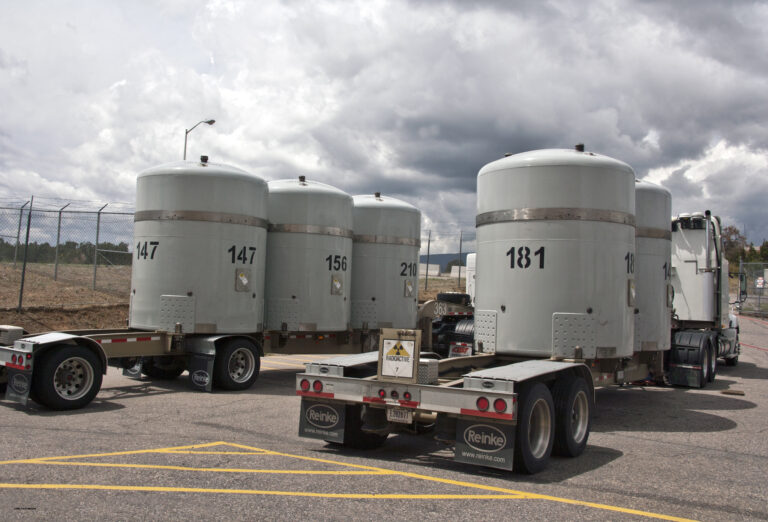
The Waste Isolation Pilot Plant near Carlsbad has received about 7,500 shipments of nuclear waste from Idaho since the facility opened in 1999.
Idaho National Laboratory, where nuclear weapons and energy research is conducted, reported the milestone Tuesday, April 1, as the lab pursues a “legacy waste” transfer plan expected to continue for at least eight more years.
“Legacy waste” refers to materials mostly left over from U.S. nuclear programs during the Cold War. Idaho National Laboratory is moving the waste to WIPP as the result of a 1995 lawsuit settlement between the state of Idaho and the federal government requiring nuclear waste at the lab be removed from the state.
In its latest “Legacy Tru Waste Disposal Plan” published Nov. 4, 2024, the U.S. Energy Department said it expected “most shipments” of Idaho’s waste will be completed by 2033. It was unclear exactly how many shipments remained, according to the plan, as much of the waste was being exhumed after it was initially buried around the lab decades ago.
The Department of Energy reported in January 2024 there were about 30,000 containers left as of 2024, compared with the 65,000 estimated when the 1995 settlement agreement was signed.
At WIPP, the Energy Department disposes of transuranic nuclear waste (TRU), which is clothing materials, equipment and other debris irradiated during nuclear activities.
The waste is buried at WIPP in a salt deposit about 2,000 feet underground. The salt gradually collapses on the waste, burying the refuse and blocking radiation from escaping.
More waste was sent to WIPP from Idaho than from any of the 12 other facilities that make shipments to the repository, according to WIPP shipment records. The 7,500 shipments from the Idaho lab were about 53% of the approximately 14,200 shipments sent to the facility for burial since disposal operations began
Idaho was followed by 2,045 shipments from the now-defunct Rocky Flats Environmental Technology Site near Denver; the Savannah River Site in South Carolina at 1,795 shipments; and Los Alamos National Laboratory in northern New Mexico, which sent 1,680 shipments since WIPP opened.
Idaho sent 341shipments last year, a decline from the 386 shipments the year before but still more shipments than any other facility that sent waste to WIPP in the last two years – about 73% of all the waste sent to WIPP in 2024.
Kelly Wooley, waste management project director at Idaho Environmental Coalition, the contractor hired by the DOE to lead cleanup at the lab, said the facility would continue shipping toward its goal of removing all of the legacy waste from Idaho.
The DOE estimated about 12 shipments leave Idaho for the WIPP site every week.
“I am proud of our many dedicated and hardworking employees,” Wooley said. “This accomplishment would not be possible without them and our collaborative partnership with WIPP.”
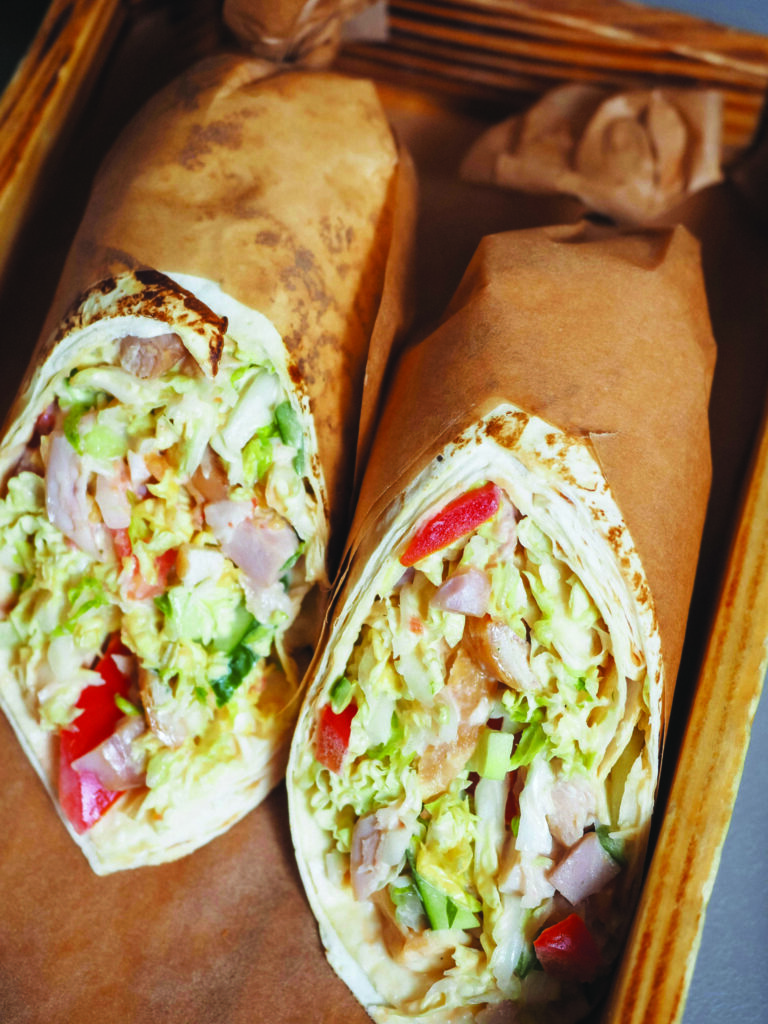
Meals with Wheels: Chicken wraps
By Wheeler Cowperthwaite
Now that we’re years beyond the pandemic and offices and schools are going back to in-person attendance, one question dominates my morning routine: What will I pack for lunch?
It’s the question that plagues everyone who goes to school or doesn’t work from home.
There are a lot of easy things to pack for a lunch: hummus (I make about two quarts at a time) and pita bread, rice bowls, pasta salad, or whatever leftovers there are in the house.
But sometimes you’ve got to up your game a little, or maybe gussy up your ingredients from two days ago and make them into something that looks or feels like something different.
For that, I find the wrap to be perfect. Buy some large flour tortillas at the store and use leftover grilled chicken, baked chicken or leftover rotisserie chicken. The carcass makes a great chicken soup in the pressure cooker, by the way.
You can go heavy on the veggies (because this is really about wraps, not about chicken), use any number of dips as seasoning, like hummus or tzatziki, and look like you’ve prepared something that’s come from a restaurant.
You can also make a wrap with chicken salad, making avocado the star of the show; steak, lunch meat (turkey, ham, bacon), and many of the basic dishes that you may have leftover.
Or, stuff it with regular salad, with some extras thrown in.
Moving in the opposite direction, possibly for picky eaters, fill that tortilla with ranch and cheese, in addition to the chicken, and have the chicken ranch wrap. Grill the tortilla for a few minutes on all sides, the cheese will melt and voíla! lunch is ready to be packed.
The recipe here is not all encompassing but rather, a series of suggestions for what to put in your wrap. Mix, match, use your leftovers, mix some more.
Chicken wraps
1 cooked chicken breast (grilled, baked, boiled), cut into bite-size pieces
1 tomato
Lettuce, spinach or other leafy mixture
1 large tortilla
Cheese
Cucumber
Peppers
Hummus (optional)
Avocado
Directions
Dice any vegetables to be used
Lay the tortilla on a flat surface
Place the sliced chicken in the middle of the tortilla and spread along the length. Add the desired vegetables, cheese, other additions and any seasoning spread, including salad dressing: hummus, tzatziki, or satay sauce.
Roll the tortilla with the ingredients and fold in the ends. Wrap in aluminum foil. Cut as necessary and pack.
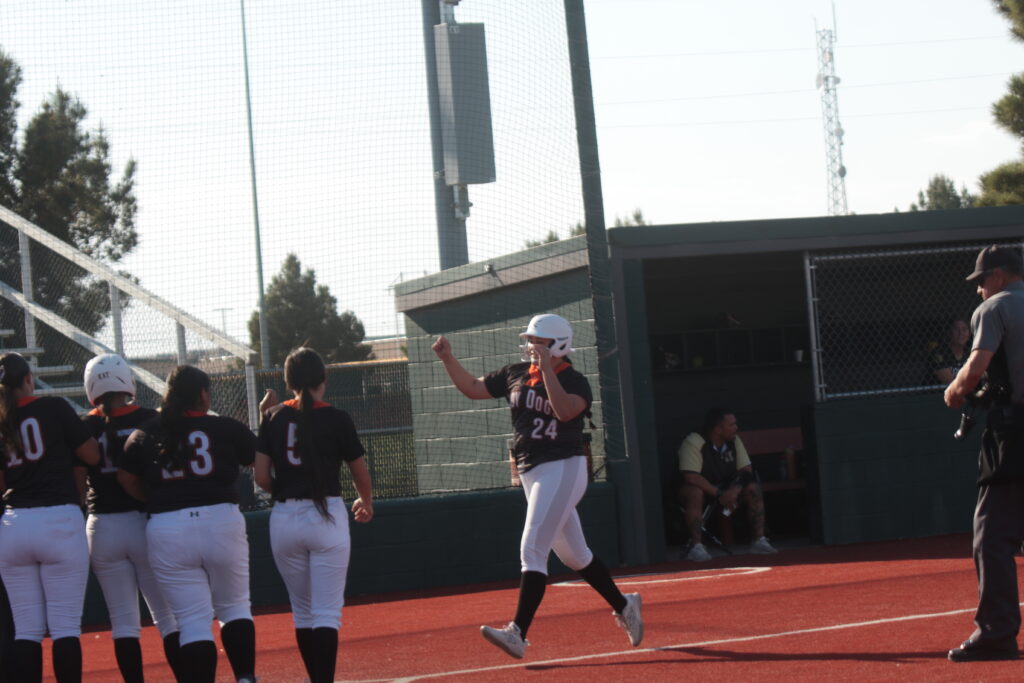
Lady Dogs take doubleheader over Roswell, 14-1 and 3-0 in Saturday softball action

Artesia Lady Dogs use the long ball to defeat Hobbs 9-3
Million Dollar Jackpot eludes Capitan breakaway roper

By Rick Mauch
Special to El Rito Media
The sport of breakaway roping requires blinding speed, bullseye accuracy and at least a smidgen of patience. But patience isn’t easy.
With the world watching on live television and the Globe Life Field crowd in Arlington, Texas, roaring Friday night, 18-year-old Capitan roper Addison Kinser was poised on the brink of rodeo glory and a million-dollar payday.
But it wasn’t to be. In the blink of an eye, Kinser’s dreams of an American Rodeo championship in breakaway roping were dashed as her horse Jlo jumped an instant too soon, causing judges to add a 10-second penalty to her excellent time of 2.22 seconds.
“I left an inch too early. I roped my calf, but I just left too soon,” Kinser said.
To explain what happened to Kinser – and several others Friday night –, the calf in breakaway roping is given a head start by a barrier, which is a rope stretched across the roping box. The calf is attached to this barrier, and must break free before the horse and rider leave the roping box.
Failure to give the calf this head start, known as “breaking the barrier,” results in a penalty. So, Kinser’s time of 2.22 seconds was turned into 12.22. Instead of being in second place, she tied for ninth.
“I thought I did break the barrier,” she said. “Then, I looked back and saw the guy’s hands up and realized, yep, I did.”
Kinser was riding a horse she purchased just a few days before the event and had only ridden three times.
“I thought he would be better prepared for this situation with all the lights and sound, and he did great,” she said. “He handled all that well. I just left too early. And it was so loud. I’ve never competed in any event this big or this loud.”
The American Rodeo is unique in that it allows both professional and aspiring rodeo athletes, known as “contenders,” to compete side-by-side with a $1 million bonus for contenders should they win the overall championship in their event. Contenders qualify by advancing from their respective regions – Kinser qualified with a second-place finish in Tulsa, Oklahoma – and the top 10 compete against each other when they come to Arlington.
Kinser finished second in her region in February with a time of 2.16 seconds – the same mark posted by professional Sarah Angelone of Lipan, Texas, when she won the 2024 American Rodeo breakaway roping championship. Angelone was not among this year’s competitors in Arlington.
The top five finishers in Friday’s competition advanced to the Saturday morning second round/semifinals where they were to be joined by five renowned ropers who were invited to compete and given a first-round bye. Of those 10, the top four will compete in Saturday afternoon’s championship round.
Kaydence Tindall, of Felda, Florida, had the fastest time among Friday’s top five, roping her calf in 2.20 seconds. She will be joined in the second round by Hali Williams, Comanche, Texas, 2.72; Harley Pryor, Moore Haven, Florida, 2.79; nine-time world champion Lari Dee Guy, Abilene, Texas, 2.80: and Sadie Grant, Santa Maria, California, 2.88.
The invited competitors are five women who topped the 2024 world standings: Kelsie Domer, Martha Angelone (Sarah Angelone’s sister), Josie Conner, Shelby Boisjoli-Meged and Jackie Crawford.
Other American Rodeo events being contested at Globe Life Field this weekend include saddle bronc, steer wrestling, tie-down roping, bull riding, bareback riding, barrel racing and team roping.
Despite her disappointment at not advancing, Kinser said the Globe Life Field experience was a definitive positive for her. While the night did not turn out as she had hoped, she proved that she has the potential to be among the best in the world at this sport. After all, she bested over 200 other hopefuls to reach Arlington.
Not bad for someone who left gymnastics to become a roper just over four years ago.
“I definitely feel it prepared my confidence level for more events like this,” she said. “I feel like I controlled my nerves pretty well. I think it was still a confidence booster.”
For now, she will return to a quieter life as a graduating homeschooled high school senior who works on her family’s ranch north of Capitan, riding, grooming and caring for the animals.
In the fall, she’ll join the rodeo team at Tarleton State University in Stephenville, Texas, one of the nation’s renowned college programs.
“I’m excited to go to school, hit some college rodeos and then on to the NFR (National Finals Rodeo),” Kinser said.
She plans to major in business and is already making plans to return to Arlington for another shot at the American Rodeo. After all, those college business courses might come in handy if she takes home the top prize next time.
“One of the best memories of my life”
By JT Keith
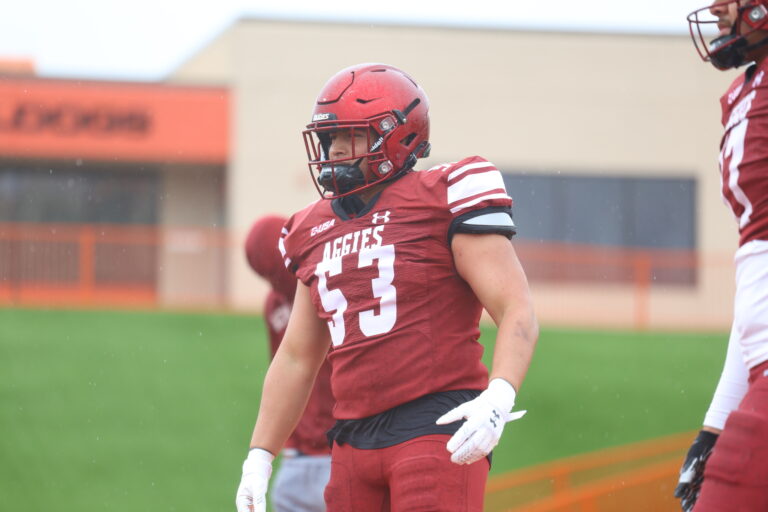
New Mexico State University’s football scrimmage at Artesia High School’s Bulldog Bowl last Saturday was a homecoming for former Artesia player Matthew Saiz.
Saiz, who helped the Bulldogs win their 31st and 32nd state football titles in 2022 and 2023, is now a sophomore defensive tackle for the New Mexico State Aggies and enjoyed getting back in action on his high school field, even though a surge of winter-like weather made the occasion less enjoyable than it might have been.
“It means a lot,” Saiz said. “I know the fans could not show up because of the weather, but it was pretty cool to see that… I get emotional … they (Artesia coaches) always told me that I will miss everything, and it will not be the same when I go to college and experience it myself.”
Artesia football coach Jeremy Maupin said he’s proud of Saiz, a great young man who has worked hard to earn a spot at NMSU.
NMSU Coach Tony Sanchez said having a local hero on hand was good for the Aggies as well for Artesia.
“Any time you can have local guys on the field, it makes a big difference,” Sanchez said. “I thought he did a good job, and I know he was fired up to be back here.”
The weather – sleet, rain, snow, 8-16 mph wind and temperatures in the 30s – made playing conditions treacherous and forced an early end to the scrimmage but Sanchez saw an upside.
“We got a chance to work on everything during the elements today,” he said.
Saiz said his teammates asked him if the weather was always like it was on Saturday. Saiz told them, ‘No, it is usually hot and only gets this way every two or three years.’”
Saiz’s cousin, Gavino Saiz, who played running back for Artesia from 2012-2014, was among the fewer than 20 spectators who braved the weather to watch the scrimmage.
“I love football, but I love my cousin more,” Gavino said.
Matt Saiz said his career as a Bulldog helped him mature. He said playing at Artesia taught him everything he needed to know to deal with the “real world” and he’s ready for what lies ahead.
“I find it amazing to be back out here,” Saiz said, “and it means so much to me. This day is one of the best memories so far. It may seem chaotic, but I loved every moment of it.”
A Deep Dive into New Mexico’s Lack of Economic Freedom
By Matthew Mitchell and Paul Gessing
A thousand years ago, a group of people settled along Red Willow Creek at the base of the Taos Mountains and never left. They were among the first, but hardly the last, to be enchanted by New Mexico’s snow-capped mountains and sun-drenched vistas. The state’s moderate climate, rich culture, and mouth-watering cuisine are peerless. And now that New Mexico churns out 2 million barrels of oil every day—more than 15 percent of all US production—you’d think New Mexicans would be riding high.
Instead, the state’s citizens struggle to get by. Over the last decade, New Mexico ranked 47th in employment growth and 36th in real GDP growth. It has the third-highest poverty rate in the union and more children on federal food assistance than any other state. Over the past decade, New Mexico’s population edged up just 1% while neighboring states grew by an average of 12%. State employment also grew 1% while neighboring state employment growth averaged 19%.
In a new report, published by the Fraser Institute and the Rio Grande Foundation, we examine these trends, comparing the state with its more prosperous neighbors.
One key explanation for New Mexico’s dismal economic record is its lack of economic freedom. People are more economically free when they are allowed to make more of their own economic choices. But New Mexico’s high spending, steep taxes, and burdensome regulations have made the state one of the least-economically free in the union. It ranks 47 out of 50, well behind each of its closest neighbors.
The Fraser Institute in Canada began measuring economic freedom nearly three decades ago, first at the national level and then at the state and provincial level. This data has been used in over a thousand peer-reviewed studies assessing the effects of economic freedom on wellbeing. And the evidence is overwhelming that economically freer people tend to be more prosperous people.
Economically free places attract people, entrepreneurship, and growth. They tend to experience lower levels of poverty, less homelessness, and less food insecurity. People in economically free places are more tolerant of others, more philanthropic, and more satisfied with their lives. They are even less likely to recommit crime.
Yet as this evidence has accumulated, New Mexico’s policymakers have moved to further restrict the economic freedom of New Mexicans. The state is the only one in the country to have reduced the economic freedom of its citizens over the four decades for which we have data.
In recent years New Mexico has had budget surpluses of more than $3 billion annually. This is a considerable surplus in a state where rapid spending growth has led to an annual general fund budget of $10.8 billion. Since Gov. Lujan Grisham took over in 2019, the budget has grown by 70%. New Mexico has also accumulated a whopping $61 billion fund for future government spending.
What can be done? New Mexicans themselves hold the key. When they head to the polls, they need to be acutely aware of candidates’ approaches to basic issues like taxes, spending, and regulations. They should question those who continue to believe that the government should be the dominant force in New Mexico’s economy.
They should respect New Mexicans who wish to engage in peaceful voluntary exchange with one another. They should question why the state’s top marginal income tax rate is nearly twice that of its neighbors or why its labor regulations are the second most burdensome in the country. Are its citizens served by especially heavy licensing requirements on low-income occupations?
Economic freedom isn’t the only thing that matters for prosperity. Geography, demography, culture, and luck also play a role. But policy makers can’t move mountains or fundamentally alter a state’s culture. What they can do is remove the barriers to prosperity that have held New Mexicans back for more than four decades.
Matthew Mitchell is a Senior Fellow in the Center for Human Freedom at the Fraser Institute in Canada. He lives in northern New Mexico. Paul Gessing is President of the Rio Grande Foundation in Albuquerque.