Home Blog Page 176

Jesus in your heart makes hate impossible

0


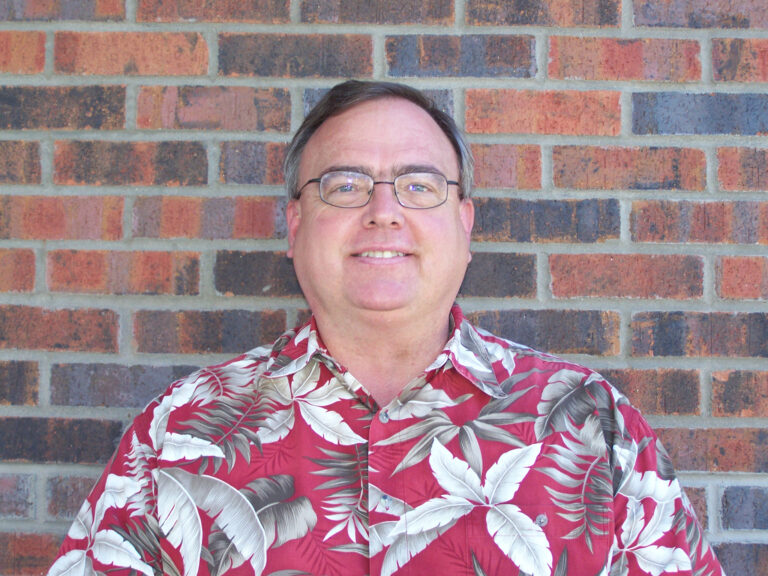
By: Pastor David Grousnick

We all tend to despise people who challenge our cherished myths and kick us out of our comfort zones. The truth is that when Jesus sets about the task of saving us, he has to heal us of any myth or prejudice that is contrary to the spirit of Christ.

Billy Sunday was the Billy Graham of a previous generation. He was conducting a crusade in a particular city. In one of his sermons he said something critical of the labor conditions for workers in that area.

After the service, several prominent businessmen sent a message to him by one of the local pastors. The message was this – Billy, leave labor matters alone. Concentrate on getting people saved. Stay away from political issues. You’re rubbing the fur the wrong way.”

Billy Sunday sent this message back to them: “If I’m rubbing the fur the wrong way, tell the cats to turn around.”

Sunday, February 9th will be a National Day of Prayer.

Okay, not “officially.” Not sanctioned by any denomination or government decree. But there will still be more prayers hurtled heavenward that day than on any other given Sunday.

Superbowl Sunday is actually a very religious day, if you will. People who never darken the door of any church will be praying for a favorite team by player, family members, coaches, investment brokers, and, of course, fans, all over this country.

Remember that one year when “Papa John’s” promised a free pizza to anyone who correctly called the “head or tails” coin toss that starts the game? Half of the people had their prayers “answered.” Half did not.

Sorry. Coin tosses and football games are not the testing grounds for our prayer life. “Hail Mary’s” aren’t the only way to connect with the divine.

“Arrow prayers – “Dear God, please let me pass this math test,” “Dear Lord, please keep the car on the road,” “Dear Jesus, please find me a job,” aren’t really “prayers” at all. They are simply heart-felt and soul-felt pleas.

Prayer is something quite different. Prayer is paying attention to the movement of the Spirit in our lives. Praying is an attitude that embraces amplitude. Prayer elevates us to the portals of eternity and opens us up to the presence of the divine. A prayer-conditioned life is a Spirit-filled life!

Consider the movie titled, Ruby Bridges. It tells the story of Ruby Bridges, a six-year-old African American girl, who was the first person to integrate the schools in New Orleans. Every day, federal marshals escorted her into the schoolhouse because both sides of the sidewalk would be lined with people who were screaming threats.

Robert Coles, a noted Harvard psychiatrist, volunteered his time to work with young Ruby. Every day he would talk with her, trying to help her weather the crisis.

On the news one night, he noticed her walking up the sidewalk and the people were screaming and throwing things, but suddenly she stopped and said something and started backing down the sidewalk. Then the marshals picked her up and took her into the building.

That night, Cole asked her what she said to the marshals.

She said, “I was not talking to the marshals.”

He said, “Yes, you were. I saw you on the news. I saw your lips moving. You were talking to the marshals.” She said, “I was not talking to the marshals.” He said, “Well, what were you doing?”

She said, “I was praying for those people who were hollering at me. I had forgotten to pray, and I was trying to go back and pray for them as I walked to the school building.”

Cole shook his head and said, “You were praying for the people who were screaming at you?”

She said, “Yes, my mama taught me that when people speak mean of you, you pray for them just like Jesus prayed for the people who spoke mean of him.”

You see, when Jesus lives in your heart, you just can’t hate anybody.

Consider making this prayer part of your daily faith routine:

“Our Father, each day is a little life, each night a tiny death; help us to live with faith and hope and love. Lift our duty above drudgery; let not our strength fail, or the vision fade, in the heat and burden of the day.

“O God, make us patient and pitiful one with another in the fret and jar of life, remembering that each fights a hard fight and walks a lonely way. Forgive us, Lord, if we hurt our fellow souls; teach us a gentler tone, a sweeter charity of words, and a more healing touch.

“Sustain us, O God, when we must face sorrow; give us courage for the day and hope for tomorrow. Day by day, may we hold your hand and look up into your face, whatever befall, until our work is finished, and the day is done. Amen.

Francis of Assisi, 1181-1226.

David Grousnick, is the Pastor at the First Christian Church in Artesia.
Future disaster costs shadow state tax bills

0

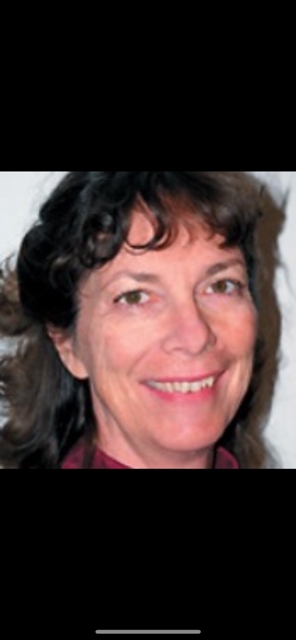
By Sherry Robinson
All She Wrote
 

            Republicans want to get rid of personal income taxes in the state, and they’ve made it their priority for the current legislative session. It’s a big step, but in recent years a surge in oil and gas revenues have fattened state coffers so much that we can think about it.

    “Eliminating the personal income tax will return more than $2 billion a year to New Mexico’s families, without disrupting our public services or tax credits that many families rely on,” wrote House Minority Leader Gail Armstrong, R-Magdalena, in an op-ed.

     Freshman Rep. Elaine Sena Cortez, R-Hobbs, has said she will carry legislation to eliminate the personal income tax, noting that nine states don’t tax personal income.

     You can’t deny the appeal. Wouldn’t we all like to be free of state income taxes?

     But lately the president has lobbed a deal killer into this proposal and the Democrats’ plans to reduce taxes. The whole picture of state revenues just changed.

While touring disaster areas in North Carolina and California, the president said he was thinking about getting rid of FEMA. “It’s very bureaucratic, and it’s very slow,” he said.

He’s got that right.

“I’d like to see the states take care of disasters,” he said. “Let the state take care of the tornadoes and the hurricanes and all of the other things that happen.” That would be faster and cheaper than sending in FEMA. He suggested that Washington might provide money directly to the states.

The way FEMA has operated for decades is that after a major disaster, local officials ask the president to declare an emergency. That ask tells the president that the disaster is beyond local and state governments’ ability to respond, according to an Associated Press explainer. The emergency declaration opens the federal purse and involves FEMA, which can reimburse local governments for rebuilding roads, bridges and public buildings. The agency will also help individuals with short-term needs like food, clothing or a motel room or longer-term help like rent assistance or some money to help rebuild. FEMA will also pay for projects intended to protect the community in the future.

It’s not there to manage disaster recovery or to make disaster victims whole.

As I’ve written previously, from its creation in 1979 to 2003, FEMA was a small, agile, independent agency that responded quickly. After it became a division of the Department of Homeland Security, it became another bureaucratic cog. Decision making, spending and communications bogged down. President Trump criticized former President Biden for not fixing the problem, but none of the presidents have fixed the problem.

Whatever criticism we have of FEMA, we can probably agree that it’s better than nothing. Are states ready to shoulder these responsibilities? I doubt it. New Mexico certainly isn’t. Is it even cost efficient for states to replicate 50 little FEMAs?

Now throw in politics. The president plans to help red North Carolina, which voted for him, but he’s placing conditions on help for blue California, which didn’t vote for him and whose governor he despises. During his first term he held up disaster aid to Puerto Rico and California. The traditional political promise – I’m here to serve you whether or not you voted for me – no longer holds.

How might New Mexico fare? I predict New Mexico will look more like California than North Carolina in terms of the administration’s future treatment.

Returning to the president’s recent comments, the big question is how much the administration is willing to pay states for disaster recovery. The answer so far is, less. Much less. And yet the disasters are getting bigger, and we are even now in another drought.

Until we know more, it’s premature to give up any revenue streams.

Sherry Robinson is a longtime New Mexico reporter and editor. She has worked in Grants, Gallup, the Albuquerque Journal, New Mexico Business Weekly and Albuquerque Tribune. She is the author of four books. Her columns won first place in 2024 from New Mexico Press Women.

Artesia senior key for return to state

0

Mike Smith
Artesia Daily Press
msmith@currentargus.com

Artesia Lady Bulldogs head coach Candice Pollard knows a healthy Hattie Harrison could be a key contributor to the team repeating as district champion and returning to the 4A state playoffs in March.

Artesia won the District 4-4A regular season title last season and made it to the semifinals of the state tournament before being eliminated by Albuquerque St. Pius X, 61-41.

The Lady Bulldogs (8-11) start league play Jan. 31 at Lovington with a healthy Harrison, who was out of the lineup for two games due to a left pinky injury suffered in a game against the Carlsbad Cavegirls Jan. 7.

“I think it was in the second quarter, I think a ball was just passed to me and it may have deflected off a girl’s hand and it hit my hand and somehow managed to break my pinky finger and I was put into a cast just to be cautious and to make sure I was not doing some crazy things to make it worse,” Harrison said.

Pollard was not aware of Harrison’s injury as the Lady Bulldogs lost to the Cavegirls 52-46 in Carlsbad.

“I didn’t know she was hurt until after the game. That really goes to show her maturity,” Pollard said.

The 17-year-old senior had a cast on the injured finger while wearing her uniform jersey during a Jan. 10 home game against Santa Teresa and was in street clothes during another home game Jan. 14 against Chaparral.

“It was sad not being able to play. I’ve played basketball for long I’m so used to being with the girls and playing with them,” Harrison said.

Pollard said the cast was removed Jan. 15 as Artesia embarked on a trip to Albuquerque for the Jan. 16-18 Hope Christian Tournament.

While she was sidelined, the 5-foot-10 senior post and wing player said she was able to run drills but could not dribble with her dominant hand because of the injury.

Pollard said she eased Harrison back into the lineup during the tournament in Albuquerque then started her in a Jan. 21 home game against Roswell. The senior scored two points against the Lady Coyotes in a 57-38 win at the Bulldog Pit.

Harrison scored eight points and snagged two rebounds Jan. 24 in a 79-30 loss at Hobbs.

Harrison said making it to the semifinal round in the 2024 state playoffs was a positive experience for her and her teammates.

“We didn’t make it to the championship, but I think we put ourselves all out there and we played for one another and that’s what’s important,” she said.

Harrison said she’ll stay positive from now until the end of the regular season on Feb. 21.

“I plan on just leading the team,” she said. “One thing I try to strive for is keeping a positive atmosphere. I want to be there for the girls whatever they’re going through. I just want them to know that I’m there and that’s a goal I have.”

Pollard has coached Harrison since she was in ninth grade and said she has grown during that time.

“To say she has matured and grown this year is an understatement,” the coach said. “She has really taken a leadership role. She’s one our team captains. She’s very mature on and off the floor. Very coachable.”

Harrison has elevated her play this season despite the injury, Pollard said, and contributes at both ends of the floor:

“She’s been putting up points, she’s been killing the rebounds … I don’t think there’s anybody in our district that can jump like she can and really clean up those boards around the basket and hopefully get some points around the basket, too. Defensively, she’s hard to shoot over because she can jump out of the gym and block a shot.”

Harrison is a three-sport student-athlete at Artesia High. She participated in volleyball in the fall and once basketball season ends, she will turn her attention to track and field, competing in hurdles and relay races.

Track and field is her favorite sport, she said, “because it’s an individual sport and I can focus on myself and set my own goals and just live by that.”

Harrison plans to attend West Texas A&M in Canyon, Texas, on a track scholarship.

She’s undecided on a college major but her favorite high school subject is science. Her mom is Robbie Harrison, her grandmother is Verna Harrison and she has two siblings, Elliot Harrison and Hollis Harrison-Madrid.

Mike Smith can be reached at 575-308-8734 or email at msmith@currentargus.com.

Southeast New Mexico lawmakers assigned to committees

0

El Rito Media News Services

ROSWELL — Southern New Mexico lawmakers have been assigned to legislative committees as activity at the Roundhouse kicks into high gear.

On Jan. 21, opening day of the session, the 42 members of the New Mexico Senate and 69 members of the New Mexico House of Representatives learned which committees they would be on. There are nine standing committees in the Senate and 14 in the House, each tasked with screening and considering legislation before it goes to the floor for a vote by all representatives and senators.

Committee assignments in the New Mexico Senate are determined by the Senate Committees’ Committee, which is chaired by Senate President Pro Tempore Mimi Stewart (D-Albuquerque), according to Chris Nordstrum, spokesperson for the New Mexico Senate Democrats.

As the committee chair, Stewart appointed a bipartisan slate of members to mete out the assignments.

Brittany Dickerson, spokesperson for the New Mexico House Republican Caucus, said the speaker provides the assignments in the House with recommendations from the minority party.

State Rep. Mark Murphy (R-Roswell) of House District 59 will be on the House Energy, Environment and Natural Resources Committee and the House Commerce and Economic Development Committee.

Murphy, the president of an oil production company, said his position on the Energy, Environment and Natural Resources Committee will allow him to analyze bills related to the oil and gas industry.

Murphy also expressed enthusiasm for the role he will play as a member of the Commerce and Economic Development Committee, which he claimed could help him with efforts to secure additional state funding for the National Championship Air Races scheduled to happen in Roswell later this year.

State Rep. Angelita Mejia (R-Dexter) of House District 58 was tapped for the House Government, Elections and Indian Affairs Committee and for the House, Labor, Veterans and Military Affairs Committee.

House District 54 state Rep. Jonathan Henry (R-Artesia) was placed on the House Energy, Environment and Natural Resources Committee and the House Tax and Revenue Committee.

The top Republican on the House Commerce and Economic Development Committee will be state Rep. Jimmy Mason (R-Artesia) of House District 66, which includes parts of Chaves, Eddy and Lea counties.

Mason also holds a spot on the House Rural Development, Land Grants and Cultural Affairs Committee.

Sen. Candy Ezzell (R-Roswell) of Senate District 32 is now the ranking member, also known as the top Republican, on the Senate Conservation Committee. That panel of lawmakers will consider legislation related to water resources, the environment, natural resources and some issues that could impact the energy industry.

Ezzell will also be on the Senate Education Committee. Democrats hold a majority on all committees, but Ezzell said the Education Committee consists of five Democrats and four Republicans.

Sen. Larry Scott (R-Hobbs) of Senate District 42 will be on the Conservation Committee and be a ranking member of the Senate Health & Public Affairs Committee.

Senate District 42 encompasses parts of Eddy, Lea and Chaves County.

Residents, chamber, and the city work to tame ‘aquatic bloom’ in Pecos River

0

Jake Cooper
El Rito Media

A river algae problem that threatened to sink Carlsbad’s popular Christmas on the Pecos festivities appears to be under control, at least for now.

City officials say measures taken to subdue the burgeoning vegetation, including the use of mechanical harvesters that pull algae out of the water, have reduced the growth to a manageable level.

The harvesters were deployed last fall to combat the heavy algae that reportedly started appearing in the river in July 2022.

Nancy Brantley, who lives along the river on Riverside Drive, said the bloom eventually became “a solid mat across the river.”

Deputy City Administrator KC Cass said the city bought two Weedoo TC Work Series mechanical aquatic weed harvesters for about $175,000 to remove the algae from the water. So far, he said, the city has removed and disposed of 125 dumpsters (about 30 cubic yards each) of the algae.

City officials notified the New Mexico Department of Game and Fish of the problem in 2022, and samples were collected. The New Mexico State University Plant Diagnostic Clinic identified the samples as brittle naiad and Eurasian milfoil, both plants that are considered invasive by the clinic.

A third species, sago pondweed, was identified by Game and Fish in April 2024, according to a letter sent by the city to residents with homes along the river.

The “aquatic bloom” has barbs that attach to swimmers, researchers said. Many have reported that the weeds can easily tangle with the blades of boats.

Brantley said her family stopped boating on the river “because it’s so bad, it sucks up the growth, and then (the motor) gets stopped up and then you’ll ruin your motor.”

‘Acting responsibly’

A diagnostic report from NMSU Plant Diagnostic Clinic said herbicides should not be used. The clinic suggested the city try physically removing the weeds. Cass said the city decided to proceed as the clinic suggested and set out to address the problem without contaminating the water with chemicals from herbicides.

“I think acting responsibly is the way to go,” he said. “We were fortunate to find the people that we did to come and help us. They did a tremendous job to help train us and get some of this stuff out.”

Not only did the bloom affect private boat owners, but it also was on the verge of impacting Christmas on the Pecos, the annual event that features boat tours along the river to view homes decorated for Christmas. The 45-minute boat rides start the day after Thanksgiving and continue until New Year’s Eve.

Sponsored by the Carlsbad Chamber of Commerce, Christmas on the Pecos is one of the chamber’s biggest fundraisers each year. Chamber Chief Executive Officer Chad Ingram said about 15,000 people rode the boats last year, an estimated 75% percent of them from outside Eddy County.

Two Weedoos could be spotted on the Pecos harvesting the algae through early November, clearing the way for Christmas on the Pecos. The harvesters did their job, and the boat rides continued as planned.

Ingram said that although business was not affected by the algae, he felt bad for those who came to Carlsbad over the summer and “probably didn’t have the best experience. I think it affected our local individuals a lot, not being able to get out there.”

Long-term solutions

The machines weren’t the city’s first attempt to combat the algae.

New Mexico Game and Fish permitted the introduction of triploid grass carp into the river to eat the algae, reducing its size and clearing the water. From July 2022 to June of last year, 4,750 carp were released at a cost of $35,750, according to a letter city officials sent to residents.

Cass said that once the Weedoo trims the algae to an acceptable level, the carp eat the plants to keep the bloom at bay. He said the river will be monitored for algae growth.

“We’ll continue to run our boat and cruise five days a week,” he said.

Michael Miller

0

Michael Ray Miller “Mikey” March 13, 1958 – January 19, 2025 Artesia, N.M. – With hearts both heavy and full, we bid farewell to Michael Ray Miller, known to all as “Mikey”, who left us on January 19, 2025, at the age of 66, surrounded by the love of his family and friends at home. Born in the sun-drenched landscapes of Artesia, New Mexico, on March 13, 1958, Mikey was the beloved son of A.K. and Margie Miller.

He danced into the next world, joining his parents, his cherished daughter Suzie Quezada, his great-grandson Atlas, his brothers Joe, Timmy, and Danny.

Honorary pall bearers are: Tito Quezada, Matthew Quezada, Cal Leavitt, Jett Leavitt, Anthony Havens, Duston Spearman, Blake Milligan, Kevin Lewis, Justin Levario, Guy Stevenson, and Robby Miller.

On October 29, 2009, Mikey found the love of his life in Jan ’Moore’ Miller, embarking on a journey filled with laughter, love, and countless adventures. He leaves behind his heart’s partner, Jan; his daughters Stephanie Domer (Shawn), Tosha Wragg (Jason), Marissa Leavitt (Cal), and Sheena Smith (Zach); his son Chad Miller (Cayla); his son-in-law, Tito Quezada; and a constellation of grandchildren – Ashlynn, Kaelynn, Jett, Matthew, Charli, Evie, and Grayson – and great-grandchildren, Draven and Aurora; his brother Steve Miller and his sister in law, Karen Miller, along with a sea of friends who felt like family. Mikey was more than just a man; he was a beacon of joy, with a heart as big as the New Mexico sky.

His quick wit and the one-of-a-kind nicknames he gave everyone painted our lives with laughter. An adventurer at heart, you’d find him under the vast outdoors, fishing, hunting, or roaring through the desert in his Jeep or dune buggies. Inside, he’d lose himself in the timeless tales of Westerns, but his heart truly belonged to “The Lion King”, which he considered “the best movie ever made!” His love for the color purple was as vivid as his personality, bringing a splash of color to every moment. Mikey’s departure leaves a vibrant void, but in our hearts, he’ll forever be the man who loved without measure, laughed with abandon, and lived life in full, glorious color. We take solace knowing he’s now painting the skies of heaven with Suzie, their laughter echoing through eternity. #HUH-What’d you say?

Sammy M. Marquez

0

Sammy M. Marquez, 79, passed away surrounded by his family on January 23, 2025 in his hometown of Artesia, NM.
Mr. Marquez was born on September 17, 1945, to Antoclo and Luz Marquez in Artesia, NM. He was a proud veteran who served in the United States Army. Sammy enjoyed fishing, camping, watching football and he loved to spend time with his all of his family. Sammy liked to work on cars and small engines and his children fondly remember helping him rebuild a car engine on the kitchen table.
Sammy is preceded by his parents, two brothers Ike Marquez and Andy Marquez, two sisters Cecelia Navarrette and Lupe Romero and one great granddaughter Liliana Rivera.
Those left to cherish his memory are his daughter Regina Rivera and her children Ramon, Joshua, Christopher and Ty, daughter Diana Marquez Williams and her children Ashley, Gabriella, Oran and Colton, daugher Cassandra Marquez and her children Brianna, Keesha, Miranda and Erica and son Sammy Marquez Jr., and his wife Amber and children Trey and Isaiah, two brothers, Tony Marquez and wife Gracie, Rudy Marquez and wife Viola and one sister Virgie Velarde and husband Robert. Sammy also leaves behind 12 great grandchildren.

Artesia High bowlers complete undefeated regular season

0

Daily Press Staff Report

In looking to complete an undefeated run through the New Mexico High School Bowlers Association regular season, the Artesia High School bowling team entered an unprecedented five teams into the Advanced Division of the season ending tournament at Starlight Lanes in Bernalillo.

“It is a testament to our bowlers that we have twenty-two bowlers averaging over 151 in tournament play and that they all have the goal of competing at the highest level,” said head coach Ken Clayton.

With an advanced division of 16 teams set to compete, and Eldorado High having set the bar at 3,095 points in the morning, the Bulldogs had their work cut out for them. Game one of qualifying saw four-time champion Artesia No. 2 jump to the lead with a 1,047, followed by Artesia No. 1 with a 967. Game 2 had Artesia’s first team storm back with a tournament high 1,074 for a two-game total of 2,041 and a 110-pin lead over Artesia No. 2 heading into the Baker game format of the tournament.

Leading the Artesia No. 1 effort was junior Payton DeMerritt with games of 245-227 for a 472 series, followed by Senior Hagen Murph with 246-223 and his 469 series. Adding to the Artesia No. 1 scoring were Ayden Gomez 245-171-416 series, Brent McIntire 211 and Kambry Collins 182.

Artesia No. 2 scoring was led by tournament leader, Mason Jeter with games of 245 and 229 for a team leading 474 series. Brenden Depew rolled 226-169-395, Chase Collins 210-182-392, Damian Lopez 194 and Jace Miles 172 to complete the scoring for Artesia No. 2.

During the Baker games Artesia No. 1 averaged 205 for seven games including games of 323-230-226 and 211 to compile a baker total of 1441. Artesia #2 rolled baker games of 231-223-201 and 192 in averaging 190 for their seven-game block of 1335.

In what became the third one-two finish in the past three tournaments and third of the season, Artesia No. 1 brought home the tournament title and helped the Artesia High School bowling team complete a strong undefeated regular season.

Artesia No. 4 and Artesia No. 3 finished seventh and ninth respectively in a 16-team advanced division.

“The improvement of our bowlers this season was amazing”, said Clayton. We had bowlers that had never bowled before October rolling 200 games and bowling tournament games 50 pins over their average. The story of Artesia bowling goes well beyond the advanced division.”

Scoring from Starlight Lanes includes Talyn Pacheco 218-177, Ayden Huffman 203, Destiny Powell 200, Darius Mendoza 190, Maggie Morris 183, Jody Roberts 182, Axel Hartley 179-170, Adam Longoria 179, Gael Ruiz 177-169, Edwin Villarreal 172, Sophie Kitchen 168, Ayden Dean 164, Ricardo Huerta 163 and Diego Molina 154.

The Bulldog bowlers now travel to Silva Lanes in Albuquerque for the state championship tournament on Feb. 1.

Lawmaking session opens with series of crime, public safety bills

0

Adrian Hedden
El Rito Media

Crime and mental health took center stage as New Mexico lawmakers convened Jan. 21 in Santa Fe, with several bills already introduced in the opening days of the 60-day legislative session.

In the months leading up to the session, Gov. Michelle Lujan Grisham unveiled a series of policy priorities related to crime and public safety throughout the state. The topic was positioned to be Lujan Grisham’s signature issue during the last two years of her final term as governor.

To that end, the governor hosted town meetings in Las Cruces, Albuquerque, Espanola and Alamogordo, along with several listening sessions in rural areas such as Carlsbad, Farmington and Clovis.

During her Jan. 8 town hall meeting at the Tays Center in Alamogordo, Lujan Grisham said she was targeting stronger penalties for criminals possessing guns while committing crimes and also looking to strengthen the state’s ability to force defendants into treatment if they are deemed incompetent to stand trial.

So far, the push for public safety reform appears to be working with bills designed to tackle criminal penalties and behavioral health reforms emerging in both the House and Senate.

Here are some of the key public safety bills and initiatives to watch during this year’s legislative session.

Criminal competency

House Bill 4, sponsored by Rep. Christine Chandler (D-43) of Los Alamos, would require that a report from a psychiatric professional regarding a defendant’s mental competency to stand trial also include an opinion as to whether such a defendant qualifies for involuntary commitment to a psychiatric facility.

The bill was referred to the House Consumer and Public Affairs Committee for its first hearing.

Fentanyl exposure as child abuse

Sponsored by Rep. Andrea Reeb (R-64), House Bill 136 would allow defendants to be charged with child abuse if they were believed responsible for exposing children to fentanyl. State law already allows the charge to be assessed for exposing children to methamphetamine use.

Abuse of a child not resulting in death is considered a third-degree felony for the first offense and a second-degree felony for second and subsequent offenses. Abuse resulting in death is a first-degree felony.

HB 136 was yet to be assigned to a committee.

Behavioral health planning

Senate Bill 3 would require the Administrative Office of the Courts to divide the state into behavioral health regions, seek public input from those regions and develop regional plans to address behavioral health issues in each of them.

SB 3 was sponsored by Sens. Peter Wirth (D-25), Mimi Steward (D-17) and William Sharer (R-1), and assigned to the Senate Health and Public Affairs Committee.

Regional plans will be made up of four phases with no more than five state-funded priorities per phase, identify local resources and include timelines to develop services and plans to obtain federal funding.

The bill also would require the Office of the Superintendent of Insurance to provide a set of standards for behavioral health services included in the regional plans, task the Legislative Finance Committee with evaluating costs, and specify that any funds appropriated under the bill must be guided by the regional plans.

Public safety and justice system funds

Senate Bill 2 was sponsored by a bipartisan group of senators: Benny Shendo (D-22), George Munoz (D-4) and David Gallegos (R-41). The bill proposed several appropriations based on the regional plans required by SB 3, totaling more than $100 million for multiple state agencies for public safety and health care initiatives.

SB 2 was referred to the Senate Health and Public Affairs Committee and is awaiting a hearing.

Here are the agencies that will be funded by SB 2.

Administrative Office of the Courts: $8.7 million for grants to local districts to help with court case management and to map out regional needs across the state.

Health Care Authority: $60.5 million to offer grants for local communities to fund regional treatment facilities, both inpatient and outpatient.

Corrections Department: $1.3 million for grants to support services for inmates discharged from the prison system.

Department of Public Safety: $5 million for local law enforcement grants to fund mobile crisis response, recovery and outreach equipment and vehicles. Another $11.5 million would be appropriated to Health Care Authority to staff vehicles and response teams.

University of New Mexico: $1 million for outreach to the homeless, including mobile health units, treatment and telemedicine. Another $1 million would go to the Department of Health to fund its outreach for the homeless.

Department of Finance and Administration: $48 million to create a program to expand housing service providers’ programs dealing with substance abuse, mental health treatment and transitional housing.

GOP leaders critical of Lujan Grisham as session gets underway

0

Adrian Hedden
Carlsbad Current-Argus
achedden@currentargus.com

New Mexico Gov. Michelle Lujan Grisham described a state in need of reforms to address crime, homelessness and climate change during her annual State of the State speech Jan. 21 in Santa Fe.

Lujan Grisham delivered her remarks at the start of the 2025 Legislative Session, vowing to support a multitude of initiatives and calling for lawmakers to introduce and pass bills to advance the governor’s multiple agendas.

The session will run for 60 days, until March 22, with a Feb. 20 deadline for introducing legislation. The governor will have until April 11 to sign bills into law after they are passed by the House and Senate – or “pocket veto” them by taking no action.

During her speech, the second-term governor – who is ineligible to run for reelection in 2026 due to term limits – focused largely on public safety, including initiatives to respond to widespread crime, homelessness and poverty.

“That’s why I’m proposing new initiatives to tackle our crime problem, expand affordable housing, protect at-risk children, improve our health care system and more,” she said. “I look forward to working with lawmakers over the next 60 days to create an even better New Mexico.”

Criticism of the governor was swift following her speech with New Mexico Republican Party Chair Amy Barela questioning a pattern she described as the administration overspending on programs and public services that have so far failed to diminish a variety of problems facing the state.

“While we acknowledge the governor’s sentiment that New Mexicans deserve better, her same approach of throwing more money at the many issues in our state has not produced results,” Barela said in a statement following the speech.

“Over her 6-year tenure, the state budget has increased by approximately 73%, yet critical areas like education and child welfare remain last in the nation.”

Republican leaders in the Legislature were also critical of the governor’s policies, but said they were eager to begin tackling crime and a “revolving door” of criminals being arrested and released back into society to reoffend.

Rep. Alan Martinez (R-23), who serves as minority whip in the House, said Republicans believed the answer to repeat offenders was bringing back cash bail after the practice was ended in New Mexico by voters via a constitutional amendment in 2016.

Last year, the GOP also attempted to crack down on repeat offenders in Senate Bill 122, which would have prevented pretrial release for those charged with crimes deemed “serious violent offenses” or felonies when a firearm was used.

That bill died before receiving a committee vote.

“The Governor is right when she says removing repeat offenders from our streets is just common sense,” Martinez said. “House Republicans have a solution to reinstate cash bail to address this problem head-on. We are hopeful that this will open the door to conversations about real tough-on-crime bills with our Democrat colleagues in the House.”

Barela was also critical of the governor for what Republicans say is her lack of support for the oil and gas industry, which is largely centered in New Mexico’s southeast Permian Basin region and credited with supplying about $13 billion in state and local revenue in the last year.

Barela slammed the governor for policies the GOP chairwoman said would stymie the energy industry’s growth without making a measurable impact on pollution and climate change.

Lujan Grisham called for legislation during the ongoing session to reform the state’s Oil and Gas Act, a law that governs several facets of how the industry works. Democrats in recent sessions introduced legislation to add language that would impose a one-mile setback between oil and gas sites, homes, hospitals and other sensitive areas while also increasing fees paid to operate on state land.

Democrats have introduced bills in the early days of the session to prohibit certain natural gas emissions in areas identified for having “high ozone” or smog levels, such as the Permian Basin, and to establish “children’s health protection zones” where oil and gas development near schools would be banned.

A resolution introduced by Democrats would add “environmental rights” to the state’s constitution, a move critics worried could expose New Mexico to future lawsuits and block development projects in several sectors.

The governor had yet to publicly take a stance on those bills, but did support increased fees in the Oil and Gas Act and legislation to support the “Strategic Water Supply” – a past proposal by Lujan Grisham to allow the state to buy wastewater from the oil and gas industry for reuse in other sectors.

“While the governor briefly acknowledged the record oil and gas revenues, she once again failed to thank the oil and gas industry for contributing nearly half of our state’s budget while proposing legislation that threatens to eliminate this vital sector by 2050,” Barela said.