Home Blog Page 178

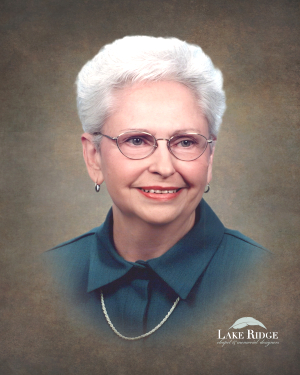
Robbie Donaldson

0

Robbie Joye Echols Donaldson, beloved wife, mother, grandmother, and great-grandmother passed away peacefully on January 16, 2025, in Lubbock, Texas at the age of 92.

Robbie Joye was born on September 7, 1932, in May, Texas, to George Washington Echols and Cynthia Brooks Echols. Always an excellent student, she attended school in Gorman, Texas, and presented graduation speeches at both her eighth-grade and high school graduation ceremonies. Robbie Joye married Glenn Sterling Donaldson on December 30, 1950, in Eastland, Texas. They recently celebrated their 74th anniversary. She is survived by her husband Glenn, sons Michael Donaldson and Larry Donaldson (Nancy)and daughter Debra White(Greg); grandchildren Shane Donaldson (Gaby); Amy Champion (J.D.); Allison Harrison (T.J.); and Annalisa White; great-grandchildren Blaze; Brooks; Tristen; Jonah; Piper; Hunter; Sterling; Stetson; Aubrey; and Maddie. Also, surviving Robbie Joye is her sister Dorothy Sparks of Midlothian, Texas.

Gramma will be remembered by her family for the wonderful meals she lovingly prepared for them. She was known for her compassionate nature and the loving kindness she imparted on her loved ones. Her favorite Bible verse was Numbers 6:24-26, The Lord bless you and keep you; the Lord make his face shine on you and be gracious to you; the Lord turn his face toward you and give you peace.

The Donaldsons lived for many fun-filled years in Artesia, New Mexico across the street from Bulldog Bowl. A graveside service will be held at a later date at Simpson Cemetery near Gorman, Texas. Memorial gifts may be made to your favorite ministry.

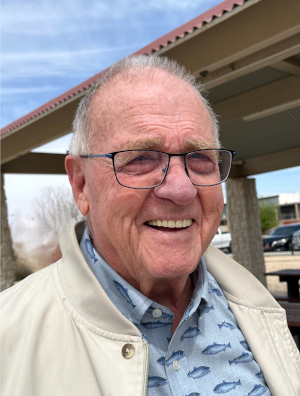
Talmadge Tally Kenneth Murphy

0

Services are scheduled for 2 p.m. Thursday, January 16, at Hermosa Church of Christ for Talmadge Tally Kenneth Murphy of Artesia, New Mexico. Services will be officiated by Mike Prude. He will be buried at Woodbine Cemetery in Artesia, New Mexico.

Mr. Murphy, 86, died on Sunday, January 12, 2025, at Artesia GoodLife.

Tally was born on September 21, 1938 in Ridgely, Tennessee to Kenneth and Ella May Murphy. He graduated from Artesia High School in 1956. He met the love of his life, Janice Jean McReynolds at Harding University. They were married on May 25, 1958, in Morrilton Arkansas. They came to Artesia in July of 2012 from Jal, New Mexico. They enjoyed 58 years of marriage before her passing in 2017.

Tally was known first and foremost as a Christian. He was proud to be called Daddy, Papa, Grandpa and Great Papa. He loved to serve the Lord by preaching and serving as an elder in the church. He loved to teach adult bible classes, and lead singing in worship. Tally worked most of his career for Montgomery Ward, until he moved to Jal, New Mexico. He operated his pest control business in both Jal and Artesia, until he retired in 2018. Tally never knew a stranger and had an amazing gift of being an encourager to everyone he met.

He was preceded in death by his parents, a brother Thomas Murphy, his wife Jan, a daughter Cindy Murphy, and grandson Edwin Lee Mitchell.

He is survived by his brother Glenn Murphy and wife Rita, son Ken Murphy and wife Amy of Artesia; daughter Kerrie Mitchell and husband Eddie of Hobbs, N.M.; grandchildren Cody Mitchell, Amanda Murphy, Melissa Mitchell and Tiffany Murphy; great-grandchildren Norah Mitchell, Lyla Mitchell, Makayla Draper and Daniel Hardy.

Memorial donations may be made to Colorado Christian Services, who help build families through adoption at www.christianservices.org.

We would like to express our sincere appreciation to all the loving staff of the Artesia Goodlife who made our daddy a part of their family.

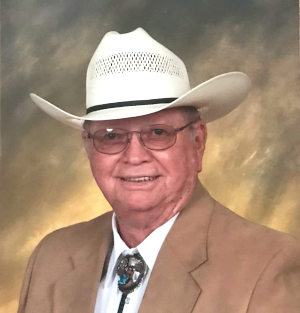
Wesley Alton Menefee

0

Wesley Alton Menefee was born on May 25, 1934 in Hagerman, New Mexico to Howard Robinett and Florene Lankford Menefee. Wesley was the oldest of four children and was lucky enough to live on the same farm outside of Hagerman from birth until the time he left for college.

Wesley married Bobbie Beth Ballard on June 27, 1954. He and Beth moved to Las Cruces for Wesley to attend New Mexico College of Agriculture and Mechanical Arts (later New Mexico State University) where he graduated with a Bachelors of Science in Animal Husbandry.

After graduating, Wesley and Beth moved back to the Pecos Valley where Wesley worked forthe Dexter’s Farmers Co-op and the Dexter gin until he was called into the service in 1957.Wesley was stationed at Ft. Carson, in Colorado Springs, Colorado then at Ft. Ord in Monterrey,California for basic training. He was then sent to Augsburg, Germany and spent three months inLebanon.

After returning to the states Wesley farmed 80 acres west of Dexter where he started by borrowing his parents equipment until they were ready to buy more land. After their son Dwight was born in 1959 and their daughter Paula in 1962 they decided it was best to move to an area where they could find more land, despite loving the town of Dexter and the people there.

In 1964 they bought a farm in the Cottonwood area and their son Ross was born. They settled into the Cottonwood area where they loved their neighbors, growing especially close to Bob and Jo Mayberry and Cecil and Jan Conklin.

Wesley bought and leased additional farms and a ranch over the years, growing a variety of crops including alfalfa, vegetables, cotton, and raising sheep and cattle. Wesley was a pioneer for efficient water usage and dedicated much of his life to studying proper irrigation usage and serving on water conservation boards. He was the first farmer in the Pecos Valley to install a sprinkler system for crop irrigation purposes.

In 1990, Wesley and Beth moved to Artesia where Wesley started driving north, south, east and west of town to take care of the cows, ranches and farms. Wesley retired from active farming in 1999 and built a custom horse trailer with living quarters. He enjoyed trail riding all over the Southwest. He took one of the farms and developed and sold the Meadowview Estates Subdivision street by street, lot by lot along south 13th Street and Tumbleweed.

Wesley was an active member of the community where he was a member of First Methodist Church Artesia where he served on several committees. He served on the Eddy County Fair Board, Eddy County Agricultural Community committee, Central Valley Soil & Water Conservation Board of Directors, Cottonwood-Walnut Watershed Board of Directors, Cottonwood Volunteer Fire Department and Pecos Valley Artesian Conservancy District.

Wesley enjoyed spending time with family, traveling in their motorhome, trail riding, playing solitaire and dominoes, and teasing his six grandkids to educate them. Overall, he was a lifelong advocate for agriculture and the western lifestyle.

He is survived by son Dwight and his wife Terri of Cottonwood, New Mexico; daughter Paula and her husband Mike Nuanes of Rio Rancho, New Mexico; and their son Ross and Lisa AnglinBurris, of Cottonwood, New Mexico.

His legacy will continue to live on in he and Beth’s six grandchildren: Seth Dwight Menefee and his wife Johnna of Cottonwood, New Mexico; Owen Wesley Densford of Orange County, California; Tad Hollis Menefee of Cottonwood, New Mexico; Joy Treva Hendrix and her husband Cody of Cottonwood, New Mexico; Logan Rae Smothermon and her husband Tucker Smothermon of Lubbock, Texas; and Kandace Lea Menefee of Lubbock, Texas; as well as his three great-grandsons, Haven McCoy Hendrix, Harvey Chisum Hendrix, and Rush Everett Menefee all of Cottonwood, New Mexico.

He is also survived by sisters Sharla Hamilton and husband Don, and Linda Kay Jones and husband Barry.

Wesley was reunited with Beth in heaven on January 7, 2024.

Services will be held on Monday, January 13 at 2 p.m. at First Methodist Church in Artesia. If you wish to order flowers for the service, the family requests that all orders go directly to SonFlowers in Artesia, NM.

Donations in Wesley’s honor can be made to First Methodist Church in Artesia or the Cystic Fibrosis Foundation.

The pettiness has been unleashed. President Donald Trump is back.

0

By: Mary Sanchez

He has been emboldened by what he’s misreading as a mandate to commit constitutionally reckless, irrational, and simply cruel actions concerning immigration.

The impact of one Trump decision began playing out at the southern border, as the president was being served his first diet cola during an inaugural luncheon. The nondescript CBP One app, a service offered by the U.S. Customs and Border Protection, was canceled.

The app began under the Biden administration for use on mobile devices. It allowed migrants outside of the country to request an appointment with U.S. immigration authorities at one of eight ports of entry along the U.S.-Mexico border.

If approved, migrants could enter temporarily the U.S. as they await further hearings and decisions before an immigration judge.

Within minutes of Trump taking the oath of office, his administration promptly canceled these appointments. Families at the border, ready for their long-awaited appointments, reportedly were confused and despondent.

Some of them had spent months crossing dangerous lands. Some had been robbed by gangs and suffered violence just to see their chance of even speaking with an immigration official crumble.

The app wasn’t a perfect solution, despite its use to schedule about 1,400 appointments a day. There are backlogs in the immigration courts, and a lack of officers at the border to hear preliminary cases.

But the app did help to organize people. It was part of an effort to create a process for migrants to follow.

Many U.S. voters often remark that they would be fine with legal immigration as long as newcomers followed the legal procedures. When pressed further, they tend to think that means asking migrants to wait their turn, fill out forms, undergo vetting, and pay fees.

Inherent in such comments is an assumption that we have a fluidly functional immigration system – and that anyone who gets branded as “undocumented” must be a conniving criminal seeking to evade this non-existent well-oiled system.

The app didn’t grant anyone legal rights, but it did create much needed structure, a virtual line for people to wait in.

One of the most common uses of the app were migrant requests for asylum. Again, using it didn’t grant anything beyond an initial meeting, an orderly way to apply.

Asylum is not granted swiftly or frivolously. People must prove they were persecuted in their native countries, undergo extensive vetting, be sponsored, and establish credible fears they have if repatriated.

Trump stomped on that sliver of hope. In his inauguration remarks, he railed against those same migrants, raising his usual claims that they’re murderers and rapists who just got released from prisons from around the globe.

The contention is nonsense, another Trump fabrication.

Mexico quickly stepped up. It said that some migrants can legally wait there, for now, as their previously set cases play out in U.S. immigration courts.

Americans salivating at the prospect of immigrants being driven from the U.S. will likely be disappointed to learn that much of what Trump brags about, will not be feasible.

He wants to end birthright citizenship by executive order, but that matter has been litigated and upheld by the U.S. Supreme Court.

He says that he wants to remove millions of undocumented immigrants. The logistics of doing so – the manpower, the chartered flights, the funds – are where Trump’s dream falls apart.

Federal immigration agents already remove hundreds of thousands of immigrants annually, often after they’ve served time in prison for violent offenses. Most voters don’t know that, however.

So Trump likely will brag that this standard practice is of his own doing, and that it’s brand new.

Countries with which the U.S. has fractured diplomatic relations, like Venezuela, make this difficult. The U.S. can’t send migrants to countries where those international flights won’t be allowed to land.

That’s just one factor that people need to know.

Media, civic leaders, politicians, and influential people must continue building facts around the utterances and actions of Trump. They should address real world outcomes and complications without adding to the trauma that many immigrant communities are feeling.

The cancellation of the CBP One app is a small change.

But be clear about the intention: Trump and many of his handpicked staffers don’t want legal migration – they want zero migration.

Chaos and cruelty, along with the hope that foreigners will simply give up and never come or leave, is the point.

Readers can reach Mary Sanchez at msanchezcolumn@gmail.com and follow her on Twitter @msanchezcolumn.

(C)2025 Mary Sanchez. Distributed by Tribune Content Agency, LLC.

Amnesia

0

By: Pastor Ty Houghtaling

What happens when we get really alarmed? We forget things. What happens when our worst fears start to come to life? We forget things. In Sunday School, we are working through the Exodus story. The Hebrew of Old leave Egypt and witness God’s miraculous works. Yet, time and time again, they grumble and complain against God. Why would they consistently seek to go back to Egypt and to slavery? It seems that they could not see through their current crisis; they forgot how God had provided for them in their last crisis.

This “forgetting what God has done” is part of the human experience. It is most prominent when we face some trial or struggle. It also happens when we let fear cloud our memories. It is as if fear creates some weird form of spiritual amnesia. When we become frightened, looking at the storm or fearfully anticipating the pain and struggle, we forget that God was faithful in our previous fears. His faithfulness before should be enough proof of His future faithfulness. In Matthew 13:1-23, Jesus tells a parable of a farmer sowing seed. “Some fell… some fell… and yet other seed fell…” and in each case the seed either produced fruit or it never grew into something productive for various reasons.

One section of seed never grew because it’s roots never developed. Jesus says of this seed, “But since they have no root, they last only a short time. When trouble or persecution comes because of the word, they quickly fall away.” (Matthew 13:21). Trouble or persecution will always lead to a choice for the Christian- to remember God and His faithfulness or let fear produce spiritual amnesia. The Bible is full of various scriptures that challenge us to remember the faithfulness of God.

There are Old Testament verses echoing this sentiment and there are New Testament scriptures saying the same thing. When the world hits us, and it will hit every one of us in some way or another, may God find you and I standing with confidence on His promises and on His faithfulness. What He has done in the past to rescue us, He will do again. He never fails; that changes everything when we are facing our fears.

Ty Houghtaling is the Pastor at the First Baptist Church in Artesia.

Holly Frontier-Sinclair agrees to $172M settlement at Artesia refinery

0

Adrian Hedden
Carlsbad Current-Argus
achedden@currentargus.com

A $172 million settlement was reached by the operators of the Navajo Refinery in Artesia, the federal government and New Mexico state officials to resolve multiple air pollution violations the agencies reported at the facility.

Air pollution emitted by the refinery led to a $35 million civil penalty to be paid in equal shares to the U.S. and the state of New Mexico by refinery owner HF Sinclair Navajo.

The company was also tasked with taking steps valued at an estimated cost of $137 million to comply with federal and state air quality rules.

“HF Sinclair is committed to safe and compliant operations of the Artesia, New Mexico refinery and being a valued member of the community,” read a statement from the company. “We have taken appropriate actions, including investing in capital projects and implementing enhanced monitoring, and will continue to do so to meet our compliance obligations.

The company said it intended to run the refinery in compliance with federal and state law, refining crude from throughout the region.

“We have additionally worked diligently and cooperatively with the government over the past few years and are pleased to have resolved this matter,” the statement read. “We look forward to the facility playing a key role in refining Permian Basin crude and serving the New Mexico, Arizona, and West Texas region for many years to come.”

The emissions were discovered during a 2019 joint investigation by the Environmental Protection Agency and New Mexico Environment Department and reported to the U.S. Department of Justice as violations of the Clean Air Act, according to a Dec. 17 justice department news release.

The settlement agreement was submitted to U.S. District Court for the District of New Mexico for approval following a 30-day comment period the justice department had yet to schedule as of Tuesday.

The agencies estimated that if implemented, the actions in the settlement would curb 180 tons per year of air pollutants such as benzene, along with 2,716 tons per year of volatile organic compounds, which form ground-level ozone – or smog – when combined with sunlight.

Another 51 tons per year of nitrous oxide and 31 tons per year of sulfur dioxide would be cut from the refinery’s emissions under the settlement, read the news release.

The Environmental Protection Agency estimated the reductions to be the equivalent of 97,551 tons per year of carbon dioxide emissions.

HF Sinclair was also required to install and maintain 10 real-time air pollution monitors along the refinery’s fence line, and six others to be placed around Artesia to measure emissions from the facility and make the results available online to the public. The total cost of the monitors was $1.8 million.

“Today’s action not only obtains civil penalties — it forces the Artesia Refinery to invest in a number of projects to benefit our state, including improving controls for cancer-causing benzene emissions and other pollutants that infringe on New Mexicans’ right to breathe clean air,” said James Kenney, New Mexico Environment Department cabinet secretary.

Other violations of state regulations governing refinery equipment and operations were found at the site, including flaring – the burning of excess natural gas – wastewater, storage vessels, leak detection and repair.

The company will also install a flare gas recovery system, upgrade its wastewater system to reduce benzene in wastewater, install geodesic domes to serve as storage vessels to capture emissions and increase monitoring for leaks and their repairs.

“The fence line community in Artesia has lived with the burden of benzene and VOC emissions for many years,” said Earthea Nance, regional administrator at the Environmental Protection Agency. “This settlement is an overdue step in bringing them some relief from the potential health effects of these pollutants.”

Trump inaugurated as 47th U.S. President

0

Adrian Hedden
Carlsbad Current-Argus
achedden@currentargus.com

Donald Trump was officially sworn in as president of the United States during a Monday ceremony at the U.S. Capitol Rotunda, igniting the passions of New Mexico politicians on both sides of the aisle.

Democrats worried that Trump, inaugurated for a second term after defeating former Vice President Kamala Harris in last November’s election, could roll back progress they believe was made by Democratic President Joe Biden during Trump’s four-year absence from the White House.

Trump was first elected president in 2016, defeating former-Secretary of State Hillary Clinton, but then lost to Biden in the 2020 election. Trump’s comeback began as he secured the GOP nomination in early 2024 but a rematch with Biden failed to materialize when the incumbent president dropped out of the race weeks before Election Day and Democrats nominated Harris as their standard-bearer.

Republicans, emboldened by the win in November, hailed Trump as a president they said would usher in a new era of American prosperity, energy production, and security at the U.S.-Mexico border.

Amy Barela, chair of the Republican Party of New Mexico, said Trump’s policies would mean “higher take-home pay, safer streets and lower grocery bills” for New Mexicans, along with cheaper gas prices paid at the pump.

“President Trump’s policies are focused on putting Americans first, and we are witnessing promises made and promises kept once again,” Barela said in a statement. “The sense of unity and purpose at this inauguration is a testament to the American spirit. Together, we are turning the page to a chapter filled with renewed hope and prosperity.”

That optimism was shared by Sen. Bill Sharer (R-1), Republican leader in the New Mexico Senate, who pointed to Trump’s campaign promises to support domestic oil and gas production. New Mexico is the No. 2 oil-producing state in the U.S. after Texas.

The two states share the Permian Basin in southeast New Mexico and West Texas, while Sharer’s district represents parts of San Juan County in northwest New Mexico – the state’s other key fossil fuel region.

“A majority of Americans made their voices heard when they elected President Trump and his vision to secure our southern border, restore economic stability, and unleash our country’s full ability to produce natural resources domestically,” Sharer said. “These top priorities will be especially beneficial to all New Mexicans.”

U.S. Sen. Ben Ray Lujan, D-N.M., who attended the inaugural ceremony, voiced reservations about what a Trump presidency could mean for New Mexico, and said he would work in Congress to hold the president and his administration accountable for “injustice.”

“As the new administration takes office, my work for New Mexico remains the same, and I will hold the administration accountable when I see injustice,” Lujan said. “These next four years will undoubtedly present challenges for the American people, but New Mexicans can rest assured that I’ll always be a strong voice for our state.”

The New Mexico Democratic Party issued a statement arguing Trump’s policies would be chosen by “billionaires” and special interest groups and violate human rights in favor of a conservative agenda.

That means cuts to healthcare and social security and eliminating the right to U.S. citizenship for children born in America to immigrant parents, along with tariffs that will raise costs for consumers and national policy that could alienate U.S. allies abroad, read the statement.

“Throughout the Trump presidency, New Mexico Democrats will be here to speak out when he puts corporate interests first, abuses his presidential powers, and makes disastrous economic choices,” the statement read.

County gives Mark Cage a $55K raise as undersheriff

0

Adrian Hedden
El Rito Media
achedden@currentargus.com

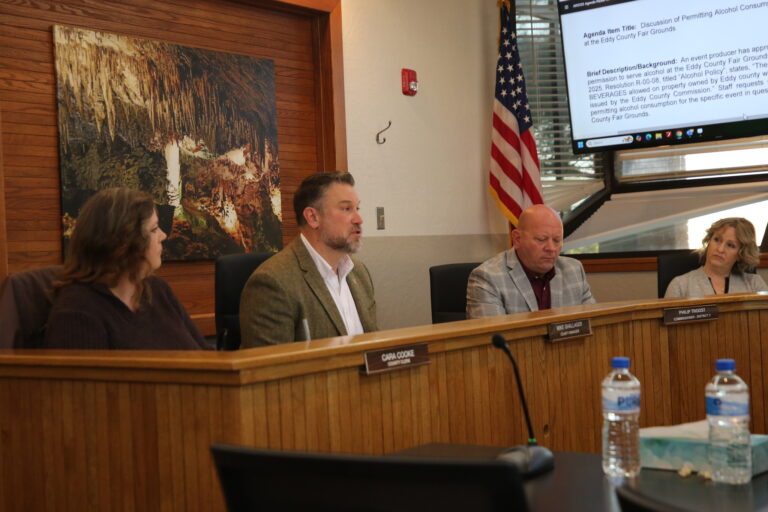
Less than a month into his new job as undersheriff, former Eddy County Sheriff Mark Cage was awarded a 47% pay raise by the County Board of County Commissioners.

All five commissioners voted in favor of the increase at their Tuesday, Jan. 21, meeting, hiking the undersheriff’s annual salary nearly $55,000 from $114,254 to $168,850.

The raise was proposed by Sheriff Matt Hutchinson, who assumed the office earlier this month after being elected in the November 2024 general election. Cage, who was ineligible to run for re-election as sheriff due to term limits, and Hutchinson swapped jobs when the new sheriff was sworn in Jan. 7. Hutchinson was undersheriff when Cage had the top job.

During his presentation before the commission ahead of the vote, Hutchinson, whose salary is $153,500, said that Cage’s experience as sheriff should justify higher pay.

The proposal came about a month after county commissioners voted to increase pay for the sheriff, commissioners and county treasurer. The commission was empowered to do so by New Mexico Constitutional Amendment 4, which the state’s voters approved in the general election last year.

Passage of the amendment transferred authority for setting salaries for the county’s elected officials from the state Legislature to county commissioners.

Under the new pay scale, the county sheriff’s annual salary almost doubled from $78,000 to $153,500; the country treasurer’s salary jumped from $75,000 to $129,000; and commissioners granted themselves an $18,500 a year increase from $26,000 to $44,500.

Hutchinson argued that Cage, who served two four-year terms as Eddy County sheriff, brought with him to the post knowledge of the inner workings of the sheriff’s office. He said the undersheriff manages day-to-day operation of the agency, all personnel issues and can sign any documents the sheriff can sign.

The Eddy County Sheriff’s Office has 78 sworn officers and about 14 to 15 civilian employees, Hutchinson said. When fully staffed, the agency would have 100 personnel. District 5 Commissioner and commission chair Sarah Cordova said this made the sheriff’s office the county’s largest department.

Hutchinson also pointed to salary ranges from area “executive” law enforcement agents such as the Carlsbad chief of police – about $150,000 to $164,000 – and the Lea County undersheriff, set at $144,000 with annual increases.

“I’m wanting to show that Eddy County currently has an undersheriff with a vast amount of experience, coming in from sheriff,” Hutchinson said. “This (pay increase) is market value for our area.”

Eddy County Manager Mike Gallagher said the county should reevaluate all its staff positions, potentially offering additional raises to department heads and employees in the future.

“What you’re seeing here is the need to have competitive salaries for the sheriff’s office, and I believe that extends to all county employees,” Gallagher said. “This comes on the tail of the adjustment for elected officials. I believe what the sheriff presented hits the mark.”

District 1 Commissioner Ernie Carlson said that under Cage’s leadership, the sheriff’s office saw improvement and expansion in efforts to combat crime in Eddy County. He said this justified the pay bump. Carlson made the motion to approve the proposal, seconded by District 3 Commissioner Philip Troost.

“I think under Sheriff Cage we moved our sheriff’s office so far forward,” Carlson said. “That is all because of all the things our current sheriff and the undersheriff did while he was in office. I think to get somebody with his knowledge of how our sheriff’s office works, it’s a small price to pay.”

Although he seconded Carlson’s motion and voted in favor of Cage’s raise, Troost voiced some reservation that future undersheriffs could be underqualified for the higher salary.

“What I’m afraid of is doing this and allowing the next undersheriff to walk into something that he is not qualified for,” Troost said.

Popular snow shovel races return to ski area

0

Mike Smith

El Rito Media

msmith@currentargus.com

After a five-year hiatus, shovel races return to the Angel Fire Ski Resort in northern New Mexico next month, according to the resort’s marketing director.

Michael Hawkins said resort officials decided 2025 was the time to bring the races back.

“In the distant past, there were multiple different types of shovel racing,” he said. “It was not just racing on a shovel, there were also modified shovels where people would make speed crafts where the only criteria was the weight and that it actually had to have a shovel touching the ground.”

Hawkins said modified snow shovels are not part of this year’s races.

“This year we are bringing back the traditional snow shovel racing,” he said. “You use a grain shovel. You are allowed to wax it if you want to. You sit down on it and you blast down the mountain.”

According to the resort’s website, there are three categories for the races: kids ages 12 and under; men 13 and older; and women 13 and older.

“With the help of the Village of Angel Fire we’ve raised over $6,000 in prize money,” Hawkins said. “The resort won’t be keeping a dime of that – it’s all going to go to pay for the prizes for first place, second place and third place.

“We expect them (contestants) to come from all over the place and this year we are just kind of getting it back going and introducing some of our staff that wasn’t here in the past for this event and once we do that, we’re planning on continuing it into the future.”

Closer look at shovel racing

Roots for the sport date back to the 1970s, according to the Sportsmatik website, and top speeds achieved by elite shovel racers can range up to 70 miles per hour.

Anyone competing at Angel Fire must wear a helmet and eye protection for all practice and competitive runs, per Angel Fire’s website.

Racers must be sitting on their shovels when crossing the finish line; anyone not sitting will receive a did not finish (DNF) for that run.

Racers coming off shovels during a time trial or Little Scoops run will receive a DNF and will be required to move laterally off the course.

More information on the races can be found at angelfireresort.com.

Latest skiing conditions as of Tuesday, Jan. 21

(Information provided by Ski New Mexico)

Angel Fire had a base depth of 22 inches with 56 of 86 trails open and 7 of 7 lifts open.

Pajarito Mountain had a base depth of 14 inches with 40 of 55 trails open.

Red River Ski Area had a base depth of 24 inches with 34 of 64 trails open and 7 of 7 lifts open.

Sandia Peak Ski Area had a base depth of 6 inches with 1 of 4 trails open and 1 lift open.

Sipapu Ski Area had a base depth of 16 inches with 13 of 44 trails open and 4 of 6 lifts open.

Ski Apache had a base depth of 3 inches with 10 of 55 trails open and 3 of 8 lifts open.

Ski Santa Fe had a base depth of 32 inches and 80 of 90 trails open and 6 of 7 lifts open.

Taos Ski Valley had a base depth of 25 inches with 56 of 120 trails open and 12 of 13 trails open.

Ski Cloudcroft received three inches of new snow Jan. 18. The tubing and bunny slopes are open Saturday and Sunday, according to the Ski Cloudcroft website.

Snow conditions could change after report is compiled.

Mike Smith can be reached at 575-308-8734 or email at msmith@currentargus.com.

Donald Trump doesn’t measure up well to Martin Luther King Jr.

0

By Trip Jennings

It is hard for me to think of a greater distillation of who we are as a nation and the moment we are living through than the fact that we honored Martin Luther King Jr. on the same day that we inaugurated Donald Trump to a second term as president.

One man dared hope this country could live into its ideals and paid for it with his life through self-sacrifice. The other preaches old hatreds and praises selfishness and foments fear.

I am reminded of a quote by the great German philosopher Immanuel Kant: “Out of the crooked timber of humanity, no straight thing was ever made.”

Kant penned the line in a 1784 essay around the time this country’s founding generation was conceiving of a new country.

The Constitution emerged out of this communal conceiving. It was constructed out of the same crooked timber as the men who codified it. The founding generation enshrined slavery in it through a clause that enabled the slave-owning states to count slaves as 3/5ths of a person to ensure they could pad their populations with fellow humans to receive as much money from the federal government as possible following every 10-year Census.

King wanted to fulfill the promise of Thomas Jefferson’s words in the Declaration of Independence — “all men are created equal, that they are endowed by their Creator with certain unalienable Rights.” It is why the man and his vision remain inspiring nearly 60 years after he was assassinated. He spoke deeply to who we could become as a country.

It is a case of unfortunate timing for President Trump that his second inauguration fell on the same day the nation honored King.

Like Trump today, King divided the nation while he was alive. Like Trump, he survived assassination attempts (until he didn’t). Like Trump, he spoke in a way that galvanized many millions of people.

But King’s vision was radically different from Trump’s: He wanted to make sure African Americans had the same rights as their White peers to vote, to have access to housing and capital. In his final days, King helped coordinate a poor-people’s campaign that included low-income folk who were White, Hispanic, Indigenous and Asian American.

Trump, on the other hand, ran his third campaign for the presidency on White grievance and fear mongering that revolved around vulnerable Brown and LBTQA+ populations.

And it appears he will dismantle federal programs that were created to put more non-white people in positions of power and decision making to reflect the increasing diversity of our nation. Financially, he appears more interested in protecting the status quo, making the rich richer than giving a people a leg up.

To get a sense of a second Trump administration, I listened to President Trump’s inauguration speech Monday.

According to his own words, he is going to cut prices, bring back manufacturing, round up millions of undocumented immigrants, create a new department of external revenue to collect tariffs, change the name of the Gulf of Mexico to the Gulf of America, eliminate “race” in our country as a category and make the U.S. a “color-blind society.”

He also will restore the greatness of the United States such that its magnificence will stop all wars.

That’s a lot to get done in four years as a president.

As for ending all wars, the language was familiar. As a Southerner raised on reading the Bible, this is language the Hebrew prophets used to speak of Yahweh in the Tanakh, the three main sections of the Hebrew Bible (the Old Testament in the Christian tradition), when they were dreaming of a day when Yahweh would remove all their troubles and create a golden age where worry and concern evaporated.

I don’t think Trump realized in the coming golden age he promised to Americans that he sounded like ancient Hebrew prophets describing God. But I noticed. And it gave me pause.

I haven’t lost faith that we can find that country Martin Luther King, Jr. dreamed of one day. I grew up learning the stories of fearless people in the Deep South like King and many countless others who thought in generations, not in social media news cycles.

They knew better than many Americans how this nation was built out of crooked timber of human beings. And that the work of making a more perfect union is never finished.

Trip Jennings started his career in Georgia at his hometown newspaper, The Augusta Chronicle, before working at newspapers in California, Florida and Connecticut where he reported on many stories, including the resignation and incarceration of Connecticut’s then-governor, John Rowland, and gang warfare in California. Since 2005, Trip has covered politics and state government for the Albuquerque Journal, The New Mexico Independent and the Santa Fe New Mexican. He holds a Master’s of Divinity from Columbia Theological Seminary in Decatur, Ga. In 2012, he co-founded New Mexico In Depth, a nonpartisan, nonprofit media outlet that produces investigative, data-rich stories with an eye on solutions that can be a catalyst for change.