Home Blog Page 32

Four Artesia Bulldogs named to the All-State team

0


JT Keith
On Saturday, the New Mexico High School Coaches Association announced that it had selected four members of the Bulldogs’ starting five for the All-State first or second team.

The first team selected starting guards Charlie Campbell IV and Braylon Vega, who joined Nico Sanchez and Juan Limas of reigning state champion Highland. Ely Malakhai of Taos also earned first-team honors.

The committee selected Bulldogs center Clay Kincaid and forward Trent Egeland for the second team, along with Francois Satchivi of Del Norte, Jerry Moody of Highland, and Brayden Giron of Hope Christian.

Artesia opened the season ranked No. 1 and held the top spot until a 64-63 road loss to Portales dropped the Bulldogs from the rankings. Highland remained No. 1 for the rest of the season.

It marked the second straight first-team selection for Campbell. Kincaid repeated as a second-team pick, while Vega had been an honorable mention in 2025.

Bulldogs coach Michael Mondragon said he had never coached a team with four All-State players in the same season.

“I am extremely proud and excited for all four guys,” Mondragon said. “Having all four players selected says everything about what we’re building as a program.”

Each of the four shined throughout the season, but their performances at The Pit in Albuquerque stood out.

Vega scored 40 points in the quarterfinals against Gallup, knocking down 9 of 12 shots from 3-point range.

Artesia center Clay Kincaid makes a shot against Highland center Jerry Moody on Saturday during the state championship game. JT Keith | Artesia Daily Press

Kincaid had 24 points against Hope Christian and followed that with 18 points in the championship game against Highland.

“It is a huge blessing to be named All-State,” Kincaid said. “I am extremely grateful for the last few years. I really appreciate my teammates, coaches, and the community for all the love and support. I hope we have helped build a stronger basketball culture for the upcoming Bulldogs.”

Egeland scored 16 points and grabbed 10 rebounds against Hope Christian.

“It means a lot,” Egeland said. “None of this would have been possible without the hard work I put in over the last three years. I’m glad I was recognized and that other coaches around the state recognized my talent.”

Campbell, the reigning District 4A Player of the Year, led the Bulldogs’ offense throughout the season.

Mondragon said the recognition reflects more than individual talent.

“This speaks to the consistency, the culture, and the commitment our guys bring every single day,” Mondragon said. “This is not just about individual talent — it’s about accountability, teamwork, and doing things the right way.”


Annie Jung: New Mexico is open for doctors

0

Annie Jung

If you have ever waited six weeks to see a specialist, driven an hour each way to find a doctor who takes your insurance, or been told your community clinic is closing, you already understand the stakes of physician recruitment and retention. It is not an abstract policy debate. It is your health, and your family’s health, on the line. New Mexico has faced a physician shortage for years — and this session, our state took the most significant action in a generation to fix it.

No single issue has driven more physicians out of New Mexico — or discouraged more from coming — than our medical malpractice environment. For years, the liability climate here was among the most hostile in the country. Punitive damages were being sought in roughly 92% of malpractice cases, creating enormous uncertainty for physicians, independent practices, and the hospitals that anchor care in our communities. Good doctors were leaving. Others simply would not come.

Against all odds, this year the Legislature passed House Bill 99. This was possible only because of the Governor’s support and prioritization of physicians and their patients. Before this law, physicians practiced under constant threat of outsized lawsuits — cases that sought not just compensation for harm, but additional punishment-based damages that bore little relationship to what actually happened in the exam room. HB 99 changes the rules. Lawsuit damages are now more tightly tied to actual costs and real harm. Hospitals are permanently protected within the state’s malpractice fund. The result is a state where physicians can focus on caring for patients rather than practicing defensively.

HB 99 was the centerpiece, but the New Mexico Medical Society has spent years working alongside legislators to address nearly every barrier making our state a difficult place to practice. We tackled the basic economics: doctors treating Medicaid patients — roughly

two of five New Mexicans — were often paid less than it cost to deliver care. We fixed that. Physicians were being taxed on money collected on behalf of insurers. We eliminated that tax. New tax credits make New Mexico more competitive with neighboring states for physician recruitment.

We cut red tape. Insurance credentialing that once took months now takes thirty days. Physicians licensed in other states can begin practicing here far more quickly than before. And we invested in the pipeline — securing over $100 million in loan repayment funding over five years, with awards up to $300,000 over four years, now available to specialists for the first time. For a young physician carrying $250,000 in medical school debt, that changes the calculus of where to build a career.

The initiatives over the last six years have focused on one thing, timely access to quality medical care. Increased access is achieved by having more physicians. More physicians choosing to come to — and stay in — New Mexico means shorter wait times. It means rural communities that have gone without a family doctor finally getting one. It means patients with chronic conditions having a consistent provider who knows their history. It means expectant mothers in underserved areas having access to OB care. The person who no longer has to drive an hour for a routine appointment, or wait six weeks to see a specialist, is exactly who this work was for.

The historic policy changes achieved will allow an environment conducive to health care. The time is now to get the word out to our fine physicians that they are wanted, needed, and honored by New Mexicans. And the time is now to extend serious invitations to physicians across the country that they will be welcomed by patients and lawmakers alike to make their homes and establish their professional practices in our beautiful and grateful state.

Physician access is not a luxury. It is infrastructure — as essential to a community as roads and schools. New Mexico made that investment. And every patient who gets the care they need, close to home, will be proof that it was worth it.

Annie Jung is the Executive Director of the New Mexico Medical Society

Artesia Downtown Lions Club honors March Students

0

Emily Soto

Parents are Richard and Sonya Soto, sibling Veronica, and Nevaeh.

School activities are Paw Prowlers, student council, BPA, HOSA, Kingdom Seekers. Emily in involved in soccer. Emily has honor roll and is Student Body President. Her favorite subject are language and history.

Activities outside of school are going out with friends and family. Hobbies are listening to music, pickleball and soccer.

Emily plans to attend NMSU and major in radiology.

Jaslyn Granado

Parent Shelly Granado, two siblings Jadrien Perez, and Jadrek Granado.

Jaslyn favorite subjects are math and U.S. Government. Activities outside of school are gym, work and church. Hobbies are drawing and going to the gym. Jaslyn plans to attend UNM and major in Biology or Pre-Med.

Javier Rodriguez

Parents are Lisa and Javier Rodriguez, sibling Miya Rodriguez. School activities are National Honors Society, DECA. Sports swimming. School Honors DC Prin of Democracy, DC Eng/Lit Comp, DC Stat Method, Anatomy and Physiology H.

Favorite subject is Anatomy, physiology, and history. Activities outside of school are video games, running, swimming, and spending time with family. Javier plans to attend Texas Tech University to major in Pre-Med. Javier has made state for swim. He also owns and takes care of multiple pets dogs, cats, chickens. Javier likes to run.

Maddisun Mancha

Parent Cassandra Spain-Mancha. School activities are Artesia FFA reporter, treasurer, Eddy County Fair Board president for 2 years. Maddisun enjoys golf and FFA public speaking. Her favorite subjects are Ag, Biology, Government. Activities outside of school are showing, judging and breeding livestock, Maddisun hobbies are showing livestock locally and nationally, and reading. Maddisun plans to attend OSU or K State to major in animal science, biology.

Cheer coach Sabrina Roybal knows the best is still to come

0


JT Keith

For the Artesia Bulldogs cheer team, the opening round put them toe-to-toe with the state’s best.

Artesia scored a 91.3 in its first performance at the Class 4A state competition, trailing five-time defending champion Taos by just half a point entering the second round.

A lower score in the second round proved costly, as the Bulldogs posted a 72.43, eighth-best among 17 teams. Artesia finished fourth overall in what head coach Sabrina Roybal described as the toughest division in the state.

“We went out there with a bang,” Roybal said. “I am so proud of them. In our Game Day routine, the girls were hungry and didn’t miss a beat.”

Roybal said the team had an hour break between performances before returning to the floor. She said the warm‑up session was as clean as any routine she has seen as a coach or former athlete.

“When you’re in the warm‑up room, that’s usually where you see nerves or mistakes,” Roybal said. “But not us. Everything was sharp. It felt really good.”

The team performed well in its second routine, though a brief fall early on left a difficult scoresheet to overcome. Roybal credited the athletes for recovering quickly and finishing strong.

The Bulldogs excelled in the cheer portion of the routine, which accounts for 25 points. All three judges scored Artesia a 24.9 out of 25 in that segment.

“We did a lot of things right,” Roybal said. “We know how small things can affect execution scores at this level.”

Roybal said competitive cheer and dance can be challenging because routines are evaluated so closely, particularly in a deep 4A field. While Artesia delivered a solid performance, the margin for error was thin.

“I do believe we were capable of more,” Roybal said. “When you work that hard and come that close, it stings.”

The Artesia cheer team at the state tournament on Saturday. Todd Fuqua | Artesia Daily Press

Throughout the season, Roybal emphasized the importance of clean execution, noting that even minor slips can affect scoring at the state level.

The Bulldogs remain well-positioned. Ten of the team’s 24 athletes were competing at The Pit in Albuquerque for the first time.

The cheer team also excelled in the classroom, finishing the semester with a 3.71 varsity GPA.

Although Artesia will lose six seniors who competed on the mat, 28 juniors will return next season. The school will hold tryouts near the end of the spring semester.

“It hurt because we knew what we were capable of,” Roybal said. “But this group has a lot to be proud of, and the future is bright.”

Tularosa beekeeper prepares for the spring season

0

Laurel Berry
Artesia Daily Press

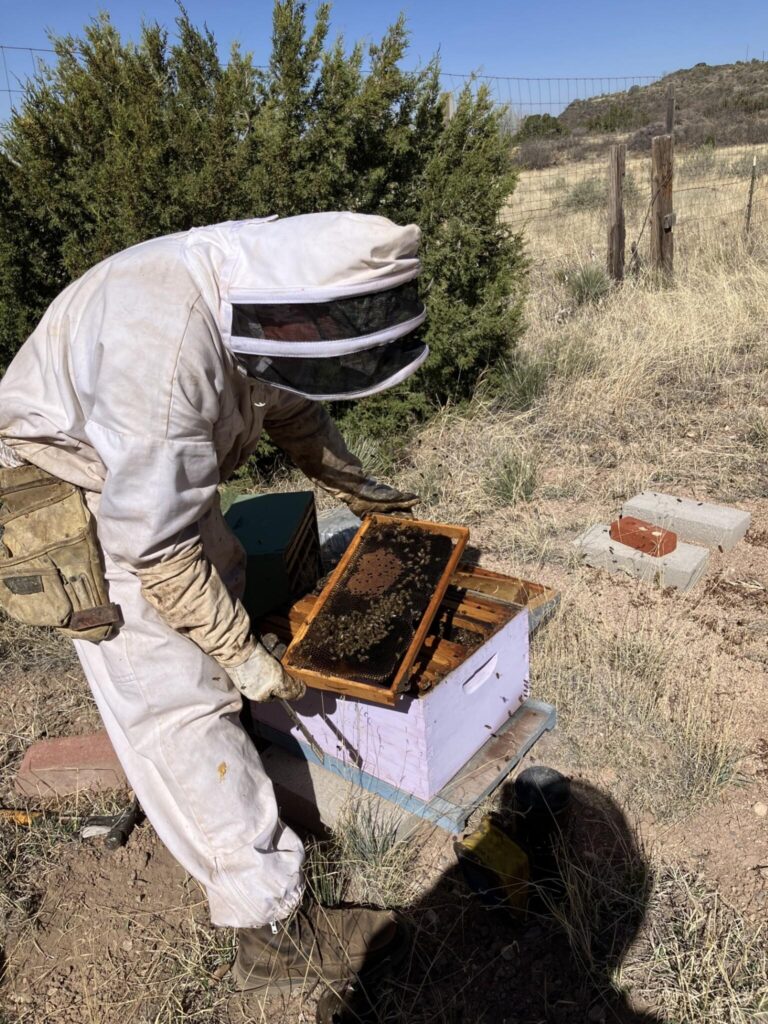
“When you’re working with bees you don’t cut corners,” Norm Bloom said as he tightened the cuffs of his full-body bee suit before sliding long gloves up his arms. Then he grabbed his smoker, which was already full of small sticks and dried grass and leaves and the smallest of fires. He pumped the bellows attached to the side of the can to make copious gray smoke plume from the pointed cap. He aimed the smoke at the entrance to the nearest hive boxes, pumped some more, then set the can down to pry the top off, revealing the hive below.

Bloom has been in the business of bee keeping for the past 13 years or so, but it started when he was a little boy, helping his mom as she tended to hives in the Tularosa area.

“She’d be out there in jeans and a long-sleeved shirt, just wearing a veil for protection, climbing up ladders to capture a hive in a tree or something. She’d put them in a box and come back down the ladder.” He shook his head at the memory. “One day, she fell as she was coming down and dropped the box right on her lap. They stung her up pretty good through her jeans.” She wasn’t in the business for the honey, but for the educational opportunities it presented. She would show off the hives to school children and give lessons on bee keeping.

The desire to live a self-sustaining lifestyle is what got Bloom interested in bees. He wanted a steady resource of sugar and figured honey would do the trick. Starting out with a hive of gentle bees that were given to him by a friend, he then bought more hive boxes and ordered a supply of bees from California for $200.

“I drove up to Albuquerque to pick them up from the guy and drove them back home, put them in the new hive boxes, and a week later they were gone. They decided they didn’t like it here and left. That’s when I decided that I was never going to buy bees again.”

He became the guy people call when they want bees removed. He’d climb trees to cut down a branch full of bees, bag them up, put them in his truck and drive them home. Or he’d cut a hive out from under someone’s eves, or from behind their siding. More bee boxes and more hives quickly led to outgrowing his own property. But he knew farmers in the area from High Rolls to Bent who were interested in having hives to help with crop pollination so he worked out a deal. He would maintain the hives on their land and they would get some of the honey every season.

According to the National Honey Board, “managed pollination is the practice of caring for hives and honey bees in order to pollinate the crops that sustain us.” About one-third of the human diet is derived from insect-pollinated plants, and honey bees are responsible for 80 percent of this pollination, “making them a critical component of today’s agricultural market.”

This is Bloom’s first trip of the season to tend to his hives and he will make seven stops over the course of the day, starting with relocating one of his hives from his property up to High Rolls. The property owner, who tends an apple orchard, lost his hives last fall to a bear. This year he has built a sturdy metal cage to house the bee boxes, protecting them from marauding bears. He leaves the new hive in cage and heads for his next stop across the highway in High Rolls. Here, he gets serious with the bee suit and the smoker can. “I want to visit this one early in the day while the weather is still cool because these bees are pretty spicy.”

The bees at this location are almost certainly Africanized honey bees (AHB), which are a hybrid between European and African bee subspecies. It’s nearly impossible to tell from looking at a bee if it is an AHB or a European. To further complicate the matter, the AHB will also hybridize with European honey bees, diluting the AHB genetics. Honey bees are not native to North America. They were brought in by early settlers in the 1600’s for honey and wax production.

“Bees have only been domesticated for about 600 years,” Bloom said. “The honey that they found in tombs in Egypt? That’s from pillaging hives, not tending to them. And it was still good 10,000 years later. Honey doesn’t go bad.”

When he pried the lid off the hives the bees inside reached a fever pitch in their humming and hit his suit and helmet with audible pops. A swirling cloud of bees surrounded him as he pumped smoke first into the hive boxes and then around himself. When bees are alarmed they emit a pheromone to let the rest of the hive know that danger is near. The smoke overshadows the pheromones, keeping the bees a little less frenetic. Bloom takes umbrage with the term killer bees.

“Don’t call them that. They are Africanized honey bees.” As an afterthought, “Though they will kill you.” He actually really likes them, despite their aggression. “They are a hardier bee and they do more foraging so they are more productive.”

As the bees swarmed around his head he removed panels from the hive box, searching for honey, broods, and the elusive queen. Each established hive consists of three boxes. If their stores are adequate, he will leave them all the honey in the lower two boxes, only harvesting from the top box.

“I let them keep all that other honey. That’s theirs. But the honey in the top box is mine. It’s their rent payment.”

He set several panels with honey in a cooler and replaced some broken frames with fresh ones from home. Then he reassembled the hive boxes and hauled his equipment back to his truck, ready to repeat those steps at the next stops.

Once he is back home, Bloom will go through the process of separating the honey from the wax and jarring it. He then melts down the wax to use in candle-making and also to mix with linseed oil to make a wood sealer for the new pergola he just built for his wife. He will clean up the frames, make the necessary repairs, and then return to the hives in a few weeks to see how the bees are fairing and to harvest more honey.

Bloom sells his honey under the label Blue Acres and can be reached via FaceBook. He also specializes in rescuing bee swarms and performing hive cutouts.

Ty Houghtaling: Doubts and fears and love and grace

0

Ty Houghtaling

First Baptist Church, Artesia

Often Jesus told people to “just believe” or some version of those words. Often the situations where he said something like that were when people were scared, confused, or hurting. Often we need to hear, “just believe”. Why? Because the world kicks us in the teeth or lies to us and makes us so mad or tempts us to try what everyone else seems to be doing even though we know the Lord is good and will never fail us. You ever just need to be reminded that we are to just believe? Faith takes courage but it is not hope that will let us down, not for real. God will not let us down, it might seem like He does on occasion, but hindsight always brings clarity.

Read 1 Peter 1:3-12. Mediate on it and try and remember Jesus loves us too much to leave us in doubts or fears about His love and grace.

“A coach, a locker room, a family, Artesia basketball”

0

 JT Keith

The Artesia boys’ basketball team spent much of the season on top, carrying a No. 1 ranking and the weight of expectations that came with it. Every opponent treated the Bulldogs like the team to beat, bringing their best night after night.

That run ended on March 14.

Despite returning 10 seniors from last year’s Class 4A state championship team, Artesia fell to Highland 71-62 in the title game, a loss that closed one chapter but underscored how much more the season meant to those involved.

“We didn’t play our best,” coach Michael Mondragon said. “I’m not going to say we played horribly. You have to give Highland credit. I thought they did a good job controlling tempo and making shots at crucial times.”

Mondragon, who has coached three championship games, said those moments often hinge on variables no box score can explain — a loose ball, a whistle, a shot that falls or rims out.

“A lot of it is luck,” he said. “You need something to bounce your way.”

This time, nothing did.

During a pivotal stretch, guard Braylon Vega was called for a travel after finishing through contact for what initially appeared to be an and-one. Mondragon said if the foul had been called on Highland’s Nico Sanchez — the team’s best player — it would have been his fourth, a moment that could have shifted the game.

Instead, play moved on, and so did time.

What lingered long after the final buzzer wasn’t the loss itself, Mondragon said, but the realization that his time with this group was over.

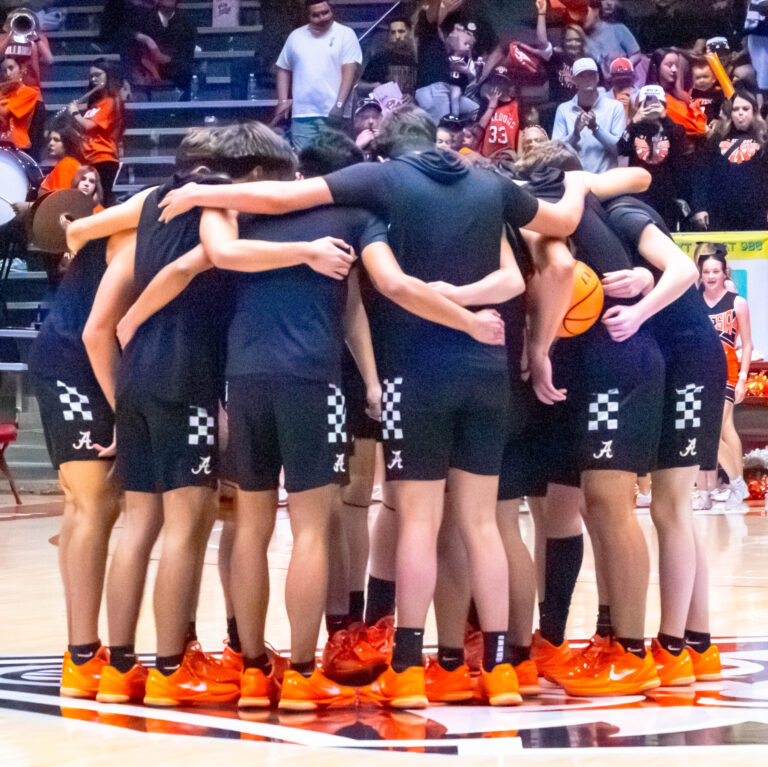
The coach spoke quietly as he talked about the relationships he built with his 12 players — bonds formed over the last two years, since they were sophomores.

“They’re like my sons,” Mondragon said. “I’ve been so close to them.”

JT Keith | Artesia Daily Press

One of his favorite memories came just weeks before the state tournament, when he had the team over for a steak dinner. Players mixed with his children, assistant coaches, and their families — a simple night that reflected how intertwined their lives had become.

“It’s emotional,” Mondragon said. “And it should be. You’re not doing it right if you don’t feel this. And you’re not doing it right if you don’t have relationships.

Artesia guards Braylon Vega and Cael Houghtaling talk during the game against Highland.

“This is so much more than basketball,” he added. “It’s about building relationships with young men who are going to be great dads and husbands. I’m trying not to cry, but it’s hard.”

Throughout the season, Mondragon said the Bulldogs were defined by selflessness. Talent was never the issue.

Players like senior Sawyer Whitehead, he said, were capable of starting for many teams across the state. Instead, Whitehead accepted his role without complaint, never allowing individual ambition to divide the group.

“They never did that,” Mondragon said. “Because it’s about the team. If you want continued success, it has to be the ‘we’ before the ‘me.’ These guys lived that.”

Mondragon said he has never experienced prolonged success in his coaching career until this group. For younger players, he said the Class of 2026 has permanently raised expectations.

“I told our first- and second-year kids that you’ve set the standard,” he said. “We’ve won back-to-back state championships. That doesn’t change. Now it’s time to get in the weight room, get in the gym, and live there if we want to be back.”

The Bulldogs’ recent success speaks for itself. Artesia has won seven District 4A-4 championships, reached the state tournament 12 straight years, and appeared at The Pit nine times in the last 12 seasons.

After the loss, Mondragon gathered his team in the locker room and offered perspective instead of regret.

“This is one to two percent of your life,” he told them. “Don’t let this be the highest moment. There’s a ladder. You climb it one rung at a time. If you look too high, you fall. If you look behind you, you trip.”

For Mondragon, the pride remained.

“I’m proud of the way they finished,” he said. “I’m proud of how they represented our school, our town, our program, and themselves.”

And for a coach who has measured success by relationships rather than trophies, that mattered more than any title ever could.

Vintage rides gather in Artesia for 27th year

0

Photos by Mike Smith, Artesia Daily Press

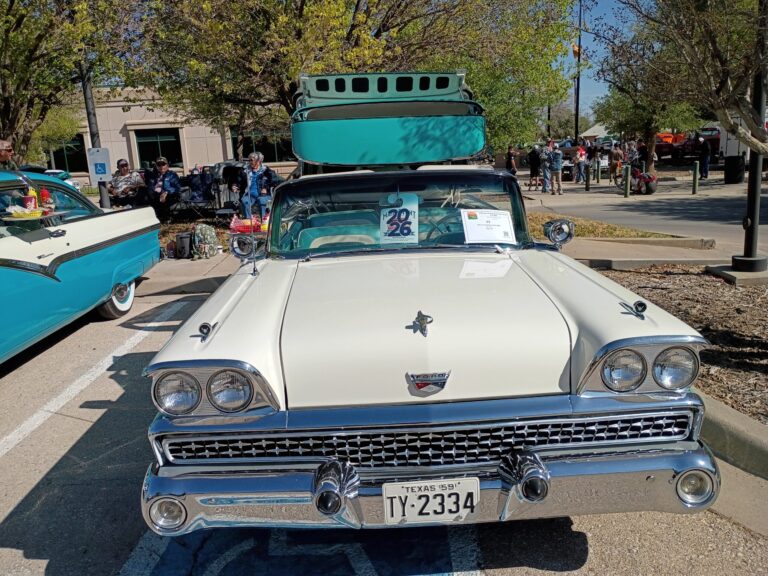
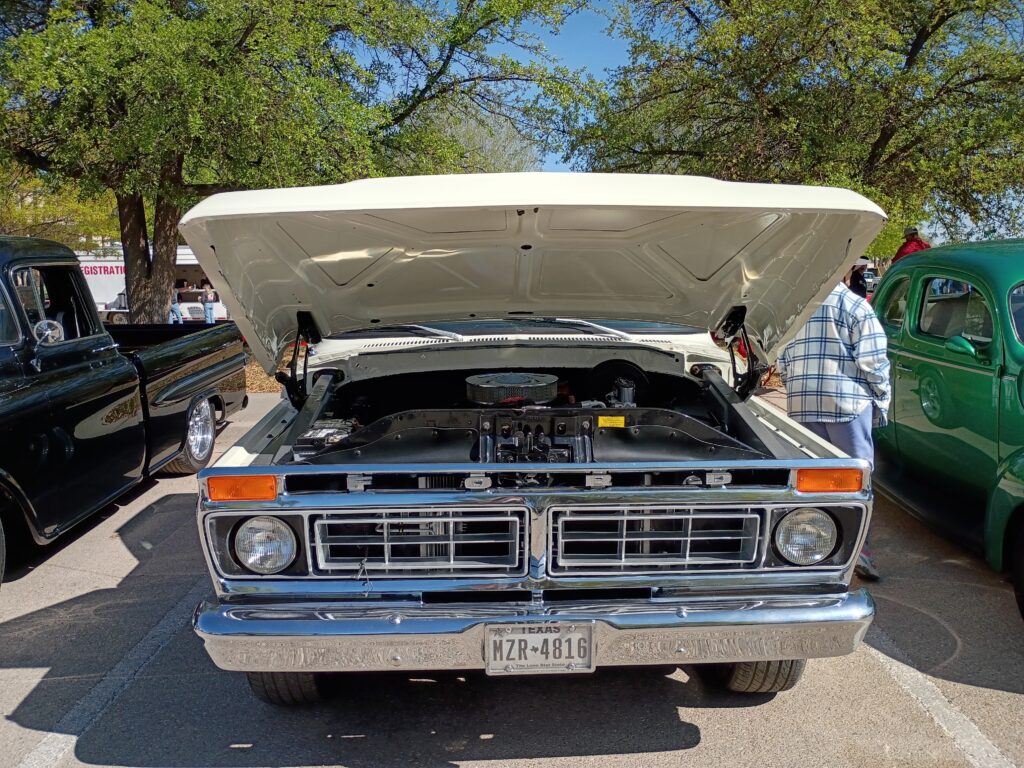
Cars, pickups, motorcycles, tractors and bicycles gathered in Artesia this weekend for the annual Main Event Car Show and Cruise.

Residents from near and far marveled at the machinery from previous decades as owners answered questions of the public on Saturday in downtown Artesia.

Sponsored by the Artesia Chamber of Commerce and the Artesia Car Enthusiasts, this year marked the 27th anniversary of the annual spring event.

More information on the show is coming next week to this website and in Thursday’s newspaper.

Feds plan May oil and gas land sale for 33K of federal public lands

0

Adrian Hedden
Artesia Daily Press
achedden@currentargus.com

Oil and gas companies are being offered more than 33,000 acres of federal public land for drilling in New Mexico.

The land will be leased to the highest bidders at an auction slated for May 20. The Bureau of Land Management issued its final approval for the auction on Friday, March 20.

Included in the sale are 74 tracts of land, spread between southeast New Mexico and West Texas.

The sale will entitle lessees access to the land for 10 years, or for as long as oil and gas are produced. To begin drilling, operators must submit subsequent applications to the bureau.

Lands offered in the sale are situated in Eddy and Lea counties in New Mexico, the two counties that make up the state’s portion of the Permian Basin – the busiest oilfield in the U.S., producing about half of the nation’s total output of 11 million barrels of crude per day.

Here’s what to know about the Bureau of Land Management’s May oil and gas lease sale in the Permian Basin.

Where are the offered lands?

Thirty-five parcels are in Eddy County on 14,289 acres – about 42% of the total lands offered in the sale. Another 24 parcels were offered in Lea County on 16,015 acres, or 47% of the sale.

The sale also includes three parcels on 360 acres in Quay County, and a single, 320-acre parcel in Roosevelt County, along New Mexico’s eastern border with Texas.

In the northwest corner of New Mexico, 11 parcels were offered on 2,168 acres spread among Sandoval, Rio Arriba and San Juan counties.

The lone Texas parcel was on 156 acres in McMullen County.

Protests accepted

With the announcement of the final parcels to be offered in the sale, the bureau began a “protest period” where those opposed to the sale have one more chance to see their reasoning entered into public record.

Protest comments can be submitted to the bureau by mail to BLM New Mexico State Office, Attention: State Director, 301 Dinosaur Trail, Santa Fe, New Mexico 87508.

Email submissions are also accepted: BLM_NM_Q2_2026Protest@blm.gov, using the subject line May 2026 Protest.

Protests must include the name and address of the protester, affiliation with any organization, specific parcel number being protested and disclosure of the protester’s interest in the lands.

Submissions can request that personal information be withheld from the public record.

What other actions were taken?

The Bureau of Land Management hosted a public scoping period in December 2025, allowing those interested to submit technical comments or suggestions for the parcels included in the sale.

A public comment period closed in February, giving the public another chance to comment on an environmental analysis, which found oil and gas operations on the proposed lands would have “no significant impact” to the environment, air or water quality.

More oil and gas lease offered in August

Another lease sale is planned for August, including about 20,000 acres, mostly in the northern region of the state.

The August sale will include seven parcels in Eddy County and two parcels in Lea, totaling about 2,239 acres.

The bulk of that sale will be the 16,855 acres split between Sandoval and Rio Arriba counties – 10 and two parcels, respectively. Another 2,086 acres were offered on 11 parcels – four in Roger Mills County, four in Angelina County and three in San Augustine County.

Managing Editor Adrian Hedden can be reached at 575-628-5516, or @AdrianHedden on the social media platform X.

NM Museum of Space History offers lecture on Hubble Space Telescope

0

New Mexico Museum of Space History

The Hubble Space Telescope is brought into focus in an upcoming Launch Pad Lecture at the New Mexico Museum of Space History. Since its launch in 1990, Hubble has looked into distant galaxies, bringing the world breathtaking glimpses that have transformed scientific understanding of galaxies, nebulae, and stellar evolution. The New Mexico Museum of Space History celebrates that legacy with a Launch Pad Lecture on Friday, April 3, 2026, from 9 – 10 a.m. in the New Horizons Dome Theater and Planetarium.

Museum educator Mackette Kark will explore the history, engineering, and discoveries behind Hubble, which reveal some of the most distant corners of the universe. The talk will highlight the telescope’s early challenges, its dramatic in‑orbit fixes, and the breathtaking images that have reshaped our understanding of galaxies, nebulae, and the life cycles of stars.

“For over 35 years, the Hubble Space Telescope has transformed the way we see the cosmos—capturing breathtaking images of distant galaxies, glowing nebulae, and the very edges of the observable universe,” says Kark. “As one of humanity’s most groundbreaking scientific achievements, Hubble has revolutionized our understanding of space, uncovering new worlds, revealing the life cycles of stars, and helping us trace the origins and destiny of the universe itself. Through the dedication of visionary scientists and engineers, Hubble continues to ignite wonder, deepen discovery, and expand our cosmic horizons—one stunning image at a time.”

The Launch Pad Lecture Series is free to the public on the first Friday of each month in the New Horizons Dome Theater and Planetarium at New Mexico Museum of Space History. Coffee and donuts are provided courtesy of the International Space Hall of Fame Foundation.