Home Blog Page 132

Real Reels: NM Film & Media Conference almost here

0

By K. Jan Wafful
Otero County Film Liaison

Starting Friday, May 30th the Otero County Film Office (OCFO) liaison, will be traveling northward to represent Otero County at the weekend New Mexico Film Office activities.  On Friday at noon, Otero County will be present for the State Liaison Network meeting with the NM Film Office. This meeting is to inform, train, and answer the questions and concerns that our state network community liaisons encounter when scouting and helping all filmmakers who come to their communities with the prospect of possibly filming in their jurisdictions.

OCFO has always been proactive in helping new liaisons navigate their way in the industry. All offices must be sanctioned on local and state levels, and all must operate under the liaison rules and guidelines set for them in booklet form by the NM Film Office with state leadership approval. All liaison services provided are a part of the states’ economic development, and under state EDD these services are provided to the industry free of charge. The film project money spent in each community by these filmmakers can provide real economic development in New Mexico. Each $1 spent in communities can be re-spent within the same community up to 8 times and remains locally in the community in the form of products, goods, and services purchased — not to mention the obvious lodging and eating out expenses while filming.

The New Mexico Film & Media Conference 2025 now returns annually. This conference will bring filmmakers, crew, businesses, studios and industry leaders together for the first time since pandemic recovery and industry strikes. Featured activities will be leadership panel discussions, vendor presentations, networking opportunities and career development sessions designed to support the NM Film Industry and bring industry members together to highlight, collaborate and shape the future film industry of New Mexico. The Otero County Film Office expects to return with new information to plan for the future building of location filmmaking that pertains to all of the more rural southern New Mexico communities.

On the local level, a report on the conference will be available from the OCFO liaison at the next quarterly Actor’s Spotlight Social at the Alamogordo Chamber conference room from 4-6 pm on July 25th, 2025.

These quarterly meetings are open to the public and provide networking, support and training to all who want to find entry-level opportunities in the local film industry.

For more information contact Jan Wafful at the OCFO in the Chamber of Commerce or email to: jwafful@gmail.com


Medicaid reform/cuts are long overdue

0

Paul J. Gessing

Gov. Lujan Grisham recently went on the TV show Face the Nation to decry potential cuts to Medicaid. She even claimed the reforms would “destroy health care as we know it.” Pretty much every elected Democrat in New Mexico supports Medicaid as it currently exists. This is partially because they view it as an “economic development” program. That’s because the federal government picks up 72% of the bill while New Mexico pays “only” 28%.

That may sound like a great deal for New Mexicans until you realize that Medicaid spending is expected to grow by a mind-blowing 27% next year and spend an astonishing $15.5 billion. That’s 1/3rd larger than the State’s fast-growing general fund budget which pays for education and public safety (to name just two priorities). In other words, even with “just” 28% of that coming from New Mexicans, that’s STILL $4.34 billion state tax dollars. Of course, New Mexicans also pay federal taxes and bear the $36 trillion in federal debt, but who’s counting?

As part of their efforts to find savings to make way for the Trump tax cuts Republicans in Washington have put forth a few ideas that would constrain Medicaid spending. This is hardly a disaster for New Mexico, but our politicians have grown accustomed to “free” money and a bloated Medicaid budget.

As The Hill notes, “Provider taxes have been a lucrative loophole for states to get more federal Medicaid funding by taxing providers and then returning the money to them in the form of higher reimbursements for treatment.” The Republicans’ proposal would freeze all state taxes at their current rates and prevent states from imposing additional taxes. New Mexico has been imposing these taxes for years and In 2024 the Legislature passed a provider tax that helped the State fleece taxpayers in the other 49 states of $1.5 billion. This is abuse of the Medicaid system. Unfortunately, the Republicans’ plan only prohibits future such schemes, not existing ones.

It’s worth mentioning that New Mexico could easily afford to replace federal Medicaid dollars with its own money. The State is sitting on $61 billion in “savings.” In the recently-completed legislative session the State has set up a mechanism to accumulate another $2 billion for the explicit purpose of “replacing” federal Medicaid dollars if indeed cuts happen.

Another initiative of Congressional Republicans’ (again from The Hill) is “work requirements.” Under the proposal, states must enforce “community engagement” requirements on Medicaid enrollees beginning in 2029. Community engagement is defined as 80 hours of work, community service or a work program each month. Other options include at least half-time enrollment in an educational program or a combination of the available options.

We’d love to see that moved up (why wait until 2029), but with New Mexico’s abysmal workforce participation rate remains depressed by any historical metric. It is lower than it was before COVID and it is lower than it was going back to 1976. Adding work requirements to Medicaid is just common sense. Such requirements would actually improve the lives of the large numbers of New Mexicans who continue to sit on the sidelines of our labor force.

While Lujan Grisham and Democrats will undoubtedly claim that the sky is falling on New Mexico and other Medicaid-dependent states, reform of this bloated program is long overdue. Medicaid needs to be reformed dramatically and that really needs to come from the federal level.

We’d like to see the federal government block grant Medicaid dollars (and then shrink the program over time). That would both remove the incentive for New Mexico and other states to “game” the system as they clearly have been doing AND it would place the federal government on more sound budgetary footing.

If large numbers of New Mexicans fall through the cracks as Lujan Grisham and others claim, the State can easily step in with its own considerable resources.

Paul Gessing is president of New Mexico’s Rio Grande Foundation, an independent, nonpartisan, tax-exempt research and educational organization dedicated to promoting prosperity for New Mexico based on principles of limited government, economic freedom and individual responsibility.

Congrats grads!

0

Photos by JT Keith
Artesia Daily Press
jtkeith@elritomedia.com

Artesia High School celebrated its Class of 2025 graduates in a ceremony held Thursday, March 22 at the Bulldog Bowl.

Collecting their diplomas were 215 high school seniors who were joined by their family and friends at the annual ceremony.

Renewing the mill levy is a vote for local healthcare

0

Dr. Joe Salgado
Artesia General Hospital

As a physician and CEO of Artesia General Hospital, I’ve had the privilege of witnessing the strength, resilience, and compassion of this community every day. I’ve also seen how access to quality healthcare—close to home—can change lives.

That’s why I’m urging every eligible voter in our district to vote “Yes” on the upcoming renewal of the hospital mill levy.

This isn’t a new tax. It’s a continuation of local support that has been in place for decades—support that has made it possible for Artesia General Hospital to grow from a small, local facility into a trusted regional healthcare provider. Thanks to the foresight of community leaders who established our hospital district, we’ve built a legacy of care that generations of families rely on.

So why does this matter now?

AGH is a not-for-profit hospital. That means every single dollar we receive—from patient fees, insurance reimbursements, or the mill levy—is reinvested into the services we provide. The mill levy plays a crucial role in covering our operational expenses. This in turn frees up other funding to go toward state-of-the-art equipment, infrastructure upgrades, new specialty services, and the recruitment and retention of medical staff.

In short, the mill levy makes it possible for us to do more—and do it better—for the people we serve.

Across New Mexico, many rural hospitals depend on similar mill levies to maintain vital services. These community-approved funds help ensure patients in smaller towns don’t have to travel hours to get basic or specialized care. They allow hospitals like AGH to offer diagnostic imaging, women’s health services, surgical care, and primary care right here in our backyard.

Without this stable funding, the services we’ve come to depend on could face serious strain.

This is a vote about keeping care local, accessible, and high quality. It’s about ensuring our friends, neighbors, and families can continue to receive compassionate, expert care without leaving the community we love.

If you’re voting by mail, please remember to follow the county’s requirements: include your signature and the last four digits of your Social Security number and return your ballot on time. You can also vote in person at the county substation.

I’m incredibly proud of the team at Artesia General Hospital and the work we do together every day. With your support, we can continue building a healthier, stronger community—now and for generations to come.

Let’s keep healthcare close to home. Vote “Yes” on the mill levy renewal.

Dr. Joe Salgado is the chief executive officer of Artesia General Hospital.

Big beautiful bill has hidden costs

0

Sherry Robinson

During recent debates over the president’s big beautiful budget bill, I wanted to know how the safety net would work. After all, New Mexico has the nation’s highest per-capita rate of Medicaid coverage with 840,000 people enrolled, more than 40% of the state’s population.

Nationally, Medicaid covers more than 71 million poor, elderly and disabled people. The big beautiful bill would cut the program by nearly $700 billion over 10 years and take health coverage away from more than 10 million people.

The big numbers and potential impacts generated endless debate about poor people, and what I heard made me wonder if the debaters had met any actual poor people. I have, and they’re not as lazy as the right would have you believe.

Let me introduce you to some neighbors from my time on the wrong side of the tracks.

Across the street was a woman I’ll call Mary, a single mom with three boys. She was a cleaning lady who worked long hours in other people’s homes to pay the rent. My next door neighbor was an older woman who was in poor health and on Social Security disability. That wasn’t enough to support two teenagers still living at home, so the fourth member of the household, an adult daughter I’ll call Alex, worked a low-wage retail job. Alex was the family’s primary supporter.

One major change mandated by the bill is work requirements for able-bodied, single adults. Sounds reasonable, right? What you might not know is that most Medicaid recipients are already working. So Alex will have to document 80 hours of work each month or prove she qualifies for an exception. But Alex is a high-school dropout who might have a hard time negotiating the new red tape. She might also be reluctant to take time off work, at a loss in pay, to visit a state office and make her case.

Benefits experts predict that millions of Alexes will get lost in the new system and lose their coverage. That seems to be the goal of the new requirement. The nonpartisan Congressional Budget Office projects the number of uninsured Americans will increase by 7.6 million.

The bill also requires states to check Medicaid eligibility more frequently, which the governor has said is a costly new administrative burden on top of Medicaid cuts the state can’t afford.

The big beautiful bill frays another strand of the safety net by cutting $300 billion (30%) from the Supplemental Nutrition Assistance Program (SNAP), formerly food stamps, which helps 42 million people. It’s the biggest reduction in the program’s history. More than 2.7 million households will lose benefits.

SNAP too has a job requirement. This one sweeps parents like Mary the cleaning lady into that category, so she would have to take time off work to document her hours and contend with unfamiliar new rules. And for the first time, states will have to absorb some of the costs of SNAP. Again, millions will lose their SNAP benefits at a time when federal cuts to food banks have emptied shelves.

Maybe you don’t give a hoot about poor people and their troubles, but you probably care about hospitals.

An emergency doctor told me, “What most people don’t know is that we have to treat people whether we’re getting paid or not.” He said his own hospital is also contending with tariff-induced price hikes on supplies and equipment.

As the number of uninsured people increases and expenses of uncompensated care rise, hospitals will see red ink. Medicaid is typically their largest source of revenue, followed closely by Medicare, which will also be hammered by the big beautiful bill.

Hospitals will try to compensate by raising rates for those with insurance and curtailing more services. It won’t be enough. They will look to the state, which has already tried to help struggling rural hospitals.

But Medicaid is the largest single source of federal funding for states and the second largest expenditure behind education. Replacing that revenue could mean raising taxes. Meanwhile many rural hospitals, already on the edge, will close.

The big beautiful bill is a complex piece of legislation, and Medicaid and SNAP are just two of many pieces. This is the House version, and the bill will change in the Senate. However, Medicaid will still be a target because it’s a big expenditure, and budget architects must come up with enough savings to pay for their tax cuts.

Sherry Robinson is a longtime New Mexico reporter and editor. She has worked in Grants, Gallup, the Albuquerque Journal, New Mexico Business Weekly and Albuquerque Tribune. She is the author of four books. Her columns won first place in 2024 from New Mexico Press Women.

Longer days beckon anglers

0

Information provided by New Mexico Department of Game and Fish

As May ends and June begins, the kids are out of school, the weather is warming up, the days are getting longer – and fishing conditions are ideal across New Mexico.

In Lincoln County, fishing for trout and catfish was good when using a variety of PowerBait at Alto Lake.

Grindstone Reservoir reported trout fishing was very good using Salmon, Cheese and Garlic PowerBait.

In Lea County at Eunice Lake, fishing for largemouth bass was very good using black-and-black two and a half inch Z-Man Craws.

In northern and northeast New Mexico, fishing for walleye was fair to good at Conchas Lake using silver minor jerkbaits.

Streamflow along the Pecos River, near Pecos Wednesday morning was 146 cubic feet per second (cfs). Fishing for trout was good when using salmon eggs.

Fishing for trout was good using PowerBait at Storrie Lake.

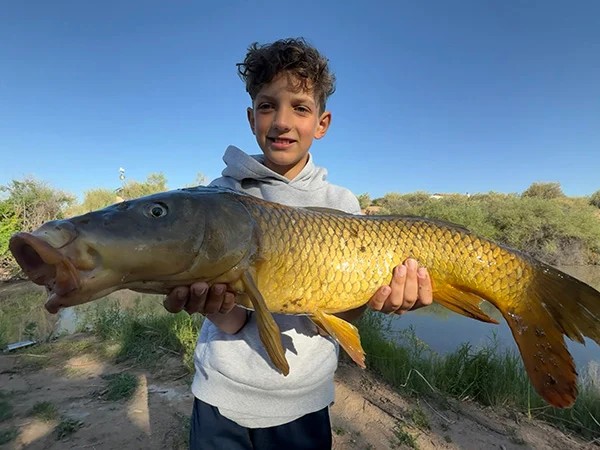
Fishing for carp was good using corn at the Albuquerque Area Drains.

This fishing report, provided by the New Mexico Department of Game and Fish, was generated from the best information available from area officers and anglers. Conditions encountered after the report is compiled may differ as stream, lake and weather conditions alter fish and angler activities.

New venue requested in Elijah Hadley murder case

0

Adrian Hedden
Carlsbad Current-Argus
achedden@currentargus.com

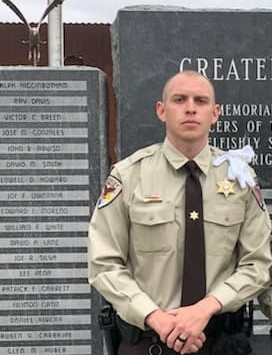
Prosecutors filed a motion May 13 to move the murder case of the Otero County Sheriff’s Office deputy who killed 17-year-old Elija Hadley from 12th District Court in Alamogordo to another jurisdiction.

The change was requested after members of Hadley’s family said they were intimidated by the Otero County Sheriff’s Office during a preliminary hearing for Jacob Diaz-Austin, the deputy accused of murdering Hadley in June 2024.

Diaz-Austin was charged with first-degree murder on Jan. 13, after he was cleared in September 2024 by an internal investigation conducted by the sheriff’s office. The 12th District Attorney’s Office “conflicted out” of the case, according to court records – likely due to the defendant’s association through his job with the local court system.

The case was assigned to the district attorney’s office in Bernalillo County, which now wants the case transferred to the Third Judicial District in Dona Ana County, or any district other than the 12th.

A hearing on the matter was scheduled for May 30.

The prosecutors’ change of venue motion alleged that Diaz-Austin was seen exchanging “hugs or fist bumps” with court security staffed by the Otero County Sheriff’s Office during a preliminary hearing on March 13.

The sheriff’s office did not respond to a request for comment from the Alamogordo News.

“Particularly concerning was one deputy who left her post near the jury box, on the side of the courtroom designated for the victim’s family, to approach the defendant to engage in friendly banter, playfully kicking the defendant’s feet with her own while smiling and laughing,” read the motion.

Similar observations were reported by Hadley’s family members in attendance, the filing said.

Hadley, a member of the Mescalero Apache Tribe in south-central New Mexico, was killed June 25, 2024, when Diaz-Austin, 28, of Las Cruces fired upon the boy after responding to a call for a welfare check at about 10:45 p.m. on U.S. Highway 70. The initial report described a person in a roadway median in an area between Tularosa and Mescalero, according to a news release from the New Mexico State Police.

It was later reported that Hadley was carrying an airsoft gun when he was shot by Diaz-Austin. An airsoft gun is defined as a replica of a real firearm that shoots plastic pellets instead of bullets.

Diaz-Austin was not injured in the incident. Hadley was pronounced dead at the scene.

The shooting was subsequently investigated by the New Mexico State Police. Diaz-Austin remained employed with the sheriff’s office in the wake of the shooting and was placed on administrative leave Jan. 14 pending the outcome of the trial, according to a sheriff’s office spokesperson.

“OCSO affirms its commitment to the rule of law and allowing the criminal justice system to do its work,” read a statement from the sheriff’s office. “OCSO further acknowledges that this incident has been traumatic and divisive for the community and is committed to ensuring the judicial process is followed according to the law.”

The case resulted in protests among tribal members and supporters of Hadley who argued the killing was the result of police brutality. Demonstrations were held outside the courthouse during the preliminary hearing in March, read the motion for change of venue, leading to heighted security and the Sheriff’s Office presence.

This had an “intimidating effect” on Hadley’s family members, read the motion, who felt deputies acted “hostile” to them and friendly with Diaz-Austin.

“It was apparent to many people present during the preliminary hearing that there was a positive relationship between the defendant and the Otero County court security deputies,” read the motion. “There is no reason to believe the conduct would be different at trial. A fair trial cannot be obtained in the 12th Judicial District.”

In signed, sworn statements included with the motion, security agents for the district attorney’s office who were present at the hearing, Hadley’s mother Eva Hadley, and his brother Malachi Kaydahzinne testified to similar behavior by the deputies at the courthouse.

Eva Hadley said there were deputies serving as security guards during the hearing and attending in the gallery to support Diaz-Austin. This conflated the Sheriff’s Office’s civilian and non-civilian roles in the hearing, Eva Hadley wrote, making her “uncomfortable.”

“It seems wrong that the defendant in this case is an OCSO deputy, that two members of the OCSO’s leadership are testifying on his behalf, and that the courthouse security is provided by OCSO deputies who are visibly supportive and protective of the defendant and his family members,” Eva Hadley wrote.

Managing Editor Adrian Hedden can be reached at 575-628-5516, or @AdrianHedden on the social media platform X.

You’ve got to be taught to hate

0

Cal Thomas

While contemplating the horror of two young and soon to be engaged Israeli Embassy employees who were gunned down by a man shouting “free Palestine” and “I did it for Gaza,” outside the Jewish Museum in Washington, D.C., last week, I recalled the opening line to a song from the old off-Broadway musical “The Fantasticks” – “You wonder how these things begin.” That song speaks to the love between a boy and a girl. Applied to the Washington shootings it makes you wonder how hate begins.

Theologically it goes back to the Garden of Eden, but in modern times it begins at certain universities and bigoted social media sites.

The hatred of Jews is not new. It extends back several millennia. That so many universities tolerate and some professors promote Jewish hatred is not free speech. It is incitement which, taken at the extreme as it was last week, leads to murder. The people responsible for this cannot wash their hands of the blood of those innocents, any more than Pontius Pilate could exonerate himself from Christ’s crucifixion by Roman soldiers by symbolically washing his hands and claiming, “I am innocent of this man’s blood.”

I have raised this question before, but it is worth repeating. Why do the media never ask who is underwriting these demonstrations, including paying for tents, printed signs and any travel, accommodations and food for those who come from out of town? How many of the demonstrators are not students? Chants of “from the river to the sea,” especially when the few who are interviewed can’t identify the river or the sea is code for destroying Israel and justifying the killing of Jews. Consider the reluctance of some who refused – or slowly waited to comment on last week’s shootings, including some Democrats in Congress.

Until President Trump began depriving Harvard and other elite schools of federal grants, these institutions were getting away with effectively being accessories to murder. Would these university presidents, who have done little or nothing to curtail the hateful demonstrations, have tolerated KKK rallies on their campuses? Not likely. Some alumni have stopped giving to their alma maters. More should. Parents should pull their kids out of these pricey schools or not send them there. It is amazing that some parents are shocked to see their children adopt ideas that contradict their fundamental values. What did they expect?

Some historians date the start of persecution, violence, attempts at genocide and deportations of Jews to the Neo-Babylonian Empire (605 BC). There are ongoing debates and discussions why this small group of people have been singled out over the centuries as the cause of everything bad, especially when they have contributed so much to the world that is objectively good.

The Jewish lyricist Oscar Hammerstein may have gotten to the heart of it when he wrote “You’ve Got to Be Carefully Taught” for the musical “South Pacific.” Here is part of the lyric, which readers should Google and read in its entirety:

“You’ve got to be taught to hate and fear,

You’ve got to be taught from year to year,

It’s got to be drummed in your dear little ear–

You’ve got to be carefully taught!”

The alleged killer of those two embassy employees (if convicted, he should get the federal death penalty), the terrorist murders of Jews in Israel by Hamas and Iran’s Houthi proxies, the vilification of Jews by professors at certain universities, are instructing a new generation to hate. The universities that tolerate hate should be punished more than just depriving their schools of grants. The professors who poison young minds should be fired, hate groups banished from campuses and the country, and the demonstrators held accountable.

Readers may email Cal Thomas at tcaeditors@tribpub.com. Look for Cal Thomas’ latest book “A Watchman in the Night: What I’ve Seen Over 50 Years Reporting on America” (HumanixBooks).

Did it really happen?

0

David Grousnick

Charles Swindoll tells a funny story about a nine-year-old named Danny who came bursting out of Sunday school like a wild stallion. His eyes were darting in every direction as he tried to locate either mom or dad.

Finally, after a quick search, he grabbed his Daddy by the leg and yelled, “Man, that story of Moses and all those people crossing the Red Sea was great!” His father looked down, smiled, and asked the boy to tell him about it.

“Well, the Israelites got out of Egypt, but Pharaoh and his army chased after them. So, the Jews ran as fast as they could until they got to the Red Sea. The Egyptian Army was gettin’ closer and closer. So, Moses got on his walkie-talkie and told the Israeli Air Force to bomb the Egyptians. While that was happening, the Israeli Navy built a pontoon bridge so the people could cross over. They made it!”

By now old dad was shocked. “Is THAT the way they taught you the story?”

“Well, no, not exactly,” Danny admitted, “but if I told you the way they told it to us, you’d never believe it, Dad.”

With childlike innocence the little guy put his finger on the pulse of our sophisticated adult world where cool skepticism reigns supreme. It’s more popular to operate in the black-and-white world of facts…and, of course, to leave no space for the miraculous.

And so, when we read the story of the feeding of the five thousand in Matthew 14, we tend to focus our attention on the question, “Did it really happen?” There have been a number of attempts to “explain” the miracle.

One attempt says that the people were so moved by Jesus’ generosity and the generosity of the little boy that they brought forth the food they had hidden under their clothes and in their traveling pouches. This way everyone was satisfied.

Another theory says that the story is not really talking about physical hunger but spiritual hunger. When the small amount of food was passed around everyone tore off a minuscule symbolic fragment. In this Jesus is said to have satisfied the thirst of the soul not the stomach.

I think these questions say more about us than they do Jesus. If Jesus is the Messiah, and I believe he is, then there is no question but that he performed miracles, and on a regular basis.

Outside a small town in our state, there once was is a sign that read as follows: “Welcome to Portales, New Mexico, home of 12,493 friendly folks and 8 or 10 grouches.”

Isn’t that the way it is everywhere? There are always a few negative folks around to tell you that Murphy’s laws will ruin everything.

I like the old story about the little boy who was trying to raise some money by collecting bottles by going door-to-door in his neighborhood.

When he came to the home of a woman who was the “town grouch,” the little boy asked, “Do you have any coke bottles?” “No,” she replied with a scowl.

Then he said, “Do you have any old whiskey bottles?” “Young man,” the woman replied, “Do I look like the type of person who would have old whiskey bottles?”

The little boy studied her for a moment and then asked, “Well, do you have any old vinegar bottles?”

Isn’t it tragic that some people go through life so negative and sour and bitter? And if you don’t watch out, they will infect you with their thinking.

Tony Campolo was a professor of sociology and a popular speaker. He was once invited to a women’s conference where he was to give a major address. These women were being challenged to raise several thousand dollars for a mission project goal.

While Campolo was sitting on the dais, the chairperson turned to him and asked him if he would pray for God’s blessing as they considered their individual responses to the goal.

Campolo stood and – to the utter amazement of everyone present – graciously said “no.”

He approached the microphone and said, “You already have all the resources necessary to complete this mission project right here within this room. It would be inappropriate to ask for God’s blessing, when in fact God has already blessed you with the abundance and the means to achieve this goal. The necessary gifts are in your hands. As soon as we take the offering and underwrite this mission project, we will thank God for freeing us to be the generous, responsible and accountable stewards that we’re called to be as Christian disciples.”

And they did.

Wow! Leave it to Tony Campolo to hit the nail right on the thumb! Jesus says, “You feed them!” And we can! This is a rich world, and we are rich people!

Extraordinary living begins with ordinary gifts. What gifts and graces do you have that you have not fully activated? What table is the Lord calling you to serve?

Have a great weekend!

Artesia girls’ softball season ends in the consolation round 

0

JT Keith 
Artesia Daily Press
jtkeith@elritomedia.com

The only thing Artesia needed for a rematch with Silver City and a chance to win the District 4-4A state softball championship was a shutout inning against the Lovington Wildcats. 

The Lady ’Dogs took a 10-9 extra-inning lead into the bottom of the eighth after Lovington tied Friday’s consolation bracket playoff game at 9-9 in the bottom of the sixth and Artesia answered with the go-ahead run in the top of the eighth. 

But in the bottom of the eighth, Zabri Rodriguez delivered a two-run, walk-off single for an 11-10 Lovington victory that sent Artesia home and sent the Wildcats to Saturday’s title game against Silver. 

Silver defeated Lovington 7-0 to win the state championship. 

Pulido said her team, which at one point led Lovington 9-4, made defensive mistakes that allowed the Wildcats to tie the score. 

“Losing that game was hard,” Pulido said. “It was especially hard for the seniors. That’s not how you want your senior year to end. As we stood in right field, I told them this wasn’t the outcome we wanted, but not to hang their heads, they should be proud of how far they’ve come and their growth this season. I am proud of them.” 

How they got there 

Artesia had defeated Lovington 7-2 in the quarterfinals on Thursday before dropping into the consolation bracket with a 5-1 loss to Silver in the semifinals on Friday. 

“After losing to Silver,” Pulido said, “we had to play Lovington again, 20-30 minutes later, for the fifth time this season. The girls were upset by the loss to Silver, as is expected. I told them, ‘We have to reset, we can’t change what happened, we have to pick each other up, move forward, and continue to play together.'” 

Growth in the team 

Artesia came into the 2025 season in rebuilding mode after losing 10 seniors to graduation, Pulido said. It was a different rebuild compared to previous seasons as nine players moved up from junior varsity. 

The season wasn’t what many expected – it was better, Pulido said, as the team faced adversity and setbacks that led to growth for each of her players. 

“Growth is important,” Pulido said. “If we are not challenged, we cannot grow as players, coaches and people. Our goal is for the girls in our program to leave as better people than when they were here. The wins are a bonus.” 

Heartbreaking loss 

Pulido said one of the obstacles the team had to deal with was losing senior Makayla Lujan, who injured her leg the week before district play started. 

“It was heartbreaking to know that was how her career ended,” Pulido said. “But I believe it changed her perspective on many things and made her a better teammate. Her leadership role moved from the field to the dugout, and she was still able to be a game changer for us.” 

jtkeith can be reached at 575-420-0061, or on X@JTKEITH1