

Artesia Lady ‘Dogs lose to Silver 5-1 in semifinals of the 2025 Nusenda Credit Union State 4A softball championships
Lincoln County offers good fishing and cooler weather
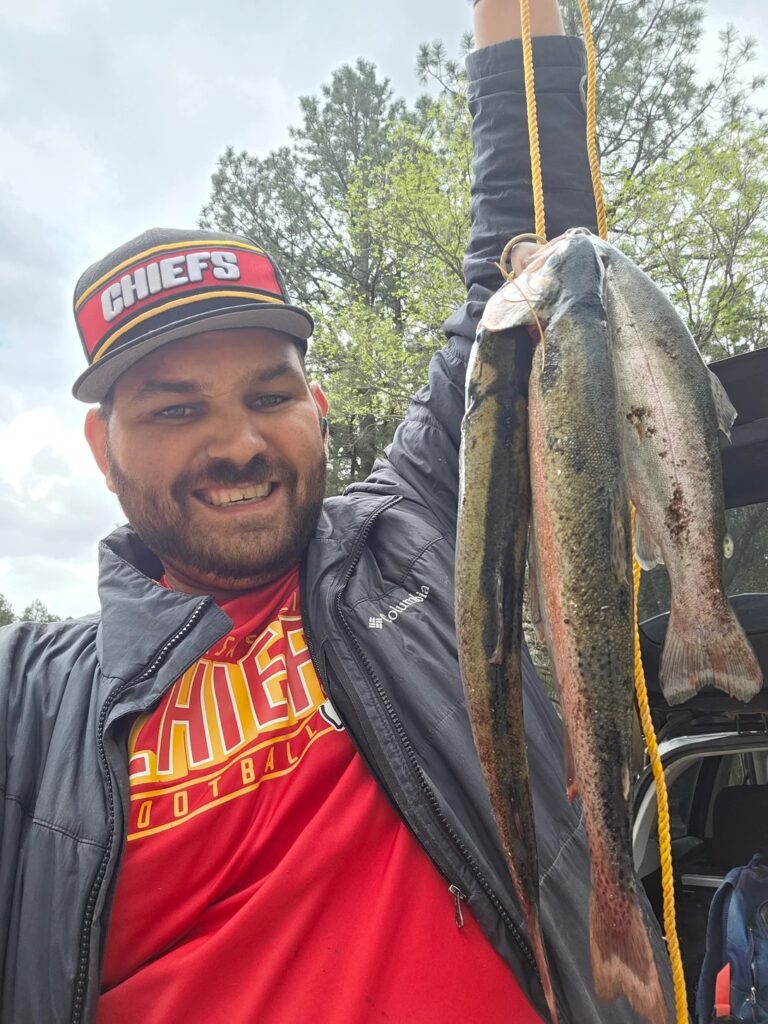
Information and photos provided by New Mexico Department of Game and Fish
Anglers in Eddy and Otero counties seeking relief from summer-like weather this weekend might want to head to the Ruidoso area for a break from rising temperatures.
At Alto Lake, fishing for trout was very good using olive-and-white Marabou Streamer flies.
At Grindstone Reservoir, fishing for trout was very good using Yellow PowerBait.
Fishing for trout at Bonito Lake was slow to fair using black-and-yellow Panther Martin spinners.
Around Truth or Consequences, fishing for catfish and carp was very good suing shads and worms at Caballo Lake.
At Elephant Butte Lake, fishing for smallmouth bass and largemouth bass was very good using plastic worms.
In eastern New Mexico at Santa Rosa Lake, fishing for largemouth bass was slow to fair using chartreuse jigs.
Fishing for largemouth bass was slow to fair using crankbaits at Carlsbad Municipal Lake.
In Lea County, at Eunice Lake, fishing for largemouth bass was good using hard jerkbaits, rubber minnows and micro chatterbaits with small minnow trailers.
This fishing report, provided by the New Mexico Department of Game and Fish, has been generated from the best information available from area officers and anglers. Conditions encountered after the report is compiled may differ, as stream, lake and weather conditions alter fish and angler activities.
Game and Fish, partners help cutthroat trout go home
Once a year, starting in 2008, Rio Grande cutthroat trout fingerlings embark on an expedition from the Seven Springs fish hatchery near Jemez Springs to the Rio Grande Gorge near Taos. New Mexicans who support conservation transport the fish to the Gorge where they are released into the water, according to a Department of Game and Fish news release.
“This stocking of native New Mexico trout by the Department of Game and Fish is a unique endeavor, relying on multiple agencies and the public’s assistance to carry 5,000 Rio Grande cutthroat trout to their natural habitat,” the news release said. “This special event would not be possible without the support from the public who want to see native populations thrive.”
Among those supporting the effort, the release said, are the U.S. Bureau of Land Management, the Rio Grande del Norte National Monument, Trout Unlimited, the U.S. Forest Service, and Friends of the Rio Grande del Norte.
Game and Fish cold water biologist John Smith said the project empowers “anglers and citizens to take an active part in native fish conservation.”
Six Greyhounds going to NCAA DII Championships

ENMU Athletics Communications
INDIANAPOLIS – Six Greyhounds will be headed to the 2025 NCAA DII outdoor track and field championships in Pueblo, Colo. May 22-24.<n><n>"These Greyhounds are a special group who have worked so hard this season. They will now have the opportunity to showcase their work at nationals next week," said head coach Joshua Harden. “Our coaches have made a great effort in preparing our team to get to this stage and now we get to go out and give it our all in Pueblo.”<n><n>Sophomore Jodian Stewart will compete in the long jump for Eastern New Mexico. This is her first appearance at a national championship meet. Her qualifying jump of 6.41m (21-0.5) helped her win the conference title in the event and ranks second nationally this season. The Black River, Jamaica native has gone three-straight meets with at least one jump going longer than 6.30m.<n><n>Stewart will compete Thursday, May 22 at 2:30 p.m. There are 22 competitors in the event with two from the Lone Star Conference.<n><n>Two Greyhounds will run the 400m at nationals. Jamoi Jackson will be attempting to earn all-american status twice in a singular academic year as he earned first team honors during the 2025 indoor championships. Jackson is coming off a conference championship in the 400m where he ran a school record time of 45.86s. Timothy Frederick will be joining Jackson at the championships. His 46.59s time at the Jo Meaker Classic earlier this season helped him earn his fifth trip to a national championship as a Greyhound.<n><n>Jackson and Frederick are going to run the 400m prelims Thursday, May 22 at 5:55 p.m. Finals for the 400m is set for Saturday, May 24 at 6:30 p.m.<n><n>Sophomore Grizell Scarlett will be going to outdoor nationals for a second-straight season. Scarlett helped Eastern New Mexico finish fifth at the Lone Star Conference championships two weeks ago. In the meet, she took second in the 100m, third in the 200m, and ran the anchor for the third place 4×100 team. The Kingston, Jamaica native holds school records in both the 100m and 200m sprints.<n><n>Scarlett will compete in the 100m prelims Thursday, May 22 at 6:25 p.m. Finals for the 100m are expected to run Saturday, May 24 at 6:40 p.m.<n><n>Junior Kennedy Ulmer is heading to her first national championship after coming up just one bid shy of an entry in 2024. Ulmer will compete in the discus throw after tossing a 48.91m (160-5) mark earlier this season at the Greyhound Open. The Rio Rancho, N.M. native is coming off the LSC championships where she scored 11 total points for the women’s program. She is the school record holder in the discus, hammer, and javelin.<n><n>Ulmer will throw the discus Friday, May 23 at 2 p.m. She is expected to compete in a field of 22 participants, including four throwers from the conference.<n><n>Senior Alex Williams will be back in the outdoor championships for a third-straight year. He was a first team all-american in 2024. Williams earns the bid to compete in Pueblo after a 65.90m throw at the conference championships which earned him his first ever conference title in the javelin. He holds the school record in the javelin.<n><n>Williams will participate in the event Saturday, May 24 at 2:45 p.m. He will throw alongside 22 competitors. He is the lone representative from the LSC this season.<n>
Artesia boys and girls track team looking to end season on a high note

JT Keith
Artesia Daily Press
jtkeith@elritomedia.com
By JT Keith
The 2025 Track & Field State Championships are about to begin at the University of New Mexico Track-Soccer Complex in Albuquerque and the Artesia boys’ and girls’ track teams will compete in the Class 4A-5A division Friday and Saturday, May 16-17. Here is a preview

Boys
The Artesia boys track and field team will have 23 state qualifiers, including competitors in javelin, discus, shot put and long jump.
“These field events are going to be very important in determining if we can get on the podium as a team this year,” said Artesia coach Adrian Olivas. “We have four long jumpers, with Bryce Parra among the state’s top three.”
Olivas said long jump is the first event of the state meet and will provide an early indication of how the weekend will go for the Bulldogs.
Artesia’s entrants in the field events include Cael Houghtaling, a top-three triple jumper, and defending state shot put champion Marco Soto, who enters the competition as the No. 1 shot putter in the state.
Olivas said a key factor in the success of the track team has been the sharing of athletes with other sports. The team will has two athletes competing in javelin, Jett Whitmire and Brant Usherwood, who are also members of the No.1 seeded Bulldogs baseball team.
On the track side of the competition, Artesia’s Zane Baize will be looking to become a two-time state champion in the mile run.
“He (Baize) has been very motivated for the last few weeks,” Olivas said. “To top it off, we hope our 3200-meter relay can get into the top three, similar to last year.”
Olivas said Artesia’s sprint relay teams are in the top five in all their events. The Bulldogs’ 400-meter relay team is No. 1 in the state and hopes to keep that honor.
Bryce Parra and Luis Torres are in the top eight in the 100- and 200-meter dashes and Marcos Ornelas is in the top three in the state in the 110- and 300-meter hurdles.
“We expect him to do well,” Olivas said. “Overall, we are confident in each of our qualified athletes. They have put in the work all year, and we look forward to having our best performances during the most important time of the year.”
Girls
Artesia girls track coach Mandi Lewallen said the team’s seniors include Hattie Harrison, Isabel Irvin, MacKenzie Norton, Esmeralda Sorrells and Makaylee Morillon.
Harrison is hoping to repeat as state champion in the 100-meter hurdles. She also hopes to take the blue trophy in high jump and finish among the top three in the 4×100 relay and 300-meter hurdles.
Morillon is returning as a member of Artesia’s entry in the sprint medley relay – an event the Bulldogs won last year, Lewallen said.
The coach said Irvin will be reaching for a top spot in pole vault while Norton and Sorrells will be running in the 4×800 relay. Norton will also run the 1600 and 3200, and Sorrells will join her in the 1600-meter run.
Brooklynne Ivans is the top seed in shot put.
Freshman Caiya Olivas qualified in the 100-meter and 200-meter sprints.
“The girls’ team is also in contention to bring home a top-three team trophy,” Lewallen said. “They (girls) finished third last year overall as a team.
jtkeith can be reached at 575-420-0061, or on X@JTKEITH1
SIMCO awards $21K in scholarships
Staff reports
Salado Isolation Mining Contractors (SIMCO) awarded $21,000 in scholarships to 21 high school seniors in Eddy and Lea counties.
“SIMCO is committed to investing in our students’ post-secondary education. A college education can have a lasting impact on their lives and we’re proud to play a small part in that journey. SIMCO scholarships are just one way we’re supporting our students and investing in their futures,” said SIMCO Education Outreach Lead Dr. Joy James-Foster.
Students from Artesia, Carlsbad, Hobbs, and Loving received scholarships. Recipients include:
Carlsbad High School
Evan Antiporda, Chistina Pia Bicol, Sean Casey, Rubye Chappa, Hailey Digby, Abbey Dugan, Jesse Fuentes,
Kalion Fuentes, Jorge Gonzalez, Aubrey Hernandez, Alyssa Munoz, Emmie Navarette, Taylor Onsurez, Kason
Perez, Alexander Sanchez and Gabby Sanchez
Artesia High School
Morgan Kay Love
Hobbs High School
Brock Beaty, Mc Kenzie Porter and Trinity Vasquez
Loving High School
Joslynn Abernathy
SIMCO also provided funding for the Martin Luther King Scholarship Fund, the Carlsbad Class Act Scholarship
Fund, the Hobbs Bash Graduation Night Fund and the Falcon Fest Scholarship Fund.
To be considered for a SIMCO scholarship, students must plan to attend an accredited college or university.
SIMCO is the management and operations contractor for the U.S. Department of Energy’s Waste Isolation Pilot Plant (WIPP) near Carlsbad. WIPP, the nation’s only permanent geologic repository for defense transuranic
nuclear waste, began disposal operations in 1999.
Trump to strip prairie chicken protections
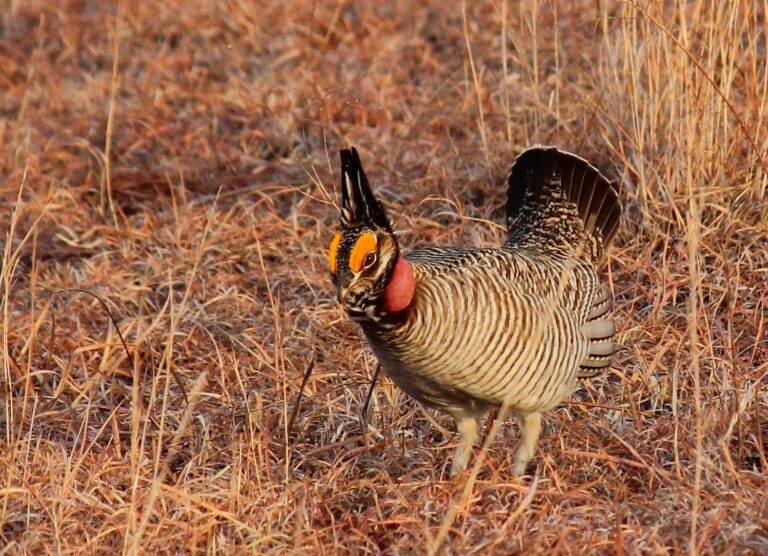
Adrian Hedden
Carlsbad Current-Argus
achedden@currentargus.com
Rancher Bret Riley believes that measures taken to save a struggling grouse in the plains of eastern New Mexico can also protect the land he relies on at his approximately 22,000-acre spread 20 miles west of Tatum.
The 62-year-old has owned the land known as Sand Ranch in the unincorporated Lea County community of Caprock for the past 13 years. He started leasing the land to raise cattle in 2008 and bought it outright in 2012.
Ten years later, the lesser prairie chicken was listed as endangered and in the years since, Riley began monitoring soil quality and taking steps, he said, to not only improve habitat for the birds but his livelihood raising cattle in the dusty eastern New Mexico prairie.
He said he was determined to continue doing so, even as President Donald Trump’s administration on Wednesday, May 7, called on a federal court to vacate the listing.
“We try not to let the listing or delisting alter our management on our properties. We try to do it the right way,” he said.
Riley’s ranch is situated about 50 miles from a piece of land labeled an “area of critical concern” by the U.S. Department of Interior because it could serve as suitable habitat for the endangered lesser prairie chicken.
The listing divided the bird’s status between two geographical ranges and two categories of jeopardy: endangered in the southern portion in southeast New Mexico and West Texas and threatened in the northern portion in parts of the northern Texas Panhandle, Colorado, Oklahoma and Kansas.
An endangered species listing means the Fish and Wildlife Service believes extinction is imminent, requiring an agency recovery plan for the species and often restricting development on lands the agency believes are needed to restore the species’ numbers.
The alternative “threatened” status means a species is in danger of warranting an endangered listing in the future.
Both listing decisions could impede booming oil and gas production in the area, according to a 2023 lawsuit filed in U.S. District Court by the State of Texas and fossil fuel trade group the Permian Basin Petroleum Association. The May 7 motion sided with the plaintiffs, asking the court to roll back the listing.
Texas Attorney General Ken Paxton said in a statement announcing the lawsuit that the listing decision would put key industries, such as oil and gas and agriculture, at risk.
“The Lesser Prairie-Chicken’s change in classification puts many of Texas’s conservation efforts at risk, all while bringing immeasurable harm to Texans’ property rights,” Paxton said. “My lawsuit aims to preserve both individual and states’ rights that are threatened by this rule and stop this Biden Administration policy in its tracks.”
But to Riley, taking away the listing and the regulations that come with it could mean unfettered impacts by industry on the ecosystems of the eastern New Mexico landscape.
“I think we have a problem with our prairie chicken populations because of encroachment and conversion in our part of the world,” Riley said. “A lot of that is oil and gas. I also think that politics get into the listing and the delisting a little too much.”
Feds reverse course
When Trump took office in January, he and his administration worked to limit regulations on the oil and gas industry by issuing a Jan. 20 executive order titled “Unleashing American Energy.”
The order called on federal agencies to reanalyze potential restrictions to energy development, including endangered species listings, established under Trump’s predecessor, Joe Biden.
Months later, the motion filed in the Texas lawsuit by the Interior Department – the Fish and Wildlife Service’s parent agency – followed suit and argued the agency did not provide adequate support for the dual listing decisions for the prairie chicken.
Specifically, the agency said its previous leaders falsely separated the species into two “distinct population segments” (DPS), and that a new listing procedure was needed to correctly apply federal law.
In the meantime, the agency asked the court to vacate the listing.
“The Service concedes that it improperly applied its DPS Policy in a manner that tainted the substance of the final listing rule,” read the motion. “Given the seriousness of the error identified, the Service will be unable to correct the rule’s defects on remand short of engaging in an entirely new analysis.”
Amid the suit, the Center for Biological Diversity filed a motion to intervene in 2023 and defend the listing in court but was denied as the agency at the time planned to defend its decision.
But with the change in administration and recent motion filed to reverse course, Jason Rylander, an attorney with the Center, said on Wednesday the national nonprofit planned to fight it in court.
He contended that the recent federal motion would “doom” the species – which once numbered in the hundreds of thousands in its range – to extinction.
“There’s no question that it’s imperiled, especially in the southern portion of its range,” Rylander said. “Removing Endangered Species Act protections is a purely political act that won’t stand up in court.”
A look at Artesia Lady ‘Dogs softball team in action against Lovington in the quarterfinals of the 4A softball championships


A look at Artesia boys baseball in action against Hope Christian


Public lands and youth stewardship programs are at risk

The Taos News
TAOS — Public land is central to life in North Central New Mexico, and that way of life is at a precipice.
Northern New Mexicans gather firewood, hunt and fish, graze livestock and harvest vigas and latillas on public land. We recreate on the land and water in the Carson National Forest and the Rio Grande del Norte National Monument.
Indications in April that the Trump administration was preparing to remove protections from the Rio Grande del Norte National Monument haven’t materialized, but if the budget Congress presented for the nation’s national parks is any indication, there are reasons to think the Rio Grande del Norte will be next on the chopping block.
An outraged U.S. Sen. Martin Heinrich released a video on May 6 calling the National Parks Service budget proposed by Republicans in Congress “possibly the worst one I have ever seen.”
“This week, they proposed actually transferring many National Park Service units to the states … and a debilitating 20 percent cut, over a billion dollars, to the budget of the National Park Service,” Heinrich said. “What kind of administration is this hostile to America’s greatest idea?”
Whether it’s considered “America’s greatest idea” by the remnants of land grants here is an open question, and the history of land in Northern New Mexico is fraught. But simultaneous attacks by the White House on the nation’s environmental laws and a push for more natural resource extraction and private development on public lands — including national monuments — indicate the country’s vast public outdoor spaces, unique in the world, are at risk.
It’s a sure bet that if some of the lands are privatized, they won’t return to the tribes who once used them or the heirs of Spanish and Mexican land grants. They will go to large corporations or cronies of the president.
There’s a need to reduce wasteful federal government spending, and we need housing and other development opportunities. But pristine public land is an economic driver here, drawing tourists and supporting businesses ranging from ranches and forestry companies to outfitters and guides, not to mention the hundreds of local people who work for federal land management agencies.
Chipping away at federally reliant conservation programs that protect watersheds and also improve access to public land through trail building and thinning projects, to name two examples, does not meet the definition of wasteful.
It’s worth reminding ourselves that young people who take AmeriCorps and Youth Conservation Corps jobs, as well as those who seek employment at smaller organizations like Rocky Mountain Youth Corps, become instilled with values that empower them as stewards of our land and our communities as adults. They’re future wildlife biologists and foresters, government officials and leaders of community nonprofits.
Department of Government Efficiency cuts and a radically downsized federal budget aren’t reducing “waste, fraud and abuse.” Cuts to youth conservation and civic programs reduce our future ability to responsibly steward our communities. It took decades of activism, and the reality of pollution and habitat destruction, to get where we are today in terms of conservation. Without programs like AmeriCorps and the stewards they produce, it will be all too easy for greed to dictate what public land is used for.
If Americans don’t voice — and vote — their conscience and stop the dismantling of federal land agencies, and programs that instill civic duty in youth, years from now the Carson National Forest and Rio Grande del Norte National Monument may not resemble the great outdoor spaces they are today.
If you haven’t done so already, it’s time to call, send emails, write letters and generally raise a stink about threats to public land. Don’t waste your ink writing to New Mexico’s all-Democrat congressional delegation — you’re preaching to the choir. Write to the delegations of Oklahoma, Texas and other states where tourists come from who appreciate our public lands as skiers, hikers, river rafters, fishermen, hunters and sightseers.
The Artesia boys baseball team advances to the semifinals in state tourney with 7-5 win over Hope Christian
