Home Blog Page 142

Nobody considers Social Security an entitlement

0

Sherry Robinson

All She Wrote

Social Security and the DOGE kids

At packed town halls held recently by New Mexico’s three U.S. House members, the defining feature of attendees was grey hair, and one of their most urgent worries was Social Security.

In New Mexico, 468,000 people get a Social Security check. Another 55,000 receive Supplemental Security Income. For a great many of them, missing even one check wouldn’t just be inconvenient, it would be disastrous – the difference between housed and unhoused, fed and hungry, as U.S. Rep. Gabe Vasquez learned when he surveyed constituents.

No recipient, myself included, considers Social Security an entitlement. “I paid in,” they will tell you.

Elders’ alarm over Social Security has festered for months. The president promised he wouldn’t touch Social Security except for “waste, fraud and abuse” and then turned Elon Musk and his DOGE, the so-called Department of Government Efficiency, loose on the Social Security Administration (SSA).

In February Musk claimed that millions of people over the age of 100 were receiving a

Social Security check, when he had, in fact, misunderstood the agency’s aged record keeping system. DOGE staff, without training or security clearances, embarked on a “major cleanup” of SSA records. Since March DOGE moved 10 million records to SSA’s Death Master File over the objections of SSA staff, according to the Washington Post. But DOGE itself was so unsure about its actions, according to Newsweek, that it advised SSA offices to reinstate people who came in with identification. That can take months.

The Washington Post reported last week on one man who learned he was added to the Death Master File when he couldn’t use his credit card to buy lunch. The government told financial institutions he was dead, clawed back his last Social Security check, and ended his pension checks and Medicare. Months later, he’s still trying to recover pension checks.

The undead have been showing up at Social Security offices, where they may or may not find somebody to help them. The Trump administration fired 7,000 people from SSA’s 57,000-person workforce, despite staffing at a 50-year low, and plans to lay off thousands more and close offices. At the same time, DOGE began requiring people without internet access to prove their identity with an in-person office visit.

The result was website crashes, hours’ long wait times by phone, and few actual humans still working in field offices.

U.S. Rep. Melanie Stansbury told a town hall this month that she was denied entry to the Albuquerque Social Security office, even though she had an appointment. She said the office, a regional call center normally staffed by 600, had around 250 to 300 employees.

She joined more than 100 members of Congress in asking SSA’s Acting Commissioner Leland Dudek to keep local field offices open.

Dudek, previously a mid-level data analyst, welcomed and enabled DOGE as other agency professionals resisted or resigned in protest. At DOGE’s direction, he has “pushed out dozens of officials with years of expertise in running Social Security’s complex benefit and information technology systems,” the Washington Post reported. In a recording obtained by ProPublica, Dudek urged co-workers to be patient with “the DOGE kids,” as he called them.

“They’re learning. Let people learn. They’re going to make mistakes.”

Former Deputy Commissioner Jason Fichtner has compared DOGE’s Social Security cuts to a drunk operating a wrecking ball. His boss, former Commissioner Martin O’Malley, has warned Social Security recipients to save their money to prepare for future missed checks. He has explained that SSA’s overhead is far below commercial insurers. In his view the administration is trying to dismember the agency by breaking its ability to serve. Once broken, it can be privatized.

Which is what Stansbury said in her town hall. “They are trying to dismantle Social Security. The GOP has dreamed of privatizing it for years. A lot of major financial institutions can make a lot of money,” she said.

Project 2025, the administration’s 900-page blueprint, doesn’t address Social Security, but one of its authors, economist Stephen Moore, called Social Security a Ponzi scheme long before Elon Musk did, and Moore has long proposed deep cuts and privatization.

The debate over privatizing Social Security is long standing. Two thoughts: First, with a private account the broker gets paid whether the market is up or down, whether you make money or not. Second, we all deserve to make our own decisions about what happens to Social Security and not be forced into an outcome because the powers that be drove it into the ground.

As a Vasquez constituent told Source New Mexico, “It’s my money.”

Sherry Robinson is a long-time New Mexico reporter and editor. She has worked in Grants, Gallup, the Albuquerque Journal, New Mexico Business Weekly and Albuquerque Tribune. Her columns won first place in 2024 from New Mexico Press Women.

.
Preaching the Gospel to Ourselves

As a Christian I cherish the hymns.  I have many favorites, both old and new that are a blessing to me.  In those times when I am alone with God I often sing “Amazing Grace”, “Rock of Ages”, or “Jesus Paid it All”.  Scriptures also come to my mind and I meditate on those to much benefit to my soul.  I think it was Martin Luther that said that we should preach the gospel to ourselves everyday because we forget the gospel every day.  It is sad to think this might be true, but preaching the gospel to ourselves will do us no harm and I think will do us great good.  In Romans 3:19-26 is a good passage to review and to aid us in preaching the gospel to ourselves.

I think that we should talk to ourselves in the manner that we would talk to an unbeliever.   Let’s look at Romans 3:19-20.  “Now we know that what things soever the law saith, it saith to them who are under the law: that every mouth may be stopped, and all the world may become guilty before God. Therefore by the deeds of the law there shall no flesh be justified in his sight: for by the law is the knowledge of sin.”  I will tell myself what I would tell someone that I am sharing the gospel.  I would say to myself, “Self, you can do nothing to save yourself.  Your good deeds won’t help, because you know you aren’t good enough.  Obeying God’s law is demanded, but only proves you guilty and aware of your sin.”  I think I would at this point literally shut my mouth, repent, and confess my sins, because that is what the Law is for.

I would read another section of Romans 3.  I would say to myself, “But God did through Jesus what I cannot do for myself.”  Consider with me verses 21-24.  Look at some of the words that are used: righteousness, faith, believe, redemption.  Whose righteousness is Paul talking about?  It is God’s righteousness.  God declares His righteousness to redeem us through Jesus.  We are not saved by what we do, but by what Jesus did and our faith in Him.  When we trust in Jesus we are “…justified freely by His grace through the redemption that is in Christ Jesus.”  You see why I sing: “Jesus paid it all, all to Him I owe, sin had left a crimson stain, He washed it white as snow.”  I owe the debt, but Jesus paid my debt by dying in my place on the cross.  Through the shedding of His blood, I have been redeemed.

Reading the remainder of our passage: “(Christ Jesus) Whom God hath set forth to be a propitiation through faith in his blood, to declare his righteousness for the remission of sins that are past, through the forbearance of God; To declare, I say, at this time his righteousness: that he might be just, and the justifier of him which believeth in Jesus.” (Romans 3:25-26).  Some would begin to accuse God of not being fair, but I can’t.  I am the object of God’s grace.  I have looked to Christ alone to save me.  And how did Jesus save me?  He, the Lamb of God, willingly shed His blood to wash away my sin.  “What can wash away my sin? Nothing but the blood of Jesus.  What can make me whole again?  Nothing but the blood of Jesus?  O Precious is the flow that makes me white as snow.  No other fount I know.  Nothing but the blood of Jesus.”  Do I get any credit?  Do I earn anything that God has done for me through Jesus?  Nothing.  I have nothing to boast of.  I am just a sinner saved by grace.

This puts an end to boasting, bragging on our works and goodness.  Through Christ alone God gets the glory.  Have you tried to rob God of His glory?  Have you tried to claim something for yourself?  Are you resting on your goodness, your baptism, your church membership?  Are you like that wicked self-righteous Pharisee who said, “God, I thank You that I am not like other men—extortioners, unjust, adulterers, or even as this tax collector. I fast twice a week; I give tithes of all that I possess.” (Luke 18:11-12).  Cast all that away as rubbish, repenting of your sins – self-righteousness is also sin – and look to Christ alone in faith.  Then daily preach the gospel to yourself as well as to others to the glory of God in Christ Jesus.

If you have any questions, we invite you to visit with us this Sunday.   Worship at 10:50 A.M.  We are located at 711 West Washington Ave.  Check our sermon videos on Youtube @ricksmith2541.  Send comments and prayer requests to prayerlinecmbc@gmail.com.

The Artesia boys and girls doubles tennis champions in District 4-4A

0
The Artesia girls and boys District 4-4A doubles championship from left to right: Breckyn Miller and Kirklyn Miller, who won the girls championship. And the boys champions are Damian Lopez, with the glasses on, and on the right, Cutter Summers. Provided by Artesia tennis team.

The Artesia girls District 4-4A doubles tennis champions and runner-ups

0
The Artesia girls’ doubles tennis team of Breckyn Miller on the left, and her sister, Kirklyn Miller, who is next to her, second from the left. The sisters’ won the District 4-4A doubles championship in Roswell. Coming in as runner ups were, teammates Anna Neatherlin, second from the right, and Adrian Harvey, on the right. Provided by Artesia tennis team.

The Artesia boys District 4-4A doubles tennis champions

0
The Artesia boys’ tennis doubles team of Damian Lopez on the left, and Cutter Summers, on the right, won the District 4-4A doubles tennis championship in Roswell. Provided by Artesia tennis team.

Artesia represented at Special Olympics Summer Games

0

Photos by Mike Smith.

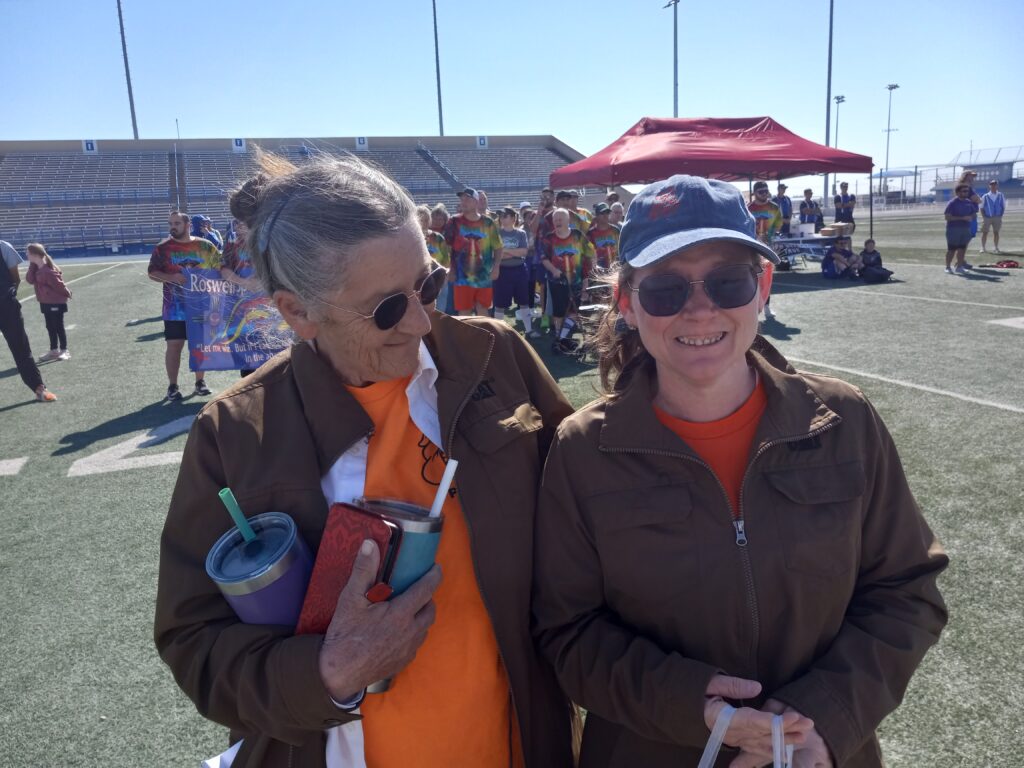
Jessica Posey (right) was congratulated by mom Darby Vernon after she received Area IV Athlete of the Year Award in Carlsbad Saturday.

Special Olympics athletes from Artesia stand for the National Anthem during the Area IV Special Olympics Summer Games in Carlsbad.

Aalise Coddington of Special Olympics Pecos Valley during the softball toss at the Area IV Summer Games in Carlsbad on Saturday.

Lea County Special Olympian Jami Berry competes in Bocce Ball.

The Artesia Lady ‘Dogs softball team win the District 4-4A championship

0

The Artesia Lady ‘Dogs softball team wrapped up the District 4-4A championship with a sweep of Portales 8-5 and 12-0 on Thursday. Artesia is 19-7 overall and 8-1 in district. Provided by Artesia softball team

Artesia softball coach Sandra wins 200th game

0

JT Keith

Artesia Daily Press

jtkeith@elritomedia.com

Artesia softball coach Sandra Pulido is so relaxed that before her Lady Bulldogs take on the Goddard Lady Rockets in a doubleheader softball game, she is pitching to her daughter, Rhys Pulido. Minutes later, she is at home plate handing in the lineup card.

Pulido has her team in a tie for first place (16-7 overall, 5-1 district) after sweeping Goddard, 8-0 and 10-0, April 25 at the Mack Chase Sports Complex.

200th win

Many fans missed the significance of a 3-2 victory over rival Lovington on Tuesday, April 22. The win was Pulido’s 200th as the Artesia coach.

For Pulido, the victory went unnoticed. Pulido said the 200 wins might be under her name, but they are “for all of us” – fans, community, players, and assistant coaches.

“I feel like it is a big deal,” Pulido said. “It is exciting, but at the same time I can’t do it alone. I am not going on the field playing the game. I would never be as successful as I am without my coaching staff and the girls who put the work in. And the support from my people in the district and the community.”

Pulido said she overlooked the record because she generally doesn’t pay attention to personal accomplishments. The one thing she remembers as a player at New Mexico Highlands is the time she missed hitting for the cycle by not getting a single.

Pulido has been coaching at Artesia since 2016. She has won three state championships – 2017, 2018 and 2021.

The coach has helped players such as pitcher RyLee Crandall prepare for the next level – Crandall moved on to Oklahoma State on a softball scholarship.

Artesia will travel to Portales at 5 p.m. Thursday for a regular season ending doubleheader.

jtkeith can be reached at 575-420-0061, or on X @JTKEITH1

A vampire movie that is so much more 

0

Trip Jennings

This weekend I saw Sinners, the latest movie from director Ryan Coogler. Coogler is best known for the Rocky sequel, Creed, and the two Black Panther films.

Some people have described Sinners as a vampire horror flick. OK, sure, there are bloodsuckers and copious amounts of the red stuff, with plenty of jump scares. But saying Sinners is a horror flick is like saying Chinatown, the 1970s noir classic, is simply a movie about a private eye hired to trail a husband who is believed to be cheating on his wife. Inspired by the early 20th century water wars between a growing Los Angeles and the water-rich Owens Valley,

Chinatown also is about money, power, and corruption — and how the country’s second-largest city came to be.

Like Chinatown, Sinners is about many things all at once — not the least of which is American history, Western civilization, and the many moral questions we should wrestle with as beneficiaries of this complicated legacy.

This sounds overly grandiose, I know. I am open to the suggestion that I am so bewitched by the film that I have lost all perspective. But in the days since seeing Sinners, I can’t shake it as a stream of novels, histories and cultural studies I’ve read over the years have leapt to mind as I’ve ruminated on Coogler’s film.

Some of these books are famous, some are not. I am thinking of novels such as The Color Purple by Alice Walker and Fledgling by Octavia Butler, Song of Solomon by Toni Morrison and Their Eyes Were Watching God by Zora Neale Hurston, as well as Sing, Unburied, Sing by Jesmyn Ward, Devil in a Blue Dress by Walter Mosley, White Tears by Hari Kunzri, The Underground Railroad by Colson Whitehead and American Gods by Neil Gaiman.

The histories loom just as large: The Warmth of Other Suns by Isabel Wilkerson, South to America by Imani Perry, How the Irish Saved Civilization by Thomas Cahill and Can’t Stop, Won’t Stop by Jeff Chang.

Here’s my confession: This column is as much about how reading can enrich one’s appreciation of a particular film, musical piece, artwork, or sculpture, as anything.

As I watched Sinners, scene after scene evoked a period of American history I’d read about, or an idea I’d encountered in a novel, or deep, uncomfortable questions I’d encountered in essays about the many influences that shape a musical genre, and who has the power to name it and, in turn, benefit financially.

Set in the 1930s Jim Crow South, Sinners is, of course, a commentary on White supremacy in the United States. But it is also about a particular time and place. As a native Southerner, I felt a twinge of homesickness for the heavy, humid air of summer and the idioms and cadences with which Southerners often speak to one another (Living around the country has taught me that White and Black Southerners have more in common than many people suspect, even if our politics sometimes separates many of us.)

But it is not just about Southern racism. It is about race in America as told through the lens of the Great Migration. From 1915 through 1970, millions of Blacks escaped the harsh conditions of the South — the terror of lynching, the backbreaking work and limited economic and educational opportunities — for a better life in the North, Midwest and West only to find that the utopia they expected north of the Mason-Dixon did not exist (Two major characters in Sinners set up the story when they return to their hometown of Clarksdale, Miss. after several years in Chicago.)

It also is about the tug-of-war between religious faith and the outside world (A major character in Sinners must decide between a peripatetic lifestyle of a blues musician and his father’s wish that he follow in his steps as a preacher. As a child of a Presbyterian minister who wondered why her seminary-trained son never followed her into the pulpit, I felt this storyline acutely).

It is, unexpectedly, also about Christianity’s destruction of and intermittent integration of Indigenous belief systems into its cosmology over the past 20 centuries as it spread across the globe. (This is represented in Sinners both by a female root doctor, a traditional healer in the rural Black South, and a 1,000-year-old vampire who remembers Christian priests taking his father’s land as they destroyed the pre-Christian culture made up of a mixture of pagan and Celtic influences.)

And it is also about music and its transcendent power to transport us to another plane of existence. At the same time, it is about who has the power to commodify this potent human creation.

I apologize if my musings give the impression that Sinners was dull, an exposition of complicated historical and sociological ideas. It is anything but. It is a fast-moving, entertaining film. After seeing it, in fact, I was shocked to learn its running time is longer than two hours. It felt much shorter.

And that is a mark of great filmmaking, when a movie chock full of this many ideas feels this tight.

That is my way of saying, I hope you’ll give Sinners a chance. It’s worth your time,

Trip Jennings started his career in Georgia at his hometown newspaper, The Augusta Chronicle, before working at newspapers in California, Florida and Connecticut. Since 2005, Trip has covered politics and state government for the Albuquerque Journal, The New Mexico Independent and the Santa Fe New Mexican. He holds a Master’s of Divinity from Columbia Theological Seminary in Decatur, Ga. In 2012, he co-founded New Mexico In Depth.

Artesia High to plant seeds from space

0

Artesia High School

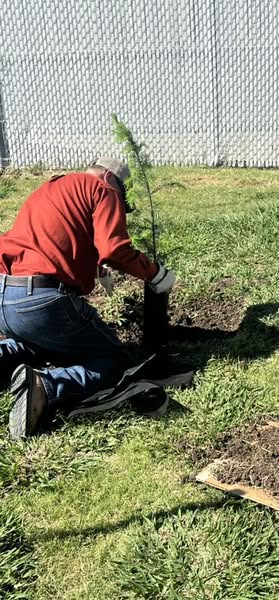
Exciting news for Artesia High School. We are thrilled to announce that we have received an Artemis Moon tree seed, part of NASA’s Artemis I mission (November 16 – December 11, 2022). This incredible gift commemorates the Apollo 14 mission, which carried the first Moon tree seeds into space.  The Douglas Fir Tree can be found at Morris field as we embark on this journey of growth and exploration, celebrating the connection between education, art, and the cosmos!

More Information can be found at https://www.nasa.gov/learning-resources/nasa-stem-artemis-moon-trees/