Home Blog Page 150

Ironman coming to Ruidoso

0

By Todd Fuqua tfuqua@elritomedia.com | Ruidoso News

RUIDOSO – Ruidoso, quickly becoming known as a prime destination for triathlon excellence, will be the site of an Ironman event, July 11-12, 2026. Community members gathered at Downshift Ruidoso on Wednesday to celebrate the announcement.

General registration for the Ruidoso event will open April 23, 2026. Volunteers are also needed to help coordinate and put on the event. Those interested in participating should visit the Ironman 70.3 Ruidoso page at www.ironman.com/races/im703-ruidoso-new-mexico. To volunteer, visit www.ironman.com/races/im703-ruidoso-new-mexico/volunteer.

Judy Stowers, regional director for Ironman, said she expects up to 2,500 athletes to come to Ruidoso, particularly in the week before, to train and prepare.

“Ruidoso is known for its horse racing and endurance type of events,” Stowers said. “When we toured the area in March, we determined that this community has the infrastructure and support from local officials needed to hold the event.”

“I’m from a small town, and every time I come here, it feels like I’m home,” she added. “This is an important milestone for Ironman and Ruidoso. Our mantra is ‘anything is possible,’ and we’re excited to bring this to the community in Lincoln County. We could not be more excited to be here.”

The Ironman announcement comes on the heels of Ruidoso’s selection as both a Gold Level XTERRA off-road triathlon event this August and next year’s XTERRA World Championships, making this area a premier destination for elite multisport events.

The difference between XTERRA and Ironman events is the terrain, with XTERRA being run on rugged off-road trails for cycling and running while IRONMAN follows a classic road triathlon format featuring a 1.2-mile swim, 56-mile road cycling course and 13.1-mile run.

While Ironman races have been held since the first event in 1978 in Hawaii, this will be the first-ever Ironman competition of any kind held in New Mexico. It will also feature more than just one race – a 70.3 triathlon, a 5150 triathlon, and a sprint triathlon, all of which are part of the internationally renowned Ironman series of races.

The Ironman 70.3, also known as a Half Ironman, refers to the distance of the course in miles while the 50150 triathlon series, introduced in 2011, gets its name from the race’s Olympic distance of 51 kilometers. The sprint triathlon is half the distance of the 5150.

Ruidoso’s event schedule is unique for an Ironman event, as all previous races have been one-day affairs. A two-day event featuring three races is a first. The 5150 and sprint triathlons are scheduled for July 11; the Ironman 70.3 will be run on July 12.

Each of these Ironman series consist of more than 100 qualifying races in 40-plus countries, with the top-ranked athletes from the events advancing to the Ironman 70.3 and 5150 World Championships, being held this year in Marbella, Spain, Nov. 8-9. The World Championships rotate locations yearly around the globe.

Men and women who compete at the Ruidoso event will qualify for the 2027 World Championships.

The course for the Ironman 70.3 is still being finalized. It will start with swimming at Grindstone Lake, with the bike leg running from there down Carrizozo Canyon to Sudderth. Contestants then will ride down Highway 70 toward Hondo before turning back for Ruidoso. Once there, they will disembark for the running leg, which will wind its way through village streets before finishing at Winfield Park.

Shane Asbury, who has put on numerous outdoor racing events in southern New Mexico through his company Wanderlust Running, was contracted by Ironman to be the race’s director. He said Ironman regularly employs local racing professionals at events around the world to better connect with the community.

“Everyone I’ve met so far working this event is local,” Asbury said. “They want local feet on the street as the face of the race. We have a year to really put on a show here and show off what Ruidoso can mean to the marathon and triathlon industry.”

Asbury has coordinated marathons in Las Cruces, Cloudcroft and Ruidoso. He’s also a finisher in Ironman 70.3 events in Austin and Lubbock, Texas.

“I grew up running, and I turned my passion into my business,” Asbury said. “I’ve been on both sides, knowing what it takes to prepare for and compete in an Ironman event, and now what it takes to put one of these on.”

Beyond raising Ruidoso’s already considerable profile in international endurance racing, the Ironman event will also have a $14 million economic impact on the area, said Ruidoso Mayor Lynn Crawford.

“This prestigious event represents a perfect match for our beautiful mountain community and outdoor recreation culture,” Crawford said. “We look forward to welcoming athletes and spectators from around the world to experience our hospitality and the challenge of competing at our high elevation. This will provide significant benefits to our village for years to come.”

Jack Byers throws a no-hitter for the Artesia Bulldogs

0

By JT Keith

Artesia Bulldogs pitcher Jack Byers threw darts in his bullpen session while warming up for his April 8 start against the Roswell Coyotes on the road.

The bullpen session was merely a prelude to what Roswell’s batters would encounter.

Byers struck out the side in the first inning and racked up 16 strikeouts in all while hurling a six-inning no-hitter that ended on the 10-run rule as the Bulldogs coasted to a 14-0 victory. The win improved Artesia’s season record to 11-6.

“In the first inning, I knew it was going to be a good outing because I struck out my first three guys,” Byers said. “My curveball and fastball were my strengths in the game.

Byers faced only 21 Roswell batters and threw just 87 pitches, including 62 strikes.

Artesia coach Jackson Bickel said he originally planned on limiting Byers to 40 pitches but decided to let him go as far as he could after Byers said he felt great following a morning weight-lifting session.

“I felt good before the game,” Byers said. “My arm had a week to rest so I knew it was at its best potential.”

The 6-foot-3 junior is a three-sport athlete who plays wide receiver on the football team and guard/forward in basketball. He helped lead the Bulldogs to this year’s 4A state basketball championship.

Byers’ parents, Jack and Anna Whitmire, said watching their son throw a no-hitter made for a fun time. They said they avoided talking about or even thinking about what was happening until the game was over because they didn’t want to jinx the no-hitter.

Roswell coach Ernie Lujan was impressed by Byers’ performance.

“He was on point against us,” Lujan said. “He had us on our heels the whole night and was able to command his pitches in crucial counts. He is a kid with a bright future on the mound.”

It’s About the Cross

0

By:Pastor Rick Smith

In Mark 15:22-39 is the account in the gospel of Mark that tells us about the crucifixion of Jesus. Everyone who has put there trust in Jesus loves the cross. That has got to be strange to those who don’t know Jesus. I mean, think about it. This cross is not jewelry, but an instrument of execution, an instrument of torture. It was designed to inflict the most suffering for the longest time possible. Why would anyone wear a cross around their neck? And why would we sing with such love about “the old rugged cross” considering the suffering, pain, and shame that Jesus endured there? This is my answer. Everything comes together at the cross: sin, judgment, and death along with forgiveness, love, righteousness, and eternal life. “For God so loved the world, that he gave his only begotten Son, that whosoever believeth in him should not perish, but have everlasting life.” (John 3:16).

Why John 3:16? It’s about the cross. Much of the Old Testament prophecies tell us about the crucifixion of Jesus. The earliest prophecy was actually a curse against the serpent, against Satan. “And I will put enmity between thee and the woman, and between thy seed and her seed; it shall bruise thy head, and thou shalt bruise his heel.” (Genesis 3:15). But there are other prophecies and shadows of the cross. One is the story of Abraham offering of Isaac (Genesis 22) foreshadowing the cross. Psalm 22 pictures the crucifixion and contains the cry of Jesus from the cross: “My God, my God, why hast thou forsaken me?” (Mark 15:34). Daniel prophecies that the Messiah (Jesus) would be cut off (Daniel 9:26). And Isaiah 53:7 prophesied that Jesus would be offered as the Passover Lamb. And Isaiah tells us that God shall see the “travail” of the Messiah’s soul and shall be satisfied (Isaiah 53:12). Jesus death on the cross satisfied God’s righteous judgment.

My friends, it is about the cross. Everything Jesus did was leading to the cross. Every miracle that Jesus did brought Him one step closer to the cross. The devil was raging against everything that Jesus did, but God the Father repeatedly said, “This is My beloved Son in Whom I am well pleased.” Jesus prophesied of His death, particularly His death on the cross, even calling His disciples to take up the cross and follow Him (Mark 8:32). On three major occasions Jesus told His disciples that He was going to die (Mark 8:31-38; 9:30-32; 10:32-34). Jesus was born to die on the cross. Jesus, the eternal Son of God, came to die on the cross. “Who, being in the form of God, thought it not robbery to be equal with God: But made himself of no reputation, and took upon him the form of a servant, and was made in the likeness of men: And being found in fashion as a man, he humbled himself, and became obedient unto death, even the death of the cross.” (Philippians 2:6-8). Jesus life and ministry was all about the cross.

My friends, our only hope is the cross. The hymn Before the Throne has this line: “Because the sinless Savior died, My sinful soul is counted free, For God the just is satisfied To look on him and pardon me…” God loved us so much that He gave us His Lamb, the Lamb of God—Jesus, to die in our place. We deserved – and still deserve – to go to hell, but John 3:16 is in effect. Jesus died for our sins according to the scriptures. Jesus paid the debt that I cannot pay. Jesus took my place in the judgment of God. In Ralph Carmichael ’s song When I Think of the Cross, the chorus reads, “Just to think of the cross Moves me now The nails in His hands His bleeding brow To think of the cross Moves me now It should have been me, It should have been me, Instead I am free, I am free!”

There are some things that cannot be understood from a distance. God says, “Draw nigh to God, and he will draw nigh to you. Cleanse your hands, ye sinners; and purify your hearts, ye double minded.” (James 4:8). And you cannot draw near to God until you come to the cross and leave your sins there and take up the cross and follow Jesus. Sin has you, but Jesus defeated sin, death, and hell at the cross. It’s about the cross. It’s about your sin. It’s about Jesus dying for you to give you a new life. You can have a new life because Jesus took your place on the cross.

If you have any questions, we invite you to visit with us this Sunday. Worship at 10:50 A.M. We are located at 711 West Washington Ave. Check our sermon videos on Youtube @ricksmith2541. Send comments and prayer requests to prayerlinecmbc@gmail.com.

Rick Smith is the Pastor at Calvary Missionary Baptist Church in Artesia.

The Time is Now: Why the LESC Must Lead New Mexico’s Education Transformation

0

By Loretta Trujillo

Ask any New Mexican if education matters, and the answer is a resounding “Yes.” Across our diverse communities, there is broad agreement: we want our children to grow up with opportunity, with schools that prepare them for a future defined by possibility, not limitations. Still, the road to fulfilling this shared vision has been anything but easy.

In 2018, the Yazzie/Martinez v. State of New Mexico court ruling confirmed what families, educators, and tribal leaders had long said. Our state was failing to meet its constitutional obligation to provide a sufficient education for all students, especially Native American students, English language learners, students with disabilities, and children from low-income families. The court ordered systemic change, but six years later, that promise remains unfulfilled.

That’s why the Yazzie and Martinez plaintiffs filed a motion in September calling on the state to develop a comprehensive remedial action plan: a clear roadmap for fixing what remains broken. Our students can’t wait. We need bold, coordinated leadership to make good on the court’s order, and the Legislative Education Study Committee (LESC) is the right body to lead the way.

The LESC brings unmatched expertise, capacity, and connectivity across state systems. As a nonpartisan committee of the Legislature, the LESC benefits from dedicated analysts who provide in-depth research, policy analysis, and data to support informed decision-making on education issues.

For decades, education policy in New Mexico has been shaped by deficit-based thinking: policies aimed at “fixing” students instead of transforming systems. This mindset has disconnected young people from their culture, language, and identity. The result? Too many students feel disconnected from school, particularly those pushed furthest from opportunity. We need a new vision, one that builds on the strengths of our communities. LESC analysts maintain strong working relationships with the Public Education Department, tribal leaders, school districts, and community advocates. These relationships are essential to building a plan rooted in both data and the lived experience of New Mexican students.

To be truly effective, any plan must be rooted in the lived experiences of families, educators, tribal governments, and especially students. It must establish clear goals, measurable outcomes, and strong accountability to ensure equity. Our children deserve an education system that recognizes who they are, values where they come from, and equips them with the tools to thrive.

As Executive Director of Transform Education New Mexico and a 20-year educator, I know the stakes are high. But I also know what’s possible when we lead with courage and collaboration.

This call is about more than just a plan. It is about aligning our dollars with a transformational vision, growing capacity where needed most and creating an education system worthy of our children’s brilliance and rooted in our multicultural values. We must remain steadfast in our commitment to advancing equity, honoring cultural and linguistic identity, and ensuring every child receives the education that the state is constitutionally obligated to provide.

Loretta Trujillo is the Executive Director of Transform Education New Mexico.

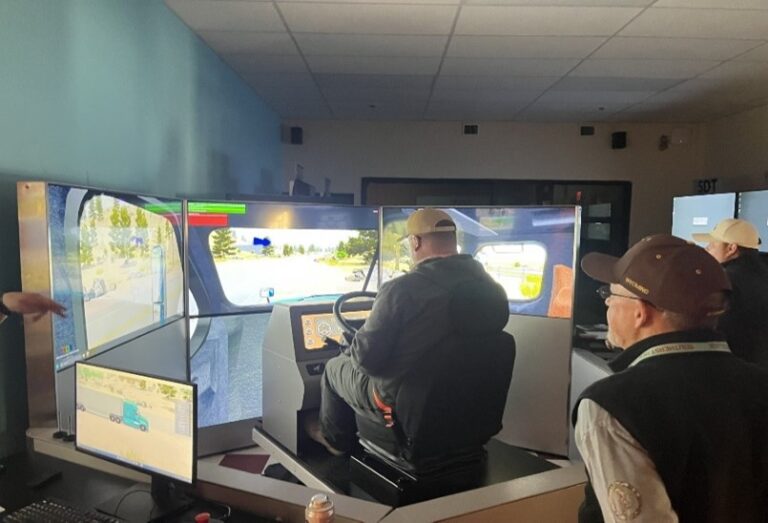
College showcases new simulator lab

0

Staff reports

Southeast New Mexico College (SENMC) has partnered with Fifth Dimensions Technologies (5DT) to invest $3.2 million in the latest state-of-the-art simulator technology to assist with industry training in Eddy County, New Mexico.

“SENMC is leading the way in the latest technology to support the industries in Eddy County,” said Vice President of Workforce Development and Community Engagement Monty Harris. “With this investment, we are going to be training employees in situations not possible before with a focus on making the industries in Eddy County much safer.”

SENMC is working with every industry in Eddy County to provide the equipment and simulators that the companies use. The college has worked continuously to bring training to our community and are providing the community with the equipment needed to be safe and successful while in the field.

Simulator equipment includes:

•Road Truck (Semi-Truck)

• Commercial Driver License (CDL)

• Underground Loader

• Roof Bolter

• Utility Truck

• Continuous Miner

• Forklift

• Mobile Crane

• Walk-Around Inspection Stations

“Providing local training to better equip our current and future workforce at the Department of Energy’s (DOE) Waste Isolation Pilot Plant (WIPP) is vital to our success and the future of Southeast New Mexico,” said Mark Bollinger, manager of DOE’s Carlsbad Field Office. “Offering industry-specific training will ensure we are well-prepared to accomplish DOE Environmental Management’s mission to clean the environment, contribute to national security priorities, and strengthen economic growth in our local communities.”

Southeast New Mexico College is the only college in New Mexico and West Texas that utilizes the latest simulator technology to help train the local workforce. A wide variety of training scenarios are provided by the department, and trainees take a systemic journey of exploration to practical uses. SENMC enjoys the strong support of its community, and has been awarded several grants, which includes $11.7 million from the U.S. Department of Energy.

Anyone interested in learning more about the SENMC Workforce Simulator Lab, please call 575-234-9277.

Entertainment guide offered to readers

0

While it’s true that men and women are circling the globe in space, writing “personal” letters with help from AI robots, and counting on “Alexa” to remember the kids’ birthdays, life on most days can still be fairly down to earth and often frustrating.

Technology isn’t always our friend.

“I can’t find the remote. I’m missing the end of the game!”

“What time does The Voice come on? I want to hear that local kid sing!”

You buy a “smart” TV only to find out it’s not smart enough. You can’t even find the onscreen program listings.

Take heart. A SAVIOR HAS ARRIVED.

Starting on Thursday, April 17, your Carlsbad Current Argus will include a weekly television and entertainment guide.

It is our slightly old-fashioned but enduringly tried-and-true solution to the vexing question: What’s on TV?

The 24-page guide, Entertainment Now, will be inserted in your newspaper every Thursday, bringing you complete television listings, streaming schedules, news and features from the world of entertainment, and a variety of puzzles and games.

And it’s FREE with your copy of the newspaper.

So put down your smart phone. Stop trying to wade through that onscreen maze to find out when and where to watch your favorite TV show. Just park your copy of Entertainment Now on the coffee table and grab it whenever you need help. Did you hear that, Alexa?

Council throws a flag on youth football

0

Rebecca Hauschild
For the Artesia Daily Press

The city of Artesia’s recreation department will change its tackle football program for fifth and sixth graders to flag football following a vote by the City Council on Tuesday, April 8.

The council acted after receiving unanimous recommendations from the recreation advisory committee and the city event board.

“It was unanimous,” said District 1 council representative Raul Rodriguez, who is a member of the advisory committee. “We are looking out for the future of our kids.”

Jayde Burnell, the city’s recreation supervisor, surveyed several members of the community and researched the issue before recommending the change.

Burnell said some football coaches were not enthused about the change but “everyone else is excited about it being flag football because they (participants) are still learning the skills … I think it opens us up to be more versatile.”

Rodriguez said flag football is “a growing sport. I think we’re headed on the right track. One of our goals is to grow the programs.”

In other business:

• Byron Landfair, community development/infrastructure director reported that concrete work on retaining walls is starting on the 26th Street project and crews are laying water line on Grant Street while keeping the westbound lane open.

• District 3 council member Jeff Youtsey reported that a company called The Towers LLC wants to construct a telecommunications tower at the Senior Mill site property near the CVE property line. Youtsey said The Towers would contract with communication companies to use the facility, which would be similar in appearance to a tower at ABU shopping center that has panels to cover the electronics.

• Rodriguez expressed concern about speeding traffic at Jaycee Park, suggesting the city look for ways to slow traffic and reminding the public to slow down while driving in the park.

• City Clerk/Treasurer Summer Valverde reported on projects underway at the Artesia Airport in preparation for the Roswell Air Races in September. Valverde said a quote for roof repairs has been received and will be presented to the council in the near future and that work will start on interior remodeling after roof repairs are completed. In addition, Valverde said, crews have almost finished fixing the runway and the city is working with a contractor on a bid for a new hanger.

• During the public comment period, Pastor Scott Pettus of First Church Artesia proposed bringing a skydiving exhibition to Artesia during Roswell’s air races. “We think it will be a good draw for people in the air sports world,” said Pettus, a 25-year veteran of the U.S. Marine Corps who said he has been involved with skydiving exhibitions around the world. The exhibition would be provided by Skydive New Mexico, a 501C4 operation from Belen, Pettus said.

Jimenez acquitted in 2017 murder case

0

Adrian Hedden
El Rito Media
achedden@currentargus.com

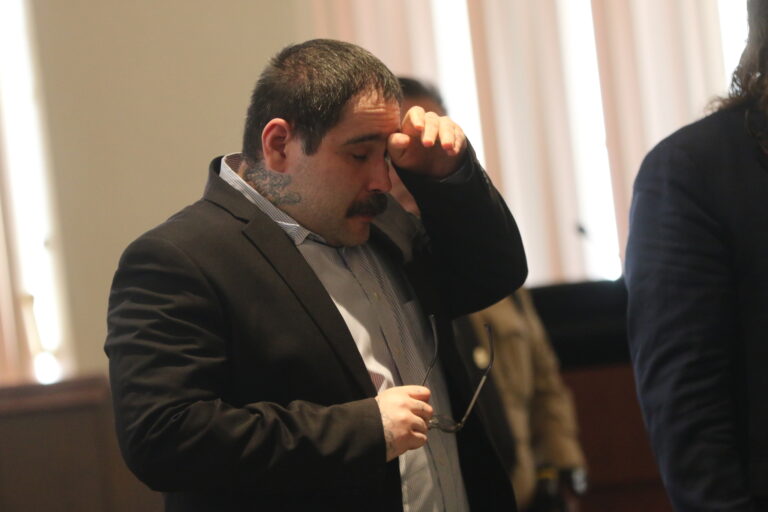
Michael Jimenez wiped tears from his eyes as a jury acquitted him of first-degree murder after a six-day trial ended Monday in Carlsbad.

The jury had the option of convicting Jimenez on a lesser charge of second-degree murder but voted 11-1 in favor of acquittal. Lacking a unanimous verdict, the judge declared a mistrial.

Jimenez could face a future trial for second-degree murder but was released from custody after being imprisoned for four years awaiting trial in Fifth Judicial District Court.

Jimenez, 33, of Artesia was first charged eight years ago with killing Danny Mendes, 49, in a remote area of Eddy County near Four Dinkus and Haystack roads. Mendes, of Roswell, was found beaten to death in the roadway in March 2017.

Ryan Morgan, 29, first accused Jimenez of beating Mendes to death during a fight near the scene of the murder, but Morgan later recanted and said he committed the homicide. A single count of first-degree murder against Jimenez was dropped about a month after the incident.

Jimenez was rearrested in May 2021 after a former girlfriend told police he confessed to her that Morgan struck Mendes first in the head with a hammer and Jimenez finished him off with the same weapon.

For his role in the death, Morgan was charged with first-degree murder but accepted a plea deal for second-degree murder and was sentenced to 16 years in prison.

At the conclusion of Jimenez’s trial, the 12-person jury unanimously found him not guilty of first-degree murder but was hung on a charge of second-degree murder. Instructions for both charges were provided to jurors, who voted 11-1 in favor of finding him not guilty of the lesser charge.

District Judge David Finger declared a mistrial, and prosecutor Ariane Gonzalez said the state would retry Jimenez for second-degree murder. A new trial date was not yet set.

Jimenez, who served four years in pretrial incarceration, was released from the Eddy County Detention Center while he awaits future proceedings.

Defense Attorney Todd Holmes said his strategy throughout the trial was based on raising doubt with jurors about Morgan’s version of events as he testified on the witness stand to Jimenez’s involvement in the murder.

“From day one, he (Morgan) was just trying to save his own criminal liability,” Holmes said. “The dude has no remorse. He was asked why (the murder) was weighing on his mind, and he said, ‘I dunno.’”

After the verdict was read, Jimenez’s family members extended their fists in victory, relieved he was being released after almost half a decade behind bars.

“I was happy when I turned to see his mom. She just started crying,” Holmes said. He’s been in jail for four years. That’s a long time. Overall, justice was served. That’s our system.”

Following the acquittal and mistrial, Gonzalez asked Finger to require a $20,000 secured bond for Jimenez’s release, which Holmes argued was tantamount to no bond after the defendant was incarcerated and unable to generate any income to pay the bond.

Finger granted Jimenez a $100,000 unsecured bond, meaning he does not have to put up the money, but will be liable for it if he misses any future court dates. In issuing his decision, which resulted in Jimenez’s release, Finger questioned whether the state had a strong case for second-degree murder as only one juror voted in favor of conviction.

“The court does find that there has been a significant change in circumstances,” Finger said. “The split indicates the case might not be as strong.”

Gonzalez argued that based on Jimenez’s criminal history – a 2018 probation violation in an unrelated case and another unrelated embezzlement conviction in 2019 – the defendant was still “a danger to the community.”

“I don’t think the history of Mr. Jimenez has changed, nor the facts of the case,” she said. “I believe Mr. Jimenez is still a danger to the community. The state feels there is still a need for pretrial detention.”

Lujan Grisham signs oil fee hike into law

0

Adrian Hedden
Carlsbad Current-Argus
achedden@currentargus.com

New Mexico will be allowed to charge oil and gas companies more to drill on state land after Gov. Michelle Lujan Grisham signed a bill into law last week.

Senate Bill 23, sponsored by Sen. George Munoz (D-4) who chairs the powerful Senate Finance Committee that devises the state’s budget each year, raised the cap on royalty rates oil companies pay as a percentage of their proceeds from operations on State Trust land.

It was the only major oil and gas reform bill that passed the Legislature during the 2025 lawmaking session in Santa Fe, which concluded March 22. This year’s 60-day session was focused on public safety, with several bills related to the fossil fuel industry stalling and failing to make it to the governor’s desk.

Friday, April 11, was the final day for Lujan Grisham to veto or sign bills into law. After the deadline, any bills not signed would be vetoed by default in a process known as “pocket veto.”

After it was signed, SB 23 allowed for an increase of the previous oil and gas royalty rate cap from 20% to 25% for operations on tracts of State Trust land in the Permian Basin area – lands appraised by the New Mexico State Land Office as containing the most valuable mineral resources.

The increase was expected to generate up to $50 million a year in Land Office revenue, funds that are used to support the office’s statutory beneficiaries such as public schools and hospitals.

Following his bill’s signing into law Thursday, Munoz said it would allow New Mexico taxpayers to get a higher fiscal benefit from the state’s ongoing oil boom, which led New Mexico to become second in the U.S. in oil and gas after only Texas, with which New Mexico shares the Permian.

“The money earned from oil that is extracted from State Trust lands benefits institutions in New Mexico including our public education system,” Munoz said. “Those institutions will now receive millions of dollars in new money every year.”

But the oil and gas industry is a key economic driver for New Mexico, producing almost half of the state’s budget  – about $13 billion in the last fiscal year – for state and local governments, according to the New Mexico Oil and Gas Association.

Throughout the 2025 legislative session, which saw SB 23 pass both the Senate and House despite staunch Republican opposition, industry leaders argued that raising the rate – even on the limited tracts of land the bill specified – could unduly burden fossil fuel producers.

Jim Winchester, president for trade group the Independent Petroleum Association of New Mexico said the higher rates would price smaller operators out of the lucrative region on the western side of the Permian Basin – a subbasin known as the Delaware that straddles the New Mexico-Texas border.

“Our concern lies in the periphery areas around the geologic border of the New Mexico Delaware Basin, as close as one mile from the basin’s edge where our independent members take risks (and) spend a lot of capital on infrastructure with the hope that reserves there will pay back the investments,” Winchester said during a Feb. 18 meeting of the Senate Finance Committee where the bill was passed.

New Mexico Public Land Commissioner Stephanie Garcia Richard, who oversees management of State Trust land, countered that the bill was only for new leases on State Trust land in that area, and that the higher rate better reflected the “market value” for New Mexico public land sought by the oil and gas industry.

Garcia Richard advocated for raising the rate since she took office in 2019, arguing it was a necessary step for New Mexicans to get their “fair share” of the state’s oil revenue. The 25% rate was comparable, she said, with rates paid to drill on private land in New Mexico and state land in Texas.

“By bringing the state’s royalty rate for premium oil and gas lands in line with what is charged in Texas and on private lands in New Mexico, we are making a smart business decision,” Garcia Richard said. “You always want to get maximum returns for the best resources, and the oil in New Mexican’s Permian Basin is some of the best in the whole world.”

Gov. signs water bills

Although most other bills intended to add regulations on oil and gas operations failed during the session, Lujan Grisham did sign into law multiple pieces of legislation that could impact the industry in the name of water conservation.

House Bill 137 was signed into law on Tuesday, April 8, to create the state’s “Strategic Water Supply” program, which will offer grants and loans for projects to treat brackish water, meaning water high in salinity, for uses such as agriculture.

Large amounts of naturally brackish water are generated by the oil and gas industry during well completions, as the fluid is brought to the surface from underground along with crude oil and natural gas.

The governor also signed Senate Bill 21, which gave broader authority to the state of New Mexico to permit the use of groundwater resources by industries such as oil and gas operators and agricultural producers.

This bill was a response to a 2023 Supreme Court decision that confined such federal protections to “continuous” bodies of water. Supporters of SB 21 argued that many of New Mexico’s rivers and streams see portions go dry during arid conditions, meaning they were no longer federally protected and expanded state permitting was needed.

<n>