Home Blog Page 150

Rogue’s new engine improves fuel economy

0

Review & Photos by: Len Ingrassia
Automotive columnist

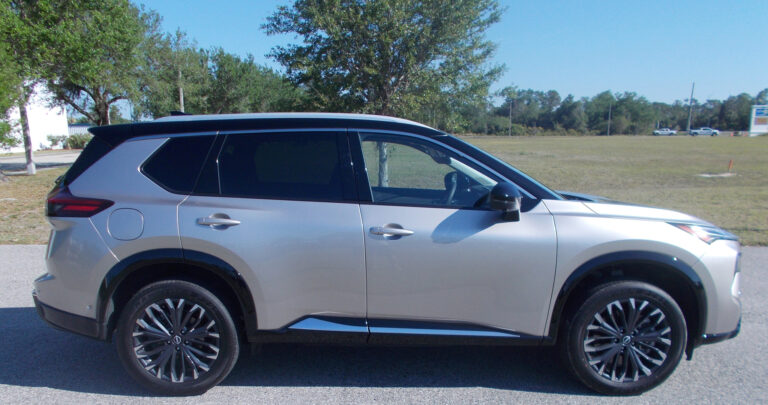
Not only does this year’s Nissan Rogue have a new and stylish horizontal grille replacing years of its staid V-Motion design, it also adds some high-tech cameras that minimize or eliminate front-end damage.

The 2025 model also adds a new three-cylinder engine across its lineup that greatly improves fuel economy at the cost of mild acceleration. A new Rock Creek edition appeals to mild adventurists preferring the dirt road over pavement dwelling .

Part of a pricey Technology Package, new surround cameras display a 176-degree view seeing around garage pillars or parked vehicles. Its Invisible Hood View uses advanced image processing to project a view of the roadway under the engine bay to avoid hitting curbs as well as help in placing front wheels in a car wash track. Nice feature.

All Rogue trims include automatic emergency braking with pedestrian detection, blind spot warning, rear cross traffic alert, lane departure warning, high beam assist and rear automatic braking.

Rogue is available in five trims: S, SV, Rock Creek, SL and Platinum with base prices ranging from the low $30s to $40s. Our decked-out Platinum tester stickered just under $50,000 pushing some buyers to high-end and more powerful sedans. The SL trim appears to be the best value in the high $30s with full leather, technology, driver assistance and infotainment system.

The new engine is rated at 201 horsepower sending 225 lb-ft of torque to its front wheels or optional all-wheel drive. In our independent testing, the new Rogue accelerated from zero to 60 miles per hour in 8.3 seconds, similar with last year’s four-cylinder powerplant featuring 181 ponies.

With improved driving dynamics, Nissan believes they have another hit since the popular compact model debuted in 2008. We agree but wish more oomph was under the hood to prop up mediocre acceleration.

Pros:

Handsome looks

High tech interior

Roomy cabin

Cons:

Upper trims pricey

Pokey

Noisy engine

Controls are intuitively placed and redundant manual knobs make radio tuning a breeze without drilling down in pull-downs. Connectivity is made easy with wireless Apple CarPlay and Android Auto.

Upper trim Rogues feature twin 12.3-inch digital screens, one featuring engine vitals while the center console touchscreen features Google’s built-in suite of applications like most smartphones on the market as well as a plethora of Nissan apps.

Our tester included a 10-speaker Bose premium sound system, heads-up display, panoramic moonroof, 19-inch alloy wheels, exterior ground lighting and interior accent lighting.

In highway travel, once up to speed, the Rogue offers a compliant ride with precise steering, firm braking and little body roll. While it lacks in passing power, the Rogue delivers a smooth ride with 19-inch alloys and suspension that absorbs most pavement irregularities.

Nissan’s Pro-Pilot Assist 2.1 combines numerous safety tech gear to keep you safe in most driving conditions although disclaimers keep the driver uppermost in control.

With the redesign, be sure to include the new Rogue in your short list of test drives along the Toyota RAV4, Honda CR-V, VW Tiguan, Kia Sportage and Hyundai Tucson.

(Contact independent automotive columnist Len Ingrassia at editor@ptd.net)

What was reviewed:

2025 Nissan Rogue Platinum AWD

Engine: 1.5-liter three-cylinder, 201 horsepower

EPA rated mileage: 28 city, 34 highway, 31 combined

MSRP/as tested: $40,920 / $48,680

Assembled: The Nissan Rogue is assembled in Nissan’s Kyushu, Japan or Smyrna, TN Nissan facilities. Nissan headquarters are located in Japan. Information on U. S/Canadian parts content, major source of foreign parts and origin of engine and transmission was not available.

Crash test ratings: The Insurance Institute for Highway Safety (IIHS) gave the 2025 Nissan Rogue a “Good” rating, its highest in small and moderate overlap crash tests and second best “Acceptable” in side crashes. Information from the National Highway Traffic Safety Administration (NHTSA) was unavailable.

Warranty: 3-year/36,000-mile basic; 5-year/60,000-mile powertrain; three scheduled oil changes within 2 years/24,000-miles whichever comes first.
Mother Nature shortened the New Mexico State scrimmage, but the real winner is the city of Artesia

0

By JT Keith

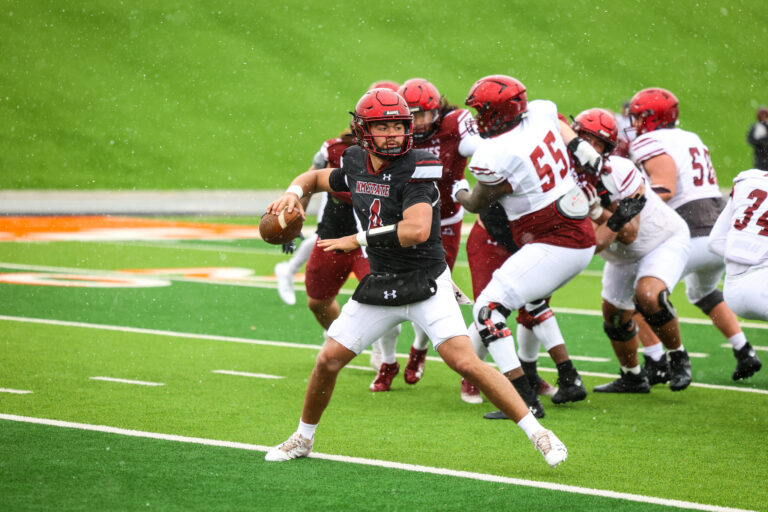
The spring scrimmage New Mexico State University’s football team played at the Bulldog Bowl on Saturday was supposed to introduce the Aggies to Artesia and southeastern New Mexico.

Coach Tony Sanchez wanted to get “eyes on the Aggies” and make NMSU football accessible to the state’s southeastern region. He hoped families from Artesia, Carlsbad, Portales, Ruidoso, Loving, Lovington and Hobbs would bring their kids to the game and have a good time.

“We don’t want just part of New Mexico supporting us,” said Sanchez, an Aggie teammate of former Artesia quarterback Ty Houghtaling and receiver David Patterson, respectively, in the 1994-1995 seasons. “We need all of New Mexico supporting us.”

Bad weather ruins the game

Unfortunately, the weather didn’t cooperate. Forecasts called for rain and cold temperatures, but no one could have predicted how Mother Nature would ruin the day.

Fewer than 20 people were in the stands, and the game turned into a weather nightmare. From the 10 a.m. start to the finish at about 11:30, the players endured a mix of sleet, rain and snow with winds ranging from 8 to 16 mph. The temperature was 35 degrees, but it felt like 10 degrees as the wind swept from left to right inside the stadium.

NMSU benefits from being in Artesia

Even so, Sanchez said, all was not lost, and the weekend benefited his team. Sanchez had dinner with Aggie boosters on Friday night, NMSU put on a coaching clinic for area high school coaches, and the trip to Artesia allowed the Aggies to get a taste of the travel facing the team once the season begins.

The city of Artesia benefits from the game

The scrimmage was cut short because of the weather, but Artesia benefited economically from having the Aggies in town.

Consider the one-night New Mexico State stayed in Artesia: The Aggies split their lodging between two hotels with half the team staying at the Sparks by Hilton and the other half at the Best Western Pecos Inn.

The team had a meal catered by Lucky Duck on Friday night and ate at First Baptist Church, where Houghtaling is the pastor. Lucky Duck also catered breakfast on Saturday. And Alma’s catered lunch on Saturday after the game – a grab-and-go to the bus.

Economically, the game was a win for Artesia as it generated lodger tax money and food income the city would not have seen if NMSU had played its spring game at home in Las Cruces. With better weather the next time the Aggies come calling, the economic impact could be even greater.

“It was a great experience,” Artesia head football coach Jeremy Maupin said. “They (NMSU) have a great staff that did a coaching clinic for us Friday. They did some admission things for our kids. The game was great and, overall, we enjoyed it. If the weather had been better, it would have been perfect.”

Bad weather does not stop football

Bad weather does not cancel football games unless there is lightning. If there is lightning, the stadium is vacated, and players go to their locker rooms for 30 minutes or until the lightning passes.

NMSU tried to play

Once the team individual period ended, NMSU scrimmaged offense versus defense. The conditions made a mess of the game, causing fumbles, overthrows, underthrows, footing problems, bad snaps and missed tackles. The scrimmage lasted only about 90 minutes, ending after the seventh of 14 periods that were planned.

Sanchez didn’t blame Artesia for the bad weather and said he expects to return.

“We appreciate Artesia High School and the entire city,” Sanchez said. “It was great getting up here and breaking some bread and meeting some nice people. It was great getting up here, and it won’t be the last time we’re here.”

Today’s boogeyman is Elon Musk

0

By: Cal Thomas

As a child I frequently visited relatives in southern Indiana. A great uncle tried to keep me from exploring his cellar (as they were called then) by telling me the boogeyman was down there and would “get you” if I descended the stairs. It worked.

Boogeymen are nothing new. They have existed in the form of politicians going back to the founding of the country. See how Thomas Jefferson and John Adams described each other. One politician says if his opponent is elected, or his party gains a majority, the country will be destroyed. The other says the same about the other person and party. That has worked well, especially for Democrats, who for decades have won votes from scared seniors by falsely claiming Republicans want to destroy Social Security, Medicare and Medicaid.

The latest boogeyman is Elon Musk. Within my short memory, Musk was hailed as a hero for developing Tesla which was going to save the planet. If you wanted to send a virtue signal, you bought one. Now, if you want to send a virtue signal, you get rid of one, or other virtue signalers will vandalize, even destroy the cars and attack Tesla dealerships.

This is about the Establishment holding onto power and their misspent money, nothing else. Some Democrats, who have no policies other than opposition to President Trump, are trying to recover a level of respectability by agreeing there is waste in government, but they want Congress, not Musk and his DOGE team to cut it. This is known as allowing the people who created the problem to provide the solution, which is not likely to happen.

People who choose to serve their country in the military or in public service when they could be making more money in the private sector were once admired and held up as worthy of emulation. John F. Kennedy encouraged that spirit in his 1961 Inaugural Address: “Ask not what your country can do for you. Ask what you can do for your country.”

Musk and DOGE are exposing what many Democrats and some Republicans have done to waste our money over decades. “The era of big government is over,” declared President Bill Clinton in his 1996 State of the Union address. It wasn’t. While Clinton cut 377,000 federal jobs, Presidents Obama and Biden added to the government employment rolls. The federal government is the largest employer in the United States.

On March 27, Musk and some of his DOGE associates were interviewed by Bret Baier of Fox News. Everyone should watch that interview. If you are not outraged by what you hear, you are part of the problem. Here is just one of many examples of the waste and fraud they have uncovered.

Musk: “(fraudsters) steal people’s Social Security … they call in (and) claim to be a retiree, and they convince the Social Security person on the phone to change where the money’s flowing. … This is happening all day every day, and then somebody doesn’t receive their Social Security. It’s because of all the fraud loopholes in the Social Security system.”

Baier: “How do you reassure people that what you all are doing is not going to affect their benefits?”

Musk: “No. In fact, what we’re doing will help their benefits. Legitimate people as a result of the work of DOGE will receive more Social Security, not less. I want to emphasize that. As a result of the work of DOGE, legitimate recipients of Social Security will receive more money, not less money.”

There are numerous other examples of misspending. Look them up and don’t take what Democrats and much of the media are saying as the truth. It isn’t.

Many members of Congress may give lip service to cutting such misspending, but the question is: will they do anything about it? Those TV ads that try selling us stocks and injury lawyers contain very small print that says: “past performance is no guarantee of future results.” With Congress, it seems like it is. They are the boogeymen (and women) in all of this.

Readers may email Cal Thomas at tcaeditors@tribpub.com. Look for Cal Thomas’ latest book “A Watchman in the Night: What I’ve Seen Over 50 Years Reporting on America” (HumanixBooks).

Idaho lab sends 7,500 waste shipments to WIPP

0

Adrian Hedden
El Rito Media
achedden@currentargus.com

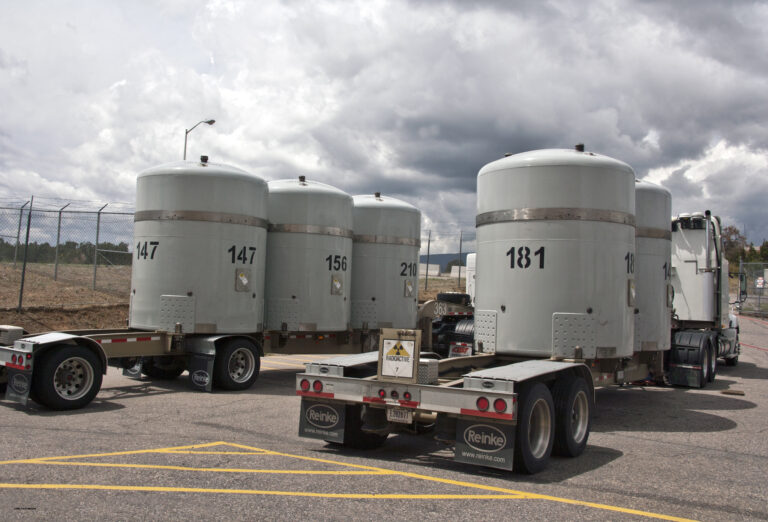
The Waste Isolation Pilot Plant near Carlsbad has received about 7,500 shipments of nuclear waste from Idaho since the facility opened in 1999.

Idaho National Laboratory, where nuclear weapons and energy research is conducted, reported the milestone Tuesday, April 1, as the lab pursues a “legacy waste” transfer plan expected to continue for at least eight more years.

“Legacy waste” refers to materials mostly left over from U.S. nuclear programs during the Cold War. Idaho National Laboratory is moving the waste to WIPP as the result of a 1995 lawsuit settlement between the state of Idaho and the federal government requiring nuclear waste at the lab be removed from the state.

In its latest “Legacy Tru Waste Disposal Plan” published Nov. 4, 2024, the U.S. Energy Department said it expected “most shipments” of Idaho’s waste will be completed by 2033. It was unclear exactly how many shipments remained, according to the plan, as much of the waste was being exhumed after it was initially buried around the lab decades ago.

The Department of Energy reported in January 2024 there were about 30,000 containers left as of 2024, compared with the 65,000 estimated when the 1995 settlement agreement was signed.

At WIPP, the Energy Department disposes of transuranic nuclear waste (TRU), which is clothing materials, equipment and other debris irradiated during nuclear activities.

The waste is buried at WIPP in a salt deposit about 2,000 feet underground. The salt gradually collapses on the waste, burying the refuse and blocking radiation from escaping.

More waste was sent to WIPP from Idaho than from any of the 12 other facilities that make shipments to the repository, according to WIPP shipment records. The 7,500 shipments from the Idaho lab were about 53% of the approximately 14,200 shipments sent to the facility for burial since disposal operations began

Idaho was followed by 2,045 shipments from the now-defunct Rocky Flats Environmental Technology Site near Denver; the Savannah River Site in South Carolina at 1,795 shipments; and Los Alamos National Laboratory in northern New Mexico, which sent 1,680 shipments since WIPP opened.

Idaho sent 341shipments last year, a decline from the 386 shipments the year before but still more shipments than any other facility that sent waste to WIPP in the last two years – about 73% of all the waste sent to WIPP in 2024.

Kelly Wooley, waste management project director at Idaho Environmental Coalition, the contractor hired by the DOE to lead cleanup at the lab, said the facility would continue shipping toward its goal of removing all of the legacy waste from Idaho.

The DOE estimated about 12 shipments leave Idaho for the WIPP site every week.

“I am proud of our many dedicated and hardworking employees,” Wooley said. “This accomplishment would not be possible without them and our collaborative partnership with WIPP.”

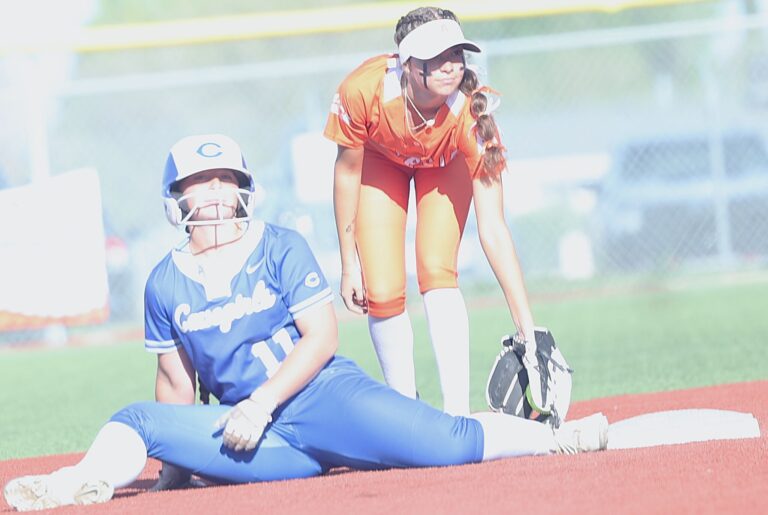
Artesia softball drops a doubleheader to Carlsbad

0

This article has no body content.

Meals with Wheels: Chicken wraps

0

By Wheeler Cowperthwaite

Now that we’re years beyond the pandemic and offices and schools are going back to in-person attendance, one question dominates my morning routine: What will I pack for lunch?

It’s the question that plagues everyone who goes to school or doesn’t work from home.

There are a lot of easy things to pack for a lunch: hummus (I make about two quarts at a time) and pita bread, rice bowls, pasta salad, or whatever leftovers there are in the house.

But sometimes you’ve got to up your game a little, or maybe gussy up your ingredients from two days ago and make them into something that looks or feels like something different.

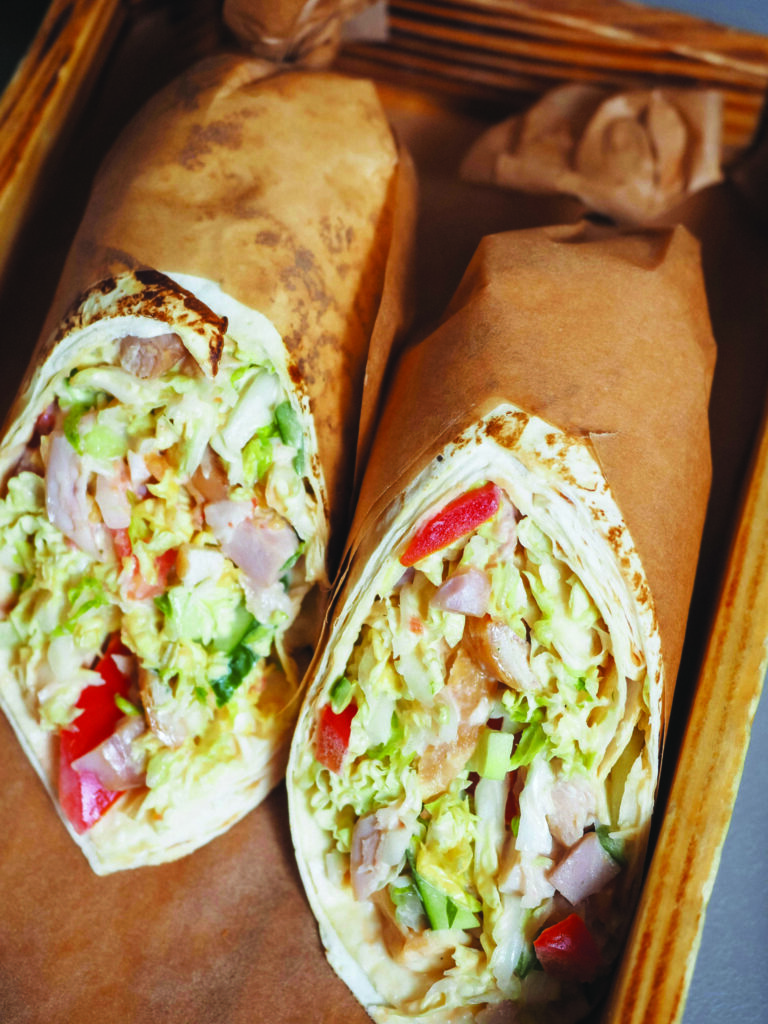
For that, I find the wrap to be perfect. Buy some large flour tortillas at the store and use leftover grilled chicken, baked chicken or leftover rotisserie chicken. The carcass makes a great chicken soup in the pressure cooker, by the way.

You can go heavy on the veggies (because this is really about wraps, not about chicken), use any number of dips as seasoning, like hummus or tzatziki, and look like you’ve prepared something that’s come from a restaurant.

You can also make a wrap with chicken salad, making avocado the star of the show; steak, lunch meat (turkey, ham, bacon), and many of the basic dishes that you may have leftover.

Or, stuff it with regular salad, with some extras thrown in.

Moving in the opposite direction, possibly for picky eaters, fill that tortilla with ranch and cheese, in addition to the chicken, and have the chicken ranch wrap. Grill the tortilla for a few minutes on all sides, the cheese will melt and voíla! lunch is ready to be packed.

The recipe here is not all encompassing but rather, a series of suggestions for what to put in your wrap. Mix, match, use your leftovers, mix some more.

Chicken wraps

1 cooked chicken breast (grilled, baked, boiled), cut into bite-size pieces

1 tomato

Lettuce, spinach or other leafy mixture

1 large tortilla

Cheese

Cucumber

Peppers

Hummus (optional)

Avocado

Directions

Dice any vegetables to be used

Lay the tortilla on a flat surface

Place the sliced chicken in the middle of the tortilla and spread along the length. Add the desired vegetables, cheese, other additions and any seasoning spread, including salad dressing: hummus, tzatziki, or satay sauce.

Roll the tortilla with the ingredients and fold in the ends. Wrap in aluminum foil. Cut as necessary and pack.

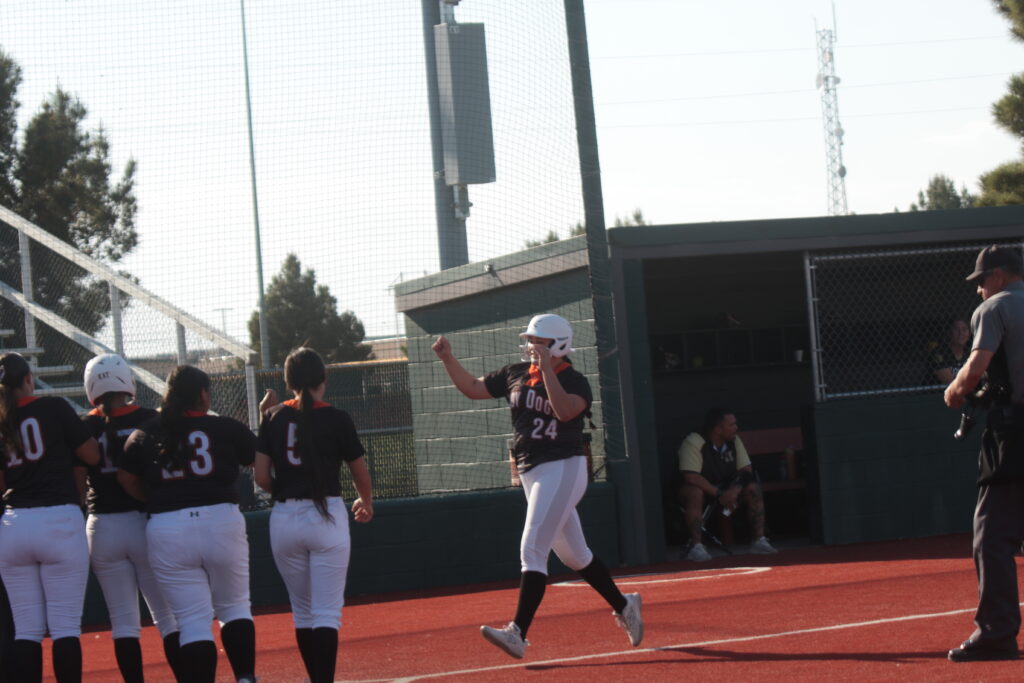
Lady Dogs take doubleheader over Roswell, 14-1 and 3-0 in Saturday softball action

0
Photo by Shawn Naranjo- Artesia’s Brooklyn Fuentes gets ahead of a Roswell baserunner to force an out at second base. Artesia won 14-1, and 3-0, in Saturday’s doubleheader. The Lady Bulldogs are 11-6 on the season and begin district play at Goddard 5 p.m. Tuesday.

Artesia Lady Dogs use the long ball to defeat Hobbs 9-3

0
Photo JT Keith- Artesia’s Kayden Apodaca hit two home runs in Artesia’s 9-3 route over Hobbs Friday.

Million Dollar Jackpot eludes Capitan breakaway roper

0

By Rick Mauch
Special to El Rito Media

The sport of breakaway roping requires blinding speed, bullseye accuracy and at least a smidgen of patience. But patience isn’t easy.

With the world watching on live television and the Globe Life Field crowd in Arlington, Texas, roaring Friday night, 18-year-old Capitan roper Addison Kinser was poised on the brink of rodeo glory and a million-dollar payday.

But it wasn’t to be. In the blink of an eye, Kinser’s dreams of an American Rodeo championship in breakaway roping were dashed as her horse Jlo jumped an instant too soon, causing judges to add a 10-second penalty to her excellent time of 2.22 seconds.

“I left an inch too early. I roped my calf, but I just left too soon,” Kinser said.

To explain what happened to Kinser – and several others Friday night –, the calf in breakaway roping is given a head start by a barrier, which is a rope stretched across the roping box. The calf is attached to this barrier, and must break free before the horse and rider leave the roping box.

Failure to give the calf this head start, known as “breaking the barrier,” results in a penalty. So, Kinser’s time of 2.22 seconds was turned into 12.22. Instead of being in second place, she tied for ninth.

“I thought I did break the barrier,” she said. “Then, I looked back and saw the guy’s hands up and realized, yep, I did.”

Kinser was riding a horse she purchased just a few days before the event and had only ridden three times.

“I thought he would be better prepared for this situation with all the lights and sound, and he did great,” she said. “He handled all that well. I just left too early. And it was so loud. I’ve never competed in any event this big or this loud.”

The American Rodeo is unique in that it allows both professional and aspiring rodeo athletes, known as “contenders,” to compete side-by-side with a $1 million bonus for contenders should they win the overall championship in their event. Contenders qualify by advancing from their respective regions – Kinser qualified with a second-place finish in Tulsa, Oklahoma – and the top 10 compete against each other when they come to Arlington.

Kinser finished second in her region in February with a time of 2.16 seconds – the same mark posted by professional Sarah Angelone of Lipan, Texas, when she won the 2024 American Rodeo breakaway roping championship. Angelone was not among this year’s competitors in Arlington.

The top five finishers in Friday’s competition advanced to the Saturday morning second round/semifinals where they were to be joined by five renowned ropers who were invited to compete and given a first-round bye. Of those 10, the top four  will compete in Saturday afternoon’s championship round.

Kaydence Tindall, of Felda, Florida, had the fastest time among Friday’s top five, roping her calf in 2.20 seconds. She will be joined in the second round by Hali Williams, Comanche, Texas, 2.72; Harley Pryor, Moore Haven, Florida, 2.79; nine-time world champion Lari Dee Guy, Abilene, Texas, 2.80: and Sadie Grant, Santa Maria, California, 2.88.

The invited competitors are five women who topped the 2024 world standings: Kelsie Domer, Martha Angelone (Sarah Angelone’s sister), Josie Conner, Shelby Boisjoli-Meged and Jackie Crawford.

Other American Rodeo events being contested at Globe Life Field this weekend include saddle bronc, steer wrestling, tie-down roping, bull riding, bareback riding, barrel racing and team roping.

Despite her disappointment at not advancing, Kinser said the Globe Life Field experience was a definitive positive for her. While the night did not turn out as she had hoped, she proved that she has the potential to be among the best in the world at this sport. After all, she bested over 200 other hopefuls to reach Arlington.

Not bad for someone who left gymnastics to become a roper just over four years ago.

“I definitely feel it prepared my confidence level for more events like this,” she said. “I feel like I controlled my nerves pretty well. I think it was still a confidence booster.”

For now, she will return to a quieter life as a graduating homeschooled high school senior who works on her family’s ranch north of Capitan, riding, grooming and caring for the animals.

In the fall, she’ll join the rodeo team at Tarleton State University in Stephenville, Texas, one of the nation’s renowned college programs.

“I’m excited to go to school, hit some college rodeos and then on to the NFR (National Finals Rodeo),” Kinser said.

She plans to major in business and is already making plans to return to Arlington for another shot at the American Rodeo. After all, those college business courses might come in handy if she takes home the top prize next time.