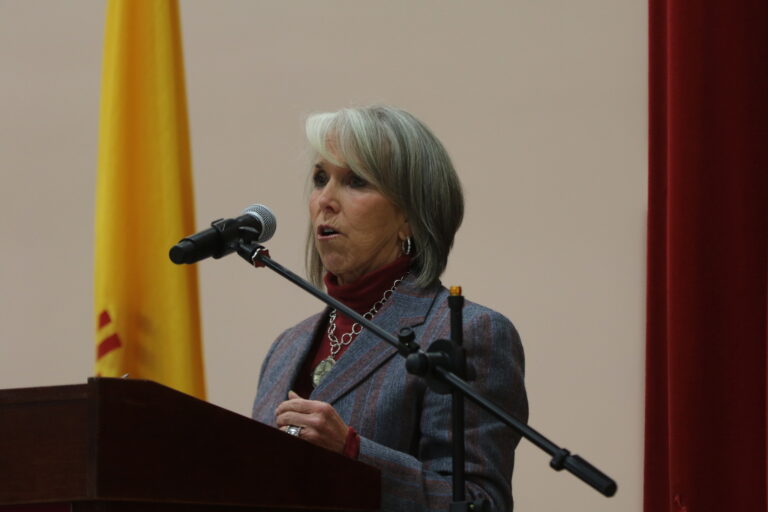
The Artesia City Council rolled through a long list of agenda items during its Feb. 25 meeting, including a land swap with the Artesia School District and several appointments to the Historical Museum Commission.
The swap agreement calls for the city to trade about 12 acres of property just north of Roberts Park for six acres owned by the school district on Roselawn Avenue. The school district plans to use the 12 acres for a future school location.
The Historical Museum Commission appointees (all to terms expiring in January 2029) are: Marta Donaghe, Felicia De La Garza, Diane Howard and Laura Jimenez.
In other business:
• Community Development/Infrastructure Director Byron Landfair reported that crews were continuing the South 2nd Street and Richardson Avenue rehab project. Landfair said he expected a late March start for the water line replacement project on Grant Avenue.
• The council approved 2024-25 budget adjustment and an aviation grant agreement with the NMDOT Aviation Division to replace security gates and install an equipment building door at the airport.
• The commission approved adding two Senior Center projects to the city’s Infrastructure Capital Improvement Plan in order to seek capital outlay funding. The projects include adding two pickleball courts to the Senior Center and the purchase of two Starcraft Allstar 22’ passenger vans.
The council also approved the consent agenda with the following items:
• Hirings: Courtney Kilmer, Library Clerk, $2600 per month; Cassandra Boutelle, Recreation Maintenance Tech, $2920.66 per month.
• Promotion: Scott Parish, Garage Supervisor, $5759.86 per month.
• Retirement: Gerardo B. Conde, Personnel, HR Director, effective March 31, 2025.
Second place finishers try hard to overcome obstacles in their way and so it is with the 2025 Chevrolet Silverado – a rugged pickup that can be outfitted with a plethora of configurations and engine choices to suit most budgets.
Silverado has been around for a quarter-century and sold 549,945 copies last year compared with Ram at 439,039 and Tundra at 159,528. Ford F150’s toppled them all with 765,649 sales. Easy to see why U.S. full size pickup truck sales are unequalled around the globe.
Trim levels are numerous starting with the base Work Truck, Custom, Custom Trail Boss, LT, RST, LT Trail Boss, LTZ, High Country and ZR2. Entry prices range from $37-$70
thousand with available options reaching six figures for the ZR2.
A variety of engines are available to suit your pocketbook and penchant for power. Entry level trucks come with a turbocharged four-cylinder (310hp). From there you can choose from a pair of V-8’s, a Duramax diesel 3.0-liter inline six (277 hp), 6.2-liter V8 with 420 ponies or you can chuck all of the above in favor of a gas-less EV.
Three bed lengths are available – 5’8” short bed, standard 6’6” and long bed at 8 feet. Each has rear bumper bed steps and a six-mode tailgate that collapses for easy access.
Our Crew LT Trail Boss tester was equipped with the big V8. It features a 2-inch lift kit, monotube shocks, large skid plates and Bridgestone Dueler all-terrain paws with 20-inch, high gloss black painted aluminum wheels.
A trailering package with hitch guidance will handle construction projects as well as tow trailers, boats and other toys. Towing capacity is 13,300 pounds, more than Ram 1500 but trailing F150s. Payload is 1,870 to 2,200 pounds.
With all this versatility, our tester was outfitted for performance, heavy off-road duty and gussied up with luxurious appointments throughout its cabin.
On open pavement, shifting the 10-speed automatic transmission was smooth with lots of torque when needed for downshifts. We found steering precise with little body roll. Brakes were strong. In highway travel, the Silverado absorbs most road imperfections.
Inside the fourth generation Crew Cab is a nice place to enjoy lengthy trips without tiring. Fill-ups will be more frequent with EPA combined 15 miles per gallon. With our sometimes-aggressive testing maneuvers, we recorded 12.4 mpg. Cabin noise is kept to a minimum unless you stomp on the gas pedal.
Whether heating or cooling, the Silverado system does so quickly. Numerous toggle switches line the center console controlling cabin environment, entertainment and navigation. A 13.4-inch center touchscreen makes adjustments simple while a driver mounted 12.3-inch digital screen monitors engine vitals.
Driver assist features are standard on upper trims and include emergency braking, front pedestrian braking, lane keep assist with lane departure warning which was useful with its behemoth size, HD surround vision, rear cross traffic braking, blind spot monitors, available adaptive cruise control and perimeter lighting. Gross vehicle weight is 3½ ton.
The new Silverado is mostly a carryover from last year’s model. Cypress Gray and Riptide Blue Metallic are new colors.
(Contact independent automotive columnist Len Ingrassia at editor@ptd.net)
What was reviewed:
2025 Chevrolet Silverado 1500 Crew LT Trail Boss 4WD
Engine: 6.2-liter V8 420 horsepower – 460 lb.-ft. of torque
MSRP/as tested: $58,800 / $72,395
EPA mileage: 15 city, 20 highway, 15 combined.
Assembled: The 2025 Silverado is assembled at GMC facilities in Silao, GJ Mexico. U.S. /Canadian parts content -37 percent. Major source of foreign parts, Mexico – 37 percent. Country of origin – engine and transmission – U.S.
Crash test ratings: The National Highway Traffic Safety Administration (NHTSA) awarded the Silverado an overall safety rating of five stars out of a possible five; five stars in side crash protection and in driver seat with four stars for front passenger and rollover protection. The Insurance Institute for Highway Safety (IIHS), in updated testing, gave the Silverado its third best rating of “Marginal” in small overlap front and “Poor” in moderate overlap front and “Acceptable” in side crash worthiness
Warranty: 3-year/36,000-mile bumper to bumper; 5-year/60,000-mile powertrain. First maintenance visit.
As the 2024-2025 basketball season comes a close with the state tournament. Here is a look at some of the action from February 14, 2025 against Lovington.
By J.T. Keith
Artesia Daily Press
jtkeith@elritomedia.com
A look at the 4A -4 bracket for the 2025 Nusenda Credit Union Girls Basketball State Championships should be enough to make the Artesia Lady Bulldogs mad – maybe even furious enough to come out and knock off the No. 2 seeded Gallup Bengals (26-2 overall, 8-2 district) on Gallup’s home court in a first-round matchup at 6 p.m. Friday.
The Lady Bulldogs have several players returning from the team that went 22-7, won the District 4A -4 title, and lost to St. Pius X 61-41 in the New Mexico Activities Association semifinals last season.
So, yes, Artesia (10-16 overall, 2-4 district 4A-4) should be upset at being the No.15 seed in the tournament. In one year, the Lady Bulldogs did not forget how to play basketball. And they did not forget how to win.
Here are Artesia’s three keys to securing a victory
Artesia’s first-year coach, Candace Pollard, must let her team know this is a business trip. The Lady Bulldogs have played well on the road this season, winning four games. It is a five-hour, 40-minute bus ride to Gallup but the team should envision nothing but success while going into a hostile environment.
“I have been telling our team that winning a big playoff basketball game comes down to execution, composure and preparation,” Pollard said.
Shorten the game
Artesia needs to limit Gallup’s possessions. The Lady Bulldogs must attack the offensive board and score off second-chance opportunities. Artesia must stop Gallup’s running game. If the Lady Bengals get second and third shots, it will be a long game for Artesia.
Artesia cannot run with the Bengals. The Lady Bulldogs must pick their spots to run and attack the glass on both ends of the floor.
“Our defense and rebounding are key,” Pollard said. “We have to lock down their key scorers, contest every shot, and control the boards and limit their second-chance points and fast break opportunities.”
Artesia cannot turn the ball over
The Lady Bulldogs must protect the ball and avoid turnovers to have a chance to win. Gallup wants to speed up the tempo and make Artesia play faster than usual. Gallup uses its defense to generate its offense.
“We have to have great shot selection every time,” Pollard said. “Every single possession matters in this matchup. We have to take high-percentage shots, move the ball, and attack mismatches aggressively on both sides of the ball.”
Keep the score in the 40s
The game at Gallup will be sold out, with standing room only. The fans will be going crazy. Artesia must take the crowd out of the game and keep its composure when the Lady Bengals go on a run. There is a reason Gallup is 26-2 overall and the No.2 seed, but Artesia is Artesia and has played in games as big as this, if not bigger.
“We know that we are walking into a place that loves basketball,” Pollard said. “They will bring everything they’ve got to us. We must play together for four quarters and have each other’s backs. We must be prepared for a dogfight.”
J.T. Keith can be reached at jtkeith@elritomedia.com.
Story and photos by Adrian Hedden El Rito Media achedden@currentargus.com
Jon Green was found guilty Tuesday of hatching an unsuccessful plot to have his wife killed. The 12-member jury deliberated for about an hour before returning the verdict following a two-day trial in Eddy County District Court in Carlsbad.
Green was convicted on a single charge of solicitation to commit first-degree murder, a second-degree felony. He could face up to 15 years in prison
No date was set for sentencing.
Police said Green, who was serving time at the Eddy County Detention Center in 2023, paid cellmate Greg Markham’s $2,500 bail so that Markham could then kill Green’s wife Kim Lark, a local physician.
The plan, according to prosecutor Dianna Luce of the Fifth Judicial District Attorney’s Office, was for Markham to break into Lark’s home, wait in hiding for her to return from work and force her to overdose on fentanyl.
Minutes before the jury was called into the courtroom for Monday’s proceedings, District Judge David Finger upheld a defense motion to exclude any mention of Green’s past in Monaco, where he was convicted of starting a fire that killed two people. He was released in 2007 after serving 10 years in prison, later changing his name from Ted Maher to Jon Green before moving to Carlsbad.
Finger also agreed to exclude any mention of Green’s previous alias.
District Judge David Finger consults with attorneys, March 3, 2025 at the Eddy County Courthouse.
Green “unhappy” with wife he plotted to kill
During closing arguments on Tuesday, Luce said Green believed killing his wife would solve several of his legal and financial problems. The prosecutor described Markham as a “pawn” in Green’s plan, saying Markham took advantage of the situation to get out of jail and never went through with the murder.
She pointed to the reasons Green was in prison when he hatched the plan: dual convictions in 2023 for larceny, after he pleaded guilty to stealing Lark’s Ford Expedition and her dogs; and forgery, after police said he falsified multiple stolen checks in Lark’s name.
The prosecutor also said Green hoped to gain access to Lark’s retirement funds, cash in a life insurance policy and take ownership of her home.
“He is unhappy with Kim Lark,” Luce told the jury. “You have to take into account the totality that he stole the vehicle and the dogs and broke into her office. That’s why he was in there plotting.”
Luce also pointed to several phone calls Green made from jail to associates, including Jennifer Thomas, who the prosecution said transferred money from a Walmart Western Union in Redondo Beach, California, to another one in New Mexico so it could be used for Markham’s bail.
During one call, Luce said, Green used the phrase “grab ahold of her throat and squeeze,” which the prosecutor said alluded to Green trying to get “as much out of” Lark as he could in their pending divorce. Lark and Green’s marriage was dissolved in May 2023 but the settlement is still pending in Eddy County District Court.
In a police interview played for the jury, Green said he “just wanted his possessions” back.
“This is the same person who all he said he wants is his truck and his dog,” Luce said. “But he was in her Expedition driving away with her dogs.”
Luce also contended in her closing that Markham knew too many details about the home where Green wanted Markham to kill Lark – including the location of a safe – for the conversations between the inmates to be construed as merely “bragging,” as the defense argued.
In his closing argument for the defense, attorney Blake Dugger said Green bailed out his cellmate so Markham could save his own dogs that were at risk of being euthanized while he was locked up on a parole violation.
Markham, an admitted drug user who testified for the prosecution on Monday and was cross-examined on Tuesday, said he only agreed to the plot with Green so he could be released. But Dugger argued that Markham planned to extort money from Green, who the defense attorney said was vulnerable to such a ploy because of his “affinity” for animals.
Dugger said Markham’s story was inconsistent as to how the money was moved around, and how he was to kill Lark.
“Markham wanted to get out of jail so he tricked Jon Green to bail him out so he could save his dogs,” Dugger told the jury. “He got out of jail, he got immunity from his statements today. More of the story tends to come out as time goes by. That should give you pause.”
A ‘contentious divorce’
During testimony on Monday, Kim Lark described how she met Green at her medical practice when Green came to her office for an appointment.
She said they shared interests in dogs, skiing and outdoor recreation and started dating after six months. The couple were married in February 2020.
But things “went bad” after only a couple of years, Lark said. She filed for divorce on April 25, 2022, and Green moved out of their Eddy County home.
The next time she saw Green after filing for divorce, Lark said, was in June of 2022 when she saw him stealing her Ford Expedition with her three certified cadaver dogs inside. Aside from her medical practice, Lark helps with search and rescue missions in the region using the dogs, valued at $70,000 each.
That incident led to Green’s arrest in San Antonio and his later larceny conviction, along with the forgery charges – convictions he was serving time for when he allegedly plotted to have Lark killed.
Lark and Green were still legally married at that time, meaning Green could gain access to her finances if she was killed, Lark said,
Dugger asked if she was sure the threat was to “physically” take her life, suggesting it could have been a threat on her reputation.
“I was told someone would end my life physically,” Lark responded.
Greg Markham testifies at a trial, March 3, 2025 at the Eddy County Courthouse.
Markham testifies to murder plot
Greg Markham started his testimony by admitting he was convicted twice of drug possession and suffered from an addiction to methamphetamine. That’s why he was in jail, he said, when he met Green.
Markham’s testimony supported each point stressed by the prosecution: why Green wanted Lark dead, how Markham was supposed to kill her and how Green had several associates move money around to pay Markham’s bail and buy him a camper to stay in once he was released.
Prosecutors played recordings of phone calls between Green, Markham and others for the jury, saying the conversations showed how the plan came together.
Markham denied that he ever intended to go through with the killing, and said he just wanted to get out of jail.
“Never would I ever do that to another human being,” he said when asked about the plan to cause Lark to overdose on fentanyl. “They turn blue. They don’t breathe.”
Six years ago, Governor Lujan-Grisham and the New Mexico Legislature created the Early Childhood Education and Care Department (ECECD) to optimize the health, development, education, and well-being of young children across the state. By establishing a coordinated system of high-quality prenatal and early childhood services, the department can ensure every family in New Mexico has access to support during the most important years of a child’s development when 90% of the brain’s neurological foundation is built.
In 2022, New Mexico made their voices heard, voting overwhelmingly to guarantee the right to early childhood education. Since then, we’ve made a significant impact on the lives of families, from single parents to grandparents raising grandchildren to two-parent households, and our early childhood policies have garnered national recognition.
The most recent New Mexico Kids Count State Databook shows that 97% of New Mexico adults with children enrolled in childcare assistance are employed, and more than half of these families receiving childcare assistance have an income of less than $47,000 annually for a family of four.
New Mexico’s investment has also improved quality, with licensed childcare providers earning a 4- or 5-star rating, increasing from 40% in 2018 to 50% today.
We can be proud that New Mexico essentially provides universal free childcare. A family of four with two kids in full-time care can save over $23,000 annually, which, for the average family, could be half of their income. Now, parents can pursue new career opportunities or advance their education with the peace of mind that their children are safe and well cared for.
But we still have work to do!
Senate Joint Resolution 6 (SJR6), sponsored by Senator Padilla, is the next step to sustain these investments. The constitutional amendment would ensure the fund is used exclusively for prenatal and early childhood programs, providing a predictable yearly distribution of $500 million. However, funds would still be appropriated by the legislature, and in the case of catastrophic budget situations, it could be tapped into as a source of revenue.
Passing SJR6 this session will give voters another opportunity to express their belief in the importance of the early years in a child’s development. SJR6 will expand upon the progress we’ve made in building a strong prenatal-to-early-childhood system, ensuring that future generations continue to benefit from these investments.
We share lawmakers’ sense of urgency in making swift progress to improve childhood well-being. But, it’s important to recognize that we are building an early childhood system from the ground up, and only five other states have established early childhood agencies at the cabinet level. This makes our work both groundbreaking and complex.
To ensure equity in access, we must intentionally ensure implementation is data-informed, culturally responsive, and address the real needs of everyday New Mexicans. While we’ve made significant strides, our vision of a fully funded, comprehensive early childhood ecosystem is still a work in progress. Advocates, early childhood professionals, and our organizations are advocating for additional policies, including a wage and career ladder to provide fair compensation for the early childhood workforce, increased access to in-home visiting and maternal health programs, and expanded infrastructure for early education. These investments are essential to achieving lasting impact.
Supporting SJR6 will strengthen New Mexico’s commitment to early childhood education and care. Let’s continue leading the nation by ensuring our youngest children have the support they need to thrive. The future of New Mexico starts with our kids, who deserve every opportunity to succeed.
Gabrielle Uballez is the Executive Director for New Mexico Voices for Children.
James Jimenez is the Executive Director of the New Mexico Voices Action Fund.
William Carey is known as the founder of modern day missions, but before this he had a heart for missions. He was a cobbler and above his workbench he tacked a map of the world and used it to pray for the souls of people all over the world. Missionaries were rare in those days and when the missionary society in London asked who would go to the world, Carey responded, “I will go down into the well, if you will hold the rope”. In the little letter of 3 John we have the guidelines for being those that “hold the rope” — that provide the support of those that go “…into all the world, and preach the gospel to every creature.” (Mark 16:15).
First, we must stand for the gospel ourselves. “For I rejoiced greatly, when the brethren came and testified of the truth that is in thee, even as thou walkest in the truth. I have no greater joy than to hear that my children walk in truth.” (3 John 3-4). The same commission that our missionaries take applies to us. It is just like in the military you have the front line soldiers, but you also have the support personnel that are necessary for the success mission. We must maintain the faith and the truth where we are and practice living and proclaiming the gospel to those that are around us. We are co-laborers with the Lord and the missionaries He sends into the far reaches of the world.
If a missionary is home on furlough or we hear about a need that they have on he mission field, then we are obligated to help as much as we can. John said this to Gaius, “Beloved, thou doest faithfully whatsoever thou doest to the brethren, and to strangers; Which have borne witness of thy charity before the church: whom if thou bring forward on their journey after a godly sort, thou shalt do well…” (3 John 5-6). We often think that the only thing that missionaries need is money to fund their work. They do need this, but they need much more. Sometimes they need a place to stay when on furlough. Many times they need, whether at home or abroad, a friend to listen, to be as sounding board, and a prayer warrior to come along side of them to help. Pray for our missionaries, but also correspond with them and encourage them in the work. Years ago there was a young missionary family that I had visited with and suddenly they seemed to disappear. Perhaps I failed to be a friend as well as a supporter. Perhaps I failed to hold the rope for them at a critical time in their work. Sadly, I will never know what happened.
I think that we need to remind ourselves of the great responsibilities that have been placed on our missionaries. Again, John says, “Because that for his name’s sake they went forth, taking nothing of the Gentiles.” (3 John 7). First, they did not choose to be a missionary. They were called by Jesus and they go in His name. A soldier represents the country that commissioned him and our missionaries are not commission by the church or an organization, but they are singled out and called by Jesus Himself. Consider Paul and Barnabas in Acts 13:3, that says, “As they ministered to the Lord, and fasted, the Holy Ghost said, Separate me Barnabas and Saul for the work whereunto I have called them.” They were called by the Spirit of Jesus and sent out by the church in Antioch. Secondly, they are not to look to the world for their support. They are one with us and we with them. They deserve support from faithful followers of Jesus Christ Who sent them out. Will you support them Jesus sent out?
Lastly, when we support our missionaries we are joining in with them in the work. “Therefore we ought to support people like these, that we may be fellow workers for the truth.” (3 John 8 ESV). We ought, we are obligated, to support those that are called by Jesus into this work. We are not obligated to support, nor encourage those that are self-sent or who preach another Jesus and another gospel. “If there come any unto you, and bring not this doctrine, receive him not into your house, neither bid him God speed: For he that biddeth him God speed is partaker of his evil deeds.” (2 John 10-11). We should reprove such as these and call them to repentance and faith in Jesus Christ our Lord.
If you have any questions, we invite you to visit with us this Sunday. Worship at 10:50 A.M. We are located at 711 West Washington Ave. Check our sermon videos on Youtube @ricksmith2541. Send comments and prayer requests to prayerlinecmbc@gmail.com.
Rick Smith is the Pastor at Calvary Missionary Baptist Church in Artesia
Gov. Michelle Lujan Grisham told business leaders last week state lawmakers will need to return to Santa Fe this fall for a special session to fill holes to New Mexico’s proposed $10.6 billion spending plan created by federal spending cuts.
There are too many unknowns to say with certainty how the state might fare with a cost-cutting Trump administration dreaming of a smaller federal workforce and pared-back programs for the needy and vulnerable.
It’s only been a week since the Republican-controlled U.S. House of Representatives passed a budget resolution that calls for $4.5 trillion in tax cuts and a $2 trillion reduction in federal spending over a decade. But with the federal share of New Mexico’s last 10 state budgets hovering around 40%, or 4 in every 10 dollars, the state is in the federal crosshairs.
One of the places the federal government likely will seek savings is Medicaid, the government’s health care insurance program for the low-income. Currently, the federal government pays roughly $3 for every $1 New Mexico spends to pay for its program. That’s because New Mexico is one of the poorest states in the nation, and receives a higher share in federal dollars than other wealthier states.
Gov. Michelle Lujan Grisham told CBS News last week that deep cuts to Medicaid would leave hundreds of thousands of New Mexicans either under- or uninsured.
To put that into context, a 12 percent to 13 percent cut in federal Medicaid dollars to New Mexico “would amount to more than $1.1 billion,” according to a presentation staff at the legislature’s budget arm, the Legislative Finance Committee, gave to lawmakers Monday in Santa Fe.
There are other programs New Mexicans rely on that could suffer cuts. Should Congress seek to save money in its free school lunch program, New Mexico might need to make up the difference because current New Mexico law requires “the state to provide funding for universal free meals.” Making up the difference could cost tens of millions of dollars, the LFC report said.
In addition to federal programs that could shrink in size, there is the Trump administration’s desire to reduce the federal workforce.
The LFC estimated New Mexico had around 29,500 direct federal government jobs in New Mexico in December 2024. Add in another 32,000 positions at the two national labs in Los Alamos and Albuquerque.
“New Mexico has the 6th highest concentration of federal employment in the country,” reads a slide in the LFC presentation. “Several NM counties have among the highest concentrations of federal employment nationally.”
New Mexico is also vulnerable to the financial consequences of tariffs the Trump administration wants to slap Mexican and Canadian imports.
“The state imported $2.5 billion from Mexico in 2023, alongside $3.61 billion of imports from China, Canada, and India,” the report reads.
Should those countries slap tariffs on American goods in response, New Mexico could feel economic pain, according to the LFC. “New Mexico exported $4.9 billion in goods globally in 2023, with $3.4 billion (70%) going to Mexico.”
Helen Gaussoin of the LFC on Monday stressed the report to state lawmakers was a “high-level broad look at possibilities” and it is too early to know what exactly will happen in the coming months.
Whatever happens, it is a safe bet New Mexico will feel economic pain in the coming months and years.
Trip Jennings started his career in Georgia at his hometown newspaper, The Augusta Chronicle, before working at newspapers in California, Florida and Connecticut where he reported on many stories, including the resignation and incarceration of Connecticut’s then-governor, John Rowland, and gang warfare in California. Since 2005, Trip has covered politics and state government for the Albuquerque Journal, The New Mexico Independent and the Santa Fe New Mexican. He holds a Master’s of Divinity from Columbia Theological Seminary in Decatur, Ga. In 2012, he co-founded New Mexico In Depth, a nonpartisan, nonprofit media outlet that produces investigative, data-rich stories with an eye on solutions that can be a catalyst for change.
A revamped but still highly controversial proposal to provide paid family and medical leave to New Mexicans is heading to the state Senate after winning approval from the state House of Representatives.
The passage of House Bill 11 marks a major win for supporters of the measure after a years-long effort to offer paid leave to working families in the state failed to pass the chamber by just two votes during last year’s 30-day session. That vote led to primary challenges against some of the more moderate Democrats who had sided with Republicans.
Friday, Feb. 28’s 38-31 vote was largely along party lines. Five Democrats — Wonda Johnson of Rehoboth, Patty Lundstrum of Gallup, Marian Matthews of Albuquerque, Joseph Sanchez of Alcalde and Martha Garcia of Pine Hill, who took the oath of office Thursday — joined their Republican colleagues in voting against the measure.
“It’s been a journey, for sure,” sponsor Rep. Christine Chandler, D-Los Alamos Democrat, said after the vote.
The journey has been hard-fought.
After Friday’s floor vote, Rep. Rebecca Dow, R-Truth or Consequences, who had offered a substitute bill she called a “reasonable compromise,” sat outside the House chamber in tears.
“We just created the largest exodus of small business in our state,” she said.
“I have been asked by [the media] why Republicans won’t compromise and why do we bring bill that are unreasonable,” she said, her voice cracking with emotion.
“This was a reasonable compromise … and it was disregarded.”
Dow’s substitute proposal called for six weeks of paid parental leave that would be funded by the state Early Childhood Education and Care Fund. Three weeks of supplemental paid leave would be available to employees who chose to contribute to a proposed supplemental fund. The chamber voted it down 40-29.
“They don’t care if the last restaurant open on Sunday in Socorro County is open,” Dow said. “I do.”
HB 11 is not a done deal.
With only three weeks left in the 60-day session, it now heads to the Senate amid stiff business opposition and a public relations campaign that has branded it the largest tax increase in New Mexico history, which proponents argue is patently false. Last year’s version passed the Senate before dying in the House.
Proponents contend they have a strong case.
They hailed the measure as one that would ensure a strong, healthy and vibrant workforce in the state.
“I’m very excited about this bill,” Chandler said at the start of the floor debate.
“We’ve worked very hard over the last year or so listening to many public comments, inputs from the business community, input from stakeholders, and we’ve come up with a proposal that I think is unique to New Mexico and is uniquely appropriate for New Mexico,” she said.
The bill, was called the Welcome Child and Family Wellness Leave Act and would create a family wellness leave fund and the welcome child fund, Chandler said.
The family wellness fund is essentially an insurance program.
Employers and employees would both contribute premiums to pay for family wellness leave, with workers chipping in the equivalent of two-tenths of 1% of their earnings while employers would add in .15% of each eligible workers’ wages — significantly lower than the premiums of one-half and four-tenths of 1% for workers and employers, respectively, in versions of the bill proposed previously. Employers with fewer than five employees would be exempt from having to pay into the fund.
Qualifying workers would be able to take up to six weeks of family wellness leave while receiving a portion of their pay equivalent to the state’s minimum wage, plus two-thirds of their remaining salary.
Chandler said family wellness leave would include medical leave for an applicant to care for themselves or a family member with a serious health condition, leave pertaining to a family member’s military service, so-called safe leave granted to an applicant who is experiencing domestic violence or sexual assault or abuse, bereavement leave for the death of a child younger than 18 and foster leave for a family who is welcoming a foster child into their home.
The welcome child component would apply to families after the birth or adoption of a child.
“Anytime a child is adopted or born in our state, one parent will receive a $3,000 rebate each month for the first three months of that child’s life,” said Rep. Linda Serrato, D-Santa Fe, who is also among the sponsors.
Both parents would have access to up to 12 weeks of welcome child leave with job protection. Though the original version of HB 11 proposed premiums on workers and employers to pay for parental leave, lawmakers now plan to pay for welcome child leave through the state Early Childhood Education and Care Department’s existing budget.
“This $3,000 rebate is really important in those first few months of life,” Serrato said. “As we all know, in that time, it’s incredibly difficult to find child care. … It gives them that financial stability that they need to bond with their child in these critical months.”