Photos by J.T. Keith Artesia Daily Press
A look at the Artesia senior’s final matches at the state wrestling tournament in Rio Rancho.



Photos by J.T. Keith Artesia Daily Press
A look at the Artesia senior’s final matches at the state wrestling tournament in Rio Rancho.
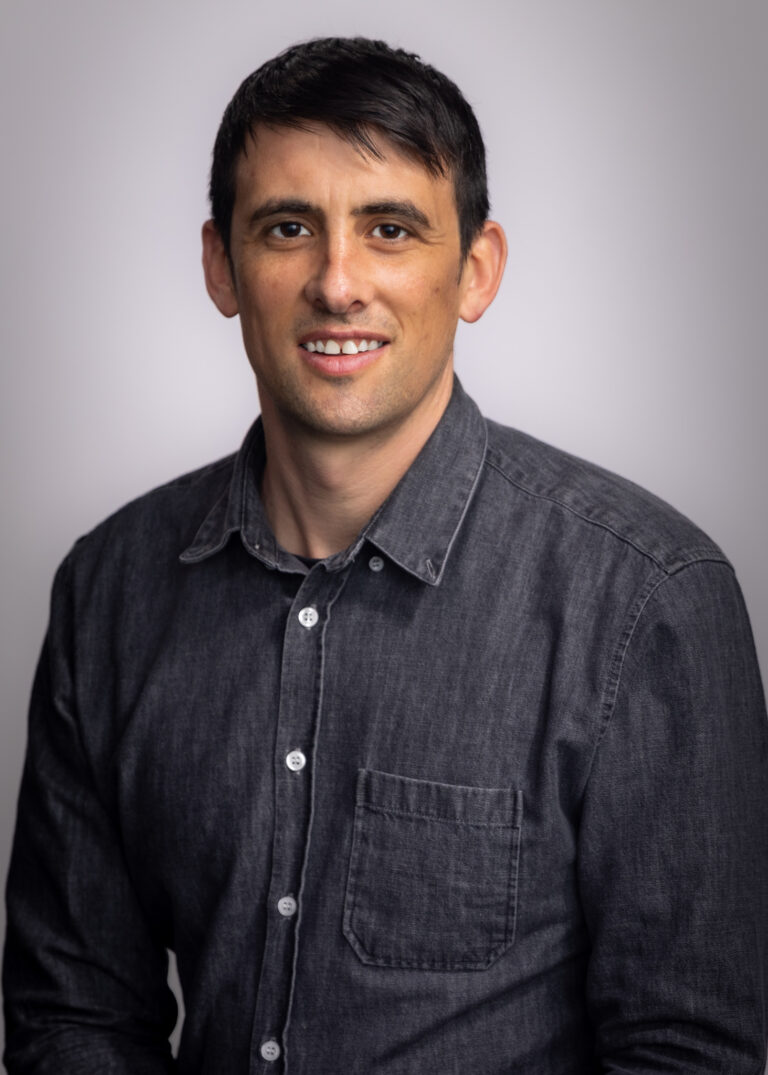
By: Dr. Samuel Swift
As an assistant professor teaching public health, I begin every class by asking my students what they believe is the biggest public health problem in New Mexico. Semester after semester, the most common answer I get is “poverty.” Our students know intuitively what over a century of epidemiological research has shown, which is that wealth creates health. New Mexicans who have more educational and economic opportunities live longer lives, are more able to avoid preventable diseases, and contribute more to our community. Unfortunately, many of our young adults know hardship from lived experience. In 2022 the New Mexico Higher Education Department conducted a survey to study the basic needs of our two- and four-year college students statewide, and found that within NM, the majority (58%) of NM college students are unable to afford or access healthy food due to financial insecurity, with this number being substantially higher at two-year and tribal colleges. How can we expect young adults to gain an education and begin their lives, when their financial situation is such that they cannot afford food to eat?
By setting aside money that young New Mexicans can access when pursuing an education, buying a home, or starting a business, the NM Baby Bonds (SB 397) makes a lasting investment at a crucial time in life. Given the well-established epidemiological relationship between wealth and health, this investment may prevent a lifetime of disease and suffering for the next generation of New Mexicans.
New Mexico is consistently among the states suffering many of worst health outcomes in the US. Like New Mexico, states with poor health outcomes are almost always the same states suffering the most severe poverty. For decades, New Mexico has ranked high on lists of troubling economic and public health statistics, often leading in causes of premature death. In 2023, New Mexico was in the top five states for diabetes and firearm death rates, and in the top 10 states for drug overdose deaths. Worst of all, in 2023 New Mexico remained the national leader in alcohol related death. The human cost of the lives we lose prematurely to these causes is incalculable. While these diseases have different pathophysiology, and strike at different times in life, a commonality is that all of these diseases are strongly associated with poverty and a lack of economic opportunity. This relationship is not new science, nor is it scientifically controversial. There is an enormous body of research that shows that persons who have access to financial opportunity and higher education early in life use fewer drugs, drink less alcohol, commit fewer crimes, eat healthier, exercise more, and live longer. Intuitively, we do not need scientific data to understand this relationship. These troubling statistics are often made up of our friends, family members, classmates, and neighbors. However, it does not have to be this way—a more prosperous, healthier New Mexico is possible.
I applaud our leaders for championing the critical policy that is the NM Baby Bonds (SB 397). I believe this policy is a sound investment in the health and well-being of all New Mexicans for generations to come. I was raised and educated in New Mexico, and I am now raising a child of my own here. I support this policy because I know that New Mexico can be a prosperous, healthy place. Given the challenges we face, we have no other choice but to fight for a better future for the next generation.
What I have written here is exclusively my own professional opinion, and does not represent the position of my employer, colleagues, or any affiliated scientific organization.
Dr. Samuel Swift, MPH, PhD is an epidemiologist with experience in applied epidemiology, academic research, peer-reviewed research, and community work. Dr. Swift works as an assistant professor at the University of New Mexico College of Population Health.
El Rito Media News Services
The temperature in the Senate grew hot at times Tuesday over a bill designed to make communities across New Mexico more resilient to the effects of a warming planet.
Senate Bill 48, which would create a community benefit fund to pay for projects aimed at reducing greenhouse gas emissions and mitigating climate change, passed the Senate on a party-line 23-15 vote after Republicans introduced a series of amendments the Democrat-controlled chamber rejected one by one.
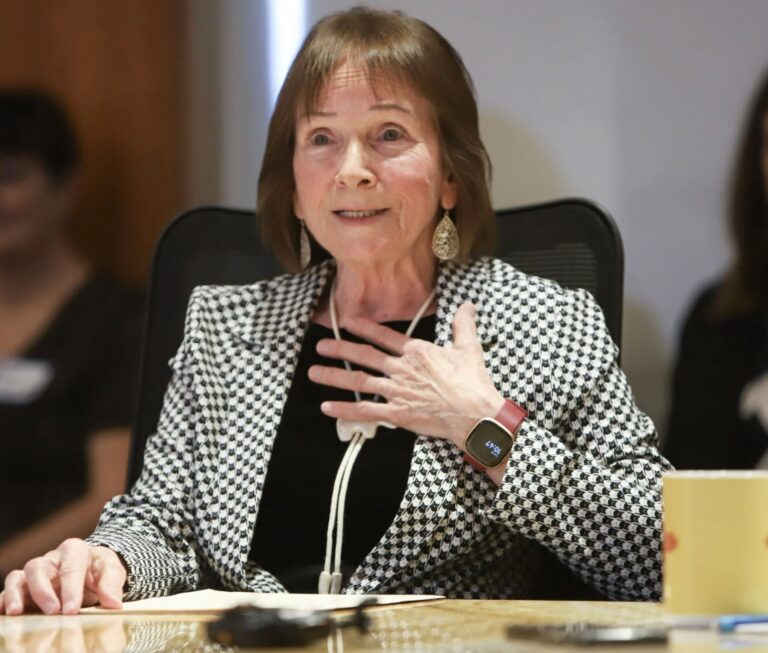
“This bill is about giving New Mexico a fighting chance at a cleaner, safer and more prosperous future,” the sponsor, Senate President Pro Tempore Mimi Stewart, D-Albuquerque, said in her closing remarks after a three-hour debate.
“It’s a bit dismaying to think that people don’t want to fund our communities that are asking for help mitigating wildfires, repairing after floods and wildfires,” Stewart added. “It’s just embarrassing to me that so many would say no to deliver funds to our communities.”
Republicans, however, argued they were trying to provide guardrails with some of their proposed amendments to protect New Mexico taxpayers from income disruptions, particularly when a revenue bonanza from the oil and gas industry starts to decline.
The first amendment proposed would have delayed SB 48 from going into effect until the share of the state’s revenue from oil and gas, which currently accounts for about half, drops below 35%.
“It would be counterproductive to target this industry while it literally is paying our bills,” said Sen. Steve Lanier, R-Aztec. “I want to make sure that we are not killing the goose that lays the golden egg.”
After Lanier’s amendment failed, Sen. Jim Townsend, R-Artesia, introduced what he called the “flip of the previous amendment,” which would repeal the proposed law if oil and gas revenues dropped below 35%.
“Not many people [currently serving in the Legislature] was in the Legislature the last time oil broke,” said Sen. Pat Woods, R-Broadview. “It would probably have been better if more of them were in the chamber at that point in time. I can remember it. I can remember all the school districts hollering at me that they swept all their surpluses.”
Stewart deemed the Republican amendments unfriendly, and all of them failed. At one point, a large number of Democrats left the chamber while Republicans were discussing one of the amendments and only rushed back on the floor when it was time to vote.
Other Republican amendments included requiring electric vehicle charging stations in the state Capitol parking garage and requiring the governor, lieutenant governor and employees and contractors of the New Mexico Environment Department to use electric vehicles. The latter, sponsored by Woods, was eventually withdrawn.
Some Democrats have said privately Republicans are simply trying to run the clock in the second half of the 60-day session to prevent some of their bills from passing.
The proposed community benefit fund, hailed by a statewide coalition of environmental, social justice and conservation advocates from 34 organizations and businesses across New Mexico, would be administered by the state Department of Finance.
The original bill appropriated $340 million from the general fund for myriad projects, including some that would reduce greenhouse gas related to the construction or renovation of a public building or increase electric grid capacity.
Stewart said the state’s proposed budget includes a slightly smaller appropriation, but the “primary amount remains.”
“We have communities statewide that are asking for resources to invest, adapt and innovate in the face of the changing climate,” she said.
The win for Stewart came a day after she suffered a blow in the Senate Finance Committee on another climate bill. Her Senate Bill 4, which aimed to put New Mexico on a path toward net-zero emissions, was tabled by the committee Monday on a 6-5 vote.
Dubbed the “Clear Horizons Act,” it would have required the state to meet a 45% reduction in greenhouse gas emissions by 2030, a 75% reduction by 2040 and a 100% reduction by 2050.
“The cost of inaction on climate is devastating,” Stewart said in a statement after the vote.
Supporters of SB 48 said in a news release Tuesday it “has the potential to grow local jobs while improving infrastructure, expanding clean energy and increasing resilience to extreme weather events.”
Projects that stand to benefit from the proposed fund in Northern New Mexico include the Mora County Complex Community Center, which Senate Democrats said would provide a hub for disaster response and community services in a county heavily impacted by recent wildfires, and the Kit Carson Electric Microgrid Development, which would ensure energy reliability for rural communities.

By J.T. Keith
Artesia Daily Press
jtkeith@elritomedia.com
For the second year in a row, Artesia senior Isabel Irvin wrestled for the state championship in the 100-pound weight class. Irvin had an outstanding senior campaign and aspired to win a state title before continuing her wrestling career in college.
She almost achieved her goal. Irvin (37-5) was on the verge of winning her first state title when Volcano Vista freshman Esperanza Gallegos pinned her at 2:34 in the second round Saturday at the New Mexico Activities Association wrestling championships at the Rio Rancho Event Center.
Irvin was in control of the match with a 6-4 lead when Gallegos (28-5) took her down and seemed to have her pinned before Irvin lifted her body and shoulders off the mat, apparently escaping the hold. But the referee, parallel with Irvin’s shoulder, called it a pin and the match was over, leaving Irvin, her coach and Artesia fans disappointed and frustrated.
Some fans, believing the match should have continued, looked stunned, asking, “What happened?”
Artesia’s coaches asked the referees to clarify what had happened. By then, Gallegos was running around the mat, celebrating her championship.
“Unfortunately, the match did not go how we wanted it to,” Artesia coach Andy Olive said. “The call, some might perceive as challenging, but being a referee is tough. It is their judgment, and we approach this with the utmost sportsmanship and will learn from it.”
Olive said Irvin’s accomplishments in the wrestling program after joining the team as a sophomore with no wrestling experience were unprecedented. Olive is thankful Irvin had the opportunity to wrestle for Artesia.
“We are very proud of Izzy,” Olive said. “With all her hard work and dedication throughout these years, her journey is not over. She will go on to wrestle in college. I know this will light a fire in her.”
Olive brought five boys to wrestle at the state meet. Two wrestlers (Rylee Kelley and Alejandro Ontiveros) had no experience in the state tournament before this year. Edel Villa (20-15) made it to the quarterfinals before losing.
Hagan Crockett (16-9) had to forfeit in the first round because of an injury. Kelley (24-14) lost in the third consolation round. Ontiveros (23-14) lost in the consolation third round. And Ethan Shannon (19-16) lost in the consolation second round.
Olive will lose three senior boys – Kelley, Crockett and Mason Peterson; and three senior girls – Irvin, Esmeralda Sorrells and Peyton Stone.
“We want to continue to develop our wrestlers,” Olive said. “So, when they graduate, we can keep bringing them up.”
J.T. Keith can be reached at jtkeith@elritomedia.com.
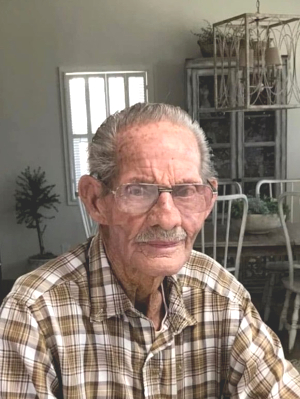
Roland (Cactus) Starr peacefully went home on February 17, 2025, surrounded by his children.
He was born to Winston Starr and Virginia (Davis) Starr on July 25, 1938, in Okemah, Oklahoma.
He married Sharon B. Starr (Tipps) on November 8, 1957. Together they had three children, Wendy (Woody) Wright, Jimmy Starr and Kelly (Jacquiline) Starr, seven grandchildren, Michele Padilla, Yvonne Wright, Kayla (Bryan) Williams, Tiffany Baker, Dustin Starr, Rocky Starr, Samantha (Guy) Sullenger. 16 great grandchildren and one great, great granddaughter.
Roland was an extremely hard working man whose main goal in life was to take care of his family. He worked as a residential construction supervisor for Quality Drywall / D&G Walls and Coatings in Phoenix, Arizona before returning to Artesia, where he worked as a project manager for FLETC facilities contractors Ramcor, Pyramid, and Omni. He retired in 2015 to enjoy more time with family, going fishing and hunting.
Roland was loyal to his family, friends and employers. He was raised in a family of faith and he was a strong believer in Jesus Christ. He anxiously looked forward to going home to his Savior, his wife, his son and family who awaited his arrival.
Survivors include his brother, Samuel R. Starr of San Jose, California.
He is preceded in death by his parents, his wife, his son, Jimmy, his brother, Austin Starr and sister, Odessa Tucker.
A funeral service will be held at Terpening & Son Chapel on Friday, February 21, 2025 at 10:00 am with a burial to immediately follow at Woodbine Cemetery.

Sherrie Dungan-Followill, of May, Texas, passed away on February 8, 2025, at the age of 75. She was born on November 24, 1949, to George Clifford Dungan and Charlene Rose Dungan.
Sherrie is survived by her loving children, Mark Glenn Followill (spouse Amber) and Amy Rose Followill. She also leaves behind one cherished grandchild Laken Followill. Sherrie’s brother and sister-in-law, Neal Dungan (spouse Carla), aunt Joyce Connor, and her nieces and nephews, Allison Dungan, Barry Dungan, Lindsay Dungan Davenport (spouse Jordan). She preceded in death by both her loving parents, and brother Donald Brent Dungan.
Sherrie attended Artesia High School in Artesia, Mexico, graduating in 1967 where she was part of the band. She continued her education at McMurry College in Abilene, Texas and continued to study at Methodist Hospital School of Medical Technology in Lubbock, TX. Where she graduated as a Registered Med Tech is MT(ASCP). Sherrie did blood testing, crossmatching, and drew blood at besides.She was known as the lady vampire. Sherrie was rewarded by trying to save people’s lives and help them get well. Sherrie worked at Artesia General Hospital in Artesia, New Mexico for many years. Sherrie made good friends with many employees. Sherrie went on to work at Brownwood Medical Center under her boss Kay Shaw before retiring in 2014.
Sherrie belonged to First United Methodist Church in Artesia, NM were she loved the Lord with all her soul. She would study the Bible faithfully and kept up with the church on Facebook and newsletter. She was sure to make Amy Rose go with her to her class reunions. She played the piano at Fishermen’s Chapel and Amy Rose was the song leader. Later on, Amy got mother into going to Pleasant Grove Baptist Church near the community she lived in. Sherrie fit right in with everyone including the preacher. She would tell him how it was and he would visit her.
Sherrie was known for her love of shopping, arts and crafts, traveling, would be seen riding around the community feeding the deer or animals. She loved her community and never meet a stranger. Sherrie will be remembered for her kind heart and gentle spirit. She will be missed by all who knew her.
Celebration of Life for our mother will be at 10:00 am on Saturday, March 8, 2025 located at
Pleasant Grove Baptist Church
201 FM 2273
May, TX 76857
Celebration will be on YouTube for ones who are unable to attend. In lieu of flowers, donations can be made to First Methodist Church of Artesia, Pleasant Grove in May, TX, or Brownwood Funeral Home of Brownwood, TX.
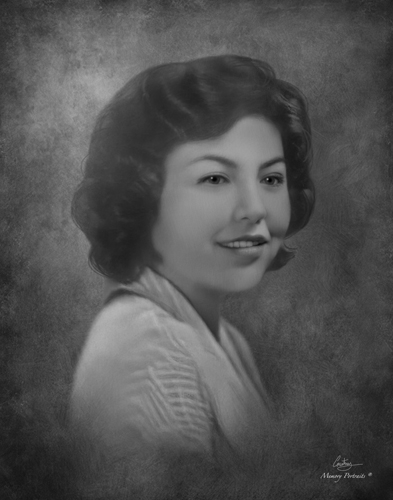
A rosary will be recited for Esther Hernandez Frazee at Our Lady of Grace Catholic Church in Artesia, NM on Saturday, March 1, 2025, at 10:30 am. Funeral Mass will immediately follow at 11:00 am. Burial is at Woodbine Cemetery.
Esther was called to her eternal resting place on February 12, 2025. She was born to Ramon and Genevieve Hernandez in Artesia, NM. Esther was raised in the catholic faith and relied on her faith in the Lord to get her through the good times and bad times.
Esther lived a full life. After graduating from Artesia High School, she went to University in Lawton, Oklahoma on a full scholarship. She graduated as a registered nurse. She returned to Artesia and began working at Artesia General Hospital. While working as an RN, Esther completed her Bachelor’s and Master’s Degrees at Eastern NM University in psychology and sociology. While completing her degrees, Esther also worked two jobs and raised four children as a single mother.
After retiring from nursing, Esther was a case worker and then an adult probation officer for the State of New Mexico. She also taught psychology at ENMU.
Esther was a compassionate, giving, and loving person. In her years of employment, she cared for and took in many children and adults in their time of need. She was a member of NM Retired Teachers Association, volunteered at the local food bank, and helped at funerals for the catholic church.
Esther took great pride in her four children and supported them in all activities they participated in. She raised her children to be strong, independent, and productive individuals.
She was preceded in death by her parents; son, Richard Frazee; brother, Ramon “Sonny” Hernandez; sisters, Martha Easley, Margaret Pacheco, and Josephine Weaver; son-in-law, Billy Latham.
She is survived her daughter, Rhonda Frazee-Matejka (Curt); son, Rene Frazee (Judy); daughter, Roxanna Frazee; grandchildren, Monique, Candace, Jamie, Bobby, Chyenne, Dillon, Courtney, Brianna, Ramon, and Montana; 26 great grandchildren; numerous nieces, nephews, and cousins.
Esther felt her greatest accomplishments were Richard, Rhonda, Rene, Roxanna, her grandchildren, and great-grandchildren.

A viewing will be held for James Adam Leachman at Artesia Center on Friday, March 7, 2025, from 11:00 am to 2:00 pm with a Memorial Service to immediately follow.
Adam, 44, passed away on February 23, 2025, in Artesia, NM. He was born on May 3, 1980, to James Ray and Rita Faye (Long) Leachman in Wichita, KS.
Adam coached little league basketball for over 20 years and has been a Recreational Tech at the center for 8 1/2 years coaching and umpiring youth sports.
Adam is preceded by his parents James and Rita Leachman; best friends, Jose Martinez (2011) and Daniel Zamarron (2022).
Those left to cherish his memory are his sons by love, Darian and Canaan Mahan; sister, Tonya Teel; nieces, Lauren and Georgia; nephew, Nolan.

Mike Smith
El Rito Media
msmith@currentargus.com
Visitors to Pajarito Mountain Ski Area in the northern New Mexico community of Los Alamos know it’s a great place to ski.
What a lot of them may not know is that the ski mecca was the brainchild of the very same scientists who spearheaded the Manhattan Project – the top secret program that developed the world’s first nuclear weapons in Los Alamos more than 80 years ago.
A group of scientists and soldiers launched the Los Alamos Ski Club in 1943 and the club evolved into today’s popular ski area, according to the Pajarito Mountain website.
“Many of them had immigrated to the U.S. from Europe and skiing was in their blood. Most had grown up climbing and skiing the Alps,” the website says of the club’s founders – a group that included J. Robert Oppenheimer and Nobel laureates Enrico Fermi, Hans Bethe and Niels Bohr.
“The scientists developed the first ski resort in Los Alamos called Sawyers Hill and then they moved it because they wanted more snow and they moved it to the current Pajarito (location),” explained Christiana Hudson, Pajarito Mountain’s marketing director.
Weather a concern this season
Hudson said Pajarito has been dry with above normal temperatures, although half the ski area’s trails are still open.
“We’re definitely not where we usually are this time of year. We’re at 58 inches this season,” she said.
At 3:15 p.m. Monday, Feb. 24, the National Weather Service reported a temperature of 66 degrees at the Los Alamos Airport. The weather service was predicting temperatures in the mid-50s for Saturday and Sunday, March 1-2.
Hudson said Pajarito Mountain has a snowmaking pond that helps when Mother Nature is lacking.
“Our beginner’s slope is really well-suited and groomed very well,” she said. “We really keep up with that beginner area to make it family friendly and affordable.”
More on Pajarito Mountain
Hudson said the mountain resort has 280 acres for skiing with a summit elevation of 10,000 feet.
“There are 53 trails, and the majority are intermediate or difficult. Twenty percent are beginner trails and there are six lifts,” Hudson said.
Pajarito Mountain offers ski lessons, equipment rentals, a gift shop, and a café for hungry skiers. This year’s ski season will culminate March 29 with “Skiesta.”
“We do really zany and fun races and ski competitions and snow competitions,” Hudson said. “We’ll have live music. It’s always a big party. It’s super fun.”
Here are reported New Mexico skiing conditions as of Monday, Feb. 24
(information provided by Ski New Mexico):
Pajarito Mountain had a base depth of 10 inches with 24 of 53 trails and 3 of 6 lifts open.
Angel Fire had a base depth of 21 inches with 51 of 86 trails open and 7 of 7 lifts open.
Sipapu had a base depth of 16 inches with 13 of 44 trails open and 4 of 6 lifts open.
Ski Apache had a base depth of 10 inches with 4 of 55 trails open.
Ski Santa Fe had a base depth of 36 inches with 83 of 90 trails open and 6 of 7 lifts open.
Taos Ski Valley had a base depth of 33 inches with 93 of 120 trails open and 12 of 13 lifts open.
Note: Snow conditions can change after this report is compiled.
Mike Smith can be reached at 575-308-8734 or email at msmith@currentargus.com.
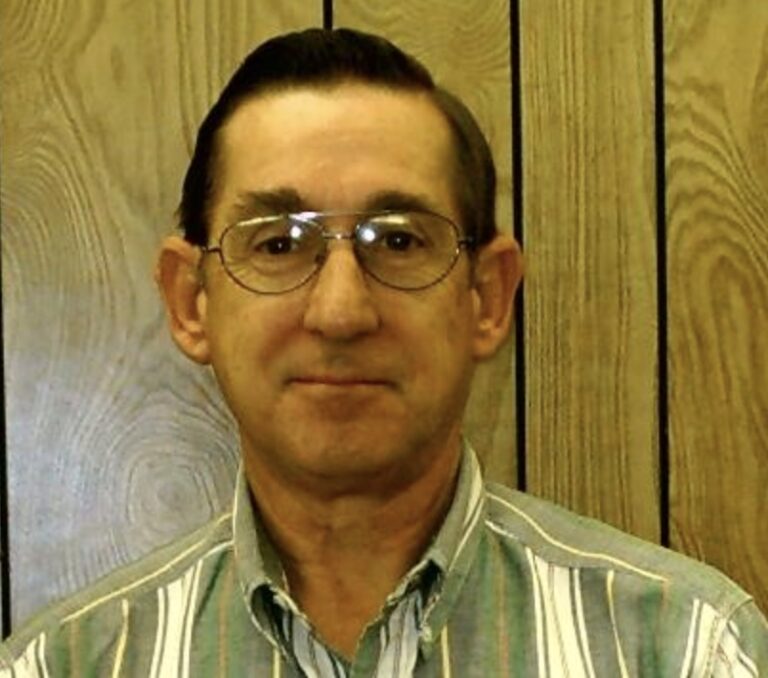
By: Pastor Rick Smith
The first church was blessed with apostles, deacons, and elders, but missionaries didn’t appear at first. Perhaps God wanted them to settle in to the life of that local church, or, maybe it was simply not in God’s timing to send out missionaries. That early church was made up of locals and foreigners. They had to learn how to be the church. They had to handle the growing pains of having such a diverse group of people. But then came persecution and martyrdom. “Now they which were scattered abroad upon the persecution that arose about Stephen travelled as far as Phenice, and Cyprus, and Antioch, preaching the word to none but unto the Jews only.” (Acts 11:19). They were ordinary missionaries that God used in miraculous ways.
Who were these that were scattered because of the persecution after Stephan’s death? Looking back to Pentecost in Acts 2 we are told that the crowd was made up of “…Parthians, and Medes, and Elamites, and the dwellers in Mesopotamia, and in Judaea, and Cappadocia, in Pontus, and Asia, Phrygia, and Pamphylia, in Egypt, and in the parts of Libya about Cyrene, and strangers of Rome, Jews and proselytes, Cretes and Arabians…” (Acts 2:9-11). It was this mixed group of foreign born Jews and proselytes that were scattered. The regions that they settled in were places dominated by Gentiles that spoke Greek. Initially the contacts were made sharing the gospel with other Jews. This is the pattern that was practiced later by the apostle Paul. These, though, probably limited themselves to the Jews, because they were more comfortable communicating the gospel to them. They were Jews and they would have common ground to proclaim the gospel.
But among those that were scattered were those from parts of the Roman world where the Jews would have to do commerce and live among the Gentiles. “And some of them were men of Cyprus and Cyrene, which, when they were come to Antioch, spake unto the Grecians, preaching the Lord Jesus. And the hand of the Lord was with them: and a great number believed, and turned unto the Lord.” (Acts 11:20-21). This is a prayer point for us. We want the hand of the Lord to be with all of our mission work. The gospel of Jesus Christ is precious seed that must penetrate into the depth of the soul and grow. We want all men to turn to the Lord. That should occupy our prayers and our work.
Once the church at Jerusalem heard about it they sent Barnabas to check it out. “Then tidings of these things came unto the ears of the church which was in Jerusalem: and they sent forth Barnabas, that he should go as far as Antioch.” (Acts 11:22). Jerusalem was approximately fifteen days journey to Antioch. When Barnabas saw what God had done he “…exhorted them all, that with purpose of heart they would cleave unto the Lord.” (Acts 11:23).
At this point in the book of Acts there is a turning of the page. Up to this point the emphasis had been on the work of the original apostles, especially Peter. But now, Barnabas seeks out Paul in Tarsus to bring him into the work at Antioch. You will remember that when Paul turned to Christ it was Barnabas who presented him to the Jerusalem church. Now, Barnabas brings Paul into the work of disciplining the new Gentile believers. Paul and Barnabas, along with others, for a year gathered with the “…with the church, and taught much people.” (Acts 11:26). The new disciples were edified and Paul and Barnabas were able to bring others to faith in Jesus.
The goal of ordinary missions and missionaries is to present every man prefect in Christ (Colossians 1:28). The disciples were no longer Jew or Gentile, but something new and part of the mystery of the gospel. It really is summed up in the statement: “And the disciples were called Christians first in Antioch.” (Acts 11:26). Through the ordinary members of the scattered church acting as missionaries God open the door to the Gentiles. Our mission, as individuals, is the same as that of every true church. Our mission is to bring the gospel to all men everywhere.
If you have any questions, we invite you to visit with us this Sunday. Worship at 10:50 A.M. We are located at 711 West Washington Ave. Check our sermon videos on Youtube @ricksmith2541. Send comments and prayer requests to prayerlinecmbc@gmail.com.
Rick Smith is the Pastor at Calvary Missionary Baptist Church in Artesia.

Copyright © 2026 El Rito Media, LLC. All rights reserved.