Home Blog Page 179

Artesia High bowling team continues to strike

0

Mike Smith
Artesia Daily Press
msmith@currentargus.com

Before a standing room only crowd last Saturday, Jan. 18, the Artesia High School bowling team won the advanced and intermediate team titles in a tournament held at Artesia Lanes and Games.

Artesia was the lone entrant representing southern and southeastern New Mexico, taking down schools from the northern and central regions of the state.

Teams traveling to Artesia, where the host Bulldogs have built a reputation for bowling prowess by winning nine state championships, were Rio Rancho High School, Rio Rancho Cleveland, Espanola Valley, Bernalillo, Pojoaque High School and five schools from Albuquerque.

In the advanced division, Artesia claimed first place as the No. 2 team finished first with 3,402 points. Artesia’s No. 3 advanced team finished third with a score of 3,249. Albuquerque El Dorado took second with 3,354 points.

Artesia’s No. 2 advanced team is made up of Jace Miles, Mason Jeter, Damian Lopez, Chase Collins, and Brenden DePew.

“I did pretty good today,” said Collins who had a decisive point total of 387.

“The individuals are not my best strong suit,” Collins said. “But the Baker team games, my team and I really shined. I closed all of my frames which is a strike or spare. I did pretty good, and we ended up winning the whole thing.”

Baker competitions are unique because they are always bowled as a team and every member must work together on the same bowling game, according to the National Federation of State High School Associations.

Collins, 15, is a sophomore and Artesia head coach Ken Clayton expects wonderful things from him heading into the regular season finale this weekend and the state tournament Feb. 1 in Albuquerque.

“Between him and Jace (Miles) we’ve got a lot to look forward to,” Clayton said. “Jace is a sophomore and has been on the team that has five wins.”

Collins is seventh on the team with a 183 average. Miles is sixth with a 191 average and DePew is first with a 207 average.

Clayton has coached the Artesia bowling team for 18 years and has 38 members on the squad.

Artesia’s No. 5 team claimed first place in the intermediate division with an overall score of 2,878. Artesia’s No. 3 squad took second with 2,850 points while Albuquerque High School finished third with 2,792 points and Artesia’s No. 4 team finished fourth with 2,785 points.

In the novice division, Rio Rancho Cleveland finished first with 2,524 points. Artesia’s No. 6 team finished second with 2,354 points and Artesia’s No. 7 squad came in third with 2,310 points.

Mike Smith can be reached at 575-308-8734 or email at msmith@currentargus.com.
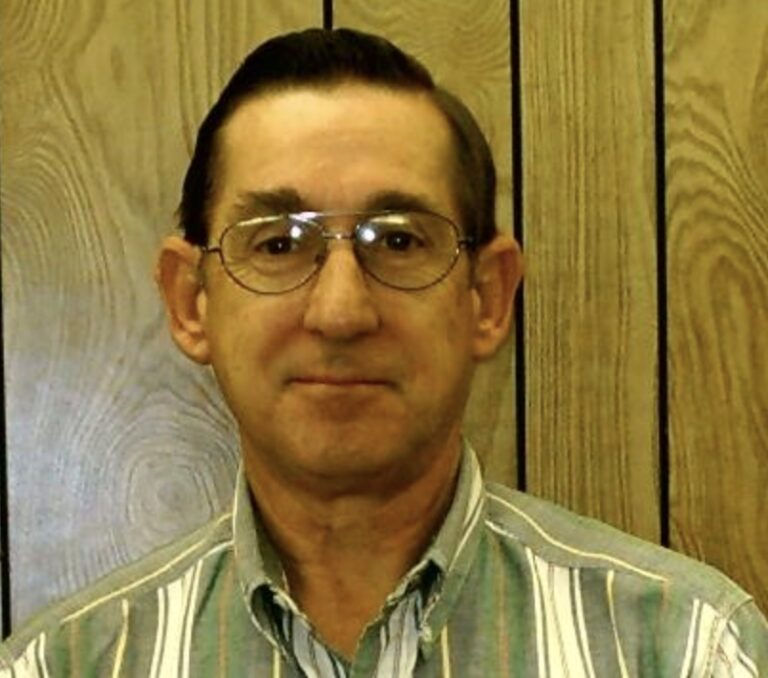
The Command to Repent

0

By: Pastor Rick Smith

“And the times of this ignorance God winked at; but now commandeth all men every where to repent: Because he hath appointed a day, in the which he will judge the world in righteousness by that man whom he hath ordained; whereof he hath given assurance unto all men, in that he hath raised him from the dead.” (Acts 17:30-31).

What is repentance? Repentance is the changing of the mind that produces a change of actions. It is an “about face”. You were heading one way then you did an 180 degree turn and are heading in the opposite direction. Once you didn’t trust in Jesus as your Savior, but you changed your mind and have entrusted your life to Him. It does not matter whether you think that you are a good person or someone so wicked that you feel that there is no hope for you, all need to repent. Repentance is necessary for salvation, to live the life of a believer in Christ, and for a Christian church to get right with the Lord.

The first thing that I want everyone to know is that repentance is necessary for salvation. I mean you must repent in order to be saved. You may say, “I thought that salvation is by faith alone in Jesus. What do you mean that we must repent to be saved?” You can read the context on your own, but in Matthew 21:31-32 Jesus says, “Verily I say unto you, That the publicans and the harlots go into the kingdom of God before you. For John came unto you in the way of righteousness, and ye believed him not: but the publicans and the harlots believed him: and ye, when ye had seen it, repented not afterward, that ye might believe him.” They saw the sinners believed John, but the Pharisees and scribes did not repent “…that they might believe him.” Paul, in explaining his ministry to the Ephesian elders, said, “Testifying both to the Jews, and also to the Greeks, repentance toward God, and faith toward our Lord Jesus Christ.” Repentance and faith are two sides of the same coin of salvation.

Secondly, I want you to know that repentance continues on in the believer’s life after he is saved. As someone has said, as believers in Jesus Christ our Lord, we are unrepentant repenters. We aren’t finished repenting once we are saved. We continue to repent almost daily for the rest of our lives. Part of the process of repentance is conviction of sin. As long as we live in this sinful flesh, the Holy Spirit is going to convict us of sins and we are going to have to repent. And when we repent we have the promise of God: “If we confess our sins, he is faithful and just to forgive us our sins, and to cleanse us from all unrighteousness.” (1 John 1:9).

Also, as we have seen in the second and third chapters of Revelation, repentance is necessary for a church to get right with God. For example Revelation 2:5 says, “Remember therefore from whence thou art fallen, and repent, and do the first works; or else I will come unto thee quickly, and will remove thy candlestick out of his place, except thou repent.” Also, Revelation 2:16 says; “Repent; or else I will come unto thee quickly, and will fight against them with the sword of my mouth.” (See also Revelation 2:21-22; 3:3, 19) We all want revival, but are we willing to repent in order to see it. The principles of 2 Chronicles 7:14 apply to the local church: “If my people, which are called by my name, shall humble themselves, and pray, and seek my face, and turn from their wicked ways; then will I hear from heaven, and will forgive their sin, and will heal their land.” The command is to the church, but the response is that of the individual members in the church.

Who needs to repent? All need to repent, because God commands “…all men every where to repent…” Why does God do this? “…Because he hath appointed a day, in the which he will judge the world in righteousness by that man whom he hath ordained; whereof he hath given assurance unto all men, in that he hath raised him from the dead.” (Acts 17:30-31). God the Father has appointed Jesus to be the Judge and the proof of it is that Jesus arose from the grave. “And he commanded us to preach unto the people, and to testify that it is he which was ordained of God to be the Judge of quick and dead.” (Acts 10:42). Are you prepared to stand before Jesus, the Judge of all the earth? If not, then repent of your sins and believe on the Lord Jesus Christ.

If you have any questions, we invite you to visit with us this Sunday. Worship at 10:50 A.M. We are located at 711 West Washington Ave. Check our sermon videos on Youtube @ricksmith2541. Send comments and prayer requests to prayerlinecmbc@gmail.com.

Rick Smith is the Pastor at Calvary Missionary Baptist Church in Artesia.

Cats and Dogs Needing to Go to Animal Shelters: A Growing Concern and Call for Action

0

By: Harry Bailey
Supervisor, Artesia Animal Shelter

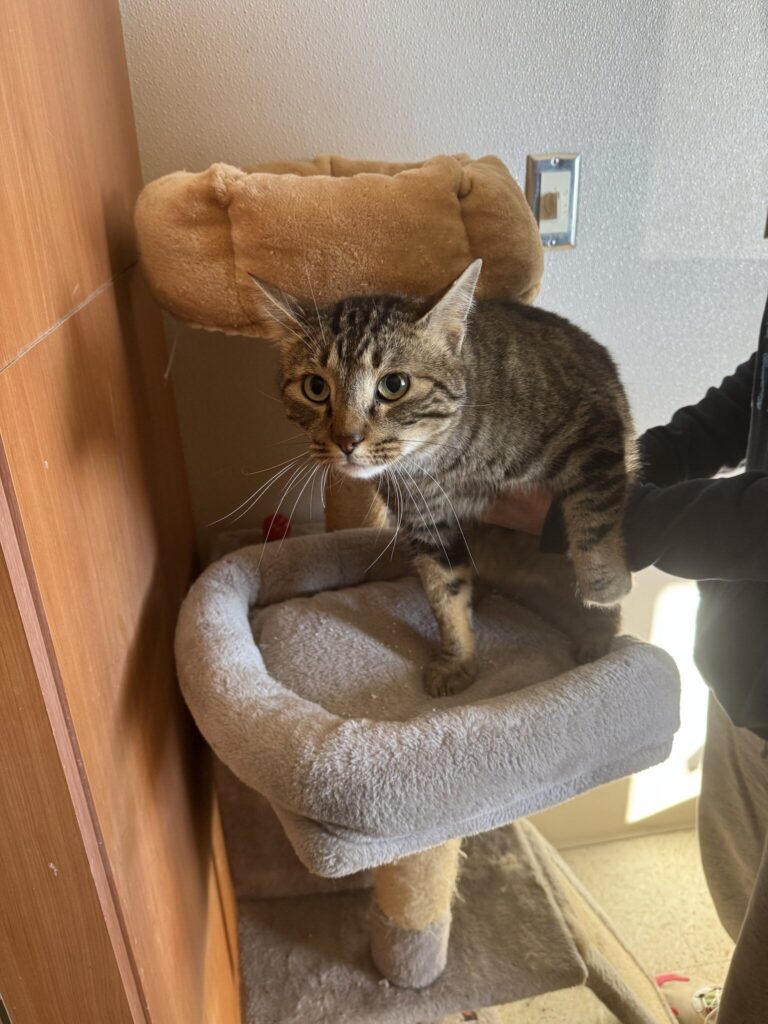
The Artesia Animal Shelter has long served as a safe haven for homeless, abandoned, and neglected pets. Cats and dogs, in particular, make up the majority of the shelter’s residents. While the dedicated staff and volunteers work tirelessly to provide care and find loving homes for these animals, the increasing number of pets needing shelter has become a growing concern in our community and surrounding areas.

Several factors contribute to the rising number of cats and dogs entering the shelter. Understanding these causes is essential to developing effective solutions to manage and reduce the strain on our shelter.

1. Overpopulation

One of the most significant challenges is pet overpopulation. Many cats and dogs are not spayed or neutered, leading to unplanned litters. The resulting surplus of animals often exceeds the shelter’s capacity, leaving many pets without homes or adequate resources.

2. Abandonment

Some pets are abandoned by their owners, often due to life circumstances such as moving, financial hardship, or a lack of willingness to care for the animal. This issue is particularly prevalent in areas where pet owners may not fully understand the responsibilities and commitment required for pet ownership.

3. Owner Surrenders

In some cases, pet owners facing personal challenges or significant life changes choose to surrender their pets to the shelter. Common reasons include job loss, financial strain, the arrival of a new baby, or relocating to a home that does not allow pets. Unfortunately, owner surrenders contribute to shelter overcrowding.

4. Stray Animals

Both urban and rural areas face issues with stray animals. These animals may have been lost, abandoned, or born on the streets, leading to a difficult existence without proper care or shelter. The Artesia Animal Shelter plays a critical role in providing these animals with a chance at survival and a potential forever home.

The Impact of Overcrowding

Overcrowding is a serious issue for the shelter. Despite its best efforts, the shelter is not equipped to handle an ever-growing population of animals. When the shelter reaches capacity, animals may face the possibility of euthanasia, particularly if they are not adopted within a certain timeframe. The stress of living in a confined environment can also negatively affect the animals’ physical and mental health. Additionally, the shelter’s staff often faces emotional and physical strain while trying to manage these challenges.

How the Community Can Help

Our community plays a vital role in alleviating the pressure on the animal shelter. Here are some ways to make a difference:

1. Adopt, Don’t Shop

One of the most direct ways to reduce the number of animals in the shelter is by adopting. By choosing to adopt rather than purchasing from breeders, you can provide a loving home to a pet in desperate need.

2. Spaying and Neutering

Spaying and neutering are crucial in preventing the overpopulation of cats and dogs. This simple procedure can significantly reduce the number of unplanned litters and help control the pet population.

3. Volunteer or Donate

Shelters rely on volunteers to assist with animal care and daily operations. Donating food, supplies, or funds can also make a significant difference in improving the lives of both the animals and the shelter staff.

4. Support Legislation

Advocating for policies that promote responsible pet ownership, such as mandatory spaying and neutering, supporting no-kill shelter initiatives, and reducing pet overpopulation, can create lasting changes.

A Call to Action

The increasing need for animal shelter services reflects broader issues, including overpopulation, resource limitations, and the challenges of responsible pet ownership. While shelters like the Artesia Animal Shelter play a critical role, the responsibility to make a difference ultimately lies with the community, individuals, and local government.

By adopting pets, spaying and neutering, volunteering, and supporting your local shelter, we can collectively ensure that fewer cats and dogs are left without homes.

I invite you to visit the Artesia Animal Shelter at 502 N. Paddywagon Way to meet our animals and learn how you can help. If you prefer to browse from the comfort of your home, you can view our available pets at

www.artesiaanimalshelter.org

Harry Bailey is the Supervisor for the Artesia Animal Shelter. He can be reached at: 575-746-5043 or at hbailey@atesianm.gov

Protecting homeowners and keeping insurers in New Mexico

0

By Sherry Robinson
All She Wrote

When we look back at fires, California’s and New Mexico’s, we’ll see that the victims got burned twice – once during the event and again when they tried to rebuild and found they couldn’t get insurance. That’s if they had any to begin with. Many don’t.

This is not a rant about insurance companies. Two of my early jobs were with insurance companies. I spent years writing about them as a business writer, so I don’t expect them to act like charities.

New Mexico and California have property insurance problems driven by climate change. The disasters are growing so big and so costly that insurers can no longer provide coverage. Many have been losing money. But California’s insurance troubles are far worse than ours.

The state of California placed price controls on home insurance; any increase in premiums above 7% requires approval from the state insurance commissioner, who is elected. He wants to keep his job, so he’s said no to insurance companies wanting to raise rates to match their risk, and companies have left California. Last year, State Farm, the biggest home insurance provider in the state, cancelled thousands of policies in risky places saying that in the event of a major disaster the allowable premiums would tank the company.

With no other options, Californians have turned to the FAIR (Fair Access to Insurance Requirements) Plan, reported the Los Angeles Times. Provided by the state to cover uninsurable people and funded by a surcharge on insurers still doing business there, it provides limited coverage. That fallback is now strained.

California voters have only themselves to blame for their insurance drought. In 1988 they passed Proposition 103, which required the state to approve premium increases.

California’s ballot proposition system is to governance what chewing gum is to hot pavement. If anybody ever suggests introducing it in New Mexico, vote them out of office quickly.

It’s a bit comforting that we’re not in California’s boat, but New Mexicans have serious issues too. In August the Legislative Finance Committee, meeting in Ruidoso, heard testimony from the state’s insurance regulator that insurers are increasingly reluctant to renew or approve policies in riskier areas since this year’s wildfires, and home insurance premiums have spiked. (We can probably add Roswell’s floods to the list.)

LFC Chairman and Sen. George Muñoz, D-Gallup, commented, “I got denied on a commercial property in the middle of Gallup next to a fire hydrant because of wildfires.”

The Office of the Superintendent of Insurance (OSI) sued State Farm, the state’s largest insurer, saying it improperly denied some claims after the South Fork and Salt fires. The state lost, reported Source New Mexico.

New Mexico hasn’t seen quite the exodus of insurance companies as California; despite losses in 2016, 2017 and 2022, they’re mostly profitable here. Nationally insurers have paid out more than they’ve taken in over the last ten years.

New Mexico also has a FAIR Plan, and it too is a fallback that costs more than conventional insurance and provides minimal coverage — $350,000 for homes and cash value, not replacement cost, for a home that’s lost. Protection is too thin to get a mortgage. You can see how this cascades into economic impacts on builders and local economies.

OSI can’t use a stick to force coverage, so it’s leaning toward carrots. That might mean property owners creating defensible spaces around their homes or new zoning regulations that prevent building in high-risk areas. It might mean beefing up FAIR plans but stopping short of competition with insurers. Fire departments might ask for more help.

We’ll probably see insurance-related bills in the upcoming legislative session. Let’s hope they get serious attention and don’t get lost in the usual crush of a 60-day session.

Sherry Robinson is a longtime New Mexico reporter and editor. She has worked in Grants, Gallup, the Albuquerque Journal, New Mexico Business Weekly and Albuquerque Tribune. She is the author of four books. Her columns won first place in 2024 from New Mexico Press Women.

Artesia swimmers set school records

0

Daily Press Staff Report

Robust finishes by the Artesia High School boys swim team gave the Bulldogs a first-place finish during the Artesia Invitational last weekend.

The Bulldogs won the top trophy with 145 points. Hobbs finished second and Clovis took third. Nine teams competed in the tournament at the Artesia Aquatic Center.

The Lady Bulldogs finished second out of seven teams with 146 points. Clovis High School won the girls division with 217 points.

The boys 200 medley relay team of Layton Whitmire, Eli DeHoyos, Aidan Ciro and Andree Bautista finished first with a time of 1:40.2.

Head coach Andrea Ciro said the team beat the school record by three seconds.

Aidan Ciro broke a 50-freestyle school record with a time of 21.47 and DeHoyos broke a 100-breaststroke school record with a time of 1:00.56.

The 400-freestyle team of Bautista, Whitmire, DeHoyos and Ciro dropped three seconds off the school record with a time of 3:24.73.

On the girls’ side, Ann Greenwood won the 200 intermediate and 100 butterfly. Andrea Ciro said she came close to breaking two school records.

Carly DeHoyos dropped 19 seconds in the 500 freestyle for eighth place with a time of 6:32.58.

Morgan Fisher won the 100 breaststroke with a time of 1:13.94.

Permian Basin oil company certified for ‘dark sky’ protection

0

Adrian Hedden
El Rito Media
achedden@currentargus.com

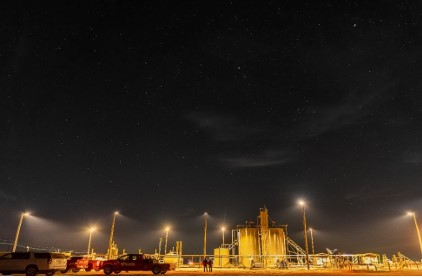
An oil and gas company operating in southeast New Mexico’s Permian Basin oilfields agreed to take steps at three facilities in Lea County to reduce artificial light impacting the wilderness in the region.

Colorado-based Franklin Mountain Energy was certified Jan. 9 by Tucson, Arizona-based nonprofit DarkSky International at the National Cave and Karst Research Institute in Carlsbad for its efforts to improve the viewshed at Carlsbad Caverns National Park by limiting excessive outdoor lighting.

The effort was part of a broader joint initiative by the park service and the New Mexico Oil and Gas Association to help oilfield operators to reduce manmade impacts to the night sky.

The Dark for the Park Alliance, formed last year by the park service and New Mexico industry groups, began work to draft a series of steps oilfield operators could take to limit “light pollution” caused by lighting used to illuminate round-the-clock oilfield work. DarkSky International defines light pollution as “human-made alteration of outdoor light levels from those occurring naturally.” The New Oxford American Dictionary calls it “brightening of the night sky caused by street lights and other man-made sources, which has a disruptive effect on natural cycles and inhibits the observation of stars and planets.”

The lighting certifications for Franklin Mountain Energy were the first ever given to a fossil fuel company.

A report on the recommendations published Jan. 8 included measures such as pointing floodlights down on works sites, rather than allowing the light to spread upward or away from the facility. The alliance also suggested limiting use of lighting to times when it was actually needed to illuminate work areas and using “warmer” amber-colored lights. Amber lights don’t scatter into the sky the same way the more traditionally used blue lights do, the alliance said in its recommendations.

The alliance said such practices would not only reduce night-sky impact but also cut companies’ energy costs and make work sites safer.

The recommended changes were applied to the three sites owned by Franklin Mountain Energy, and will be used in new builds, the company said.

“Safety for our workers is always our first priority,” said Audrey Robertson, Franklin Mountain Energy co-founder. “We also prioritize the environment and support night-sky friendly lighting practices. I am proud of our team for working on this project with DarkSky International and the alliance to ensure the continued beauty found throughout the Permian Basin’s skies.”

Carlsbad Caverns Superintendent Carmen Chapin said the lighting changes will protect views of the night skies, which are important to maintain as part of the park service’s conservation mission.

The park service was working to limit light pollution at Carlsbad Caverns, Chapin, said, and also at Chaco Culture National Historic Park in northwest New Mexico’s San Juan Basin – the state’s other main oil and gas region.

“Part of the night sky, for us, is entrenched in cultural traditions and backyard wonder,” Chapin said. “This is a challenge. We’re the park service. We’re in the business of forever.”

From 2008 to 2023, a 15-year period punctuated by dramatic increases in fossil fuel production in the Permian Basin, there was a 700% increase in brightness in the area, Chapin said,.

“This is a huge change in our ability to see the night sky,” she said.

Chapin said the increased light was impacting the ability to stargaze from the park and negatively affecting native nocturnal wildlife. Reducing the impact is a fix oil companies can accomplish affordably without interrupting operations, she said.

Stephen Hummel at the McDonald Observatory, operated in far-west Texas just south of Van Horn by the University of Texas, said the light from oil and gas operations in the remote region near Carlsbad Caverns rivals that of an urban area.

He said about 95 percent of the light seen at night from the park is from oil and gas operations.

“It looks like a city. In fact, it’s all oil and gas,” Hummel said.

The observatory in 2018 released its list of recommendations for oil and gas operators on the Texas side of the Permian Basin in response to light that was impacting McDonald’s ability to measure the stars and other planetary bodies, Hummel said.

The observatory was founded in 1939, he said, long before fossil fuels boomed in the region and such impacts could be predicted.

“In order to study space and the stars, we need dark skies,” Hummel said. “In the 1930s, we thought we were far enough out that we would never see artificial light. We underestimated the pace of human expansion. We went from having the darkest skies on the globe to pretty significant glow from the Permian Basin.”

Alexandra Fleming, DarkSky Alliance coordinator with the oil and gas association and a scientist at Chevron U.S.A., said the industry operates 24 hours a day but can take steps to limit its impacts when the sun sets on the oilfields.

“It’s not the absence of light. It’s better lighting,” she said. “It’s not rocket science.”

An Unlikely Missionary

0

By: Pastor Rick Smith

In Mark chapter five we have the remarkable story of the Gadarene demoniac. We are not told how this poor man became possessed by the legion of demons, but he was in a sad and miserable state. He lived among the tombs being constantly tormented by the demons that possessed him. As he wandered among the dead, the demons would torment him and cause him to cut himself. Family and friends tried to help him by binding him with manacles and chains, but the demons that tormented him gave him supernatural strength and he would break these restraints. Then Jesus came.

The arrival of Jesus and His disciples caught the attention of this man, or the demons, and he met them as they touched shore. “And cried with a loud voice, and said, What have I to do with thee, Jesus, thou Son of the most high God? I adjure thee by God, that thou torment me not.” (Mark 5:7). Jesus promptly cast these demons out of the man. The man was instantly changed and he was found in the company of Jesus “…sitting, and clothed, and in his right mind: and they were afraid (Mark 5:15).” Fearfully these pagans asked Jesus to leave their area.

As Jesus was leaving, the once possessed man asked to go along with Him. But Jesus said, “Go home to thy friends, and tell them how great things the Lord hath done for thee, and hath had compassion on thee (Mark 5:19).” With that commission, you will agree with me, that we have one of the most unlikely missionaries of the gospel of Jesus.

Consider the field of service that was given to this new missionary. “Go home to thy friends…” In the parallel passage in Luke Jesus says, “Return to thine own house…” (Luke 8:39). These are two difficult, but blessed areas of missionary service. Who is it that will know better than family and friends of the change that has taken place in our lives when Jesus has set us free. Although he wanted to be with Jesus, it was better in the long run to be among those that knew him if God was to receive the glory.

Paul told the Philippians that he was caught between his desire to leave this life and be with the Lord and his needful service to them (Philippians 1:21-26). “Nevertheless to abide in the flesh is more needful for you,” he tells them. Perhaps there are some of your family and friends that will never receive Christ except by your own witness. This was the case for this new missionary.

And it was a simple message that he was to deliver to his family and friends. “Go home to thy friends, and tell them how great things the Lord hath done for thee, and hath had compassion on thee (Mark 5:19).” He had a story to tell. He had been an enslaved by the Devil, now he was free. How did it happen? Who set him free? What a joy it must have been to tell them the story.

Others have had similar experiences and have gone on to be great voices of praise to the God that saved them. John Newton, slave trader turned minister of the gospel, said, “Although my memory’s fading, I remember two things very clearly: I am a great sinner and Christ is a great Savior.” The apostle Paul said, “Christ Jesus came into the world to save sinners; of whom I am chief (1 Timothy 1:15).” Every one of the redeemed have a story to tell his family and friends. That was the commission given. “Come and hear, all ye that fear God, and I will declare what he hath done for my soul.” (Psalms 66:16).

Now, what was the response of this new and unlikely missionary? “And he departed, and began to publish in Decapolis how great things Jesus had done for him: and all men did marvel (Mark 5:20).” Jesus gave these instructions and he obeyed. What more can we do, but obey the Lord’s command. It is not a complicated task. We simply tell what God has done for us through Jesus Christ our Lord. He couldn’t go with Jesus then, but Jesus would never leave him. As with the apostles, so with this man. “And they went forth, and preached every where, the Lord working with them, and confirming the word with signs following. Amen. (Mark 16:20).”

We are not responsible for how people receive our message, but only that we obey the Lord and go and tell what God has done for us. He had been a great sinner. He was freed by a great Savior. He was now a servant of the Lord. He obeyed the Lord’s command and told both his story and Christ’s story. “…and all men did marvel.”

If you have any questions, we invite you to visit with us this Sunday. Worship at 10:50 A.M. We are located at 711 West Washington Ave. Check our sermon videos on Youtube @ricksmith2541. Send comments and prayer requests to prayerlinecmbc@gmail.com.

Rick Smith is the Pastor at Calvary Missionary Baptist Church in Artesia.

Jesus the Leader

0

By: Pastor Ty Houghtaling

I googled leadership, here is a quick summary of a source on the subject that turned up. In 2023 a joint project between U.S. News and The Harris Poll, surveyed 2,100 American adults asking them to assess the state of leadership in the country – from the government to the corporate world. The results showed that Americans are down on business leaders in society and even more frustrated with political leadership.

The overwhelming, more than 80% of those surveyed basically said that they didn’t see any leaders in their immediate environment that I aspired to be. Why isn’t there more reliable admirable leaders? Leadership is hard. There is certainly plenty of critics and not nearly enough grace and that could be part of the problem. Unfortunately, there is also a lack of interest in understanding Jesus as a leader. I am thinking through His leadership attributes.

I am trying to be like Jesus as a leader and I have found it is not easy. He knew intimate details of people’s lives. He knew the “why did they do that”; and “what needs to be said right now to address the issue?”, answers, and answers to all the other questions and concerns facing leaders. He knew because He knew. John 2:24-25 says, “But Jesus would not entrust himself to them, for he knew all people. He did not need any testimony about mankind, for he knew what was in each person.” I am not Jesus and though I try and be like Him, sometimes I try harder than other times, leading like Jesus is difficult. The world would have leaders lead out in certain ways while Jesus gave us a different model.

I am trying to learn it, apply it, and even teach it. Maybe if we all considered His model and implemented it in our families, churches, communities, and the world, we would see different survey data, data that might indicate that we have no shortage of leaders and that would confirm that there are leaders at every business and in every church that are admirable and worth following.

Until then, I and the men I admire, will keep trying to lead like Jesus and God willing our efforts will make a difference. I’d like to know who do you admire as a leader and why? Email me at ty@fbcartesia.org, I am always looking for examples of people living like Jesus.

Ty Houghtaling is the Pastor at the First Baptist Church in Artesia.

The Difference Between a Dangerous Dog and a Vicious Dog: Understanding the Implications of Misreporting

0

By: Harry Bailey

Dogs are beloved companions for many, but sometimes, circumstances arise where concerns about their behavior need to be addressed. In some cases, a dog might be deemed either dangerous or vicious, two terms that are often used interchangeably. However, these terms have distinct meanings, especially in legal and animal control contexts. Misreporting one type of behavior as the other can have serious consequences, both for the dog and for its owner. Understanding the difference between a dangerous dog and a vicious dog—and the implications of such misreporting—can help ensure that dogs are treated fairly and that communities remain safe.

A dangerous dog is typically defined as a dog that has shown aggressive behavior, but not necessarily in a malicious or unprovoked way. Dangerous dogs may include those that:

• Bite or attack a person or animal in a situation where the dog was provoked.

• Pose a risk of harm due to their size, breed, or past behavior.

• Have displayed aggressive tendencies but without a pattern of unprovoked attacks.

For example, a dog may bite in self-defense when it feels threatened, even though it may not have a history of aggressive behavior. A dangerous dog classification usually stems from a single event or a few isolated incidents, and the dog might still be considered a candidate for rehabilitation or training to address its behavior.

A vicious dog, on the other hand, has consistently exhibited unprovoked, violent behavior and poses a serious risk to others. Vicious dogs are often characterized by:

• Repeatedly attacking or injuring people or animals without provocation.

• A history of aggressive acts that indicate the dog poses a threat to public safety.

• Exhibiting behaviors that suggest a lack of control, such as targeting people, animals, or even objects aggressively.

Vicious dogs are generally considered to be a severe threat to safety due to their unpredictable, unprovoked aggression. Such dogs are often subject to stricter legal measures, such as euthanasia or mandatory confinement.

Misreporting a dangerous dog as a vicious one can have significant consequences for both the dog and its owner. A dangerous dog might be misidentified as vicious, resulting in an unfair legal classification. The consequences can include euthanasia If a dog is misclassified as vicious, it may face the extreme consequence of being euthanized, even if it was not a habitual aggressor. This is especially tragic when the dog may have been provoked in the past and could potentially be rehabilitated with proper training.

Mislabeling a dangerous dog as vicious can also impact public safety. While it is important to identify truly dangerous animals, misreporting can divert attention from genuinely dangerous dogs that need intervention, while putting pressure on local authorities to enforce laws based on inaccurate information.

When a dog is inaccurately labeled as vicious, it can lead to a disproportionate response by animal control, which might focus too much on rehabilitating or regulating a less dangerous animal while ignoring others that pose a greater risk. This misdirection can undermine trust in the animal control system, and the resources spent on handling misreported cases could have been better used to address actual threats.

The importance of accurate reporting cannot be overstated. Dog behavior is complex, and it’s essential to understand the full context of an incident before labeling a dog as dangerous or vicious. Here are a few key considerations for accurate reporting:

• Whether the dog was provoked or acted without provocation is crucial. Aggression in self-defense or during stressful situations may not qualify as “vicious.”

• One isolated incident may not be enough to classify a dog as vicious. Repeated aggressive behavior, particularly without provocation, is the hallmark of a vicious dog.

• Dangerous dogs can often be rehabilitated with proper training and socialization, reducing their risk of future aggression. Vicious dogs, however, pose a much greater challenge to reconditioning, and in some cases, they may remain a danger to society despite rehabilitation efforts.

The distinction between a dangerous dog and a vicious dog is not merely a matter of semantics—it has serious consequences for the dog, the owner, and the community. Misreporting one as the other can lead to unwarranted punishment, increased liability, and misallocation of resources. Dog owners, animal control officers, and the community must understand the nuances between these classifications and ensure that each case is carefully evaluated before making judgments that could have long-lasting repercussions.

By promoting a clear understanding of these terms and ensuring that dogs are accurately classified, we can work toward safer communities while safeguarding the well-being of our canine companions.

Harry Bailey is the Supervisor for the Artesia Animal Shelter. He can be reached at: 575-746-5043 or at hbailey@atesianm.gov

Designing New Mexico’s Future: A Path Toward Resilience and Growth

0

By: George Munoz

As we welcome the dawn of a new year, it is natural to reflect on the journey that has brought us here. In doing so, I, as a state senator and Chair of the Senate Finance Committee, often find myself reflecting not only on my own personal experiences but also on the transformative changes that have shaped New Mexico over the years. We stand at a critical moment, one that presents us with both the lessons of our past and the opportunity to build a brighter, more resilient future. The steps we take now will determine the legacy we leave for future generations of New Mexicans.

In reflecting on the challenges we have faced, I remember the times when we had to make difficult decisions, especially during moments of economic turmoil. In 2009, 2017 and again in 2020, the volatility of oil prices caused major disruptions to the state’s budget.

The oil price crash of 2017 forced us to confront the reality that New Mexico’s economy was too dependent on one source of revenue. We had to make tough cuts to balance the budget and swept every penny we could find from under the cushions, affecting education and public services. But as always, New Mexicans have proven to be resilient. We didn’t just weather these storms—we adapted.

I also recall the urgency of 2020, when the pandemic hit and forced us to come together in unprecedented ways. We quickly convened a special session to pass solvency measures that would allow us to continue to operate as a state while providing the resources necessary to combat the effects of COVID-19. These experiences have taught me invaluable lessons about the importance of preparation, adaptability, and, above all, diversification.

One of the hallmarks of my tenure has been my commitment to diversification. While we, as a state, are deeply grateful for the vast natural resources like oil and gas that have strengthened our permanent fund to unprecedented levels and account for over 40% of our annual budget, we can no longer rely on oil and gas alone to fuel our state’s economy. As we saw in the aftermath of the price crash, economic volatility puts us at risk. That’s why, in 2017, I was proud to work on the creation of the New Mexico Bioscience Authority. By investing in the bioscience sector, we’ve laid the foundation for a new economic pillar in our state—one that promises not only growth but also high-quality jobs and technological advancement.

This focus on diversification has also extended to education. I remember a time when we could barely afford to fund the lottery scholarship, and students struggled to afford higher education. Today, we now offer tuition-free education to all New Mexico students, ensuring that a lack of financial resources will not limit a person’s potential. This is not just an investment in individuals, but an investment in the future workforce of New Mexico.

Over the last decade, we’ve also made significant strides in early childhood education. I recall when our early childhood programs were limited to whatever the federal government could fund. Today, New Mexico boasts the largest sovereign early childhood education fund in the nation, a testament to the importance of investing in our youngest learners.

I’ve also had the distinct privilege of serving as Chair of the Senate Finance Committee, and through this role, I’ve worked to address the volatility of our state’s revenue streams. One of the most significant steps we’ve taken has been to invest today’s money in ways that will pay dividends far into the future. For example, an estimated $3.04 billion in school tax and $4.74 billion in federal royalty distributions is estimated to reach the severance tax permanent fund between now and 2030 as a result of these efforts. To give you context, the severance tax permanent fund had an ending balance of $9.5 billion in 2024; essentially, in the next 5 years we will have saved almost the same amount of money we have been saving for the last 47 years within this permanent fund. This approach, though not always immediately gratifying, is the key to ensuring long-term sustainability and stability for New Mexico; it is safe to say that we have made New Mexico recession proof and are now able to withstand a future economic downturn.

Looking ahead, the work is far from over. We must continue to diversify our economy, invest in economic development initiatives, and prioritize job creation, while also addressing some of the most pressing challenges of our time. Mental health care is a priority. For too long, mental health has been an underserved and underfunded area. Remember too that prior administrations effectively destroyed our state’s behavioral services and we have yet to recover. The pandemic has only highlighted the critical need for accessible mental health services, and it is time we build a system that truly supports the mental well-being of all New Mexicans.

Furthermore, we must continue to focus on improving the quality of life for all of our residents. This means tackling issues such as healthcare, housing and homelessness, infrastructure, and public safety and crime prevention in ways that are meaningful, equitable, and sustainable. The work we do today will determine how future generations experience life in New Mexico, and it is incumbent upon us to make thoughtful, deliberate investments in their well-being.

Lastly, we must prepare our state for an economic boom by electrifying and modernizing our electric grid. Ensuring we have sites ready for economic development and growth. And investing in our local small businesses and entrepreneurs.

As we embark on this new year, I am committed to continuing the work of diversifying our economy, addressing mental health needs, and improving the overall quality of life for all New Mexicans. We’ve come a long way, but we still have much to accomplish. Together, we can design a New Mexico that is not just resilient in the face of adversity but a model of opportunity and prosperity for future generations.

George Munoz is a New Mexico State Senator, representing District 4. He is also the Chair of the State Finance Committee.