


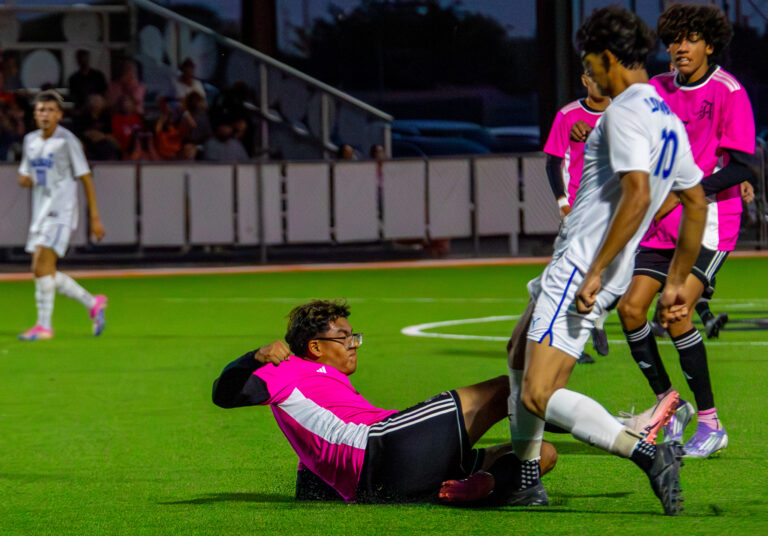
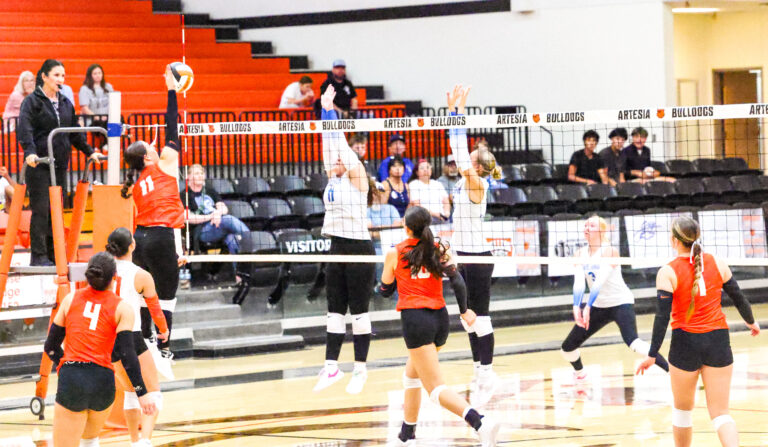

The Artesia Daily Press has nominated three girls for their excellent play on the athletic fields this week. For Cross Country, Jema Molina, for volleyball, Brooklynne Ivans and for soccer, Alani Escareno.
Voting starts on Oct. 9-16.




The Artesia Daily Press is has nominated three boys for Athlete of the Week.
Please vote for your favorite athlete, starting on Thursday, Oct. 9-16. Only one vote per day.
This week’s nominees are: Football, Trent Egeland, Boys Soccer, Damien Lopez and Cross Country, Edwin Villarreal.

Bulldogs wide receiver Trent Egeland makes a catch against Santa Teresa on Friday. He is a nominee for Athlete of the Week.


Jose Garcia
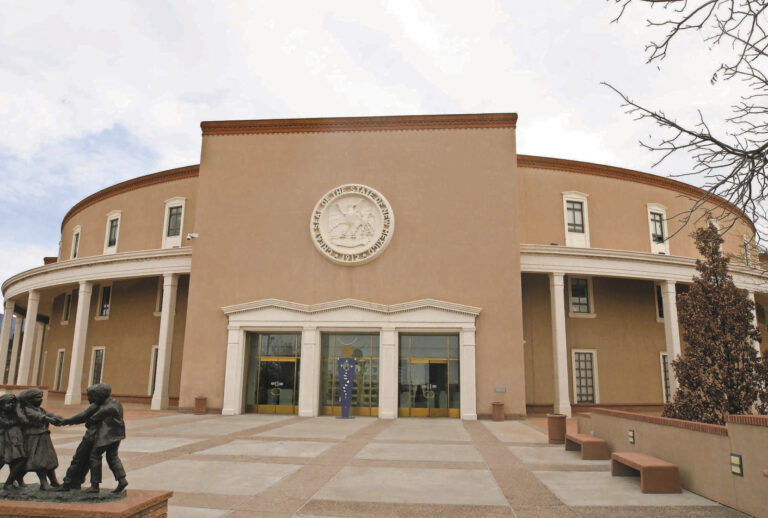
The special session of the Legislature last week addressed the Trump health care cuts that were passed in July 2025 but won’t kick in until after the mid-term elections next year, or in some cases not until 2028. This timing detail deflated the air of urgency in the session’s balloon and gave rise to complaints from legislators that the bills offered up were premature, since no one can be sure what might happen.
So with lawmakers reminded in committee hearings about the “what if” character of the special session, especially by Republican legislators, a cloud of skepticism permeated some of the debate. Couldn’t all of this have been delayed until the 30-day session in January or even beyond? When I asked about this, however, one knowledgeable person told me hospitals need some lead time in planning future investments, and even the five-month advance notice of the Legislature’s intent could make a difference in whether to keep a hospital open or not. Such is the critical nature of the problem.
Despite this complaint, for many legislators the session presented an opportunity to highlight publicly the poor condition of our declining statewide health care system, particularly the highly precarious state of health care in most rural areas of the state – conservative politically, but not necessarily MAGA strongholds. Sen. Angel Charley, who represents several counties in the northeast part of the state, asserted on the floor of the Senate and in committee that in McKinley County 65% of the population is on Medicaid, and of these, the average household income is just under $20,000. Those are dismal numbers, but many rural counties with highly conservative legislators are not far behind. This go-around, Republican legislators in rural districts paid more respectful attention to the proceedings. One legislator spent an hour talking to me knowledgeably about the poor quality of health care in his district, and the difficulty keeping hospitals open and doctors from leaving.
Inside the leadership, the emphasis was on getting things finished quickly. Peter Wirth, majority leader of the Senate, was quoted in Source New Mexico saying legislative special sessions before the session “only work when the bills are cooked.” Senate President Pro Tem Mimi Stewart, echoing Wirth, said “vetting” proposals in advance enabled legislators to walk into the chambers with “confidence.” True to his word, Wirth would not allow the issue of caps on malpractice suits and compacts with other states to permit out-of-state health care providers to practice in New Mexico. Many believe these two issues are major contributors to the huge flight of physicians from New Mexico, resulting in grossly increased wait times for doctors’ appointments, and in difficulty recruiting doctors to practice in New Mexico. Compacts with other states allowing physicians to practice in New Mexico, including by Zoom, were postponed – apparently under pressure from the trial attorneys – until the legislative session in January. Wirth is a lawyer with a prominent firm, giving rise to a feeling this was simply a delaying tactic on an issue of high urgency for most patients in the state. Have you tried to get an appointment with a primary care doctor or specialist lately?
These issues are more complex than one might imagine, as I found out talking to lobbyists and legislators about them, and they deserve full deliberation. But they are issues that have been around for several years without deliberative resolution, and more than one legislator and lobbyist confirmed to me that cleavages in the special session could be summarized as a fight between most stakeholders in the health care system and the trial lawyers. The pressure is on the Legislature from the public on this, so the 2026 session might actually produce some serious proposals to recruit and retain doctors in New Mexico and to keep hospitals open.
In the end, the Legislature can be said to have created a path toward alleviating the most damaging effects of the Trump administration’s scheduled cuts in health care coverage, at least reassuring hospital administrators and doctors that the Legislature is aware of the dangers ahead in a health care system that has been deteriorating for the past two decades. House Bill 1 authorized $162 million for health care, food assistance, and hospitalization. The Senate transferred $50 million to the Rural Health Care Delivery Fund to alleviate conditions. Another bill, if signed into law would grant the state Department of Health authority to purchase COVID vaccines for children and allow parents to ignore new federal guidelines for schools and day-care centers. When you look at the numbers of people who might be affected should the federal legislation take effect on schedule, $162 million is not a lot of money. But it signals intent for the state to assume some of the duties that for many decades have been seen as a federal responsibility.
Dr. Jose Z. Garcia is a former New Mexico Secretary of Higher Education, retired University PhD professor of political science, is active in state politics and a columnist for El Rito Media. He lives in Las Cruces and also frequently spends time in Santa Fe where he maintains a residence.
Adrian Hedden
Artesia Daily Press
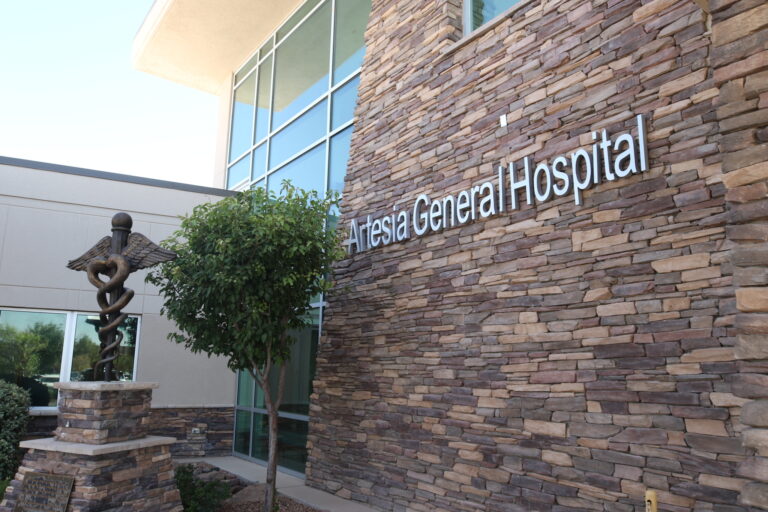
A tax levy that was defeated in a special election in June – a setback that could cost Artesia General Hospital between $4 million and $7 million a year – is going before the voters again in this year’s general election on Nov 4.
Hospital officials said they were hopeful that problems with the mail-only format of the June election will be alleviated in the second round of voting, along with misconceptions throughout the community as to what the levy revenue would pay for.
The levy, paid on property taxes for homeowners and businesses within the Artesia Special Hospital District which encompasses most of the city limits and about 10,000 voters, is used to supplement the hospital’s operating costs.
The district, which owns the land the hospital sits on, acts as a landlord while collecting the levy from taxpayers and providing the funds to the hospital at its board’s discretion and based on requests from hospital officials.
The levy was first implemented in 1979, when the district was established mainly to spend the funds. It had been renewed every four years since.
That changed on June 3, when a special mail-in election resulted in 638 votes against renewal and 608 in favor.
Approval of the mill levy in next month’s election would not raise taxes but would maintain the current levy of $2.70 per every $1,000 of a property owners’ net taxable property value within the district. It was last renewed in 2021 and doesn’t expire until Dec. 31 of this year so passage in November would keep the levy in effect without interruption.
Hospital officials maintain that about 80% to 90% of the levy is paid by commercial entities, mostly large oil and gas companies, and that it funds between 5% and 10% of the hospital’s operating budget.
District board member Karen Waldrip said hospital leaders are devising a plan to “cut lines of service,” should the levy be defeated again.
She declined to comment on which specific services could be defunded, but said “lines of service” include specialties such as cardiology and advanced surgery.
“The hospital has already made plans since it was defeated in June,” said Waldrip, who is also running in the Nov. 4 election for a second four-year term against David Romine and Harry Williams. “Our money from the mill levy goes to improvements and maintaining hospital services.”
During a small gathering of residents and hospital staff Tuesday, Oct. 7, at Kith and Kin in downtown Artesia the hospital’s chief executive officer, Dr. Joe Salgado, said the funds would support ongoing operations at the hospital, which serves patients throughout Eddy County – both at the main location and at a facility in Carlsbad.
“One of the things to recognize and spread is that support of the hospital is essential,” Salgado said. “It’s for our operating expenses, but it also gives validity to the district in its managerial role.”
Salgado said the funds allow Artesia General to maintain specialized treatment and prevent patients from having to travel to larger cities such as Lubbock or El Paso, often across state lines and several hours away.
“Because we’re small, we’re rural, we’re going to try to get about 85% to 90% of what people need,” Salgado said. “The rest we will facilitate.”

Without the levy funds, the hospital could also be strained by more patients coming to Artesia, according to Director of Radiology Roy Thomas.
He pointed to federal cuts to Medicare, Medicaid and SNAP, or the Supplemental Nutrition Assistance Program, formerly known as food stamps, impacting rural hospitals throughout New Mexico, and potentially sending their clients to Artesia.
The cuts, which were estimated to remove 90,000 New Mexicans from federally supplemented health care, were enacted July 4 when President Donald Trump signed a spending bill known by supporters as the “One Big Beautiful Bill.” Conflict over the cuts was the key factor in the ongoing government shutdown that began Oct. 1 when Republicans and Democrats in Congress failed to agree on a plan to keep the government up and running.
New Mexico Health Secretary Kari Armijo earlier this year testified before a legislative panel that six to eight rural hospitals, not including Artesia General, could be in danger of closing, according to a July 2 article in the Albuquerque Journal. The reported list included facilities in Taos, Grants, Clayton and Gallup in northern New Mexico.
Thomas said such closures could send more patients south to hospitals like Artesia’s, making the mill levy more important in efforts to serve a potentially broadening client base.
“That’s something for not only local Artesians to keep in mind, but the whole region,” he said.
Morgan Fox, who serves as spokesperson for both Artesia Mayor/State Rep. Jon Henry (R-54) and New Mexico Sen. Jim Townsend (R-34), said many of the no votes in June were likely the result of misconceptions about what the levy pays for and how the money is distributed.
The mill levy is specifically for continued operations at the hospital, Salgado said, not for future capital projects such as plans for the hospital district to build multiple new medical facilities throughout Eddy County.
“I think the public just doesn’t understand all the components of the hospital and the district,” Fox said. “I think education is important.”

Joseph Shiel, an 85-year-old retired teacher and oilfield worker, said many voters did not comprehend what the June ballot was for or why they received it in the mail, and as a result failed to fill it out and submit it.
The ensuing low turnout could be to blame for the levy’s defeat, he said, as only 1,246 of about 10,000 ballots mailed to voters were returned to Eddy County. That means the turnout was about 12% for the special election, compared with about 68% countywide during the 2024 general election when voters chose President Donald Trump over Democratic Party nominee Kamala Harris, according to data from the New Mexico Secretary of State.
Shiel said he believed the levy would have more success when it’s up for approval in the Nov. 4 election along with candidates for school board and the Artesia Special Hospital District Board of Directors.
“Nobody understood the ballot,” Shiel said. “It was just the whole mail-in thing. I knew a lot of people who thought it was junk mail; they just threw it in the trash.”
Danny Parker, who serves on the Special Hospital District Board and as assistant superintendent of secondary education at Artesia Public Schools, agreed that mail-in ballots were to blame.
He said concerns were raised to him that the ballots required personal information such as the last four digits of a voter’s social security number, details many potential voters were leery of providing through the mail.
“Mail ballots are confusing. People don’t fill them out,” Parker said.
He also said voters were dissatisfied with the time it took the hospital to begin devising a “baby box” – a secure location where unwanted infants can be left at the facility.
Artesia General signed an agreement in August with Indiana-based Safe Haven Baby Boxes to design and install a baby box at the facility, two years after New Mexico’s first such box was installed in Alamogordo and another was made available in Carlsbad.
Another sticking point for voters, Parker suggested, was the perception that the mill levy would pay for a new hospital, after plans were announced in August 2024 for a “health care village” that would include a housing subdivision to be established around a new medical facility on the north side of town, replacing Artesia General’s current main campus.
But that project was in the early design phases, said hospital spokesman Khushroo Ghadiali, and may not come to fruition for at least another five years. Funding for such a proposal, Parker said, would likely go before voters in the form of a general obligation bond separate from the mill levy.
“There’s a lot of talk about the levy and the new hospital, and people put them together,” Parker said. “It’s a whole different ball of wax. The public will have their say on the new hospital, which will take a lot more than a mill levy vote will provide.”
In a broader sense, owner of Permian Construction Scott Taylor, who has led multiple construction projects at the hospital, said votes against the levy in the mail election were used by many to vent their overall frustrations with health care in the U.S.
He said rising health care costs and insurance premiums led to widespread dissatisfaction with the health care industry, criticisms Taylor said were misdirected toward Artesia General Hospital.
“People are frustrated with their health care and their insurance. It’s an emotional thing,” Taylor said. “It’s a nationwide problem that affects the mill levy.”
Managing Editor Adrian Hedden can be reached at 575-628-5516, or @AdrianHedden on the social media platform X.

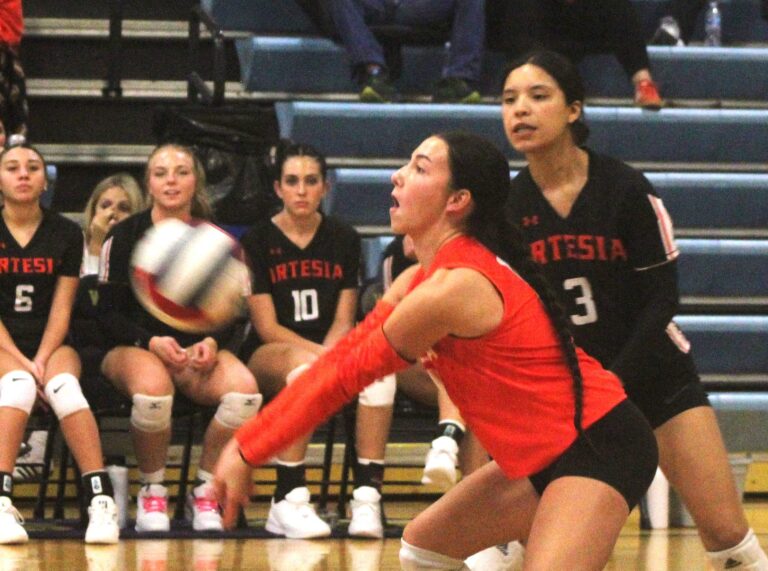
The Ruidoso Warrior volleyball team was unable to get started or sustain any momentum in its 25-19, 25-19, 25-10 loss to the Artesia Bulldogs on Oct. 7 at Ruidoso High School.
Neither team came out firing on all cylinders, as the team traded scores through the first 16 points of the first set for an 8-all tie before Brooklynne Ivans got the serve and the Bulldogs (13-3) got a decisive kill from Kailee Padilla to take a 12-8 lead and not trail the rest of the way.
“We just didn’t have the fight tonight,” said Ruidoso coach Rory Arisumi. “That just happens sometimes. You have good nights and bad nights, peaks and valleys.”

Even after that, both teams struggled to put together a long run before Talyn Ramos got the serve for Ruidoso (7-8) to make it a 20-18 match. But Artesia was able to close it out with another kill from Padilla and an ace serve by Jenna Whitmire to put the frame away for the Bulldogs.
“Honestly, we just met a very good team,” Arisumi said of Artesia. “They’re not a very big team, but all six of their starters are very athletic.”
Set two started out much the same as the first, with Ruidoso leading 9-7 before Ashton Craft got the serve and the Bulldogs rattled off six straight points to take the lead for good.
Artesia coach Alan Williams said hitting and service errors made each set closer than it would have otherwise been. The Bulldogs are coming off two losses against St. Pius and District 4-4A rival Goddard at a tournament in Albuquerque over the weekend.
“The loss against Goddard really hurt,” Williams said. “We need to fix our hitting errors and stop keeping teams in it. I liked our defense and how we pass the ball, setting the ball was good. We’re just making too many hitting errors.”
The third set was when things went south for the Warriors. Artesia put together consistent scoring runs and was never seriously threatened. A pair of kills by Madison Lutterman got Ruidoso into double digits, but were trailing the Bulldogs 22-10 at that point.
Three straight Warrior errors brought the match to a close.

This match came on the heels of Ruidoso’s three-set loss at Silver on Oct. 3, in a contest Arisumi felt they could have won. The Warriors lost sets one and three, 26-24, including a run in the final set that saw Ruidoso survive five straight match-point serves to tie it at 24-all.
“Things that we can control, like our unforced errors, we didn’t do a very good job of controlling there,” Arisumi said of the said of the Silver match. “Like serving, for example. We missed six serves in the first set, and we lost it by two points. That pretty much tells the story right there.”
Ruidoso hosts Lovington on Saturday in a 1 p.m. start, while the Bulldogs are at Hobbs tonight for a 6 p.m. match.
Todd Fuqua is Editor for the Ruidoso News and can be reached on Instagram at @toadfox1.

Mike Smith
Artesia Daily Press
msmith@currentargus.com
Editor’s note: The Artesia Daily Press has submitted questionnaires to candidates for Artesia Special Hospital District and school board in this year’s general election. The paper is publishing the responses in print in the order they were received.
Artesia native and resident Dennis Garcia is a retired Artesia Public Schools (APS) educator and administrator and is running for school board in District 1 against incumbent David Conklin.
What made you want to run for this office?
“I want to ensure that Artesia Public Schools continue to provide a high-quality education for every student in our district. I’ve seen firsthand how the quality of education offered by APS not only supports student success but also contributes to the overall success of our community.”
What would be your day-one priority if elected to this office?
“I don’t have a specific “day-one” priority, other than gaining a deeper understanding of the role of a board member, listening to community stakeholders, and applying what I’ve learned from my experience as a former APS employee.”
What are some of the top issues facing Artesia students?
“Chronic absenteeism is a major challenge to student achievement in any school district. During my 33 years as an educator for APS and for nearly a decade as an administrator, I observed how poor attendance affected student success. If a student missed 2 to 4 days in the first month of school, they were often on track to miss 15 to 25 days over the course of the school year. And that was before the impact of COVID-19.
“Addressing absenteeism requires a collaborative approach involving parents, schools, community, and policymakers. It’s not enough to monitor attendance, we need to also address the underlying causes.
“If elected, I would be committed to joining conversations and initiatives that work to implement real, lasting solutions to reduce student absenteeism.”
If elected, how would you deal with future growth and future construction?
“It’s important that approved budgets are allocated effectively for educational growth. I would engage with the administration and community to gather feedback and ensure that the district’s goals align with the needs of the students and community.”



A orange defensive player tackles Roman DeHoyos in the backfield during the game on Monday.



Copyright © 2026 El Rito Media, LLC. All rights reserved.