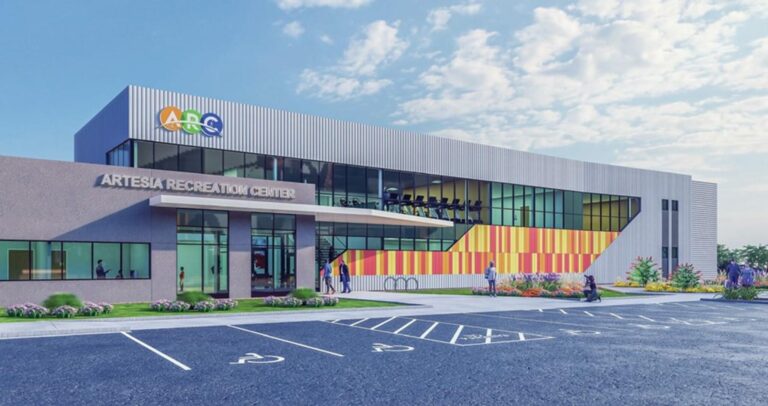
Artesia Recreation Center Foundation
A New Mexico District Court, presided over by Judge David Finger, has dismissed the Foundation’s legal challenge to the Construction Industries Division (CID) regulation requiring EV charging infrastructure in all new commercial and residential construction across the state.
While we respect the role of the courts, this decision raises serious concerns about the long-term impact of this mandate on communities like Artesia.
The Court found that requiring private property owners to install EV infrastructure and designate parking spaces exclusively for EV use does not constitute a physical occupation of property. It further concluded that the regulation meets energy conservation goals, even though it requires all construction applicants to increase electrical capacity—driving up project costs significantly.
Additionally, the Court upheld the regulation despite acknowledged gaps in the code and determined that it does not violate constitutional protections against the taking of private property without just compensation.
Perhaps most concerning, the ruling affirms that these costs must be borne entirely by the property owner—regardless of whether electric vehicles are present or in demand in the community. In our case, the Foundation was required to expend over $250,000 to comply, yet the Court determined this did not constitute a legal injury.
This mandate extends beyond commercial projects. It now requires all new residential construction to include EV charging capabilities, even for homeowners who do not own electric vehicles.
The broader implications are clear. Public projects, including facilities such as detention centers, schools, and community centers, will be required to incorporate this infrastructure—adding costs that will ultimately be passed on to taxpayers.
There are also unresolved concerns regarding how this regulation was developed. State law requires that standards related to electrical systems be recommended by the appropriate electrical bureau. However, this regulation was drafted and advanced outside of that process. Despite this, the Court upheld its validity.
The Artesia Recreation Center Foundation, believes strongly in responsible progress. However, policies must reflect the realities of the communities they impact. In rural areas and lower-income regions, mandates like this risk placing unnecessary financial strain on families, nonprofits, and local governments.
This decision is not just about one project—it sets a precedent that will affect development across New Mexico for years to come.
Key findings from the court’s decision
Judge Finger dismissed the Foundation’s case and, among other findings, ruled:
• The requirement to install EV infrastructure and chargers on private property does not constitute a physical occupation of that property. (Insert photo of EV chargers if available.)
• The regulation fulfills its stated purpose of establishing minimum energy conservation standards for commercial buildings, even though all construction applicants must increase electrical (ampere) capacity to comply.
• The code can be understood by persons of common intelligence, even though certain sections referenced in the code are missing or do not exist.
• The regulation requires private property owners to designate a number of parking spaces exclusively for EV users.
• The regulation does not violate Article II, Section 20 of the New Mexico Constitution regarding the taking of private property without just compensation.
• All costs associated with EV infrastructure—including chargers, infrastructure, and dedicated parking—must be paid by the construction applicant, even in areas with little or no EV presence.
• The Foundation did not suffer a legal injury, despite being required to expend over $250,000 to comply with the regulation.
Statewide impact of the regulation
The implications of this ruling extend across New Mexico:
• All new commercial construction projects must include EV infrastructure and designate EV-only parking spaces. This includes public facilities such as the Eddy County jail.
• All new residential homes must include EV charging capability and infrastructure, regardless of whether the homeowner owns an electric vehicle.
• Long-term infrastructure costs: The code requires additional capacity for future EV growth, including reserving approximately 10% of parking for future charger expansion. This means parking lots may need to be torn up and rebuilt to accommodate additional infrastructure—costs that will ultimately fall to cities and taxpayers.
Regulatory concerns
State statute requires that regulations involving the installation or use of electrical wiring be recommended by CID’s electrical bureau and its chief.
• The EV infrastructure regulation was drafted and recommended by CID’s trade bureau chief, Martin Romero.
• The trade bureau chief does not have statutory authority to recommend regulations related to electrical wiring standards.
• Despite this, the Court found the regulation to be proper.
• Public statements from CID leadership indicate the regulation is intended to “move New Mexico forward,” even as it increases construction costs for both commercial and residential projects—costs that may disproportionately impact lower-income communities.