Home Blog Page 153

Sport SUV for the discriminating buyer

0


Review & Photos by: Len Ingrassia
Automotive columnist

There is a plethora of luxury, mid-size SUVs competing for consumer dollars. BMW SUVs, for instance, have a distinctive look with stiff suspension, powerful engines racking up nearly a quarter million sales last year while British carmaker Range Rover claimed 12 percent of that number.

That’s not to say Range Rovers are deficient in style, luxury or power. They aren’t. The two companies have varied interests and appeal to different audiences. Jaguar Land Rover is owned by Tata Motors of India, a $37 billion manufacturer of high-end cars, SUVs, trucks and defense vehicles.

We spent a week with the Range Rover Sport Autobiography, near the top of six available trim levels starting in the low $80s – higher than rival BMW X5.

The Sport can be ordered as a 3.0-liter inline six cylinder with a mild hybrid system that makes 355 horsepower in the Sport P360. Tune up the same engine and it delivers 395 ponies in the Sport P400. Next up is the Sport P460 – 454 hp; P530 – 523 hp; P550e -542 hp and Sport SV with 626 ponies. Each sends power to an eight-speed automatic transmission.

Our 2½ ton test car with 523 ponies reached the 60 mile-per-hour mark in a respectable 4.1 seconds from a dead stop – one-half second slower than the top-of-the-line SV Edition trim at $180,700.

Although you can manually fidget with all the Sport has to offer with hill descent control, low traction launch, dynamic air suspension, all-wheel steer, electronic active differential and twin speed transfer case – we found there is an easier way.

Lacking expert training, the system defaults to auto control. It senses what the tires are seeing and feeling, and computer adjusts to the right mode using air suspension to create more ground clearance and rear-wheel steering to manipulate the trail.

Back on pavement, the cabin is a quiet place to be with sound deadening material throughout and lavish seat coverings that pamper occupants with soft leathers, suede headliner, panoramic roof and premium cabin lighting and adjustable massaging seats up front.

Audiophiles will be thrilled with a 28-speaker Meridian 3D surround system that includes stereo headrests for front seat occupants. A cabin air purification system is available to keep out unwanted allergens and viruses.

Cargo space is okay however golf bags will not fit horizontally. Its high waist exterior lines give the Sport a rich look and quad exhaust tips show off the V8 rumble from the get-go.

A curved 13.1-inch touchscreen dominates the center console and houses cabin audio, climate and navigation features. With few buttons, switches or knobs we found drilling down was required to control basic functions like setting cabin temperature, changing radio stations, phone settings and navigation features – all requiring eyes off the road.

We recommend a test drive in the Range Rover Sport along with Porsche Cayenne, Audi Q7 and Mercedes Benz GLE.

(Contact independent automotive columnist Len Ingrassia at editor@ptd.net)

What was reviewed:

2025 Range Rover Sport Autobiography

Engine: 4.4-liter twin turbocharged V8 – 523 horsepower – 553 lb.ft torque

Base price/as tested: $123,400/$130,110.

EPA rated mileage: 16 city, 23 highway, 19 combined.

Assembled: Final assembly of the Range Rover Sport is at Solihull, United Kingdom. U.S. /Canadian parts content – 5 percent; major source of foreign parts, United Kingdom – 50 percent; country of origin, engine and transmission – Germany.

Crash test rating: Neither the National Highway Traffic Safety Administration (NHTSA) nor The

Insurance Institute for Highway Safety (IIHS) had rated the Range Rover Sport as of this writing.

Warranty: 4 year/50,000-mile bumper to bumper warranty and roadside assistance. No complimentary maintenance.

New Mexico Legislators Can’t Have It Both Ways

0

By: Missi Currier

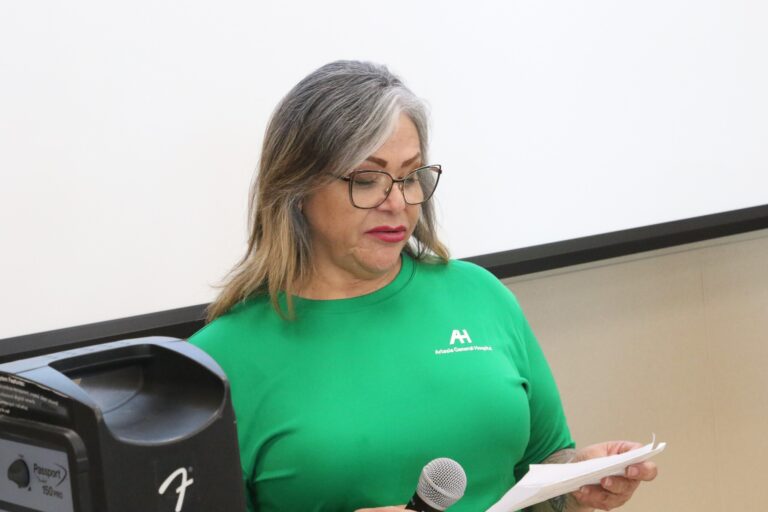
With the 2025 New Mexico legislative session now behind us, it is crucial to address a growing concern that threatens the economic stability of our state. The recent push to impose higher taxes on the oil and gas industry while simultaneously relying on it to fund essential programs is a contradictory and unsustainable approach. Legislators must recognize that they cannot have it both ways.

The oil and gas industry has been the backbone of New Mexico’s economy for decades, contributing nearly half of the state’s budget. The industry funds critical programs such as bills like SB48 and SB49, which aim to improve the quality of life for all New Mexicans through $360 million in investment throughout the state, funded by oil and gas revenues. However, introducing new taxes on this industry, as seen in the proposed Oil and Gas Equalization Tax, threatened to undermine its ability to continue providing this vital support.

Higher taxes on the oil and gas industry will inevitably lead to reduced investment, job losses, and stifled economic growth. This, in turn, will diminish the industry’s capacity to generate the revenue needed to fund essential programs. It is a short-sighted strategy that jeopardizes the very programs legislators seek to support.

Instead of continually targeting the oil and gas industry for additional revenue, it is time for our legislators to focus and act on diversifying New Mexico’s economy. The Economic Development Department’s 2025 strategic plan outlines several promising sectors that can drive future growth, including renewable energy, technology, and tourism. By investing in these sectors, we can create a more resilient and diversified economy that is less dependent on a single industry.

Diversification is not just a buzzword; it is a necessity for the long-term prosperity of our state. By fostering growth in new industries, we can create more high-quality jobs, attract new businesses, and ensure an increased revenue stream for essential programs. This approach will not only benefit our economy but also provide a more sustainable future for all New Mexicans. Our state can and should have a multitude of successful industries outside of oil and gas and mining, agriculture, and tourism.

Let me be clear –the oil and gas industry is not holding New Mexico back. New Mexico’s business climate is what continues to hurt our state’s potential to grow.

New Mexico legislators must recognize the importance of the oil and gas industry and the critical role it plays in funding our state’s budget. Imposing higher taxes on this industry while expecting it to continue supporting essential programs is a flawed strategy. Instead, we must prioritize economic diversification and a good start would be to invest in the sectors outlined in the Economic Development Department’s 2025 strategic plan. By doing so, we can build a stronger, more resilient economy that benefits all New Mexicans.

Missi Currier President and CEO New Mexico Oil & Gas Association

Artesia General Hospital celebrates Bone and Joint Center anniversary

0

Mike Smith
Artesia Daily Press
msmith@currentargus.com

Sandra Trujillo had knee problems. She couldn’t even walk without hurting. Lucky for her, she was in the right place and she was there at the right time.

Trujillo works as a scheduler in the surgical services department at Artesia General Hospital and she was the first patient in southeast New Mexico to undergo a partial knee replacement using the revolutionary Mako robotic-arm surgery system introduced at the hospital a decade ago.

The now pain-free hospital employee, who suffered repeated cartilage damage playing sports, sang the praises of robotic-arm assisted surgery April 8 as Artesia General celebrated the 10th anniversary of its Bone and Joint Center.

“I would go home from work hurting,” Trujillo said. “That changed when I walked into the Bone and Joint Center. The procedure gave me my life back. I’m walking pain free.”

The Mako SmartRobotics system allows a surgeon to create a personalized surgical plan that can address the problems causing a patient’s pain while also protecting healthy bone, according to Stryker Corporation, a medical devices and manufacturing company in New Jersey.

Dr. Marshall Baca, an orthopedic surgeon at Artesia GeneraL, said the robotic system has improved quality of life for patients undergoing not only partial knee replacement but also total knee replacement and total hip replacement.

“They’re no longer inpatient, they don’t have to stay here for two or three days,” he said.

Dr. Joe Salgado, Artesia General’s CEO, said the opening of the Bone and Joint Center to provide specialized orthopedic care for southeast New Mexico residents was a landmark event for the hospital.

“We took a bit of a leap of faith 10 years ago,” he said. “The Bone and Joint Center defines what our mission is here at Artesia General Hospital.”

Artesia General is striving to be the medical treatment leader in southeastern New Mexico,” said orthopedic surgeon Baca.

“We are excited about the future … with plans of a new facility (and) new lines of service … and we will always be looking to improve, and we will always be looking to be ahead of the facilities that surround us north, south and east,” Baca said.

Mike Smith can be reached at 575-308-8734 or email at msmith@currentargus.com.

Entertainment guide offered to readers

0

Staff reports

While it’s true that men and women are circling the globe in space, writing “personal” letters with help from AI robots, and counting on “Alexa” to remember the kids’ birthdays, life on most days can still be fairly down to earth and often frustrating.

Technology isn’t always our friend.

“I can’t find the remote. I’m missing the end of the game!”

“What time does The Voice come on? I want to hear that local kid sing!”

You buy a “smart” TV only to find out it’s not smart enough. You can’t even find the onscreen program listings.

Take heart. A SAVIOR HAS ARRIVED.

Starting on Thursday, April 17, your Artesia Daily Press will include a weekly television and entertainment guide.

It is our slightly old-fashioned but enduringly tried-and-true solution to the vexing question: What’s on TV?

The 24-page guide, Entertainment Now, will be inserted in your newspaper every Thursday, bringing you complete television listings, streaming schedules, news and features from the world of entertainment, and a variety of puzzles and games.

And it’s FREE with your copy of the newspaper.

So put down your smart phone. Stop trying to wade through that onscreen maze to find out when and where to watch your favorite TV show. Just park your copy of Entertainment Now on the coffee table and grab it whenever you need help. Did you hear that, Alexa?

How might we approach Holy Week?

0

By: Pastor David Grousnick

A little boy was sick on Palm Sunday and stayed home from church with his mother. His father returned from church holding a palm branch. The little boy was curious and asked, “Why do you have that palm branch, dad?”

“You see, when Jesus came into town, everyone waved Palm Branches to honor him, so we got Palm Branches today.” The little boy replied, “Aw Shucks! The one Sunday I miss is the Sunday that Jesus shows up!”

This Sunday is Palm Sunday and it celebrates Jesus’ triumphal entry into Jerusalem, as described in Luke 19:28-44. Palm Sunday is the lead into Holy Week and seven days that changed the world.

The seven days of Holy Week have been the topic of a million of publications, countless debates, and thousands of films. These seven days have inspired the greatest painters, the most skilled architects, and the most gifted musicians. To try and calculate the cultural impact of these seven days is impossible.

But harder still would be an attempt to account for the lives of men and women who have been transformed by them. And yet these seven days as they played out in Jerusalem were of little significance to anyone, but a few people involved.

What happened on those seven days? Let’s summarize:

1. On Sunday the first of the seven days, Jesus rode into Jerusalem on a donkey to the shouts of Hosanna, fulfilling an old prophecy in Zechariah 9:9.

2. On Monday he walked into the Jerusalem Temple overturning tables where money exchange occurred, Roman drachmas were being exchanged for Jewish shekels. Roman coins were not allowed. The image of Caesar was a violation of the second commandment. But the Temple authorities were using the Commandment as means to cheat the people and making the Temple a place of profit rather than a place of prayer.

3. On Tuesday Jesus taught in parables, warned the people against the Pharisees, and predicted the destruction of the Temple.

4. On Wednesday, the fourth day, we know nothing. The Gospel writers are silent. Perhaps it was a day of rest for him and his weary and worried disciples.

5. On Thursday, in an upper room, Jesus celebrated the Passover meal with his disciples. But he gave it a new meaning. No longer would his followers remember the Exodus from Egypt in the breaking of bread. They would remember his broken body and shed blood. Later that evening in the Garden of Gethsemane he agonized in prayer at what lay ahead for him.

6. On Friday, the fifth day, following betrayal, arrest, imprisonment, desertion, false trials, denial, condemnation, beatings and sentencing, Jesus carried his own cross to “The Place of the Skull,” where he was crucified with two other prisoners.

7. On Saturday, Jesus lay dead in a tomb bought by a rich man named Joseph.

8. On Sunday, his Passion was over, the stone had been rolled away. Jesus was alive. He appeared to Mary, to Peter, to two disciples on the road to Emmaus, and to the 11 disciples gathered in a locked room. His resurrection was established as a fact.

Back then these seven days were called Passover, as it is still called today by the Jews. Christians around the world know these seven days as Holy Week, the Passion of the Christ.

So, how might we approach Holy Week?

At a pre-concert lecture, the conductor of a symphony orchestra was telling the audience about the major work that the orchestra would be performing at that evening’s concert. The conductor told the people that if they listened carefully to the music, they would discover that it was both surprising and inevitable.

On the one hand, the musical score would take a fair number of rather jarring and unexpected twists. There would be points in the concert when the blare of the trumpet or the sudden rolling of the timpani would seem to come from out of nowhere in a surprising fashion.

On the other hand, however, the conductor noted that in the long run, these surprises would themselves become part of a larger coherence. Once listeners heard the entire piece from start to finish, they would find in the music an air of inevitability–how could it ever have been written any differently?

Surprising and inevitable.

Palm Sunday and the events of Holy Week are both surprising and inevitable. The truth is that we are not completely sure what to make of Palm Sunday. After forty days of Lenten travel that have often focused on serious and sometimes dark subjects, suddenly we arrive at a day that seems at first blush to be surprisingly cheery.

The Palm Sunday parade has color and spectacle, cheering and singing, festive voices and joyful exuberance. This seems like a happy day. Yet it would be completely appropriate if you were to ask, “What in the world is this day doing here given how close we are now to the cross!?”

Is Palm Sunday a bright spot in the midst of the otherwise darker hues of Lent? Are we, for just a little while this Sunday, supposed to forget about all things dreary so that we can cry out some full-throated “Hosannas!”?

Or is there also a sadness to this day that we must bear in mind?

I offer these thoughts for your consideration and contemplation this Sunday and during the week to come! Have a great weekend!

David Grousnick, is the Pastor at the First Christian Church in Artesia.

Southeast GOP blocks oil bills, frustrated by crime inaction

0

Adrian Hedden
El Rito Media
achedden@currentargus.com

Republicans in southeast New Mexico said they were successful in blocking several bills that would have upped regulations on oil and gas operators during the 2025 legislative session, but chided Democrats who control the Legislature for not addressing public safety and crime.

This year’s session ran from Jan. 21 to March 22 as lawmakers in the House and Senate proposed, debated and voted on bills that, if passed, were sent to the desk of Gov. Michelle Lujan Grisham to be signed into law. Lujan Grisham has until April 11 to sign or veto bills passed by the Legislature. Any bill not acted on by then will be “pocket vetoed.”

A pocket veto is essentially the same as an actual veto by the governor – it kills the bill. Any lawmaker wanting to revive it would have to introduce the bill as new legislation at the start of a subsequent session.

Sen. Jim Townsend (R-34), who represents parts of Eddy and Otero counties, said “it could have been worse” for conservatives in the GOP, which is the minority party in both the House and Senate.

He said the biggest success Republicans achieved was blocking an oil and gas surcharge Democrats attempted to include in a package of tax bills. Townsend said the charge would have amounted to a $130 million annual tax on the industry he credited as a driving factor behind $3.5 million in “new money” provided to the state’s budget this year.

A heavily amended version of the tax package, House Bill 14, was sent to the governor’s desk in the final minutes of the session and included state tax breaks for those working for minimum wage and foster parents. The version passed was estimated to cost $113 million and was funded by a 20% increase in the state’s liquor excise tax.

“We had absolutely no need for any new taxes,” Townsend said.

Although lawmakers did pass Senate Bill 23, which raised the cap on royalty rates paid by oil and gas operators on State Trust land, Townsend said most of the bills attempting to restrict fossil fuel production were stopped by strong GOP opposition.

Those included two separate bills to ban new oil and gas facilities within a mile of public schools and in areas known to have high levels of ground-level ozone in the air – areas that include Eddy and Lea counties in the Permian Basin.

Other failed oil and gas bills were measures that would have codified into law reductions in statewide greenhouse gas emissions specified in an executive order signed by Lujan Grisham in 2019, and a rule enacted in 2022 by the Oil Conservation Division requiring operators to capture 98% of produced gas in 2026.

Townsend said lawmakers should consider the totality of New Mexico’s oil and gas regulations, which he said make it more expensive to do business in the state.

“If you look at the overall regulatory burden on producers, we have exceeded Texas,” he said. “We’re blessed with the Permian and the Delaware. They’ve provided a lot for New Mexicans.”

Another threat to oil and gas was a bill that passed giving the New Mexico Game and Fish Department statutory authority to oversee “wildlife” in New Mexico as opposed to its current mandate to regulate only “game,” said Sen. Larry Scott (R-42), who represents parts of Eddy, Lea and Chaves counties.

Scott worried the “wildlife” terminology that would be included in the department’s jurisdiction under state law would mean it could regulate endangered species such as the dunes sagebrush lizard, which has habitat throughout the Permian Basin oilfields.

“What came to my mind is the ability to manage the little critters that could prevent drilling operations,” Scott said.

Crime and public safety

But energy and environmental issues largely took a backseat to proposals intended to address widespread crime and public safety throughout New Mexico.

In the months leading up to the session, Lujan Grisham held multiple townhall meetings in cities and small towns throughout the state, gathering local feedback on crime issues to use in crafting legislation for the session.

The session notably ended on a violent note with a mass shooting in Las Cruces occurring on the last day lawmakers were convened in Santa Fe. Police said three teenagers were killed in a dispute during an unsanctioned car show at Young Park: Andrew Madrid, 16; Jason Gomez, 18; and Dominick Estrada, 19. Fifteen people were injured in the shooting.

Tomas Rivas, 20, was arrested and charged with three open counts of murder, along with a 15-year-old boy and two 17-year-old boys who face the same charges.

Scott said the “lawlessness” in New Mexico’s big cities was not adequately addressed by bills passed during the session.

He said lawmakers should have supported legislation making it easier for courts to incarcerate repeat offenders, who Scott said often commit violent crimes, including murder, after being released following less serious offenses.

“We didn’t do anything about the revolving door,” he said. “We didn’t do anything about the mental health revolving door, letting those people back out onto the street.”

Democrats did claim victory at the outset of the session via House Bill 2, the General Appropriations Act, which allocated $10 million to local enforcement agencies and $4 million to help recruit and retain police officers.

House Bill 6 was also passed and included a package of six bills to help the state’s criminal justice system address mental health, while increasing penalties for fentanyl trafficking, mass shooting threats and habitual car theft while banning devices to convert handguns into automatic weapons.

“Improving public safety is both urgent and ongoing work,” House Speaker Rep. Javier Martinez (D-11) of Bernalillo County said in a statement as the session ended. “It does not start or end with the legislative session, and it requires all of us to keep coming to the table with a focus on developing solutions, not pointing fingers.”

Townsend said the Legislature could have done more, and by not doing so sent a message to criminals that they won’t be punished for most crimes.

“They’re not afraid. Right now, they know breaking and entering is not that big of a deal. It’s probably just a slap on the wrist. Same thing with drugs. They don’t care,” Townsend said.

Lucy Leyba

It is with great sadness that we announce the passing of Lucy Elena Leyba on March 29, 2025 at the age of 63.

She was born on August 13, 1961 to Eusebio and Josephine Leyba. Lucy was a life long resident of Artesia NM. She was a loving mother, who enjoyed doing yard work, listening to music, reading and dancing. She also enjoyed playing with her dog Bella.

Lucy is preceded in death by her parents, Eusebio and Josephin Leyba; sisters, Amelia Morales, Esmerada Quiroz, and Manuela Saiz; brother, Eusebio Leyba Jr.

Survived by her son, Michael Leyba of Roswell, brothers Aldolfo Leyba and his wife Linda Leyba and David Leyba Sr. of Missouri. She is also survived by numerous nieces and nephews along with great nieces and nephews.

Lucy’s loss is deeply felt by her family and all those that knew and loved her.
Her memory will continue to live on and inspire strength, resilience, and generosity in those whose lives shes touched.

Pallbearers will be Jeremy Ramirez, Steve Saiz, Johnny Ramirez, Nathan Ramirez, Ricky Ortiz and Manuel Salcido.

Please refer to Terpening & Son Mortuary website for updates on service information.

I Don’t Think Getting Tough on Crime is ‘Stupid’

0

Senator Nicole Tobiassen

Recently, Senator Antonio “Moe” Maestas, an Albuquerque Democrat, told the Santa Fe New Mexican that my tough-on-crime policy proposals were ‘stupid.’ This is regarding my attempts to strengthen his weak and inconsequential ‘juvenile crime’ bill HB 255 that a number of his own Democrat colleagues voted against. The level of immaturity it takes to call someone ‘stupid’ could be expected in a high school lunchroom, not the New Mexico State Senate. While I couldn’t care less about a childish remark targeted at myself or my approach to solving Albuquerque’s crime crisis, I am troubled by the underlying sentiment that Democrats like Sen. Maestas have towards public safety.

Democrats in the legislature either wish to totally ignore the public’s outcry to address crime or, in Sen. Maestas’s case, deceive the public into thinking they had passed legislation to address the problem while accomplishing virtually nothing. Both of these strategies result in the lawlessness we experience here in Albuquerque on a daily basis.

Here’s an example: House Bill 8, or this year’s supposedly comprehensive ‘crime package,’ was signed into law with bipartisan support. Clearly, HB 8 had elements that we Republicans could get behind but we primarily supported it based on assurances that, in return, there would be further consideration of true public safety bills. This, however, was not the case. Instead, Democrats killed or refused to consider Republican crime bills and celebrated the success of a ‘bipartisan crime package’ to the media and their voters. As an Albuquerque resident, I assure you that this ‘crime package’ alone will do absolutely nothing to curb the rampant auto and retail theft, juvenile violence, and emboldened repeat offenders that plague our community.

When the Democrat Party is not busy killing Republican public safety bills, they have been fanning the flames of political division by calling on their activists to ‘agitate’ the other side, joking about assassination attempts, or resorting to childish name calling. Enough is enough. New Mexicans are fed up with their failed leadership, reckless behavior, and unwillingness to truly address the criminals terrorizing our state.

We must come together and do what the people have elected us to do. As a state, we cannot continue inaction when it comes to improving public safety. Rest assured, if the Governor calls for a special session, my Republican colleagues and I will be right back at the table with policy proposals to make our communities safer for New Mexico families to live and thrive in. If anyone finds that ‘stupid,’ perhaps they don’t have the maturity the public deserves from an elected lawmaker responsible for improving the lives of all New Mexicans.

Nicole Tobiassen is a New Mexico State Senator representing District 21, Bernalillo County.

Millions go to counties, cities for capital outlay projects via bill

0

Adrian Hedden
El Rito Media
achedden@currentargus.com

About $1.2 billion in local infrastructure projects throughout New Mexico will be funded after lawmakers passed House Bill 450 on March 20, two days before the end of the 2025 Legislative Session.

The bill passed the House on March 19 on a 41-25, and then the Senate the day after, 25-16. It now goes to Gov. Michelle Lujan Grisham to sign into law. Lujan Grisham could remove projects from the bill via line-item vetoes or “pocket veto” the measure by taking no action by April 11.

HB 450 funded hundreds of capital outlay projects, which are proposed each year by lawmakers from each county in the state, mostly to pay for infrastructure improvements in local communities such as roads, facilities and buildings.

The money comes from the state’s General Fund, which is used to develop the state budget and fund projects across New Mexico.

Bernalillo County led the state in capital outlay dollars with $293.6 million funded by HB 450. Bernalillo is New Mexico’s most populous county, includes the state’s biggest city, Albuquerque, and is represented by the most members of the Legislature.

Here’s how Eddy County faired.

Eddy County – $10.4 million total

County

Malaga Municipal District Water Company vehicle purchases – $175,000

Otis water line replaced on Kelly Road – $700,000

Artesia

Artesia City Hall renovations – $1 million

Designs for new city park – $300,000

Artesia rescue vehicle purchase – $500,000

Artesia Police Department vehicle purchase – $500,000

Roof replacement at Grand Heights Early Childhood facility – $650,000

U.S. Highway 285 and Mill Road traffic signal – $1 million

Carlsbad

Affordable housing construction – $1.5 million

Double Eagle water line – $1.1 million

Carlsbad Police Department vehicle purchase – $800,000

Plan for Carlsbad Public Safety Complex – $500,000

Eddy County Courthouse exterior improvements – $1 million

Old Cavern Highway Construction – $770,000

Decades of work keeps Rio Grande Cutthroat Trout off Endangered List

0

Information and photo provided by New Mexico Department of Game and Fish

Decades of dedicated conservation work by the New Mexico Department of Game and Fish and its partners have secured a bright future for the Rio Grande cutthroat trout (RGCT). This collaborative effort culminated in the U.S. Fish and Wildlife Service’s recent decision that the species does not warrant protection under the Endangered Species Act, affirming its long-term stability throughout its range.

The Rio Grande cutthroat trout, New Mexico’s state fish, is native to high-elevation streams in New Mexico and Colorado, including watersheds of the Canadian, Pecos and Rio Grande rivers. The species is threatened by competition and hybridization with nonnative trout, such as rainbow, brook and brown trout, as well as habitat loss, drought and the effects of wildfires.

Conservation efforts for the RGCT date back to the 1960’s and 1970’s. In 1989, the Department created a dedicated biologist position to focus on RGCT conservation. In 2003, the RGCT Conservation Team was established, bringing together federal and state agencies, tribes, municipalities, non-governmental organizations and private landowners. This collaborative group has worked tirelessly to protect and restore RGCT populations across the region.

The Department has led several recent projects to remove nonnative trout and reintroduce the RGCT into its native habitats. At the Seven Springs Hatchery, a broodstock program established by the Department produces thousands of RGCT annually. This source of fish is key to providing angler opportunities and creating new populations throughout New Mexico.

One of the most notable achievements is the Rio Costilla restoration project, which added more than 120 miles of stream, 16 lakes and a reservoir of protected RGCT habitat. This project also restored populations of the Rio Grande chub and sucker, which were similarly kept off the Endangered Species list this year. Additional restoration efforts have been completed on Middle Ponil Creek and Willow Creek, with new projects, such as Cow Creek in the Pecos watershed, currently under way.

To address the impacts of wildfires, the Department and its partners have salvaged RGCT populations from affected areas, relocating them to unoccupied streams or incorporating them into hatchery programs for future stocking. Following post-fire flooding, biologists evaluate stream conditions to identify opportunities for future restoration, ensuring the species will continue to thrive.

The decision not to list the RGCT as threatened or endangered highlights the success of the Department’s conservation initiatives and partnerships. While this decision is a significant milestone, the Department remains committed to the long-term survival of the Rio Grande cutthroat trout. This iconic species is a vital part of New Mexico’s natural heritage, and the Department will continue its efforts to ensure it thrives in its native habitat for generations to come.

Restoring the Gila Trout

New Mexico is a beautiful place to enjoy the outdoors. In the state, there’s no shortage of inspiring experiences to observe wildlife, bike, hunt or fish with friends, family and loved ones.

Two New Mexico Department of Game and Fish biologists catch and release Gila trout in their spare time in a historic canyon in the Gila National Forest under suspended bridges called the Catwalk in Catron County. Once intended for mining gold, the Catwalk has now been rebuilt for the purpose of recreation like hiking and habitat improvements so anglers can fish in a unique canyon.

The most recent habitat improvement project, which reduced streambank erosion and increased stream shading with the addition of native riparian vegetation along a quarter-mile stretch of Whitewater Creek, was completed earlier this month, so it is a great time to head to the Gila and fish.

The Gila trout is not only one of the rarest trout in North America, but also one of the earliest spawning. Spawning activity may be beginning in some creeks and peak in April. Today, Gila trout conservation is guided by the Gila Trout Recovery Plan, established in 2022. A diverse team of State and Federal agencies, including the New Mexico Department of Game and Fish, as well as university researchers and non-governmental organizations, continues a program of stream restoration – removing nonnative species, constructing barriers to prevent nonnatives from reinvading, and reestablishing Gila trout.