Home Blog Page 212

Enterprise buys Pinon Midstream in $950M Permian Basin pipeline deal

0

Adrian Hedden
Carlsbad Current-Argus

A Permian Basin-based pipeline company sought to up its presence in the region by buying up almost a billion dollars in midstream assets in a merger announced last week.

Enterprise Products Partners said it was acquiring Pinon Midstream in an about $950 million deal, adding natural gas gathering and processing facilities to its portfolio in the eastern side of the Delaware Basin, a sub-basin of the Permian that straddles the New Mexico-Texas border.

The deal was expected to close by the end of 2024.

Pinon’s assets included in the sale were about 50 miles of natural gas pipelines both for gathering and re-delivery, along with five gas compression stations.

The assets also have a hydrogen sulfide and carbon dioxide treatment capacity of 270 million cubic feet per day (MMcf/d), and a planned expansion to 450 MMcf/d by the second half of 2025.

The sale also included two acid gas injection wells, and Enterprise is considering locations for a third, according to a company announcement, which will mean a total injection capacity of 750 MMcf/d.

The company estimated the area of the assets, mostly in Lea County in the Delaware Basin, had more than 7,500 remaining well locations but drilling was restricted due to a lack of gas treating capacity in the area.

Chief Executive Officer A.J. Teague said the acquisition would help Enterprise capitalize on this demand, and increase Enterprise’s presence in the booming Permian Basin.

“These assets accelerate our entry into this region by at least three or four years. These assets are highly complementary to our midstream energy system and provide us an excellent entry point into the eastern flank of the Delaware Basin for us to expand our natural gas processing footprint,” Teague said.

“Our entry will provide producers a choice for reliable and value-added processing services.”

Brazos adds pipelines on Texas side of Permian

Brazos Midstream based in Forth Worth, Texas said it completed multiple projects to build pipelines that would serve oil and gas operators throughout the Permian Basin.

The company completed a 200 MMcf/d cryogenic gas processing plant in Martin County, Texas, going into operations in October, and is finishing an about 175-mile natural gas gathering line and other associated infrastructure spanning the region.

Upon completion, Brazos will operate about 260 total miles of natural gas lines and 10 compressor stations in the Midland Basin, the eastern sub-basin of the Permian.

Brazos also planned to build another 300 MMcf/d processing facility in service by the second half of 2025, increasing the company’s capacity to 500 MMcf/d.

Brad Iles, Brazos CEO said the Permian Basin accounted for about a quarter of natural gas produced in the continental U.S., with production expected to grow in the coming years.

“These expansion projects are a testament to our continued commitment to build high-quality assets in the Permian Basin and provide the highest level of service for our producer customers,” Iles said. “Our asset base represents mission critical infrastructure that provides reliable capacity for existing Permian gas production that has been historically underserved.”

Analysts predict continued growth in Permian

U.S. oil production was forecast to grow by 13.7 million barrels of oil per day (bopd) in 2025, according to the Energy Information Administration (EIA), while natural gas would grow to 114.3 billion cubic feet per day (cf/d).

The EIA said most of that growth centered in the Permian Basin in southeast New Mexico and West Texas, driven by high productivity of newly drilled wells.

Newly-completed wells in the Permian were producing an average of 433,000 barrels per day in their first month, the report read, while natural gas wells averaged 780 million cf/d.

“In the Permian, increased rates of production from new completions are offsetting existing wells’ production declines and leading to higher crude oil and natural gas output,” read the report. “These productivity increases indicate significant efficiency gains and technological advancements in the drilling and completion process.

“This new well production is more than offsetting the declines in production from existing wells.”

Adrian Hedden can be reached at 734-972-6855, achedden@currentargus.com or @AdrianHedden on the social media platform X.


$35 million could be coming to New Mexico for abandoned oil wells

0

Adrian Hedden
El Rito Media

Another $35 million in federal money was made available to New Mexico to help plug more than a thousand abandoned oil and gas wells throughout the state.

The Department of the Interior announced a total of $775 million offered to 21 states on Aug. 14, part of a $4.7 billion effort to clean up the wells, which often sit abandoned when oil and gas companies deem them nonviable financially.

Not monitored and unplugged, the wells can leak pollution into the air, water and land as they sit idle in New Mexico’s oilfields – both in the Permian Basin to the southeast and San Juan Basin in the northwest.

The money to fix the problem came via the Infrastructure Investment and Jobs Act, which offered $444 million in the first phase of the formula grant process. The money announced this month, including the $35 million in eligibility for New Mexico, was the second phase of the program.

In total, New Mexico was eligible for about $72.3 million via the program for the work.

“President (Joe) Biden’s Investing in America agenda is enabling us to confront long-standing environmental injustices by making a historic investment to plug orphaned wells throughout the country,” said Interior Secretary Deb Haaland. 

“These investments are good for our climate, for the health of our communities, and for American workers. With this third round of additional funding, states will put more people to work to clean up these toxic sites, reduce methane emissions and safeguard our environment.”

Missi Currier, president of the New Mexico Oil and Gas Association said energy companies in New Mexico planned to work with regulators, using the increased funds to aid in remediating abandoned wells.

“Our member companies are committed to the continued remediation of abandoned wells,” Currier said.

Conservation groups urged the federal government to take more action to prevent wells from being abandoned in the first place, rather than paying for their remediation with public dollars.

The Center for Biological Diversity noted 3,300 inactive oil wells in New Mexico the group said operators should be required to clean up rather than seeing the State or federal agencies pick up the tab.

And New Mexico regulators should enforce state law to require companies address their abandoned wells, said the groups led by the Center for Biological Diversity in an Aug. 21 letter to New Mexico’s Oil Conservation Division (OCD) – the state’s lead oilfield compliance arm.

OCD data showed more than 300 companies drilling for oil and gas in New Mexico have wells listed as abandoned or “orphaned” in industry terms, read the letter.

Companies are required to pay into bonding for financial assurance to the state to pay for well clean up, but the groups argued this was inadequate to fund the work.

“It’s high time that oil and gas companies in New Mexico are forced to clean up their toxic mess, rather than leaving the rest of us to deal with it,” said Gail Evans, an attorney with the Center for Biological Diversity, based in Albuquerque. “The state must start prioritizing the health and well-being of New Mexicans and our environment by enforcing its own laws.”

At the state level in New Mexico, this would mean increasing the bonding rates required of companies who extract fossil fuels, the letter read.

In June, former-Acting OCD Director Dylan Fuge estimated the state had $107 million in bonds against up to 35,000 well statewide. That would pay for “less than half” of the cost if 1 percent of those wells should they be abandoned, Fuge said, about $200 million.

He’s now an attorney for nonprofit Earth Justice in Santa Fe and said higher bonding rates would better support state regulators, while protecting the environment.

If 5 percent of the wells in New Mexico were abandoned, Fuge estimated remediation would cost up to $500 million and more than $1 billion if 10 percent of New Mexico’s wells needed clean up.

“Industry is doing plugging continuously, hundreds a year,” Fuge said. “They plug them for a whole host of reasons. It’s not reasonable for us to assume all wells would be abandoned, but there has to be a balance.”

That’s why Fuge supported House Bill 133 during the 2024 Legislative Session, which ended in February, that would have created a “tiered” bonding rate based on the size and production of oil wells drilled in New Mexico. Smaller, low-producing wells would be grandfathered into their current bonding rates, Fuge said, if the bill had passed.

The idea was likely to be brought up again in the 60-day session starting January, he said.

“We know macroeconomic situations can change, increasing state liabilities and we need assurances to cover those liabilities,” Fuge said. “It’s like any insurance, the key is finding a path forward that reflects the right balance in terms of adequately insuring against future risks and not add undue costs.”

Currier, NMOGA president argued oil companies already pay into the state’s Conservation Tax which Currier argued should be used more via legislative action to pay for the well clean up, rather than raising bonding rates.

“Increased bonding requirements will only serve to limit opportunity for small, New Mexico-owned businesses,” Currier said. “An unnecessary increase may actually grow the number of abandoned wells as smaller companies become unable to secure a bond.”

Adrian Hedden can be reached at 734-972-6855, achedden@currentargus.com or @AdrianHedden on the social media platform X.

FTC bid to block Kroger-Albertsons merger heads to trial

0

By Jody Godoy

(Reuters) – The U.S. Federal Trade Commission will argue Kroger’s $25 billion merger with rival grocer Albertsons is bad for shoppers and workers when the agency’s lawsuit goes to trial in federal court in Portland, Oregon, on Monday.

The FTC and several states sued to block the deal in February, saying it would eliminate competition between the top two traditional supermarket chains in the U.S., spelling higher prices for consumers and less bargaining power for unionized grocery workers.

The case is a high-profile piece of the Biden administration’s push to lower prices for consumers, and comes as high grocery bills take prominence in the U.S. presidential race between Vice President Kamala Harris, the Democratic candidate, and former President Donald Trump, her Republican opponent.

It is also a key test of FTC Chair Lina Khan’s initiative to use antitrust law to boost wages and mobility for workers.

The trial is expected to last around three weeks and feature evidence about how major grocery retailers and smaller rivals set prices and view competition in the industry.

Kroger and Albertsons are asking U.S. District Judge Adrienne

Nelson to let the deal proceed, saying the tie-up is necessary to compete with multinational corporations like Walmart, the largest grocery retailer in the U.S., bulk shopping mainstay Costco and Amazon.com, which owns Whole Foods.

The two companies say the lawsuit’s focus on traditional supermarkets ignores that consumers typically shop for food at a variety of locations including big-box stores like Target and dollar stores such as Dollar Tree.

Kroger has said it will sell 579 of the approximately 5,000 stores it would own if the deal is allowed to go through. Part of the trial will focus on whether buyer C&S Wholesale Grocers can successfully run them.

Kroger has also pledged to lower grocery prices by $1 billion after the merger.

Retailers use multiple levers to lower prices, including negotiating better deals with suppliers, investing in automation in the supply chain or changing the way they label and package products.

Although Kroger said it could not provide more specifics on the details of the price investments, a source familiar with the matter indicated that the reductions will likely focus on essential and high-demand items first.

“It’s not going to be peanut butter spread, for instance, initially, but targeted on across a wide range of staples,” the source said.

Arizona, California, Illinois, Maryland, Nevada, New Mexico, Oregon, Wyoming and the District of Columbia are pursuing the case alongside the FTC.

Washington and Colorado have filed their own lawsuits to block the merger. The lawsuits are scheduled to go to trial after the Oregon case.

The states all have Kroger and Albertsons locations.

(Reporting by Jody Godoy and Siddharth Cavale in New York;

Editing by Matthew Lewis)

Bulldogs roll over Cavemen 44-7 in the 2024 Eddy County War

0

By Mike Smith
El Rito Media

Ethan Conn caught three touchdown passes and quarterback Izac Cazares led a balanced offensive attack as the Artesia Bulldogs defeated the Carlsbad Cavemen 44-7 Friday night in the 2024 high school football season opener for both squads.

For the Bulldogs (1-0) the win continues a longstanding tradition of victories as Artesia aims for its third straight 5A state title and 33rd overall.

Early in the first quarter, Carlsbad’s defense held the Bulldogs on Artesia’s first offensive drive of the game.

But the Cavemen offense could not find footing on its opening offensive drive of the game and had to punt, setting up Artesia’s first score of the game.

Cazares threw an 87-yard strike to Conn at the midpoint of the first quarter on Artesia’s second drive of the game. The Bulldogs 2-point conversion was successful as Artesia had an early 8-0 lead.

Artesia struck again late in the first quarter as running back Frankie Galindo scored on a 31-yard touchdown run. The 2-point conversion was good as the Bulldogs extended the lead 16-0.

In the second quarter, Artesia delivered a knockout punch to the Cavemen (0-1) as Diego Lopez caught a 12-yard pass from Cazares. The Bulldogs converted the extra point kick and extended the lead 23-0.

The Bulldog defense swarmed Carlsbad’s offense for most of the game. The Cavemen’s lone score came early in the fourth quarter as Ty Young scored on a 19-yard pass. The extra point kick was good, but the Bulldogs extended the winning streak over its southern rivals to three games.

At 7 p.m. Thursday in Roswell, Carlsbad seeks its first win of 2024 against the Goddard Rockets.

At 7 p.m. Friday in Hobbs, the Bulldogs play the Eagles in the first game of a two-game road trip.

Mike Smith can be reached by phone at 575-308-8734 or via email at msmith@currentargus.com and can be followed on X @MSmithartesianm.

The Mayor’s Minute

0

By: Jon Henry

Summer is winding down and Artesia is celebrating the success of many great programs and new initiatives launched this year. Because of the hard work, dedication, and enthusiasm of our community, we can look back on the past couple of months with pride and satisfaction.

At the Artesia Recreation Center, city staff navigated a successful summer rec program that involved daily activities for our youth. An end of July pool party was held for the participants at the Artesia Aquatic Center. The Recreation Center has moved their focus towards both cheer and flag football for the fall and will remain very busy serving our community.

The Artesia Public Library provided weekly activities for all ages throughout our summer. This facility continues to engage our community with events and learning year round. The Artesia Aquatic Center held splash camps, movie nights and made big waves with the little swimmers known as the Sea Dogs. This group of dedicated competitors will someday fill the swim lanes at our High School swim meets! The creative minds behind Artesia MainStreet launched the Oil Patch Market on the Derrick Floor providing small businesses the opportunity to introduce their products and wares to the public.

Tuesday nights became one of my favorite times in Artesia this summer in part because of this Market. It was a great place for community, to catch up with neighbors. None of this would have been possible without the collective effort of our residents and the tireless commitment of our city staff, volunteers and local organizations. Your support and involvement are what make Artesia a wonderful place to live.

As we transition into the fall, let’s carry forward the momentum and enthusiasm we’ve built this summer. There are still plenty of exciting events and programs ahead, and I encourage everyone to stay engaged and continue contributing to our community.

 Thank you once again for making this summer an unforgettable one. Here’s to many more successful seasons ahead!

Jon Henry is the Mayor of Artesia. You may contact him at: mayor@artesianm.gov

Mayors Minute.pdf

—————–

Good Life

0

By: Pastor Ty Houghtaling


What if you could build your perfect life?  Where would you start?  Would you start with a piece of land?  How about the starting place philosophically?  Would you start at “you are what you eat?”  Probably not. 


For the Christian, the good life starts with 1Chronicles 29:11. Then, the Christian adds to that foundational place Proverbs 9:10.  Naturally, if a Christian begins there, they will not be able to avoid Romans 3:23.  That verse from the Bible is foundational for understanding the good life.  That verse points us to Romans 6:23. Once a person discovers the answers offered in Romans 6:23, they can start to add to their life a pursuit of Matthew 6:33. 


The good life is not for everyone. Some of us just refuse to trust and obey God’s expectations.  We think the good life comes through faster horses, older whiskey, and more money (that’s one of my favorite lines from a classic country song).


I think if we are truly honest, we know that peace and well-being do not come from a worldly pursuit.   The good life comes from God who is the giver of all good gifts (James 1:17).   


I know it seems counter intuitive to trust God with all our heart, strength, and mind.  We see the broken nature of this world and we cannot help but think belief in the unseen God is just too hard.  So, we try to fix things for ourselves as we go.  Or, we throw up our hands and give in to the pressures of culture or society.  We add to our life some faulty thinking, bad advice from untrustworthy people, and settle for less than best because it’s just easier.  That is not the good life, it is not the abundant life, it is not even a decent life; not compared to what God has for those who love Him. 


If you could start all over and build the perfect life, I bet you would want security and peace as foundational pieces.  I bet you would want love embedded in every relationship.  I bet you would want to include certain assurances about how everything will turn out in the end.  There is only one place to start the good life.  That place is with a personal relationship with Jesus.

Ty Houghtaling is the Pastor at the First Baptist Church in Artesia.

LET’S GET READY TO RUMBLE!

0

By Mike Smith
Artesia Daily Press

A three-peat awaits the Artesia Bulldogs football team in 2024 and Friday’s season opener against the Carlsbad Cavemen is the first step back to the postseason.

Last season the Bulldogs claimed state title number 32 in a 35-21 win over the Roswell Coyotes at the Bulldog Bowl.

The win marked Artesia’s second 5A title in as many seasons for head coach Jeremy Maupin.

Last year in the Eddy County War in Carlsbad, Artesia defeated the Cavemen 55-7 in the first game in the march toward the state title.

Along with last year’s win, the Bulldogs are on a two-game winning streak against the Cavemen. In 2022, the Bulldogs won in a 30-27 thriller.

Gone for the Bulldogs is championship quarterback Nye Estrada. Iza Cazares takes his place at signal caller.

Maupin offers a scouting report on the Cavemen on B1 of today’s Artesia Daily Press sports section.

Mike Smith may be reached at 575-308-8734 or via email at msmith@currentargus.com and may be followed on the X social media platform @MSmithartesianm.

Deadline extended for federal wildfire relief in New Mexico

0

Staff reports

New Mexicans suffering property damage and other impacts of wildfires have another 60 days to apply for federal disaster relief after a request from Gov. Michelle Lujan Grisham.

The Federal Emergency Management Administration (FEMA) announced the extension of a due date to apply for benefits to Oct. 19, read a news release.

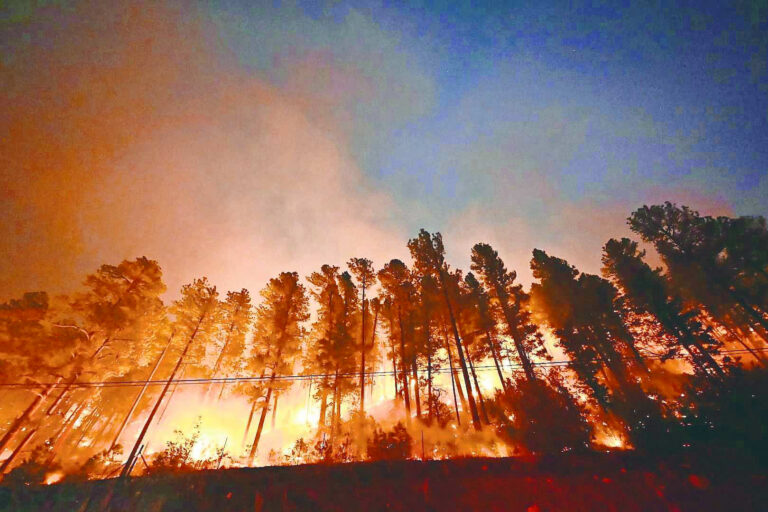
Relief aid was offered to those in Lincoln and Otero counties impacted by the South Fork and Salt fires which burned about 20,000 acres in the Ruidoso area and led to flooding through south-central New Mexico.

To help repair damages caused by the fires and floods, residents can apply for both assistance through FEMA and small business loans via the Small Business Administration.

“We appreciate our federal partners’ work to help us support New Mexicans who were impacted,” Lujan Grisham said. “Even after the fires tore through these communities, they continue to be affected by the flooding, making it imperative that we give them more time to apply for the help they need to rebuild.”

Here’s how to apply for fire recovery aid.

Visit a relief center

Disaster Resource and Recovery Centers are open Monday thought Saturday from 9 a.m. to 7 p.m. Locations can be found at fema.gov/drc. There is one resource center at 237 Service Road in Ruidoso, and none in Alamogordo or Otero County.

Apply online

Those in need of disaster relief can also apply at www.disasterassistance.gov

Apply over the phone

FEMA’s application phone number is 1-800-621-3362. Calls are accepted daily from 6 a.m. to 10 p.m. Mountain Time, and help is available in most languages.

Need debris removed?

The State of New Mexico can remove debris from private property for free. There is no deadline to apply for debris removal. Those interested can sign up for debris removal online via the New Mexico Department of Homeland Security and Emergency Management.

Las Cruces’ sanctioned homeless encampment works

0


By Sherry Robinson
All She Wrote


Since the U.S. Supreme Court blessed local government bans on public camping, many have tried to sweep away their homeless camps. They just pop up again somewhere else, or individuals fan out to new places.

Where are they supposed to go? Courts don’t answer that question. Neither do local governments.

Except Las Cruces, where Camp Hope, a sanctioned homeless encampment, has been thriving for 13 years at no cost to taxpayers. I often wonder why officials of every New Mexico community with a homeless problem haven’t made a pilgrimage south to see the Las Cruces model.

Camp Hope began in 2011 as an experiment. Nicole Martinez, executive director of the nonprofit Mesilla Valley Community of Hope (MVCH), asked the city for a three-month trial of a small tent camp on city land to give people living on the street a temporary place to stay. The city agreed.

Today Camp Hope can house up to 50 people in tents. Many tents are in three-walled, roofed shelters that protect them from sun and wind. The camp has restrooms, showers, laundry, kitchen and a community garden. Next door at MVCH, residents have access to a food bank, medical care, case management and a menu of services to help them get back on their feet.

Camp Hope hasn’t hobbled its programs with so many restrictions that people are discouraged from getting shelter. People can keep their pets. They can’t use drugs or alcohol on site, but if they return to camp after imbibing elsewhere, they can stay as long as they don’t bother others. There is no minimum or maximum stay.

The camp does have rules (no violence, no weapons, help with maintenance, for example), but it’s largely governed by residents, who have helped make the rules.

Camp Hope operates on the principle of Housing First, which holds that people can’t effectively respond to treatment and help until they’re safely housed. Once they have the basics, residents are more open to such services as behavioral health treatment, education and training, or eventually permanent housing.

Some residents aren’t ready to move quickly from tent to apartment – they need some transition time to develop trust and self-confidence. Camp Hope allows this transition time, but managers are clear that permanent housing is the ultimate goal.

“I see this 100 percent as a good investment for the city,” Natalie Green, Las Cruces’ Housing and Neighborhood Services manager, told Searchlight New Mexico in 2022. “Studies show that when we house someone experiencing homelessness, it’s much more cost-effective.” 

 Last year the Legislative Finance Committee reported that the homeless population statewide had grown by 48% to about 4,000, and that’s probably a dramatic undercount. The increase goes hand in hand with the lack of affordable housing. Wages can’t keep up with spiraling rents, and affordable rentals are half what they were in 2020.

Our largest cities have the worst shortages, but the report showed seven rural counties in the next tier of need: Curry, Grant, McKinley, Otero, Rio Arriba, San Juan and San Miguel.

 Albuquerque, Santa Fe and Española have waged the most public struggles with their homelessness, and they’re no closer to a solution.

Since closing the unsupervised camp in Coronado Park in 2022, Albuquerque has tents scattered around the city. Albuquerque and Santa Fe refuse to consider sanctioned camps mostly out of NIMBYism. The prevailing sentiment: Take care of “those people” somewhere else. Albuquerque actually had a nonprofit ready to supervise an encampment; after blowback city councilors ran the other way. Santa Fe didn’t get that far.

From my time volunteering at a homeless center, I know this group varies from working people who simply can’t find affordable rentals to the most down-and-out addict. They will respond to choices individually. For some, the sanctioned encampment is a godsend.

Sherry Robinson is a longtime New Mexico reporter and editor. She has worked in Grants, Gallup, the Albuquerque Journal, New Mexico Business Weekly and Albuquerque Tribune. She is the author of four books. Her columns won first place in 2024 from New Mexico Press Women.

Lady Eagles blank Artesia in opener

0

Jason Farmer
Hobbs News-Sun

HOBBS – Playing its third straight road game to start the season, the Artesia Lady Bulldogs suffered their first loss Tuesday after being blanked 2-0 to the Hobbs Lady Eagles at Watson Memorial Stadium in Hobbs.

Tuesday night, as the Lady Eagles went into their game, their coach said the team had two goals for the game.

“We had two goals for this game, score first and win every ball,” Lady Eagles soccer coach Makenzie Telles said. “We scored first and we won the majority of the balls this game. I think that was the change from last season. I remember not winning the balls like we should have last year.”

“Tonight when we were talking (before the game), we had the mindset that we were going to go out there and win the game,” Hobbs senior Brianna Baker added. “Last year we didn’t really have a mindset like that, but this year we are back and we are stronger. We did everything we could to win as a team.”

The Lady Eagles took control of the game fairly quick, but after putting two balls in the back of the net early, they didn’t score again.

Baker scored Hobbs’ first goal with 38:34 left on the clock off an assist from Brooke Davis. Ten and a half minutes later, Baker scored again, this time when she got the ball off of an Artesia defender.

“It felt great,” the Hobbs senior said of scoring. “It felt good to be back and get a little back on Artesia.”

The Lady Eagles’ coach loves what Baker brings to the field for the team.

“She is going to be a playmaker for us,” Telles said of Baker. “She is a playmaker and she is a goal scorer and we are looking for her to do big things this year. We have a lot of youth that is going to help her do (big things), but she is going to get the job done this season.”

Despite having four corner kicks, the Lady Eagles were unable to capitalize on any of them in the first half.

The Lady Eagles had other opportunities to score in the first half, taking five shots on goal, but went into the break leading 2-0.

“I feel like we got a little tired,” Baker said. “It felt like we got to where we were playing more kickball instead of possessing. We didn’t really take as many shots as we could have.”

While Lady Eagles’ goalkeeper Sabrina Marquez picked up the win and the shutout, the junior did not really factor into the game as the Lady Bulldogs never registered a shot on goal.

“My defense passed the ball back to (Marquez) and it looked really good,” Telles said.

“I think that gave her a little bit more confidence. She was pretty excited to beat Artesia. She is from Lovington originally and this was her first time beating Artesia.”

Artesia falls to 2-1 with the loss. The Lady Bulldogs will now travel to Las Cruces for a game against the Mayfield Lady Trojans on Friday at 4 p.m.