Adrian Hedden
Artesia Daily Press
A police bodycam video allegedly showing an Artesia teenager confessing to suffocating her newborn son was at the center of a New Mexico Supreme Court argument regarding the admissibility of comments made by the defendant while under medical care.
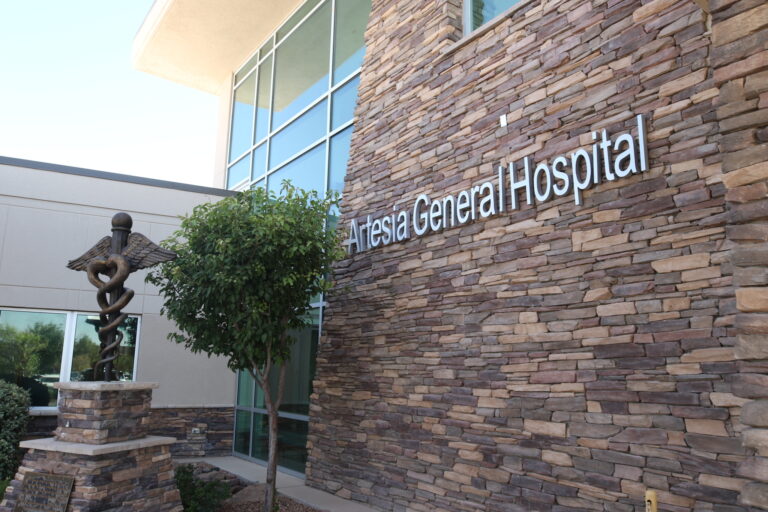
The video in question, taken in 21-year-old Alexee Trevizo’s hospital room at Artesia General Hospital while she was being questioned by police in January 2023, formed the basis for charges against Trevizo of first-degree murder and tampering with evidence.
Now-retired Fifth Judicial District Judge Jane Shuler Gray ruled in May 2024 – about a year after Trevizo, then-19, was arrested – that the alleged confession was inadmissible. Shuler Gray said using the footage as evidence would violate Trevizo’s rights against self-incrimination and also doctor-patient confidentiality.
That ruling was subsequently appealed by prosecutors to the New Mexico Supreme Court, which held oral arguments on the matter Sept. 4. A verdict had not been rendered as of Monday, Sept. 8.
Michael Thomas, deputy district attorney for the New Mexico Department of Justice, argued before the five justices of the State Supreme Court that Shuler Gray “erroneously” ordered the evidence suppressed and that the decision should be thrown out, allowing the criminal case to proceed with the video as evidence.
“A careful review of the video is critical to a proper understanding of the issues as it undercuts a myriad of defense assertions and glaringly fails to support and outright contradicts the district court’s findings,” Thomas argued.
Justice C. Shannon Bacon said her concern with admitting the video of the alleged confession was that it could be taken out of context with what “police were told prior to entering the room.”
“There’s been a report, they’ve heard from the nurse, probably things the nurse shouldn’t have told them, then they’re invited into the room,” she said. “That’s action before going in. They didn’t just pop their head in.”
Initially, a jury trial on the murder charge was scheduled for Aug. 26, 2024, but was delayed after Shuler Gray’s sealed opinion ordered suppression of the statements made by Trevizo to medical staff and police at the hospital.
That ruling, in response to a defense motion to exclude the video and confession, did not exclude medical records obtained by investigators, read the prosecution’s appeal filed July 8, 2024.
The defense motion also argued the case should be dismissed, contending Trevizo’s doctor-patient privilege was violated when statements she made to a physician were used as evidence in the criminal prosecution, and that she was not properly advised of her rights to avoid self-incrimination when speaking with police officers at the scene.
According to the state’s appeal, Trevizo told a doctor, “I’m sorry … it came out of me … I didn’t know what to do,” when she was told by medical staff that her son was found in a bathroom trash can, thus allegedly admitting her role in the infant’s death while not under arrest or restraint.
Prosecutors also argued Trevizo’s mother was present during the conversation as a third party, thus removing doctor-patient confidentiality.
Justice Julie Vargas questioned why police were brought into the room by medical staff after Vargas said it appeared staff intended to discuss Trevizo’s medical treatment with her.
“Why did they feel like it was appropriate for them to go into the room with the doctor to discuss treatment?” Vargas asked.
Thomas argued that police had “reasonable suspicion” that a crime was committed by Trevizo after being told the baby’s body was found in a bathroom they knew had only been entered by the defendant.
“The medical staff clearly knew that the only person who had been in that bathroom was the defendant,” Thomas said. “This was not going to be a whodunit.”
Amber Fayerberg, attorney for the defendant, said the legal matters were “simple” in the case but that the potential impacts of a verdict would be “extraordinary for every vulnerable patient in New Mexico.”
“Physicians and medical personnel take on the role of caregiver. Police take on the role of investigator,” she said. “If we accept the state’s position in this case, that line completely disappears and it’s to the detriment of New Mexico patients at their most vulnerable moment.”
Managing Editor Adrian Hedden can be reached at 575-628-5516, or @AdrianHedden on the social media platform X.