Home Blog Page 101

E. Gene Brown

0

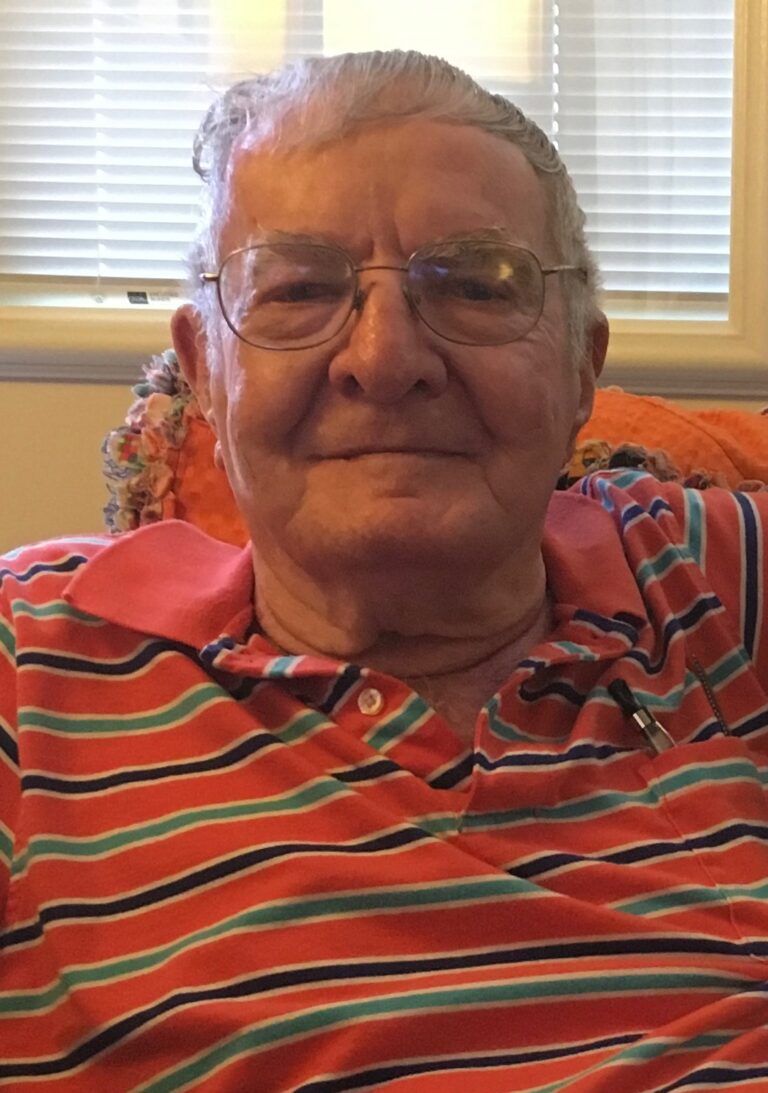
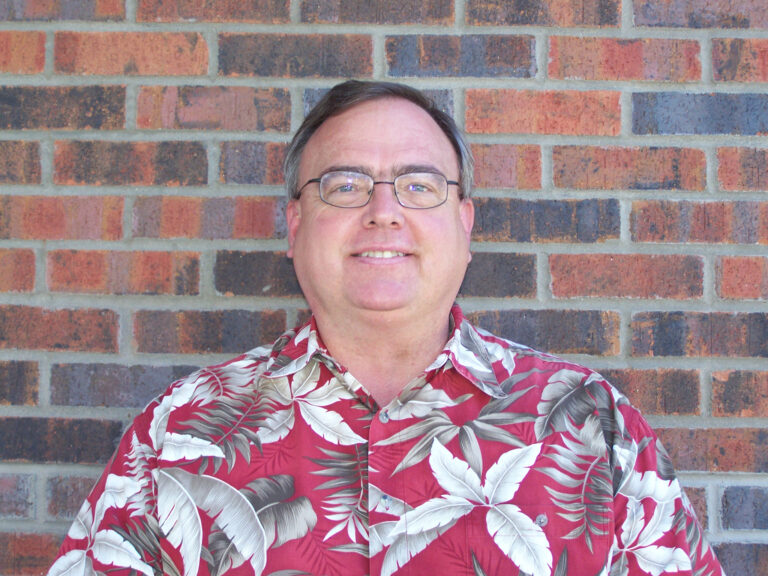
E. Gene Brown (Daddy, Papa), 88, of Artesia, New Mexico, went home to be with the Lord on August 14, 2025, surrounded by the love of his family. A memorial service to honor Gene’s life will be held at 10:00 a.m. on September 5, 2025, at Terpening and Son Mortuary Chapel. Cremation will take place under the direct care of Terpening & Son Mortuary.

Born in Cogar, Oklahoma, in 1937, Gene learned the value of hard work and family early in life. He graduated from Hagerman High School in 1955 and went on to build a remarkable life filled with dedication, perseverance, compassion, and quiet strength. Gene was married to Sally Lane Bolen for 12 years before marrying Marsha Stewart (Sutton) in April 1970, creating a blended family that became his greatest joy.

He spent many years working in the oilfields around Artesia, and alongside that, supported his wife of 55 years, Marsha, to successfully run a dairy farm. Gene was never afraid of an early morning or a long day-he valued a job well done. Outside of work, Gene found joy in life’s simple, steady rhythms. He had a green thumb and tended the garden that helped to feed his family. He mowed his yard carefully and enjoyed sitting outside to appreciate the beauty of a well-kept space. He also enjoyed listening to music, reading, restoring anniversary clocks, and collecting tractors. He made it a point to repair equipment and vehicles, making sure every tool and machine was put to good use. His dedication ensured nothing ever went to waste under his watch.

Family was at the heart of Gene’s life. He treasured every visit, conversation, and shared meal. His greatest joy came from spending time with those he loved. Nothing made him happier than a visit from his children, grandchildren, and great-grandchildren.

Those left to cherish his memory are his wife, Marsha Brown; daughter, Teresa Pursley of Norman, Oklahoma; son, E. Gene (Buddy) Brown Jr. of Shawnee, Oklahoma; son, Will Sutton of Seneca, Missouri; daughter, Willa Sutton of Lamar, Missouri; daughter, Debra Butson (Dennis) of Mansfield, Texas; daughter, Cindy Smith (Steve) of Odessa, Texas; daughter, Susan Richards (Lee Roy) of Artesia, New Mexico; along with 19 grandchildren and 16 great-grandchildren, including his beloved great-granddaughter Vivian Foy.

Gene is preceded by his parents, Earnie and Elnor Brown; brothers, Cleo Brown and Bill Brown; sister, Genelle Beattie; son, William Sutton; and grandson, Colton Trevor.

Gene’s life is one of dedication, kindness, and love-a life well-lived and a man deeply adored by those closest to him. His legacy lives on through the lessons he taught, the example he set, and the love he offered so freely.

The family would like to extend a heartfelt thank you to GoodLife Senior Living and Memory Care in Carlsbad and Artesia, as well as EnHabit Hospice, for the compassion with which they cared for Daddy during his final months. He expressed his admiration for the GoodLife staff and their dedicated work, which they handle with grace and dignity.
Los Alamos historian honored at festival

0

Adrian Hedden
Carlsbad Current-Argus
achedden@currentargus.com

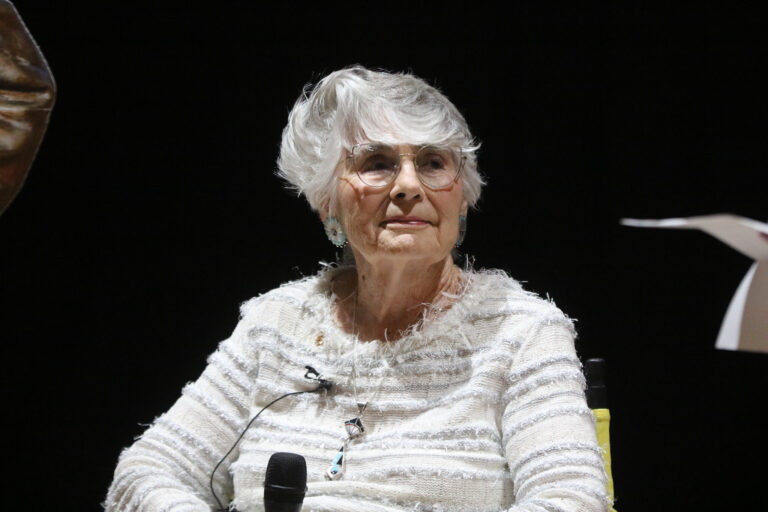
Nancy Bartlit spent her career telling the story of J. Robert Oppenheimer and New Mexico’s unique role in nuclear weapons and World War II, linking the history with Los Alamos and uplifting her community.

She was honored during a ceremony, Saturday, Aug. 16, at the SALA Event Center in Los Alamos, on the first day of the center’s third annual Oppenheimer Festival. The event was dedicated to the memory and contributions of J. Robert Oppenheimer, who led the United States’ successful efforts to devise the world’s first atomic weapons in a secret lab among the mesas and rocky cliffs of Los Alamos.

“We need to keep telling these stories, and I’m glad that through the peace theme of this event that I can continue to do that,” she said before the gathered crowd.

Bartlit, 88, was inspired to study the stories of the Manhattan Project by her father Thomas George Reynolds who worked for the program, which ran from 1942 to 1947, from its original headquarters in New York City.

The family frequently traveled to Oak Ridge, Tennessee, where nuclear elements used in developing the weapons were produced. Bartlit moved to Los Alamos in 1961 with her husband John Bartlit who worked at Los Alamos National Laboratory.

The couple founded New Mexico Citizens for Clean Air and Water in their living room in 1969 and would go on to testify at several government hearings on air quality throughout the 1970s.

Nancy Bartlit served three terms as a Los Alamos County councilor in the 1980s, and served on the board of the New Mexico Association of Counties.

“I realized that making Los Alamos a more appealing place to visit was something that we should be doing,” Bartlit said, reflecting on her career. “I guess that’s what they mean when they say I have ideas.”

‘She did so much’

As a civic leader and historian in the community, Bartlit was instrumental in the development of Los Alamos, said Allan Saenz, owner of the event center and organizer of the festival.

Bartlit’s vision led to Los Alamos’ growing reputation of significance in the complex roles played by New Mexico and the nation in nuclear proliferation, Saenz said.

He said it has been “an inspiration” to share the legacy of Oppenheimer with Bartlit. “She has done so much. You can sit with her for hours. If we don’t have people like Nancy, then these stories will fade.”

It was Bartlit’s work as the leader of the Los Alamos Historical Society that drove the organization’s efforts in 2003 to secure the donation of the Oppenheimer House, the home of J. Robert Oppenheimer where he and his family lived in Los Alamos during the Manhattan Project.

The house, first built in 1929, is in downtown Los Alamos within the Manhattan Project National Historical Park and stands today as a symbol of Oppenheimer’s time in New Mexico, which led to the creation of the first atomic bomb.

Nearby are two statues dedicated in 2011, one of Oppenheimer and one of U.S. Army Gen. Leslie Groves, who oversaw the development of the Manhattan Project’s facilities in three locations: Los Alamos; Hanford, Washington; and Oak Ridge, Tennessee.

Saenz also credited Bartlit with getting the statues built through the historical society, as a landmark in the middle of town.

In 2023, famed director Christopher Nolan filmed his Oscar-winning biography on Oppenheimer, indicating strongly, Saenz said, that there was national and international interest in the community and its place in history.

He said more work must be done, such as obtaining funding for a $5 million project the historical society is working on to revitalize the Oppenheimer House so it can be opened to the public.

“We see that people are interested,” Saenz said. “They come because they want to continue listening to the stories. We have to continue sharing the story. If we don’t, we die.”

Managing Editor Adrian Hedden can be reached at 575-628-5516, or @AdrianHedden on the social media platform X.

Healing on the Sabbath

0

David Grousnick

In Luke 13:10-17, we are told that as was his custom, Jesus went one Sabbath morning to the synagogue for worship. As he was preaching and teaching, he saw a very crippled woman. She was bent over and was unable to stand up straight. When he inquired, Jesus was told the woman had been that way for eighteen years.

Can you imagine? For nearly two decades this woman spent every waking moment bent double. When she went to the market, she did not see the distant green hillsides. She saw only the dirt path in front of her. Instead of the smiling faces of passing children, she saw the tops of dusty sandals. Luke tells us that the Master was deeply moved by her plight and he called the woman toward him.

He laid hands on her and said, “Woman you are set free from your ailment.” Immediately the woman stood up straight and she started to praise God. 

This irritated one of the leaders of the synagogue. This fellow began to criticize Jesus for healing on the Sabbath. “There are six days on which work ought to be done. Healing equates to work and there is no excuse for working on the day set aside for rest and worship.”

This religious leader believed keeping the law more important than caring for people.

The man’s attitude irritated Jesus. The Master responded that the law permits untying and leading a donkey to water on the Sabbath. Certainly the law should care more for the needs of people than animals. The law should make an exception for unleashing this daughter of Abraham who has been kept from drinking from the waters of abundant life for eighteen years. 

We assume that Luke, who remembers this story in his biography of Jesus, recorded the event because of this confrontation with the leader of the synagogue. That disagreement offers the most to learn. However, I want us to focus on that bent-over woman.

If we don’t look closely, we might assume Jesus healed the woman of a physical disease of the spine like osteoporosis or scoliosis. At first hearing, it does seem that when Jesus laid hands on her and told her to stand up straight, the power of God flowed though our Lord’s fingers, into her back, and healed a physical defect.

While plausible, that is not what Luke says. 

Walter Wink, in his book Engaging the Powers, suggests that Jesus’ action represented a revolution happening in seven short verses. Jesus tries to wake people up to the kind of life God wants for them. He often talks about the Kingdom of God where people have equal worth and all of life has dignity. But in the latter part of his ministry, he begins to act this out.

In the midst of a highly patriarchal culture Jesus breaks at least six strict cultural rules:

1. Jesus speaks to the woman. In civilized society, Jewish men did not speak to women. Remember in John 4 when Jesus spoke to the Samaritan woman at the well. She was shocked because a Jew would speak to a Samaritan. But when the disciples returned, the Scripture records, “They were astonished that he was speaking with a woman?” In speaking to her, Jesus jettisons the male restraints on women’s freedom.

2. He calls her to the center of the synagogue. By placing her in the geographic middle, he challenges the notion of a male monopoly on access to knowledge and to God.

3. He touches her, which revokes the holiness code. That is the code which protected men from a woman’s uncleanness and from her sinful seductiveness.

4. He calls her “daughter of Abraham,” a term not found in any of the prior Jewish literature. This is revolutionary because it was believed that women were saved through their men. To call her a daughter of Abraham is to make her a full-fledged member of the nation of Israel with equal standing before God.

5. He heals on the Sabbath, the holy day. In doing this he demonstrates God’s compassion for people over ceremony, and reclaims the Sabbath for the celebration of God’s liberal goodness.

6. Last, and not least, he challenges the ancient belief that her illness is a direct punishment from God for sin. He asserts that she is ill, not because God willed it, but because there is evil in the world. (In other words, bad things happen to good people.)

And Jesus did all this in a few seconds.

Author Max Lucado tells about his boyhood days of playing football out in the West Texas fields. The fields where Max and his friends played were full of grass burrs that stuck in their skin. Sometimes, after a big tackle, a player would have a leg or arm full of grass burrs. They stung horribly. The game came to a stop while the player pulled out each of the burrs.

Some players wanted to keep on playing in spite of the burrs, but it was usually too painful. Lucado trusted no one but his father to pull out the burrs. So he would leave the game, go home, and get his father to pull out every last burr, then he would return to play.

Friends, there are burrs that only our Father can remove. Fortunately God will remove them if we trust ourselves to Him.

Have a great weekend!

Eddy County resident readies for kayak fishing championship

0

Mike Smith

Carlsbad Current-Argus

msmith@currentargus.com

With his sights set on a first-place trophy, Matt Ramey is preparing for the New Mexico Bass Nation Kayak Anglers state championships to be held this fall at Santa Rosa Lake.

The Carlsbad fisherman, who serves as chairman of the New Mexico Bass Nation Kayak Anglers, currently sits in fifth place in the state championship point standings with 308.

Richard Ross is in first place with 380 points, Richard Castellese is second with 375 points, John Widner is third with 373 points and Jeff OBrain sits in fourth with 326 points.

Ramey said an exact date has not been set for the state tournament at Santa Rosa Lake in northeastern New Mexico but the event is expected to be held at the end of October or the start of November.

“(Members) are currently voting on weekends and what fits the schedules best,” he said. “Only qualified anglers receive invites to this event.”

Ramey said that to qualify for the state championship, anglers must compete in two regular season events. The top 10% percent who compete in the state event earn an opportunity to enter the Bassmaster Kayak Series Championship next March in Tennessee.

“Every year, our anglers strive to qualify for the state championship, win and advance to the national championship with the ultimate goal of walking across the prestigious Bassmaster stage,” Ramey said.

Ramey said 44 anglers competed in six events at Santa Rosa, Elephant Butte, Conchas Dam and Ute Lakes in New Mexico along Ivie Reservoir and Lake Colorado State Park in Texas.

“Each tournament has brought its own unique challenges, from weather changes to varying water conditions,” he said.

Ramey said the two Texas tournaments were especially challenging for the New Mexico participants “as they had to adapt to different fishing environments.”

Kayak fishing is expected to have an annual growth rate of 3.98 percent until 2030, according to a study from Cognitive Market Research (CRM). The North American fishing kayak market should be valued at $256 million by 2029, per the CRM findings.

“The kayak community in New Mexico and across the country is truly unique, and there is no other sport quite like it in the fishing world,” Ramey said. “It’s the friendships, camaraderie, and joy that kayak fishing brings that make it so appealing.”

In addition to pursuing the state title in New Mexico, Ramey is looking for a championship in Texas. He leads the West Texas Kayak Fishing standings and expects to compete in the WTKF championships Oct. 25-26. A site for the event has not been chosen.

Ramey said preparing for a tournament varies depending on the angler. He said the common trait is making informed decisions every time a kayak hits the water.

“We then adjust our tackle, rigging and equipment to better meet the challenges ahead,” he said. “Rigging rods, repooling line, tying on baits, studying maps, and checking weather conditions will play a crucial role, at least before the event,” Ramey said.

He said he narrows his confidence in his baits and doesn’t worry about other details.

“I want to make educated decisions based on what the fish and conditions tell me that day. I feel too much information hurts me more,” Ramey said.

As he awaits the New Mexico Bass Nation Kayak Anglers state championships, Ramey said, he will likely make one trip to Santa Rosa in September. He said anglers will have a 30-day off period before the start of the championships when no one is allowed to check out Santa Rosa Lake. He said competitors will be allowed access to the lake on the Thursday before the championship to prepare for the event.

During the month long restriction, he said, anglers can fish in nearby lakes including Conchas Lake and Ute Lake State Park, both an hour away from Santa Rosa.

Ramey said he has made at least 50 trips to Santa Rosa while kayak fishing over the past 10 years.

“It’s one of my favorite lakes in the state for sure,” he said.

Mike Smith can be reached at 575-628-5546 extension-2361.

Eddy County War is almost here

0

JT Keith

Artesia Daily Press

jtkeith@elritomedia.com

When the Artesia Bulldogs football team invades Ralph Bowyer Cavemen Stadium at 7 p.m. Friday, August 22, it will be time to renew the football rivalry with Carlsbad.

There have been 115 games played between the two schools since 1913, with Carlsbad holding the edge at 52-50-10. (No scores were found for the games in 1915 and 1916.)

The first game played between the two schools was in 1913 at Fireman’s Park on South Canal in Carlsbad.

According to Bulldogs coach Jeremy Maupin and Cavemen coach Cale Sanders, this game is essential, yet they say they are looking at it as just another game.

Both see this game as a building block toward district play and making the playoffs.

“I think there is going to be some excitement there,” Maupin said. “They spent a lot of money on the state-of-the-art facility over there. I think Cale Sanders has done an excellent job there. They have a solid group. This will be a challenging game for us.”

Sanders said that Artesia is a good football team, but his team of seniors will be ready to play.

“We are a lot better team than when I took over three years ago,” Sanders said. “We are continuing to change the culture, and we need to be ready when adversity hits. How we handle adversity will tell a lot about the game and season.”

2024

For the past two seasons, the Artesia Bulldogs have defeated the Cavemen in the Eddy County War.

In 2024, Artesia dominated Carlsbad and led 37-0 at halftime.

Carlsbad could not contain Artesia’s offensive attack as the Bulldogs exploded for 446 yards of total offense.

The ’Dogs had 88 yards on 19 rushing attempts, and in the air, the Bulldog receivers grabbed 22 receptions for 358 yards.

Carlsbad’s lone score came in the fourth quarter, and the team only surrendered a touchdown in the second half to lose 44-7.

Artesia’s quarterback, Izac Cazares, who has since graduated, completed 17 of 23 passes for 309 yards with four touchdowns.

Caveman quarterback Kason Perez completed 14 passes for 98 yards and one touchdown.

The Cavemen had only 18 yards rushing on 12 carries.

2023

In Cavemen head coach Sanders’ debut, the Bulldogs won 55-7 at Ralph Bowyer Cavemen Stadium in Carlsbad.

Artesia senior quarterback Nye Estrada completed 15 of 19 passes for 329 yards with four touchdowns for the Bulldogs in the season-opening victory.

Jesse Leroch had 11 carries for 60 yards for Artesia on the ground. In the air, Cazares caught four passes for 127 yards, and Ethan Conn had five catches for 113 yards.

Perez completed 11 passes for 127 yards and one touchdown, which came in the opening period for the Cavemen.

Four Carlsbad running backs had a combined 31 carries for 69 yards. Ian Sandoval was the leading receiver with five catches for 65 yards.

5 keys to the game

Consistency: Artesia must play consistently all four quarters, regardless of what happens.

Derrick Warren: Quarterback Derrick Warren must stay composed in his first start as the Bulldogs quarterback. But Warren has weapons in the backfield and when he throws the ball. Maupin is starting him as quarterback because he gives the Bulldogs the best chance to win.

Carlsbad a challenging opponent: Though Artesia has beaten the Cavemen during the past two seasons, they should expect a challenging game going into the fourth quarter this year.

Do not look ahead: The Bulldogs may be looking ahead to next week’s battle against Hobbs, but the focus should be on Carlsbad and this week’s game.

Offensive line: The Bulldogs’ offensive line must dominate in all aspects of the game. With one returning starter in Steven Williams, the others must blend on the fly and quickly. With the next two opponents being 6A schools, the Bulldogs need to make sure their technique and assignments are solid.

jtkeith can be reached at 575-420-0061, or on X@JTKEITH1.

Who has been busy destroying democracy?

0

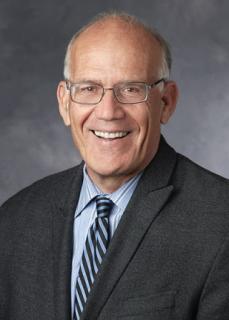
Victor Davis Hanson

“Destroying democracy” — the latest theme of the left — can be defined in many different ways.

How about attempting to destroy constitutional, ancient, and hallowed institutions simply to suit short-term political gains?

So, who in 2020, and now once again, has boasted about packing the 156-year-old, nine-justice Supreme Court?

Who talks frequently about destroying the 187-year-old Senate filibuster–though only when they hold a Senate majority?

Who wants to bring in an insolvent left-wing Puerto Rico and redefine the 235-year-old District of Columbia — by altering the Constitution — as two new states solely to obtain four additional liberal senators?

Who is trying to destroy the constitutionally mandated 235-year Electoral College by circumventing it with the surrogate “The National Popular Vote Interstate Compact?”

Does destroying democracy also entail weaponizing federal bureaucracies, turning them into rogue partisan arms of a president?

So who ordered the CIA to concoct bogus charges of “collusion” to sabotage Donald Trump’s 2016 campaign, the 2016-2017 transition, and the first 22 months of Trump’s first term?

Who prompted a cabal of “51 former intelligence officials” to lie to the American people on the eve of the last debate of the 2020 election that the FBI-authenticated Hunter Biden laptop was instead the work of a “Russian intelligence operation?”

Who ordered the FBI to connive and partner with social media conglomerates to censor accurate news deemed unhelpful to the 2020 Biden campaign?

Who pulled off the greatest presidential coup in history by using surrogates in the shadows to run the cognitively debilitated Biden presidency, then by fiat canceled his reelection effort, and finally anointed as his replacement the new nominee Kamala Harris, who had never won a single primary delegate?

Who ordered FBI SWAT teams to invade the home of a former president because of a classification dispute over 102 files out of some 13,000 stored there?

Who tried to remove an ex-president and leader of his party from at least 25 state ballots to deprive millions of Americans of the opportunity to vote for or against him?

Who coordinated four local, state, and federal prosecutors to destroy a former and future president by charging him with fantasy crimes that were never before, and will never again be, lodged against anyone else?

Who appointed a federal prosecutor to go after the ex-president, who arranged for a high-ranking Justice Department official to step down to join a New York prosecutor’s efforts to destroy an ex-president, and who met in the White House with a Georgia county prosecutor seeking to destroy an ex-president — all on the same day — a mere 72 hours after Trump announced his 2024 reelection bid?

Who but the current Democrats ever impeached a president twice?

Has any party ever tried an ex-president in the Senate when he was out of office and a mere private citizen?

When have there ever been two near-miss assassination attempts on a major party presidential candidate during a single presidential campaign?

Who destroyed the southern border and broke federal law to allow in, without criminal or health background audits, some 10-12 million illegal aliens?

Who created 600 “sanctuary jurisdictions” for the sole purpose of nullifying federal immigration law, in the eerie spirit of the renegade old Confederacy?

Who allowed tens of thousands of rioters, arsonists, and violent protestors over four months in 2020 to destroy over $2 billion in property, kill some 35 people, injure 1,500 police officers, and torch a federal courthouse, a police precinct, and a historic church — all with de facto legal impunity?

How do the purported destroyers of democracy find themselves winning 60-70 percent approval on most of the key issues of our times, while the supposed saviors of democracy are on the losing side of popular opinion?

How does a president “destroy democracy” by his party winning the White House by both the popular and Electoral College vote, winning majorities in both the Senate and House by popular votes, and enjoying a 6-3 edge in the Supreme Court through judges appointed by popularly elected presidents?

So what is behind these absurd charges?

Three catalysts: one, the new anguished elitist Democratic Party alienated the middle classes through its Jacobin agenda and therefore lost the Congress, the presidency, and the Supreme Court, and now has no federal political power.

Two, the Democratic Party is polling at record lows and yet remains hellbent on alienating the traditional sources of its power — minorities, youth, and Independents.

Three, Democrats cannot find any issues that the people support, nor any leaders to convince the people to embrace them.

So it is no surprise that the panicked Democrats bark at the shadows — given that they know their revolutionary, neo-socialist agenda is destroying them. And yet, like all addicts, they choose destruction over abandoning their self-destructive fixations.

A good recipe for getting along with all types of people

0

Trip Jennings

“Thank God no one let me write newspaper columns when I was 22.”

I said this flippantly to another journalist last week as I was telling them I was writing newspaper columns for the first time in my career. It was not so much a joke as an older man looking back on his younger self with clarity.

At 22, I did not have any striking insights to offer the world.

While I could string words and sentences together well enough to make interesting paragraphs, I only had a dim understanding of the world, mostly through second-hand information: through reading newspapers, magazines, and books. Plus, my experience up to then did not lend itself to great storytelling. My life had revolved around other affluent White people living in gated communities in the Deep South, a very particular geographical, socioeconomic bubble.

I didn’t possess the imaginative power to transform a life of relative ease into a compelling drama. Nor had my understanding of the world been punctured by a diverse set of people who could challenge my deepest-held assumptions by drawing on their own lived experiences to come up with competing theories on how the world worked.

The epiphany that I had grown up in a bubble would take years to sink in, and only after I had lived around the country and married a child of Mexican immigrants whose tales of growing up were so foreign to me that her experiences genuinely shocked me. By this time, thanks to journalism, I had already met people of different races and ethnicities, from all walks of life and socio-economic situations, disparate faith traditions, including quite a few people who’d been born outside the U.S.

I am not saying the only way to become more self-aware people must live elsewhere from where they grew up, or become a journalist or have a diverse personal network, although I believe all can help. Only that these experiences have helped me understand myself better — as well as the world in which we all live, which is wondrously and frustratingly complicated.

I think about this as I ruminate on our nation’s polarized politics and the fraying it has done to the bonds that hold us together as a country. Daily, it seems the tribalism that pits Americans against each other tightens its grip on us. And I wonder if a small factor in this scenario has to do with Americans’ decreasing desire to live far from where they grew up, which, in turn, makes them more prone to be wary of people who might have grown up differently than they did, at least when it comes to politics.

Researchers in the U.S. Census Bureau and Harvard University found in 2022 that nearly six in 10 young adults live within 10 miles of where they grew up, and eight in 10 live within 100 miles. And in a marked difference from previous eras when a large portion of the American population moved regularly, new data showed that fewer than 10% of Americans moved in the annual period that ended in March 2024, the first time the figure had dropped below 10% since 1947, when the Census Bureau began tracking that figure.

I’m not saying that moving around would lance the fever of political polarization sickening our society. Or that moving is even practical for many Americans. It is expensive, and it is hard.

Honestly, I don’t know how to solve the sickness infecting our country.

But moving around and meeting new people from different circumstances and disparate worldviews, has made me more open to individuals who on first impression share nothing in common with me while making me more suspicious of people who decry that differentness is dangerous.

For that reason, I resonate much more with people who understand that in a society of 320 million people from all walks of life, belief systems and lived experiences that getting to know people in the messiness of their lives, which inevitably happens when you move around, might help us more than fighting from afar on social media or always sticking with our own kind.

Since 2005, Trip has covered politics and state government for the Albuquerque Journal, The New Mexico Independent and the Santa Fe New Mexican. In 2012, he co-founded New Mexico In Depth, a nonpartisan, nonprofit media outlet that produces investigative, data-rich stories with an eye on solutions that can be a catalyst for change.

Feds accredit air races in Roswell

0

Staff Reports

The National Championship Air Races held next month in Roswell cleared federal hurdles for this and next year’s event, via approval from the Federal Aviation Administration.

The agency, after a review of the Air Races’ application issued letters in support of the event hosting multi-class air races, including new racecourses as this year’s event will be the first held in New Mexico after it was moved from Reno, Nevada.

The approval is valid through Aug. 31, 2027 and the races for this year are planned to run from Sept. 10 to 14 in Roswell.

Six of the seven race classes were granted full FAA approval, while the Unlimited and Sports classes withdrew and were hoped to return to the races next year.

Evaluations were made during this year’s Pylon Racing Seminar, held in May, during which several participating pilots complete their course certifications needed to compete, with others expecting to do so in an additional seminar session held ahead of the event.

The Pylon Racing Seminar, known as “Rookie School” provides pilots with the training needed to compete in the low-altitude environment that defines pylon racing, read a news release from National Championship Air Races.

“This accreditation underscores the strength of our long-standing partnerships with the race classes and the FAA who are committed to producing an event that meets and exceeds the highest standards of safety and performance,” said Fred Telling, CEO and chairman of the board of the Reno Air Racing Association (RARA).

“We’re pleased to have received full FAA approval across our operations and look forward to showcasing the very best of air racing once again.”

President and Chief Operating Officer Tony Logoteta said this year’s event will also include a biplane class. The event will also feature closed-course pylon racing, STOL drag, aerobatic performances and other activities and attractions.

“Our team’s diligence and the FAA’s cooperative approach have laid the foundation to carry on our legacy of hosting a safe and exciting event – the 2025 relaunch of the National Championship Air Races in Roswell,” Logoteta said.

Unlimited class withdraws from Air Races.

The Unlimited Class opted to forgo this year’s National Championship Air Races, following a similar announcement by the Sport Class, which means there will be five out of seven classes competing in this year’s air races.

The Unlimited Class did not provide a specific reason for its withdrawal, but in an Aug. 15 news release, spokesman Steve Hinton said the decision was not made “lightly.”

“The Unlimiteds are deeply woven into the fabric of air racing, and though we’re unable to participate this year, we look forward to working with RARA toward our return to the races in 2026,” he said in a statement.

The class and the Reno Air Racing Association will work together to evaluate the unique requirements of the Unlimited Class and ensure it can compete safely during the competition in Roswell, read the release.

“While they won’t be able to join us for our inaugural year in Roswell, we look forward to working closely with the class after this event to ensure their accreditation and return at NCAR 2026,” Telling said.

The Unlimited Class generally includes stock or modified World War II fighter planes, including P-51 Mustangs, F-8F Bearcats and Hawker Sea Furies, exceeding 500 miles per hour during the competition.

The class’ decision to pull out of the races followed a July 18 announcement by the Sport Class that it would also not compete this year.

Sport Class involves modern, kit-built aircraft with speeds reaching about 350 miles per hour.

The decision for that class to pull out was linked to “operational concerns” with the new track in New Mexico, read a news release, that arose during the seminar in May.

“This was not an easy decision for our Sport Class Board, but stemmed from the complexity of our class, which races a wide speed range of aircraft on 3 different courses,” said Sport Class spokesman Bob Mills. “We feel this decision is the right one for 2025, and feel it shows our commitment, along with RARA’s, to a culture of safety and long-term success.”

Bulldog Outfitters reopens

0

Artesia Chamber of Commerce

We were very honored to do a ribbon cutting and help celebrate the official grand re-opening of Bulldog Outfitters under their new ownership. We are so happy for the Vega family and cannot wait to see what great things the future holds. Be sure to bleed extra orange this fall and stop by 1409 W. Main where they can help you get decked out for everything Bulldog. New gear dropping this week and every week.

Hours

Tues-Thurs, 10 a.m.-5 p.m.

Friday, 10 a.m.-6 p.m.

Artesia General Hospital new general surgeon

0

Staff reports

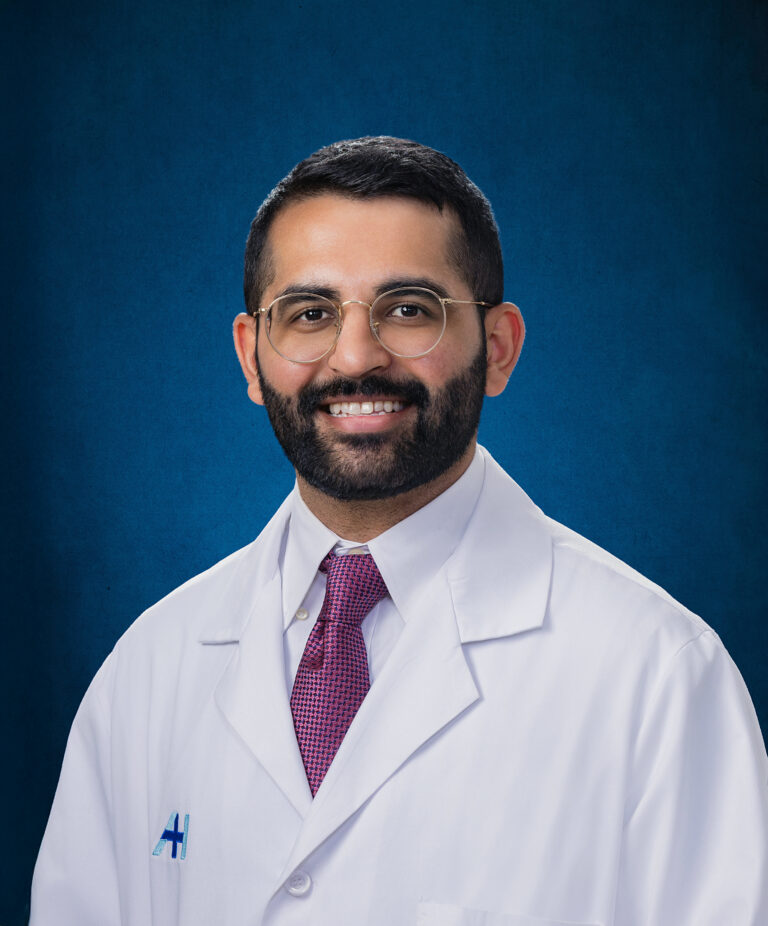
Artesia General Hospital (AGH) announced the appointment of Dr. Shyamal Pansuriya, D.O., B.Sc., B.A., as its newest General Surgeon. Dr. Pansuriya brings a broad surgical skill set, deep research experience, and a passion for patient-centered care to Artesia and the surrounding region.

Dr. Pansuriya joins AGH from Henry Ford Macomb Hospital in Clinton Township, Michigan, where he completed his general surgery residency and served as chief resident. During his training, he earned distinction for his proficiency in advanced laparoscopic techniques, robotic surgery and management of complex colorectal and gastrointestinal conditions. He is certified in fundamentals of laparoscopic surgery, fundamentals of endoscopic surgery, and is DaVinci robotic surgery equivalency-certified.

“I am excited to begin serving this vibrant and tight-knit community,” said Dr. Pansuriya. “My philosophy is rooted in respectful collaboration, thoughtful decision-making, and delivering high-quality surgical care tailored to each individual’s needs.”

Dr. Pansuriya completed his medical education at Marian University College of Osteopathic Medicine in Indianapolis, Indiana. He earned dual undergraduate degrees in Honors Biology and Economics, graduating summa cum laude from McMaster University in Hamilton, Ontario. His academic work was recognized with numerous awards, including the prestigious Ontario Genomics Research Fellowship and multiple national presentation honors.

A dedicated scholar and researcher, Dr. Pansuriya has co-authored several peer-reviewed articles on surgical innovation and rare clinical presentations, with publications in The American Surgeon. He has presented at more than 15 national and regional conferences, including the American Society of Colon and Rectal Surgeons (ASCRS) and the Southeastern Surgical Congress, with topics ranging from minimally invasive colorectal procedures to rare surgical case reports.

In addition to his clinical accomplishments, Dr. Pansuriya has served as medical student coordinator, adjunct clinical faculty with Michigan State University College of Osteopathic Medicine and held executive roles in surgical and research societies. He has mentored numerous medical students and led surgical skills training workshops for early learners.

“We are delighted to welcome Dr. Pansuriya to the AGH medical staff,” said Dr. Joe Salgado, CEO of Artesia General Hospital. “His diverse expertise and compassionate, team-based approach to surgery align perfectly with our mission to provide exceptional care for the people of Artesia and beyond.”

Dr. Pansuriya’s clinical services include:

• General abdominal surgery (hernia, gallbladder, bowel)

• Colorectal surgery (diverticulitis, fistulas, colorectal cancer)

• Minimally invasive and robotic-assisted procedures

• Emergency surgical care and trauma

• Diagnostic endoscopy and surgical consultation

Dr. Pansuriya is fluent in English and conversational in Gujarati and Hindi, allowing him to serve a wide range of patients with cultural sensitivity and clarity.

He is now accepting new patients. To schedule an appointment or request a consultation, contact the AGH Surgery Department at (575) 736-8235 or visit www.artesiageneral.com.