Home Blog Page 142

Artesia General certified in infection prevention

Staff reports

Artesia General Hospital (AGH) announced the renewal of its Certification in Infection Prevention (CIP) from DNV Healthcare USA Inc., a nationally recognized accrediting body. This three-year re-certification is valid through March 12, 2028.

The CIP designation demonstrates that Artesia General Hospital has met or exceeded national benchmarks in infection control, emergency preparedness, risk mitigation, and related policies and procedures. The program includes standards from the Centers for Disease Control and Prevention (CDC), the World Health Organization (WHO), the Centers for Medicare & Medicaid Services (CMS), and the ISO 9001:2015 Quality Management System.

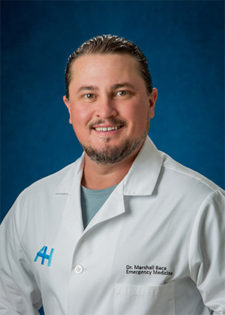
“This certification reflects the incredible work of our team and our dedication to keeping patients safe,” said Dr. Marshall Baca, Jr., chair of the Infection Control Committee. “Infection prevention is one of the most vital aspects of high-quality care, and this renewal is a powerful testament to the systems and culture we’ve built at Artesia General Hospital.”

Brandi Ford, BSN, RN, CIC, a board-certified infection control nurse leads the hospital’s infection prevention and control program. She coordinates efforts across departments to ensure that protocols are consistently implemented, monitored and improved.

“This certification validates the daily commitment our team brings to protecting not just our patients, but also their families, our staff, and the broader community,” Ford said. “Infection prevention is more than a set of policies—it’s a mindset. It takes every department working together, every day, to reduce risk and provide the safest environment possible.”

Ford said she worked to train hospital staff, improve hand hygiene compliance, update sterilization practices, manage outbreak protocols and ensuring readiness for unexpected events like pandemics or emerging threats.

The hospital’s Environmental Services department also helps maintain the cleanliness level at the hospital. EVS staff are responsible for room turnover and maintaining standards for disinfection throughout the facility.

DNV’s Certification in Infection Prevention requires hospitals to maintain continuous compliance with best practices through annual assessments. The most recent DNV recertification survey, conducted on March 11–12, 2025, included detailed on-site evaluations of AGH’s clinical and operational practices.

The CIP program evaluates the hospital’s entire infection prevention system, including:

• Standard and transmission-based precautions

• Surveillance and data tracking of healthcare-associated infections (HAIs)

• Employee education and training

• Environmental cleaning and disinfection

• Surgical and procedural safety

• Emergency preparedness planning

• Cross-departmental communication and accountability

“Our goal is to bring world-class care to our rural region,” Salgado said. “Through certifications like this, we hold ourselves to the highest standards and ensure that every person who walks through our doors receives care that is both compassionate and safe.”

For more information about Artesia General Hospital’s quality initiatives and infection prevention program, visit www.artesiageneral.com.

The Trump counterrevolution and the moral ledger

0

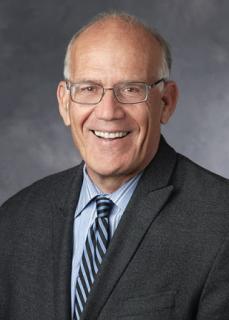
Victor Davis Hanson

Despite the media hysteria, President Donald Trump’s counterrevolution remains on course.

Its ultimate fate will probably rest with the state of the economy by the November 2026 midterm elections. But its success also hinges on accomplishing what is right and long overdue — and then making such reforms quietly, compassionately, and methodically.

No country can long endure without sovereignty and security — or with 10 to 12 million illegal immigrants crossing the border and half a million criminal foreign nationals roaming freely.

The prior administration found that it was easy to destroy the border and welcome the influx. But it is far harder for its successor to restore security, find those who broke the law, and insist on legal-only immigration. Trump is on the right side of all these issues and making substantial progress.

Everyone knew that a $2 trillion budget deficit, a $37 trillion national debt, and a $1.2 trillion trade deficit in goods were ultimately unsustainable.

Yet all prior politicians of the 21st century winced at the mere thought of reducing debts and deficits, given that it proved much easier just to print and spread around federal money. As long as the Trump administration dutifully cuts the budget, sends its regrets to displaced federal employees, seeks to expand private sector reemployment, and quietly presses ahead, it retains the moral high ground.

The elite universities have long hidden things from the American people that otherwise would have lost them all public support.

They deliberately sought to neuter Supreme Court rulings banning race-based preferences by stealthily continuing their often-segregated policies on campuses, from admissions and hiring to dorms and graduations.

They have taken billions of dollars from autocracies, such as communist China and Qatar. And they have partnered abroad with their foreign illiberal institutions and then disguised their quid pro quo subservience.

These supposedly prestigious universities have previously made no real effort either to stop or even hide their own campus epidemics of antisemitism.

They have spiked their tuition and costs higher than the annual rate of inflation, assured that the tottering $1.7 trillion guaranteed student loan portfolio would always send them guaranteed cash flows.

They have gouged taxpayers by charging exorbitant surcharges on federal grants from 40 to 60 percent. And they make no effort to offer students intellectual, ideological, or political diversity.

So, even our most prestigious universities seem to have no real moral compass. Accordingly, as long as Trump retains the high ground, the public, too, will demand either reform in higher education or a cessation of federal support to it.

The economy remains strong, but its ultimate health depends on reaching a trade deal with a handful of nations that account for our $1.2 trillion trade deficit in goods: China, the EU, Canada, Mexico, the Southeast Asian trade bloc, and Taiwan, Japan, and South Korea.

These nations all know that their tariffs are not symmetrical. But our trade partners will not willingly change. They apparently, but wrongly, believe that the U.S. either welcomes its trade deficits, naively thinks they’re irrelevant, or is too wedded to libertarian trade ideology to demand accountability.

So, too, on trade, the Trump administration is in the right.

Its only challenge is to avoid envisioning tariffs as a new, get-rich source of massive revenue. Data does not support the idea of such large tariff incomes.

The American people signed on for symmetry, fairness, and reciprocity in trade, not tariffing those who run deficits with us or seeing high tariffs as a cash cow to fund our out-of-control government.

Enraged Democrats still offer no substantial alternatives to the Trump agenda.

There are no shadow-government Democratic leaders with new policy initiatives. They flee from the Biden record on the border, the prior massive deficits and inflation, the disaster in Afghanistan, two theater-wide wars that broke out on Biden’s watch, and the shameless conspiracy to hide the prior president’s increasing dementia.

Instead, the Left has descended into thinly veiled threats of organized disruption in the streets. It embraces potty-mouth public profanity, profane and unhinged videos, nihilistic filibusters, congressional outbursts, and increasingly dangerous threats to the persons of Elon Musk and Trump.

All that frenzy is not a sign that the Trump counterrevolution is failing. It is good evidence that it is advancing forward, and its ethically bankrupt opposition has no idea how, or whether even, to stop it.

Victor Davis Hanson is a distinguished fellow of the Center for American Greatness. He is a classicist and historian at the Hoover Institution, Stanford University, and the author of “The Second World Wars: How the First Global Conflict Was Fought and Won,” from Basic Books. You can reach him by e-mailing authorvdh@gmail.com.

Faith and family keeps Artesia mom balanced

Mike Smith
Artesia Daily Press
msmith@currentargus.com

Artesia resident Renee Kraft is a teacher, a pastor’s wife, a mother of four adult children and a grandmother of seven. Family, she says, has kept her grounded.

“The running joke in the family is she is like the Energizer bunny,” says Jason Kraft, Renee’s husband of 34 years and lead pastor at West Main Baptist Church. “She is very high energy. She can multitask about 18 things at once and do them very well. She’s a servant – she likes to help people. She knows how to lean into her strengths.”

Born 53 years ago at the Fort Bliss Army installation in El Paso to a teenage mother, Renee Kraft was adopted at six weeks of age and grew up in Kermit, Texas.

“My dad was an accountant, and my mom was a stay-at-home mom,” she said.

After graduating from high school, she attended college in Abilene, Texas, where she met her husband and earned her teaching degree. The young couple stayed in the Abilene area where Jason served as a youth pastor before moving to Roswell 30 years ago.

“We were in Roswell for seven years and I was a stay-at-home mom and did part-time work in the preschool department at the (First Baptist) Church. (I) taught piano lessons for several years,” Renee said. “After seven years, West Main needed a pastor and they called and asked (Jason) to preach and so we took a step of faith. We weren’t looking to move somewhere and felt like this was God calling us to Artesia.”

Renee Kraft graduated from Hardin-Simmons University, a private Baptist college in Abilene, earning a degree in elementary education with a specialty in reading.

While in college, she developed a love for music and that led to a 20-year teaching career with the Artesia Public Schools (APS).

“I moved around in different positions and started teaching in the music department,” she said.

Kraft has taught music to kindergarten, elementary and high school students during her tenure with APS.

Being a teacher and a mom could be difficult while her children were growing up, she said.

“I’m in a season now where the kids have all grown up and we have seven grandchildren. It’s a little easier being a teacher and not having the kids at home,” Kraft said.

When children Charis, Hope, Josiah and Faith were young, Renee said, she had to juggle a career and motherhood.

“I think being a parent made me a better teacher and maybe being a teacher made me a better parent, she said. “I had to decide which one was going to be the most important with us having four children and all of them having busy schedules and all of them at different stages and also being a partner with Jason with stuff at church. I had to decide that our home was going to be the most important and that my job was going to be secondary. You kind of have to make a choice.”

In January, she had to put life and teaching on hold after being diagnosed with breast cancer.

“It’s challenged me to be grateful for every little thing and just considering if this had been something that could have taken my life,” she said. “It just makes me really grateful for the relationships in my life.”

After suffering post-surgery complications related to allergies, Kraft is undergoing radiation treatment at University Medical Center at the Texas Tech Health Sciences Center in Lubbock. She’s on medical leave from APS with plans to return in August for the start of the 2025-2026 academic year.

“We caught it really early, so my treatment has been fairly easy,” she said. “We just didn’t know I was going to have several complications after the surgery … and just had to require more treatment than we expected. It has made me slow down a little bit. Being on medical leave has given me some time to slow down and not to be in such a rush all the time.”

Mike Smith can be reached at 575-308-8734 or follow on X @mikesmithartesianm.

New county building project underway

0

Adrian Hedden
Carlsbad Current-Argus
achedden@currentargus.com

A new administrative complex could be coming to Eddy County but commissioners have yet to determine the project’s estimated cost or timeline, potentially ranging from 14 months to four years.

Eddy County Commissioners opted last year to move forward with a proposal to shift both the county’s administrative office and its jail from Carlsbad’s downtown area on Greene and Main streets, respectively, to a location near the Cavern City Air Terminal.

Between the jail and administrative offices, the county last year estimated the total cost at about $350 million.

The idea was to consolidate county operations and provide more space for parking and potential new businesses opening in downtown Carlsbad. Commissioners decided not to move the historic Eddy County Courthouse, choosing to renovate the aging building at Mermod and Canyon streets in a separate project now underway.

Officials with Frisco, Texas-based architecture firm Parkhill presented their plan for rebuilding the administrative building during the County Commission’s regular meeting on Tuesday, May 6.

Principal in Charge Kreg Robertson said the firm was first meeting with those who work in county offices, aiming to understand their needs and how to best modernize the facility. He did not give a specific timeline or cost estimate for the building alone, but said the design process could take a year, with construction “dependent on the site.”

Robertson did estimate that a complete “ground-up” rebuild would take up to 14 months, while renovating the existing structure could push the project out “three or four years.”

“We’ve got an opportunity here to do something more than create a building that’s just offices,” he said. “It could be so much more than an administrative complex. You’ve got a wonderful opportunity to create a legacy project.”

Civil Practice Lead Kyle LaFerney said Parkhill would recommend that the county convene an advisory committee to solicit input from the public and county employees on what the rebuild should include.

“You’ll see a common theme, which is us coming to you to talk,” LaFerney said. “It isn’t our building. We’re a tool to get this done.”

Robertson said dialogue with the county and local stakeholders was “critical” to the project to limit alterations once plans and construction begin.

“We can’t do all of this design until we’ve met with you all,” Robertson said. “I can go and design a beautiful building, but we might end up having to go back and change it if we haven’t talked with you and collaborated.”

He said the county would be updated frequently throughout the project.

“We never ever what to get to the end of the process and find out that we’re $10 million over your budget. That’s not fun for anyone,” Robertson said. “We never want this to be a surprise at the end of the project.”

LaFerney said several meetings would be held in the coming months, starting within weeks, to get input from workers and the public before the design process begins.

“It’s a much slower process than many believe,” LaFerney said. “Construction is dependent on the site. Every community is different.”

Commission Chair Sarah Cordova said workers will be more efficient if they are staffed in a building and workspace they can help tailor to their own needs.

“It really has to center around the employees and what’s going to work best for them,” she said. “Your workplace has to be a reflection of you. I really appreciate the emphasis on getting the input from the employees.”

Other business

Eddy County Finance Director Roberta Gonzalez reported the county received about $5.9 million in gross receipts tax as of March 2025, the latest month accounted for in county finance. The county also received about $7.9 million in oil and gas receipts.

The county had about $144,000 in lodgers tax at the start of Fiscal Year 2024-2025, which ends June 30, 2025, Gonzalez said, increasing to $192,000 by the end of March.

Managing Editor Adrian Hedden can be reached at 575-628-5516, or @AdrianHedden on the social media platform X.

Magical May Moments

0

Kevin Beardmore
Southeast New Mexico College

Spring is a time of renewal and rebirth. It is my favorite time of year because possibilities seem to bloom like flowers. My quarter century in higher education has likely been an influence. The majority of college graduates still finish their studies in May, and it is a milestone event. The birth of a child and marriage exceed it in significance, but in those cases the focus is on a baby or a couple. Commencement is a communal and cultural event, with dozens, hundreds, or even thousands graduating together with many times that joining in the celebration. Everywhere you look, there is someone radiating with joy.

It is no surprise how excited everyone is for the occasion. A degree is a key to future success. It unlocks doors that may otherwise be closed. The graduate can open them and take their first steps into a tomorrow where they can prove to the world—and themselves—how they can contribute.

What amazes me is that the journey that leads to a degree begins and ends with something intangible: trust.

Post-secondary education is not compulsory. It is up to a student to invest money, time, and effort in pursuing a college degree. They must trust in the potential it has to enhance their skills, abilities, and marketability. It is true that some take the path because of the expectations of family or friends, but few persevere based on those social pressures alone. Most discover intrinsic motivations that drive them to finish. All in the pursuit of something—a college degree—that has value only because we, as a society, value it.

This is not to say that this value doesn’t have a solid basis in reality. A deep understanding of a discipline, a skill set that helps others or creates new products, or enhanced abilities to communicate and collaborate are all quite useful. But these are all potentials—not something you can own like a horse, a truck, or a house. Unlike those items, an education is something that cannot be taken away, but it requires trust.

Interestingly, trust is often taken for granted. So much so that we forget that something as ubiquitous as money is founded in trust. “Money is the most universal and most efficient system of mutual trust ever devised,” according to Israeli historian Yuval Noah Harari. His book, Sapiens: A Brief History of Humankind, includes a fascinating exploration of this claim. It is only when we take a step back and consider how critical trust is to the world in which we live that we realize the essential nature of our collective beliefs. We are successful as a species because we work together. This includes creating systems of shared trust to which we all contribute.

Soon I will preside (something presidents get to do) over the SENMC May Commencement. Near the end of the ceremony, I will state that by the power “vested in me” by the Southeast New Mexico College Board of Trustees, that I will bestow upon the graduates their respective credentials. This “vestment” is a sacred power, one that only exists because of the trust placed in the college.

It is easy to forget that we need each other for so many reasons. If you have a magical moment this May, savor the experience—and remember that it is more than an individual accomplishment. It is a reminder of the power that comes with being part of something larger, something we can only make real—together.

Kevin Beardmore, Ed.D., is the President of Southeast New Mexico College. He may be reached at kbeardmore@senmc.edu or 575.234.9211

Please God, make the next pope like the last one

0

Mary Sanchez

By the grace of God, Pope Francis’s successor will avoid a page out of American politics. Hopefully, the new pope will not be the “Trump of the Vatican” – a pope that is a reaction to the policies of his predecessor, just like we are seeing with President Donald Trump’s reactionary stance to former President Barack Obama.

The conclave of cardinals is set to begin their deliberations on May 7. The word conclave is from the Latin meaning “with key,” a descriptor of the group primarily composed of cardinals which must remain barricaded inside the Vatican until they reach a two-thirds majority in voting for the next pontiff.

They could choose someone who will align with the late Argentinian pope’s open-minded sense of reform. Or their choice could be a reaction against the progressive stance of Pope Francis, a step back toward the traditionalism exemplified by Pope Benedict XVI.

Backward is not good.

Consider what happened in American politics, when the emergence of Donald Trump was fueled in part as a counter to the historic election of Barack Obama.

There is no denying that what had been racial dog whistles during the first Trump administration aren’t hidden at all now. Trump displays a vulgar animus to the racial progress the nation made with the election of its first Black president in Obama.

It was always a fantasy that Obama, even in two terms, would usher in a post-racial America. His presence in the White House did not completely upend inequities and racial hatreds deeply embedded in our society.

To suggest one man, one presidency, could do so, was always absurd.

But there was progress, acceptance in subtle and obvious examples. For some, simply observing the Obama family live their lives in the public eye with grace, dignity, and humor at times, was a positive.

Those who didn’t vote for Obama might have disagreed with some of the administration’s policies, but found common ground on other points, even on matters concerning race that might not have been raised by a non-Black president.

According to Emory University, in a write up of the work of Emory political scientist Andra Gillespie and her book, “Race And The Obama Administration: Substance, Symbols and Hope,” Obama issued more executive orders addressing issues of concern to both African Americans and other racial and ethnic minorities” than did his predecessors. “He also nominated – and maintained – a more ethnically diverse group of Cabinet-level candidates and senior-level staff.”

Now, the opposite seems to be occurring, and it’s to the detriment of all races.

The nation is upended by Trump’s obsession with degrading anything that reminds us of our country’s diversity, of our deep history of civil rights and of the fact that many immigrants today are brown, and some aren’t Christian.

Diversity, equity, and inclusion (DEI) is used like a slur. To label something “woke” is a verbal signal, a starting point for screeds against what feels too liberal for conservatives.

Likewise, Pope Francis firmly walked a path that caused many conservatives in the church to recoil. He offered olive branches where some church authorities preferred to erect barricades.

As pope, the former Jorge Mario Bergoglio, extended a level of respect and acceptance — like his much-dissected comment on the LGBTQ community, about whom he said, “Who am I to judge?”

To be clear, Pope Francis didn’t change church teachings on homosexuality. He leaned into the pastoral, emphasizing every human as a creation of God.

Pope Francis appointed more women to prominent roles, placing them on boards and in senior roles at the Vatican. In recognizing and honoring the diversity of the Roman Catholic faith, his actions were more concrete.

There, he not only recognized the countries where the Catholic faith is rapidly expanding – Africa and Asia – he ensured that more of the world’s cardinals came from those regions.

In this way, the makeup of the church hierarchy shifted under Francis. This move is vital given that Africa makes up 20% of the world’s 1.4 billion Catholics, with 281 million, and South America has more than 27%.

North America is home to only 6.6% of the world’s Catholics.

The conclave that will choose Pope Francis’s successor will be larger and more diverse. Eight out of 10 of the cardinals have been elevated to their role by Pope Francis.

That doesn’t mean that all of them align with his views. Some of the African cardinals are traditionalists.

But the prospect of a Black pope has been raised. If it happens, that would not be the first, but the first in about 1,500 years. According to Reuters, one or more of the first millennium popes might have been Black, born in North Africa.

The faith’s growing diversity will be only one factor as the cardinals assess what the world needs from the next pope.

The race, ethnicity, or home nation of their choice will be of lesser concern. What would be beneficial is if that person continues an embrace of developing nations.

To take the opposite stand is to deny the realities of the faith, as well as the dynamics of the globe. The world would continue to benefit if the open-minded, global embrace of Pope Francis isn’t allowed to end with him.

Mary Sanchez writes for the Tribune Content Agency.

Nobody considers Social Security an entitlement

0

Sherry Robinson

All She Wrote

Social Security and the DOGE kids

At packed town halls held recently by New Mexico’s three U.S. House members, the defining feature of attendees was grey hair, and one of their most urgent worries was Social Security.

In New Mexico, 468,000 people get a Social Security check. Another 55,000 receive Supplemental Security Income. For a great many of them, missing even one check wouldn’t just be inconvenient, it would be disastrous – the difference between housed and unhoused, fed and hungry, as U.S. Rep. Gabe Vasquez learned when he surveyed constituents.

No recipient, myself included, considers Social Security an entitlement. “I paid in,” they will tell you.

Elders’ alarm over Social Security has festered for months. The president promised he wouldn’t touch Social Security except for “waste, fraud and abuse” and then turned Elon Musk and his DOGE, the so-called Department of Government Efficiency, loose on the Social Security Administration (SSA).

In February Musk claimed that millions of people over the age of 100 were receiving a

Social Security check, when he had, in fact, misunderstood the agency’s aged record keeping system. DOGE staff, without training or security clearances, embarked on a “major cleanup” of SSA records. Since March DOGE moved 10 million records to SSA’s Death Master File over the objections of SSA staff, according to the Washington Post. But DOGE itself was so unsure about its actions, according to Newsweek, that it advised SSA offices to reinstate people who came in with identification. That can take months.

The Washington Post reported last week on one man who learned he was added to the Death Master File when he couldn’t use his credit card to buy lunch. The government told financial institutions he was dead, clawed back his last Social Security check, and ended his pension checks and Medicare. Months later, he’s still trying to recover pension checks.

The undead have been showing up at Social Security offices, where they may or may not find somebody to help them. The Trump administration fired 7,000 people from SSA’s 57,000-person workforce, despite staffing at a 50-year low, and plans to lay off thousands more and close offices. At the same time, DOGE began requiring people without internet access to prove their identity with an in-person office visit.

The result was website crashes, hours’ long wait times by phone, and few actual humans still working in field offices.

U.S. Rep. Melanie Stansbury told a town hall this month that she was denied entry to the Albuquerque Social Security office, even though she had an appointment. She said the office, a regional call center normally staffed by 600, had around 250 to 300 employees.

She joined more than 100 members of Congress in asking SSA’s Acting Commissioner Leland Dudek to keep local field offices open.

Dudek, previously a mid-level data analyst, welcomed and enabled DOGE as other agency professionals resisted or resigned in protest. At DOGE’s direction, he has “pushed out dozens of officials with years of expertise in running Social Security’s complex benefit and information technology systems,” the Washington Post reported. In a recording obtained by ProPublica, Dudek urged co-workers to be patient with “the DOGE kids,” as he called them.

“They’re learning. Let people learn. They’re going to make mistakes.”

Former Deputy Commissioner Jason Fichtner has compared DOGE’s Social Security cuts to a drunk operating a wrecking ball. His boss, former Commissioner Martin O’Malley, has warned Social Security recipients to save their money to prepare for future missed checks. He has explained that SSA’s overhead is far below commercial insurers. In his view the administration is trying to dismember the agency by breaking its ability to serve. Once broken, it can be privatized.

Which is what Stansbury said in her town hall. “They are trying to dismantle Social Security. The GOP has dreamed of privatizing it for years. A lot of major financial institutions can make a lot of money,” she said.

Project 2025, the administration’s 900-page blueprint, doesn’t address Social Security, but one of its authors, economist Stephen Moore, called Social Security a Ponzi scheme long before Elon Musk did, and Moore has long proposed deep cuts and privatization.

The debate over privatizing Social Security is long standing. Two thoughts: First, with a private account the broker gets paid whether the market is up or down, whether you make money or not. Second, we all deserve to make our own decisions about what happens to Social Security and not be forced into an outcome because the powers that be drove it into the ground.

As a Vasquez constituent told Source New Mexico, “It’s my money.”

Sherry Robinson is a long-time New Mexico reporter and editor. She has worked in Grants, Gallup, the Albuquerque Journal, New Mexico Business Weekly and Albuquerque Tribune. Her columns won first place in 2024 from New Mexico Press Women.

.

Preaching the Gospel to Ourselves

As a Christian I cherish the hymns.  I have many favorites, both old and new that are a blessing to me.  In those times when I am alone with God I often sing “Amazing Grace”, “Rock of Ages”, or “Jesus Paid it All”.  Scriptures also come to my mind and I meditate on those to much benefit to my soul.  I think it was Martin Luther that said that we should preach the gospel to ourselves everyday because we forget the gospel every day.  It is sad to think this might be true, but preaching the gospel to ourselves will do us no harm and I think will do us great good.  In Romans 3:19-26 is a good passage to review and to aid us in preaching the gospel to ourselves.

I think that we should talk to ourselves in the manner that we would talk to an unbeliever.   Let’s look at Romans 3:19-20.  “Now we know that what things soever the law saith, it saith to them who are under the law: that every mouth may be stopped, and all the world may become guilty before God. Therefore by the deeds of the law there shall no flesh be justified in his sight: for by the law is the knowledge of sin.”  I will tell myself what I would tell someone that I am sharing the gospel.  I would say to myself, “Self, you can do nothing to save yourself.  Your good deeds won’t help, because you know you aren’t good enough.  Obeying God’s law is demanded, but only proves you guilty and aware of your sin.”  I think I would at this point literally shut my mouth, repent, and confess my sins, because that is what the Law is for.

I would read another section of Romans 3.  I would say to myself, “But God did through Jesus what I cannot do for myself.”  Consider with me verses 21-24.  Look at some of the words that are used: righteousness, faith, believe, redemption.  Whose righteousness is Paul talking about?  It is God’s righteousness.  God declares His righteousness to redeem us through Jesus.  We are not saved by what we do, but by what Jesus did and our faith in Him.  When we trust in Jesus we are “…justified freely by His grace through the redemption that is in Christ Jesus.”  You see why I sing: “Jesus paid it all, all to Him I owe, sin had left a crimson stain, He washed it white as snow.”  I owe the debt, but Jesus paid my debt by dying in my place on the cross.  Through the shedding of His blood, I have been redeemed.

Reading the remainder of our passage: “(Christ Jesus) Whom God hath set forth to be a propitiation through faith in his blood, to declare his righteousness for the remission of sins that are past, through the forbearance of God; To declare, I say, at this time his righteousness: that he might be just, and the justifier of him which believeth in Jesus.” (Romans 3:25-26).  Some would begin to accuse God of not being fair, but I can’t.  I am the object of God’s grace.  I have looked to Christ alone to save me.  And how did Jesus save me?  He, the Lamb of God, willingly shed His blood to wash away my sin.  “What can wash away my sin? Nothing but the blood of Jesus.  What can make me whole again?  Nothing but the blood of Jesus?  O Precious is the flow that makes me white as snow.  No other fount I know.  Nothing but the blood of Jesus.”  Do I get any credit?  Do I earn anything that God has done for me through Jesus?  Nothing.  I have nothing to boast of.  I am just a sinner saved by grace.

This puts an end to boasting, bragging on our works and goodness.  Through Christ alone God gets the glory.  Have you tried to rob God of His glory?  Have you tried to claim something for yourself?  Are you resting on your goodness, your baptism, your church membership?  Are you like that wicked self-righteous Pharisee who said, “God, I thank You that I am not like other men—extortioners, unjust, adulterers, or even as this tax collector. I fast twice a week; I give tithes of all that I possess.” (Luke 18:11-12).  Cast all that away as rubbish, repenting of your sins – self-righteousness is also sin – and look to Christ alone in faith.  Then daily preach the gospel to yourself as well as to others to the glory of God in Christ Jesus.

If you have any questions, we invite you to visit with us this Sunday.   Worship at 10:50 A.M.  We are located at 711 West Washington Ave.  Check our sermon videos on Youtube @ricksmith2541.  Send comments and prayer requests to prayerlinecmbc@gmail.com.

The Artesia boys and girls doubles tennis champions in District 4-4A

0
The Artesia girls and boys District 4-4A doubles championship from left to right: Breckyn Miller and Kirklyn Miller, who won the girls championship. And the boys champions are Damian Lopez, with the glasses on, and on the right, Cutter Summers. Provided by Artesia tennis team.