

The Artesia girls District 4-4A doubles tennis champions and runner-ups
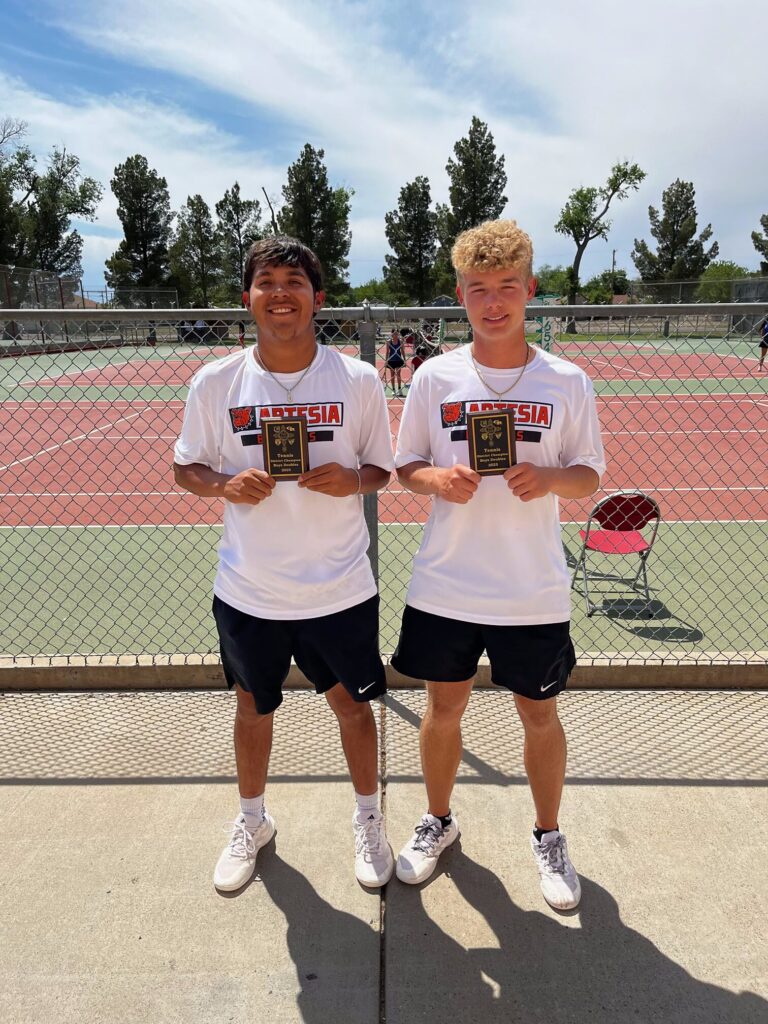
The Artesia boys District 4-4A doubles tennis champions
Artesia represented at Special Olympics Summer Games

Photos by Mike Smith.
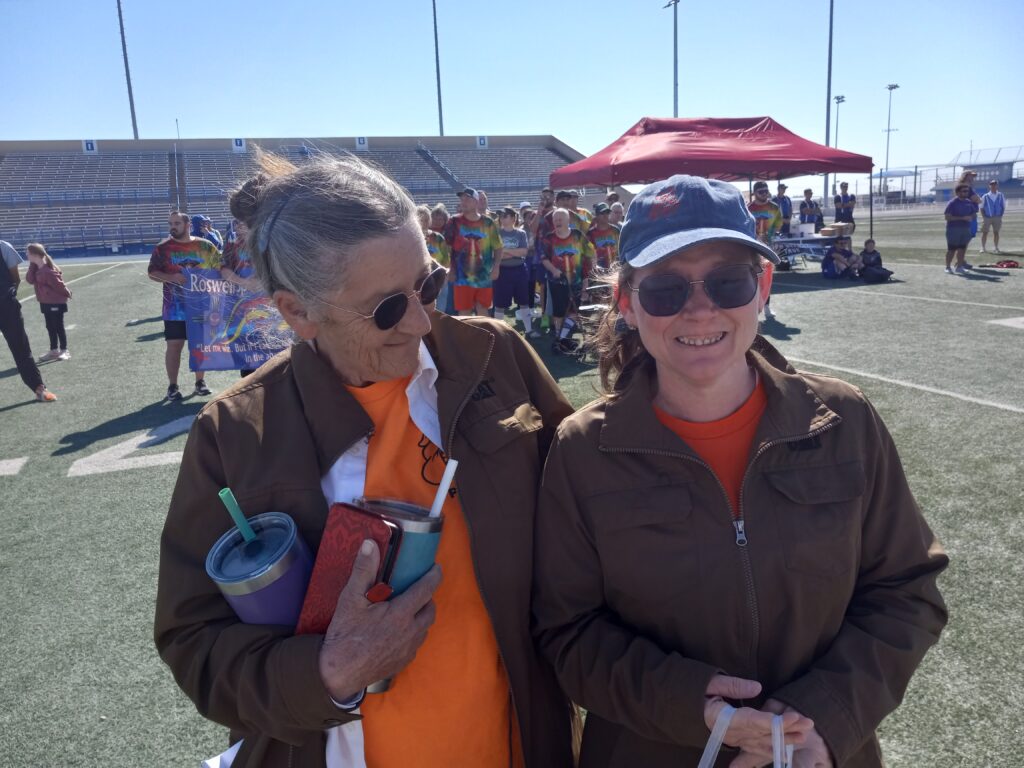
Jessica Posey (right) was congratulated by mom Darby Vernon after she received Area IV Athlete of the Year Award in Carlsbad Saturday.
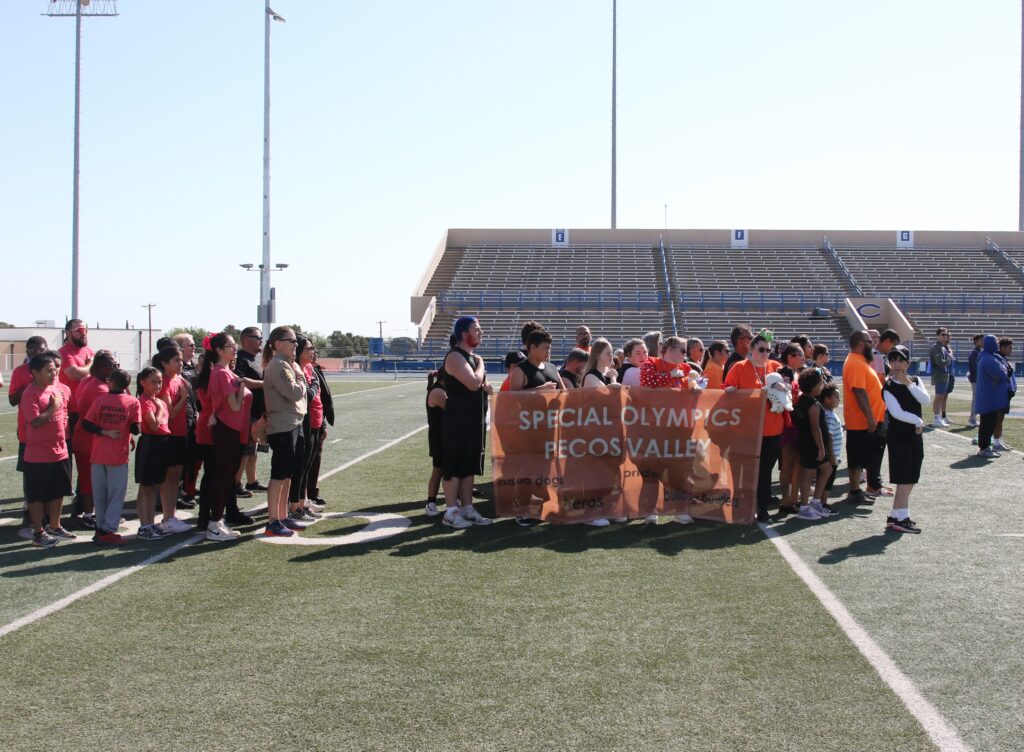
Special Olympics athletes from Artesia stand for the National Anthem during the Area IV Special Olympics Summer Games in Carlsbad.

Aalise Coddington of Special Olympics Pecos Valley during the softball toss at the Area IV Summer Games in Carlsbad on Saturday.

Lea County Special Olympian Jami Berry competes in Bocce Ball.
The Artesia Lady ‘Dogs softball team win the District 4-4A championship

The Artesia Lady ‘Dogs softball team wrapped up the District 4-4A championship with a sweep of Portales 8-5 and 12-0 on Thursday. Artesia is 19-7 overall and 8-1 in district. Provided by Artesia softball team
Artesia softball coach Sandra wins 200th game

JT Keith
Artesia Daily Press
jtkeith@elritomedia.com
Artesia softball coach Sandra Pulido is so relaxed that before her Lady Bulldogs take on the Goddard Lady Rockets in a doubleheader softball game, she is pitching to her daughter, Rhys Pulido. Minutes later, she is at home plate handing in the lineup card.
Pulido has her team in a tie for first place (16-7 overall, 5-1 district) after sweeping Goddard, 8-0 and 10-0, April 25 at the Mack Chase Sports Complex.
200th win
Many fans missed the significance of a 3-2 victory over rival Lovington on Tuesday, April 22. The win was Pulido’s 200th as the Artesia coach.
For Pulido, the victory went unnoticed. Pulido said the 200 wins might be under her name, but they are “for all of us” – fans, community, players, and assistant coaches.
“I feel like it is a big deal,” Pulido said. “It is exciting, but at the same time I can’t do it alone. I am not going on the field playing the game. I would never be as successful as I am without my coaching staff and the girls who put the work in. And the support from my people in the district and the community.”
Pulido said she overlooked the record because she generally doesn’t pay attention to personal accomplishments. The one thing she remembers as a player at New Mexico Highlands is the time she missed hitting for the cycle by not getting a single.
Pulido has been coaching at Artesia since 2016. She has won three state championships – 2017, 2018 and 2021.
The coach has helped players such as pitcher RyLee Crandall prepare for the next level – Crandall moved on to Oklahoma State on a softball scholarship.
Artesia will travel to Portales at 5 p.m. Thursday for a regular season ending doubleheader.
jtkeith can be reached at 575-420-0061, or on X @JTKEITH1
A vampire movie that is so much more
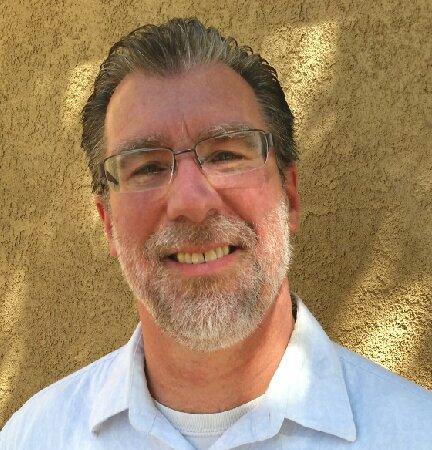
Trip Jennings
This weekend I saw Sinners, the latest movie from director Ryan Coogler. Coogler is best known for the Rocky sequel, Creed, and the two Black Panther films.
Some people have described Sinners as a vampire horror flick. OK, sure, there are bloodsuckers and copious amounts of the red stuff, with plenty of jump scares. But saying Sinners is a horror flick is like saying Chinatown, the 1970s noir classic, is simply a movie about a private eye hired to trail a husband who is believed to be cheating on his wife. Inspired by the early 20th century water wars between a growing Los Angeles and the water-rich Owens Valley,
Chinatown also is about money, power, and corruption — and how the country’s second-largest city came to be.
Like Chinatown, Sinners is about many things all at once — not the least of which is American history, Western civilization, and the many moral questions we should wrestle with as beneficiaries of this complicated legacy.
This sounds overly grandiose, I know. I am open to the suggestion that I am so bewitched by the film that I have lost all perspective. But in the days since seeing Sinners, I can’t shake it as a stream of novels, histories and cultural studies I’ve read over the years have leapt to mind as I’ve ruminated on Coogler’s film.
Some of these books are famous, some are not. I am thinking of novels such as The Color Purple by Alice Walker and Fledgling by Octavia Butler, Song of Solomon by Toni Morrison and Their Eyes Were Watching God by Zora Neale Hurston, as well as Sing, Unburied, Sing by Jesmyn Ward, Devil in a Blue Dress by Walter Mosley, White Tears by Hari Kunzri, The Underground Railroad by Colson Whitehead and American Gods by Neil Gaiman.
The histories loom just as large: The Warmth of Other Suns by Isabel Wilkerson, South to America by Imani Perry, How the Irish Saved Civilization by Thomas Cahill and Can’t Stop, Won’t Stop by Jeff Chang.
Here’s my confession: This column is as much about how reading can enrich one’s appreciation of a particular film, musical piece, artwork, or sculpture, as anything.
As I watched Sinners, scene after scene evoked a period of American history I’d read about, or an idea I’d encountered in a novel, or deep, uncomfortable questions I’d encountered in essays about the many influences that shape a musical genre, and who has the power to name it and, in turn, benefit financially.
Set in the 1930s Jim Crow South, Sinners is, of course, a commentary on White supremacy in the United States. But it is also about a particular time and place. As a native Southerner, I felt a twinge of homesickness for the heavy, humid air of summer and the idioms and cadences with which Southerners often speak to one another (Living around the country has taught me that White and Black Southerners have more in common than many people suspect, even if our politics sometimes separates many of us.)
But it is not just about Southern racism. It is about race in America as told through the lens of the Great Migration. From 1915 through 1970, millions of Blacks escaped the harsh conditions of the South — the terror of lynching, the backbreaking work and limited economic and educational opportunities — for a better life in the North, Midwest and West only to find that the utopia they expected north of the Mason-Dixon did not exist (Two major characters in Sinners set up the story when they return to their hometown of Clarksdale, Miss. after several years in Chicago.)
It also is about the tug-of-war between religious faith and the outside world (A major character in Sinners must decide between a peripatetic lifestyle of a blues musician and his father’s wish that he follow in his steps as a preacher. As a child of a Presbyterian minister who wondered why her seminary-trained son never followed her into the pulpit, I felt this storyline acutely).
It is, unexpectedly, also about Christianity’s destruction of and intermittent integration of Indigenous belief systems into its cosmology over the past 20 centuries as it spread across the globe. (This is represented in Sinners both by a female root doctor, a traditional healer in the rural Black South, and a 1,000-year-old vampire who remembers Christian priests taking his father’s land as they destroyed the pre-Christian culture made up of a mixture of pagan and Celtic influences.)
And it is also about music and its transcendent power to transport us to another plane of existence. At the same time, it is about who has the power to commodify this potent human creation.
I apologize if my musings give the impression that Sinners was dull, an exposition of complicated historical and sociological ideas. It is anything but. It is a fast-moving, entertaining film. After seeing it, in fact, I was shocked to learn its running time is longer than two hours. It felt much shorter.
And that is a mark of great filmmaking, when a movie chock full of this many ideas feels this tight.
That is my way of saying, I hope you’ll give Sinners a chance. It’s worth your time,
Trip Jennings started his career in Georgia at his hometown newspaper, The Augusta Chronicle, before working at newspapers in California, Florida and Connecticut. Since 2005, Trip has covered politics and state government for the Albuquerque Journal, The New Mexico Independent and the Santa Fe New Mexican. He holds a Master’s of Divinity from Columbia Theological Seminary in Decatur, Ga. In 2012, he co-founded New Mexico In Depth.
Artesia High to plant seeds from space
Artesia High School
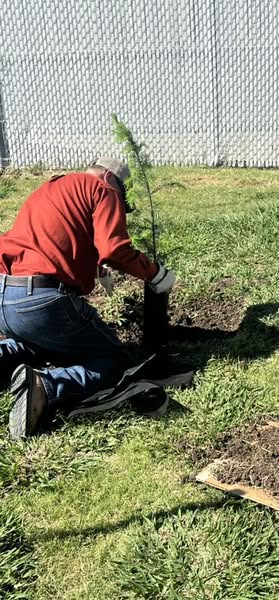
Exciting news for Artesia High School. We are thrilled to announce that we have received an Artemis Moon tree seed, part of NASA’s Artemis I mission (November 16 – December 11, 2022). This incredible gift commemorates the Apollo 14 mission, which carried the first Moon tree seeds into space. The Douglas Fir Tree can be found at Morris field as we embark on this journey of growth and exploration, celebrating the connection between education, art, and the cosmos!
More Information can be found at https://www.nasa.gov/learning-resources/nasa-stem-artemis-moon-trees/
The Artesia baseball team wins the District 4-4A title

Artesia Bulldogs’ pitcher Diego Morales celebrates a strikeout against Roswell earlier in the season. On Friday, Morales pitched 6 2/3 innings in the first game of a doubleheader as the Bulldogs defeated Goddard 3-2 and 2-0 to remain unbeaten in district play. The Bulldogs end the regular season at 20-6 overall and 9-0 in district play. JT Keith | Artesia Daily Record
Carlsbad hosts Summer Games

Daily Press Staff Report
Special Olympians from Lea County, Roswell, Artesia, Clovis and Carlsbad will compete in the Special Olympics New Mexico-Area IV Summer Games at Ralph Bowyer Caveman Stadium Saturday May 3.
“We will have 156 athletes and 28 unified partners competing on Saturday,” said Lee Kirksey, special Olympics area coordinator.
“Unified partners are people without disabilities who participate on teams with athletes.”
Kirksey said unified partners would participate in the 4X100 meter relays and Bocce ball.
She said flag football and other track field events are part of Saturday’s games.
Opening ceremonies start at 9 a.m.
The State Special Olympics Summer Games are May 30 through June 1 in Albuquerque.
Take out Iran’s nuclear facilities now
Cal Thomas
Before basketball’s 24-second rule, there was a tactic called freezing the ball. The team that was ahead would attempt to run out the clock by holding onto the ball as long as it could to deny the opposing team an opportunity to score.
That looks like what Iran is again doing – “freezing” negotiations while finishing the final stages of nuclear enrichment on the way to building a deliverable nuclear weapon.
It is important for the U.S. to take Iranian leaders at their word. Failing to do so and believing the regime will pull back on what some of their leaders have said is a religious mandate to wipe out Israel and “the great Satan” virtually guarantees the world will be faced with the greatest threat since the beginning of the Cold War with a nuclear-armed Soviet Union. Except the Soviets were atheists. The Iranian mullahs think doing what they claim to be Allah’s will, especially if it leads to martyrdom, guarantees them a ticket to Heaven.
The West has a history of not taking seriously the announced intentions of its enemies. Karl Marx and Friedrich Engels publicly stated their economic and political goals, which were fulfilled in the Bolshevik Revolution and the imposition of communism and socialism in Russia.
Adolf Hitler wrote “Mein Kampf” (My Struggle) in which he stated his hatred of Jews, a hatred incorporated in the Third Reich, which led to the Holocaust.
In each instance there were Western academics, journalists, even clergy, who excused, denied or rationalized these objectives. And in each instance millions of lives were lost in a forced famine and gulags (Stalin) and World War II (launched by Hitler).
Past deals with Iran, including initially agreed inspections by the International Atomic Energy Agency and the UN, have been violated. Why does anyone believe the Iranians will abide by a new agreement?
Writing for the publication JNS.org, New York attorney Eric Levine references an April 14 op-ed in The Wall Street Journal by former U.S. Secretary of State John Kerry in which Kerry” discusses what a good deal between the United States and Iran will look like if Iran is willing to reach an agreement with President Donald Trump. Kerry’s hypothetical new Iran deal bears no resemblance to the disaster that he and then-President Barack Obama forced down the throats of Americans in 2015, despite overwhelming bipartisan opposition.”
Trump’s special envoy, Steve Witkoff, has no experience dealing with people who claim a religious motivation for their actions. He is no more likely to succeed with Iran than Kerry and Obama who got rolled by the mullahs.
As John Bolton, President Trump’s former national security adviser, has written for the publication Independent Arabia: “Washington has every justification to take military action against Tehran’s proliferation efforts. Iran’s nuclear threat is not a problem merely for Israel, but for the entire world.
For 30 years, the ayatollahs have sought to become a nuclear power, to the detriment of everyone else. America has the wherewithal to eliminate this proliferation threat, and would be politically and morally justified in doing so. Helping Israel de-fang Iran follows quite logically.”
Iran is in a weak position, domestically and internationally. Regime change would be the best option, but the rulers are unlikely to willingly relinquish power. The time to strike Iranian nuclear facilities is now. Delay means we will likely have to face a nuclear armed Iran with the ability to launch ICBMs at Israel and American cities. Who thinks that is a risk worth taking?
<n>Readers may email Cal Thomas at tcaeditors@tribpub.com. Look for Cal Thomas’ latest book “A Watchman in the Night: What I’ve Seen Over 50 Years Reporting on America” (HumanixBooks).<n>