Home Blog Page 38

Ty Houghtaling writes on truth in love

0

Ty Houghtaling

Every Sunday morning thousands of preacher’s step into the pulpit to speak a word of truth in love. One goal of the preacher is to help people see themselves the way God sees them. It is a lofty goal. Another goal is to confront the church with expectations for how to live in this broken world. We do not always want to hear these hard truths, but they are good and hopefully spoken in love. Ephesians chapter 4 is a passage of Scripture that helps us understand why preachers preach. When Jesus left this world to return to Heaven, He left behind pastors and teachers to equip His people. These pastors and teachers were challenged to speak truth in love so that God’s people would no longer be deceived by the cunning and craftiness of deceitful people who scheme against God’s will. Maybe you like to be preached at, maybe not, but there is a reason why preachers preach. Read Ephesians chapter 4 and as you do you will realize that we Christians are called to a high standard of living before the Lord. I appreciate the Apostle Paul’s words in Ephesians chapter 4. They are hard truths spoken in love with the goal of challenging the church to grow in maturity. I need to hear these words and live them out and I am encouraged by the thousands of you out there that read your Bibles and live for the Lord. Thank you for being not just hearers but doers!

Movie filmed in Ruidoso nominated for Oscar

0

Todd Fuqua
Ruidoso News
tfuqua@elritomedia.com

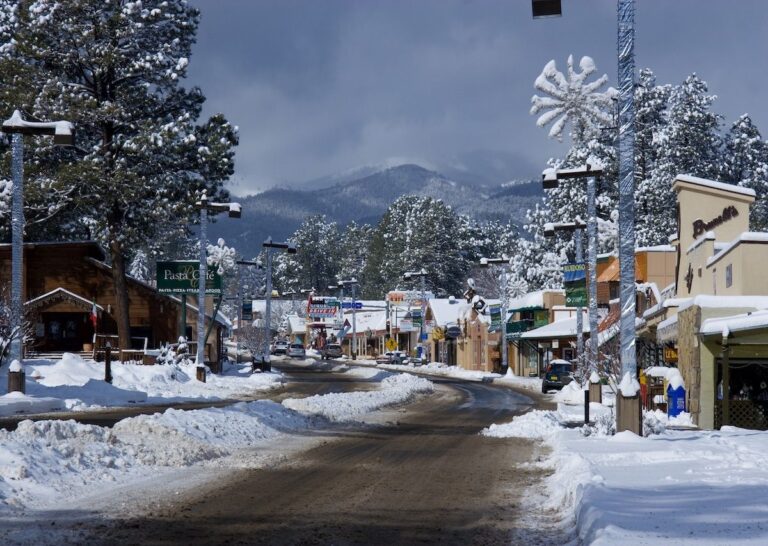
A movie filmed in Ruidoso has been nominated for an Academy Award for visual effects.

The film, entitled The Lost Bus, tells the story of school bus driver Kevin McKay, who had to navigate a bus carrying 22 children and their teachers to safety during the Camp Fire, which devastated much of Paradise, California, in 2018.

Directed by Paul Greengrass, The Lost Bus stars Academy Award-winning actor Matthew McConaughey as McKay. Filming was done in and around Ruidoso because the area’s landscape resembled the California region where the Camp Fire occurred, according to an account posted on the Discover Ruidoso tourism website. The local scenes were shot in the spring of 2024, before Ruidoso suffered its own devastation from the Salt and South Fork fire.

“Ruidoso’s soaring pines, winding mountain roads, and even parts of Midtown provided the perfect backdrop for several of the film’s most intense scenes,” read the report on discoverruidoso.com. “Additional filming took place in Santa Fe, Española, Truchas, and Glorieta, where New Mexico’s diverse landscapes helped recreate the desperate escape at the heart of the story.”

“It’s awesome and amazing that Ruidoso has a $200 million feature film that’s been nominated,” said Eddie Ryan, film liaison for the Village of Ruidoso. “All it does is show that this is a viable filming community. If it wins, Ruidoso will have an Oscar-winning film under its belt.”

Nominations for the annual film industry awards presented by the Academy of Motion Picture Arts and Sciences were announced Jan. 22. The awards, popularly known as the Oscars, will be presented Sunday, March 15, at Hollywood’s Dolby Theatre in Los Angeles, California.

The ceremony will be televised live on the ABC network and streamed on Hulu starting at 5 p.m. Mountain time.

Besides The Lost Bus, this year’s nominees for Best Achievement in Visual Effects are Avatar: Fire and Ash; F1: The Movie; Jurassic World: Rebirth; and Sinners.

The films were selected for their groundbreaking technical achievements, according to information posted on the Internet Movie Database.

Todd Fuqua is Editor for the Ruidoso News and can be reached at 575-937-0344.

Kayak fisherman prepares for jigging on ice

0

Mike Smith
Carlsbad Current-Argus
msmith@currentargus.com

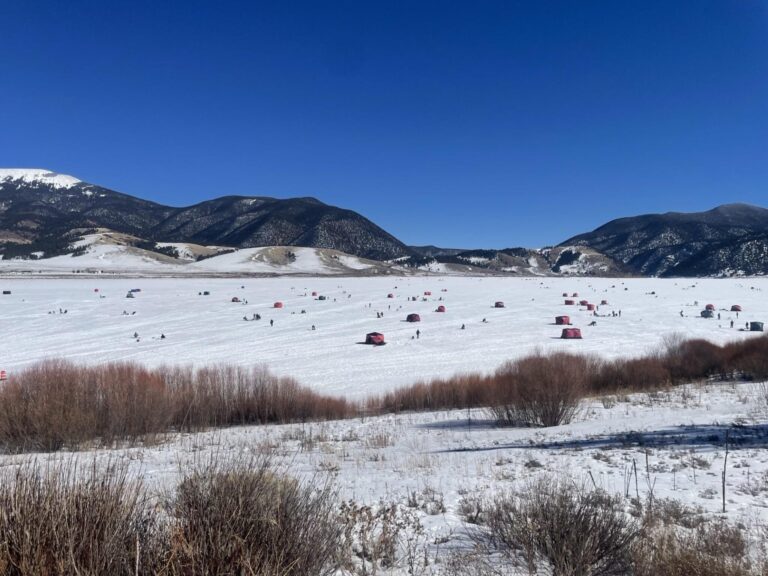
Artesia native Anthony Barrera loves to fish, from the shore or from a kayak. He has mixed feelings about his next fishing trip, a Feb. 6 outing on an ice-covered lake in northeastern New Mexico.

“This is my first-time ice fishing,” he said. “I’m excited to go fishing (but) not excited about the cold.”

The State Parks Division of New Mexico’s Energy, Minerals, and Natural Resources Department announced Jan. 27 that Eagle Nest Lake in the Sangre de Cristo Mountains was open for ice fishing after recent frigid temperatures thickened the ice to safe levels.

Barrera, a 31-year angling veteran who began kayak fishing in 2020, said he will take to the ice with two of his kayak fishing mates, Richard Ross and Victor Garde. Barrera and Ross work together at Sandia National Laboratories in Albuquerque and both met Garde during a kayak fishing trip.

“He (Ross) is the one that twisted my arm for about three years. He is giving me advice and pointers,” Barrera said.

Between now and fishing day, Barrera plans on tracking the weather forecasts and staying warm.

Staying warm might be difficult for ice fisherman but staying safe is possible and crucial, according to park officials.

In a news release announcing the opening of ice fishing season at Eagle Nest Lake, New Mexico State Parks director Toby Velasquez reminded anglers that “venturing onto frozen water always carries risk.”

“We once again welcome outdoor enthusiasts to enjoy the winter fishing season,” Velasquez said. “However, we advise them to take precautions to ensure that their outings are safe.”

The release included a list of safety precautions:

·       Don’t fish alone. Before you leave shore, inform someone of your destination and expected return time.

·       Go on the ice on foot – motorized vehicles are not allowed on the ice.

·       Always wear a life jacket (personal flotation device).

·       Be aware of and prepared for weather conditions. Dress in layers and wear thermal underwear, fleece or wool and wind and waterproof outerwear, especially for feet, hands and head. Take extra clothes, food, water, etc.

·       Be prepared for emergencies. Carry equipment such as ice picks or awls, rope, and cellular phones. Pack a first-aid kit and matches or other tools for starting a fire.

·       Keep fishing holes small and few. When drilling fishing holes with an ice auger, keep the diameter under eight inches. Bigger holes are not necessary to land fish and can create a safety hazard for others.

·       Stay cautious around known weak ice areas such as feeder streams, springs or cracks.

·       Disperse weight and fishing holes to avoid overcrowding in one area.

Anglers can call Eagle Nest Lake State Park at 575-377-1594 for more information and current updates on the lake’s ice conditions.

Mike Smith can be reached at 575-628-5546 extension-2361.

Around Town

0

Flourish: A Women’s Community

Coming in January we will gather twice a month for friendship, networking, personal development, more joy, and just plain fun! We gather at 5:30 pm the second and fourth Tuesday’s of each month starting Jan. 13 at Kith and Kin, in the back room. More info visit Facebook @flourishartesia.

—————–

President Trump’s Prayer Initiative:

President Trump has asked that the American People come together and pray for our Nation weekly until July 4th, 2026.

Artesia will be holding its prayer gathering every Thursday at Lucky Duck Restaurant, 2209 W. Main St, Artesia NM at 10-11am.

Come and go during the hour. Everyone is welcome Come join and pray for our Nation.

We’ll begin again on January 8th, 2026.

Come & go during the hour.  Everyone is welcome.

Shared prayers or silent prayers- whatever you feel comfortable with

—————–

PHLEBOTOMIST PROGRAM

Applications are now open for Artesia General Hospital’s certified phlebotomist program. To learn how to apply and for more information on this career opportunity, call 575-736-8178 or email foundation@artesiageneral.com.

—————–

GRIEF SUPPORT

A Grief Group meets at 1:30 p.m. each Tuesday in the Saint Damien Center at Our Lady of Grace Catholic Church, 1111 N. Roselawn Ave. Free support is offered in both English and Spanish. For more information, contact Nora at 575-308-3248.

—————–

P.A.L.S.

People about losing safely meets at 9 a.m. Wednesdays at the Senior Center. For more information, call the Center at 575-746-4113.

—————–

ALZHEIMER’S/DEMENTIA SUPPORT GROUP

Every other Tuesday  from 6:30pm-7:30pm at Artesia Healthcare and Rehabilitation Center -1402 Gilchrist Ave. RSVP to Helen at 575-746-6006.

Warming trend awaits New Mexico anglers

0

Information and photos provided by the New Mexico Department of Game and Fish

Winter Storm Fern brought snow and colder temperatures to parts of New Mexico last weekend. Projected mild temperatures should attract anglers to their favorite lake or stream this week.

In northern New Mexico, along the Rio Grande River, streamflow below the Taos Junction Bridge on Wednesday morning was 411 cubic feet per second (cfs). Fishing for brown trout was very good using red worms.

Near Silver City at Bill Evans Lake, fishing for trout was good when trolling trout lures from a kayak and when using PowerBait from the bank.

Near Truth or Consequences at Elephant Butte Lake, fishing for white bass was very good when using Rat-L-Traps.

Rainbow trout fishing was very good when using worms at Escondida Lake. Fishing for largemouth bass was fair when using spinners.

In Lincoln County at Bonito Lake, trout fishing was fair to good using Yellow PowerBait and Rainbow Glitter PowerBait and slow using rooster tails, Kastmasters and Dardevle lures.

This fishing report, provided by the New Mexico Department of Game and Fish, has been generated from the best information available from area officers and anglers. Conditions encountered after the report is compiled may differ, as stream, lake and weather conditions alter fish and angler activities.

Tie legislator pay to performance

0

Jose Garcia

Milan Simonich in the Jan.19 issue of the Santa Fe New Mexican, lays out the shifty tricks legislators played on the public in the last few years to increase their take-home pay. First, they raised their pensions by 27% in 2022, during the pandemic when no one was paying much attention, citing inflation. Two years later Rep. Harry Garcia (D-Grants) offered up a “cleanup” bill to increase pensions on top of that by 50% as the oil production that many progressives love to hate was adding billions of new dollars to the state’s treasury. These increases allow legislators with 10 years of service to retire on a lifetime salary of $29,110 from a part-time job that requires attendance only 90 days in a two-year term, fully a 90% increase in two years. If you were a state government employee earning $50,000 in 2021, with the same increases the legislature gave itself, equivalent increases would have given you a salary of $95,000 in 2024. Did you get this kind of raise? During those years PERA pensions increased by a total of about 3%, after an inflation rate of about 20%.

Full disclosure: I receive a state pension based on ERA and PERA service. Am I resentful of the legislature helping itself to a 90% increase for its service when I only got 3%? You bet I am.

Legislators, feeling sorry for themselves, also helped themselves to taxpayer money to provide for a legislative assistant for each one, a move touted loudly by legislators as a step in “professionalizing” the legislature. But now, I am occasionally told, when you try to call a legislator on the phone you are asked on voicemail to contact the legislative assistant. This is hardly a step in keeping with the concept of a citizen’s legislature as baked into the New Mexico Constitution. Abuse is already popping up. And we have learned from decades of observation how malleable some legislators can be with their vote after a steak dinner and a glass of wine or two at a lobbyist’s expense. What guarantee will we have of better government if we now provide legislators with salaries? Particularly if gerrymandering continues to reduce the ability of candidates out of line with their party to have a chance at beating an incumbent?

Now, Simonich asserts, Cristina Parajón (D-Bernalillo) is introducing legislation to float a constitutional amendment for a vote allowing salaries for legislators. This, as envisioned by Parajón, will provide a salary in 2024 money of about $64,000, going up in lockstep as NM median incomes increase over time. No such legislation is proposed for state government workers’ salaries.

But instead of talking about fairness in the past, let me make a modest proposal for the future that might improve the performance of the legislature enough for voters to swallow a constitutional amendment to provide salaries for legislators. The strongest case for salaries up to now has been that legislators typically come from only three buckets: the rich, the retired, and the highly resourceful (the latter covering a lot of ground). Salaries should help create a legislature that is more like most New Mexicans, a move in the direction of greater democracy.

Under my proposal salaries would be tied to legislative performance in improving state government. Exactly one year after U.S. News & World Report moves New Mexico up from 50 out of 50 in education to, say, 45, a constitutional amendment allowing for salaries will be put up for a vote. Think the task is impossible? If Mississippi could move up dramatically from 48 in 2014 to the low 30s (U.S. News & World Report), why can’t we, especially with incentives to do so?

Should the amendment allowing salaries be approved by the voters, future increases in legislative salaries would be tied to a specific metric of improvement in the operations or policy outcomes of state government. Parajón wants a salary of $64,000? Sure. But New Mexico needs first to improve its standing in education. Want a cost-of-living increase after that? Sure, as soon as New Mexico’s ranking in health care goes up 5 places. Instead of the usual excuses given by legislators for poor performance in health care, education, the condition of our roads, efficiency metrics for the operations of state agencies, etc., only tangible progress must happen if you want a salary increase. That’s the way CE0s and professional athletes often get salary increases. Why can’t we adopt this here?

Dr. Jose Z. Garcia is a former New Mexico Secretary of Higher Education, retired University PhD professor of political science, is active in state politics and a columnist for El Rito Media. He lives in Las Cruces and also frequently spends time in Santa Fe where he maintains a residence.

Lujan Grisham-backed crime bills blocked by lawmakers

0

Alex Ross
El Rito Media
aross@elritomedia.com

Lawmakers blocked a proposal to give more power to district judges in New Mexico to deny bail for those charged with violent crime.

The House Consumer and Public Affairs Committee on Thursday, Jan. 29, tabled the measure on a 4-2 party-line vote, with the committee Democrats supporting the motion to table while its two Republicans opposed it.

Once tabled, the committee must take separate vote to bring the bill back up for consideration and potentially a vote to pass. Legislation must clear two committees in the chamber where it originates before going before the full body.

House Joint Resolution 2 would put a proposed constitutional amendment on the ballot in the Nov. 4 election that, if approved by voters, would allow a judge to presume a person is a danger to the public if they are charged with a dangerous or violent felony or represent a flight risk.

Currently, to incarcerate someone charged with a felony before a trial, the prosecution must prove in a separate court hearing that the defendant is a danger to the public.

HJR 2 would allow a court to determine a defendant was such a risk without a hearing, by deciding if the offense was a “serious, violent offense,” such as murder or aggravated battery. The defense would be allowed to rebut such a decision.

The amendment would have also allowed someone to be held without bail if they are deemed a flight risk. Reps. Andrea Reeb (R-64) of Clovis and Nicole Chavez (R-31) of Albuquerque, sponsored the resolution.

Lujan Grisham, a Democrat who will term out of office at the end of the year, has been a proponent of the measure and other enhanced criminal penalties, putting her at odds with much of her own party, which controls both legislative chambers.

Jonathan Ibarra, a public defender and the president of the New Mexico Criminal Defense Lawyers’ Association, argued during the public comment portion of the meeting that HJR 2 would unduly shift the legal system away from placing the burden of proof on the prosecution to prove guilt.

“The presumption of innocence should mean something,” he said.

The committee’s two Republicans, state Rep. John Block (R-51) of Alamogordo and Stefani Lord (R-22) of Sandia Park, expressed outrage that HJR 2 did not pass the committee.

The two are frequent critics of Lujan Grisham but urged the governor to call a special session for lawmakers to reconsider HJR 2.

“It’s shameful that this has not passed this committee, and so this is a message for the governor: ‘Please call a special session, demand this be on your call,’” Block said.

When reached for comment about Block’s suggestion, Michael Coleman, the governor’s communications director, told El Rito Media that all options are on the table when it comes to Lujan Grisham’s priorities and that she still believes New Mexico needs bail reform.

“Everyone knows that Gov. Lujan Grisham is not afraid to call a special session if it’s in the best interest of New Mexicans and that hasn’t changed,” Coleman said.

Lujan Grisham has called seven special legislative sessions since she was sworn into office in 2019.

That included one in July 2024, where she called lawmakers back to Santa Fe to act on a series of public safety proposals after they did not consider them during the regular 30-day session that year.

The session ended hours later with lawmakers only approving relief funds for the Ruidoso area in the wake of the South Fork and Salt fires earlier that spring.

2nd-degree murder penalty increase shot down

The committee on Thursday also tabled another priority of Lujan Grisham’s, House Bill 59, which would have increased the state’s maximum penalty for second-degree murder.

Sponsored by Reeb, Block and Rep. Luis Terrazas, R-39 of Santa Clara, HB 59 would have increased the maximum penalty for second-degree murder from 18 to 25 years in prison.

Reeb, a longtime prosecutor, said the revision is necessary because the current maximum sentence is the same as that for certain other non-violent offenses such as first-degree kidnapping and drug trafficking.

“So, if you kill somebody, you’re treated the same as someone who’s a second-time drug trafficker,” Reeb said.

Critics on the committee noted that the maximum penalty for second-degree murder was elevated in 2024 when the legislature passed, and Lujan Grisham signed a bill to increase the second-degree murder penalty from 15 to 18 years.

“So, it’s been in effect for less than two years,” said Rep. Liz Thomson (D-24) of Albuquerque, arguing not enough time had passed to rate the effectiveness of the statute.

Lolita Moskowitz, staff attorney with ACLU New Mexico, said she believes that bills like HB 59, which increase sentences, do not result in improved public safety.

“Various proposals this year seek to engage the same response, increased penalties, which will not deliver the community safety that New Mexicans deserve,” Moskowitz said.

Legislative reporter Alex Ross can be followed on X @alexrosstweets.

Winter storm brings relief to New Mexico ski resorts

0

Mike Smith
Carlsbad Current-Argus
msmith@currentargus.com

The 2025-2026 ski season in New Mexico has been hindered by mild temperatures and sporadic snowfall but last weekend’s winter storm offered hope for the remainder of the season as resorts benefited from arctic air that brought heavy snowfall, said the executive director of the trade organization Ski New Mexico.

“This snow was a huge help,” Christy Germscheid said.

She said the storm allowed operators in northern and southern New Mexico to open more trails.

“A nice snowfall gives them the ability to pack natural snowfall on those runs,” she said. “They can move equipment around as they have water and electricity.”

Although she welcomed the snow, Germscheid said ski resorts across the state need more as they endure the second season in a row with limited snowfall.

“Last year was not a great year,” she said, noting that snowfall was down 65% percent from 2023-24 when the state’s ski resorts had a combined 193 inches of snow.

But the recent cold snap provided assistance for Mother Nature, Germscheid said, producing ideal conditions to stock up on human-made snow.

Reported snow conditions as of Tuesday, Jan. 27

(Information provided by Ski New Mexico)

Angel Fire Resort had a 21-inch base depth with 59 of 95 trails open.

Pajarito Mountain had a base depth of 10 inches with 17 of 53 trails open.

Red River Ski and Summer Area had a 20-inch base depth with 27 of 64 trails open.

Sandia Peak Ski had a 15-inch base with 2 of 4 trails open.

Sipapu Ski and Summer Area had a base depth of 20 inches with 22 of 44 trails open.

Ski Apache had a 33-inch base with 40 of 55 trails open.

Ski Santa had a 30-inch base depth with 82 of 89 trails open.

Taos Ski Valley had a 35-inch base depth and 85 of 120 trails open.

Note – snow conditions can change after this report is compiled.

Mike Smith can be reached at 575-628-5546 extension-2361.

Political power and US growth

0

Tom Wright

It seems like a decade has happened this past month, from Nicolás Maduro being captured in Venezuela to President Trump’s rhetoric on the conquest of Greenland. Maduro says he was kidnapped. Some say it was a misuse of military power. The EU nations claim President Trump is destroying NATO to assuage his ego, which is demanding Greenland come under U.S. control. Like it or not, politics has always been and remains a power game of negotiations.

Let’s take a little trip back in our history. James Monroe was a Founding Father, Ambassador to France, Secretary of State, Secretary of War, Virginia Senator and Governor, and our fifth President. His Monroe Doctrine of hands off our hemisphere, remains a foundational pillar in our foreign policy. As President, Monroe saw the need to allow Latin American countries to establish independence, free from further influence of European colonizers. His Doctrine has been invoked by Presidents Ulysses S. Grant, Theodore Roosevelt, John F. Kennedy, Ronald Reagan and Donald Trump.

William Seward was President Abraham Lincoln’s Secretary of State, serving in that post during the Civil War. In 1867, Britain occupied Canada. Russia owned Alaska, was broke and feared Britain would take Alaska by force. Secretary Seward quietly negotiated the sale of Alaska to the U.S. for $7.2 million. A pretty good deal.

In 1848, the U.S. was at war with Mexico over its domination of much of the Southwest. The Treaty of Guadalupe Hidalgo ended the Mexican-American War and transferred 525,000 square miles to the United States, including California, Nevada, Utah, Arizona, New Mexico and parts of Colorado and Wyoming.

In 1844, presidential candidate James Polk ran on “54-40, or Fight,” promising, if elected, he would annex the Oregon Territory, which was claimed by Spain, Britain and the U.S. Polk’s promise of territorial expansion based on Manifest Destiny got him elected. In 1846, the U.S. was at war with Mexico and President Polk had no intention of also fighting Britain, but he knew supplying British troops in the far Pacific northwest, would be difficult. So, he negotiated a settlement at the 49th parallel, which gave us Oregon, Washington State, Idaho and parts of Wyoming and Montana.

Polk had foreseen the war with Mexico. He knew Mexico considered the treaty of Velasco invalid. While it was signed in 1836 by President Santa Anna, when his army was defeated at San Jacinto and granted Texas independence, it was signed under duress. Polk knew the annexation of Texas in 1845 would likely start a war, which he also knew the U.S. could win and the vast area of Texas became a state. In 1848, Mexico finally ceded Texas along with the other gains of the Guadalupe Hidalgo treaty. For these territorial gains, James Polk is considered the most effective one-term president.

In 1803, President Thomas Jefferson feared that France, under aggressive leader Napoleon Bonaparte, might close the strategic port of New Orleans and strangle commerce for the westward expanding United States.

Jefferson went to work, creating authority to buy foreign territories. He knew Napoleon had a slave rebellion in Haiti, a threat of war with Britain and no money in the French Treasury. As Secretary of State, James Monroe was President Jefferson’s principal negotiator with France. Jefferson sent a delegation headed by Monroe to Paris and the U.S. bought 828,000 square miles for $15 million. No war. The Louisiana Purchase was just a good real estate deal.

Today, those upset with President Trump over his bid to acquire Greenland from Denmark need to understand how the U.S. became the world’s dominant power. What President Trump has done to protect our borders, expel illegal immigrants, protect our national security, the right of citizenship, our national defense and public health is nothing new to our history. It is America First and that is not new.

The media is quick to point out his approval rating has taken a dive to 42.5%. However, he has good company with our last three presidents who also occupied 42-43% at the end of their first year. Republicans rate him at 90% approval. Congressional job approval is now 22.7% with disapproval at 66.3%.

The U.S. became the nation we are by dealmaking. Some may not like the tactics of President Trump, but he will find good company in the history books.

Tom Wright is a Santa Fe columnist and El Rito Media investor.

Immigrant detention bill heads to House Floor

0

Alex Ross

El Rito Media

aross@elritomedia.com

A ban on local governments entering contracts to house undocumented immigrants was headed to a vote on the floor of the New Mexico House of Representatives.

House Bill 9 was advanced out of the House Judiciary Committee on Wednesday, Jan. 28 on a 7-4 vote with all Democrats in support and Republicans voting against.

The vote came a week the House Consumer and Public Affairs Committee voted to support the bill, also along party lines. It will next be debated and voted upon by all 70 members of the House, and if passed by that chamber, will go to the Senate for consideration.

If HB 9 reaches Gov. Michelle Lujan Grisham’s desk, she will have until March 11 to sign or veto it.

The legislation, also known as the Immigrant Safety Act, would prohibit public bodies in New Mexico – such as counties, municipalities and school boards- from entering into agreements with U.S. Immigration and Customs Enforcement (ICE) and private contractors to house people on civil immigration violations.

Cibola, Otero and Torrance counties currently have such agreements where such detention centers operate, and HB 9 would force them to exit those contracts.

Similar proposals to block the agreements were introduced in past years, including during the 60-day session in 2025 where that year’s version passed the House but died in the Senate.

State Rep. Eleanor Chavez (D-26) of Albuquerque, one of the bill’s sponsors, pushed the proposal in response to concerns about conditions at New Mexico’s three facilities used to house undocumented immigrants.

But the proposal has taken on greater urgency this year as the tactics used by ICE and U.S. Customs and Border Protection in Minneapolis and elsewhere have sparked nationwide outrage.

Most recently a group of ICE agents shot and killed 37-year-old Alex Pretti during a demonstration in Minneapolis, inflaming tensions and leading to debate in the media on the agency’s tactics.

“We should be focused on taking care of our communities. We should refuse to continue propping up this mass detention center that puts so many people in harm’s way,” Chavez said.

Fernanda Bada, co-executive director of the New Mexico Dream Team, an immigrant advocacy group, said detention facilities were a danger to New Mexicans, and people who are undocumented that reside in the state.

“Our state has a choice. We can continue allowing detention centers to harm families and traumatize children, or we can pass the Immigrant Safety Act and choose dignity, families, safety and care,” she said.

Last week, Sen. Jim Townsend (R-34) of Artesia, sent a letter to the U.S Department of Justice, arguing H.B. 9 could violate the U.S. Constitution by running afoul of federal policy.

He urged the Department of Justice to publicly oppose H.B. 9 “to ensure that New Mexico does not enact legislation that conflicts with federal law and undermines federal supremacy.”

Leaders from communities where some of the facilities are located also expressed worry about closing or reducing operations at facilities they said provide jobs and economic benefit to rural areas.

Virgil Brummel, a member of Milan Board of Trustees, the governing body for the Village of Milan in Cibola County, said ending immigrant detention at the Cibola County Corrections Center would trickle down to several segments of his community.

“We’re going to close out this facility, and we’re going to lose a lot of jobs, and it’s going to trickle down into our school systems, which are already taxed, and we just can’t afford it,” he said

Bill prevents ICE from deputizing locals

At Wednesday’s hearing, Speaker Javier Martinez (D-11) of Albuquerque, who sits on the Judiciary Committee, introduced an amendment adding language to H.B. 9 to also block ICE from deputizing local law enforcement through contracts called 287(g) agreements.

Such agreements allow local law enforcement to be aid in immigration enforcement. Specifically, the amendment prohibits local agents from taking part in the investigation, detention, transportation or removal of people who are undocumented.

The committee accepted Martinez’s amendment on another 7-4, party-line vote.

“That is very important to me, because our law enforcement officers should not be doing the work of the feds,” Martinez said.

According to ICE’s website, the agency has 1,373 active “287(g) agreements” across 35 states. The only agreement that exists in New Mexico is with Curry County for a warrant service officer.

Opponent of the bill State Rep. Andrea Reeb (R-Clovis), whose district includes Curry County argued the county’s agreement only allows a specially trained officer to serve warrants to undocumented individuals housed in the Curry County Detention Center.

People suspected of immigration law violations are not housed there, but the agreement allows immigration warrants to be served by local police to inmates detained on other charges and found to be undocumented.

Reeb said blocking such an agreement and would hamper local law enforcement by not allowing police to work “even in a limited capacity” with ICE.

“I just feel like we’re doing something that could actually open a door to a worse situation,” Reeb said.

Legislative reporter Alex Ross can be followed on X @alexrosstweets.