Home Blog Page 43

CULINARY CONFIDENTIAL: Decadent Monte Cristo with Pear Salad and Pear Vinaigrette

0

Bruce Lesman

The Monte Cristo is indulgence at its finest — savory, sweet, crisp, and rich. This version elevates the classic sandwich with quality ham and turkey, Swiss cheese, and a light dusting of powdered sugar, paired with a fresh pear salad and elegant pear vinaigrette. Serves 4–6.

Ingredients – Monte Cristo

• 12 slices brioche or challah bread

• 8 oz quality ham, sliced

• 8 oz roasted turkey breast, sliced

• 8 oz Swiss cheese, sliced

• 3 eggs

• 1 cup whole milk or half-and-half

• ½ tsp salt

• ¼ tsp white pepper

• Butter for griddle

• Powdered sugar for dusting

• Raspberry preserves for serving

Preparation

Whisk eggs, milk, salt, and pepper in a shallow bowl. Assemble sandwiches with ham, turkey, and Swiss cheese. Dip each sandwich into the egg mixture, coating both sides. Melt butter on a griddle over medium heat and cook sandwiches until golden brown on both sides and cheese is melted. Dust lightly with powdered sugar and serve with raspberry preserves.

Pear Salad

• 4 ripe pears, thinly sliced

• 4 cups mixed greens

• ½ cup crumbled blue cheese or goat cheese

• ¼ cup toasted walnuts or pecans

Pear Vinaigrette

• 1 ripe pear, peeled and diced

• 2 tbsp pear juice or white wine

• 2 tbsp white wine vinegar

• ½ cup olive oil

• Salt and white pepper to taste

Preparation

Blend vinaigrette ingredients until smooth. Adjust seasoning. Toss greens with pears, cheese, and nuts. Drizzle lightly with vinaigrette just before serving.

Bruce Lesman is a food columnist and culinary creative known for indulgent desserts, classic Americana, and restaurant‑style comfort food. His Culinary Confidential column celebrates nostalgia, technique, and just a touch of showmanship. Bruce has held prior positions as Corporate Food & Beverage Director, Cunard and Seabourn Cruise Lines, Lead Culinary Consultant, Royal Caribbean Cruise Lines, Vice President, Canyon Ranch Wellness Resorts.

Artesia officials question state pollution law

0

Rebecca Hauschild
For the Artesia Daily Press

Artesia city officials voiced support for Xcel Energy as the utility provider sought an exemption from a state law aimed at reducing carbon emissions from energy production.

Hayley Klein, city administrator, said at the City Council’s Tuesday, Jan. 13, meeting that Xcel was planning to apply for the exemption through the Public Regulation Commission, the state agency that oversees utilities throughout the state.

City councilors took no official action on the matter at their recent meeting, but could vote at a future meeting to send a letter of support for Xcel to the state of New Mexico.

At issue is the Energy Transition Act, a signature piece of legislation pushed by New Mexico Gov. Michelle Lujan Grisham and signed into law in 2019. The bill called for New Mexico energy production to be 100% “carbon-free” by 2045.

The bill also called on the state’s administration, namely the New Mexico Environment Department and Energy, Minerals and Natural Resources Department, to pursue projects such as renewable energy intended to reduce air pollution in the state.

Xcel sought to be exempted from such requirements as the company seeks to increase natural gas production in the Permian Basin region, both in New Mexico and Texas.

The company planned to build a transmission line this year from its power plant in Gaines County, Texas, across the state line into New Mexico, and requested an exemption from the state to allow for associated emissions.

Mayor Jon Henry and city officials said the booming southeast New Mexico oilfields were in need of more power as fossil fuel production, and that a lack of electricity could lead to wells being shut in.

“Right now, a lot of the power in the oilfield is coming from diesel generators,” Klein said.

Election day in March

March 3 will be election day in Artesia. The deadline for candidates to file was Tuesday, Jan. 13.

Early voting will take place Feb. 3-28 at the City Clerk’s Office, 511 W. Texas Ave. Absentee ballots can be requested from the clerk’s office until Feb. 24.

Election day polling places will be the City Clerk’s Office; the Artesia Senior Center at 202 W. Chisum Ave.; and Faith Baptist Church at 401 S. 20th St.

Other business

The council agreed to spend $40,000 to finish the mural on Eagle Draw and to add $500,000 to a housing incentive program that provides up to $10,000 per rooftop to developers.

Another $4 million was budgeted for overall city infrastructure construction, including road repairs, sewer lines and other city services.

Councilors also approved $580,309 in start-up costs for the Artesia Recreation Center.

Infrastructure Director Byron Landfair reported there are 196 days remaining on the 26th Street project. City staff was completing curb and gutter work, he said, with paving expected in mid-February.

Artesia Police Chief Kirk Roberts reported a 20% reduction in violent crime such as robbery, murder, robbery, rape, sexual assaults, child abuse and domestic battery in the last five years. The Artesia Police Department answered 24,376 calls for service in 2025, which is an average of 2,026 calls per month or 67 calls per day, Roberts said.

Also in 2025, Roberts said, the department received 959 requests for records and hired 12 officers from a pool of 108 applicants.

Fire Chief Kevin Hope reported the department experienced a 5.5% increase in total call volume in 2025, compared with the year before.

Charles Sullivan: Change needed amid Democrat dominance

0

Charles Sullivan

There are two taboo facts that New Mexico’s television stations and major newspapers almost never discuss. The first is that no state in the United States has had single- party Democratic rule at the state level longer than New Mexico. The second is that there is any connection between decades of single-party Democratic rule and the current state of affairs in New Mexico.

Here are a few examples of Democrat dominance since 1931.

State legislature: The last time Republicans held a majority in both houses of the N.M. Legislature at the same time was 1930.

N.M. Supreme Court. The last time Republicans held a majority on the N.M. Supreme Court was in the 1920s. Currently, all five justices on the Court are Democrats.

N.M. Court of Appeals: The N.M. Court of Appeals was created in 1966 and

has never had a Republican majority. Currently nine of the ten judges on the Court are Democrats.

Secretary of State: Republicans have held the position for 4 years since 1931. Attorney General. Republicans have held the post for 4 years since 1931.

And what has nearly 100 years of single-party Democratic rule brought New Mexico? Here are a few examples.

The nation’s worst ranked K-12 public school system, even worse than the deplorable public schools of Washington, D.C.

A state where 46% of its residents over 16 years of age are functional illiterates.

The state with both the highest violent crime per capita and the highest property crime per capita in the nation.

A state with the highest percentage of welfare recipients of any state.

A state with the second highest poverty rate of any state.

A state with anemic population growth compared to its neighbors. In the 1930 census, neighboring AZ had 12,000 more residents than NM. Today, AZ’s population is 5,552,000 larger.

A state with the nation’s 4th highest per capita suicide rate despite having great weather.

A state with one of the highest Covid death rates per 100,000 in the country despite a nearly totalitarian lockdown by the ruling party.

What are we to make of these stunning facts about New Mexico? Would it not be logical for the Republican Party of New Mexico to be screaming at the top of its lungs, “Good God, look at what the Democrats have done to the state. They’ve had complete control for nearly 100 years and the state is a shambles. Why do you keep voting for these people and what hope is there for fundamental change if they keep running the state?”

And yet, the response from the Republican Party has been crickets. I understand, for them it is embarrassing to lose to a group (Democrats) who have driven this state into a ditch. I’ve lived in the state for nearly 50 years and have never heard the Republican Party or a state-wide Republican Party candidate discuss Democrat Party single party rule for most of the last 100 years. Is it stupidity? Lack of cojones? A combination of both? So, yes, the Republican Party of New Mexico is the nation’s most incompetent.

Thousands of New Mexicans are simply unaware of the historical fact that the state has had single party Democrat rule for most of the last 100 years. That’s because of the nearly total news blackout on the subject by most of New Mexico’s news media, and the Republican Party’s silence on the subject. If more people knew this fact, it could make a big difference.

The Republican Party of New Mexico needs a fighter like Lee Atwater to turn it around. Until it gets one, it will probably remain the junior varsity team.

Charles Sullivan is a retired attorney who has lived in New Mexico since 1978.

3 Artesia soccer players named to All-State squads

0

JT Keith
Artesia Daily Press
jtkeith@elritomedia.com

The New Mexico High School Coaches Association has named Moises Corza a first-team All-State forward. Cutter Summers made the second team as a defender, and Anton Wodarz was also named to the second team as a midfielder.

Artesia coach Phillip Jowers said he is super-proud of his players being named to the All-State team. Cutter and Corza have played for him for five years.

“Those kids put the work in,” Jowers said. “They deserve everything they have received. I am so proud of them. It did not happen overnight. I have had these students for five years, and they have benefited from an extra year of play. They have seen everything on the soccer field. I will miss these kids. I wish I could have Anton for another year as well.”

After making All-State, Corza said that his favorite quote is from Philippians 4:13: “I can do all things through Christ who strengthens me.”

Upon being named an All-State player, Summers said: “Praise the Lord.”

“There is strength in stillness,” Wodarz said. “My grandmother used to say that, and I will use that now on making All-State.”

The honors follow the recent naming of Jowers as 4A Coach of the Year

It was a banner season for the Artesia boys, who boasted a 13-game winning streak in the middle of the season. The Bulldogs were also undefeated (6-0) in district play.

Jowers said he wanted to see his team take the next step in its trajectory of progress: win a state quarterfinal game.

That happened when the Bulldogs defeated Los Alamos in overtime after Wodarz made a kick with 6:32 left to play at Robert Chase Field.

The win advanced the Bulldogs to the semifinals, where they played the eventual champions, St. Pius X.

Artesia won a record 18 games in a season, finishing 18-4, firsts in program history.

JT Keith can be reached at 575-420-0061, or on X @JTKEITH1.

Gov. Lujan Grisham outlines priorities in State of the State speech

0

Alex Ross

El Rito Media/aross@elritomedia.com

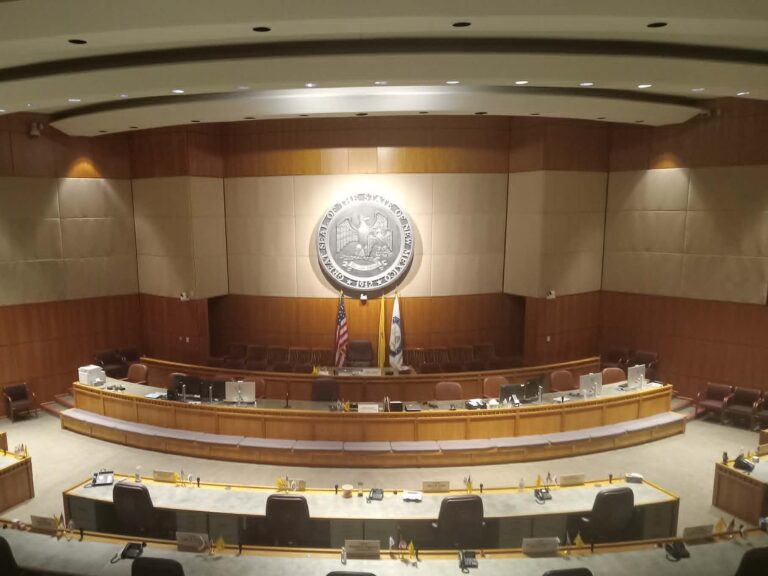
Gov. Michelle Lujan Grisham pushed for lawmakers to act on health care, child care and public safety in her State of the State address Tuesday in Santa Fe.

The speech, opening this year’s legislative session was the final for Lujan Grisham, a Democrat who took office in 2019 and is term limited when her tenure ends in 2026.

For over an hour, Lujan Grisham, a Democrat, urged lawmakers to not shy away from tackling longstanding challenges that face the state. The 30-day legislative session which ends Feb. 20. 

“With one year left, there’s still work to do, and progress to make. Let’s double down and do it all,” she said. 

Lujan Grisham touted various actions such as free universal school lunches, measures to make college more affordable and reduced taxes designed to make life more affordable in a state long plagued by generational poverty. 

Lujan Grisham also reiterated her call for the Legislature to approve $160 million in recurring funding to the Early Childhood Education and Care Department to make her proposal for universal childcare a reality. The proposal, announced in September 2025, would provide no-cost childcare to every family in the state regardless of household income. 

However, that same initiative is facing hurdles in the Legislature, as lawmakers put forth a budget recommendation that would increase spending for the Early Childhood Education and Care Department by $13.6 million, a spending bump much smaller than that requested by the Department 

In her address, Lujan Grisham argued that expanded access to childcare will yield better educational outcomes. 

Healthcare has been a dominant issue discussed by lawmakers ahead of the current legislative session. Lujan Grisham shared their enthusiasm, directing them to enact medical malpractice reform and approve bills to allow New Mexico to enter into interstate medical licensure compacts.

The compact would streamline the process for medical professionals and social workers from other states to become qualified to work in New Mexico and help alleviate the state’s shortage of health care professionals. 

Other healthcare proposals Lujan Grisham called for would eliminate the state’s gross receipts tax on medical services and build a medical school at the University of New Mexico to bolster enrollment and train more healthcare professionals. 

The governor has long clashed with members of her own party when it comes to tackling crime and public safety. On Tuesday, she reiterated her call for lawmakers to take action. 

“Any serious approach to public safety starts here: people who are committing dangerous, violent crimes must be held accountable – without hesitation, and without exception,” Lujan Grisham said. 

She also called for a rewrite of the state’s juvenile code to address youth crime, an assault weapons ban and enhanced penalties for felons found in possession of firearms. The governor also reiterated her support for reforms to the state’s system of pre-trial detention, so that individuals charged with violent felony offenses can be held behind bars pending trial.

Legislative reporter Alex Ross can be followed on X @alexrosstweets.

Child dies in Ski Apache accident

0

Staff report

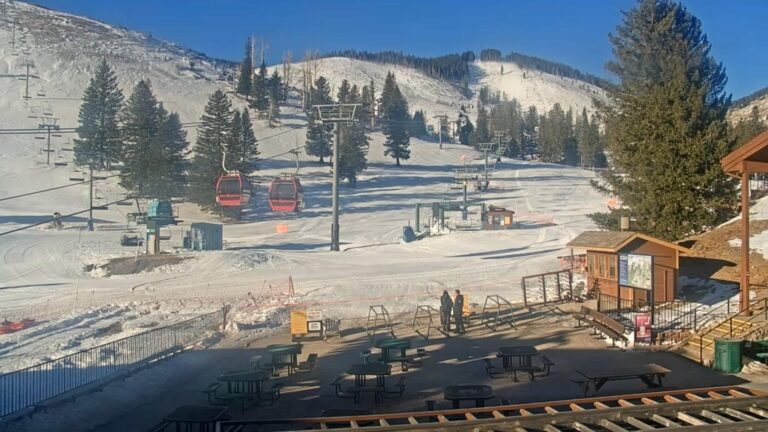
Officials with Ski Apache have confirmed the death of a child involving a ski lift at Ski Apache which occurred Jan. 6.

According to a release from the resort, Ski Apache Ski Patrol responded to provide emergency medical care, but passed away due to the injuries. No other information was given by the release while the incident remains under review.

“Our hearts are with the child’s family during this incredibly difficult time,” said Ski Apache General Manager Ken Marlat in the release. “We extend our deepest condolences and ask that their privacy be respected.”

The release went on to say that Ski Apache is fully cooperating with appropriate authorities, and protocols are being reviewed. No other information was available.

Winter storm benefits New Mexico ski resorts

0

Mike Smith
Carlsbad Current-Argus
msmith@currentargus.com

A winter storm last week produced beneficial snowfall as New Mexico’s ski industry looks for increased snow chances during the second half of ski season.

According to the Ski New Mexico website, some northern New Mexico resorts received snowfall amounts in the double digits during a five-day period from Jan. 9-13.

“It was such a blessing,” said Christy Germscheid, executive director of Ski New Mexico.

“We were so thankful to see that storm roll in,” she said. It was a jam-packed, fun-filled weekend. It brought in cold temperatures. It was needed.”

Near Germscheid’s northern New Mexico home in Angel Fire, 13 inches of new snow had fallen as of Tuesday.

The Sipapu Ski and Summer Area received 14 inches of new snow and Red River Ski and Summer Area picked up 7 inches of new snow during a five-day period.

Germscheid said Sandia Ski Area near Albuquerque received snowfall and was able to open this week.

Pajarito Ski Resort west of Taos also saw snowfall and was scheduled to open Saturday, according to the resort’s website.

“We’ll be welcoming you back with limited terrain in our beginner area, featuring Lower Lumberyard and West Road,” read the website.

Germscheid welcomed the opening of both resorts, saying continued closures would have impacted communities and employees economically as skiers opted for other locations with snow.

“Opening is a huge deal,” she said.

Germscheid said New Mexicans wanting to hit the slopes should take advantage of the three-day weekend for Martin Luther King Jr. Day.

“We’re set up with some beautiful conditions,” she said. “It’s less crowded than Presidents Day or spring break.”

Reported snow conditions as Tuesday Jan. 13

(Information provided by Ski New Mexico)

Angel Fire Resort had a base depth of 16 inches with 28 of 95 trails open.

Red River Ski and Summer Resort had a base depth of 20 inches with 20 of 64 trails open.

Sandia Peak Ski Area had a 12-inch base depth with 1 of 4 trails open.

Sipapu Ski and Summer Area had a 24-inch base depth with 13 of 44 trails open.

Ski Apache had a base depth of 10 inches with 29 of 55 trails open.

Ski Santa Fe had a base depth of 30 inches with 72 of 90 trails open.

Taos Ski Valley had a 26-inch base depth with 56 of 120 trails open.

Note – snow conditions can change after this report is compiled.

Mike Smith can be reached at 575-628-5546 extension-2361.

Lawsuit filed over imperiled Pecos River turtle

0

Adrian Hedden
Artesia Daily Press
ahedden@elritomedia.com

A struggling turtle native to the waters of New Mexico, including the Pecos River, is at the center of a federal lawsuit.

The Rio Grande cooter was denied federal protections under the Endangered Species Act in 2022 after a petition by the Center for Biological Diversity called for it to be added to the federal list of “endangered” species.

Endangered status means the federal government, namely the U.S. Fish and Wildlife Service, believes a species’ extinction is imminent.

Such a listing means the agency must devise a recovery plan, require stricter analysis before development can occur near or in habitat, and potentially set aside lands for the species’ recovery.

The lesser “threatened” status indicates the service believes an endangered listing may soon be warranted and results in similar requirements to prevent extinction.

In response to the service denying the cooter endangered status about three years ago, the Center for Biological Diversity sued the Fish and Wildlife Service Jan. 8 in U.S. District Court for the District of Columbia seeking to reverse the agency’s 2022 decision and calling for a judge to set a hearing on the matter.

The complaint cited data and research the national environmental nonprofit argued was proof that protections were needed.

The cooter dwells in a “fragmented range” across the Pecos, Rio Grande and Rio Bravo rivers in New Mexico, West Texas and northeast Mexico, read the suit, and its survival is threatened by worsening drought in the riparian areas where it dwells.

“Rio Grande cooters are threatened by climate change, unsustainable water usage and the oil industry’s influence, but we can save them with Endangered Species Act protections,” said Camila Cossío, an attorney at the Center.

The turtle is also impacted by the trade industry, read the suit, when the turtles and other “exotic” species are collected and exported as pets out of their natural habitats.

Seven of the top 10 pet exports from the U.S. are turtle species, read a 2025 study published by the Center for Biological Diversity. About 8.7 million reptiles were exported from the U.S. since 2017, most of them directly from the wild, the study read.

“The pet trade contributes to the growing global extinction crisis,” read the study. “Wildlife exploitation, including taking animals out of the wild to become pets, is the leading driver of marine species loss and the secondary driver of terrestrial species loss.”

The Center originally filed a petition to list the cooter in 2012, and the Fish and Wildlife Service in 2015 issued a 90-day finding that a listing would be warranted. That triggered a 12-month analysis, which led to the 2022 denial to grant the species protected status.

In denying the listing, the Fish and Wildlife Service explained that despite stressors on its habitat, the species had several “resilient” populations throughout its range in Texas and New Mexico.

Cooter populations were found in all five of its native river basins: the Pecos River in New Mexico, the Devils River and Rio Grande in Texas, and two others in Mexico, read the service’s 2022 announcement denying the listing.

As a result, the announcement read, the species maintained “genetic diversity,” meaning cooters can reproduce in different areas and problematic traits such as diseases can be bred out of the population.

“Because Rio Grande cooter has maintained multiple resilient population analysis units across a diversity of habitat types and within all five river basins in which it historically occurred, the species has retained redundancy and representation at the species level,” read the announcement.

“Based on these conditions, the current risk of extinction for the Rio Grande cooter is low.”

Opponents of the listing argued a listing would unduly impede development in the oilfields and ranchlands of West Texas and southeast New Mexico, where the Permian Basin – the United States’ busiest oil and gas field – is located.

Robert Hatter, landman at the Texas General Land Office, argued western portions of the 13 million acres of state-owned land where oil and gas is produced could be adversely affected by listing the cooter.

“The (General Land Office) believes this substantial acreage would be adversely and unnecessarily impacted by a listing, due to the associated restrictions that a listing would impose on economic development of the property,” read comments signed by Hatter and submitted in 2015 when the listing was proposed.

Managing Editor Adrian Hedden can be reached at 575-628-5516, or @AdrianHedden on the social media platform X.

Lawmakers push crime bills ahead of New Mexico legislative session

0

Alex Ross

El Rito Media/aross@elritomedia.com

Public safety and crime are expected to be central issues on the governor’s agenda in the 30-day legislative session that begins Tuesday, Jan. 20. 

Legislators during 30-day sessions are only permitted to take up proposals related to the budget or issues that receive support from Gov. Michelle Lujan Grisham, a Democrat.

A list of agenda items Lujan Grisham is directing the Legislature to consider had not been released as of Monday night, but the session could represent the term-limited governor’s last chance to advance the issue of public safety, an area where she has often clashed with her party which holds a 44-26 majority in the New Mexico House and a 26-16 majority in the New Mexico Senate.

During the period to pre-file legislation, which ended Friday, several measures have already been introduced, ranging from enhanced penalties to the creation of new offenses, revising existing laws and one proposed amendment to the New Mexico Constitution. 

Lawmakers will have until Feb. 4 to introduce legislation. Below are some of the public safety measures that have already been put forth. 

New Mexico House of Representatives  

Increase maximum sentence for second-degree murder: House Bill 59 seeks to increase the maximum sentence for second-degree murder from 18 to 25 years in prison. The bill is sponsored by state Rep. Andrea Reeb (R-64) of Clovis. 

Rebuttable presumption constitutional amendment: House Joint Resolution 2 would revise the state’s system of pretrial detention. Reeb and state Rep. Nicole Chavez (R-31) of Albuquerque are sponsoring the resolution. 

Article II, Section 13 of the New Mexico Constitution limits denial of bail to instances where, following a hearing, a court finds that prosecutors prove “by clear and convincing evidence that no release conditions will reasonably protect the safety of any other person or the community.” 

HJR 2 would allow a court to presume that when a person is charged with a violent felony offense, “release conditions will not reasonably protect the safety of any other person, or the community,” and therefore can deny that defendant bail unless, by a preponderance of evidence, that presumption is rebutted.

The amendment also clarifies that a person cannot be denied bail solely because of their inability to post a cash bond or provide a property bond. 

Lujan Grisham has repeatedly, though unsuccessfully, urged lawmakers to advance such changes, but proposals to do so have been blocked by the Legislature.

Aggravated battery upon a law enforcement officer: House Bill 61 would raise the penalty for aggravated battery of a peace officer in a manner that results in great bodily harm or death from a third-degree felony to a second-degree felony. 

As a third-degree felony, the offense carries a prison term of up to three years and a possible $5,000 fine. The sentence under House Bill 61 would be raised to nine years in prison, and the fine would double to $10,000. 

Reeb, who is sponsoring HB 61, has introduced the proposal in each regular session since 2023. Last year, the bill, House Bill 103, cleared the New Mexico House on a 66-to-1 vote but was not taken up in the Senate or any Senate committees.

Telephone crimes – House Bill 58, sponsored by Reeb, would extend the law that makes use of a telephone to terrify, intimidate, threaten, harass, annoy or offend a misdemeanor to other means of electronic media. The law would be extended to include cellular phones, as well as emails, social media, instant messages and text messages. 

A companion bill has been introduced in the Senate by Sen. Crystal Brantley (R-35) of Elephant Butte. 

Limits on deferred or suspended sentences: House Bill 73 would require courts to suspend or defer no more than two-thirds of the basic sentence for a conviction on a second or third-degree felony if that person has any prior felony convictions. The bill is sponsored by Reeb. 

Felon in possession of a firearm sentencing increases: House Bill 49 would provide judges with the ability to apply increased sentences to individuals convicted of receipt, transportation, or possession of a firearm or destructive device by a felon. 

Under current New Mexico law, the offense is a third-degree felony and carries a basic sentence of five years in prison. HB 49 would make a first offense of felon in possession of a firearm a second-degree felony. In New Mexico, second-degree felonies carry a basic sentence of nine years in prison but reach as high as 15 years when involving certain sexual offenses against children or 18 years for second-degree murder. 

HB 49 would also allow a court to sentence individuals convicted on a second or subsequent offense of felon in possession of a firearm to be sentenced as a first-degree felon, which carries an 18-year prison sentence. 

State Rep. Joy Garratt (D-29) of Albuquerque is sponsoring the bill. 

Ticket scalping: House Bill 39 would make ticket scalping a misdemeanor punishable by a fine of $500 and a prison sentence of “less than one year,” according to the bill. 

The proposal defines ticket scalping as “selling, offering for sale or attempting to sell” a ticket or admission to a college athletic event or events hosted by the state, political subdivisions of a state or a nonprofit corporation at a price more than what is offered at the event or printed on the ticket. 

State Rep. Kathleen Cates (D-44) of Albuquerque is sponsoring the bill. 

New Mexico Senate 

Eliminating statute of limitations for certain sex crimes: The proposal eliminates the statute of limitations for second-, third- or fourth-degree felony counts of criminal sexual penetration and criminal sexual contact of a minor. 

Elimination would also apply in cases of attempted and conspiracy to commit criminal sexual penetration and criminal sexual contact of a minor, as well as cases of criminal solicitation involving those offenses.

Sens. Angel Charley (D-30) of Acoma, Jeff Steinborn (D-36) of Las Cruces and George Munoz (D-4) of Gallup are sponsoring the bill.

Human trafficking: The proposal would make changes to state laws on human trafficking. The changes would include raising the maximum age of the victim from 16 to 18, at which an adult can face enhanced penalties for human trafficking of a child when it involves knowingly profiting from a prohibited sexual act or hiring or offering to hire a child under age 18 for such a purpose. 

Other elements of the proposal would eliminate the ability for those charged with human trafficking to be eligible for time off for good behavior, known under New Mexico law as meritorious deductions.


Ruidoso Downs out of business after flood and fire damage

0

Todd Fuqua
El Rito Media
tfuqua@elritomedia.com

Officials with the Ruidoso Downs Race Track announced today that the entire 2026 race meet will be held at the Downs of Albuquerque this year, citing concerns continue over the track’s security and damage from previous catastrophic flooding.

According to a press release from the track, the decision was not made based on findings in a report by J.E. Fuller Hydrology and Geomorphology in Flagstaff, Ariz. The entire J.E. Fuller report, made to the New Mexico Department of Homeland Security and dated Aug. 5, 2025, can be found here.

“It is, without question, the most challenging and emotional choice we have ever made as an organization,” the press release states. “We will continue to communicate openly as we assess our next steps.”

This summer will mark the first summer in more than 80 years that there has not been organized horse racing at Ruidoso Downs. Initially known as Hollywood Park, the track first hosted paramutuel racing in 1947. It has hosted the All American Futurity – the world’s richest quarter horse race – since 1959.

The release states the 2026 NM Bred Sale and Super Select sale will still be held at the Ruidoso Downs Sales pavilion in their normal time frames.

“This news is heartbreaking for our entire community. Ruidoso Downs Race Track is far more than a venue; it is woven into the very fabric of our region’s identity and economy,” said Ruidoso mayor Lynn Crawford in a statement released Monday. “For generations, the thundering hooves of champion quarter horses have drawn visitors from across the nation to our mountain community. The track generates vital revenue for local businesses, provides hundreds of jobs, and brings the world’s finest horsemen and women to our doorstep each summer.”

Full text of the Ruidoso Downs press release regarding the track’s closing:

“We have been diligently working with local, state, and federal agencies to evaluate ongoing flooding risks at Ruidoso Downs Racetrack and determine whether flood mitigation measures could be implemented to prevent a repeat of the significant flooding that occurred in July 2024 and July 2025. Both these flooding events were catastrophic for the customers, patrons, employees, horsemen, and horses at Ruidoso Downs Racetrack. Our goal has been to return the Ruidoso Downs Racetrack facilities and operations—if that could be done — with flood mitigation steps needed both on-site and off property upstream of the Racetrack to avoid a future flooding event. For the past several months, we have begged for solutions to no avail.

Thursday, January 15, 2026, Ruidoso Downs Racetrack owner Johnny Trotter, General Manager Rick Baugh, and Village of Ruidoso Mayor Lynn Crawford traveled to the State Capitol in Santa Fe, NM, to meet with numerous state officials to discuss additional flood mitigation efforts, only to find out that the racetrack is not sustainable now or for many years to come.  It has now become clear that, even with proposed flood mitigation work done on-site and off-site upstream, Ruidoso Downs Racetrack cannot be adequately protected from future flooding.

We are sharing the findings of engineering firm JE Fuller, which was retained by and working for the New Mexico Department of Homeland Security, regarding future flood risks at Ruidoso Downs Racetrack. August 5, 2025, JE Fuller analysis shows that the Racetrack faces serious and ongoing flooding risks that cannot be adequately addressed with the mitigation measures proposed.

According to the JE Fuller Report, even moderate rainfall events—around two inches or more per hour—can overwhelm existing and planned drainage improvements intended to mitigate flooding risks at Ruidoso Downs Racetrack. A rainfall event of two inches per hour over the fire-scarred areas creates a high risk of dangerous flooding at Ruidoso Downs Racetrack that could be life threatening.

Based on the JE Fuller findings, and our follow-up discussions with governmental agencies, the engineers specializing in hydrology and flooding concluded that the Racetrack is not sustainable as a public venue. We are deeply concerned about the safety and well-being of everyone who attends Ruidoso Downs Racetrack, and our equine athletes. Continuing operations at the current site of Ruidoso Downs Racetrack is not feasible.

This decision is not taken lightly. It is, without question, the most challenging and emotional choice we have ever made as an organization. The racing schedule will be run at the Downs at Albuquerque and the 2026 NM Bred Sale, and the Super Select sale will be held at the Ruidoso Downs Sales pavilion in their normal time frames. We will continue to communicate openly as we assess our next steps.”

Full text of the Ruidoso Mayor Lynn Crawford’s statement regarding the track’s closing:

“It is with deep disappointment that I must announce that Ruidoso Downs Race Track will not be able to host the 2026 racing season. The devastating flood events of 2025 caused significant damage to critical track infrastructure, and despite the tireless efforts of repair crews and stakeholders. The 2026 meet will be run at the Downs at Albuquerque and the 2026 New Mexico Bred Sale and the 2026 Super Select Sale will still be held at the Ruidoso Downs Sales Pavilion. The Billy the Kid Casino will also be operational during this time.

This news is heartbreaking for our entire community. Ruidoso Downs Race Track is far more than a venue; it is woven into the very fabric of our region’s identity and economy. For generations, the thundering hooves of champion quarter horses have drawn visitors from across the nation to our mountain community. The track generates vital revenue for local businesses, provides hundreds of jobs, and brings the world’s finest horsemen and women to our doorstep each summer.

The Village of Ruidoso, Ruidoso Downs Race Track management, Lincoln County, state officials, and community stakeholders are unified in our commitment to bringing championship quarter horse racing back to Ruidoso for the 2027 season. We are already coordinating recovery efforts, identifying funding sources, and developing an aggressive timeline to ensure that every necessary repair is completed well ahead of Memorial Day 2027.

I want to extend my deepest gratitude to Johnny and Jana Trotter and Rick Baugh for their tireless efforts over the past two years to keep the track operational. Their dedication, commitment, and passion for preserving this vital part of our community have been nothing short of extraordinary.

Our community has faced unprecedented challenges over the past year, yet time and again we have demonstrated our resilience. We rose from the ashes of the South Fork and Salt Fires, and we are rebuilding after devastating floods. We will all continue recovery efforts, and we will persevere.

To our racing families, horsemen, visitors, and fans: we miss you already, and we are working every single day to welcome you back in 2027. Ruidoso remains open, our community remains strong, and our commitment to the sport of quarter horse racing remains unwavering.”

Todd Fuqua is Editor for the Ruidoso News and can be reached at 575-937-0344.