Home Blog Page 44

Championship air races announced in Roswell

0

Staff reports

The Reno Air Racing Association (RARA), organizers of the National Championship Air Races (NCAR) announced this year’s races will take place Sept. 16 to 20 at the Roswell Air Center.

The event will feature several classes of air racing, with the U.S. Air Force Thunderbirds appearing as the event’s headlining airshow act.

“We are thrilled to officially announce our 2026 dates and to be joined by the prestigious U.S. Air Force Thunderbirds in Roswell,” said Fred Telling, Chairman and CEO of RARA. “The enthusiasm and commitment we’ve seen from the racing community, the City of Roswell, and our partners across New Mexico gives us great confidence that 2026 will build on the tremendous success of our inaugural year here.”

The organization noted that the timing of the announcement came later than in previous years due to a combination of factors — namely responsible due diligence with respect to the federal government shutdown and using this past December’s International Council of Air Shows as an opportunity for RARA to meet with various organizations and event partners.

“Out of respect for the important role federal agencies play in aviation safety and event coordination, we felt it was prudent to take a measured approach before announcing,” Telling said. “At this time, we’re pleased to share that we are in discussions with all seven race classes for what is sure to be a wonderful event in Roswell next September.”

Tickets for the 2026 event are expected to go on sale in March.

The National Championship Air Races are a one-of-a-kind aviation experience that combines the thrill of head-to-head air racing with high-speed demonstrations, military displays, and world-class aerobatic performances, read a news release from the Association.

The races debuted in Roswell in 2025, and officials said this year’s event will be “bigger, faster, and even more exciting as NCAR continues its mission to preserve and promote the legacy of air racing for generations to come.”

To stay up to date on NCAR 2025 developments and more news about NCAR, sign up for our newsletter at www.airrace.org, or follow Facebook and Instagram.

The National Championship Air Races are produced every September by the Reno Air Racing Association, a 501(c)(3). Founded and held in Northern Nevada for nearly 60 years, the event became an institution and the pinnacle of air racing before moving to Roswell, New Mexico in 2025. Aviation enthusiasts from around the world come to the air races to see multi-class air racing, a large display of static aircraft and several military and civilian flight demonstrations. Independent economic impact studies show that the event generates tens of millions of dollars annually for the local economy.

For more information on the National Championship Air Races, visit AirRace.org.
Oilfield water solutions struggle in New Mexico, Permian Basin, locals say

0

Adrian Hedden
Artesia Daily Press
ahedden@elritomedia.com

Wastewater from the oil and gas industry could prove a boon to southeast New Mexico’s strapped water supplies, locals said, if New Mexico officials would get out of the way.

The comments came during a discussion on produced water and efforts to treat and reuse the byproduct fluid from oil and gas drilling.

About 50 local government leaders, industry workers and others attended the Jan. 8 meeting at the Pecos River Village Conference Center where researchers presented recent findings on the topic and solicited feedback from the public.

Produced water is mostly brought to the surface from the same underground rock formations, or shale, that yield crude oil and natural gas.

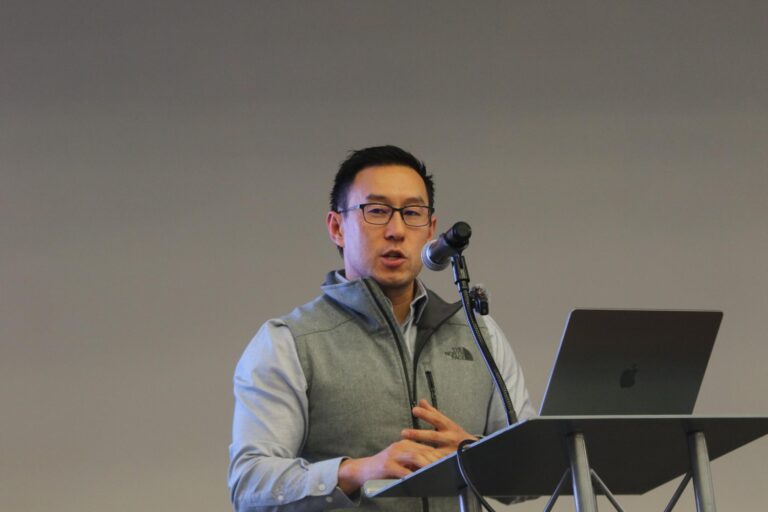
It is high in brine, heavy metals and other toxic chemicals, making it unfit for human consumption unless treated and recycled, said Zach Stoll, a scientist from New Mexico State University who presented his findings to the group.

Stoll also serves as executive director of the New Mexico Produced Water Research Consortium, formed in 2020 by the New Mexico Environment Department and NMSU to study methods of treating produced water to a quality that could be used outside of oil and gas.

The water is currently treated by oil and gas companies and reused in subsequent drilling operations, namely hydraulic fracturing – or fracking – when a combination of water, sand and chemicals is pumped underground to break up fossil fuel-rich shale.

The other option is to pump the produced water back into the rock formation, Stoll said, via disposal wells, which were recently linked to a spate of earthquakes across the Permian Basin.

And it’s a lot of water, he said: between two and five barrels – 42 gallons each – per barrel of oil. In the prolific Permian Basin, Stoll estimated, there could be billions of gallons of water produced every year.

“A lot of water comes up with the oil and gas. In the desert, wouldn’t it be great if we could actually use that water?” he said. “That’s how the science has been looking at it.”

But such scientific progress faced significant “obstacles” from regulators and state decision-makers, Stoll said.

The Produced Water Act was passed by the New Mexico Legislature in 2019, clarifying that the New Mexico Oil Conservation Division had authority to regulate and track produced water’s use within the industry, such as recycling and reuse in drilling.

The Environment Department was tasked with overseeing the product’s potential use outside of the industry, suggesting future applications such as watering crops.

That’s why the department formed the consortium, and Stoll said that while its research and experiments proved that treated produced water is safe for human cells, plants and various fish species, the environment department’s rulemaking Water Quality Control Commission remained unconvinced.

Commission members voted last April to allow permits for produced water to be discharged in conjunction with pilot projects studying its potential for reuse. The commission reversed that decision in May, and opted to require permits even for pilot projects that do not discharge the fluid.

“That kind of makes it difficult because you’re stuck at a much, much smaller scale,” Stoll said of conducting research without the ability to discharge the water into the environment. “From what I’ve seen, it’s very, very safe and its very technically possible to take this water and treat it so that it’s not toxic. The ability to hide your head in the sand has really put us at a disadvantage.”

To local leaders in Carlsbad, the increased water supplies would provide an opportunity to support the needs of the growing community, in step with the booming oil and gas industry in the southeast region of New Mexico.

In 2025, about 1.6 billion barrels of water were produced in the New Mexico oilfields, read a report by the research consortium presented at the meeting, up from about 700 million barrels in 2015.

About 75% of the total water used in Eddy County is for irrigation in the agricultural sector, meaning treating produced water could provide a safe way to offset much of the hydraulic cost of the region’s other leading industries, Stoll said.

“I see this as an industry opportunity. It’s something that could help all of our industries, oil and gas, potash and nuclear,” said Kristen Gamboa, executive director of the Carlsbad Department of Development, a nonprofit that promotes business needs in the area.

“It’s just infrastructure. If it must be industrial, manufacturing, then we need to market it that way.”

Kevin Beardmore, president of Southeast New Mexico College, said the school in Carlsbad recently created its first-ever “environmental management technology” program, which would train students to research produced water treatment and other environmental issues tied to fossil fuel extraction.

New Mexico is already sending about 35% of its produced water to Texas for disposal where regulations are laxer, read the consortium’s report.

And Beardmore worried that the growing oilfield water management industry could also leave the state if policymakers fail to act.

“By the time a market solution arrives, Texas is going to eat our lunch,” Beardmore said. “All the facilities are on the state line in Texas, which is where we’ll be sending our graduates if something doesn’t happen.”

Managing Editor Adrian Hedden can be reached at 575-628-5516, or @AdrianHedden on the social media platform X.

Trout remain popular in Lincoln County lakes

0

Information and photos provided by New Mexico Department of Game and Fish

Trout-fishing conditions have not changed at the popular waters in and around Ruidoso this week.

Conditions were fair to good at Alto Lake using Rainbow Glitter PowerBait and worms.

Rainbow PowerBait, worms, and flies were the baits of choice at Bonito Lake where trout fishing was fair to good.

Trout conditions were fair to good at Grindstone Reservoir using Rainbow Glitter PowerBait.

In western New Mexico along the Gila River, trout fishing was slow to fair using flies in the west fork.

In northern New Mexico at Bluewater Lake, fishing for tiger muskie was fair to good using Rooster Tail lures.

Streamflow along the San Juan River was 284 cubic feet per second (cfs) this week as fishing for rainbow trout and brown trout was slow to fair when using flies in the quality waters.

Streamflow below the Taos Junction Bridge along the Rio Grande was 630 cfs. Fishing for rainbow trout was slow using flies.

At Ute Lake, fishing for white bass, walleye and catfish was very good using 3- and 4-inch Gulp minnows and blade baits in 60 feet of water.

This fishing report, provided by the Department of Game and Fish, has been generated from the best information available from area officers and anglers. Conditions encountered after the report is compiled may differ as stream, lake and weather conditions alter fish and angler activities.

Eddy County sending $4M to Carlsbad for housing

0

Adrian Hedden
Carlsbad Current-Argus
achedden@currentargus.com

A Carlsbad housing development was given a $4 million boost by Eddy County and will see apartments and homes installed on the south end of the city.

Eddy County commissioners voted unanimously during their Tuesday, Jan. 13, meeting to approve funding the project, which will use about 20 acres of land at Kircher and Boyd Drive the city purchased from Carlsbad Municipal Schools for about $1.3 million on Oct. 29, 2025.

The plan presented by city of Carlsbad officials included development of 10 acres on the property to hold about 150 to 200 apartments, while the other 10 acres will include 55 single-family houses.

The homes will be priced from $220,000 to $299,000, according to the city’s presentation. It was unclear what monthly rents would be at the apartments.

The county’s contribution was part of a $15.6 million housing project commissioners voted to create at a special meeting Nov. 10. Municipalities such as Carlsbad and Artesia can apply to the commission for a portion of the money to offset costs of housing developments.

In December, the county approved a slate of three housing projects in Artesia, totaling about $6.5 million, meaning about $5 million in county funds remained.

Carlsbad Mayor Rick Lopez said his city’s portion of the money would support growth in the city, which he said depended on adequate housing.

“We purchased the 20 acres for housing,” Lopez said during the meeting. “There will be market-priced apartments, but they will be on the lower price.”

A sticking point for commissioners, before they voted to approve, was the lack of finalized design plans for the homes and apartments.

The city of Carlsbad planned to close a request for proposals from potential contractors for the apartments on Jan. 30 when a contractor will be chosen.

Another request would be issued for the homes in the coming weeks, with final designs for the development – apartment and houses – expected to be approved by Feb. 27.

District 1 County Commissioner Ernie Carlson said the county prefers projects using the county funds to be designed and ready for work to begin before being approved.

“We really want to get these projects going,” he said. “We don’t approve these until we have an invoice from the contractor.”

Lopez said work would begin within 120 days after approval.

“We can have those designs ready to go and shovel-ready. We’re pretty far down the road on that one,” Lopez said. “We need houses.”

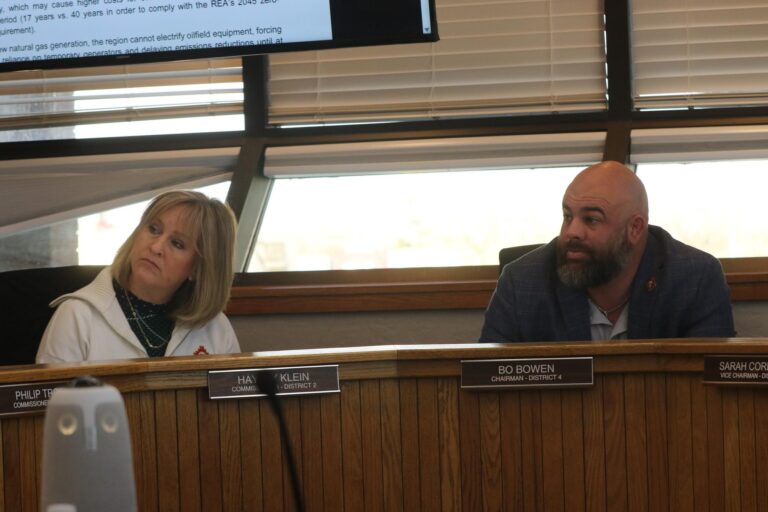
District 4 Commissioner Bo Bowen said Carlsbad’s vow to begin work in 120 days was a sign that it was close enough to deserve the county’s support. He noted that if the city does not begin work by the deadline, it could apply to the county for an extension.

“I think there’s been a lot of thought put into this by the city. We don’t have engineered plans, but I think we can take their word for it,” Bowen said. “They’ll either fulfill it or not. I think this is one worth supporting.”

Eddy County building underway

A new county administrative complex was being designed, using feedback recently gained from county employees saying they need more space for a growing staff, said officials with Parkhill, the Frisco, Texas-based design firm leading the project.

Eddy County Commissioners opted last year to move forward with a proposal to shift both the county’s administrative office and its jail from Carlsbad’s downtown area on Greene and Main streets, respectively, to a location near the Cavern City Air Terminal.

The county estimated last year the total cost for the jail and administrative offices would be about $350 million.

Parkhill’s Principal in Charge Kreg Robertson noted “structural challenges” with the administrative building’s continued use, not just in its size but also its design.

He said the building had inadequate security technology, no fire suppression system and “outdated” climate control. Robertson noted the space would also need to grow to accommodate a projected increase in county staff from about 75 workers to 120 in the coming years.

“There are a lot of deficiencies we are looking at,” Robertson said. “We would propose to renew, not renovate.”

Other business

Finance Director Robert Gonzales reported that in November 2025, Eddy County received about $6.6 million in gross receipts tax revenue and $8 million in oil and gas revenue.

Gonzales also reported the county was at about 69% of its budgeted revenue collection as of November, amounting to about $167 million of $244 million the county expected to receive for fiscal year 2026.

Fiscal years run from July 1 to June 30 and are named for the calendar year when they end.

Gonzales said the county was also at 24% of budgeted expenses, about $110 million of the expected $470 million in spending for Fiscal Year 2026.

Artesia basketball team remains No. 1

0

JT Keith
Artesia Daily Press
jtkeith@elritomedia.com

Bulldogs coach Michael Mondragon said he wanted to see his No. 1-ranked 4A-4 team continually improve throughout the season. He saw it with Artesia’s 61-45 victory over No. 5-ranked Taos on Saturday.

Artesia (11-3) has improved in each game as the football players are finding their basketball legs during the dog days of the season. After injuries to Braylon Vega and Corbyn Dominguez, the team is trying to get healthy and is using its deep bench until all the players are 100%.

The Bulldogs are coming off a tough stretch of playing three games in three days. They defeated a tough 5A Carlsbad team 51-36 in a chippy game, during which the officials assessed double technical fouls on both teams.

The Bulldogs shut the Cavemen down with intense defense; the ’Dogs allowed Carlsbad to score only two points in the third quarter and outscored them 15-2 going into the fourth quarter.

“We did what we wanted to do,” Mondragon said. “I thought we guarded a lot better, and we did not allow a lot of penetration, and that penetration killed us the last time we played them. That penetration allowed them to enter the lane, and they kicked the ball out to the 3-point shooters, which hurt us. We pressed them and changed the tempo of the game, which forced them to work for their shots, which played in our favor.”

The Bulldogs defeated Valencia 39-35 on Thursday. Mondragon said the game at Valencia differed completely from the one the two teams played at the Pit. The Jaguars slowed the tempo, and the Bulldogs were not converting their shots.

“When we are not hitting our shots, we are a completely different team,” Mondragon said. “We were able to hit some tough shots in the fourth quarter and take the lead. It was a good 4A matchup. Valencia always plays us tough.

The Bulldogs beat Belen 60-33 on Friday. Mondragon said the tournament showed him that his team is getting into shape and improving each time they take the court.

“I have said all along that we want to be playing our best basketball in February and March,” Mondragon said. “I like the way our team is progressing and playing right now.”

Artesia point guard Charlie Campbell IV is 40 points away from scoring 1,000 points in his career for the Bulldogs.

Artesia will face Taos at 4:30 p.m. on Thursday and will return to the Pit for a game against Hobbs at 7 p.m. Friday, Jan. 23.

JT Keith can be reached at 575-420-0061, or on X @JTKEITH1.

Sen. Larry Scott: Capital outlay supports local communities

0


Sen. Larry Scott

This column is going to cover the process by which capital outlay money is brought back into local communities from the State coffers. Capital outlay monies are utilized to purchase additions to road and sewer systems or new fire trucks as examples. Basically, they are supposed to be used for infrastructure projects with life spans longer than the bonds that are normally sold to raise the money.

Traditionally, capital outlay monies available during the fiscal year are allocated amongst the Governor, Senate, and House of Representatives in 1/3, 1/3, 1/3 equal shares. This division was disrupted during the 2023 legislative session when the tribal communities demanded one hundred million dollars ‘off the top’ before the balance was distributed according to the above formula. This happened because the tribal communities wield significant influence in the legislature by virtue of chairmanship positions on House and Senate budget committees.

It should be noted that tribal communities are all represented in the legislature by both House and Senate members. In fact, the recent redistricting gerrymander left these lands over represented. As an example, a Representative in Indian country may only speak for some 26,000 constituents instead of the ideal allocation of 29,000. Because of demographics and an imperfect census, it is not possible to ever be perfect with district divisions. During redistricting the last time however, there was a systematic effort to maximize the voices of the tribal lands.

The capital outlay process begins with meetings ahead of each legislative session where the governmental entities within the district present to legislators their requests for the upcoming session. At this point, there is no concrete number for the funds available to fulfill the requests. It is safe to say however, there is never enough. During the session, when actual numbers become available, legislators in each district form working groups to allocate funds to the various projects. At least in the Southeast part of the State this is a coordinated effort to try to fully fund as many projects as possible.

The $100,000,000 pre-allocation resulted in each Senator in districts with no tribal lands receiving a cut of $780,000. to his (her) allocation. Similarly, each Representative lost some $470,000. These reductions generated a vigorous and passionate floor debate with the sponsor of the legislation finally admitting that the one hundred million dollars of ‘juice’ going into the tribal communities could be justified as compensation for past injustices. Although the word ‘reparations’ was not actually used during the debate, the objective was crystal clear. In this case it is compensation for the appropriation by the State and Federal governments of land historically claimed by the various tribes, all the way back into the 1800s. An obvious question asked during the debate was if this sum under consideration would consider the bill ‘paid in full’. The answer was ambiguous at best.

The tribes consider themselves independent nations when it comes to enforcing contracts and state law on their lands. As a consequence, there is a limit to how much oversight is going into the vetting. There are seven pages of projects, 102 in total, that are being funded with the additional monies. Admittedly, many, perhaps most look perfectly legitimate from an infrastructure standpoint. There are suspicious notes however, that not all the expenditures are for the benefit of the communities at large. One reads “Chapter is still contacting people who want to have their bathroom renovated”.

This process is patently unfair to folks who had nothing to do with the decisions and consequences of the conflicts prosecuted during the buildout of the United States. It is particularly galling to those of us today in the Southeast as virtually all of the monies available for distribution are the result of our labors in the oilfield. In my 10 years of participating in this process, I have yet to have sufficient funds to offer individuals ‘bathroom remodeling” money.

Larry Scott of Hobbs is the state senator, representing District 42 in Eddy, Lea and Chaves counties.

Vote now for Athlete of the Week

0

The Artesia Daily Press is letting you decide on the best local sports star each week. Go to ArtesiaNews.com and cast your ballot. You can also access the polling using the QR code.

Girls

Eighth-grader Ashlyn McIntire is powering the bowling team this season.

The Lady ’Dogs basketball team leader, Jenna Whitmire, has become the glue for the squad. The ever-hustling Ashton Craft continues to play superior defense.

Boys

Bulldogs center Clay Kincaid has played well for Artesia this season. Senior Tootie McNeil has helped spur the boys basketball team to the No. 1 ranking in 4A-4.

Bowling makes its second Athlete of the Week appearance with senior Payton DeMerritt.

Results will be released in the Jan. 22 print edition and online.

Sen. David Gallegos running for New Mexico Lt. Gov

0

Alex Ross
El Rito Media
aross@elritomedia.com

A southeast New Mexico lawmaker on Thursday, Jan. 15 became the latest Republican to launch a bid for lieutenant governor.

Sen. David Gallegos (R-41) of Eunice announced his campaign in an early morning Facebook post on Thursday. He said he is running to succeed term-limited Democratic Lt. Gov. Howie Morales because New Mexico needs “serious leadership.”

State Sen. David Gallegos

“New Mexico cannot afford more symbolic leadership. We need people in office who understand how to govern, how to work with a President Trump administration to secure our border and get the economy moving again, and how to build the coalitions necessary to actually get things done. The Lieutenant Governor cannot just give speeches — the Lieutenant Governor has to help run a state,” the post stated.

In New Mexico, the lieutenant governor serves as acting governor when needed, presides over the Senate when the Legislature is in session and is a member of eight state boards and committees.

In an interview with El Rito Media, Gallegos, 65, confirmed that he had filed the necessary campaign paperwork Monday with the New Mexico Secretary of State’s office. However, as of Thursday morning, his candidate campaign committee registration was still not posted on the Secretary of State’s website.

Gallegos said that on the campaign trail and as lieutenant governor, he would work to strengthen the state’s oil and gas industries, bring attention to rural New Mexico and advance a conservative policy agenda.

“In reality, we need someone that is steadfast and understands rural New Mexico and the southeast, and we’ll then do everything we can for the whole state,” he said.

Gallegos has represented portions of Eddy and Lea counties in the Senate since 2021. He sits on the Senate Health and Public Affairs Committee, Senate Rules Committee and Senate Ethics Committee. As Senate Republican Caucus Chair, he holds the third highest-ranking Republican leadership position in that chamber.

He previously held the District 61 seat in the New Mexico House of Representatives, from 2013 to 2020, representing Lea County. That seat is currently held by Rep. Randall Pettigrew, a Republican. Gallegos has also been on the Eunice School Board since 1999.

Currently, Gallegos is a senior superintendent with Ramirez & Sons Inc., a Hobbs-based general contractor. From 1979 until 2010, Gallegos worked for the New Mexico Gas Company, where he began as a laborer and eventually rose to a supervisor position in Lea County. Gallegos also has a bachelor’s degree in business from the University of the Southwest in Hobbs.

With his announcement, Gallegos became the third Republican to enter the race to be his party’s nominee. Manuel Lardizabal of Albuquerque, who ran unsuccessfully in 2020 for the District 26 New Mexico Senate seat, filed paperwork last year for a campaign for lieutenant governor. Aubrey Blair Dunn, an Albuquerque attorney who was the Libertarian Party nominee for New Mexico attorney general in 2018, wrote in a Facebook post Monday that he is also running as a Republican for the position.

Three Democrats are also vying for their party’s nomination: New Mexico Secretary of State Maggie Toulouse Oliver, Sen. Harold Pope (D-23) of Albuquerque and Jackie Onsurez, the mayor pro tem on the Loving village Council. New Mexico Public Lands Commissioner Stephanie Garcia Richard also launched a campaign, but later withdrew due to her husband’s health.

Legislative Reporter Alex Ross can be followed on the social media platform X @alexrosstweets.

New Mexico Democrats outline priorities ahead of lawmaking session in Santa Fe

0

Alex Ross
El Rito Media
aross@elritomedia.com

New Mexico Democratic lawmakers on Friday said affordability, healthcare, juvenile justice and banning immigrant detention will be top priorities in the upcoming legislative session.

Speaker Javier Martinez (D-11) of Albuquerque and other Democrats laid out their agenda Friday during a press conference outside the First Choice Community Health Care, South Valley Health Care Center in Albuquerque. The press conference came as lawmakers gear up for the 30-day legislative session that begins Tuesday.

“We will lead the way forward to ensure that we are making life affordable for our families, to build a safe community for all of our children to be able to thrive,” Martinez said.

In New Mexico, 30-day sessions are dedicated to the budget and matters the governor calls for the Legislature to take up.

The session comes as state economists last month projected a steep drop in the amount of new money — revenue coming into the state that is above spending levels for the current budget year — that the state is projected to receive. A report last month by the Legislative Finance Committee predicted the state will take in $105 million in new money, representing a $329 million downward revision from their August estimate.

House Majority Floor Leader Rena Szczepanski (D-47) of Santa Fe said that despite the slowing revenue growth, New Mexico enters the session as “the envy of many states.”

She said lawmakers backfilled health and food assistance programs during two special sessions this fall. That includes allocating $17.3 million to fully cover the cost of federal enhanced premium tax credits that expired at the end of the year, up through the current fiscal year that ends June 30.

“We were the only state to do that,” Szczepanski said. “We’re going to continue to do that as long as we can and as long as we have to.”

Szczepanski announced House Democrats will put forth a comprehensive healthcare agenda, which includes expansions of both the rural provider tax credit and the state’s Medical Student Loan Repayment Program and legislation to allow New Mexico to join the interstate medical licensure compacts. The compacts, she said, will expand options in telehealth and provide healthcare professionals licensed in other states with a more streamlined path to work in New Mexico.

Lawmakers will also make what Szczepanski called “targeted” changes to the state’s medical malpractice laws, and a bill will be introduced to protect the assets of physicians in medical malpractice cases.

Amid an aggressive crackdown by the Trump administration and the use of controversial tactics by Immigration and Customs Enforcement, also known as ICE, Democrats also promised to reintroduce a bill that would prohibit New Mexico counties from entering into contracts with the federal government to detain people on alleged civil immigration violations.

In the last regular legislative session, such legislation, known as the Immigrant Safety Act, passed the New Mexico House but stalled in the Senate. Martinez said the bill will be reintroduced in the first days of the session.

“It’s going to be House Bill 9, and it’s going to move quickly,” he said.

House Majority Floor Whip Dayan Hochman-Vigil (D-15) of Albuquerque said measures will also be introduced to ensure ICE agents can be identified and held accountable and prevent certain routine surveillance data from being used by ICE against immigrants.

Democrats said they also look forward to addressing crime and public safety by increasing oversight of firearms dealers, cracking down on weapons trafficking, continued investments in law enforcement and improving behavioral health services.

“When it comes to juvenile justice, we must address the core issues and not fall for the false promise of easy solutions,” Hochman-Vigil said.

Policies that will be considered, she said, will include measures to hold juveniles accountable but also more funding for programs that steer youth away from crime.

Other issues Democrats said they hope to take up include a bonding bill to repair roads across the state and a proposed constitutional amendment that, if approved by voters, would create a commission of experts to appoint the leadership of the state’s Children, Youth and Families Department.

Legislative reporter Alex Ross can be followed on X @alexrosstweets.

Lawmaker calls on Gov. Lujan Grisham to address juvenile crime during session

0

Alex Ross
El Rito Media
aross@elritomedia.com

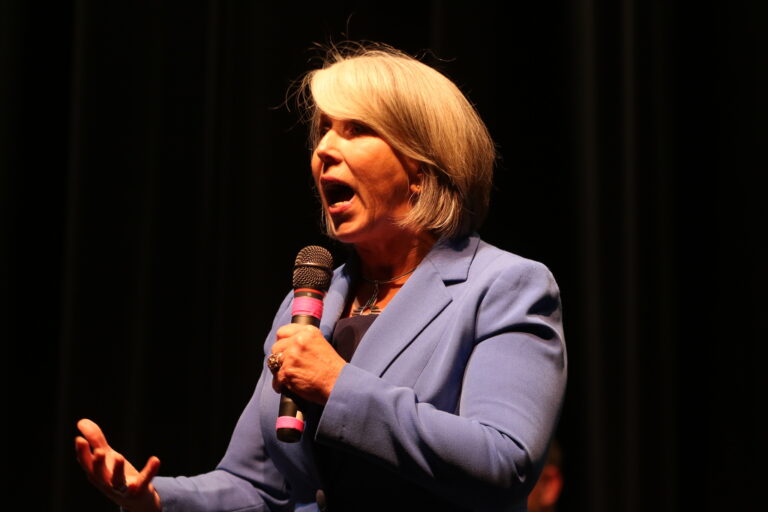
A Republican state lawmaker is planning to prefile several bills on juvenile crime she hopes will win the backing of Democratic Gov. Michelle Lujan Grisham.

The proposals by Rep. Andrea Reeb (R-64) of Clovis include expanding the circumstances under which youths can be sentenced as adults and how long the state can have jurisdiction over young offenders.

Reeb told El Rito Media on Wednesday that two bills were prefiled and another four were introduced Friday, the deadline for filing legislation ahead of the 30-day legislative session, which begins Tuesday.

Under the New Mexico Constitution, 30-day legislative sessions focus on the state budget, and lawmakers may consider only bills supported by the governor. Reeb does not know whether her bills will get on the governor’s agenda, but said early indicators suggest Lujan Grisham will direct legislators to act on juvenile crime.

“So, I’m hoping that will open the door for mine to be discussed,” Reeb said.

On Thursday, Ben Baker, Lujan Grisham’s public safety advisor, told El Rito Media one of the governor’s top goals is reducing the youth recidivism rate, especially for individuals who commit crimes involving firearms. He said Lujan Grisham expects the issue will be debated by lawmakers in the session.

Reeb’s bills represent the latest push by the longtime prosecutor and former district attorney for Curry and Roosevelt counties to advance juvenile crime reforms through the Democratic-led Legislature.

Last year, Reeb sponsored House Bill 134, a comprehensive package meant to overhaul New Mexico’s system of juvenile justice. But the measure was ultimately defeated on a 4-2 vote in the House Consumer and Public Affairs Committee.

Reeb said she is taking a more piecemeal approach this time, hoping that breaking her proposals from last year into separate bills will give them a better chance at passage.

Proposals

As of Thursday afternoon, the website of the New Mexico Legislature showed that two of Reeb’s proposals, House Bills 78 and 79, were prefiled and posted online. HB 78 would allow the juvenile records of a defendant to be more easily accessed for purposes of pretrial detention or sentencing for another crime.

HB 79 would reduce the standard of evidence under which a juvenile’s probation can be revoked from “beyond a reasonable doubt” to the lower standard of “preponderance of evidence.”

Other aspects of Reeb’s push for juvenile justice include proposed changes to the risk assessment tool used in determining whether a juvenile suspect should be held in pretrial detention and another to more closely align the procedure for competency evaluations of a juvenile defendant to those used for adults.

The two remaining bills yet to be filed include one to increase the age at which the New Mexico Children, Youth and Families Department has jurisdiction over delinquents from 21 to 25. Reeb argues that doing so can provide the state with a longer period to keep youth on probation or provide them with treatment to reduce the risk of youth reoffending.

The sixth measure would broaden the list of offenses under which a juvenile can be sentenced as a serious youthful offender, where a juvenile defendant can receive the same mandatory sentence as an adult.

New Mexico law reserves that designation for youth convicted of first-degree murder, but Reeb wants to add second-degree murder, voluntary manslaughter, armed robbery and shooting at or from a motor vehicle or into a dwelling or occupied building that results in great bodily harm.

Reeb’s bill would also add involuntary manslaughter, homicide by vehicle, unlawful possession of a handgun and leaving the scene of an accident that causes great bodily harm or death.

‘Balance’ needed

Juvenile crime has been a top priority for Republicans, as Reeb said New Mexico copes with high juvenile crime rates involving firearms and fewer juvenile detention facilities.

“We’re seeing young kids commit crimes, and so we have to adjust to what is happening currently in society,” she said.

Some leading Democrats, such as Speaker Javier Martinez (D-11) of Albuquerque, are skeptical that stiffer penalties are the way to address youth crime.

In a recent interview on New Mexico In Focus, Martinez said he is concerned about juvenile crime, but believes increased behavioral health services, early intervention programs and reforms at the Children, Youth and Families Department are better solutions.

But Reeb said there has to be a balance.

“There are kids that we can change, and we can help, and we can rehabilitate, but then there are some that need to be locked up because they’re dangerous,” she said.

Legislative reporter Alex Ross can be followed on X @alexrosstweets.